Shopping mall investment promotion has been defeated by "incompatible eight characters".
"There's a river here, and my Chinese zodiac clashes with water," said the franchisee.
Wu Mei was a bit stunned for a moment. In November last year, as a commercial property investment promotion staff member, she talked with the store expansion personnel of a catering brand for a month and everything was settled. Unexpectedly, when the franchisee who was going to invest came, they refused with a reason she couldn't refute. The boss is from Fujian and believes in feng shui.
When reporting to her leader, the leader asked her, "Is this true?" She could only awkwardly say, "Yes." This deal fell through, and the storefront hasn't been rented out until now.
In the past two years, mall investment promotion staff like Wu Mei have heard all kinds of rejection reasons from brands. Behind these reasons is a more realistic change: the once almost automatically - operating trust chain between malls and brands is loosening. Brands are no longer easily entering malls, and malls are no longer easily accepting brands.
In the past, the relationship between malls and brands was a cooperation about expansion; today, it is more like a mutual screening for survival.
Brands Say "No" to Malls
"Do you have a signing quota to complete in May?" Suddenly, the boss sent a "concern" about performance on the computer. But Wu Mei had no time to deal with it.
Not long ago, she received a message. The store manager of a chain digital brand told her that due to "company policy," they planned to leave the mall next month. It's very difficult to find a new tenant in such a short time, and the loss is almost certain. Wu Mei regretted that she didn't notice their business situation earlier.
Wu Mei didn't check how many square meters she still needed to sign. She had no hope of achieving the goal and just waited for her performance to be deducted.
Like Wu Mei, Yang Shilin is an investment promotion person with twelve years of experience in Chengdu. He has worked on projects with an annual sales volume of over 1 billion yuan and also on small - scale commercial projects with less than 50 million yuan. In his experience, in the past, malls selected brands, but now, "it's good if one out of twenty brands can be finalized."
He felt that fewer and fewer people were willing to open stores in malls: "In the past, as long as a chef cooked a little deliciously, someone would invite him to open a store." Now, even if a store is labeled as a "net - red store" or "regional first store," it may not bring in traffic.
There are signs for everything. On social media, the descriptions of the work difficulties of investment promotion staff in the past two years come from the strange rejection reasons of brand owners. Common reasons include: the location is too remote, the rent is too high, and the footfall is too low; but there are also rarer reasons: the cleaning aunt is too old, there are too many children in the city, the commuting subway fare is too expensive, the feng shui conflicts, and the Chinese zodiac signs don't match, etc.
The most "ridiculous" rejection Yang Shilin experienced was that a brand suddenly said it wouldn't come after two rounds of business terms had been negotiated. The reason was that "the boss's home is too far from the project, and he can't make it in the morning to open the store."
Small and medium - sized brands are starting to say "no" to malls, and leading brands are also more cautious about entering malls. Zhan Sirui, an investment promotion staff member of the Aegean system in Sichuan and Chongqing, found that some leading brands will adopt a more cautious observation strategy. Brands like Pop Mart, high - end Nike stores, or Huawei car model stores often consider entering only after seeing similar formats enter and the business district stabilize.
Wu Yaming is a super franchisee with more than forty stores. He receives mall investment promotion invitations almost every day, and seven or eight malls approach him every week. His common rejection reason is "too busy to have time to take a look."
Wu Yaming feels that his "industry risk awareness" has gradually increased from level three at the beginning to level seven or eight now. He switched from retail to the franchise system in 2023. His current judgment of the industry is: Now, "80% of stores in malls lose money, and 20% make money." Entering a mall is more like a probability game. He feels that brands are also lowering their expectations. "In the past, they thought they could open 50 stores in an area, but now maybe 10 are enough."
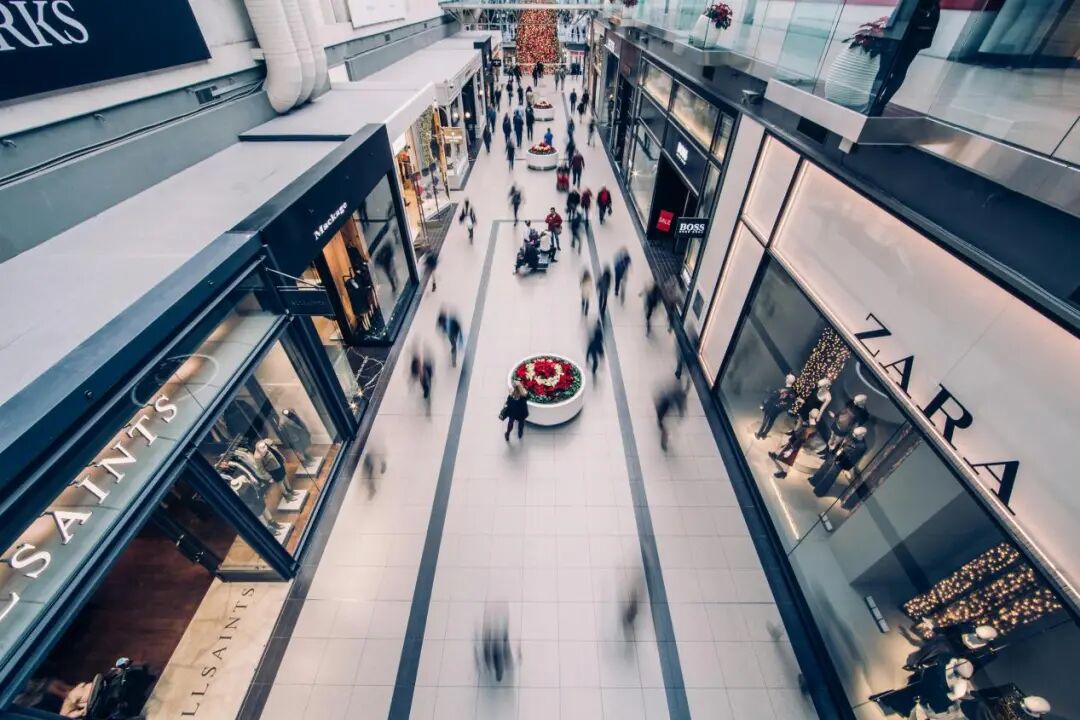
● The "80/20 rule" in the market is becoming more and more obvious. 20% of malls and brands contribute 80% of the performance. Image source: pexels
According to the monitoring of Winshang Big Data, more than 180 typical brands closed their stores in 2025, with a total of more than 15,000 stores closed. Nearly 80% of the brands had intensive store closures or full withdrawals.
They can't keep the old brands and can't attract new ones. Another piece of data shows that among more than 600 sample shopping malls in 26 key cities across the country, about 30% have a vacancy rate of over 10%. "It's as difficult as finding a partner," Wu Mei is annoyed, but she has gradually gotten used to it and can only "give up."
For a long time in the past, this industry operated according to an almost automatically established formula -
Malls believed that brands could bring in footfall, brands believed that malls could bring in business, and franchisees believed that opening a store could make money. But now, this chain is loosening.
In the past, people believed that "entering one Wanda could lead to entering 100 Wandas"; now, more and more people are starting to doubt whether a mall can still support a brand.
The Days of Making Money Effortlessly Are Over
In 2018, when Wu Mei entered the industry, she thought the commercial real estate was still on the rise, but later she found that it was the end of the golden age. When she first entered the industry, she made fifty phone calls a day. After one year, there were already more than 2,600 merchants in her WeChat contacts. At that time, by making phone calls, reporting footfall, talking about customer flow, and discussing per - square - meter efficiency, brands could be attracted.
But this order began to be broken around 2024. Wu Mei once communicated with a restaurant about an event, discussing jointly distributing 50 - yuan coupons for a certain product. The boss looked embarrassed and said that he only had a 20 - yuan profit margin, which meant that distributing these coupons would result in a loss. Wu Mei was extremely surprised. She clearly felt that brands were no longer eager to enter. In the past, the question was "Can we open a store?" Now it has become "Can we survive?"
What really changed is not that brands suddenly became timid. It's that the once - proven store - opening formula has started to fail frequently.
When Xiong Zhengyang opened a restaurant in a mall in 2023, he still had the idea that "going to a mall means making money." At that time, brands even had to "grab storefronts" to get better locations. Xiong Zhengyang remembered that an intermediary approached him and said bluntly, "If you want to enter the mall, you have to pay." Later, when he heard his peers chatting, he learned that 10,000 yuan was considered a small amount, and some people had spent 80,000 yuan to get a location.
Looking back now, although he didn't know how to negotiate rent, calculate the area, and his products were imitations of mature brands in the market at that time, "he definitely made tens of thousands of yuan a month."
Xiong Zhengyang and many brand entrepreneurs believe that as long as they can open a store in a mall, the business will somehow thrive. As the most special offline consumption scenario in China, malls compress footfall, consumption, and leisure needs into the same space and can also endorse brands. Many consumers may not know the newly emerging catering brands, but they must know Wanda or Mixc.
But now, this logic is failing. Malls no longer naturally mean footfall, and footfall no longer naturally means business. The rent per square meter of Xiong Zhengyang's mall store is about twice that of a street - side store. In the worst off - season, the footfall on weekdays is 100 people; in the best peak season, the footfall on weekends is 350 people, which is only twice that of a street - side store. The footfall advantage of malls is weakening. Even if a brand enters a mall, it will face more intense competition, a longer pay - back period, and more demanding consumers.
Last year, Xiong Zhengyang wanted to enter the Chengdu market with a new brand. But the congee - base hot pot category in popular malls was already full, and malls usually only reserved one brand of the same type. Having no other choice, they turned to seek to enter Luzhou Mixc. But because the Mixc in Suining was having trouble with investment promotion, the project party put forward a condition: the rent could be negotiated and they were willing to reduce it by 600,000 yuan. However, in exchange, he had to accept "bundled entry" into Suining Mixc. Xiong Zhengyang accepted.
But soon, Xiong Zhengyang found it difficult to operate the mall store. To maintain profits, he continuously adjusted the gross profit margin and compressed labor costs - reducing more than 30 employees to 20 full - time employees to bring the overall gross profit margin to 65%. But after temporarily suppressing the cost problem, new difficulties emerged - it was getting harder and harder to acquire new customers.
The most direct method is to find food bloggers to shoot short - video marketing. The effect is often immediate. On the night when the video is released, the footfall will increase significantly; it reaches a peak on the first weekend, but then gradually declines after a week. Brands must detect changes in customer needs, continuously invest, continuously create topics, and continuously find new customers to keep the business running.
When opening the store last year, Xiong Zhengyang originally calculated that if the Suining store lost 40,000 yuan a month and the Luzhou store made 40,000 yuan a month, the two stores would just offset each other, and as long as there was no overall loss, it would be okay. Now, he found that there was still a surplus, which was obviously a kind of success.
Not every time a brand enters a mall to open a store is so lucky. In September last year, he took a fancy to a storefront in the Wanda project in Yibin, Sichuan. But less than two months after opening, a new Mixc World opened, and the footfall was quickly taken away. The store immediately started to lose money. In May this year, he still decided to withdraw early, even though the contract was not due. He lost 2 million yuan in 10 months.
Later, when he reviewed the situation, he realized that his site - selection evaluation was too crude. He only looked at "who is the first in the local area" but didn't really study the location factors. There was footfall in the mall, but it was not targeted; the surrounding competition was quite fierce. Within a 5 - kilometer radius of the city center, there were 4 malls. As soon as a new project opened, the younger and more consumption - power - strong crowd was immediately attracted away.
Now, he has new criteria for screening malls: don't go to malls with a vacancy rate of over 10%; don't go to malls without brands like Haidilao, Green Tea, and Kaojiang; don't go to malls where the performance of surrounding catering stores doesn't reach more than one million yuan.
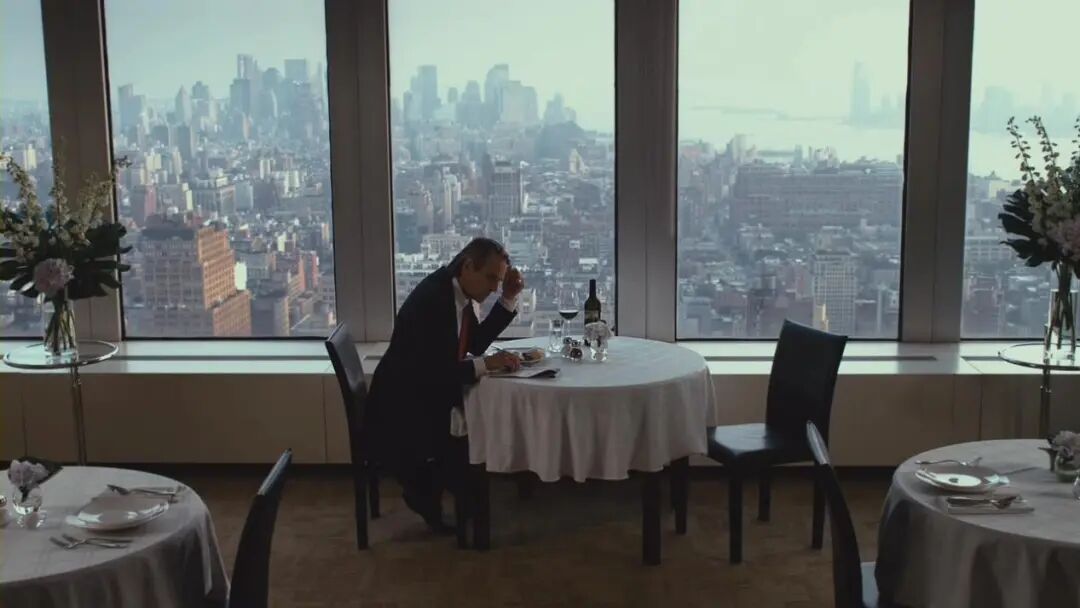
● Brands are becoming more strict in screening new projects. Image source: "Margin Call"
For these growing brands, although the mall is a traffic entrance, it is also the biggest variable. In the view of Tang Kuanyi, a platform practitioner who uses AI for footfall monitoring, this "cruel" Matthew effect is accelerating and will be more obvious in the next 5 to 10 years: The core business districts in first - tier cities and leading commercial complexes will continue to concentrate traffic, while a large number of commercial projects in second - and third - tier cities and below will face continuous investment promotion pressure.
So, not only are brands being cautious, but malls are also becoming more conservative in the process. "One of the biggest trends in investment promotion in recent years may be that investment promotion staff need to consider how long a new store can survive after entering," said Wu Mei.
Yang Shilin remembered that in the past, many projects would offer exaggerated decoration subsidies for investment promotion. The annual rent was only 120,000 yuan, but they were willing to subsidize 400,000 yuan for decoration. But now, when a brand asks for "decoration subsidy," their first reaction is to think about how to refuse. Malls are no longer as "generous" as before.
One of his friends managed to negotiate seven reserve brands in the last round of project approval in December last year. The brands were very interested, and most of them paid a "good - faith deposit." However, the group headquarters didn't approve any of them. The reason was just: "The brands are too bad, and the rent has been reduced so much." In fact, the rent was only 10% to 15% lower than the original plan.
No one is willing to pay in advance for uncertainty. And when this uncertainty is continuously prolonged, the entire industry may be more like a time - based game - slower decision - making, longer verification, and faster withdrawal. The days of making money effortlessly are over.
Malls Start to "Nurture" Brands
Wu Mei said that she has learned more in the past one or two years than in the previous four or five years combined.
Her current main task is to "do the math." Not calculating the rent, but calculating the brand's survival model: what is the break - even point, whether the customer group matches, and what resources the mall can provide. She breaks it down and explains it to brands and merchants.
"It's really like being a nanny now," she said.
This "nanny - like" approach even extends to more detailed aspects. The investment promotion manager is more competitive than her. When talking about a coffee brand that sells coffee for 5.9 yuan a cup, he will study why it can offer such a low price. He finds that the brand comes from a warehousing supplier background and has a strong supply chain. He further asks if the brand can introduce its coffee supply system to help other coffee brands in the mall reduce costs; he even personally creates advertising pictures for users and discusses the placement of billboards.
In addition to the "nanny - like" investment promotion, investment promotion staff are also starting to develop an "operational mindset" in the era of stock. The project Wu Mei is currently working on is a riverside commercial block. She designs activities for stores. For example, for a basketball training store, she designs a promotion: let the store manager place a basketball hoop in the mall's open space. If a customer makes six out of ten shots, they can get membership benefits. She then subsidizes basketballs, milk tea, or snack coupons. If customers add the store's WeChat, they can take another shot. She attracted 28 members in one night.
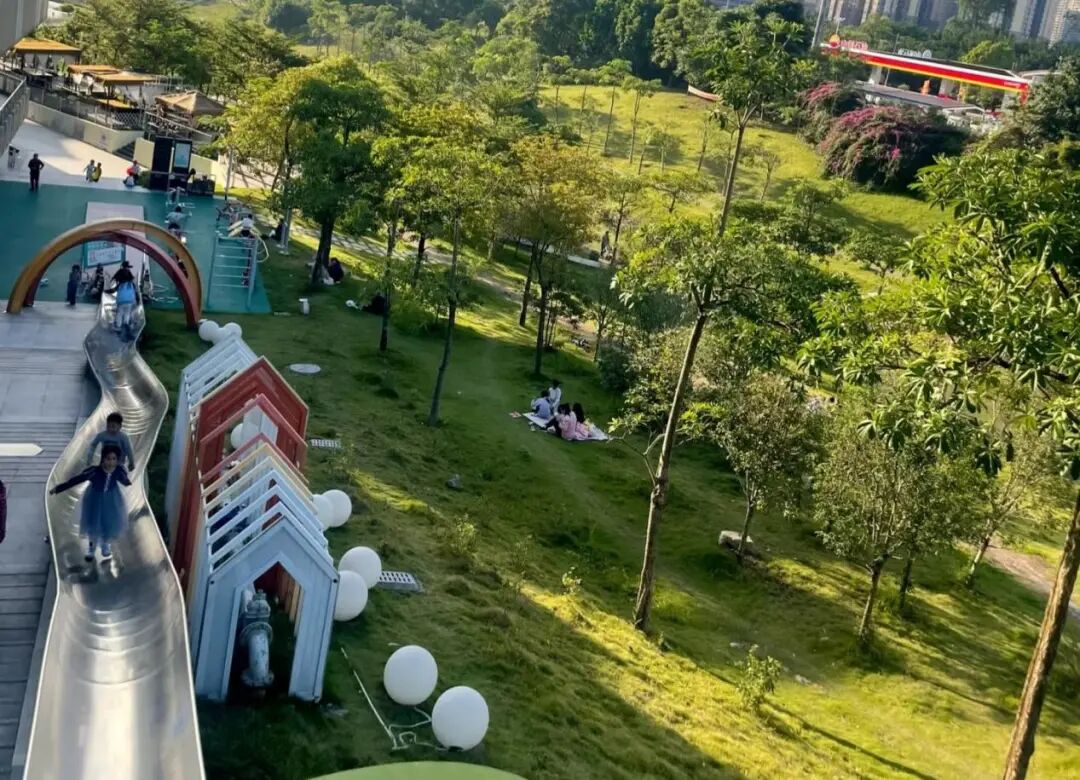
● The commercial block where Wu Mei is currently working. Image source: interviewee.
She also increasingly feels that online traffic is replacing part of the mall traffic. Many small bars and light - catering brands are starting to move to community ground - floor shops. They can use