Tearing apart the hundred-billion-yuan lie of Pretty Food
In late May 2026, at Wuyue Plaza in Nanxun, Huzhou, Zhejiang, a franchisee of Ameigo Meiguo·Yungui-Chuan Bistro picked up tools and smashed the bar, tables, chairs, and freezers in the store one by one, shouting, "I'd rather smash everything than leave it to the mall." In less than five months, a 377-square-meter store with nearly 30 employees and an investment of over 4 million yuan ended up as a video that went viral on the Internet.
This scene is like a sharp fragment that cuts open the shiny shell of "pretty food". This is not just the tragedy of a single boss, but a startling catering phenomenon upon in - depth investigation.
The core of "pretty food" is not the dishes
"Pretty food" is not a standardized catering category, but more of a consumption concept spawned by social media. In the past, "pretty food" usually referred to refined dining represented by high - end Western cuisine, with an average per - capita consumption generally over 500 yuan. However, in recent years, the "pretty food" that has emerged on social media focuses more on the immediate communication effect and social value.
In the past one or two years, "pretty food" has almost occupied the tables of young consumers and the core positions in shopping malls at a rocket - like speed. On Douyin, the playback volume of relevant topic videos has exceeded tens of billions; on Xiaohongshu, millions of young users leave comments like "Please tell me the address" under the beautiful photos. Why can "pretty food" so accurately pry open the wallets of young people?
From the consumer side, this is an inevitable product of the changing consumption concepts of the Generation Z. For this generation of young people, eating is no longer just for filling their stomachs. Research data from the Red Meal Industry Research Institute shows that 27.6% of consumers have listed "having a stylish environment and being photo - worthy" as an important consideration when dining out, and over 40% of people are willing to pay for it. They share photos of those exquisitely arranged dishes, Morandi - colored tableware, and high - saturation food on their WeChat Moments or short - video accounts, using a "high - value" meal to gain recognition and attention in their social circles. The most core consumption driving force has shifted from satisfying the taste buds to providing emotional value and photo - taking opportunities.
Therefore, if we carefully analyze the business logic of "pretty food", we will find that its most core driving force is not dish research or the chef's skills, but a pure visual engineering. In this system, the dishes are just the canvas, the tableware is the filter, and the space is the backdrop - and "taste" has become an optional accessory.
In the logic of traditional catering, the core of a dish is the "wok qi" - that is the aroma and flavor produced by the intense collision of ingredients, heat, seasonings, and skills in a short period. In the kitchen of "pretty food", the chef's primary skill is no longer stir - frying, but "plating" and "color - matching".
Open Xiaohongshu or Douyin and search for "pretty food", and you will see a set of highly similar visual codes: Edible petals are carefully scattered in irregular dots on Morandi - colored tableware; layered and gradient special - blend drinks must be served in test tubes or beakers, waiting for customers to pour in a certain colored syrup; even the most ordinary salad is pressed into regular circles or star shapes with a mold, and decorated with a few deliberately unevenly cut mango pieces. The logic of this design is very simple: the food must first please the camera, then the eyes, and finally - if there is still energy left - the taste buds.
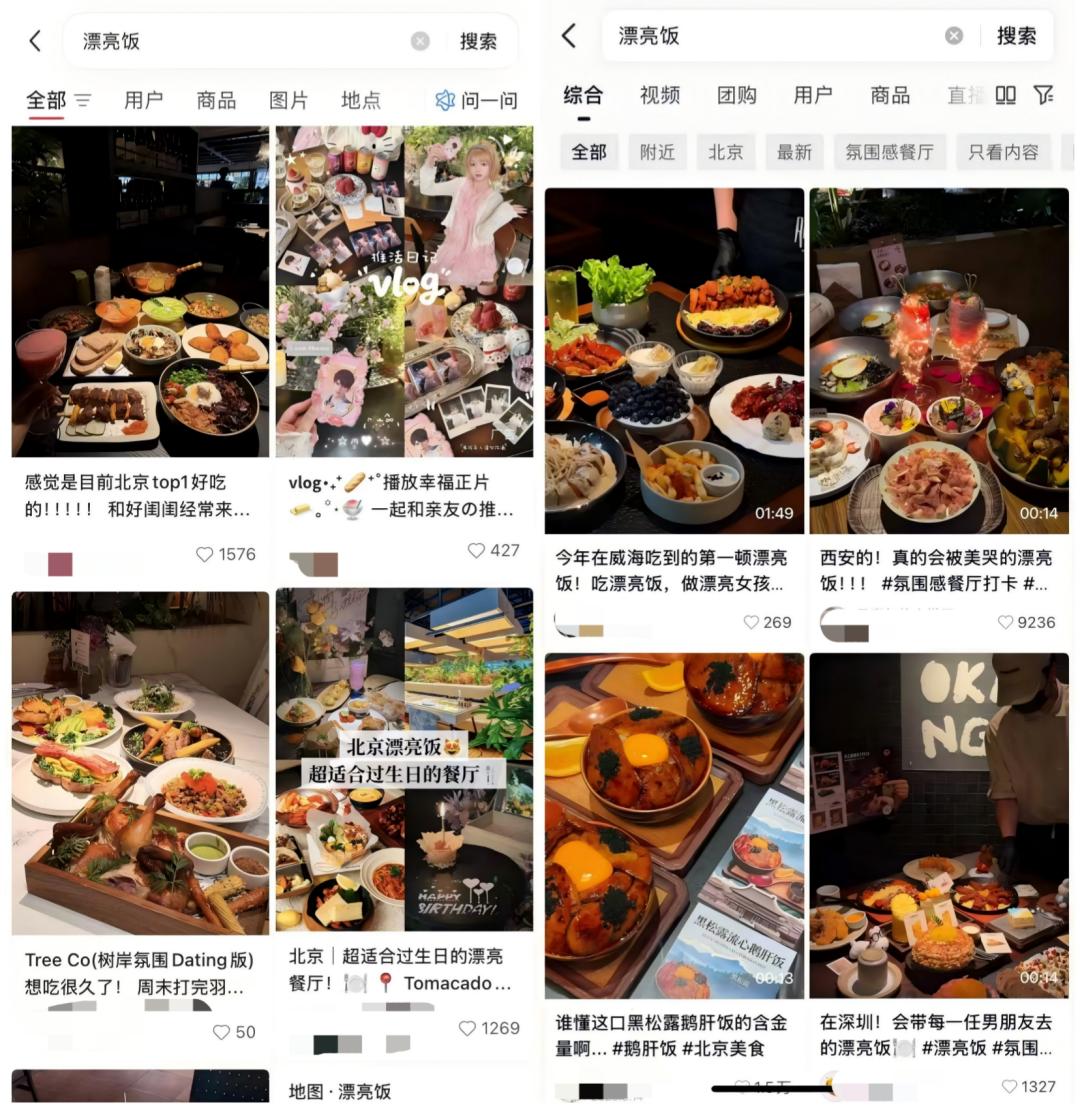
The head chef of a popular online restaurant once admitted in an interview: "When we develop new dishes, we spend about three times as much time on plating design as on taste adjustment. Because the boss's requirement is very clear - when the guests sit down, their first reaction must be 'Wow, it looks so good', and then they immediately take out their phones. As long as this step is achieved, more than half of the business is successful." In fact, many "pretty food" restaurants even have a dedicated "plating chef" who is not responsible for cooking but only arranges the pre - prepared ingredients according to the design drawing to ensure that each plate of food looks as standard and "photo - worthy" as a printed product.
If the dishes are beautiful "props", then the space is a carefully set - up "studio". The design logic of "pretty food" restaurants is completely different from that of traditional restaurants. Traditional restaurants pursue reasonable traffic flow, high turnover rate, and comfortable seats; while "pretty food" restaurants pursue being photo - worthy everywhere and at all times - even if it means sacrificing part of the dining experience.
A commercial space designer once said bluntly: "What we design is not a restaurant, but a'social currency production workshop'. The client will give us a list with 12 photo - taking spots that must be included. What we have to do is to ensure that no matter which corner the customers sit in, they can take at least three non - repeating background photos when they pick up their phones." Under this logic, the comfort of the tables, the ergonomics of the chairs, and the volume of the background music - these details that traditional restaurants care most about are often considered last. Therefore, the real dining experience in many "pretty food" restaurants is not pleasant: the height of the tables and chairs is awkward, the lights are too dim to see the menu clearly, and the background music is completely drowned out by the photo - taking and chatting sounds of dozens of tables of customers.
However, the reason why "pretty food" can survive in a model where "the core is not the dishes" is that a large number of consumers are willing to pay for this model. This is not the consumers' fault, but a normal reaction of human psychology in the social media era.
There is a psychological concept called "social reward" - when a person posts a carefully taken photo of delicious food on their WeChat Moments and receives likes and comments, the brain will secrete dopamine, producing a sense of pleasure similar to getting a material reward. And a meal that is "tasty but not good - looking" is difficult to provide this social reward.
A college student who often visits restaurants once confessed in an interview: "I know the food in those popular online restaurants is just so - so, maybe not as good as the small restaurants near the school. But when I post a photo of 'pretty food', I can get dozens of likes and comments asking for the address; if I post a photo of braised chicken rice, no one will care about it even if it tastes good." This sentence nakedly reveals the underlying logic of the success of "pretty food" - it sells not food, but a social asset for showing off.
In the business model of "pretty food", no one really cares about "whether the food tastes good". Or more accurately, those who care about this will never come back after the first visit, while a steady stream of new customers will make this business still seem prosperous in the short term.
The "Development Report on 'Pretty Food' in the Catering Industry 2025" released by the Red Meal Industry Research Institute shows that under the upsurge of the popularity of "pretty food", a group of restaurants featuring "pretty food" have developed into chain brands with a certain scale, such as Sanchushan Hot Pot and Shan Huanhuan Hot Pot in the Yungui hot pot category; Ye Guo Yeego and Ameigo Meiguo·Yungui - Chuan Bistro in the Yungui cuisine category. According to Red Meal big data, as of November 2025, the number of stores of Ameigo Meiguo·Yungui - Chuan Bistro and Shan Huanhuan Hot Pot both exceeded 100.
The real financial ledger of "pretty food"
The bustling crowds bring a misleading revenue picture to "pretty food" - high revenue in the first month of opening, amazing turnover rate, attractive gross profit margin... But when we peel off the layers of filters, we will find the extremely abnormal and fragile cost structure behind it.
The abnormal cost of "pretty food" starts from the moment of signing the contract. Its upfront investment is much higher than that of a traditional restaurant of the same area, but the extra money does not turn into better ingredients or more advanced equipment, but into the excessive profits of the brand owner.
Take Meiguo in Huzhou as an example. The total investment in its 377 - square - meter store is about 4 million yuan, including dormitory, salary, franchise fee, decoration, equipment, rent, and the first batch of materials. But what is really fatal is not the total amount, but the extremely unreasonable premium black hole. The decoration link is the first deep pit that most franchisees fall into. The brand owner quoted 850,000 yuan for the hard - fitting of the above - mentioned store.
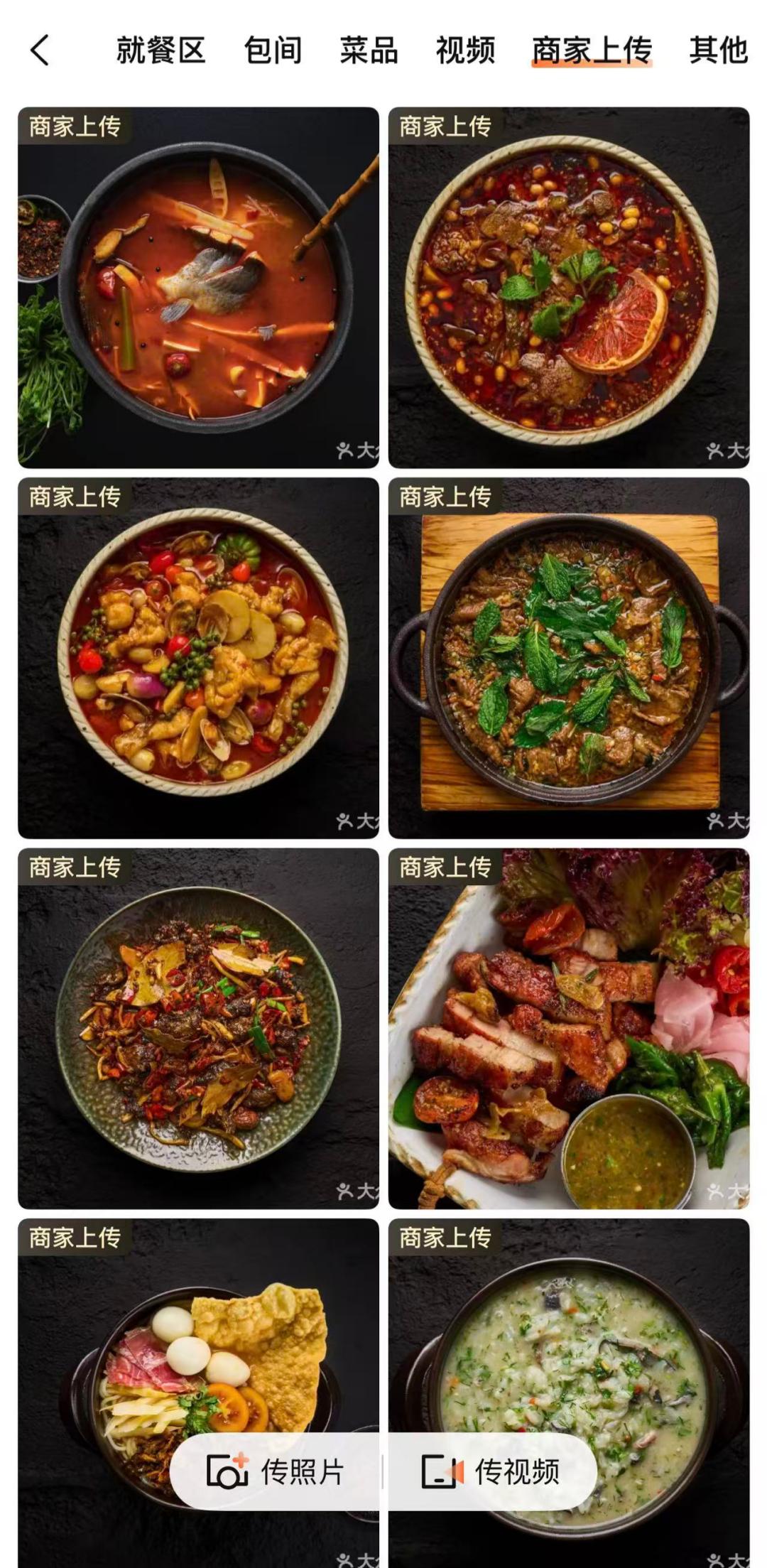
In addition to decoration, "pretty food" brands usually also require franchisees to purchase a full set of equipment from designated channels - freezers, ovens, coffee machines, customized tableware, tables and chairs, etc. The quotes for these equipment are often 30% - 50% higher than the market price. Take a commercial freezer as an example. The market price is about 8,000 yuan, while the brand owner may quote as high as 12,000 yuan, and franchisees have no other choice. The "entry fee" for the first batch of materials is also astonishing: tissues, menus, take - out packaging, and employee uniforms with the brand logo are much more expensive than ordinary custom - made ones.
It is worth noting that the franchise fee of "pretty food" brands is usually between 100,000 and 300,000 yuan, and in addition, several tens of thousands of yuan in management fees must be paid every year. Some brands even adopt the "turnover commission" model - extracting 3% - 5% from the franchisee's monthly turnover. This means that even if the restaurant loses money, the brand owner still has a stable income.
Overall, a 377 - square - meter "pretty food" restaurant requires a total investment of 4 million yuan, while a traditional restaurant of the same area in a second - tier city may only cost 1.5 million - 2 million yuan to open.
If the upfront investment is a one - time blood loss, then the daily operating cost is a continuous blood - loss channel. There are three insurmountable mountains in the operating cost of "pretty food" restaurants:
The first mountain: Labor cost. To maintain the "atmosphere" and "photo - taking rate", "pretty food" restaurants need to be equipped with far more employees than the actual demand. The front - of - house needs waiters with good looks who can guide customers to take photos - they not only serve the dishes but also help customers choose angles, adjust the lighting, and even press the shutter; the back - of - house needs "plating chefs" who can complete complex plating, rather than chefs in the traditional sense; some stores even have a special "photo - taking assistant" position. There are nearly 30 employees in this Huzhou store. According to the local salary level (waiters' monthly salary is 4,000 - 5,000 yuan, plus social insurance and accommodation), the monthly labor cost easily exceeds 150,000 yuan. While a traditional Chinese restaurant of the same area may only need 15 - 18 employees. The extra dozen or so people are not doing "cooking" or "service", but "maintaining the beauty".
The second mountain: Rent cost. "Pretty food" restaurants must be opened in the core position on the first floor or basement floor of a shopping mall, or in a street - facing store in a popular urban business district, because traffic is its lifeline. The rent for these locations is usually 2 - 3 times that of ordinary shops. Take Wuyue Plaza in Nanxun, Huzhou as an example. Although it is not a top - level shopping mall in a first - tier city, the monthly rent and property management fee for a 377 - square - meter store are conservatively estimated to be 80,000 - 120,000 yuan. Once the revenue declines, the rent becomes a crushing boulder.
The third mountain: Marketing and promotion cost. "Pretty food" has no natural traffic - it doesn't rely on word - of - mouth or old customers, but only on continuous social media advertising. On Douyin and Xiaohongshu, the promotion cost of an exploration video ranges from a few hundred yuan to tens of thousands of yuan; inviting a blogger with 100,000 followers to visit the store may cost 3,000 - 5,000 yuan plus a free meal. More subtly, the platform algorithm determines that "no advertising, no exposure". The monthly marketing expense of many "pretty food" restaurants accounts for 15% - 20% of the revenue, while that of traditional restaurants is usually only 3% - 5%.
In addition to the obvious upfront investment and operating costs, "pretty food" also has a large number of hidden costs that are ignored by franchisees.
For example, many of the decoration materials for "pretty food" are designed for "one - time photo - taking", and their durability is extremely poor. Large - area artificial green plants will fade and accumulate dust after three months of strong light exposure, looking extremely cheap; the lifespan of neon lights is usually only about one year, and it costs thousands of yuan to replace one... The "beauty" of a "pretty food" restaurant that has been open for one year may have been halved, and it needs to spend hundreds of thousands of yuan on renovation if it wants to continue attracting customers to check in.
In addition, many of the equipment in "pretty food" restaurants are customized - irregular bars, freezers of special sizes, and customized ovens with the brand logo. Once these equipment are damaged, it is difficult to purchase repair parts, and they can only be replaced from the original supplier, with the price at the supplier's discretion. What's more troublesome is that if the franchisee wants to withdraw, these customized equipment have almost no second - hand market value.
The catering enterprises under this investment structure are in a typical unbalanced state of "low food ingredients, high labor, and high rent", and their risk - resistance ability is extremely fragile.
It's just a traffic - driven business
Of course, from the perspective of the brand owner, the business model of "pretty food" can indeed work in the short term and is even quite profitable. Its operation logic can be summarized into four steps:
Step 1: Create a popular concept. The brand incubation team captures popular trends from social media data - Yungui - Chuan Bistro, rustic and wabi - sabi style, camping style, ruin style... Then they quickly complete brand positioning, space design, menu development, and visual packaging. This process usually only takes 3 - 6 months, and the cost is only in the range of hundreds of thousands to millions of yuan.
Step 2: Detonate social media. The brand owner invests the majority of the start - up funds in grass - roots advertising on Douyin and Xiaohongshu, invites a large number of KOCs (Key Opinion Consumers) and mid - level bloggers to visit the store and check in, creating a false prosperity of "the whole city is queuing up for this store". A well - planned "exploration vlog" can bring hundreds of thousands of exposures in a few days if recommended by the algorithm, attracting a large number of consumers to try it out.
Step 3: Open franchise and reap profits. When the online popularity of the brand reaches its peak, the brand owner presents a carefully prepared franchise manual. Franchisees are attracted by the high - value appearance and impressed by the data, and they sign contracts one after another, pay hundreds of thousands of yuan in franchise fees and management fees, and accept the high - price decoration and material procurement designated by the brand owner.
Step 4: Lock in profits through multiple channels. The brand owner's profit sources are extremely diverse: franchise fees (one - time), management fees (annual or monthly), decoration rebates (20% - 30% of the contract amount), equipment price difference (30% - 50%), supply chain premium (10% - 20% markup on ingredients and packaging materials), turnover commission (3% - 5%)... These revenues are already in the brand owner's pocket before the franchisee even sells a single plate of food. Even if the franchisee fails in subsequent