Young People's "Electronic Badge": Is the End of Hardware All About Emotion?
A small 1.75-inch circular screen is becoming the new bet for major consumer electronics manufacturers.
It has no flagship performance, no complete system, and can't install apps. Its only ability is to "change images". Insta360 sells it for 528 yuan, OPPO for 499 yuan, and Honor for 599 yuan, and all of them are out of stock.
Many people regard it as a small Japanese anime toy. However, when you see names like OPPO, Honor, Insta360, and TCL Thunderbird appearing in the same new product category at the same time - it feels that things are not that simple.
This small circular screen is called an "electronic badge".
So, why exactly has it been quietly targeted by major technology manufacturers?
Let's take a look at what the underlying trend signals are.
What is an "electronic badge"?
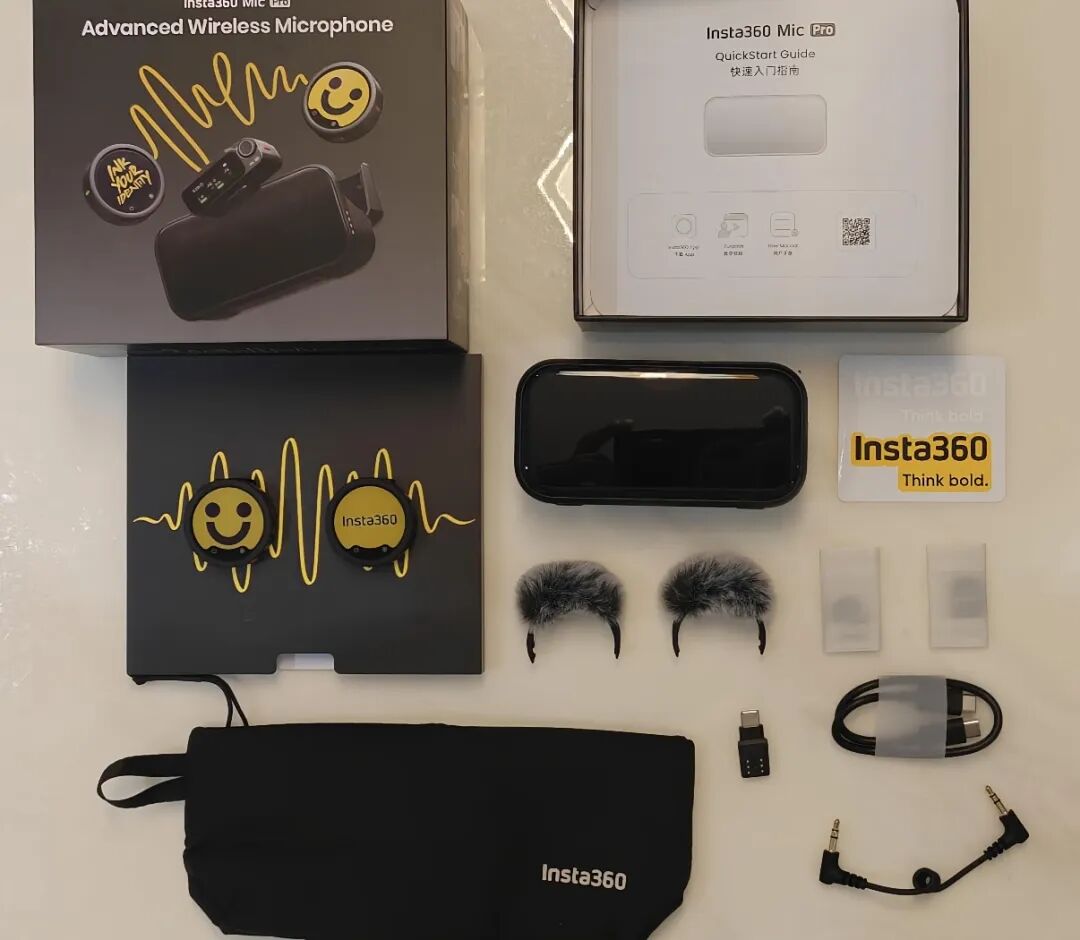
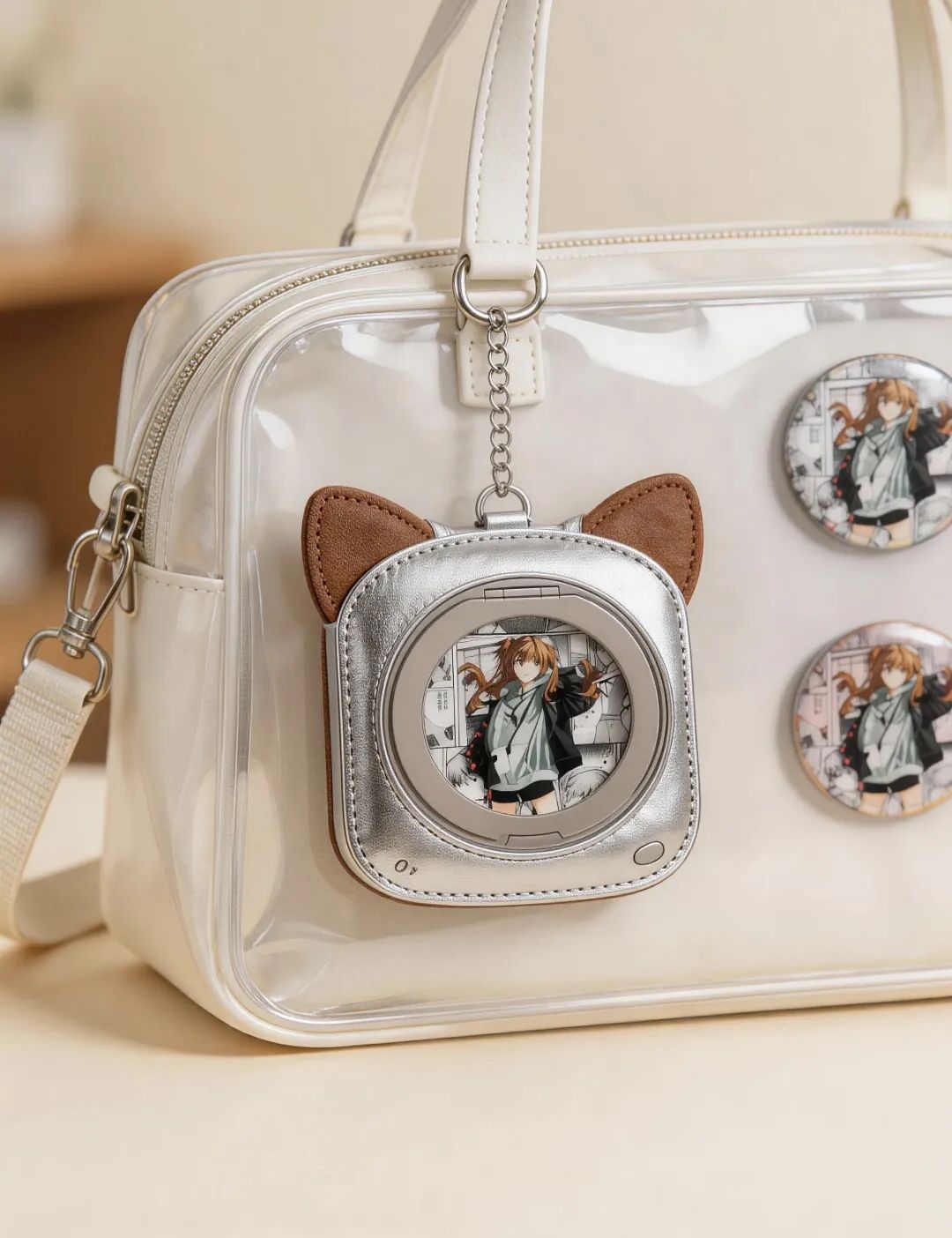
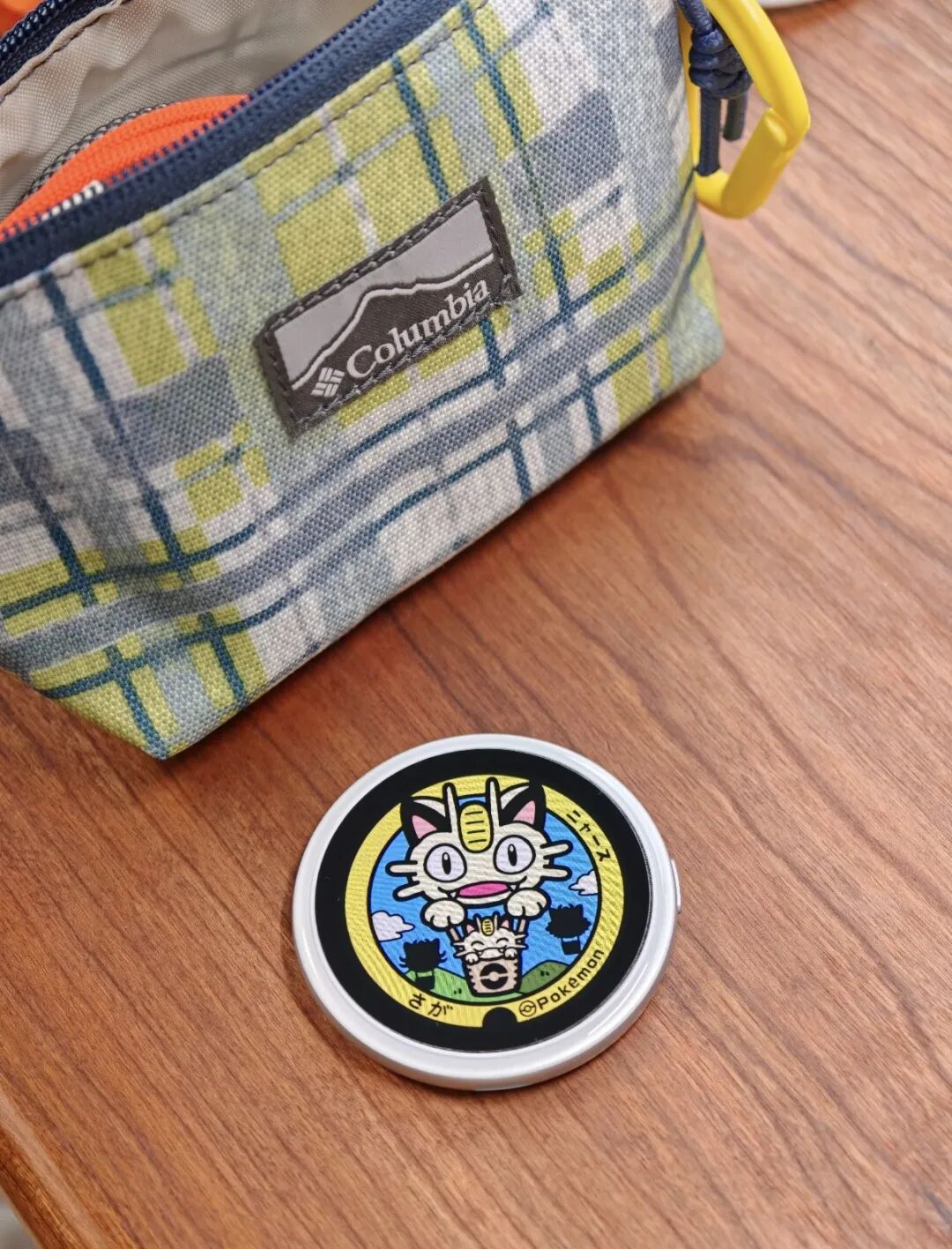
"Badge" is not a new technological term. It is a transliteration of the English word "badge". In the Japanese anime circle, "badge" specifically refers to those tin circular badges with a diameter of 5 - 6 cm - printed with character avatars and hung all over "pain bags". They are IP peripheral collectibles and the core products of the merchandise economy.
In the traditional consumption ecosystem of the merchandise circle, physical badges are the most intuitive items for circle identification and self-expression of preferences. Popular out-of-print items are often hyped up to tens of thousands of yuan on second-hand trading platforms. A small tin badge supports users' spiritual sense of belonging to characters and IPs.
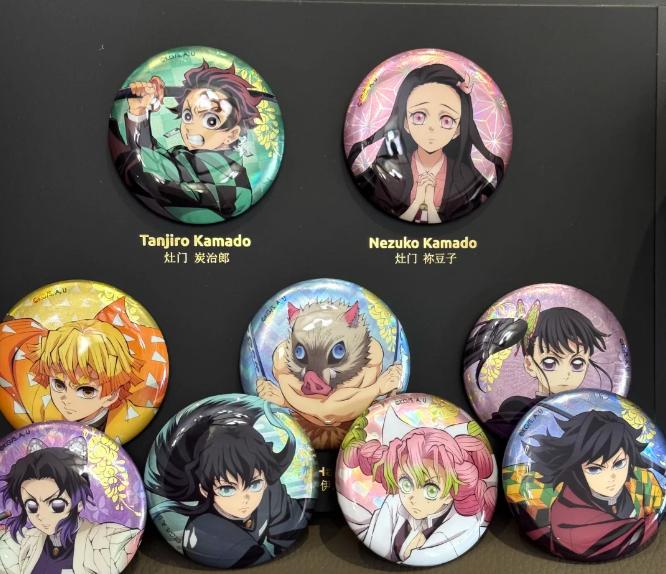
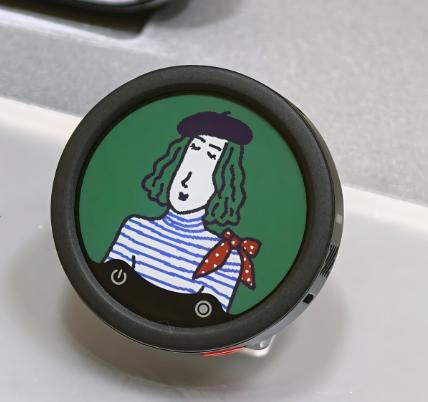
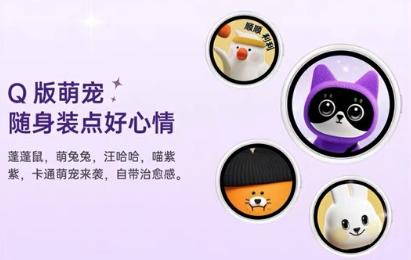
The electronic badge is the digital upgrade product of the traditional physical badge. It is an intelligent screen that can change images at will, has a glowing screen, and some models are equipped with AI interaction. It is gradually becoming the "portable external organ" of smartphones.
As early as 2025, a small white-label manufacturer, Baoshijiao, was the first to target the niche market and test the waters with the first-generation electronic badges. As a result, the sales volume of a single link of related products exceeded 13,000. In 2026, it directly exploded. Insta360, OPPO, Honor, TCL Thunderbird, and Wispal all entered the market. They cut in from three routes simultaneously: microphone accessories, magnetic secondary screens for mobile phones, and independent AI pendants, directly bringing this niche merchandise circle good into the view of mass consumers.
OPPO Bubble (499 yuan) focuses on the mobile phone ecosystem. It offers rear camera preview and Bluetooth remote control for taking photos. Endorsed by Song Yuqi, it targets the fan circle and star-chasing groups, emphasizing the attribute of support outfits.
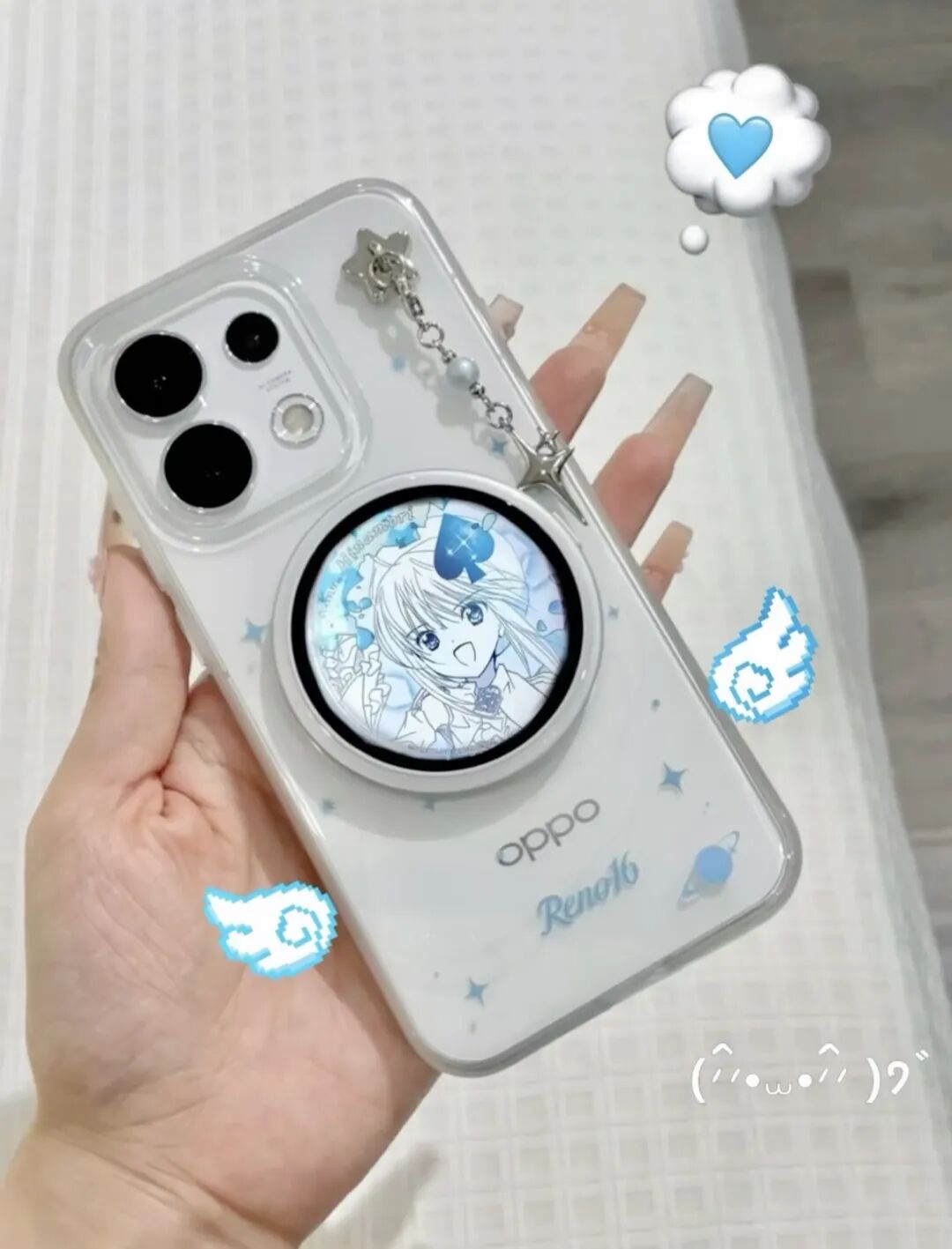
Honor Magic Small Screen (599 yuan) pursues a multi-functional travel photography orientation. It adds hardware on the basis of OPPO. The outer ring comes with a four-level circular selfie fill light. It can play short videos and has an electronic pet cultivation gameplay. It is integrated with the new Honor 600 series ecosystem, catering to both selfie lovers and the Japanese anime crowd.
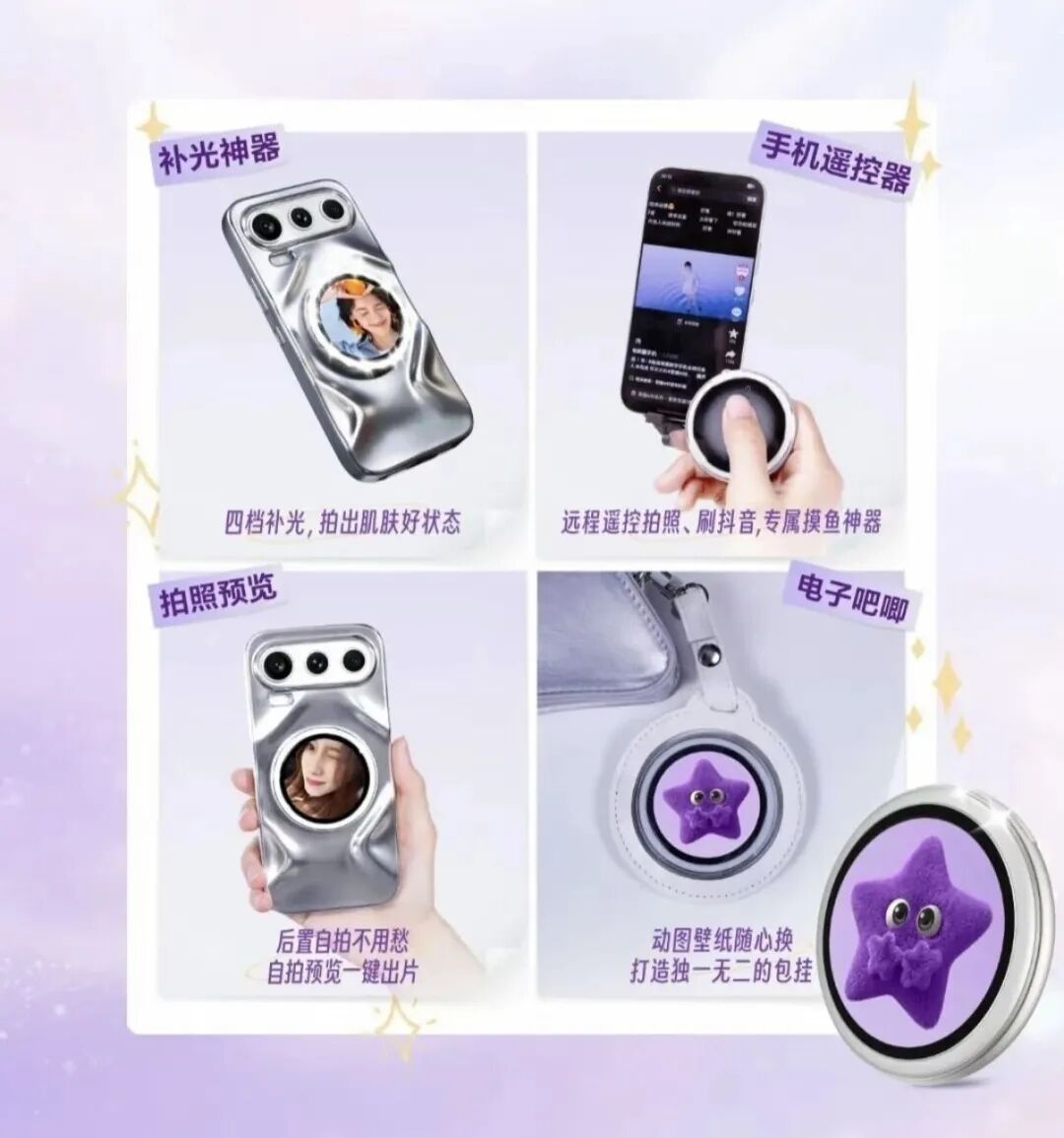
Insta360 Mic Pro (starting from 528 yuan, with the top configuration approaching 2,000 yuan) pioneered a cross-border hardware product. It is essentially a wireless noise-canceling microphone. The screen uses an e-ink screen, which doesn't reflect light in strong sunlight. It doesn't rely on magnetic attachment to the phone and can be clipped on a bag. It turns a sound recording tool into a cyber badge, targeting short video bloggers and outdoor content creators. By meeting the outdoor professional-level sound recording needs and the dressing needs of light merchandise circle players, it was also the first product to have a big sales explosion.
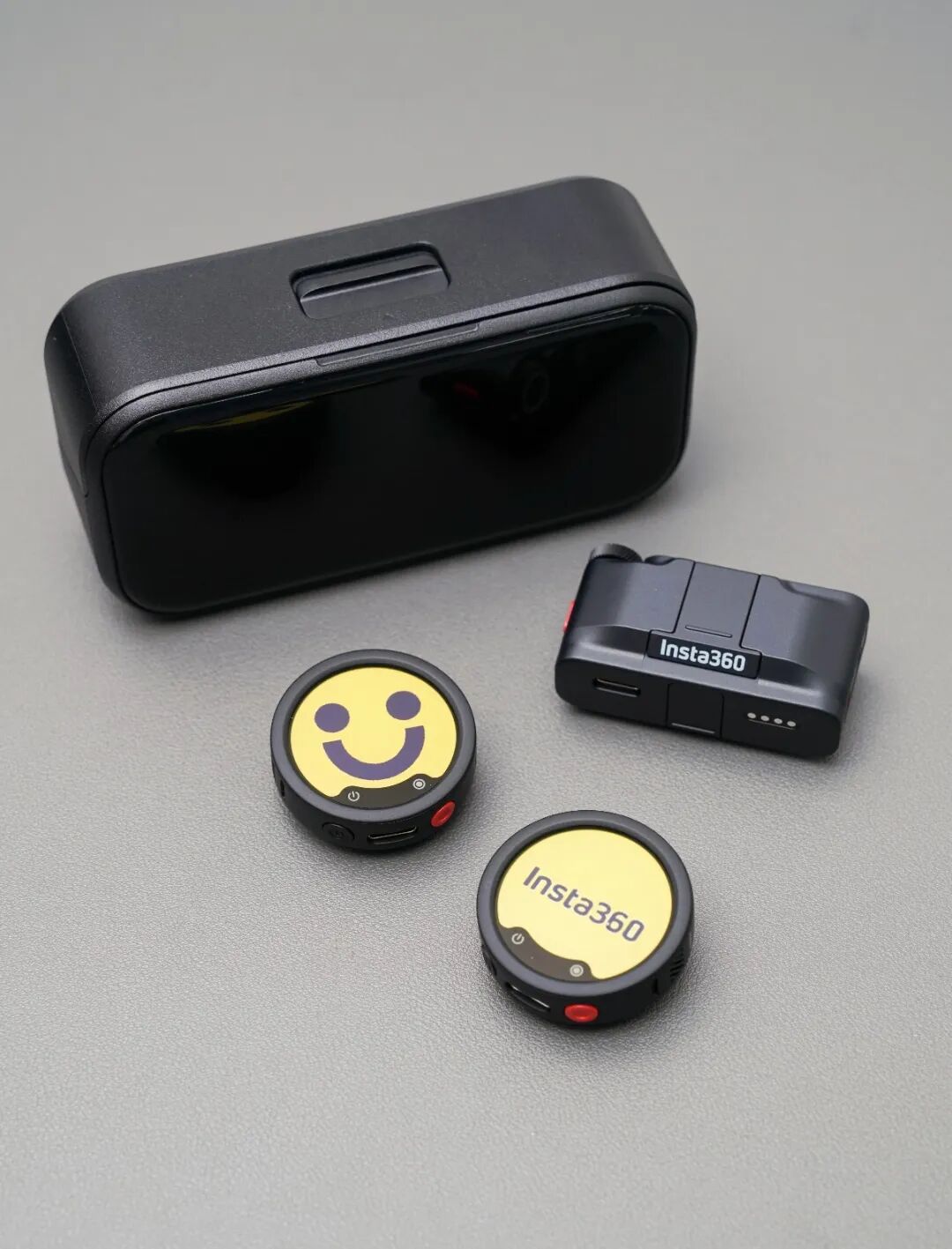
In addition to mobile phone and imaging hardware brands, brands like TCL Thunderbird took a different approach and launched independent AI electronic badges. Breaking out of the framework of mobile phone accessories, the products are equipped with a multi-language AI interaction system, supporting real-time conversations in four languages: Chinese, English, Japanese, and Korean, as well as AI voice cloning. Users can upload the voice source of their favorite anime characters to achieve all-day AI character chat companionship, extending to new usage scenarios such as accompanying the elderly living alone, gift cultural and creative products, and portable intelligent assistants.
The underlying logic behind the popularity of electronic badges is that the consumption of Generation Z has completely shifted from "cost-performance" to "emotional value". When buying products, they no longer only look at hardware functions but give priority to emotional companionship value.
Why are major manufacturers collectively betting on "electronic badges"?
Many people ask: This thing can be made by white-label manufacturers for just a few dozen yuan. Why were major manufacturers suddenly interested in it in 2026? Is it because mobile phones really can't be sold?
The explosion of electronic badges hides three major trend signals.
Trend 1: Smartphone innovation has reached its peak, and the accessory ecosystem has opened up a new track
The latest data from the China Academy of Information and Communications Technology in 2026 shows that the average replacement cycle of domestic smartphones has reached 40.2 months, about 3 years and 4 months, which is directly 15 months longer than five years ago. The replacement cycle of young people has even been extended to 45 months, and "mobile phone die-hards" have become the norm.
Many people say that this is the winter of the consumer electronics industry. However, looking at the trend from the opposite perspective, when the innovation of the main device reaches its peak, it is precisely the golden period for the explosion of ecological accessories.
This is like a city. When the land in the main urban area has been fully developed and the housing price has reached the ceiling, people stop buying new houses. But at this time, the surrounding satellite cities will experience explosive growth. Electronic badges, magnetic back screens, and intelligent pendants are essentially the "satellite cities" of the mobile phone ecosystem.
It doesn't matter if you don't buy a new phone, but you may spend 499 yuan to buy a "fashionable companion" that can make your old phone more useful and can also be used as a dressing accessory. Major manufacturers are not calculating the profit of a single phone but the value of a user's entire life cycle. Previously, it was "earn money by selling one phone at a time", and now it is "lock in a user and earn money for a lifetime".
Moreover, each manufacturer is using its core capabilities to target different "emotional scenarios": support, selfies, creation, and companionship. All these scenarios will ultimately point to the same business model: one-time hardware charging and continuous subscription for content/services.
The traditional badge is the end of the transaction - you buy it, clip it on your bag, and that's it.
The electronic badge is the starting point of content - changing an image, buying a set of linked skins, starting an AI character conversation, unlocking a special effect limited to a comic convention... Every action is a new possibility of payment.
What major manufacturers are really betting on is not how many of these small circular screens can be sold, but whether it can become the "first-tier entrance for lightweight AI companion hardware".
Trend 2: The merchandise economy has been upgraded from a niche circle to the "spiritual consumption infrastructure" of Generation Z
With a 240-billion-yuan market and 520 million pan-Japanese anime users, the merchandise economy is no longer a niche circle.
Today, if you go to any shopping mall, who occupies the busiest stores on the first floor? It's not luxury goods or cosmetics, but Pop Mart, merchandise stores, and IP pop-up stores.
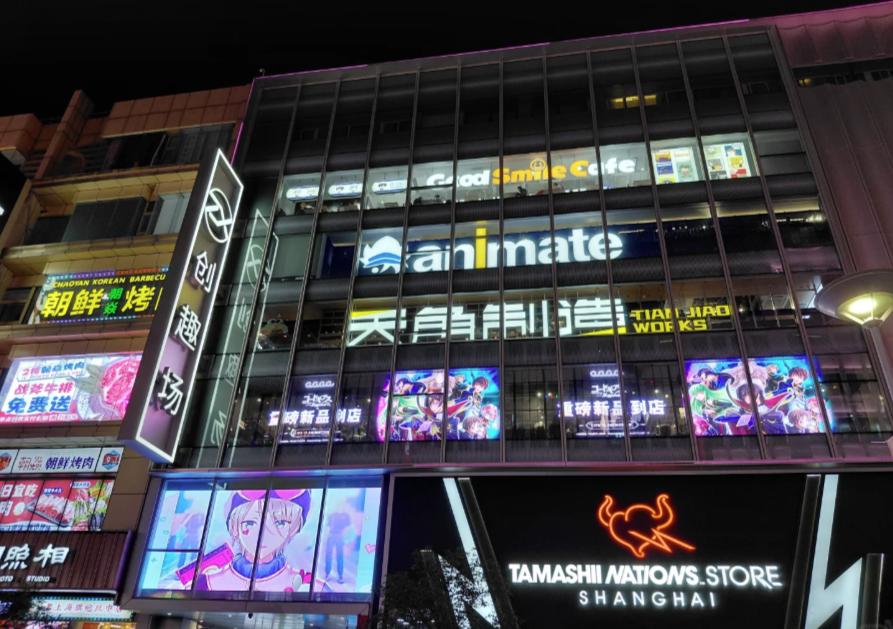
After the Shanghai Bailian ZX Creative Fun Mall was transformed into a Japanese anime mall, its daily average passenger flow increased by five times compared to before the renovation. After the old wholesale market, Xin Baima in Shenzhen's Dongmen, was transformed into the "Dimension 9" trendy play complex, its sales during the Spring Festival holiday easily exceeded 4 million yuan.
Behind this is a fundamental change in the consumption logic of Generation Z: Their consumption has completely shifted from "cost-performance" to "emotional value". In their mental accounts, there is a whole dedicated "emotional budget line" for buying things that can make them happy, help them find like-minded people, and represent who they are. Therefore, whether it's trendy toys, blind boxes, limited-edition peripherals, or the currently popular electronic badges, they all fall within the scope of this emotional budget consumption.
What is the ultimate pain point of traditional badges? It's that "one can only represent one". If you like 10 characters, you have to buy 10 badges. If you change your favorite character, the old badges can only be stored away. Limited editions are hyped up to sky-high prices, and ordinary people simply can't afford them. Constrained by fixed images, high collection costs, and high idle rates, it's difficult to meet the ever-changing preferences of young people.
The electronic badge perfectly solves this pain point: "Once you have an electronic badge, you have countless badges." There's no need to stockpile, it doesn't take up space, and there's no need to buy at a high price on the second-hand market, but the emotional value remains the same. This is not a replacement for traditional badges but a digital upgrade of the merchandise economy.
When IP content can be displayed at any time on a portable small circular screen, IP commercialization has a new lightweight implementation path. This is also one of the important reasons why cultural and creative and IP brands are willing to cooperate with digital manufacturers in co-branded products.
What major manufacturers are targeting is not the small circular screen but the rapidly expanding "emotional wallet" in the pockets of Generation Z.
Trend 3: Cute Tech, the "fashion revolution" of consumer electronics
This phenomenon is not isolated. Vogue used a term to summarize it - Cute Tech.
Technology hardware is shedding its pure functional attributes and evolving into trendy fashion items. The core value of products has changed from "solving users' practical problems" to "providing emotional value and social labels". The electronic badge is the most representative product of the Cute Tech trend.
You can see that headphone cases have become hanging rope bags, cameras have become pendants, and smartwatches are no longer just sports monitors but fashionable items with daily-changing watchbands. Even the Tamagotchi from twenty years ago, through Y2K retro accessory transformation, went from the verge of bankruptcy to cumulative global shipments of over 100 million - it relies on "being able to represent who you are when clipped on a bag".
The Apple Watch is also evidence. Many consumers choose the Apple Watch not only for the essential health monitoring functions such as blood oxygen and electrocardiogram. The consumption data of watchbands can better reveal the consumption truth: Apple's annual global third-party watchband shipments exceed 100 million, and the proportion of female users of the product has exceeded 55%. Over 60% of users will match three or more watchbands of different styles and rotate them according to their outfits and travel scenarios. Consumers pay for watchbands, which in essence is to pay for dressing styles and personalized labels.