Spotify all in AI, opportunity or bubble?
Spotify is approaching a critical juncture.
Recently, the world's largest music streaming platform held its first Investor Day since 2022. It not only announced its growth targets for 2030 - a mid - double - digit compound annual growth rate of revenue, a gross margin of 35% - 40%, and an operating profit margin of over 20%. More importantly, it systematically presented its strategic layout in the AI era for the first time: from AI music generation, podcast creation tools, to AI - assisted audiobook production, and reaching an AI music licensing cooperation with Universal Music. Its business boundaries are continuously extending from content distribution to content production.
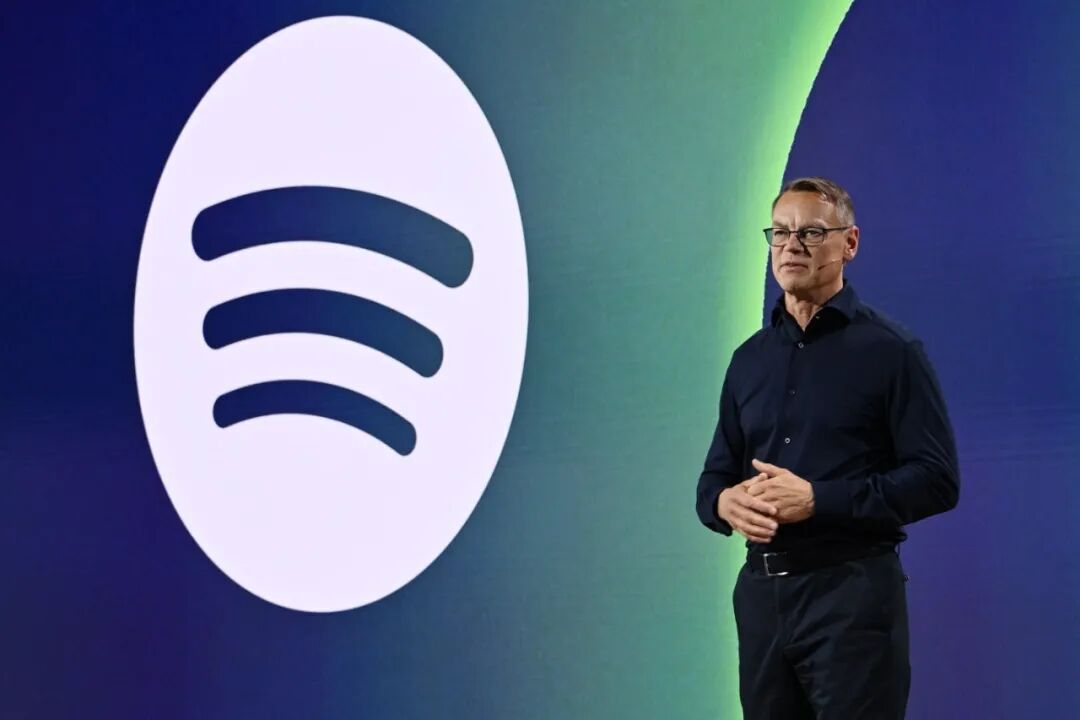
In the view of the management, this is not only a product upgrade but also likely to be a platform - level transformation. Gustav Söderström, the co - CEO of Spotify, compared the current AI wave to the birth of the iPhone and the App Store, saying that it might become one of the most important turning points in Spotify's history.
So, does this mean that a new growth curve has emerged, or is it just a future story told to the capital market? And in the current situation where the AI music track is heating up rapidly, what different business paths are different players taking?
Is AI Spotify's "iPhone Moment"?
At the 2026 Investor Communication Meeting, Gustav Söderström, the co - CEO of Spotify, summarized the company's evolution path in one sentence: "We started with basic services, moved on to personalized services, and now we're heading towards generative services."
This sentence points out Spotify's growth narrative: In the first stage, it used streaming to replace downloads and piracy, solving the problem of accessing music; in the second stage, it used algorithmic recommendations, playlists, and personalized homepages to improve user retention, solving the problem of discovering music; in the third stage, it uses generative AI to allow users to participate in content production, solving the problem of creating new audio consumption scenarios.
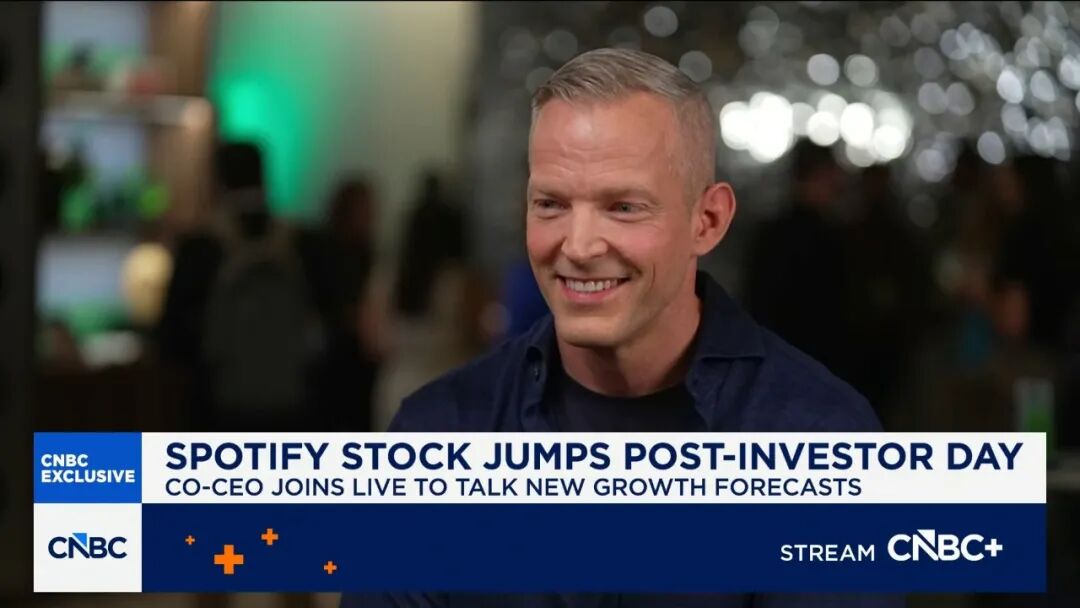
In the past year, affected by factors such as the saturation of the mature streaming market and the continuous diversion of users by podcast, short - video, and AI audio platforms, Spotify's stock price once dropped by about a quarter. Today, there is no fundamental difference in users' ability to obtain music. The music libraries of major platforms are similar, algorithms are converging, and subscription prices are close. If users only want to listen to music, it is difficult for Spotify to continue to achieve excessive growth.
This is why the stories Spotify has told in recent years have deviated more and more from traditional music streaming. Nowadays, the keywords repeatedly mentioned by the management are no longer just music subscriptions, but interaction, participation, and creation. Compared with continuing to optimize the recommendation system, they seem to be more concerned about how to turn users from content consumers into content participants.
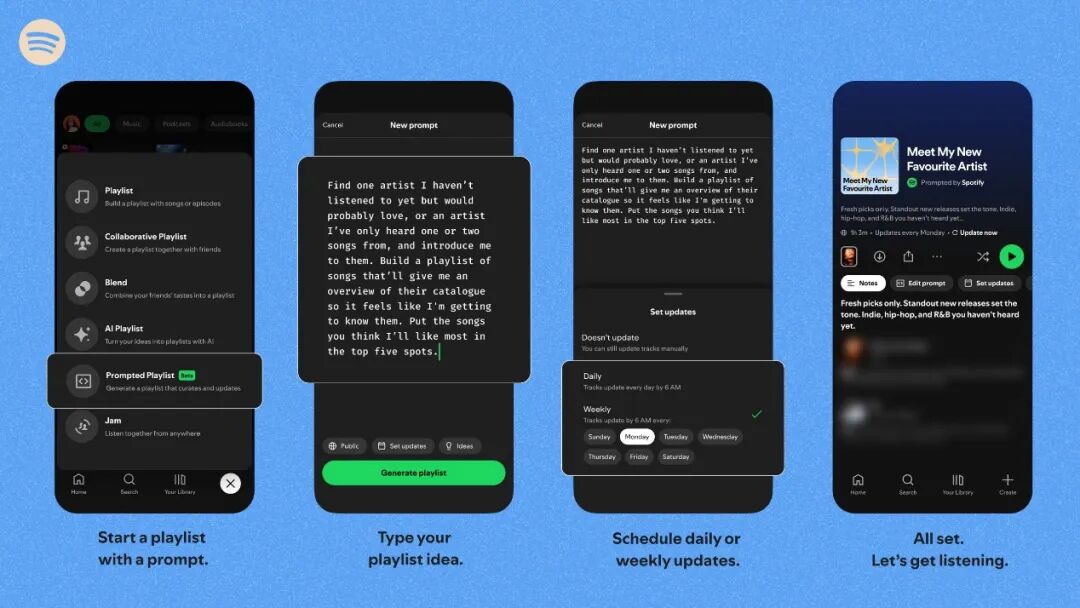
For example, in terms of function implementation, Spotify has taken swift actions. Features like AI DJ, Prompted Playlist (AI playlist), Studio by Spotify Labs, Artist Profile Protection (AI certification), and the upcoming AI cover/remix and the super - fan ticket - grabbing function Reserved to be launched with Universal Music all show that Spotify is extending users' behavior from simply "listening" to "creating" and "interacting" through generative services and personalized experiences, opening up new space for user retention, payment, and value - added services.
While promoting the implementation of AI products, Spotify has also started to build a rules system simultaneously.
In the past year, the company has successively launched an AI usage disclosure mechanism, a music junk content filtering system, and a stricter impersonation policy. Through the AI certification function, it has returned the right to review works to the artists themselves, ensuring that future AI music can operate within a framework of authorization, traceability, and revenue distribution.
From this perspective, whether it is generative and interactive tools or governance rules, they are just the external manifestations of Spotify's construction of the next - generation audio ecosystem. What really determines whether it can build long - term barriers is the data assets behind these functions.
Spotify's AI strategy is not to become another OpenAI, Google, or Suno. Instead, it seems to be answering an old question for a streaming platform: When music is becoming easier to obtain and even easier to generate, why should users stay on Spotify?
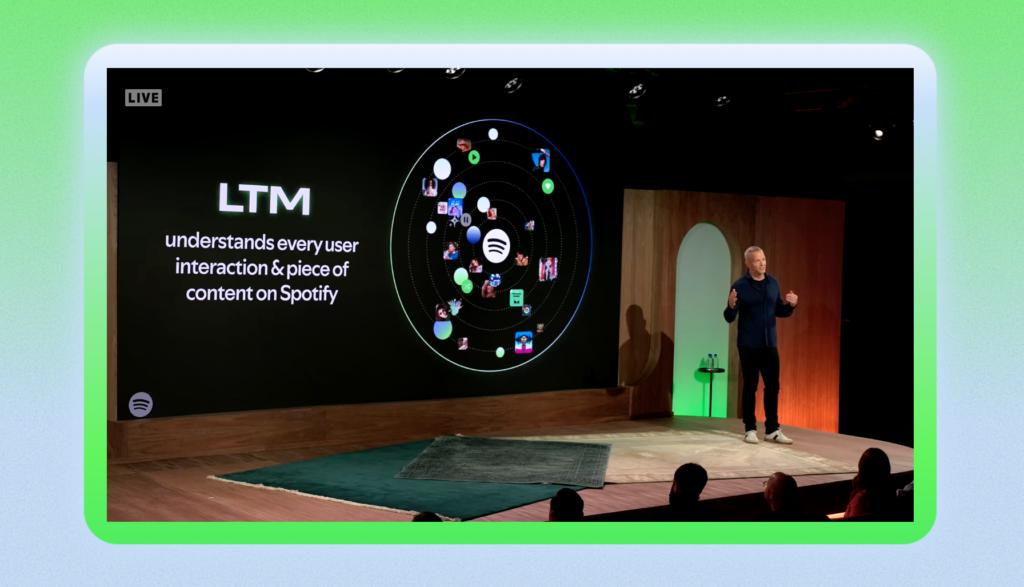
Spotify's answer is "taste", that is, users' taste.
Söderström said bluntly that general reasoning ability will become more and more commoditized. Spotify's barrier lies elsewhere, which it calls the "Large Taste Model", a deep - interest understanding system built on 20 years of user behavior data.
As of the first quarter of 2026, Spotify had 761 million monthly active users and nearly 300 million paid subscribers. The platform generates 34 trillion events and interest signals every day, covering various content forms such as music, podcasts, and audiobooks. This gives Spotify a different competitive barrier in the AI era from OpenAI, Google, or Suno.
Therefore, Spotify's AI strategy is not to turn into a model company but to productize data assets. It needs to transform user behavior data into stronger user retention, higher willingness to pay, and more salable value - added functions.

This is also where the metaphor of "iPhone moment" for Spotify's AI is most meaningful.
What really changed the mobile Internet about the iPhone was not just the touch - screen phone itself, but the reconstruction of the relationships between developers, users, content, payment, and distribution. What Spotify is trying to do today is similar. After the homogenization of music streaming, it uses AI to reconstruct the relationships of content production, distribution, consumption, settlement, and governance in the audio industry.
This is also a sharp perspective to examine this narrative. Spotify's Q1 2026 earnings report shows that after excluding the impact of exchange rates and social expenses, operating expenses increased by 17% year - on - year, and one of the main drivers was the expenditure on cloud and AI infrastructure. On the other hand, the growth comes with heavy capital expenditure, which means that the AI strategy is not a one - time profitable business in the short term. It is more like a long - term bet that requires continuous investment.
At least for now, the generative AI experience highly depends on the platform's computing power and multi - party authorization agreements. It also depends on the extremely complex interest negotiations between record companies, artist rights organizations, and whether users are really willing to pay continuously for it.
In the deadlock of the homogenization of music streaming, Spotify has proposed an attractive solution with AI, which can temporarily divert the capital market's attention from the increasingly narrow growth indicators.
However, whether it can truly transform the large - scale taste model into a sustainable business model depends not only on technology but also on whether it can re - establish the rights rules of the audio industry. And this is much more complex than just launching AI functions.
Three Commercial Paths for AI Music
The AI music industry is shifting from the early stage of model - ability competition to comprehensive competition in copyright assets, distribution scenarios, community relationships, and settlement systems.
The premise of this shift is that the boundaries of voices, portraits, works, and styles must be re - defined.
This year, bipartisan US lawmakers submitted the "NO FAKES Act" for the third time. The new version of the act makes targeted revisions for streaming platforms such as Spotify. It distinguishes the property differences between ordinary user - generated content platforms and manually curated operation platforms, refines the rules and implementation standards for handling infringement disputes on different platforms, and makes regulatory rules more in line with the actual situation of the industry.

The industry signal is very clear: In the past record and streaming eras, the copyright system mainly revolved around songwriting copyright, recording copyright, performer rights, and distribution revenue. In the AI music era, singer voices, artist images, work styles, training data, secondary creation rights, and output download rights may all be split into different levels of authorization packages.
Based on this, there are currently three main commercial paths for AI music:
For example, Spotify and Udio represent the first path, the "authorized walled garden" led by copyright holders.
Take the upcoming official AI music platform Starstruck by Udio as an example. It is reported that Starstruck will offer four creation modes: Cover, Reimagine, Remix, and Create. However, no matter which mode users choose, they need to focus on artists and songwriters who have actively authorized their participation. The agreement previously reached between Universal Music and Udio also points to a similar logic. The platform will operate based on authorized music, and the created content will be controlled within the platform, accompanied by mechanisms such as fingerprint recognition and filtering.

The advantage of this path is high business certainty. It is suitable for top - tier copyright holders, super - artists, and platforms with strong distribution capabilities. It can bring back the fan - created secondary content demand that was originally scattered on external platforms such as TikTok, YouTube, Suno, and Udio to an environment where authorization, billing, and settlement are possible. However, the ceiling of this model is also obvious. Users can only create within the boundaries set by copyright holders, and their freedom is inevitably restricted.
The second path is the most common and direct commercialization path for AI music at present. It attracts new users through free trials, increases production capacity through subscriptions, controls generation costs through credits, and promotes paid conversion through commercial authorization.
Take Suno as an example. Its Pro plan provides 2,500 credits per month, which can generate about 500 songs and grants commercial usage rights to the newly generated songs. The Premier plan provides 10,000 credits per month, which can generate about 2,000 songs and unlock more advanced production capabilities such as Suno Studio, multi - track editing, audio uploading, adding vocals or accompaniments.

Whether in terms of experience, efficiency, or marginal production capacity, it is also a content production force for short - video creators, advertising teams, game developers, podcast producers, and independent musicians to quickly test and produce content in batches.
The domestic AI music platform Mureka is also on a similar path. The official emphasizes that the platform can generate royalty - free music suitable for video, podcast, TikTok, Spotify distribution, and marketing, and supports downloads in formats such as MP3, WAV, and MP4. Its API documentation also shows that the content generated through the paid API comes with commercial authorization and can be used in scenarios such as commercial products, platform distribution, advertising, and videos.

However, if the platform's revenue mainly depends on the number of generations, as the model capabilities converge, the inference cost decreases, and the number of similar products increases, the price per generation will continue to be under pressure.
The third path is represented by ElevenLabs, a transaction - based market with a revenue - sharing model for creators. On the ElevenLabs platform, users can publish AI - generated songs. Other users can purchase usage rights, download, or remix the songs for different purposes, and creators can get a share of the revenue. According to the official, the starting revenue - sharing ratio for creators is 25% of the purchase price, and the settlement is carried out through ElevenLabs' existing payment system.
The essence of this path is to push AI music from a generation tool to a material trading market. The platform connects AI music creators on one end and buyers who need music materials on the other end, such as YouTube creators, advertisers, brand teams, podcast producers, corporate video teams, and offline event organizers.

This may be a form of AI music commercialization that is closer to a mature copyright market. Creators get revenue, buyers get definite authorization, and the platform obtains multiple sources of income through transaction commissions, subscriptions, corporate authorizations, and API calls.
In summary, although there seem to