Li Ning needs Curry, but Curry needs Li Ning even more.
Author | Xie Yunzi
Editor | Zhang Fan
A piece of news has caused a stir in the sports circle.
On June 2nd, NBA star Stephen Curry signed a ten - year endorsement deal with Chinese sports brand Li Ning. Neither party disclosed the specific amount, but the industry's consensus is quite unified: this is a super contract with a total value of over $400 million (approximately 2.7 billion RMB).
According to multiple sources, Curry is guaranteed an annual endorsement fee of $30 million. He can also get a commission from the sales of his personal brand, Curry Brand, plus equity incentives in the form of Li Ning's tradable shares. This combined model of "high guaranteed payment + sales commission + equity" is exactly the same as the treatment Nike gave to Michael Jordan back then.
Curry's status in the sports world is beyond doubt: he is "one of the most revolutionary players in NBA history", ranked second among point guards in history, and is the founder of the "small - ball era".
In April this year, USA Today selected the "Top 25 NBA Legends of All Time", and Curry ranked fourth, right behind Jordan, James, and Kobe. In the rankings of more professional sports media, Curry usually ranks between tenth and thirteenth. In terms of strength, popularity, and market favorability, Curry has everything that sports brands desire.
However, the stock price reaction is quite intriguing.
On the day the news was announced, Li Ning's stock opened more than 7% higher in intraday trading, but the upward trend only lasted for half a day. As of the close on June 2nd, the stock price closed down 0.79%. On June 3rd, Li Ning's stock closed at HK$17.99, with a cumulative decline of 2.07% in two days, and the stock price was close to the lowest level of the year.
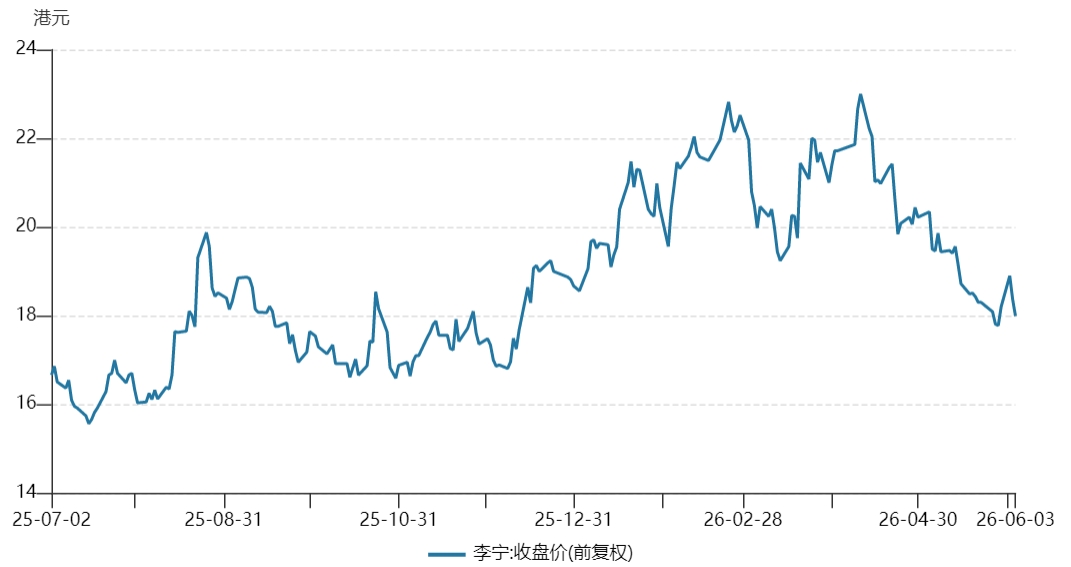
Image from Wind
The value of a sports brand's star endorsement mainly comes in two forms:
One is "performance - driven sales", that is, relying on the star's performance on the court to directly boost sales. At 38 and approaching retirement, Curry has "uncertainty". The other is the overall value of the IP. After Jordan retired, his personal brand still sold well, but this requires a long - term investment and sunk costs.
From these aspects, Li Ning's signing of Curry at this moment has missed the "peak performance" period of this talented player, and the capital market also relatively dislikes the risks brought by the long - term cycle. The key question is, is this money well - spent by Li Ning?
In 2013, both Li Ning and Nike were interested in signing Curry. At that time, Curry was just a young man who had just gained a little fame, and the injury to his right foot also made the brands hesitate. It was at this time that Under Armour made a sincere invitation, and the two sides finally reached a cooperation at a price of $4 - 5 million per year. The subsequent story is a textbook case of sports marketing.
As Curry's value soared, Under Armour's basketball business advanced by leaps and bounds. In 2015, Curry's first signature shoe, "Curry 1", achieved sales of $160 million. Under Armour's basketball shoe sales soared by 350% that year, and the company's overall revenue also jumped from $2.33 billion in 2013 to $4 billion. In terms of consumer perception, the bond between Curry and Under Armour is still strong.
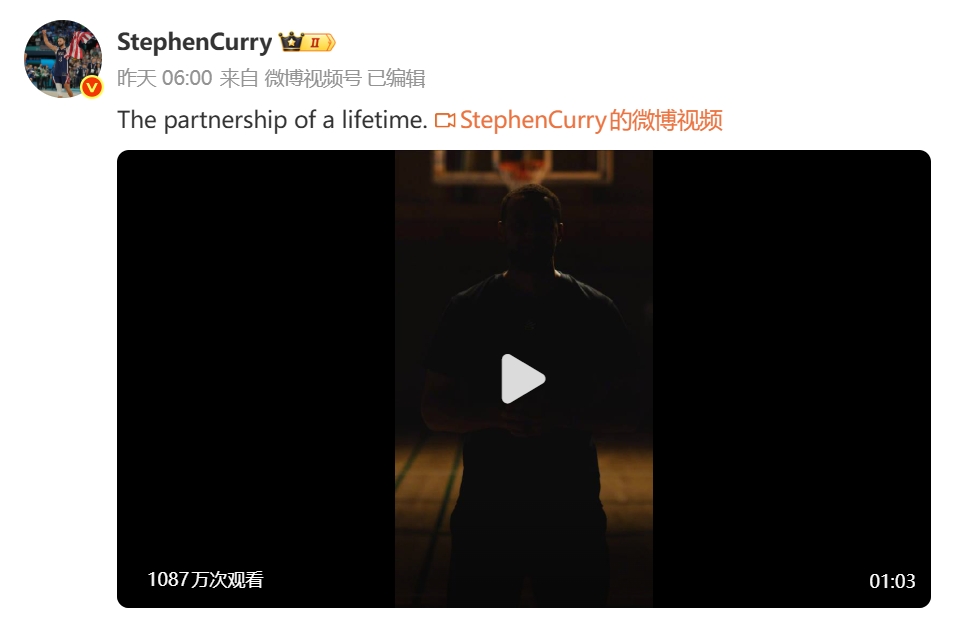
Image captured from the official Weibo
In November 2025, Curry's cooperation with Under Armour expired, and Li Ning once again had an opportunity to make a move.
Shams Charania, a well - known American sports journalist, said on social media: "We've seen Curry wear different shoes before, and the ones that made him feel most comfortable in the end were the signature shoes of Dwyane Wade and Jimmy Butler."
Both of these products are from Li Ning.
In 2018, Li Ning signed a lifetime contract with the soon - to - retire Wade and established a sub - brand, "Way of Wade", which has become one of the company's most mature and successful cases. Different from the cooperation model with Wade, Li Ning's market strategy for Butler is more professional. The Jimmy Butler 1 and 2 models jointly launched by the two sides are mainly focused on high - end practical performance.
However, the reason for Curry to give up other more lucrative offers and choose Li Ning is not only the recommendation of his teammates.
In Charania's supplementary statement, Li Ning and Anta were the two brands competing for Curry in the end. The reason for Li Ning's "come - from - behind victory" is that "what it offers to Curry is a diversified investment portfolio, not a one - on - one direct signing."
The information provided by Li Ning also shows that it will jointly operate the Curry Brand with Curry, and the products cover basketball shoes, golf equipment, and sports lifestyle items. Based on brand co - construction, the two sides will jointly explore more possibilities for the global development of the Li Ning brand and the Curry brand. In the future, independent Curry Brand stores will also be launched.
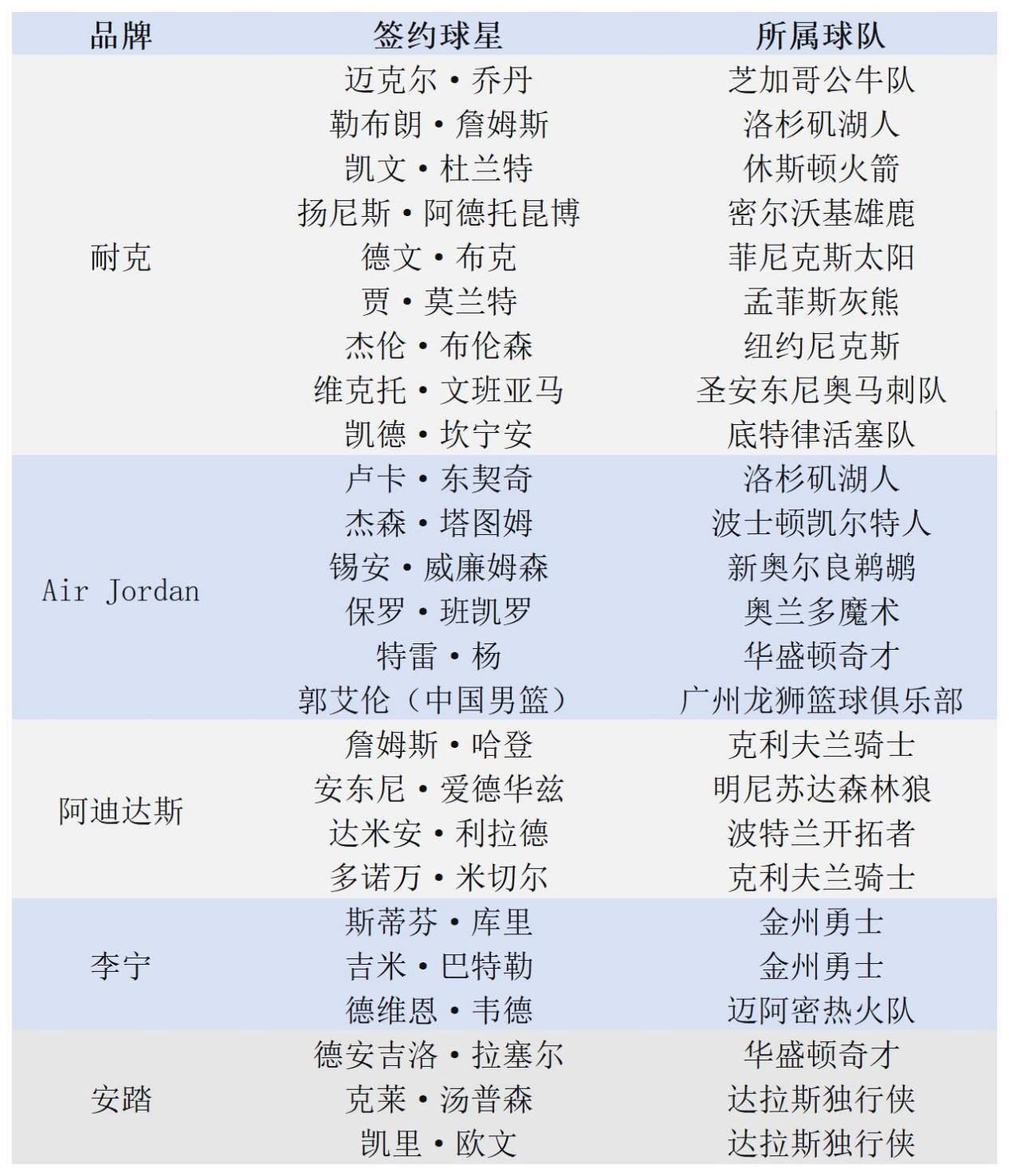
All these arrangements point in one direction: Li Ning wants the Curry Brand to become the next Air Jordan.
Incomplete statistics by 36Kr based on public data
In the Chinese sports market, Li Ning's status is beyond doubt. The founder's identity as a well - known athlete gives this brand strong appeal and national awareness.
However, no one can replicate the legend of Air Jordan.
The general perception in the industry is that the success of Air Jordan is not only due to Nike's all - out effort but also benefits from the "era of TV hegemony" and the rapid growth of the global basketball market. In contrast, the enthusiasm of young people for basketball games is no longer what it used to be.
From the viewership data, the dilemma of the NBA is quite obvious. In 2025, the total TV viewership of the first game of the NBA Finals was less than 11 million, a 5% decrease compared to 2023. Some reports say that only 8.6 million viewers watched the second game of the 2025 NBA Finals globally, setting the lowest record since 2007.
If the decline in viewership is mainly due to the fragmented dissemination of short - video media, the financial report data of sports brands can more intuitively reflect the downward trend of the industry.
The 2025 financial report shows that the turnover of Li Ning's basketball category decreased by 19% year - on - year. Behind this is both the current downturn of the basketball sport and the company's active adjustment in the past two or three years.
At the financial report meeting, Qian Wei, Executive Director and Co - CEO of Li Ning Group, also clearly stated, "We believe that by maintaining such investment and leading position in the market, we may continue to rapidly expand our market share before the basketball category recovers." "The basketball category is extremely important to Li Ning. In such a market environment, we must continue to deeply cultivate this category." An insider told 36Kr that the signing of Curry is regarded as a key move for Li Ning's globalization within the company.
However, this confidence to act against the trend is difficult to be reflected in the financial statements in the short term.
J.P. Morgan pointed out that it takes at least 15 to 18 months to build a mature brand matrix, and the amortization costs and R & D expenses brought by the contract have started to occur since 2026. However, J.P. Morgan also believes that the impact is controllable and predicts that Li Ning's advertising and promotion expenses will account for 12% of the total sales this year. In recent years, this figure has been basically controlled at around 9%.
As of the time of writing, many institutions, including J.P. Morgan and CICC, still give Li Ning an overweight or buy rating.
Li Ning's "late - coming bold bet" may not be targeting Curry's remaining professional career, but the next decade of the Chinese basketball market and even the global basketball culture. The only question is whether investors have enough patience.
Follow for more information