The self-destructing aura of Japanese cars: defective components can also make their way onto production lines
If you buy Japanese cars in the future, you really have to tolerate “defects”.
Recently, Japanese automakers and parts manufacturers, including Toyota Motor Corporation, are formulating a unified policy for determining parts defects.
Simply put, they have lowered the original “quality baseline”. According to the new rule, minor defects that have no impact on the function and are not easily noticeable after assembly will no longer be regarded as defective products and can be directly used in production. It is also expected to be gradually promoted to various types of parts within 2026.
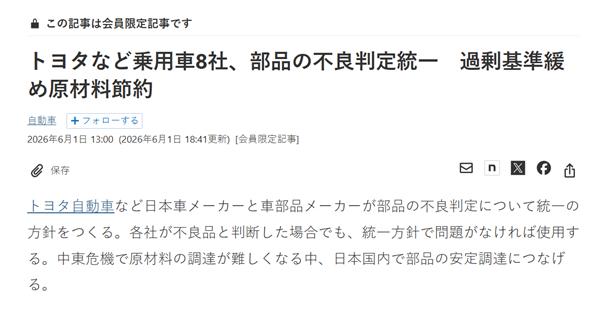
If summarized in one sentence, it is that the quality threshold has been lowered.
This new rule was jointly finalized by the Japan Automobile Manufacturers Association (JAMA) and the Japan Auto Parts Industries Association (JAFA). The former includes 8 mainstream passenger car manufacturers and commercial vehicle manufacturers such as Toyota and Honda, while the latter has more than 450 supporting parts factories across Japan.
This also means that it is basically equivalent to the entire Japanese domestic automobile industry chain uniformly changing the quality inspection standards. This is also the first time that the Japanese automobile industry has publicly and extensively lowered the standards for determining parts defects.
Allowing “minor defects”
In the past, Japanese automakers, which were regarded as having the “craftsman spirit”, always took “zero defects and strict quality control” as their foundation. Therefore, the requirements for parts in the past could be said to be almost harsh:
Even if there was a tiny black spot, a small scratch or a slight color difference on the surface of the parts, details that might not be noticed even after ten years of using the car, as long as they were not perfect, parts manufacturers often scrapped them on their own, or they were directly rejected during the quality inspection at the main factory, judged as “defective products” and discarded, even if the functions were completely normal.
A supplier of a Japanese automaker once revealed that if black spots with a diameter of more than 0.3 mm were detected on the plastic parts of the dashboard under strong light, the entire batch of products would be returned. Even if the tiny burrs on the door seals did not affect the sealing performance, they would be judged as defective products.
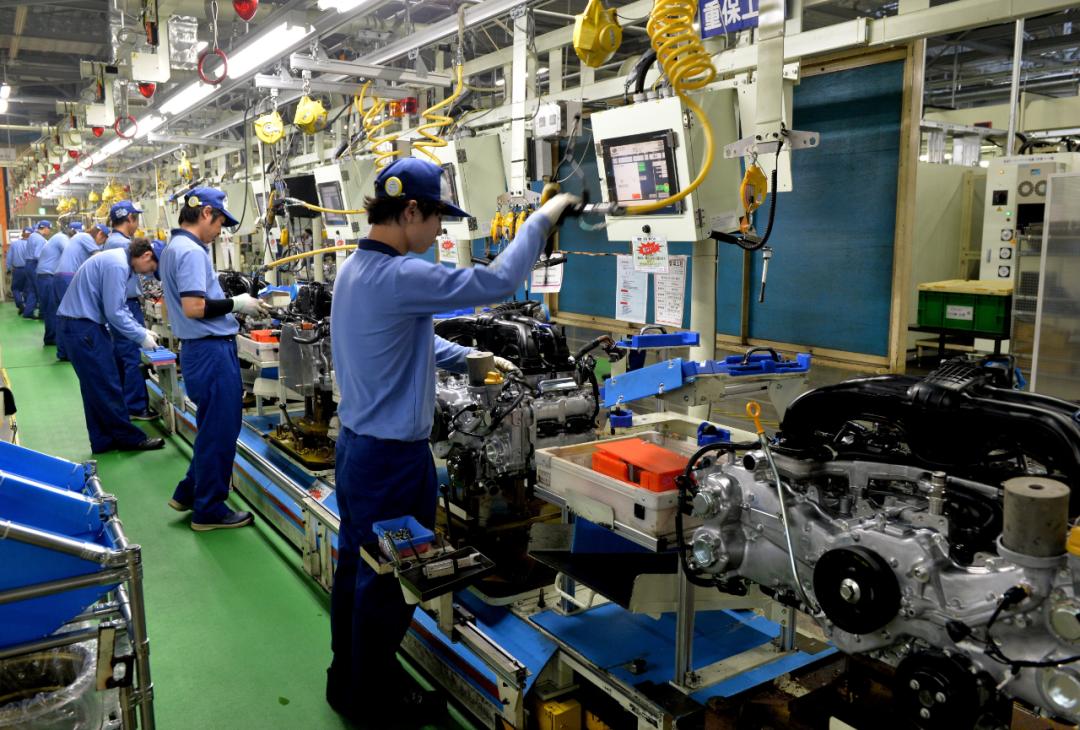
This “extremely strict” quality control has established an inherent perception of “impeccable workmanship” for Japanese cars in the global market, becoming an important source of brand premium for them.
Now, this iron rule has been broken.
According to the new rule, as long as the parts meet national standards and there are no substantial problems with the function and appearance, these parts with minor defects can be directly installed in the vehicle. Parts with harmless burrs and edges will also be allowed to pass. For example, if there are small bubbles in the headlight parts, as long as the function and appearance are okay, they can also be used.
As for the parts that used to be reworked, if they have no impact on the function now, they can also be directly installed in the vehicle.
Of course, the new rule has drawn a clear red line: for core functional parts such as braking, power, body structure, and safety protection, the standards have not been lowered. Only the non-core appearance defects that “do not affect the function and are hidden and invisible after assembly” have been relaxed.
The effect of lowering the standards can be immediate. The Japan Automobile Manufacturers Association has calculated that taking the plastic parts used for connecting automotive electronic equipment as an example, about 60% of the defective judgments are due to the presence of black spots. If the new standard is followed, it is expected that the monthly scrap volume of 10,000 parts can be reduced in Japan. It will also reduce most of the ineffective quality inspection man-hours and save both labor and material costs.
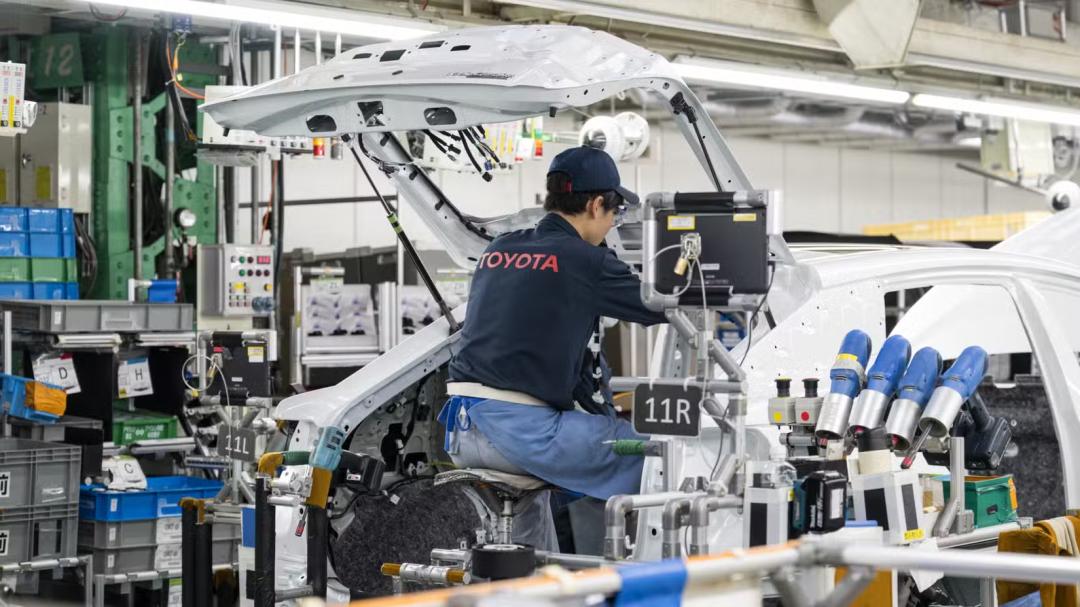
Currently, Toyota has established a special department to jointly review parts with supporting manufacturers according to the unified standard, and regularly holds joint review meetings with Japanese automakers such as Honda and Nissan and parts suppliers.
For consumers, the changes under the new standard may not be obvious - minor defects do not affect the performance and are even difficult to notice. However, from an objective fact, the “scrapped parts” in the past can now flow into the market normally. The golden signboard of “Japanese precision manufacturing” has really taken a step towards loosening.
Multiple pressures
Why suddenly “relax” the quality requirements?
The most direct fuse is the supply chain crisis caused by the intensifying geopolitical conflict in the Middle East.
Currently, about 70% of the processed aluminum and naphtha of Japanese automakers rely on imports from the Middle East. The situation in the Strait of Hormuz is currently tense. Not only is it difficult to purchase, but the prices of raw materials for plastic and interior materials have soared, and the arrivals are intermittent, increasing the risk of supply interruption.
Under the situation where the supply of parts is already tight, if the past strict standards are still adhered to, a large amount of materials will be wasted, and the factory may even be forced to stop production due to the lack of parts. Previously, Toyota and Mazda have already been forced to cut the production capacity of models specially supplied to the Middle East.
Sato Koji, who recently stepped down as the president of Toyota, once said at a supplier conference: “If things don't change, we won't be able to survive.”
For decades, the brand premium of Japanese cars has mostly relied on the reputation of “precision and no defects”. However, this reputation has been achieved at a very high cost. Now, when the cost is so high that the enterprise “cannot survive”, the first consideration is to “survive first”. In other words, relaxing the standards may be a helpless move to ensure the supply.
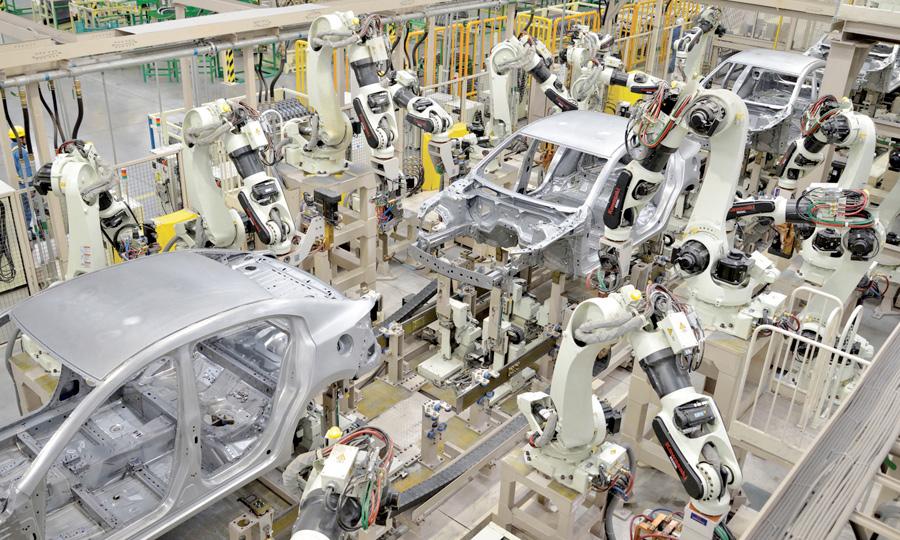
In fact, some Japanese automakers have done this more than once because of the supply chain crisis. As early as 2021, due to the impact of the epidemic, Toyota Motor publicly stated that “on the premise of not affecting the vehicle performance and safety, it is willing to use worn or defective parts from suppliers.”
It is understandable if one automaker does this, but now the entire Japanese automobile industry has collectively lowered the standards. The deeper reason may be that Japanese automakers are really cornered.
On the one hand, Chinese parts enterprises are rapidly eroding the market share of Japanese suppliers by virtue of the advantages of domestic raw material acquisition and low cost, and the market share of Japanese automakers overseas has also begun to decline.
Recently, according to a report by Yonhap News Agency, in the registered market of imported new cars in South Korea in April, the sales volume of Chinese-made cars exceeded that of Japanese cars for the first time, ranking among the top three in the South Korean imported car market. Moreover, this breakthrough was achieved only by the single brand BYD, and its sales volume far exceeded the total sales volume of the three major Japanese brands, Lexus, Toyota, and Honda, in South Korea.
On the other hand, according to the latest report from a Japanese database, the net profit of Japanese listed parts companies decreased by 35% in the fiscal year 2025, and the labor cost increased by 20% in 10 years. They have obviously fallen behind in terms of cost competitiveness. In the fiscal year 2024, there were 32 bankruptcy cases of Japanese automobile parts manufacturers, a year-on-year increase of 33.3%, setting a new high in the past 10 years.
The tight supply of raw materials is only a superficial reason. Under multiple pressures, Japanese automakers are forced to save resources and reduce losses in the quality inspection link. Reducing manufacturing costs is the underlying requirement.
Coming off the pedestal
Since the 1980s, the words “Made in Japan” have become a golden signboard of high quality globally and an important source of brand premium.
Toyota's “lean production” system has even become a classic case in business schools around the world. Now, Toyota is taking the lead in actively “relaxing” the quality standards. Although minor defects do not affect the performance and are difficult to notice, in the long run, the once established perception of “impeccable workmanship of Japanese cars” is bound to be affected.
Once the bottom line of brand quality control is loosened, in an environment of rising raw material prices and pressure on profits, whether the existing boundaries can be maintained depends entirely on the self-discipline of automakers.
In fact, even if we put aside the event of the Japanese automobile industry's unified relaxation of quality inspection standards, the once “Made in Japan” is no longer a myth.
In recent years, there have been frequent scandals of Japanese automakers in terms of falsifying data in crash tests, emissions, and quality inspections. It is no longer news that they promote “high standards” but deliver products with “low standards”.
In June 2024, the Japanese Ministry of Land, Infrastructure, Transport and Tourism reported that five automakers, including Toyota, Honda, and Mazda, had violated regulations such as tampering with crash data and cheating in engine power tests during vehicle model certification, involving 38 models and about 5.18 million vehicles.
In the same year, Daihatsu admitted to manipulating the side-impact safety tests of 88,000 small cars. Subsequently, Toyota found about 174 violations in more than 60 models.
At the end of 2025, Mitsubishi Electric was exposed to have falsified data for 35 years. Kawasaki Heavy Industries admitted to tampering with the test data of ship engines. A subsidiary of Japan Steel Works in Hokkaido had a 24-year history of quality inspection fraud, with a total of 449 violations.
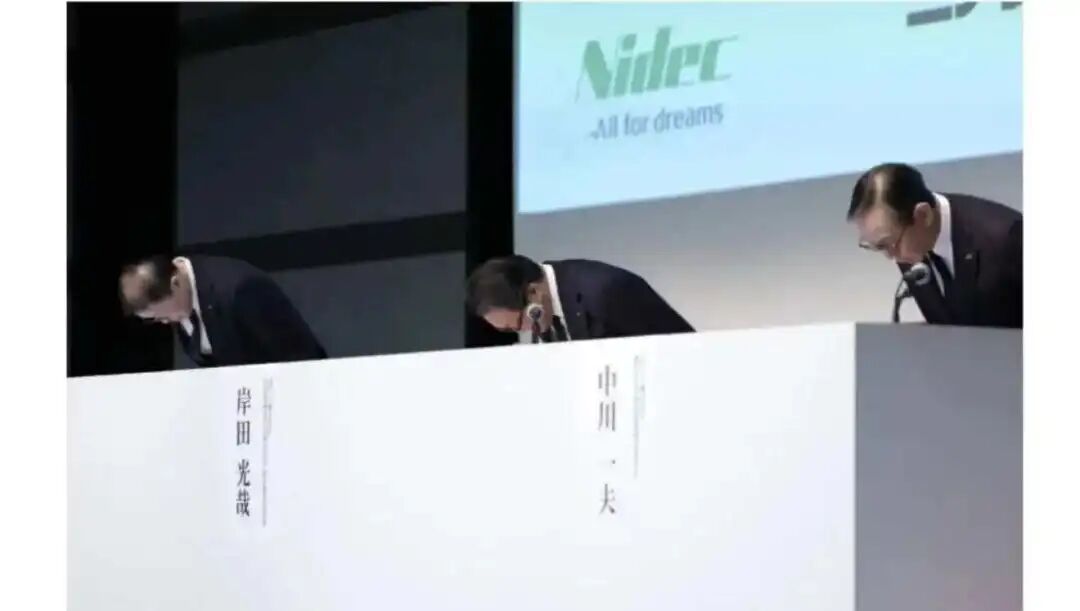
Recently, Nidec, a large Japanese motor company, admitted to accounting fraud worth more than 200 billion and was also found to have a large number of quality violations, more than 1,000 in total. It falsified test data and even falsely marked the origin, using false reports to get through.
The frequent scandals have gradually turned the “craftsman spirit” into the “bowing spirit” - every time a scandal is exposed, the corporate executives will hold a press conference and bow 90 degrees to apologize, but it is difficult to regain consumers' trust.
“Made in Japan”, which is already on a downward path in terms of consumer trust, has now publicly and collectively lowered the quality standards. Even if it can be regarded as a reasonable optimization to remove “redundant quality” and a careful survival strategy.
But for the Japanese manufacturing industry, which once engraved the “quality myth” in its DNA, once a crack appears, it is difficult to repair it.
This article is from the WeChat official account “SuperEV-Lab” (ID: SuperEV-Lab). Author: Wang Lei, Editor: Qin Zhangyong. Republished by 36Kr with authorization.