Japanische Autos zerstören ihre eigene Aura – fehlerhafte Bauteile gelangen trotzdem auf die Produktionslinie
If you buy Japanese cars again in the future, you really have to come to terms with “defects.”
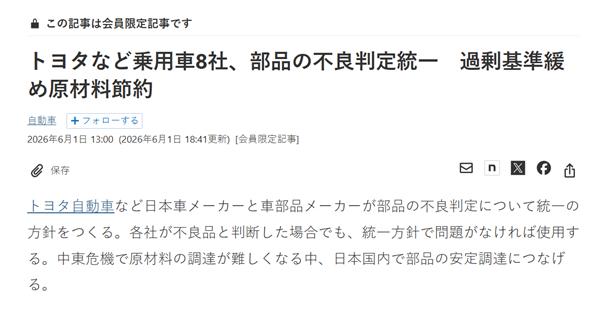
Recently, Japanese automobile manufacturers and suppliers, including Toyota Motor Corporation, have developed a unified guideline for assessing component defects.
Put simply, the previous “quality limit” has been shifted downward a bit. According to the new regulation, minor defects that do not affect the function and are hardly noticeable after assembly are no longer regarded as defective products and can be directly used in production. It is expected that this regulation will be gradually extended to all types of components by 2026.
If you want to summarize it in one sentence, it is: The quality requirements have been lowered.
This new regulation was jointly established by the Japan Automobile Manufacturers Association (JAMA) and the Japan Auto Parts Industries Association (JAFA). The first organization includes eight leading manufacturers of passenger cars and commercial vehicles such as Toyota and Honda, while the second has more than 450 suppliers across Japan.
This means that essentially the entire Japanese automobile industry has uniformly changed the quality control standards. This is also the first time that the Japanese automobile industry has publicly and extensively lowered the standards for assessing component defects.
The approval of “minor defects”
In the past, Japanese automobile manufacturers, regarded as models of “craftsmanship,” always considered “zero defects and strict quality control” as the basis of their existence. Therefore, the requirements for components in the past were almost scrupulous:
Even if there was a tiny black dot, a fine scratch, or a slight color deviation on the surface of a component – details that one might not notice even after ten years of driving – the components were often rejected by the suppliers themselves or directly rejected during quality control at the main workshop, classified as “defective products” and discarded, even if the function was completely normal.
A supplier of a Japanese automobile manufacturer once revealed that for the plastic parts for dashboards he produced, if black dots with a diameter of more than 0.3 millimeters were discovered during the inspection under strong lighting, the entire batch was sent back. Even tiny burrs on the door seals were classified as defective, even if the sealing function was not affected.
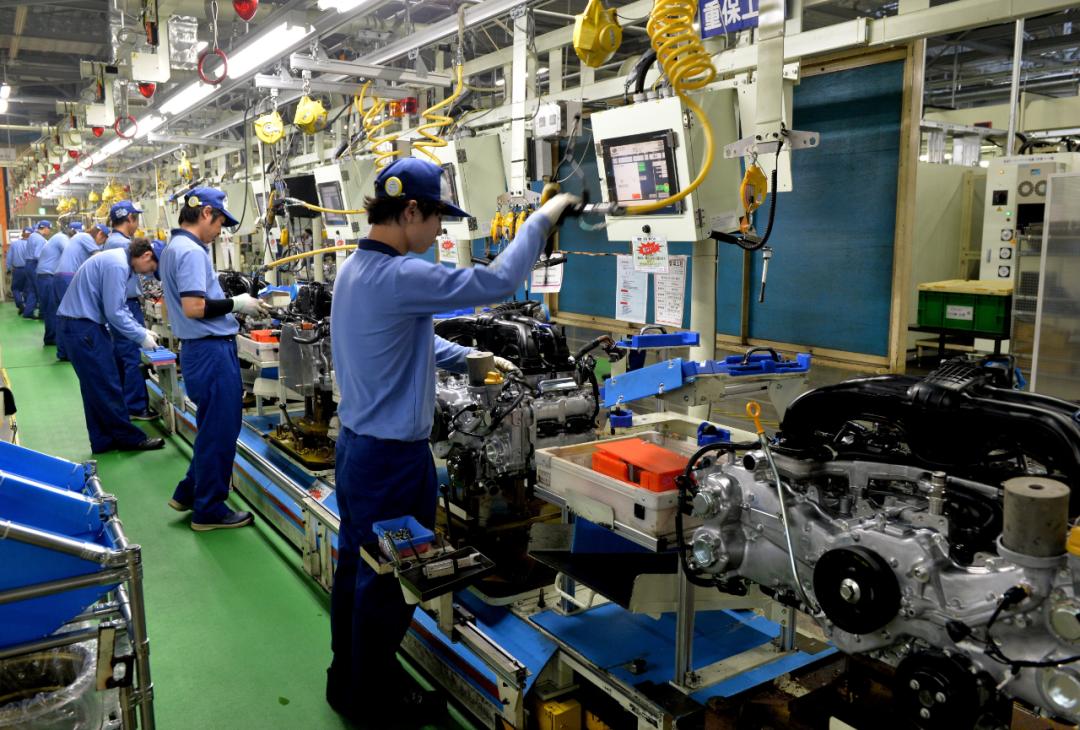
This “extremely strict” quality control has enabled Japanese cars to gain a reputation for “flawless workmanship” on the global market, which contributes to an important brand premium.
However, today this unshakable rule has been broken.
According to the new regulation, components with minor defects can be directly installed in vehicles as long as they meet national standards and have no significant problems in function and appearance. Components with harmless burrs or protrusions are also approved. Even if there are small bubbles in the headlight parts, they can be used as long as the function and appearance are okay.
What had to be reworked before can now be directly installed in vehicles if it does not affect the function.
Naturally, the new regulation has set a clear limit: The standards for core components such as brakes, drive, vehicle body, and safety equipment remain unchanged. Only non - core optical defects that “do not affect the function and are hidden and not visible after assembly” are judged less strictly.
The effects of the lowered standards are immediately recognizable. The Japan Automobile Manufacturers Association has calculated: For the plastic parts for connecting automotive electronic devices, about 60% of the defective judgments are attributed to black dots. If the new standards are applied, it is expected that 10,000 fewer components can be discarded monthly in Japan. In addition, the time for ineffective quality control is significantly reduced, and both labor and material costs are saved.
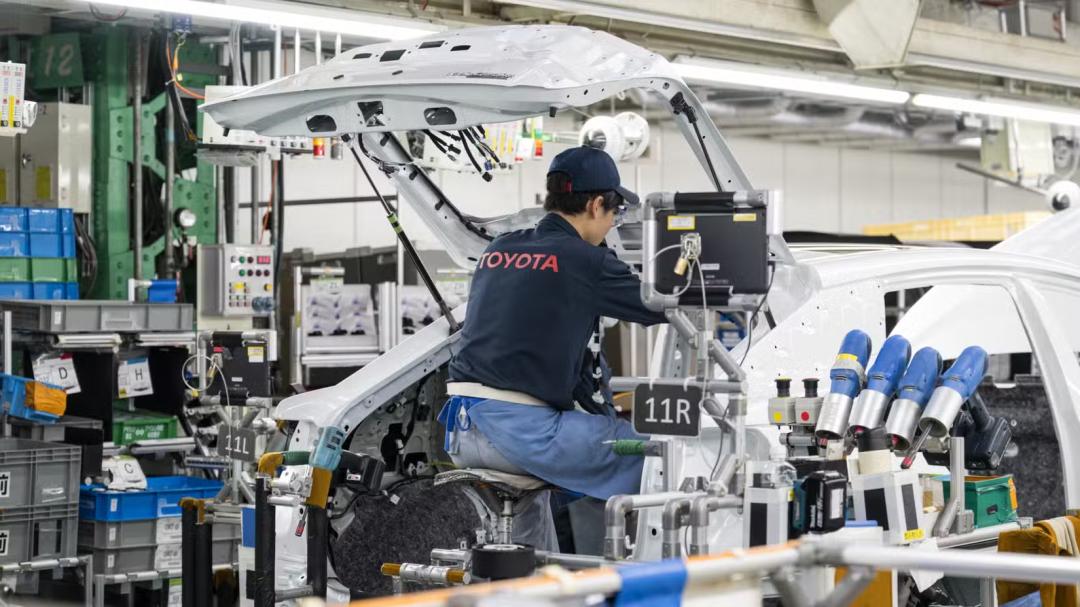
Currently, Toyota has set up a special department that, in cooperation with suppliers, assesses components according to the unified standards. Regular joint inspections are also carried out with other Japanese automobile manufacturers such as Honda and Nissan and their suppliers.
For consumers, the difference under the new standards may not be very obvious – minor defects do not affect the usability and are often hardly noticeable. But objectively, the previously “discarded components” can now normally enter the market. The legendary brand symbol “Japanese Precision” has actually taken its first step towards relaxation.
Multiple pressure factors
Why is there suddenly a compromise on quality?
The most direct trigger is the intensifying geopolitical conflicts in the Middle East, which have led to a supply crisis in the supply chain.
Currently, Japanese automobile manufacturers are about 70% dependent on imports of semi - finished aluminum products and naphtha from the Middle East. The current tension in the Strait of Hormuz not only makes purchasing difficult, but also the raw material prices for plastics and interior materials have risen sharply. Deliveries are irregular, and the risk of supply failure has increased.
Under the already tight component supply, if the strict standards of the past were continued, a large amount of material would be wasted, and the factories might even be forced to shut down due to component shortages. Toyota and Mazda have already reduced the production capacities of models specifically intended for the Middle East.
Sato Koji, who recently stepped down as President of Toyota, said at a supplier conference: “If things don't change, we won't be able to survive.”
In the past few decades, the brand premium of Japanese cars has largely been based on the reputation for “precise manufacturing without defects.” But this reputation was bought at a very high cost. Now, when the costs are so high that the companies “can't survive,” the first thing is to ensure “survival.” In other words, relaxing the standards may be an inevitable measure to ensure supply.
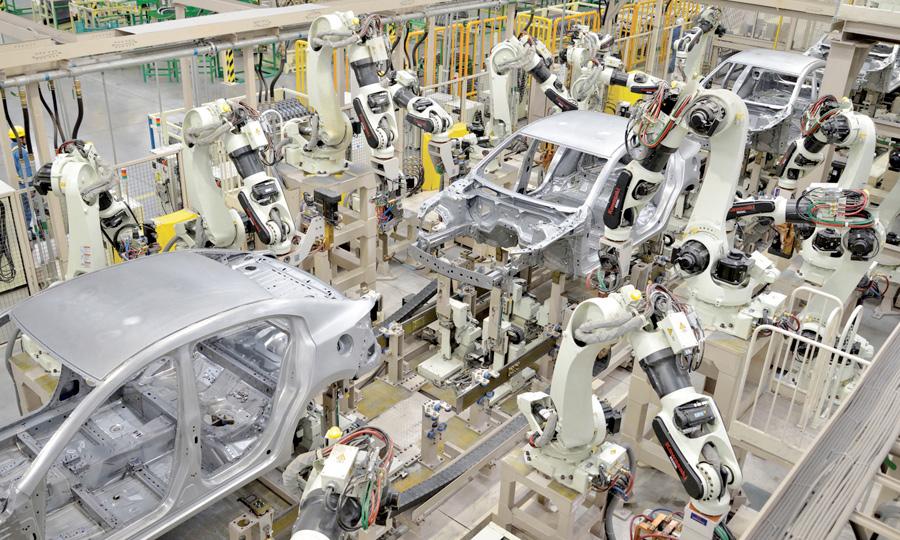
In fact, some Japanese automobile manufacturers have already lowered the standards more than once due to a supply crisis. In 2021, Toyota stated in view of the impact of the pandemic that “as long as vehicle safety and performance are not affected, it would be willing to use components with wear or defects from suppliers.”
If a single company acts like this, it can still be understood as a corporate decision. But now the entire Japanese automobile industry is lowering the standards. A deeper reason could be that Japanese automobile manufacturers are really in a tight spot.
On the one hand, Chinese suppliers are quickly capturing the market share of Japanese suppliers due to their advantages in raw material procurement and low costs. Japanese automobile manufacturers are also losing market share in the foreign market.
Recently, the South Korean news agency Yonhap reported that in April, in the market for newly registered imported cars in South Korea, the sales volume of Chinese cars exceeded that of Japanese cars for the first time and they ranked among the top three imported cars in South Korea. And this market capture was achieved with only the single brand BYD, whose sales volume far exceeded the sum of the sales volumes of the three Japanese brands Lexus, Toyota, and Honda in South Korea.
On the other hand, the latest report from a Japanese database shows that the net profit of listed Japanese suppliers decreased by 35% in the fiscal year 2025, labor costs increased by 20% in the past ten years, and the cost competitiveness has clearly lagged behind. In the fiscal year 2024, there were 32 insolvency proceedings among Japanese automobile suppliers, which increased by 33.3% compared to the previous year and reached the highest value in the past ten years.
The tight raw material supply is only a superficial reason. Under the pressure of multiple factors, Japanese automobile manufacturers are forced to squeeze resources from quality control and reduce losses. Reducing manufacturing costs is the real goal.
Falling from the pedestal
Since the 1980s, the term “Japanese manufacturing” has become a legendary brand symbol for global high - quality and also an important source of brand premium.
Toyota's “Lean Production” system has even become a classic case study in business schools around the world. Now, Toyota is leading the way by deliberately “relaxing” the quality standards, although minor defects do not affect the usability and are hardly noticeable. But in the long run, the previous perception of “flawless Japanese workmanship” will surely be affected.
Once the quality control limit of a brand is relaxed, it entirely depends on the self - discipline of the automobile manufacturers whether they can adhere to the existing limits when raw material prices rise and profits are under pressure.
In fact, “Japanese manufacturing” is no longer a myth even without the current decision of the Japanese automobile industry to relax the quality control standards.
In recent years, in terms of collision tests, emission tests, and quality control data in the Japanese automobile industry, scandals due to falsifications have often occurred. Advertising with “high standards” and delivering products with “low standards” is no longer uncommon.
In June 2024, the Japanese Ministry of Land, Infrastructure, Transport and Tourism reported that five automobile manufacturers such as Toyota, Honda, and Mazda had committed violations such as manipulating collision data and falsifying engine tests during vehicle certification, which affected 38 vehicle models and about 5.18 million vehicles.
In the same year, Daihatsu admitted that it had manipulated the side - collision safety tests of 88,000 small cars. Subsequently, Toyota discovered about 174 violations in more than sixty vehicle models.
At the end of 2025, it was revealed that Mitsubishi Electric had falsified data for more than 35 years. Kawasaki Heavy Industries admitted that it had manipulated the test data of ship engines. The North Sea subsidiary of Japan Steel Works even falsified quality control for 24 years, involving a total of 449 violations.
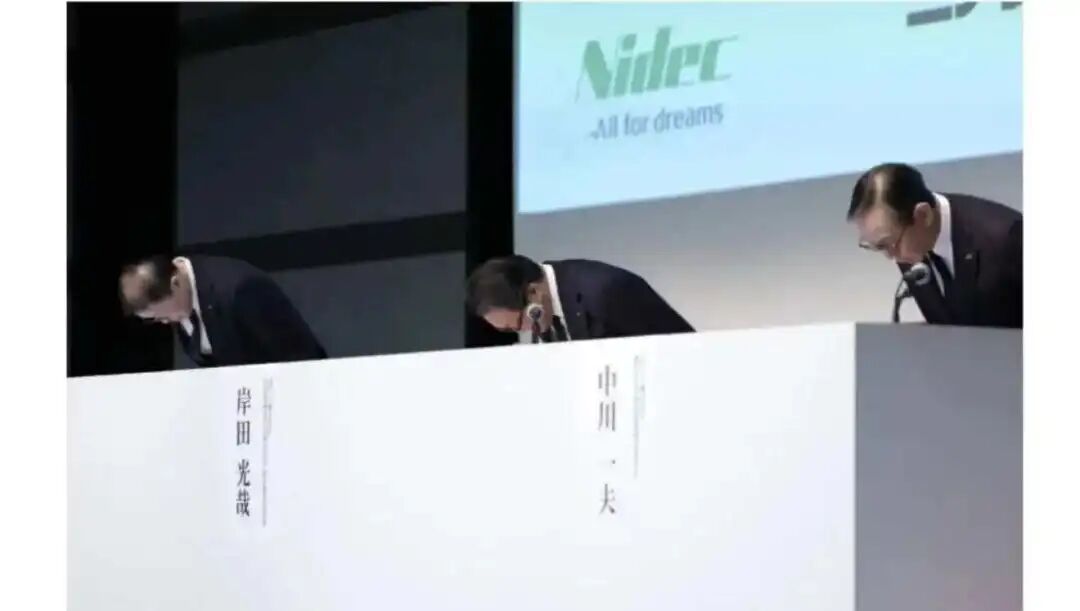
Recently, the Japanese conglomerate Nidec admitted to a booking fraud of more than 200 billion yen and was also exposed for massive quality violations. The number of violations exceeded 1,000, including falsifying test data and mislabeling the place of manufacture to pass with false reports.
The frequent scandals have gradually transformed the “craftsmanship” into the “art of bowing” – every time a scandal is discovered, the company management holds a press conference and bows 90 degrees, but it is difficult to regain consumers' trust.
“Japanese manufacturing,” which is already in a phase of declining consumer trust, is now publicly and collectively lowering the quality standards. Even if this can be regarded as a reasonable optimization to eliminate “unnecessary quality” and as a thrifty survival strategy.
But for the Japanese manufacturing industry, which once wrote the “quality myth” into its DNA, it will be difficult to close the cracks that have once appeared.