Zhipu AI Creates a New Unicorn: Raises $1 Billion in Just 10 Months Since Inception
On June 3, 2026, a company that had been established for only 10 months raised 1 billion yuan in financing.
It's called Xingyuanzhi. It doesn't make robot hardware but only focuses on the "brain" of robots.
Behind it stands the Beijing Academy of Artificial Intelligence, which once incubated Zhipu, an AI company with a market value of HK$800 billion.
With this 1 billion yuan, the capital is buying into a judgment: What robots lack is not hands and feet but brains.
Raised 1 Billion in 10 Months
The story of Xingyuanzhi begins with the Beijing Academy of Artificial Intelligence.
This institution has a special status in the domestic AI circle. It once incubated Zhipu, a large - model company whose Hong Kong stock market value exceeded HK$800 billion as of May 29, 2026. After the wave of embodied intelligence emerged, the academy started looking for the next direction.
Xingyuanzhi is the selected project. The company was founded in 2025 and by June 2026, it had been 10 months since its establishment. The founder, Liu Dong, has an early - stage technical background in the fields of AI and robotics.
According to the company's disclosure, the core team comes from Tsinghua University, Peking University, Technical University of Munich, and the Beijing Academy of Artificial Intelligence itself.
What Xingyuanzhi does can be simply summarized as: installing an AI brain that can "predict consequences" in robots.
In the past, the biggest limitation of robots was that they "only knew how to execute" but couldn't think. For example, when grabbing a cup, it didn't know if it would knock over the bowl beside it; after entering an unfamiliar environment, it didn't know how to adjust its actions.
What Xingyuanzhi is currently focusing on, the "world model", essentially allows robots to simulate internally before taking real actions: "What will happen if I do this?"
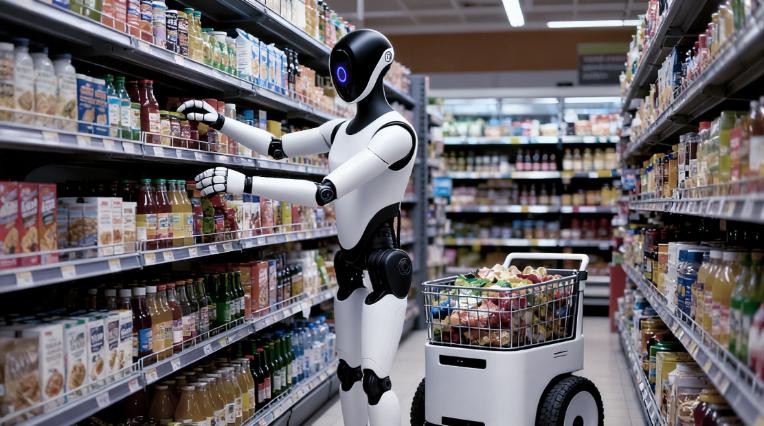
A humanoid robot equipped with Xingyuanzhi's embodied brain is performing a shelf - picking task in a supermarket; Source: Xingyuanzhi's official website
According to the company's disclosure, the financing lineup for this round covers three major directions: financial capital, state - owned capital, and industrial capital. Among them, financial institutions such as Songhe Capital, Creation Eastern Investment, and Huakong Fund participated in the investment; state - owned background institutions such as CRRC Capital, Beijing Industrial Investment, Guojun Innovation Investment, and Jiangxi Financial Holding provided support; industrial capital such as Aiteke, Hengxing Group, and Qi'an Investment also entered the game.
The old shareholder, Yuansheng Venture Capital, has continuously increased its investment for three consecutive rounds, and the Beijing Academy of Artificial Intelligence has continued to provide in - depth support.
On the commercialization front, Xingyuanzhi's hardware - software integrated solutions cover more than 70% of the leading embodied intelligence companies and it has become the largest global shipper of the NVIDIA Jetson Thor platform.
In terms of implementation scenarios, the company's business has expanded to fields such as government services, intelligent inspection, tour guiding and shopping guidance, power inspection, and energy facility operation and maintenance. It has established cooperative relationships with Beijing Yizhuang Robot Company and several leading energy and power groups.
In terms of team composition, the core members of Xingyuanzhi come from institutions such as Tsinghua University, Peking University, Technical University of Munich, and the Beijing Academy of Artificial Intelligence.
Why Has the World Model Suddenly Become Popular?
Why did the world model suddenly explode in 2026? Because the large - model industry has started to move from the "digital world" to the "physical world".
In the past two years, large models mainly solved problems such as writing code, writing copy, making PPTs, and answering questions. Essentially, AI understood the "world of words".
However, robots and autonomous driving are different. They face the real world and need to understand whether a door can be pushed open, whether a cup will fall, whether a pedestrian will suddenly move, and what consequences an action will bring. Traditional large models are not good at understanding physical laws.
Thus, the "world model" has become the latest competitive focus in the AI industry. In the past year, almost all leading global AI companies have started to layout in this direction.
At the end of 2024, Google DeepMind released the world model Genie 2, which can generate an interactive 3D world from a single image; in 2025, NVIDIA launched the Cosmos platform, specifically for training world models for robots and autonomous driving; World Labs, founded by the "Godmother of AI", Fei - Fei Li, had a valuation of over $1 billion within a few months of its establishment.
A core reason for the sudden crazy investment by capital is that the industry has started to believe that "AI in the physical world" will become the next super - industry.
Data is verifying this trend. Goldman Sachs predicts that by 2035, the global market size of humanoid robots is expected to reach $38 billion; Morgan Stanley is even more radical, estimating that by 2050, the global market size of humanoid robots may exceed $5 trillion. The Chinese market is also accelerating.
Statistics from Gaogong Robot show that in the first five months of 2026, the financing scale of embodied intelligence in China has exceeded that of the whole year of 2025.
What really drives the industry's explosion is not "robots dancing", but AI starting to truly understand the real world. Because the biggest problem with robots in the past was not that they "couldn't move", but that they didn't know what would happen in the next second.
Autonomous driving is the most typical example. Pony.ai's Q1 2026 financial report shows that its Robotaxi and related business revenue reached 59.12 million yuan, a year - on - year increase of 395%, and the real fare revenue from users increased by 456% year - on - year.
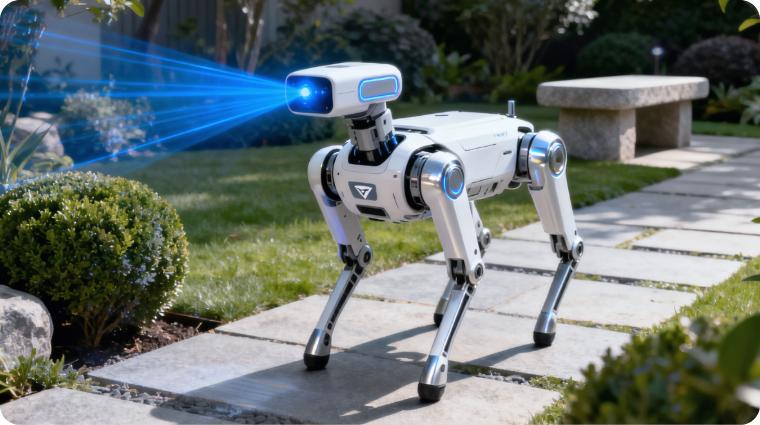
A quadruped robot dog equipped with Xingyuanzhi's embodied brain is performing an intelligent inspection task outdoors
Essentially, what autonomous driving does is a world model: predicting whether the vehicle in front will change lanes, whether a pedestrian will cross the road, and what will happen in the real world next.
Now, the humanoid robot industry is also starting to replicate this path. More and more companies are beginning to realize that the truly valuable part of the robot industry may not be the mechanical arm, but the "brain".
In a sense, ChatGPT solves "linguistic intelligence", while the world model is trying to solve "physical intelligence". And this is becoming the biggest competitive direction in the global AI industry in the next stage.
Who Is Making Money?
Currently, there is no company in the world that is making large - scale profits from the "world model" itself.
Leading companies such as DeepMind Genie, NVIDIA Cosmos, World Labs, and Runway are all in the stage of large - scale investment. The scenarios where stable cash flows are starting to form are mainly concentrated in autonomous driving, power inspection, industrial manufacturing, warehousing and logistics, and energy operation and maintenance.
Because these scenarios have two characteristics: First, the environment is relatively fixed; second, enterprises are willing to pay.
First of all, autonomous driving is currently the optimal track for the implementation and monetization of the world model.
For example, in Q1 this year, WeRide's Robotaxi revenue was 20.5 million yuan, a year - on - year increase of 115%.
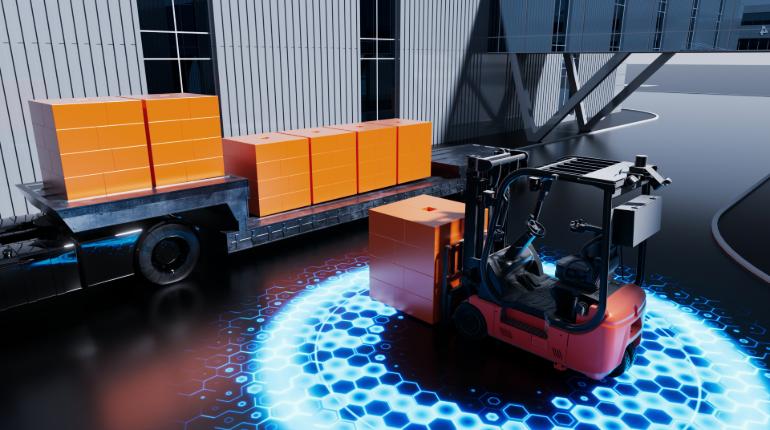
The embodied loading and unloading solution jointly released by Zhongli Co., Ltd. and Xingyuanzhi: Intelligent forklift; Source: Xingyuanzhi's official website
However, the real imagination of the industry goes beyond this. In the past, AI mainly understood the "world of words". Now, the world model is starting to let AI understand the "real world".
It is targeting not just chatting, but factories, warehouses, power grids, and cities.
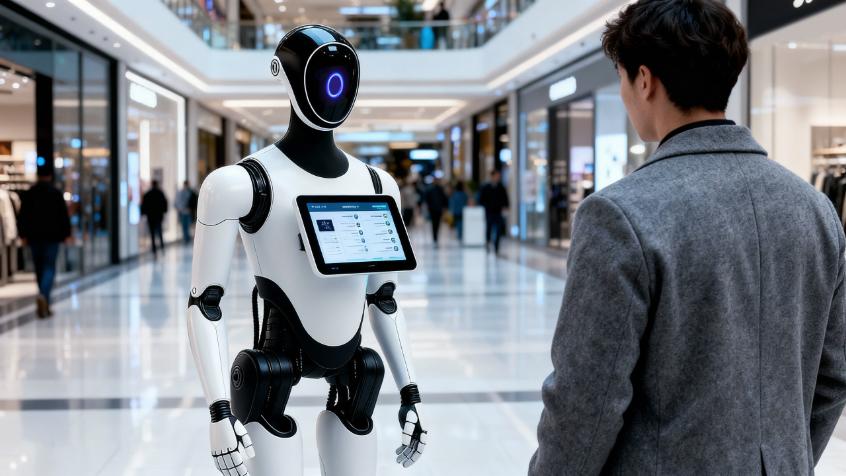
A humanoid robot equipped with Xingyuanzhi's embodied brain in a shopping mall
This is why capital suddenly flooded into embodied intelligence in 2026. Because once robots truly have the ability to "predict the future", they may transform from "moving machines" into real "AI labor forces".
This article is from the WeChat official account "Pencil News" (ID: pencilnews). Author: Xi Wen, Editor: Wang Fang. Republished by 36Kr with authorization.