WWDC26 Ultimate Preview: The All-New Siri Takes the Spotlight, While iOS 27 Is Another Year of Tweaks and Fixes
Finally, Apple has confirmed that WWDC26 will kick off at 10 a.m. local time on June 8th, which is 1 a.m. Beijing time on June 9th.
Image source: Apple
As usual, each WWDC will showcase the latest updates to the Apple platform, including AI progress and new software and developer tools. In particular, the most important keynote speech at the beginning usually focuses on the upgrades and changes of iOS, iPadOS, and macOS in the past. However, in 2026, Apple is facing different problems.
In the past two years, Apple Intelligence has failed to truly change the daily use of iPhone users. The major upgrade of Siri has been repeatedly postponed, making Apple seem a bit slow in the wave of generative AI.
So what's really worth watching at this year's WWDC26 is not just what iOS 27 looks like and what new capabilities macOS 27 has, but also whether Apple can answer a more fundamental question: In the era when AI has penetrated into mobile phones, computers, headphones, watches, glasses, and home devices, will the Apple ecosystem still be the best computing platform?
According to Lei Technology's inventory, judging from the current leaks about WWDC26, apart from the new Siri driven by the Gemini underlying model, Apple's new generation of systems is unlikely to undergo major overhauls. Instead, they will focus more on patching the underlying and details. The real reform will have to wait until 2027 (the 20th anniversary of the iPhone), especially for iOS.
Major Changes to Siri, Another Year of Patching for iOS 27
In the past few years, the changes in iOS have been a bit awkward. On the one hand, Apple has been adding new features every year, from lock screen widgets, the Dynamic Island, to personalized desktops and Apple Intelligence. On the other hand, for a large number of ordinary users, the daily use of the iPhone hasn't changed much. Apps are still apps, the control center is still the control center, the system settings are still hierarchical menus, and Siri has not truly become the core entrance for a long time.
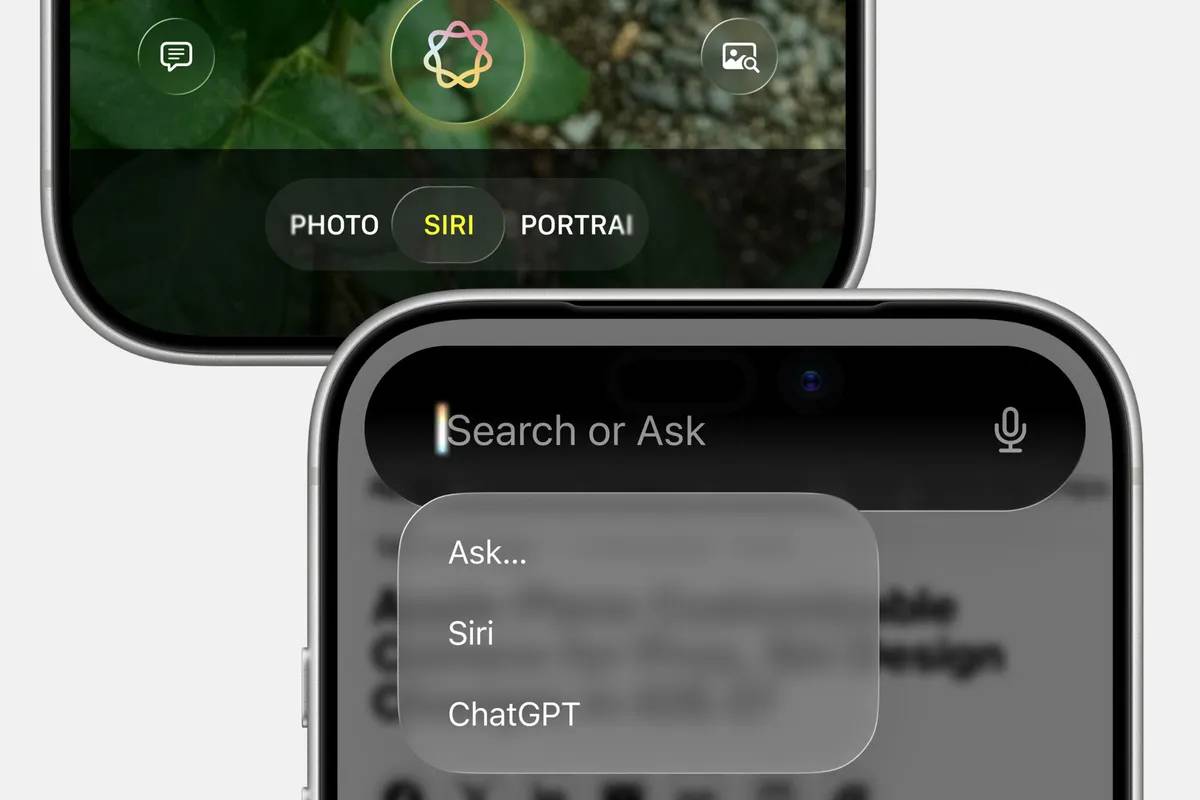
iOS 27 may first change this inertia from the visual and entrance aspects. According to Bloomberg, the new version of Siri will pop up from the Dynamic Island in a lighter bubble form and enter a system-level entrance similar to "Search or Ask" by swiping down from the center of the top of the screen.
Not a real device. Image source: Bloomberg
This entrance doesn't necessarily have to be understood in the context of AI capabilities. It's more like Apple is redefining the way of searching, controlling, and asking questions on the iPhone. In the past, users swiped down for Spotlight search. In the future, swiping down may become a unified entrance that connects local content, system functions, web search, and intelligent assistants.
The Dynamic Island has mainly been a status prompt and light interaction area in the past, such as incoming calls, timers, music playback, and navigation progress. If iOS 27 really puts Siri and the system search entrance into the Dynamic Island, it means that Apple may turn this screen cutout from an "information display area" into a "system entrance".
The camera app may also have a more practical adjustment.
According to leaks, the camera app in iOS 27 will add a new "Advanced" tab, supporting depth of field and exposure control, and providing widget functions such as "Basic", "Manual", and "Preset". It may also add new grid and color scale tools. At the same time, the main interface will allow users to customize whether to display function icons such as flash, exposure, and timer.
If iOS 27 can keep the camera interface as simple as Apple's usual style while giving more control to those who like to tinker, it will be a very practical upgrade.
In addition, the photo app may add a new tool area and add editing capabilities such as image expansion and recompose in addition to the existing "Clean up" function. This part is of course related to AI, but from the perspective of system experience, it's more like Apple is bringing the light photo editing capabilities that used to be done by third-party apps into the system photo album.
The more fundamental changes may be in stability and performance. MacRumors mentioned that Apple's new generation of systems pays more attention to bug fixes, stability improvement, and underlying performance optimization, and is even compared by the outside world to the Mac OS X Snow Leopard update back then. This may not sound as exciting as AI, but it's more important for iOS users.
Another direction that can't be ignored is the early adaptation for the foldable iPhone.
Even if Apple doesn't release a foldable iPhone this year, iOS 27 may expose some system preparations in advance, such as more flexible window ratios, multitasking more suitable for large screens, stronger landscape interfaces, and a more blurred boundary between iPhone and iPadOS.
For Apple, not only the hardware but also the real challenge of the foldable screen is how to make iOS switch naturally between the small screen, the unfolded large screen, and the external screen.
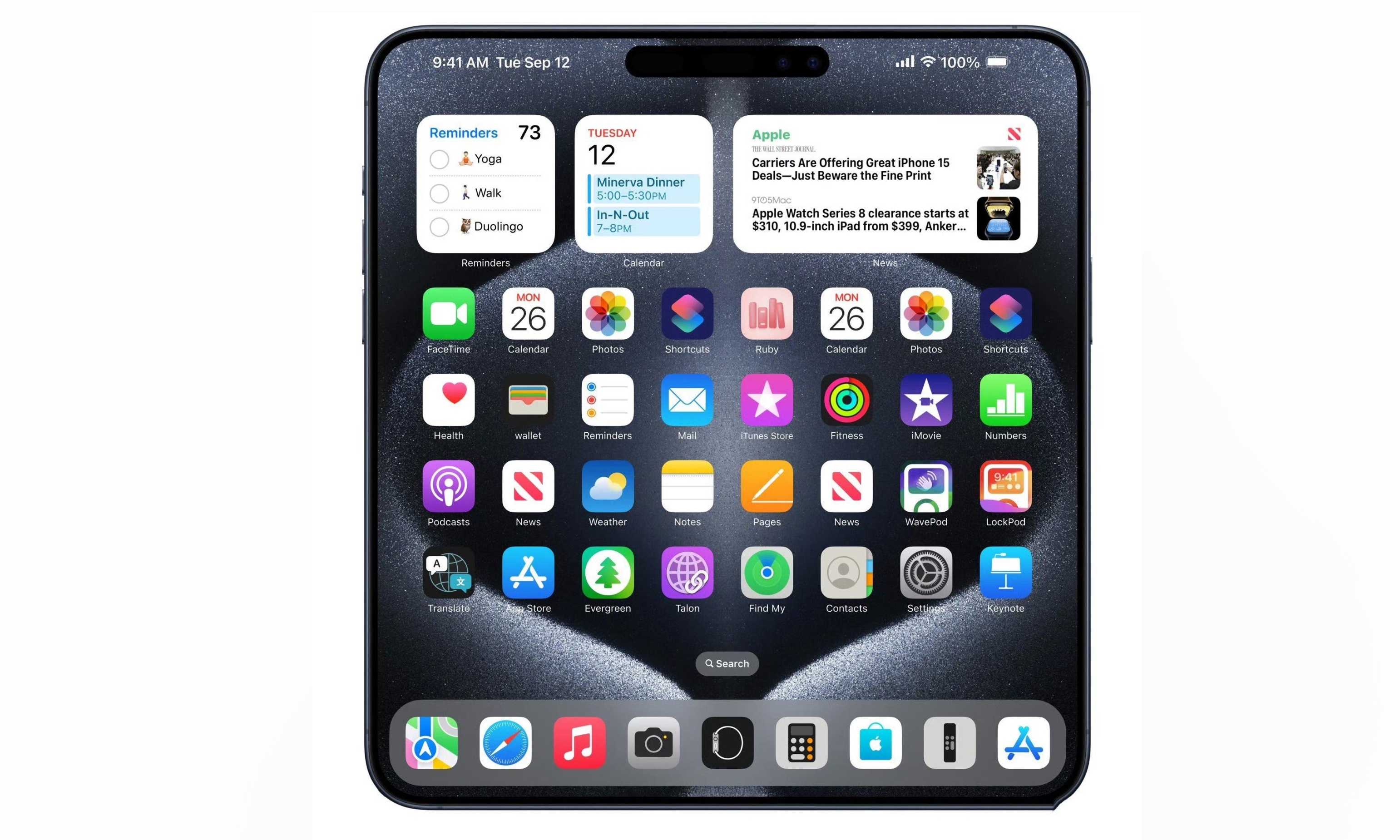
Image source: X
By the way, let's talk about iPadOS 27.
The biggest problem with the iPad in the past few years has always been the overabundance of hardware performance and the lack of system productivity. So what we can expect is whether Apple will continue to relax the system boundaries of the iPad, such as more stable Stage Manager, more flexible window management, a file system closer to the desktop, a better external display experience, and a more natural workflow between the Apple Pencil, keyboard, trackpad, and multiple windows.
For the iPad, AI is of course important, but the basic system capabilities are even more important. Without mature multitasking and file logic, even the most powerful intelligent assistant will have a hard time turning the iPad into a truly reliable main production tool.
macOS 27: The Core Testing Ground for Apple Intelligence
Compared with the iPhone, the Mac is actually more suitable for showcasing Apple's AI ambitions. The reason is simple: the Mac naturally supports more complex workflows. Writing, editing, programming, file management, browser data organization, meeting communication, and cross-app collaboration are all scenarios where generative AI can create more value.
The key upgrades of macOS 27 this time include the new version of Siri, new features of Apple Intelligence, and the continuous refinement of the liquid glass design language.
Image source: X
First of all, macOS 27 will optimize the performance and make minor design adjustments on the basis of macOS Tahoe, including improving the readability of the "liquid glass" interface. For Mac users, this kind of "minor patching" is not trivial. The Finder, menu bar, Dock, Mission Control, window management, Safari, file preview, and shortcut key system all contribute to the basic productivity of the Mac.
In addition, macOS 27 will officially abandon support for Intel chips. Many Intel Macs actually have good performance, but from Apple's perspective, after unifying to the M series, macOS can reduce the historical burden in terms of graphics, energy efficiency, security, virtualization, edge models, and cross-device collaboration.
Safari may also be one of the focuses of macOS 27. The new version of Safari in macOS 27 will add the ability to automatically group tabs, simplifying the browser experience.
If the new version of Siri and Apple Intelligence really make their way into macOS 27, the first thing they should solve is not just AI chat on the Mac, but whether they can integrate into real workflows. For example, can they understand the content of the current window, connect email, calendar, notes, files, and browser information, directly help users generate scripts, organize files, create to-dos, process images, and even complete a series of continuous tasks across apps with the user's permission.
This will be a crucial step for Apple. In the past, Apple Intelligence had a low profile on the iPhone. One reason is that the mobile phone scenarios are more fragmented, and users have a lower tolerance for AI errors. However, tasks on the Mac are longer and more complex, and the value of AI is easier to perceive.
If Apple can make macOS 27 the most stable, secure, and user-friendly personal AI work system, it may prove itself better than simply piling on features on the iPhone.
The New Siri Will Be the Main Dish at This Year's WWDC
In addition to iOS, iPadOS, and macOS, WWDC26 is also an opportunity for Apple to re-organize the cross-platform experience. Platforms such as visionOS, watchOS, and tvOS will also receive a new round of updates, but there isn't much information leaked so far.
Undoubtedly, the biggest highlight of WWDC26 will still be Siri.
According to Mark Gurman, Apple is preparing a new Siri based on Gemini technology, which has access to the system's underlying permissions and can be more deeply integrated with iOS 27, iPadOS 27, and macOS 27, accessing all personal data such as local text messages, photo albums, schedules, and documents on the phone.
Moreover, Apple also plans to launch an independent Siri app, which will presumably take on more functions, just like the independent apps for AI assistants developed by domestic mobile phone manufacturers.
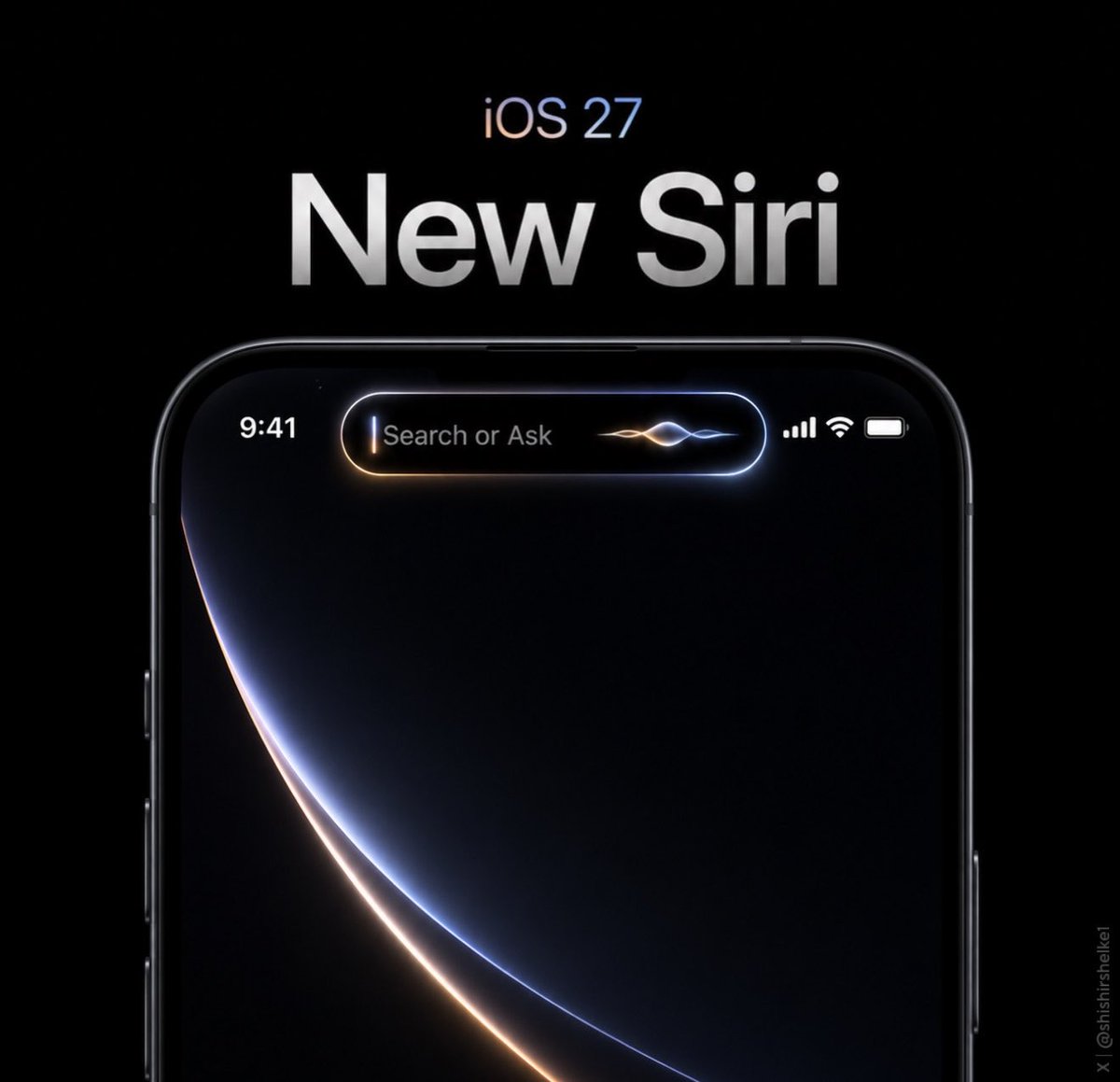
Image source: X
However, it's worth noting that Apple has long emphasized the integration of hardware and software and has been building a differentiated image in terms of privacy and edge processing. Now, it has to rely on Google's Gemini model to achieve a major upgrade of Siri, which to some extent means admitting that Apple lags behind in the basic capabilities of large models.
From a practical perspective, this may also be Apple's most pragmatic choice. The problems with Siri have been dragging on for too long, and it's hard for Apple to use the excuse of "we're still refining" for another year or two. By leveraging Gemini, Apple can make up for the underlying model capabilities and then amplify its own strengths:
System entrance, privacy architecture, edge processing, cross-device experience, developer ecosystem, and control over the boundaries of user data access.
This is also the most interesting part of WWDC26. Apple needs to clarify what role Gemini will play. Which tasks will be completed on the edge? Which tasks will be sent to the Private Cloud Compute? Will users' personal data be used for third-party model training? Can developers access the new Siri capabilities?
On the other hand, the biggest problem with Apple Intelligence in the past is that it seems like a set of scattered functions: writing tools, summaries, image generation, notification organization, photo cleaning, and partial enhancement of Siri. They are not useless, but it's hard for users to feel that "I can't live without it every day".
So the real important thing is whether they can be integrated. The next step for AI mobile phones is not to add an AI button to each app, but for the system to understand what the user is currently doing and then provide assistance at the right time.
For example, when a user is looking at a photo, AI can help him edit the photo, generate a caption, and send it to a specified contact; when a user is writing an email, AI can reference the calendar, files, and the content of the previous email; when a user is searching for information in Safari, AI can organize the web page, extract tables, and generate notes; when a user describes a requirement in the Shortcuts app, the system can automatically generate a cross-app workflow.
This is the role that Apple Intelligence should play. It shouldn't just be a brand name but become a system-level intelligence that runs through the iPhone, iPad, Mac, Watch, and Vision Pro.
Can Apple Prove Itself Again in AI? WWDC26 Will Reveal the Answer
WWDC26 will be a special developer conference for Apple. It will of course have the regular upgrades of iOS, iPadOS, macOS, watchOS, visionOS, and tvOS, as well as the continuous refinement of design, performance, development tools, and ecosystem capabilities.
But what really determines the outside world's perception this year is still Siri and Apple Intelligence.
Apple doesn't lack devices, users, or an ecosystem. But in today's era when generative AI has reshaped the software entrance, can Apple still turn complex technologies into an experience that ordinary people are willing to use every day?
If the new version of Siri is just better at chatting, WWDC26 will probably only be seen as Apple's late catch-up. If AI can truly integrate into Apple's major systems, understand personal scenarios, mobilize device capabilities, and maintain the privacy and stability that Apple has always emphasized, then this conference may mark the beginning of Apple redefining the AI entrance.
Apple has missed the earliest window of opportunity. Next, it must prove that it can still seize the new window of opportunity.