Ultimative Vorschau auf die WWDC26: Das neue Siri ist das Hauptgericht, iOS 27 wird ein weiteres Jahr nur ausgebessert
Finally, Apple has confirmed that WWDC26 will start at 10:00 local time on June 8th, which corresponds to 01:00 on June 9th in China Time (CZT).
Image source: Apple
According to the usual practice, each WWDC showcases the updates of the new Apple platform, including the progress in Artificial Intelligence (AI) as well as new software and developer tools. In particular, the most important keynote at the beginning usually focuses on the upgrades and changes of iOS, iPadOS, and macOS. However, in 2026, Apple is facing other problems.
In the past two years, Apple Intelligence has not really changed the daily lives of iPhone users. The major upgrades of Siri have been postponed again and again, making Apple seem a bit sluggish in the wave of generative AI.
Therefore, at this year's WWDC26, it is not only interesting to see what iOS 27 looks like and what new features macOS 27 has, but also whether Apple can answer the more fundamental question: In a world where AI is ubiquitous in smartphones, computers, headphones, watches, glasses, and home appliances, is the Apple ecosystem still the best computing platform?
An analysis by Lei Technology shows that given the previous rumors about WWDC26, the new Apple system is unlikely to undergo radical changes. Instead, it will more likely improve the fundamentals and details. The real reforms will probably take place in 2027 (the 20th anniversary of the iPhone), especially for iOS.
Major changes to Siri, iOS 27 will be refined on details for another year
In recent years, the changes to iOS have been a bit embarrassing. On the one hand, Apple adds new features every year, from Lock - Screen widgets, the Dynamic Island to personalized desktops and Apple Intelligence. On the other hand, for most ordinary users, the way they use their iPhones daily has not changed significantly. Apps remain apps, the control center remains the control center, the system settings still consist of a hierarchical menu, and Siri has not really become the core access.
iOS 27 could initially change these habits in terms of appearance and access. According to information from Bloomberg, the new version of Siri will appear in the form of a light bubble from the Dynamic Island and reach a system - wide access similar to "Search or Ask" by sliding down from the middle of the upper screen edge.
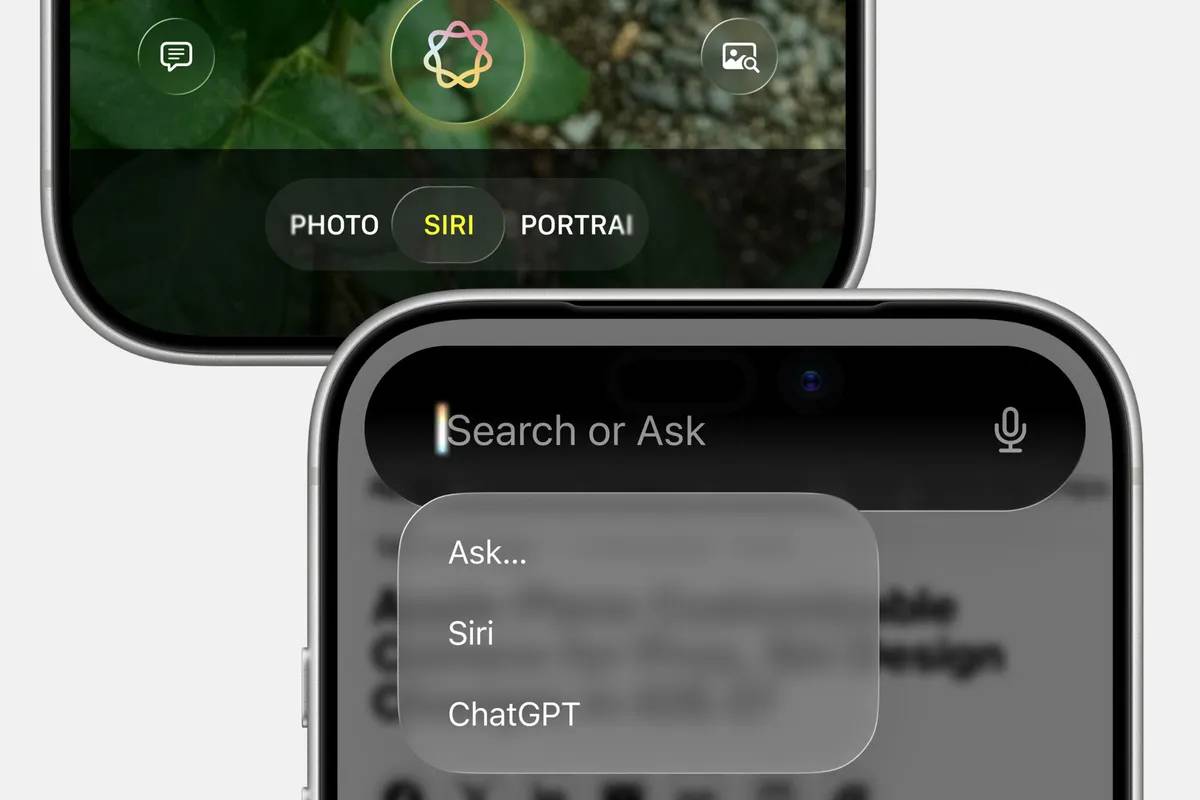
Not a real device, Image source: Bloomberg
This access does not necessarily have to be understood in connection with AI capabilities. Rather, Apple is redefining the way people search, control, and ask on the iPhone. In the past, sliding down was for Spotlight search. In the future, it could become a unified access that accesses device content, system functions, web search, and the intelligent assistant.
So far, the Dynamic Island has been more intended for status messages and light interactions, such as calls, timers, music playback, and navigation progress. If iOS 27 integrates Siri and the system search access into the Dynamic Island, it means that Apple may want to turn this screen area from an "information display area" into a "system access".
The Camera app could also receive a more practical adjustment.
According to rumors, the Camera app in iOS 27 will add a new "Advanced" tab that supports depth - of - field and exposure controls and offers widget functions such as "Basic", "Manual", and "Preset". In addition, new grid and color scale tools could be added. At the same time, the main screen will allow users to determine whether icons for flash, exposure, timer, etc. are displayed.
If iOS 27 keeps the camera interface as simple as usual and gives more control to those who like to experiment, this would be a very practical improvement.
In addition, the Photos app could get a new tool area and add capabilities such as image enlargement and reconstruction in addition to the existing "Cleanup" function. This is of course related to AI, but from the perspective of the system experience, it seems that Apple is integrating the capabilities for simple image editing, which were previously done by third - party apps, into the system gallery.
The deeper changes could lie in stability and performance. MacRumors reports that Apple is focusing more on bug fixing, stability improvement, and basic performance optimization in this system update. This is compared externally to the update of Mac OS X Snow Leopard. This doesn't sound as exciting as AI, but it is much more important for iOS users.
Another important aspect is the pre - adaptation for the foldable iPhone.
Even if Apple doesn't launch a foldable iPhone this year, iOS 27 could already show some system preparations, such as more flexible window ratios, better multitasking capabilities for large screens, stronger landscape interfaces, and a less clear boundary between iPhone and iPadOS.
For Apple, it's not only difficult in terms of hardware, but also how iOS can seamlessly switch between small screens, opened large screens, and external screens.
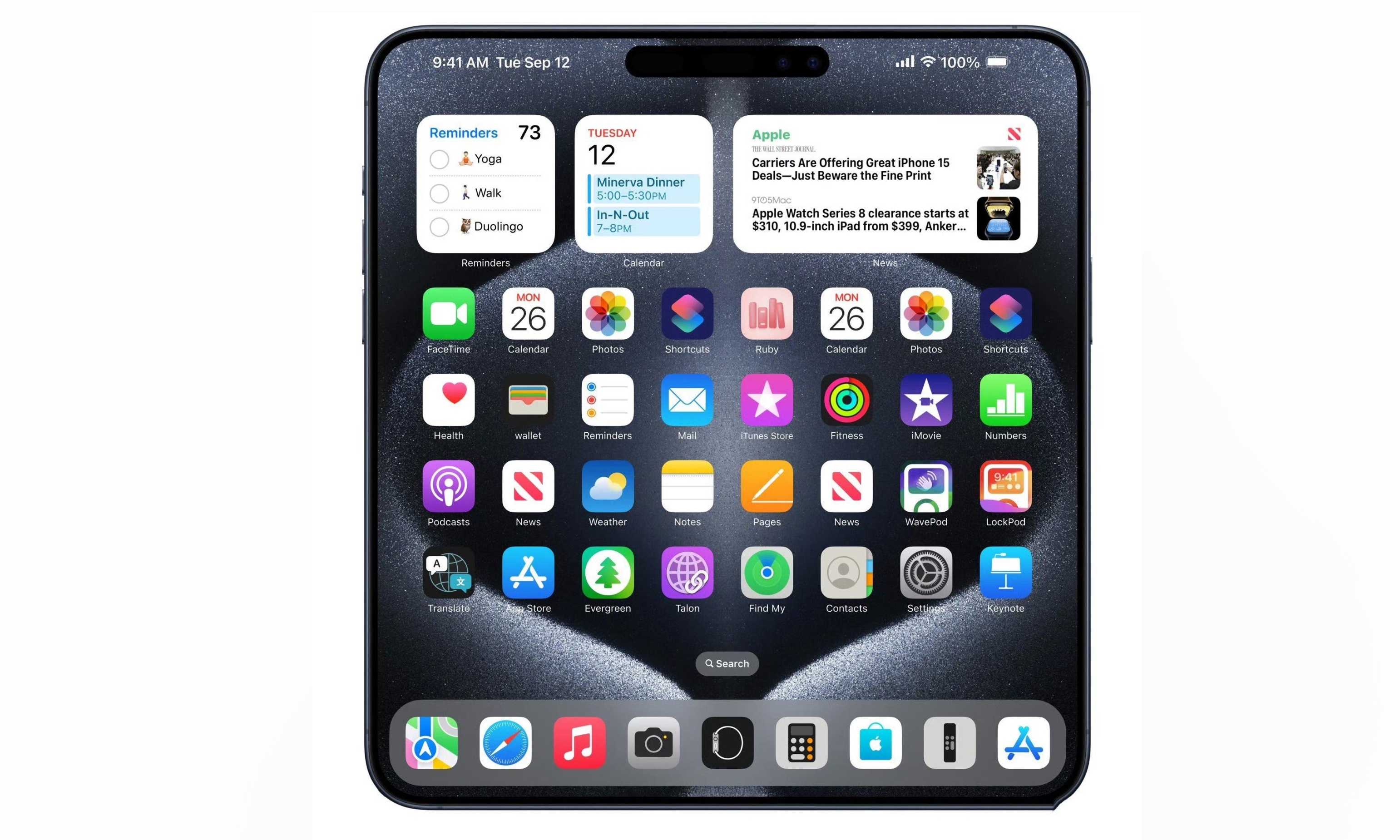
Image source: X
By the way, a little more about iPadOS 27.
The biggest problem with the iPad in recent years has been that the hardware performance has been over - dimensioned while the system productivity has been too low. So, one can expect that Apple will further loosen the system boundaries of the iPad, such as a more stable Stage Manager, freer window management, a file system that is more like a desktop, a better experience with external monitors, and a more natural way of working between the Apple Pencil, keyboard, trackpad, and multiple windows.
Although AI is important for the iPad, the basic system capabilities are even more important. Without sufficiently mature multitasking and file logic, it is difficult for a powerful intelligent assistant to turn the iPad into a truly reliable productivity device.
macOS 27: The core test field for Apple Intelligence
Compared to the iPhone, the Mac is more suitable for showing Apple's AI ambitions. The reason is simple: The Mac can naturally support more complex workflows. Writing, cutting, programming, file management, browser data organization, meeting communication, and cooperation between apps are scenarios where generative AI can create more added value.
The focuses of the macOS 27 upgrade include the new version of Siri, new functions of Apple Intelligence, and the further improvement of the fluid - glassy design language.
Image source: X
First, macOS 27 will optimize performance and make minor design changes based on macOS Tahoe, including improving the readability of the "fluid - glassy" interface. For Mac users, this kind of "small improvement" is not inferior. Finder, menu bar, Dock, Mission Control, window management, Safari, file preview, and keyboard shortcuts form the basis of productivity on the Mac.
In addition, macOS 27 will finally stop supporting Intel chips. The performance of many Intel Macs is actually not bad, but from Apple's perspective, macOS will have fewer problems in terms of graphics, energy efficiency, security, virtualization, edge models, and device cooperation if it is unified on the M series.
Safari could also be one of the focuses of macOS 27. The new version of Safari in macOS 27 will add automatic table grouping to simplify the browser experience.
If the new version of Siri and Apple Intelligence are actually integrated into macOS 27, the first goal should not be AI chatting on the Mac, but rather whether it can be integrated into real - world workflows. For example, whether it can understand the content of the current window, whether it can link emails, calendars, notes, files, and browser information, whether it can directly generate scripts, organize files, create to - do lists, edit images, and even handle continuous tasks between apps if the user allows.
This will be an important step for Apple. In the past, Apple Intelligence was not very prominent on the iPhone. One reason is that smartphone scenarios are more fragmented and users have a lower tolerance for AI errors. On the Mac, tasks are longer and more complex, and the benefits of AI are easier to feel.
If Apple can make macOS 27 the most stable, secure, and convenient personal AI - working system, this could better prove what Apple can do than simply adding functions to the iPhone.
The new Siri will be the main course of WWDC
Besides iOS, iPadOS, and macOS, WWDC26 is also an opportunity for Apple to restructure the experience on all platforms. Platforms such as visionOS, watchOS, and tvOS will also receive a new update, but so far, only a few details are known.
It is undeniable that the biggest highlight of WWDC26 will still be on Siri.
According to Mark Gurman, Apple is preparing a new version of Siri based on Gemini technology. It has access to system basic rights and can be more deeply integrated with iOS 27, iPadOS 27, and macOS 27 to use all personal data such as SMS, photos, calendars, and documents on the smartphone.
In addition, Apple plans to launch an independent Siri app. It will probably take on more functions, similar to the independent apps for AI assistants on Chinese smartphones.