Zhu Yiming of ChangXin Technologies: Build a Machine That Doesn't Need a "Hero"
Changxin Technology is not a typical business case.
In classic business school textbooks, whether it's organization, human resources, or competitive strategy, the core revolves around the concept of "growth". Most of them follow this path: discover market demand, match supply, explore and make trial - and - error attempts, establish a viable business model, seek VC/PE financing, go public through an IPO, diversify, and find new growth curves.
However, in its early days, Changxin Technology was almost "out of sync" in every aspect.
On June 13, 2016, the predecessor of Changxin Technology was established. Its positioning was clear from the start. It mainly focuses on the design, R & D, production, and sales of Dynamic Random Access Memory (DRAM) chips. It wasn't until September 2019 that it launched its first self - designed and produced DRAM chip, an 8Gb DDR4 product, and officially started mass production.
On May 27th of this year, an announcement from the Shanghai Stock Exchange declared that Changxin Technology had successfully passed the review for its IPO on the Science and Technology Innovation Board. With a fundraising scale of 29.5 billion yuan, it is the largest IPO in the A - share market since the beginning of 2026, making it the second - largest IPO on the Science and Technology Innovation Board after SMIC.
Since the second half of 2025, the demand for AI computing power has triggered a super - cycle for memory chips. The price of DRAM has been rising continuously, and the entire industry is in a state of excitement. In the first quarter of 2026, the actual total "net profit" of the whole company was
33.012 billion yuan. It's difficult to determine how much of this figure comes from the gift of the cycle, how much is the company's accumulation, and how much is due to the technical operations of key figures.
On May 27th, the same day that Changxin Technology passed the IPO review, the stock price of SK Hynix in South Korea rose by 13% at one point, and its increase over the past 12 months exceeded 1000%. It became the third Asian company with a market value exceeding 1 trillion US dollars after Samsung Electronics earlier this month. On the 26th, the stock price of Micron soared by 19%, the largest increase since 2011.
The semiconductor industry is a typical cyclical industry. It usually experiences a cycle of fluctuations from trough to peak every 3 to 5 years. Among them, the cyclical fluctuations of memory are more obvious. Changxin Technology and Zhu Yiming indeed have many technical operations worthy of reference in terms of crossing the cycle. These operations are covered in the three "counter - intuitive" actuarial questions answered by "tech - savvy" Zhu Yiming.
Question 1: A Detour Acquisition
In April 2005, Zhu Yiming returned to China to start a business and founded Xinjijiaoyi Microelectronics Technology Co., Ltd. A little over a year later, the company independently developed China's first static memory using 0.18 - micron technology. Later, its products were mass - produced at SMIC and quickly entered the market.
"Entrepreneurship, for me, is about being fearless out of ignorance. If an engineer clearly understands the impact of entrepreneurship on his entire life, he might not dare to start a business." Zhu Yiming, who has an engineering background, already had a certain business mindset at that time. "Engineers who succeed in entrepreneurship are often those who think, judge, and take action from the perspective of customer needs."
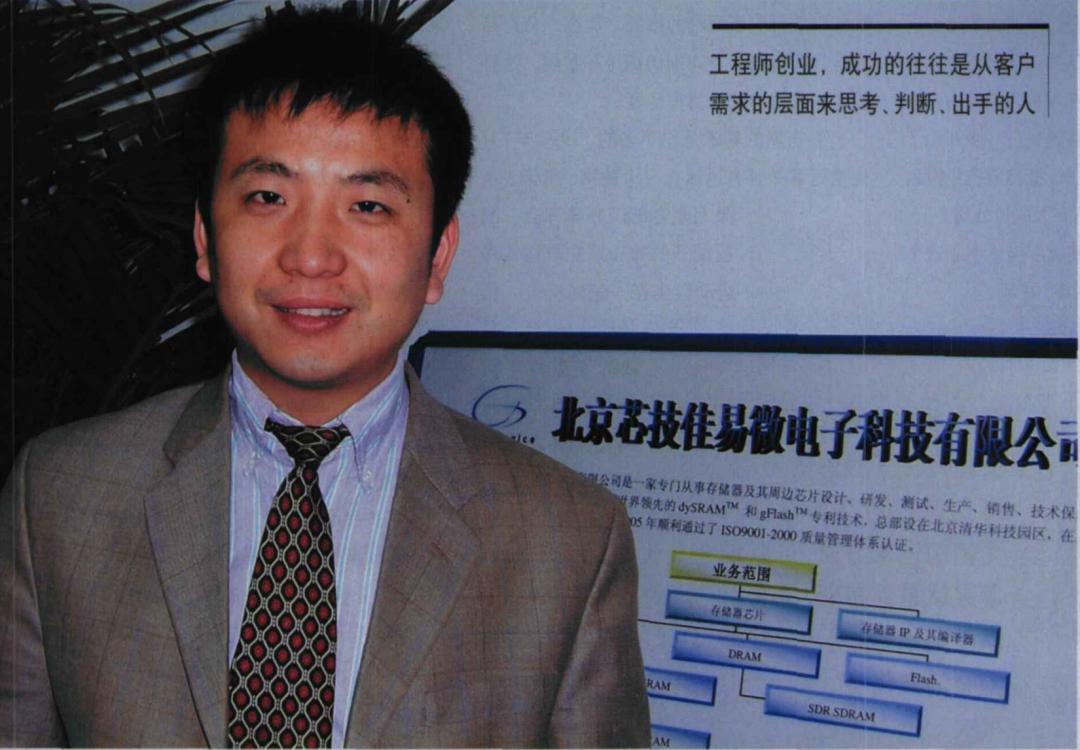
With the dual advantages of being a returnee entrepreneur and an engineer entrepreneur, Zhu Yiming summarized a "rule" at that time: Take advantage of overseas strengths and seize domestic resources. This thinking that straddles the fields of engineering and business, as well as the perspectives of both domestic and international markets, laid the foundation for Zhu Yiming's subsequent decision - making.
In 2018, the Chinese memory chip industry experienced a major upheaval.
Fujian Jinhua, which was established around the same time as Changxin, initially chose to cooperate with UMC. Under this technical cooperation, Jinhua commissioned UMC to develop technologies related to 32nm Dynamic Random Access Memory (DRAM). According to the agreement, Fujian Jinhua would provide special equipment and pay technical remuneration as development costs according to the development progress. The development results would be jointly owned by both parties.
However, before the agreement was signed, three former executives of Micron jumped to UMC. In 2017, Micron sued UMC and Fujian Jinhua in Taiwan, China, and the United States, alleging that the employees who changed jobs had stolen trade secrets and committed patent infringement.
This lawsuit brought an investment project worth tens of billions of yuan to a sudden halt on the eve of mass production. This incident left a profound lesson for later entrants in the domestic memory chip industry: In the face of the patent barriers of international industry giants, the paths of "reverse engineering" and "poaching" are like double - edged swords that can hurt oneself at any time.
Also in this year, Zhu Yiming officially took over as the CEO of Changxin Memory.
The situation he faced was essentially the same as that of Jinhua. The global DRAM market is firmly controlled by Samsung, SK Hynix, and Micron. Their patent barriers are like an airtight maze. Any new entrant may be dragged into an unpredictable quagmire of encirclement before mass - producing their products.
Zhu Yiming chose a different path from Jinhua.
At the GSA + Memory Storage Summit held in mid - May 2019, Zhu Yiming delivered a keynote speech titled "The Development and Solutions of Chinese Memory Technology", in which he mentioned the technical source of Changxin's DRAM memory - the bankrupt Qimonda.
Qimonda used to be the memory division of Infineon. After being spun off, it once became the second - largest DRAM supplier in the world. Due to factors such as oversupply in the DRAM market and a sharp drop in prices, Qimonda suffered severe losses in 2008 and finally filed for bankruptcy on January 23, 2009. In the nearly ten years that followed, the technical assets it left behind were like an unclaimed mine.
To build an intellectual property moat and avoid infringement risks, from 2018 to 2019, the Changxin team had a long and secret negotiation with the patent operation company WiLAN and its subsidiary Polaris Innovations Limited.
On December 5, 2019, Changxin Memory announced on its official WeChat account that it had obtained a license to implement a large number of Dynamic Random Access Memory (DRAM) technology patents from Infineon through the Canadian intellectual property company WiLAN. Due to the commercial secret clause, the two parties did not disclose the transaction amount. According to media estimates, this acquisition involved an investment of "hundreds of millions of dollars".
Zhu Yiming said at the time: "These two agreements mark that Changxin Memory has taken new measures in improving its intellectual property portfolio, further strengthening its technology strategy, and ensuring the operation of its DRAM business."
This is a typical calculation problem. On one hand, there is a definite investment of hundreds of millions of dollars. On the other hand, there may be lawsuits and encirclement that could cost billions or even tens of billions of dollars in the future. Zhu Yiming chose to take a detour, using a calculable amount of cash to cover an incalculable huge risk.
Through cooperation with Qimonda, Changxin Technology obtained more than ten million technical documents related to DRAM and 2.8TB of data, which is also one of its initial technical sources.
Zhu Yiming later summarized this cooperation and defined it as "standing on the shoulders of giants." "Even so, domestic R & D of DRAM memory still cost a huge price. The cumulative R & D cost reached 2.5 billion US dollars, and a rigorous and compliant R & D system and a unique technology system were established." he said.
Question 2: A Decade, Four Rounds of Share Reductions, and One Person's "Tale of Two Cities"
Zhu Yiming has a unique label in the industry: he is the core figure of two important companies at the same time.
One is GigaDevice Semiconductor, the leading domestic NOR Flash memory chip design company, which he founded in 2005 and serves as the chairman. The other is Changxin Technology, the only Chinese enterprise with the ability to mass - produce DRAM on a large scale, and he became its CEO in 2018.
These two companies are located at opposite ends of the semiconductor industry chain.
GigaDevice Semiconductor is a light - asset chip design company with obvious cyclicality. For a long time, its gross profit margin has been maintained above 40%. Changxin is a typical heavy - asset manufacturing plant. The investment in a 12 - inch wafer factory can easily reach tens of billions of yuan, and equipment depreciation and R & D investment are like bottomless pits.
Its prospectus shows that as of December 31, 2025, Changxin Technology had accumulated losses of 3.665 billion yuan. The prospectus explained the reason for the losses: the capital expenditure required for the construction of the DRAM wafer manufacturing production line is extremely high, and the investment scale of a single factory has exceeded 10 billion US dollars.
On May 26, 2026, on the eve of the IPO review, an announcement of equity change attracted the attention of the market.
GigaDevice Semiconductor announced that on May 26, 2026, it received a "Notification Letter Regarding the Equity Change Reaching the 1% Threshold" from Zhu Yiming, the controlling shareholder and chairman. From May 11 to May 25, 2026, Zhu Yiming reduced his shareholding in the company by a total of 6.3299 million shares through centralized bidding and block trading, accounting for 0.90% of the company's total share capital. After this equity change, the combined shareholding ratio of Zhu Yiming and his concerted action person, Hong Kong Yingfude Co., Ltd., decreased from 7.90% to 7.00%, and the equity change reached the 1% threshold.
When this share reduction took place, the stock price of GigaDevice Semiconductor was in a high - level range in recent years: Affected by the super - cycle of memory chips driven by AI, its stock price has soared by more than 350% in the past year.
What's also subtle is the timing.
At this time, less than two months had passed since the share - reduction plan he announced on April 8th this year, and there were still nearly two months until the deadline for the previous share - reduction.
Although there is no direct evidence, the two actions of "share reduction" and "gift" are always seamlessly connected in time, which has also led the outside world to form an interpretation: This share reduction is to raise "ammunition" for that sky - high incentive.
Looking through GigaDevice Semiconductor's historical announcements, one can find a fragmented share - reduction history spanning seven years.
According to incomplete statistics from public information: from September to December 2019, he initiated the first round of share reduction after the company went public. He and his concerted action person reduced their shareholding by about 12.75 million shares in total; from September to November 2020, he reduced his shareholding by 4.7153 million shares, exactly accounting for 1% of the total share capital; from December 2021 to January 2022, the largest - scale round of share reduction began. He and his concerted action person reduced their shareholding by about 10.65 million shares in total, and then promised not to reduce their shareholding for 12 months.
According to the statistics of Sina Finance's Eagle Eye Studio, from September 2019 to March 2022, there were 23 share - reduction actions. And each share - reduction took place during the high - level window of GigaDevice Semiconductor's stock price. After each share - reduction, Changxin Technology would also be a topic of discussion.
In 2019, Changxin Memory, a wholly - owned subsidiary of Changxin Technology, successfully mass - produced its first 10nm - level DDR4 chip, achieving a breakthrough from 0 to 1 in domestic DRAM chips and filling the gap in the domestic mainstream DRAM field. In 2020, Changxin Memory completed a 1.7 - billion - dollar financing, launched a capacity expansion plan for DDR4, and started the R & D of 17nm technology. In 2022, the R & D of 17nm DDR5 achieved a phased breakthrough, and the production capacity reached 120,000 wafers per month, ranking first in China. In 2024, Changxin Technology completed the last large - scale financing before going public, and its post - investment valuation increased significantly. The production capacity expanded to 300,000 wafers per month.
Zhu Yiming is a typical "tech - savvy" person. He established a connection between GigaDevice Semiconductor and Changxin Technology beyond just capital.
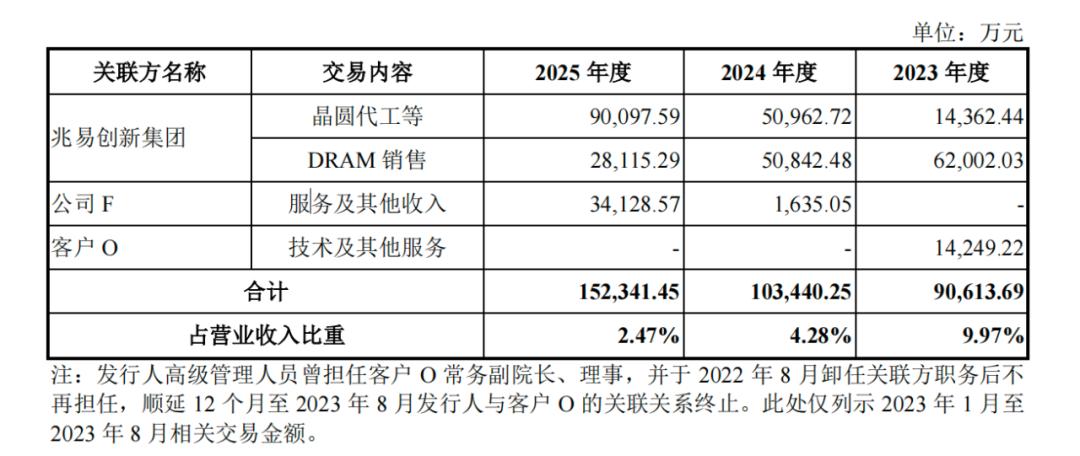
Through the upstream - downstream industrial relationship of "contract manufacturing - procurement", Zhu Yiming deeply bound the two companies together. The prospectus reveals that the related transactions between GigaDevice Semiconductor and Changxin Technology increased steadily from 760 million yuan in 2023 to 1.182 billion yuan in 2025.
Zhu Yiming is good at using rules. It's not difficult to see from his multiple rounds of share - reductions over the years that details such as the advance announcement time and share - reduction scale are within the framework of the new share - reduction regulations. And this is the second question Zhu Yiming answered: Instead of "gambling", design a precise machine that can continuously self - finance.
In 2018, Zhu Yiming, who rarely accepts media interviews, appeared in the public eye. In an interview with "Elite Magazine", he emphasized that "survival is the key" and that GigaDevice Semiconductor would never engage in pure capital operations. "Any investment made by GigaDevice Semiconductor is not a financial investment but a strategic investment."
Question 3: 20 Billion, Wearing the "Golden Handcuffs"
The first two questions about the "birth certificate of technology" and the "tale of two cities of capital" test Zhu Yiming's ability to identify external risks. The third question points directly to a more thorny problem: people.
The chip industry is an industry that highly depends on talents. Without more than ten years of experience accumulation, it's almost impossible to be competent in the R & D, process, and yield improvement of DRAM. A considerable proportion of Changxin's core technical team are senior experts from Taiwan and overseas.
So, after going public, how can the organization continue to maintain its combat effectiveness and cohesion?
Zhu Yiming's solution is to use a set of precise rules to motivate.
According to the prospectus, Zhu Yiming holds 1.598 billion shares of Changxin Technology. Among them, 1.536 billion shares are indirectly held through Hefei Jixin Forty - First Enterprise Management Partnership (Limited Partnership), which comes from the company's employee stock ownership plan. In addition, Zhu Yiming also indirectly holds 860,0