In the cautious financial circle, the AI that can truly get things done has finally arrived.
A day for a buy-side researcher usually starts with hundreds of unread messages.
Conference calls, listed company roadshows, expert interviews, industry summaries, and brokerage research reports keep pouring in. There are always endless group chats and meeting links to scroll through.
But the annoying thing is that, in many cases, the really important information is not in the formal research reports, but hidden in a certain communication detail, or even in a subtle change in tone.
This is the current situation in the investment research field of the financial industry. With tens of thousands of messages, missing one could mean losing tens of millions or even hundreds of millions of real money.
So, when practical Agents enter the investment research circle, how do they effectively "fulfill their duties" and do a good job, helping researchers handle complex information and quickly capture marginal changes?
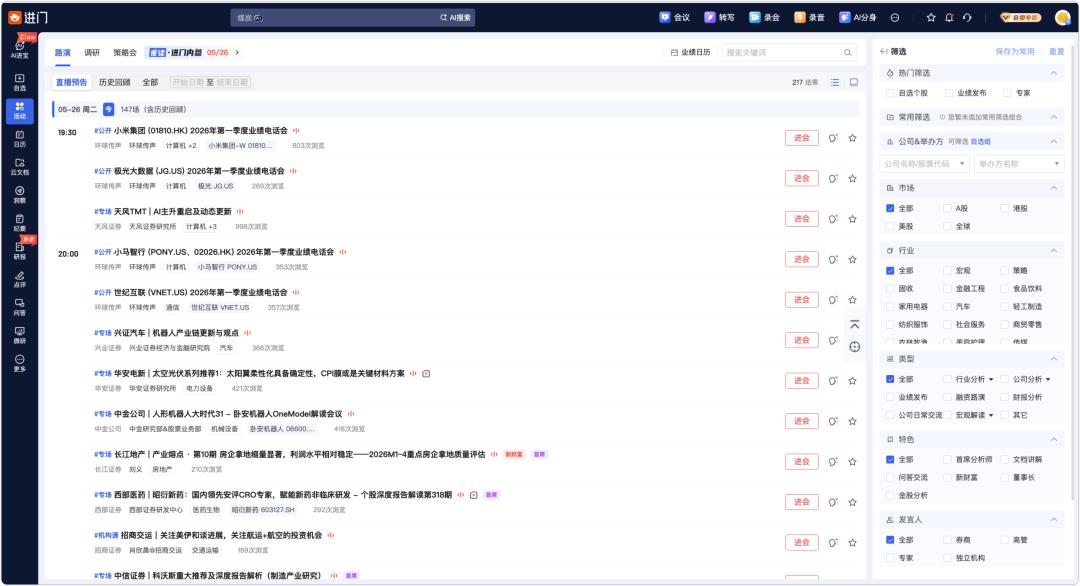
JMen, which focuses on AI investment research, was founded in 2013 and has a market share of about 95% in the public roadshow field of domestic brokerage research institutes. This label is so profound that many people's impression of this company still stays at the conference platform. In 2023, JMen received strategic investment from Tencent. In the same year, it was fully upgraded to an "institutional AI investment research workbench".
In 2025, JMen launched the super investment research intelligent agent "AI Jinbao", becoming the first company in the industry to launch an investment research version of Agent, helping users handle a large amount of work in the investment research scenario. Moreover, after connecting to Tencent Cloud, the usage of JMen's AI products increased by 10 times in the first quarter of this year.
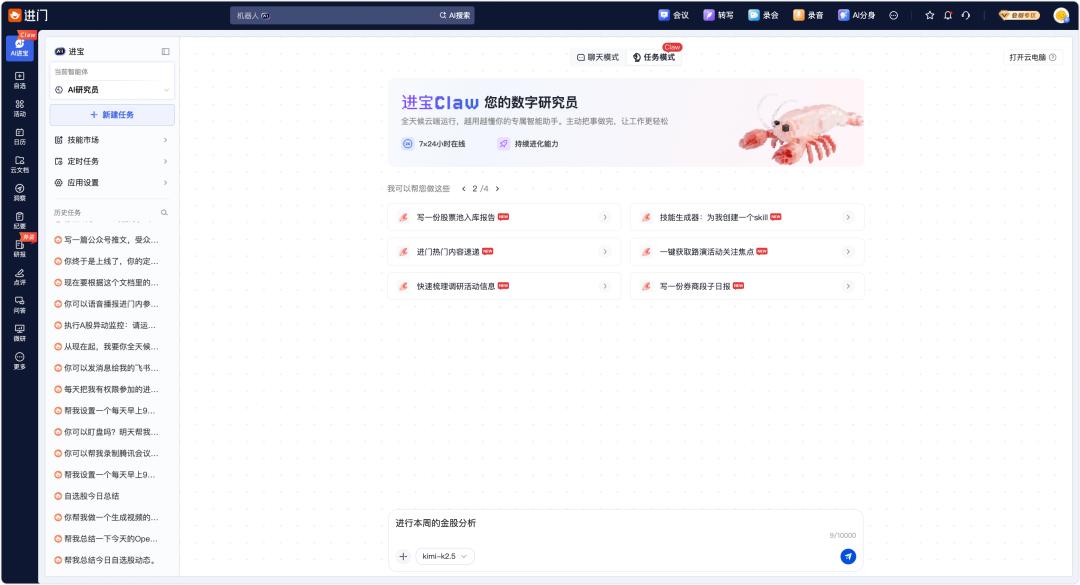
In the words of JMen's CEO, Cheng Jianhui, the biggest change brought by Agentic AI is that "AI has officially entered the work mode from the past chat mode."

"Working" in the communication scenario
Actually, as early as the early days of entrepreneurship, Cheng Jianhui and his team wanted to do more than just a meeting platform. Going back more than a decade, when JMen was first founded. In the financial market at that time, market quotes and trading were the most frequent scenarios, followed by the communication scenario. Cheng Jianhui believes that "the communication scenario is a natural rich mine of information." As the efficiency of information circulation gets higher and higher, the communication scenario will surely become the future of the financial market.
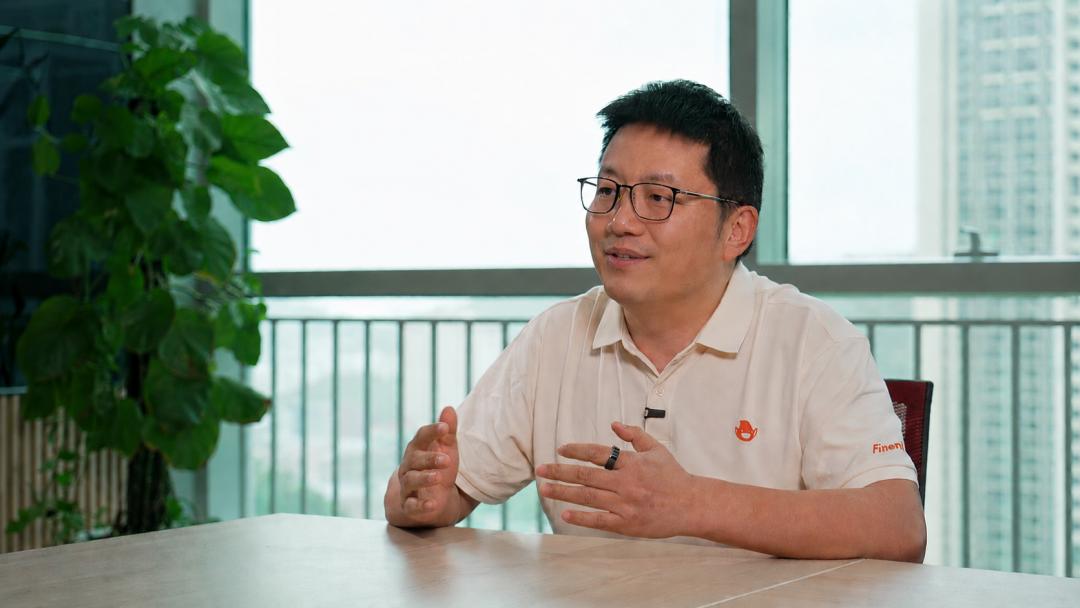
JMen's CEO, Cheng Jianhui
But at that time, no one thought it was a good track.
The turning point came after the pandemic. Roadshows and meetings in the investment research circle were all moved online, and JMen's market penetration rate increased accordingly, which also confirmed the team's initial prediction.
A large amount of facts and data are precipitated from the massive communication scenarios. However, the investment research field involves multiple entities, and different entities have different ideas about the same content. Cheng Jianhui realized that what they need to do is actually "connect the three entities of listed companies, brokerage research institutes, and institutional investors based on the communication scenario."
At first, JMen considered methods such as machine learning and NLP, but their capabilities were relatively limited. It wasn't until the wave of AI Agents came that new opportunities emerged.
When Openclaw detonated the Internet at the beginning, the entire JMen team was extremely excited. They didn't even take a vacation during the Spring Festival and worked overtime to study how to better implement Agentic AI in the investment research field.
Based on the financial communication scenario data flywheel formed over more than a decade, JMen has built "AI Jinbao" into a "super productivity tool" that really understands investment research, can be implemented, and runs through the entire process of investment research work.
AI can really do work now. Cheng Jianhui gave an example, "In the past, to follow the self-selected stocks, you had to open the market software every day to see if there were any marginal changes. Now you don't have to. You can directly set a scheduled task. For example, at 7 o'clock every morning, scan all the self-selected stocks, help me analyze the changes, and even help you do complex tasks such as quantitative backtesting and management background checks."
In the second half of the AI application, the focus is gradually shifting from pursuing efficiency to pursuing the usability of the delivery results. So Cheng Jianhui believes that it's not enough for AI Jinbao to just be able to do work. It must truly have the practical value of doing the work to a 99-point level.
Cheng Jianhui used an analogy, "In handling investment research tasks, a wild AI is a roughcast house, but AI Jinbao is a fully decorated house that you can move into immediately without having to do a lot of basic work."

From a toy to a productivity tool
Only those in the financial industry understand the direction of "full decoration".
For the financial industry, in addition to the improvement in efficiency, to truly integrate AI Agents into the workflow, more special problems in the industry need to be solved. One of the most urgent problems is security.
However, AI still has a certain "hallucination" problem, which poses a great challenge to the investment research field. Individual users have a relatively high tolerance for "hallucinations", but "in the financial industry, you must be correct 100 times out of 100. If you make a mistake on the 101st time, it will be a big accident," said Xie Rendong, the deputy general manager of Tencent Cloud's Digital Finance.
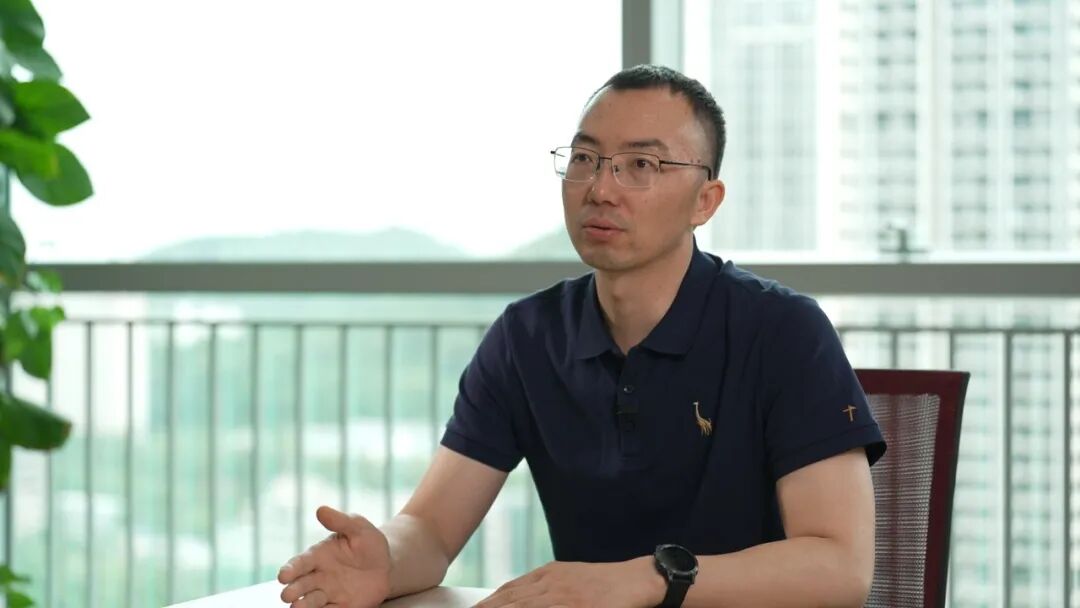
Xie Rendong, the deputy general manager of Tencent Cloud's Digital Finance
In Xie Rendong's view, the most essential difference between an enterprise "raising shrimp" and an individual "raising shrimp" lies in the control of safety and reliability. As an enterprise-level AI intelligent agent platform, Tencent Cloud has a mature and comprehensive infrastructure and resources to ensure that enterprises can use AI Agents efficiently and smoothly.
As early as the early stage of JMen's AI business development, JMen established a friendly partnership with Tencent Cloud. In the cooperation of enterprise-level AI Agents, Cheng Jianhui is more certain of Tencent Cloud's ability to "solve pain points." "Whether it's explicit or implicit needs, Tencent Cloud communicates with us with the idea of solving problems," Cheng Jianhui still remembers that at the beginning, when cloud computing resources were very tight, Tencent Cloud still guaranteed the provision of resources to support the release of new AI products.
In terms of the data security issue of roadshow meetings, Tencent Cloud also provided the solution that JMen urgently needed. Through the technology of audio watermark positioning, Tencent Cloud helped JMen effectively monitor the outflow channels, accurately trace the source of responsibility, and defend the bottom line of financial data security.
Xie Rendong mentioned that what Tencent Cloud provides here is not just a "cloud server", but an all-round architecture from one-click deployment of AI capabilities, to enterprise-level security capabilities, and then to the model call ecosystem. It includes:
1) Multi-scenario intelligent application layers for business, research efficiency, and office work such as CodeBuddy and WorkBuddy;
2) Intelligent agent engine layer with atomic capabilities such as intelligent agent API, context engineering, multi-Agent orchestration, and retrieval enhancement;
3) Intelligent service layer such as AgentRuntime, tokenhub model routing, and inference platform;
4) Infrastructure layer such as heterogeneous computing power, high-performance network, and security protection.
That is to say, enterprises in the financial field can no longer regard AI as just a toy for chatting, but as a compliant, safe, and efficient productivity tool, which can "turn AI into a general ability of an organization." Financial institutions can combine their own "vertical data + industry skills + evaluation system" with the "infrastructure + Agent operating environment + security and compliance tools" provided by Tencent Cloud to give full play to their respective advantages and quickly promote innovation.

Make the excellent people even more excellent
With a safe and stable underlying architecture, enterprise users can rest assured to hand over information processing entirely to AI. So after that, where is the value of researchers? Will they really be replaced by AI?
In response, Cheng Jianhui gave an unexpected answer. He believes that the emergence of AI investment research will instead "make excellent people even more excellent."
"There are basically three types of money to be earned in the market. The first is to earn money from information asymmetry; the second is to earn irrational money; the third is to earn money from cognitive difference. In the era of AI, it will be more and more difficult to earn money from information asymmetry, but in the future, the most valuable thing is to earn money from cognitive difference." In Cheng Jianhui's description, what AI really changes is not the existence of people, but the way the industry "earns money."
What AI Agents can do in the future is to help researchers raise the upper limit of cognition and hold the lower limit, and earn money from cognitive difference.
"The top analysts in the world may have only processed 10 research reports a day before, but now they can process 100,000 research reports a day," Cheng Jianhui explained. He believes that at this stage, the thinking and analysis ability of the model is far behind that of top human researchers, but it can help researchers save a lot of time for thinking and decision-making. Therefore, for senior researchers, the stronger the AI, the more valuable those who can ask questions, make judgments, and make non-consensus decisions are.
For the younger generation of researchers, their growth path will also be completely different. Cheng Jianhui compared it to the difference between "using a shovel" and "driving an excavator." Young practitioners can delegate the entry-level and inefficient work to AI and focus their energy on improving their cognition, and may even surpass senior practitioners.
In a conversation with 36Kr, Cheng Jianhui once explained why JMen has always been deeply involved in the vertical track of investment research. "The aircraft carriers of giant companies do business in the vast ocean. We want to do a good job in the business in the small river first before sailing far." The vertical and real financial business scenarios are like small rivers, but it is here that AI is truly implemented, iterated, and further verifies greater industry trends.
Looking at the financial industry, in addition to investment research, there are many other segmented business forms such as risk control, asset management, insurance, and payment. As Xie Rendong said, the advantage of Tencent Cloud lies in "openness and ecosystem", which will accept and support more "small businesses" like JMen that are deeply involved in vertical scenarios, and have more opportunities to respond to the common propositions of the financial industry in the AI era.