Coding Challenges Everything: The Two-Year Survival Battle in the Independent Large Model Race (Part 2)
The first part of this article discussed the impact of coding capabilities on the market value and development paths of the "Four AI Dragons," as well as the influence of the styles of their core decision - makers on the outcomes. The second part further explores their interrelationships, entanglements, and potential breakthrough points in the future.
——Introduction
Moments of Entanglement
If one only looks at the costs associated with the above four styles, one might think that the four companies are going their own separate ways and have nothing to do with each other.
However, this is not the case in reality.
From 2025 to 2026, in one specific moment after another, these four companies influenced each other and became part of each other's stories. This entanglement is not visible in public reports - it is an undercurrent that can only be felt within the industry.
For example, 172 days after January 20, 2025.
During the week when DeepSeek - R1 was released, Yang Zhilin disappeared from the public opinion field.
However, within these 172 days, the internal reactions of Zhipu, MiniMax, and Jieyue Xingchen were almost as intense as the dark side of the moon.
According to a later - circulated statement, Zhipu's internal judgment during that period was that "DeepSeek made coding the only important thing." After that, Zhipu began to concentrate its R & D resources for the next - generation of the GLM series in the coding direction. Starting in July 2025, some internal teams at Zhipu responsible for "multi - modality" and "long - text" directions were quietly merged into the coding team.
MiniMax's reaction was a bit slower. According to multiple indirect sources, Yan Junjie still insisted in the internal discussions in Q1 2025 that "full - modality integration is the core barrier." It wasn't until Q3 2025 that he truly accepted that "MiniMax needs a foundation model for coding." The M2 series, released in October 2025, was essentially the result of six months after Yan Junjie was forced to accept the reality.
Jieyue's reaction was the most hesitant. Jiang Daxin agreed at the beginning of 2025 that "investment in coding should be made," but he advocated "doing coding within the multi - modality architecture" rather than creating a separate coding model. There is no public record of this divergence within Jieyue, but from the subsequent product release schedule, it can be seen that Jieyue did not release a real - sense coding - specific model in 2025.
This is the same event that triggered four different levels of reactions within the four companies. Zhipu was the fastest, the Dark Side of the Moon was awakened, MiniMax was half a step slower, and Jieyue didn't really catch up. The differences in these four reactions turned into real market - value differences in May 2026.
However, the entanglement of the Four Dragons doesn't end here.
On the day when Zhipu rang the bell for its IPO, the Dark Side of the Moon was doing almost the exact opposite thing.
In an internal letter released by Yang Zhilin on December 31, 2025, he wrote the sentence that was later repeatedly quoted: "We are not in a hurry to go public in the short term." In the letter, he publicly announced the Dark Side of the Moon's cash reserve - more than 10 billion RMB. This was a signal from Yang Zhilin to investors and the market: I have money, I don't need to rush to sell equity, and I want to make the model more solid.
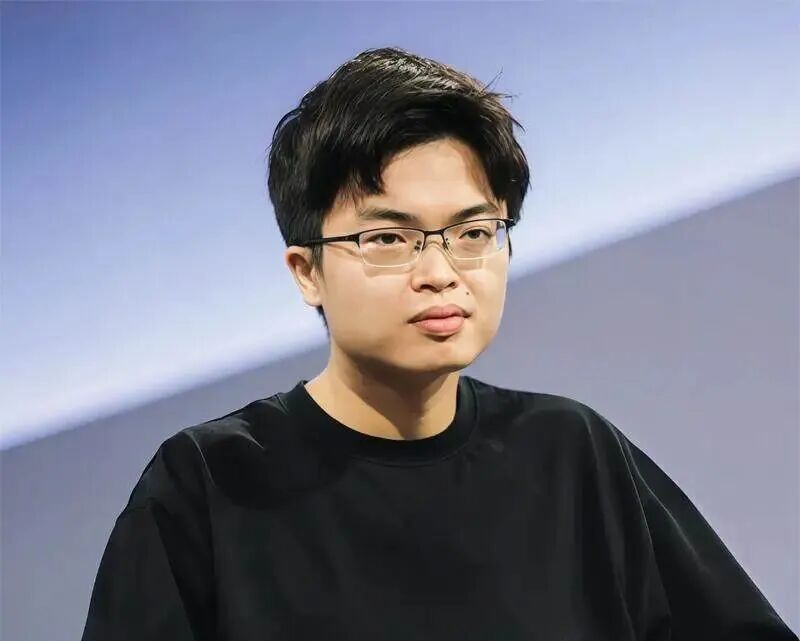
However, after Zhipu rang the bell on January 8, the situation changed.
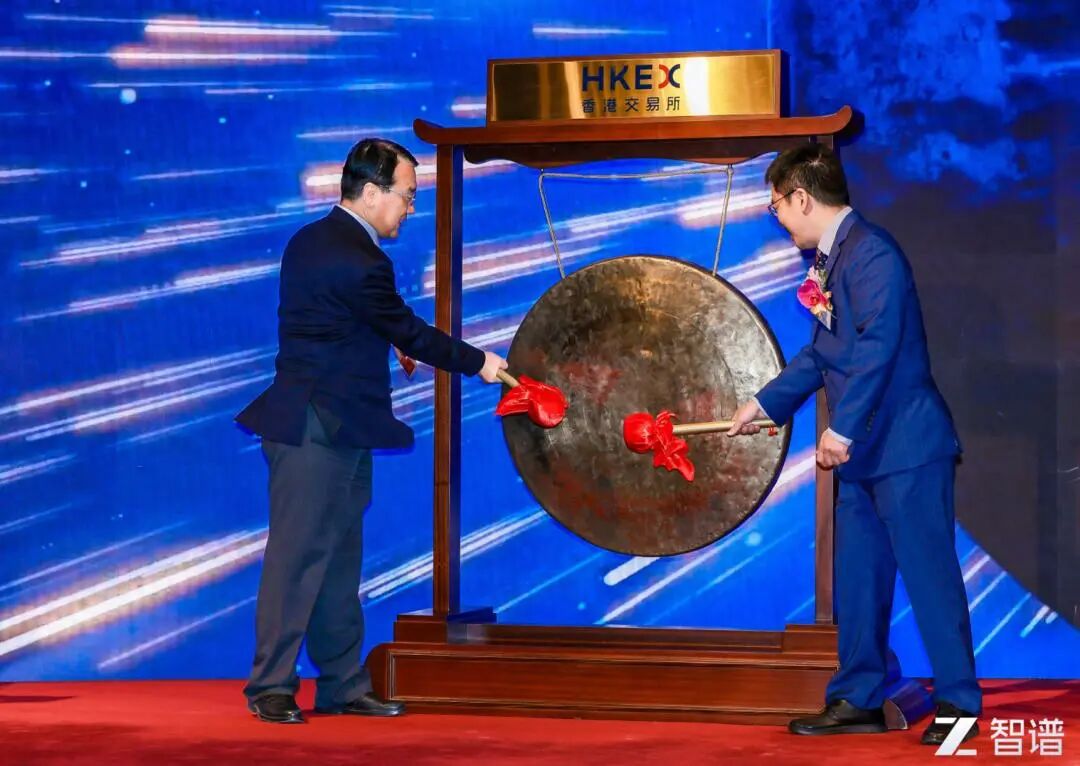
Zhipu received 1159 times over - subscription, and MiniMax received 1837 times over - subscription the next day. The real enthusiasm of the Hong Kong stock market for independent large - model companies far exceeded the expectations of any executives of independent companies. This IPO actually re - priced the entire independent large - model track.
Yang Zhilin's judgment of "not being in a hurry to go public in the short term" quickly became invalid in the face of this re - pricing. According to Bloomberg, the Dark Side of the Moon contacted CICC and Goldman Sachs to prepare for a Hong Kong IPO within less than four months after Zhipu's IPO.
Thus, Zhipu's IPO directly rewrote the Dark Side of the Moon's IPO schedule. This was a "leverage transmission" that did not appear on any media headlines but was very clear within the industry.
At the same time, Jieyue Xingchen was in the most awkward situation. On the day when Zhipu rang the bell on January 8, Jieyue's strategic shift announcement of "AI + terminal" with Yin Qi had not been released - but the direction had already been determined in internal discussions. On January 26, Jieyue officially announced Yin Qi's joining.
From January 8 to January 26, these 18 days were the most difficult time for Jieyue. It had to publicly admit its strategic shift at the same time when Zhipu and MiniMax had successively gone public and the independent large - model track had collectively reached the peak of capital. This public admission was itself a compromise.
However, the two pieces of news released on January 26 - a 5 - billion - RMB Series B+ financing + Yin Qi's joining - were very well - coordinated. First, it told the market that "we just raised the largest single - round financing in this track in a year," and then it told the market that "we are changing to a different track." This sense of rhythm was the work of serial entrepreneur Yin Qi.
Early in the morning on February 12, 2026, on the same day when Zhipu's GLM - 5 was released, MiniMax's M2.5 was also released.
However, the biggest loser in this competition was not Zhipu or MiniMax, but Jieyue, which did not release anything on that day. Jieyue's Step Audio R1.1 won the first place globally in Artificial Analysis in January 2026, but the attention on February 12 was taken away by Zhipu and MiniMax. Jieyue missed an opportunity to occupy the collective mind.
As mentioned before, Yang Zhilin's speech was evaluated by Elon Musk as "impressive."
However, few people noticed that the aftershocks triggered by this speech within the Chinese independent large - model track were far deeper than Musk's evaluation.
It is said that some team members at Zhipu immediately held an internal sharing session after the speech to analyze the three - dimensional framework of "Token efficiency + long context + intelligent agent cluster" proposed by Yang Zhilin. Tang Jie is rumored to have said internally that the Muon optimizer and Kimi Linear architecture mentioned by Yang Zhilin "are worth serious study."
MiniMax's reaction was different. Yan Junjie is said to have said in an internal meeting two weeks after the GTC speech: "Our direction for M2.5 is correct, but Yang Zhilin's ability in public relations and communication is what we need to catch up with."
Jieyue's reaction was the most low - key. Jiang Daxin has never publicly evaluated Yang Zhilin's speech. All the content released by Jieyue in March was related to "Step Audio R1.1 winning the first place globally" and "cooperation with Qianli Technology," deliberately avoiding a direct comparison with Kimi.
On March 22, 2026, the Cursor shelling incident broke out.
Three days later, Cursor, a Silicon Valley programming tool valued at nearly $30 billion, was exposed by developers that its new model was suspected of being a shell of Kimi K2.5. Cursor apologized and supplemented the annotation of the base source (the official of the Dark Side of the Moon said that the two parties had a compliant commercial licensing cooperation through the Fireworks AI platform).

The biggest reaction triggered by this incident within the Chinese independent large - model track was not the celebration of the Dark Side of the Moon's victory, but the nervousness of Zhipu and MiniMax.
It is said that Zhipu urgently discussed a question within 48 hours after the incident: Why did Silicon Valley developers choose Kimi K2.5 instead of the GLM - 5 or M2.5 released at the same time? According to later analysis, the core reasons were that Kimi K2.5 had a more lenient open - source license, lower API costs, and better support for long contexts.
The result of this internal discussion directly led Zhipu to publicly announce that "it is benchmarking against Claude Opus 4.6" when releasing GLM - 5.1 at the end of March, and to design the core indicators of the coding evaluation as "Claude Code as the evaluation framework." This was the first time that Zhipu completely aligned its product positioning with Claude instead of comparing with domestic peers.
MiniMax's reaction was different. Yan Junjie is said to have emphasized in an internal meeting after the Cursor incident: "We want M2.5 to also become the object of being 'shelled,' not just the object of being used." After that, MiniMax increased its openness to the developer community, and the open - source license, API documentation, and deployment examples of M2.5 were all significantly upgraded.
Jieyue was a complete bystander in this incident. It was not shelled by any Silicon Valley tools, and none of its models had the possibility of being "shelled." This bystander status itself was cruel - it meant that Jieyue's models had not entered the "attention" range in the minds of global developers.
This is what the Chinese independent large - model track was really like in 2026. It is not a story of four isolated companies, but a net that is constantly being woven, intersecting, and re - positioning. Every external event - DeepSeek - R1, GTC speech, Cursor shelling, Zhipu's apology letter - triggers a resonance on this net. Each resonance will readjust the relative positions of the four companies at the closing moment in May 2026.
Behind the Glorious Surface
Let's go back to the initial judgment: The market - value differences among the four companies are essentially the result of the combination of the time when they bet on the coding main battlefield and the costs of their decision - making styles.
Zhipu has the highest market value because it was the first to bet on coding, although the operational ceiling of the academic - style management limits it from being even higher.
The valuation of the Dark Side of the Moon has quickly caught up because it was awakened early, although the fragile talent echelon of the genius - youth limits its upper bound.
MiniMax's market value is only half of Zhipu's because it turned around too late, although its reverse bet is still one of the most successful cases among Chinese independent AI companies.
Jieyue Xingchen has the lowest target valuation because it lost its position in the coding main battlefield, although Yin Qi's "AI + terminal" strategy is a precise compromise.
However, this is only the answer as of May 2026. This answer itself may start to face challenges in the second half of 2026.
The first challenge is that Claude still accounts for more than 60% of global coding requests.
As mentioned before, Chinese open - source models once accounted for about 30% of the overall token call volume on the OpenRouter platform during some periods in the second half of 2025 (note that this is the token share for all uses, not just for coding). However, on the other hand, their share in the global paid coding market is still very small. While Chinese companies are competing fiercely for the first place in open - source coding in the domestic market, the ceiling of the global paid market is still firmly held down by Claude.
"Open - source mainly enhances influence and prestige, but has limited value for the commercial closed - loop," said a senior Chinese AI observer.
The second challenge is the existence of Alibaba's Qwen3 - Coder.
This giant company has an open - source model in the first echelon of coding capabilities, the largest cloud service in China, and almost unlimited capital and computing power. When Alibaba's Qwen's coding capabilities continue to catch up with Claude in 2026, independent large - model companies must answer a new question: Why should customers choose Zhipu, Kimi, or MiniMax instead of directly using Qwen? There is no clear answer to this question as of May 2026.
The third challenge is the remaining gap at the top level.
The coding evaluation of Zhipu's GLM - 5.1 (using Claude Code as the evaluation framework) reached 94.6% of Claude Opus 4.6 - which means there is still a 5.4% gap. Kimi K2.5's SWE - bench Verified reached 65.8%, but Claude Opus 4.6 is significantly higher. This gap still exists. In the winner - takes - all logic of the coding main battlefield, these "small gaps" may mean a 50% difference in market value.
The fourth challenge is the madness of the secondary market of the Hong Kong stock market.
Zhipu's stock price rose 36.9% in a single day on May 13 and had a cumulative increase of 524%. How much of the future has this valuation overdrawn? When the Hong Kong stock market starts to adjust in the second half of 2026, whether the market values of these companies can hold up directly determines whether they can obtain the next round of financing.
These four potential huge challenges mean that the glorious situation in May 2026 may just be a preview of the first half.
In May 2026, the Chinese independent large - model track was at such a moment.
The success of the Hong Kong IPO is just an admission ticket, not the end. In the real main battlefield of this track - the global paid coding market, Chinese independent companies have just reached the card table. Claude still holds most of the chips on the table. Alibaba's Qwen is joining this card game with the resources of a giant company.
Zhipu, the Dark Side of the Moon, MiniMax, and Jieyue Xingchen must answer a question in the second half of 2026 and in 2027 that is more difficult than "how to survive":
Can they move from "open - source SOTA" to "the first in global paid services" in the coding era?
No company can avoid this question.
Tang Jie, a 49 - year - old Tsinghua professor, Yang Zhilin, a 34 - year - old genius with a halo, Yan Junjie, a 37 - year - old with systematic capabilities from a large company, and the combination of Jiang Daxin and Yin Qi, a technical expert and a serial entrepreneur - all the judgments, bets, persistence, and compromises of these four generations will be re - evaluated in the face of this question.
After the bell rings at the Hong Kong Stock Exchange, the real test has just begun.
This article is from the