The stubborn Dario took down OpenAI this time.
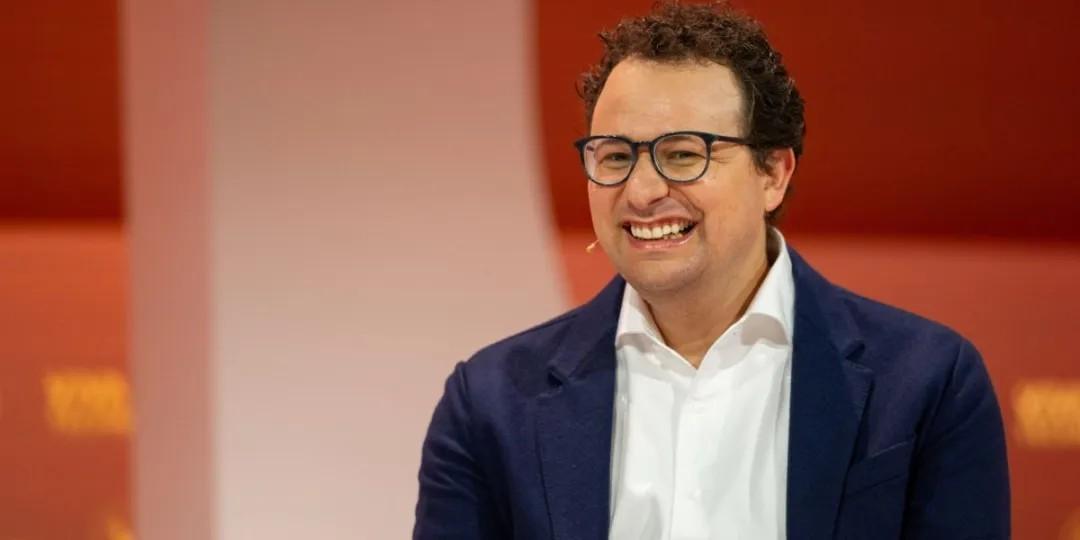
The boss of Anthropic, Dario Amodei, looks cute when he smiles, but when it comes to getting things done, he always gives the impression of being stubborn.
Take security risk control for example. Anthropic has always been radical, adopting an approach of "it's better to wrongfully eliminate a thousand than to miss one."
As long as it determines that a user has violated the rules or for legal compliance reasons, it will block the user's account without hesitation, and has been criticized by users for this.
Some people even created a website dedicated to documenting Anthropic's controversial events over the past few years, such as account blocking, system outages, copyright lawsuits, traffic restrictions, competition blocking, and the decline in Claude's intelligence, and organized them into a timeline.
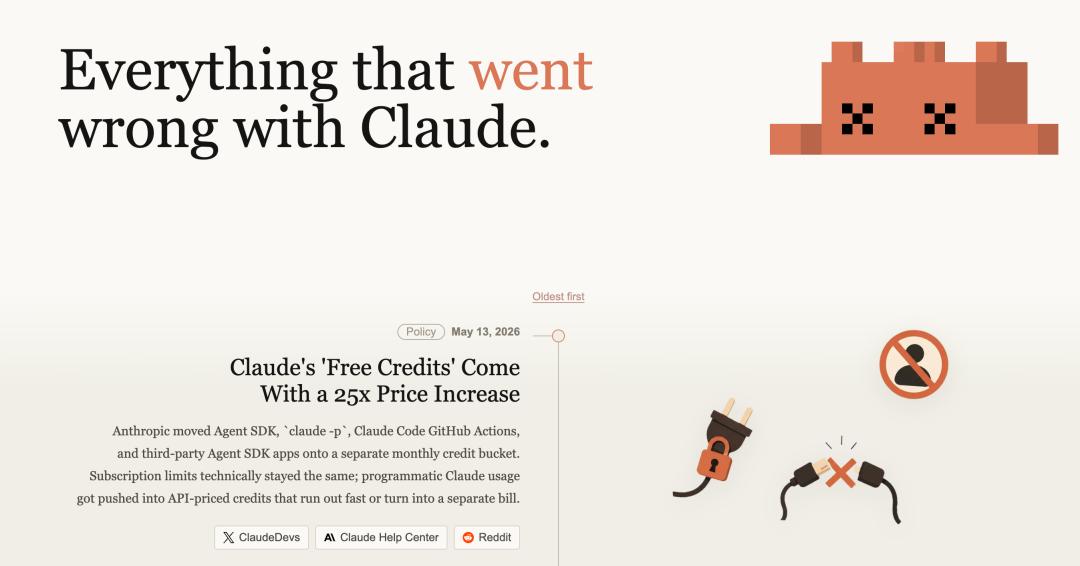
http://clawd.rip
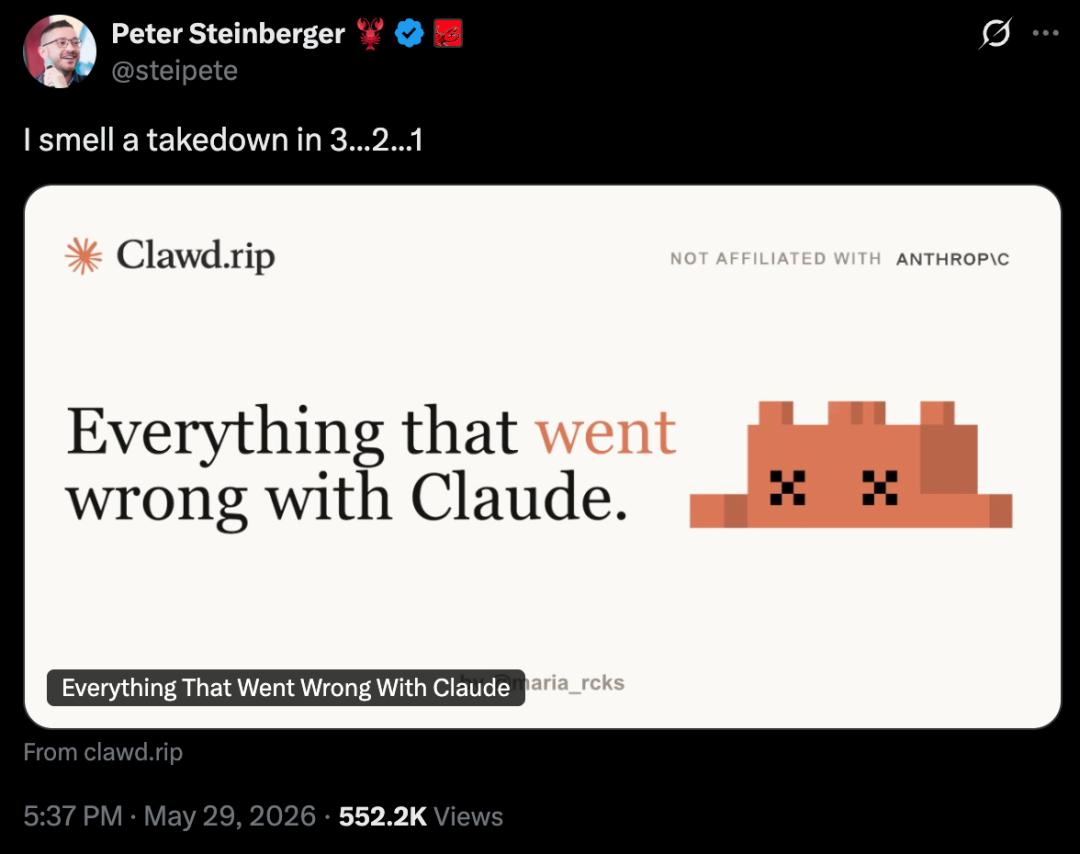
This website was also reposted by Peter, the founder of OpenClaw.
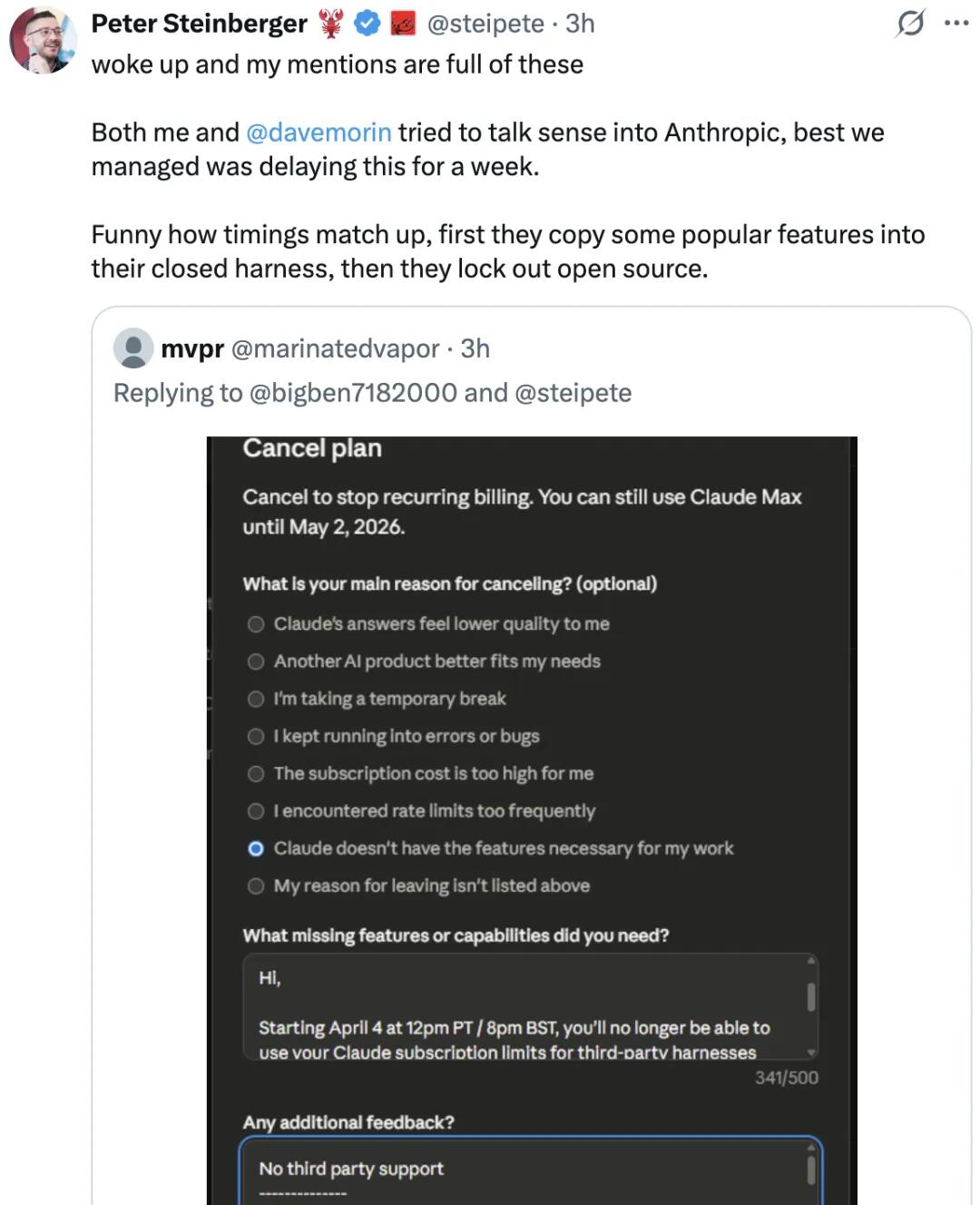
OpenClaw was also one of the "victims" of Claude. At the beginning of April this year, Anthropic informed its subscribed users that their Claude traffic limits would no longer cover third - party tools like OpenClaw, and users would need an API key or pay separately to use them. This made Peter quite anxious.
A company that often does things that offend users. Sometimes Dario's stubbornness is just inexplicable and helpless.
However, looking back now, Anthropic's current position may be due to Dario's stubbornness and focus.
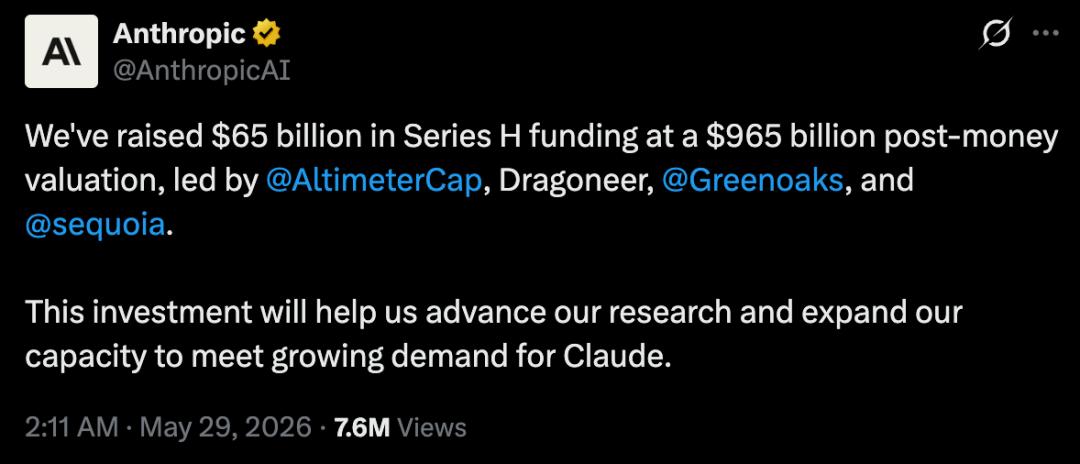
Last Friday, Anthropic announced the completion of its Series H financing, with a scale of $65 billion.
After this round of financing, Anthropic's valuation reached $965 billion, surpassing OpenAI's previous valuation of approximately $852 billion, making it the most valuable unlisted AI company in the world.
In terms of revenue, at the beginning of 2025, Anthropic's annualized revenue was approximately $1 billion; by May 2026, this figure had increased to $47 billion. It increased by about 47 times in just over a year.
According to CNBC, if Anthropic can achieve its revenue target of $10.9 billion this quarter, the company is expected to turn a profit this quarter.
In contrast, OpenAI's annualized revenue during the same period was approximately $30 billion, and Anthropic's revenue was about 35% higher.
The core of the growth is a product called Claude Code. It was launched in May 2025, and its annualized revenue exceeded $500 million three months later, reaching $2.5 billion by February 2026.
In the enterprise AI programming market, Anthropic's market share increased from 42% in June 2025 to 54% by the end of the year, while OpenAI's was only 21% during the same period.
In the broader enterprise large - model procurement market, Anthropic's market share increased from 24% in 2024 to 40%, while OpenAI's dropped from 50% in 2023 to 27%.
Why did Anthropic surpass OpenAI?
Now, when people mention Anthropic, the first thing that comes to mind is coding. So much so that people mistakenly think that Anthropic is a coding company.
X blogger @AndrewCurran_ pointed out that Anthropic is essentially an intelligence company.
As Claude's capabilities continue to improve, it will eventually extend to all fields that require human intelligence. Understanding this is the key to seeing Anthropic's future.
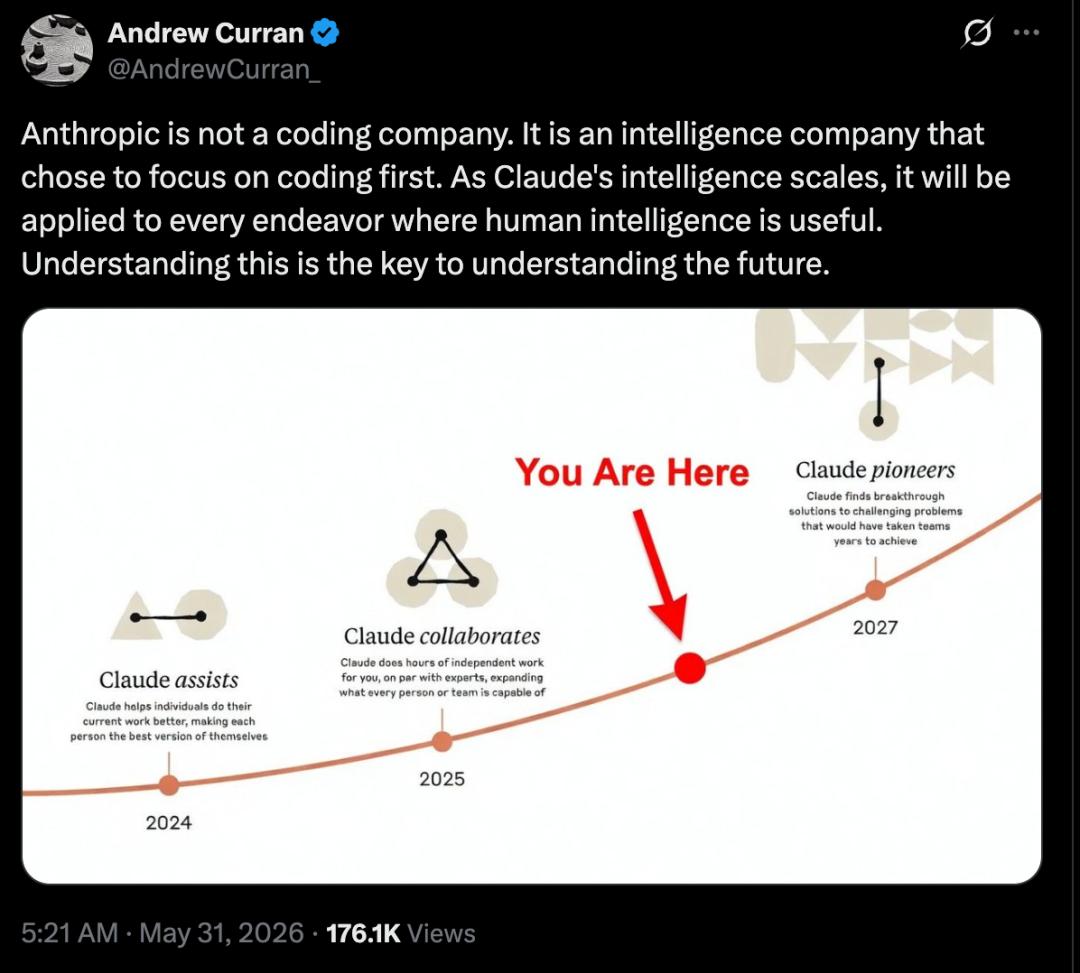
He also mentioned that OpenAI is now also returning to its essence and transforming into a more pure - play intelligence laboratory, while other Western AI companies have a bit of a "media company" attribute, being keen on product development, marketing, and gimmicks.

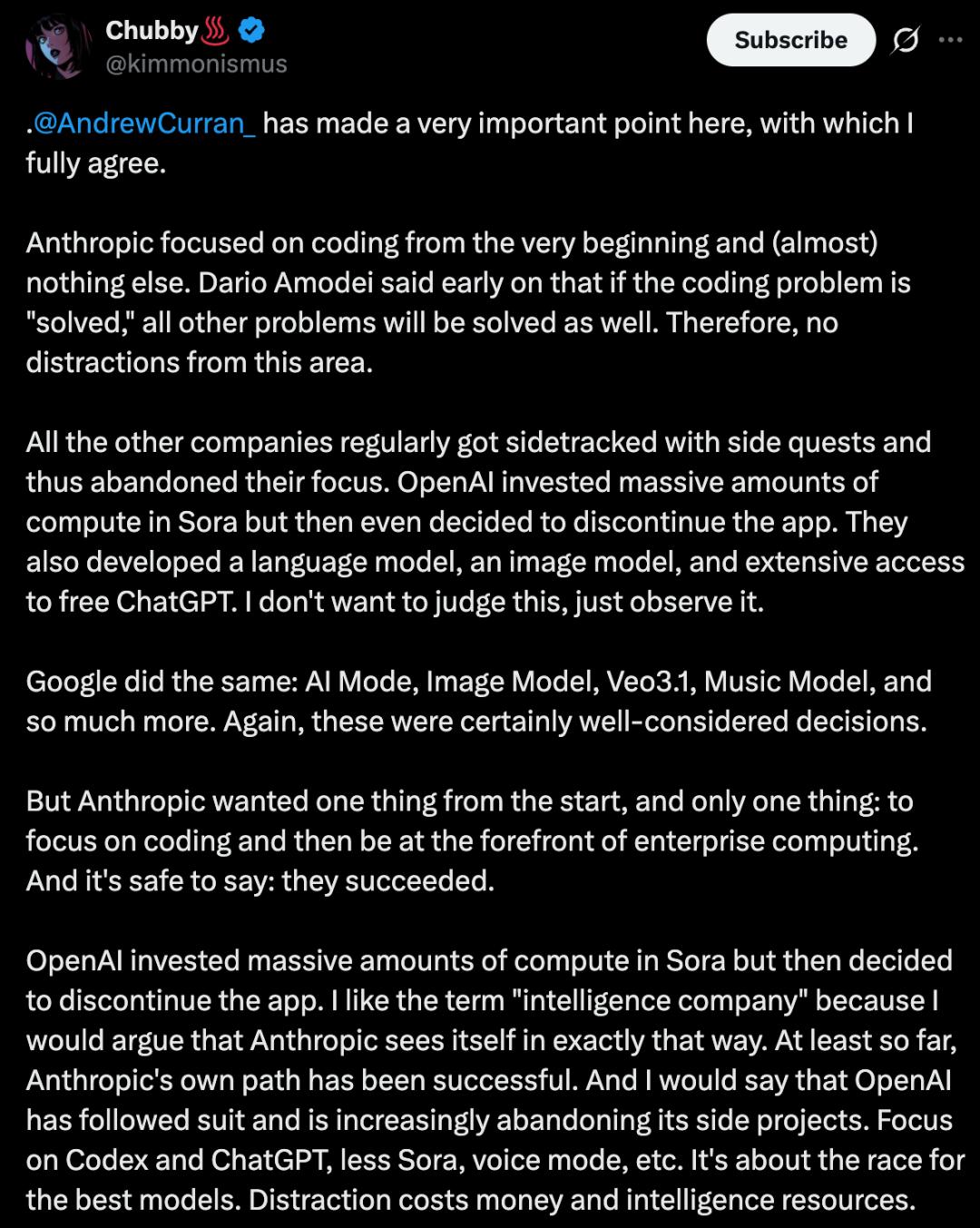
X user @kimmonismus agrees with this view.
Anthropic has been focusing on coding from the very beginning and hardly does anything else. Dario Amodei said a long time ago that as long as the programming problem is solved, almost all other problems will be solved, so they don't engage in those messy things.
Other companies are often easily distracted and take on a lot of side tasks. OpenAI invested a huge amount of computing power in Sora, but later scrapped the app. They also developed language models, image models, and launched a large - scale free ChatGPT.
Google is similar. It has multiple projects running simultaneously, such as AI Mode, image models, Veo, and music models. These are definitely well - considered decisions.
Anthropic has been focused on one thing from start to finish: fully engaging in coding and becoming the leader in the enterprise - level market.
After all, this is a race to get the best model. Being distracted is really costly in terms of money and computing power.
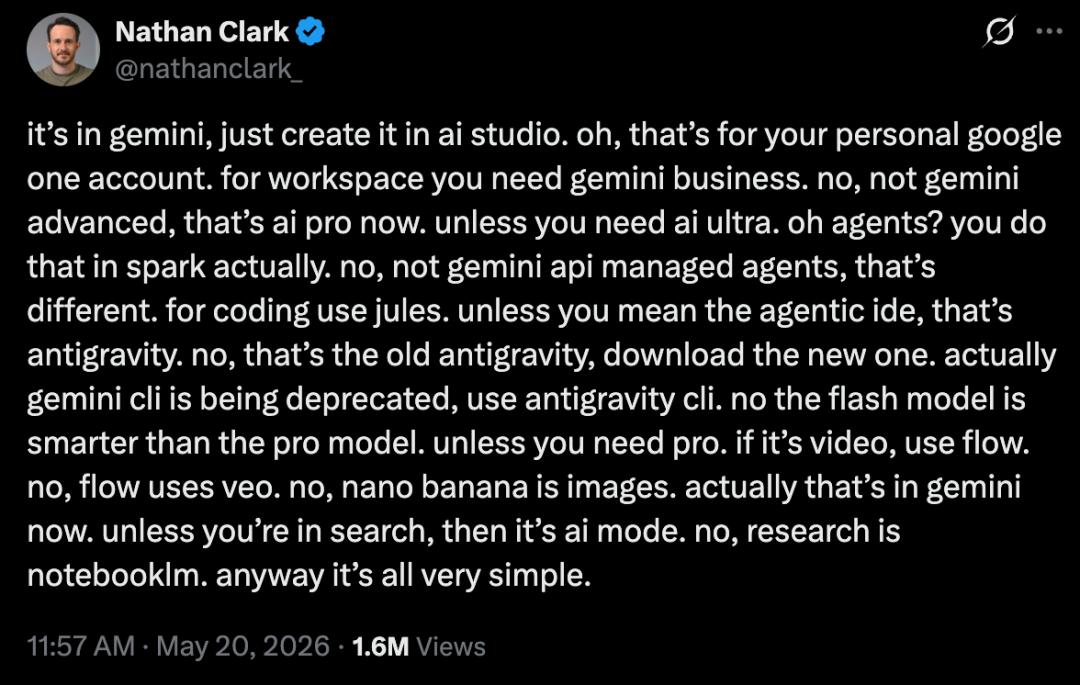
Compared with Anthropic, Google and OpenAI do have a large business scope.
Previously, some netizens complained that Google's AI products were too confusing. The same Gemini - related capabilities were scattered across different entrances and packages such as AI Studio, Workspace, Spark, Jules, Antigravity, Flow, Veo, NotebookLM, and AI Mode, and the names were often changed, making it difficult for users to figure out which one to use.
OpenAI was also bent on expansion before.
In July 2024, OpenAI announced the signing of a $10 million consulting contract. This company, which was originally thought to use AI to replace consulting firms, started doing consulting business instead.
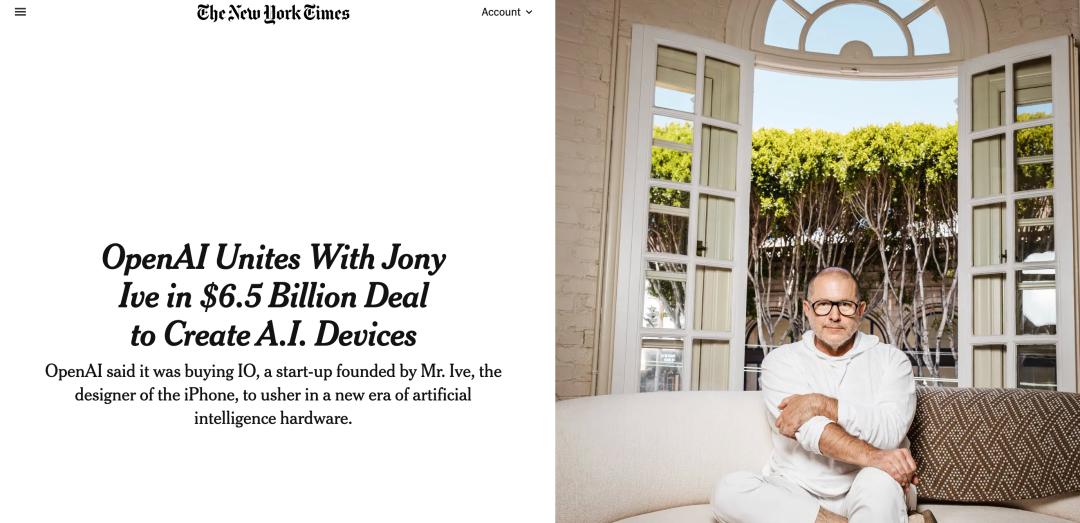
In May last year, OpenAI acquired Jony Ive's hardware company for approximately $6.5 billion, which was interpreted by the outside world as OpenAI planning to create a "post - screen era" device, but nothing came of it later.
Five months later, OpenAI released ChatGPT Atlas, a new web browser built on ChatGPT. Soon after, it announced the launch of an "adult mode" chatbot project, which ended up going nowhere.
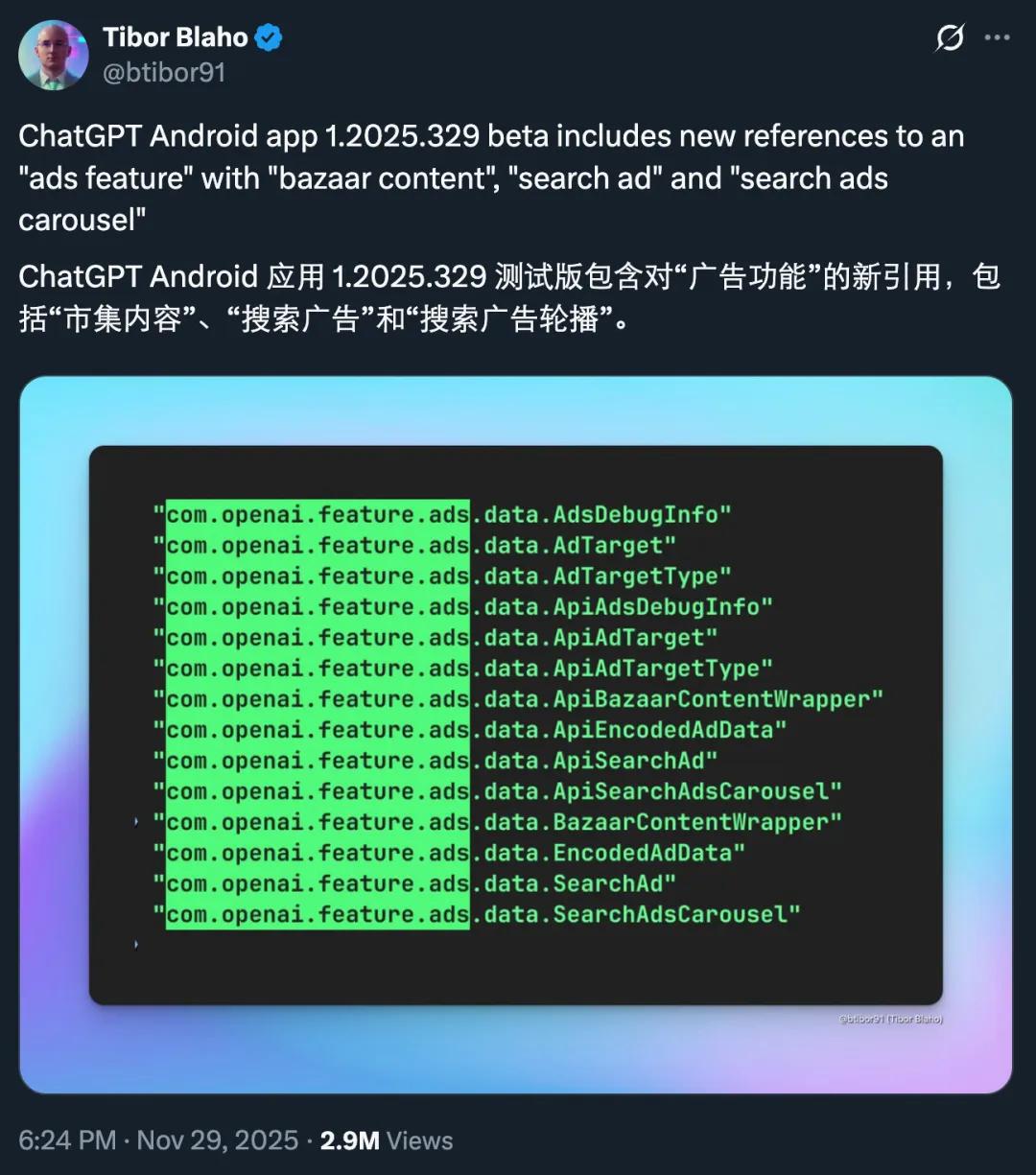
In November last year, OpenAI was preparing an advertising function for ChatGPT.
As the netizen mentioned above, OpenAI is now also moving towards a more focused path, cutting down on many side businesses and focusing back on Codex and ChatGPT.
Why focus on coding?
There are deeper strategic considerations behind Anthropic's focus on coding.
Some believe that Anthropic's bet on coding is not only because it is a large market, but also because code can in turn accelerate the evolution of AI itself. Code agents can write tools, conduct evaluations, and modify infrastructure, directly helping the next - generation models become stronger. This is something that products like Sora have never been able to bring to ChatGPT.


Meanwhile, code agents have extremely strict requirements for permission control, involving high - risk aspects such as file access, API calls, and online deployment. If the agent permission problem in the code scenario can be solved, almost all agent governance problems in vertical industries can be solved.
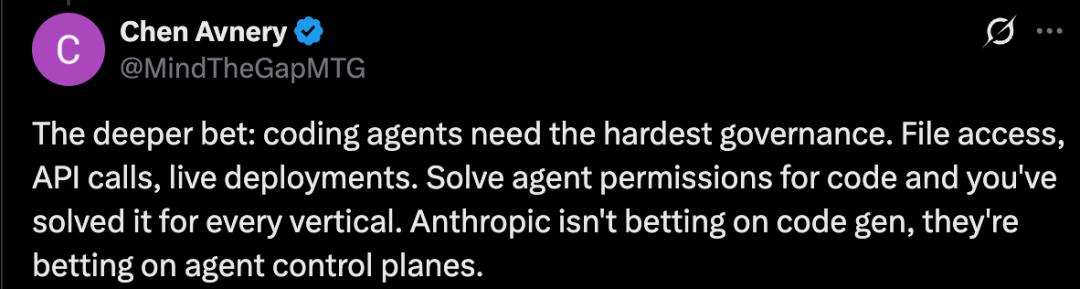
From this perspective, programming is both an entry point and a testing ground.
Of course, not everyone is optimistic about this path.
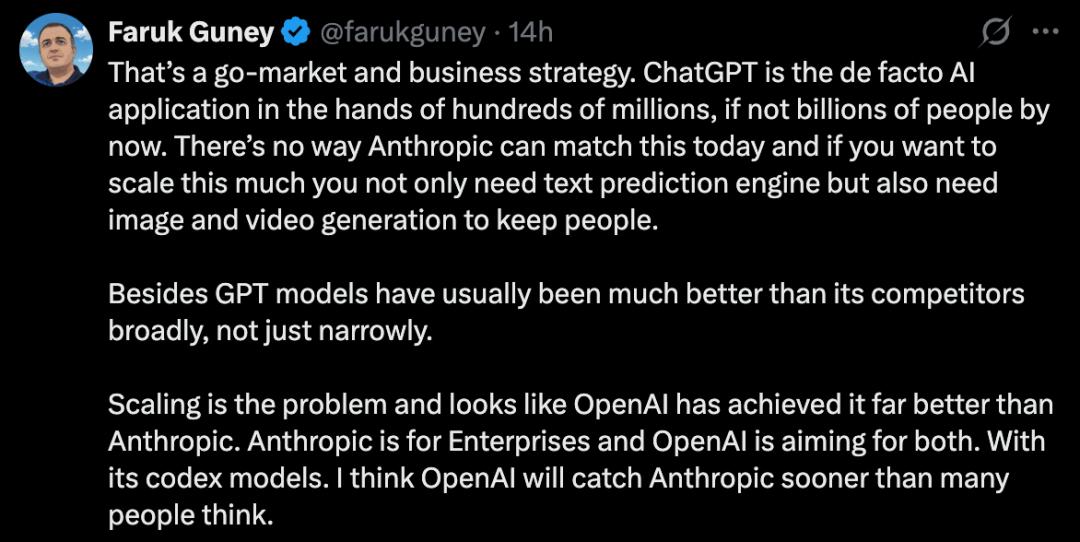
Some analysts believe that Anthropic's advantages mainly come from its business strategy in the enterprise market. OpenAI's ChatGPT covers hundreds of millions or even billions of users and has more complete consumer - level product capabilities in text, image, video, etc., and is better at scaling. With the advancement of code models like Codex, OpenAI may catch up with Anthropic faster than many people expect.
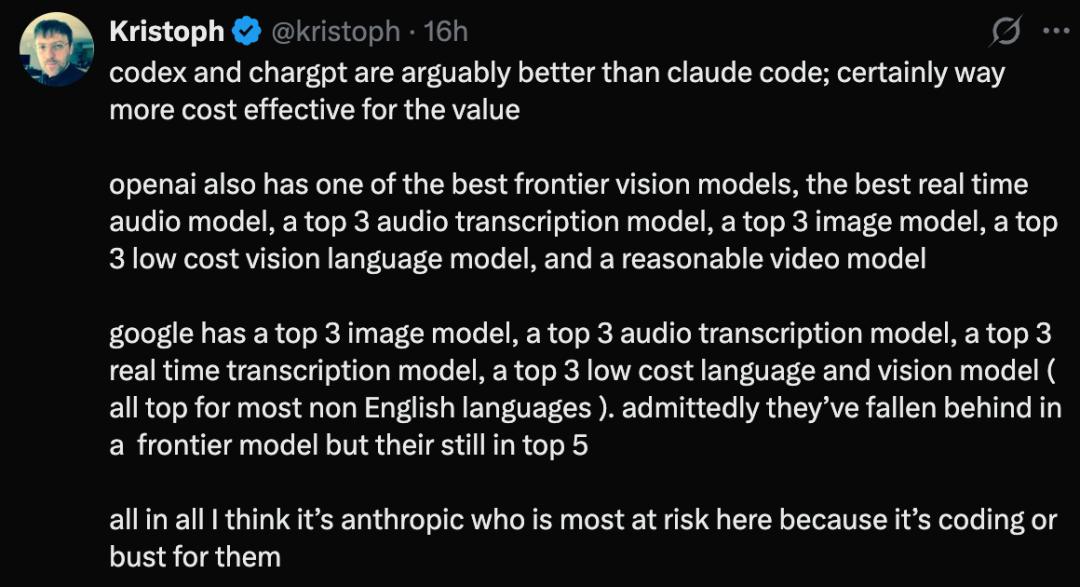
There are also more pessimistic voices. They think that Anthropic is actually the one at the greatest risk. OpenAI has strong layouts in areas such as vision, real - time voice, transcription, image, low - cost multimodality, and video; Google is also not weak in image, voice, multilingual, and low - cost multimodality. In contrast, Anthropic's advantages are almost entirely concentrated on Claude Code and programming agents. Once this line is caught up by competitors, its moat will become quite vulnerable.
Some also point out that programming ability itself is not equivalent to general intelligence. Over - focusing on it may actually restrict the model's development in terms of adaptability, planning ability, and spatial reasoning.
