With a gross profit margin of over 20%, but the capital is not buying in. What exactly is the market game of Voyah?
On March 19th, VOYAH Automobile was listed on the Hong Kong Stock Exchange. On the first day of listing, the stock price dropped all the way from the issue price of HK$7.5 and once fell to HK$5.
Although it rebounded briefly afterwards, it eventually fell back to the range of HK$6. Over the past two months, the situation of the stock price falling below the issue price has hardly changed.
This situation seems out of place in the book figures: Last year, VOYAH sold 150,000 vehicles, a year-on-year increase of 87.44%; the revenue growth rate exceeded 80%; it was the first among new energy vehicle companies to achieve profitability; the gross profit margin was as high as 20.9%, surpassing leading players such as BYD, Li Auto, and NIO.
The figures are all good, but the stock price can't hold up.
What are the investors in the capital market worried about?
The Quality of Profitability
In 2025, VOYAH achieved a revenue of 34.865 billion yuan and a net profit of 1.017 billion yuan, belonging to the scarce profitable camp among new energy startups. However, when looking through the financial reports, this net profit figure doesn't stand up to close scrutiny.
In that year, the government subsidies received by VOYAH were 1.078 billion yuan, higher than the net profit itself. In other words, if the subsidies are stripped away, VOYAH's main business actually didn't make a profit.
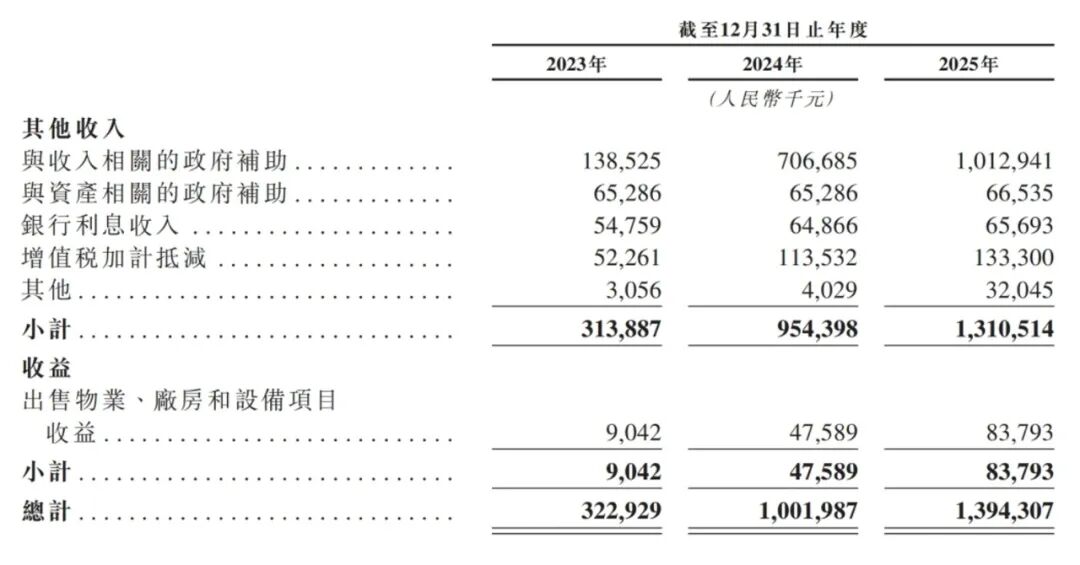
Source: Corporate financial reports
For a company that "breaks even" with the help of subsidies, the market will naturally discount the quality of its profitability.
The issue of the gross profit margin is also worth examining.
The gross profit margin of 20.9% is indeed eye-catching. BYD's is 17.74%, Li Auto's is 18.7%, NIO's is 14.6%, Changan's is 15.54%, and Great Wall's is 18.04%. VOYAH outperforms all these first-tier players in terms of figures. However, the market has doubts about whether this figure is real.
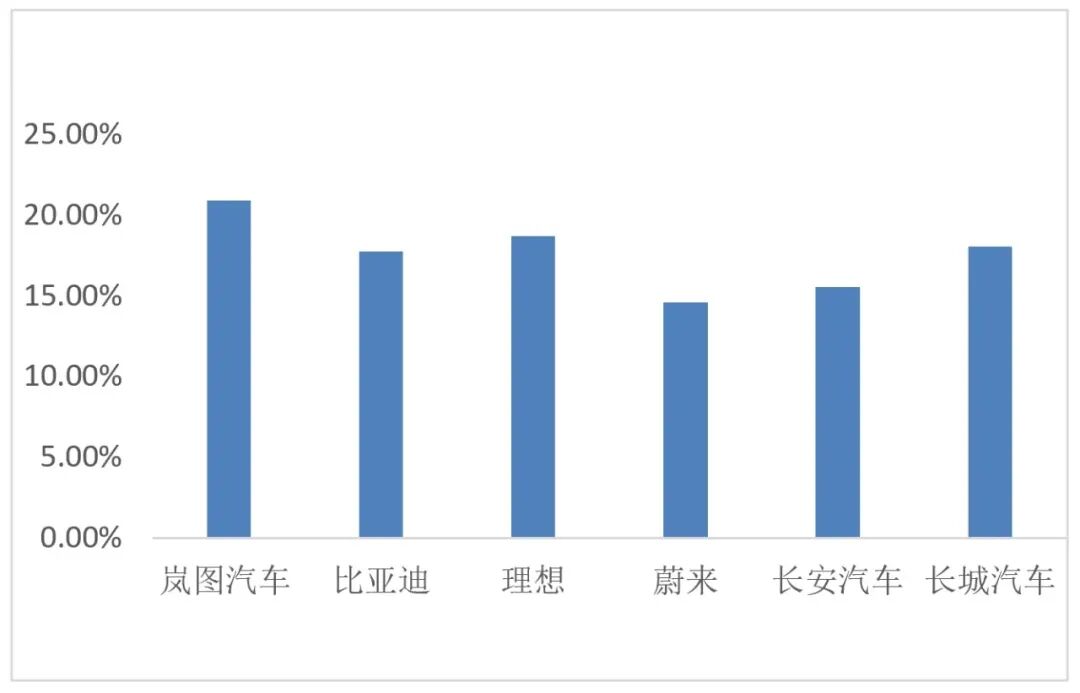
Source: Corporate financial reports
According to the listing documents of VOYAH, in 2025, the revenue from selling complete vehicles and parts to companies under Dongfeng Group was 5.372 billion yuan, accounting for 15.4% of the operating revenue.
With such a high proportion of related-party transactions, it's inevitable that investors will have doubts about the fairness of the pricing - is the business done with insiders really at the real market price?
An even more difficult question to answer is: Can this gross profit margin be sustained?
2026 is the most competitive year for new energy vehicles in China. According to data from the China Association of Automobile Manufacturers, in the first four months of this year, the production and sales of domestic new energy vehicles were 4.285 million and 4.304 million respectively, with the production volume decreasing by 3.2% year-on-year and the sales volume only increasing slightly by 0.1%, and the growth rate has dropped significantly compared to before.
The market has shifted from incremental expansion to stock competition. Automobile companies are bound to continuously reduce prices and compete on configurations to compete for market share. In such an environment, it will only become more and more difficult for VOYAH to maintain a gross profit margin leading its peers.
There is also a technical factor worth mentioning. VOYAH adopted the "introduction listing" method for this listing, without issuing new shares or raising funds, and only applied for the listing of the already issued shares.
The advantage is that the process is fast and the cost is low; the price to pay is that there is no underwriter to maintain the stock price, and the fluctuations in the early stage of listing are often greater. Without a "market support" mechanism, coupled with the market's doubts about the fundamentals, it's not surprising that the stock price has fallen below the issue price.
The Solitary Dreamer
The slump in the stock price also reflects the market's conservative expectations for VOYAH's future growth space.
VOYAH was established in April 2019 and took more than six years to reach the level of selling 150,000 vehicles a year. However, compared with its competitors in the same price range, the gap is still obvious: Li Auto sold 406,300 vehicles last year, NIO sold 326,000 vehicles, and ZEEKR sold 224,000 vehicles. VOYAH ranks at the bottom of this list.
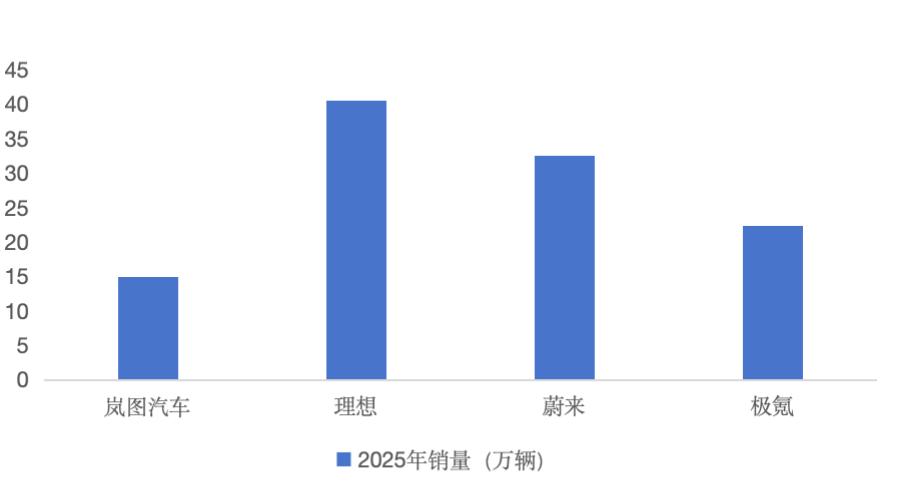
The capital market doesn't only look at past sales but also values the elasticity of future performance. A comparison can illustrate the point: The sales volume of Jianghuai Automobile decreased by 4.72% in 2025 and continued to decline by 13.28% in the first four months of this year, but the stock price has risen more than four times from the bottom. There is only one reason. Yu Chengdong of Huawei publicly announced in April this year that the 2 million-yuan luxury model "Zunjie" in cooperation with Jianghuai is planned to be launched at the end of June, targeting Rolls-Royce and Bentley. This story is sexy enough, and capital has flocked in with the imagination.
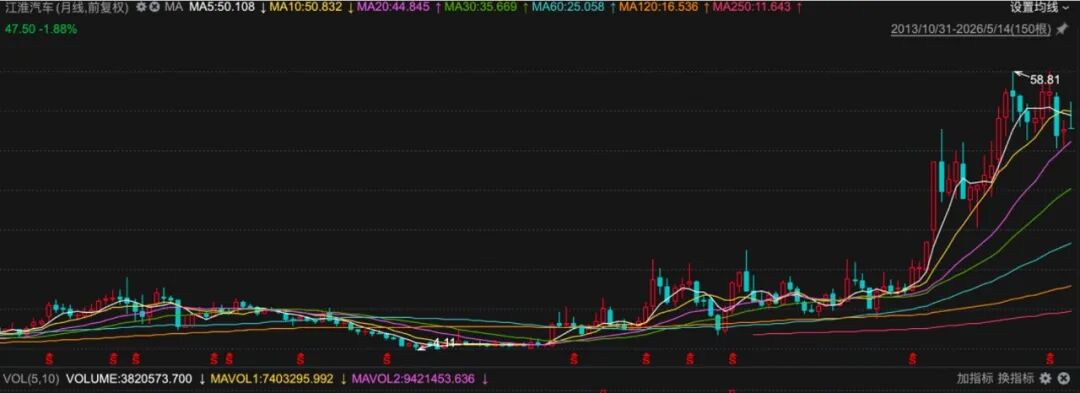
VOYAH doesn't have such a story.
VOYAH's current basic market highly depends on one vehicle - the Dreamer. In last year's total sales, the Dreamer contributed 76,045 vehicles, accounting for more than 50%, firmly ranking first in the sales of high-end MPVs. The success of this vehicle has its logic: The 800V high-voltage platform solves the pain points of short range, slow charging, and high fuel consumption in power deficit of traditional hybrid MPVs. The high - end version's magic carpet air suspension and CDC electromagnetic shock absorption improve the driving experience, and the Huawei ecosystem makes up for the short - board in intelligence.
However, these advantages are being caught up. The sales volume of WEY Gaoshan has exceeded 6,000 vehicles in the past two months, and the gap with the Dreamer is rapidly narrowing. Gaoshan is also equipped with four - wheel drive hybrid, with an acceleration of 5.7 seconds per 100 kilometers, and is fully equipped with a refrigerator, color TV, and big sofa, but the starting price is pressed down to 285,800 yuan.
Greater pressure comes from the congestion of the entire MPV track: Zhijie V9, GAC Trumpchi M8 Master Edition, and Buick Zhijing Shijia EV have entered the market one after another, and Denza D9 and Li MEGA continue to defend their positions. In the core price range of 300,000 to 400,000 yuan, the Dreamer of VOYAH will face tougher competition.
VOYAH's response is to expand its product line. According to the 2026 plan, four new models will be launched this year: the mass - produced L3 - level SUV "VOYAH Taishan Ultra", the courtyard - level large five - seat SUV "VOYAH Taishan X8", a new FUV codenamed "FE", and an MPV codenamed "Zhufeng".
However, the problem is that the successful path of the Dreamer - relying on high - configuration to create differentiation when the market competition is not fierce - can hardly be replicated in today's SUV track, because this track has become extremely competitive in terms of configuration and cost - effectiveness. Other models under VOYAH have not been able to replicate the market performance of the Dreamer so far. In the market environment with a sharp drop in growth rate this year, it will only be more difficult to break through, not easier.
The Microcosm of Dongfeng
VOYAH's situation is a microcosm of the overall dilemma of Dongfeng Group.
During the same period when VOYAH was introduced for listing, Dongfeng Group completed the privatization and delisting of its H - shares in August last year. The announcement was straightforward: Affected by multiple factors such as intensified industry competition, the H - share price has been undervalued for a long time and has basically lost its financing function. The arrangement of "the parent company delists while the subsidiary lists" reflects the group's re - layout of the capital market narrative and is also a move that has to be made under pressure.
Dongfeng's joint - venture segment is accelerating the loss of blood. Dongfeng Nissan sold 600,000 vehicles in 2025, a year - on - year decrease of 4.94%; Dongfeng Honda sold 325,800 vehicles, a year - on - year decrease of 23.92%; and Dongfeng Peugeot - Citroën (Dongfeng Peugeot, Dongfeng Citroën) sold 51,500 vehicles, a year - on - year decrease of 24.61%.
All three major joint - venture brands are on the decline, and the once - cash cows have shrunk significantly.
Dongfeng's self - rescue in the new energy field is also progressing difficultly.
Last year, the group integrated Dongfeng Fengshen, Dongfeng Yipai, and Dongfeng Nammi under Yipai Technology, aiming to solve the problem of the three brands fighting separately. However, the total sales volume after integration was only 274,600 vehicles. In the mainstream price range of 100,000 to 350,000 yuan, this volume is far from being competitive. Another new energy off - road brand, Mengshi, barely crossed the threshold of 10,000 vehicles last year. The ceiling of the off - road track determines that it cannot play the role of the main sales force.
At the 2026 Beijing Auto Show, Dongfeng released the "Oriental Wind Rising 2030" plan, with the goal of achieving a global sales volume of 5 million vehicles by 2030, with new energy vehicles accounting for more than 70%, that is, the sales volume of new energy vehicles must reach more than 3.5 million.
Comparing with the reality: Dongfeng's new energy vehicle sales volume was 1.05 million in 2025, with a year - on - year increase of 42.62% on a low base. It's not easy to achieve about 3.5 times growth in five years.
Dongfeng's incremental growth is likely to be bet on three directions: VOYAH to hold the high - end market, Yipai to target the mainstream household market, and going global to expand the incremental market. However, each path is not easy.
In terms of going global, the tariff barriers in Europe and the United States are constantly increasing, and the Southeast Asian market has long been firmly controlled by Japanese automakers. More importantly, many Southeast Asian countries clearly hope that Chinese automakers will build factories locally to drive local employment and technology transfer. This means that Dongfeng's going - global strategy can't just be sending domestic cars overseas, but also needs to rebuild factories, build supply chains, and form management teams locally - starting from scratch, it will take at least two or three years to run smoothly.
VOYAH, Yipai, and going global form the three pillars of Dongfeng's 2030 plan. However, at present, none of them is thick enough. As the domestic stock competition becomes more and more cruel, for the "Oriental Wind Rising" to really blow, Dongfeng needs not only a plan but also the ability to execute it, which is exactly what this old - state - owned enterprise has lacked in the past few years.
Conclusion
VOYAH's story is essentially a structural problem of state - owned enterprise transformation.
Its success is real, but the coldness of the capital market is also honest. What investors see is a company that highly depends on a single blockbuster product at a critical moment, has its gross profit supported by related - party transactions, and has its losses covered by government subsidies. In a market where the intensity of competition will only continue to increase, it lacks a clear second growth curve.
The deeper dilemma is that VOYAH is not a purely market - oriented company. It bears the strategic mission of Dongfeng Group's new energy transformation, which means that in its decision - making logic, market efficiency is not the only variable.
VOYAH's stock price falling below the issue price is not just a valuation problem of a single company. It reflects the real situation of the transformation of the entire traditional automobile central enterprise in the intelligent and electric era. It has no shortage of resources, but it's difficult to tell a good story.
This article is from the WeChat official account "Luming Finance" (ID: luminglab), written by Jin Delu, and is published by 36Kr with authorization.