Can NIO replicate the story of selling 110,000 large vehicles in eight months?
The core thinking in the Chinese new energy vehicle market is quietly changing.
In the past five years, product positioning and strategic choices have been the key factors in this business battle. The Li ONE and the Xiaomi SU7 are two iconic products of this stage: the former defined the first super - demand in the new energy era - the three - row, six - seat "dad SUV"; the latter actively bypassed the SUV category, which was regarded as a consensus in the industry, and used appearance and performance as the core strategies, ultimately surpassing the Tesla Model 3 to become the best - selling model in the pure - electric sedan segment.
However, with the convergence of technology and intensifying competition, the "half - life" of a single product in terms of configuration, functions, etc., is rapidly shortening.
There are almost no longer any "trump cards". Different models are becoming more and more similar in appearance and have a higher degree of functional overlap. Just like what has happened in the consumer electronics field, after a short "exclusive period", cool new functions and new configurations will quickly become "industry standards".
Therefore, the past "guerilla tactics" of differentiation driven by products and strategies will inevitably turn into a "street fight".
This "street fight" recently reached a small climax: in the large - size SUV segment with a vehicle length of over 5 meters and a wheelbase of over 3 meters, almost all new - force brands have concentrated their core resources to participate in the competition. The reasons are simple: first, the market demand for this type of vehicle has been verified; second, large vehicles have higher gross margins, and the commercial returns are more attractive.
In this "Series 9 SUV" battle, neither the currently leading Li Auto and AITO, nor NIO making a comeback, nor XPeng and Leapmotor making their first foray, nor many joint - venture companies, nor Xiaomi which will enter the market in the second half of the year, is absent. They are all swarming in.
This large - size SUV market has become a red - ocean even before it really starts.
01 The "Half - Life" of New Energy Vehicles Is Still Shortening
In fact, in the era of fuel vehicles, large - size SUVs were not a popular segment at first because of their high prices and high fuel consumption, and they were not a "hot topic" in the competition among brands.
The Li ONE, released at the end of 2019, was the first to make this category "electrified" and "lowered" the price to the 300,000 - yuan range, validating the Product - Market Fit (PMF) that no one had verified before.
In the following six - plus years, with the decline in battery prices, the maturity of three - electric technologies, and the expansion of the charging network and other industrial and technological advancements, the large SUVs with verified market demand have gradually become the common choice of all players.
There is also an external environmental change that cannot be ignored in this process: from January to April 2026, the domestic new energy passenger vehicle market declined by nearly 20% year - on - year. The intensifying market competition has made more and more players inclined to pour resources into the "high - certainty, market - mature" standard answers.
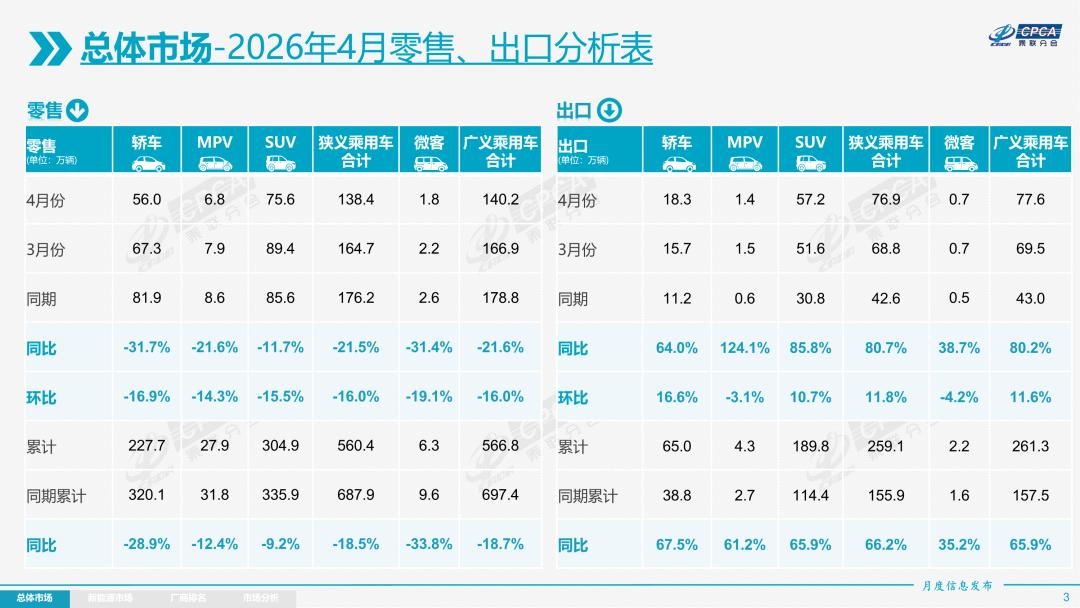
In 2026, the competition in the domestic passenger vehicle market is further intensifying | Source: China Passenger Car Association
But the question is, if everyone discovers the trump card, can it still be called a trump card?
In the hardware industry, an innovative technology or function can often boost the product's popularity and sales. Among them, the time from when it is first introduced to when competitors catch up can be regarded as the "half - life" of the product and technology. The longer the half - life, the more this advantage can support the premium narrative; the shorter the half - life, the less valuable it is.
In the era of fuel vehicles, the half - life of products was often calculated in years. Whether it was the engine, the chassis, or some intelligent safety configurations, it took competitors several years to catch up. During the half - life, the product could support a high - end narrative and a certain premium power.
However, in the era of electrification, the half - life has begun to decrease sharply. The trends of modularization and external procurement allow more configuration differences to be quickly caught up with or even leveled out, just like in the consumer electronics industry. This is the case for features such as refrigerators, color TVs, large sofas, lidar, cockpit intelligent driving chips, and even intelligent driving solutions.
The latest example is: the "fully active suspension", which was only available as an optional configuration on luxury cars worth millions in the past, has become a "standard configuration" in the 500,000 - yuan range in this round of the "Series 9 battle". Moreover, there are two technical routes of 48V and 800V, along with a series of commercial disputes over which one is better.
The product shelves are becoming more and more concentrated, and the gap that can be created is getting smaller and smaller. Urban intelligent driving, 800V, and ultra - fast charging, which were once regarded as "silver bullets", have quickly become standard configurations for competitors. The iteration is getting faster and faster, and the half - life is being further compressed.
A phenomenon has emerged in the industry: although the half - life is shortening, these functions cannot be absent. They are the tickets to the game but not the decisive factors for winning. If someone bets all their capital on these, they will end up competing on price with everyone else, and no one can sell at a high price.
02 Does the Best - Selling ES8 Pose a Problem for the More Expensive ES9?
On May 27th, NIO officially launched its new technological flagship SUV, the NIO ES9, in Beijing. With a starting price of 498,000 yuan, it is 90,000 yuan more expensive than the entry - level model of the third - generation ES8, its "little brother". The latter is an important product that has pulled NIO back from losses to profits in the past period. It has delivered over 110,000 units in eight months since its launch and has even become an iconic best - selling product in Shanghai, Hefei and other places regardless of price range and energy type.
However, the better the ES8 sells, the more it seems to lead to a problem: what can the ES9, from the same brand, rely on to be 100,000 yuan more expensive than its "little brother"?
The ES9 offers two ideas. One is the product - level foundation. On top of the configurations that are common in 500,000 - yuan SUVs, it adds differentiated configurations such as a 48V fully active suspension, steer - by - wire, and NIO's unique design.
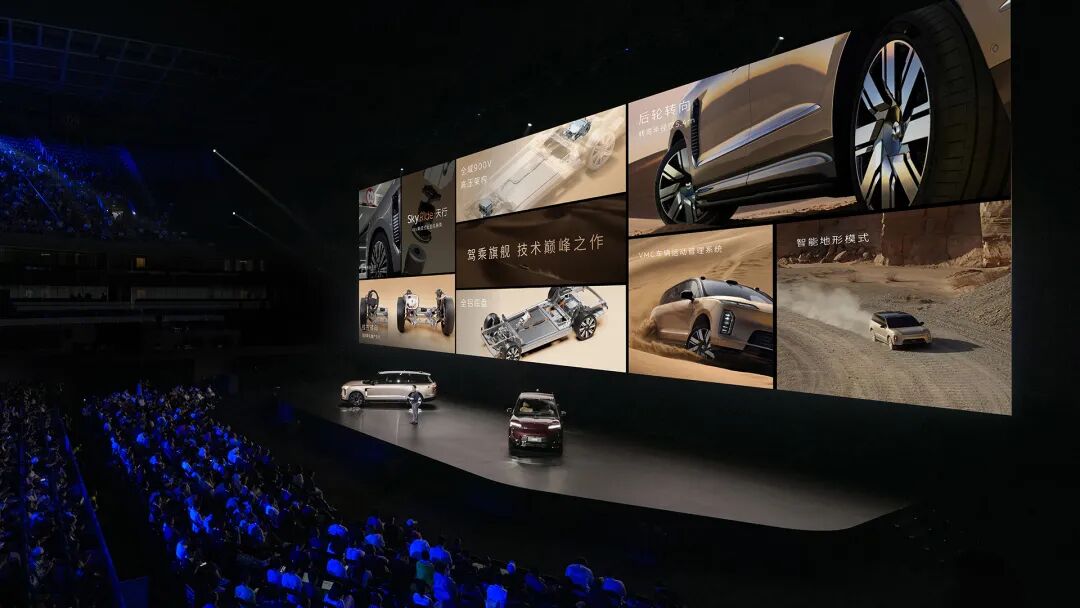
At the press conference, Li Bin demonstrated the new functions of the ES9 | Source: NIO
In my opinion, more importantly, the charging network, user relationships, and the brand image that NIO has accumulated in the past can also endow high - end products with a unique image of a "long half - life".
During the entire launch period, what impressed me the most was not a specific product function, but the following words of Yao Ming, the "Chief Product Experience Officer" of the ES9:
I'm often asked if the view from the top is very different. In fact, for tall people, falls also hurt more. I've been following NIO for a long time. Besides the glorious moments, I've been watching how it gets up after a fall.
It starts with courage and is achieved through action. When you're determined about something, even if the whole world says it's too difficult, too slow, or too hard, you still keep working on it bit by bit. You've experienced glory and taken detours. The seeds you planted back then have now grown into strong branches.
What hasn't changed is the courage to dream and the ability to act.
Many people ask me what I think of cars. A car is like a person. It's mainly about its essence. This essence is not built up overnight but grows little by little. I can see NIO's essence in the ES9.
These experiences seem to be about both NIO and Yao Ming himself.
Over the past few years, the outside world's doubts about NIO have never stopped: the heavy - asset approach of insisting on battery swapping and building its own battery - swapping stations has long been considered "too costly and the returns are far away"; the continuous investment in user services and community operations has also often been criticized as "lacking focus and having a disproportionate input - output ratio".
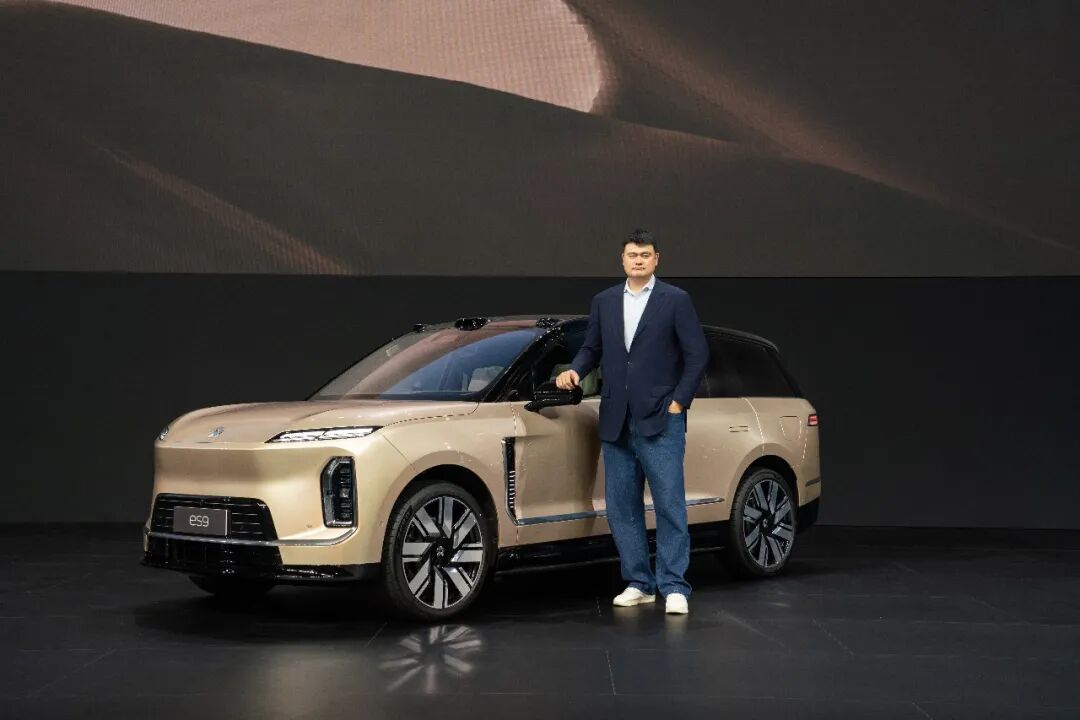
Yao Ming's cooperation with NIO this time has received extensive support and praise from NIO community users | Source: NIO
Li Bin himself previously admitted that there were problems in terms of strategy and rhythm in both the product definition of the second - generation models and the judgment on overseas expansion in previous years.
However, a wrong rhythm does not mean a wrong direction. Now, those "burdens" that have been criticized for years have gradually settled into assets that are difficult for others to copy:
Over 3,800 battery - swapping stations and the user community built over the years have now become NIO's "long half - life" assets that are difficult to replicate. They are not written in the configuration table, and other players can't copy them.
The bets that Li Bin made back then have finally waited for the market to resonate with them. And time itself is its moat.
03 "Running Long" Is as Important as "Running Fast"
Looking at NIO's approach over a longer period, it's not new.
In the fuel - vehicle field, when hardware such as engines and gearboxes have become mature, the labels of Japanese cars being economical, German cars being luxurious, and American cars having high performance have become the most crucial factor in consumers' decision - making process.
Now, with the penetration rate of new energy vehicles exceeding 50%, as an independent market parallel to the fuel - vehicle market, it is also moving towards this stage. In the words of NIO CEO Li Bin, in the past, the new energy market was in a "chaotic period" with a wide variety of technical routes and no convergence. Everyone was competing on who could have more updated and comprehensive products. When the technology converges and the products become similar, the industry enters a "clarification period". When consumers buy a car, they no longer just look at the configuration but at the brand.
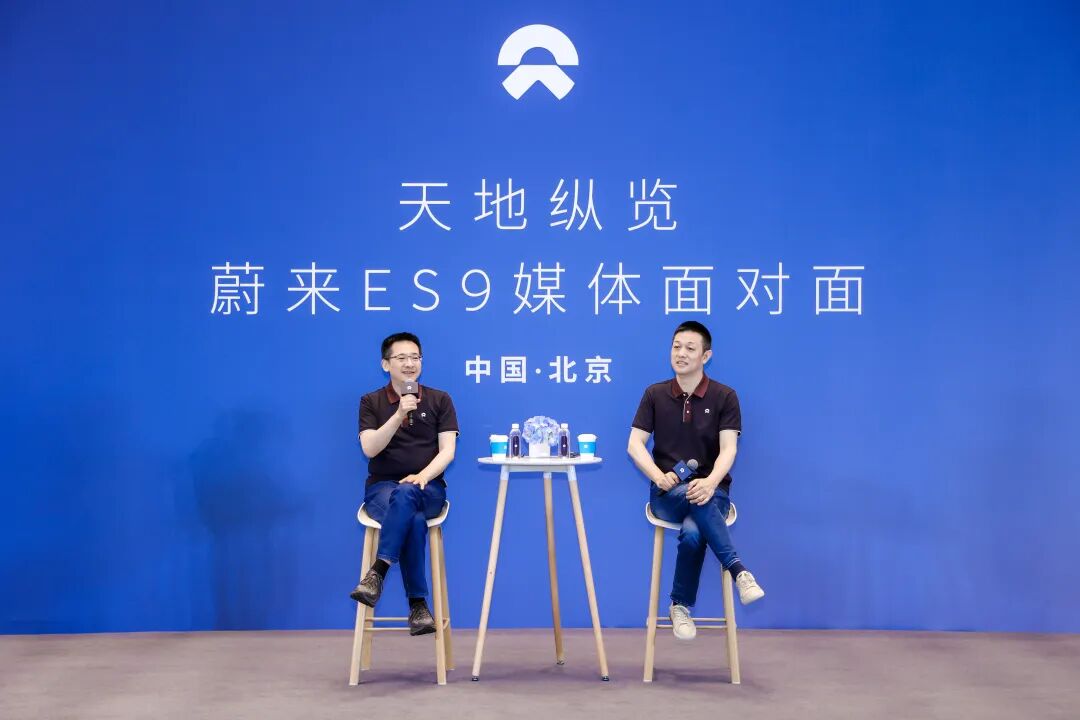
NIO CEO Li Bin (right) and President Qin Lihong (left) at a media communication meeting | Source: NIO
When Li Bin put forward this view, he mentioned an industry statistic: in the car - buying decisions of new energy consumers, the weight of the brand has significantly increased in recent years, rising from the fifth place to the second place.
This means that every company will have to face the battle beyond the configuration table. The advantages that can be built up are becoming less and less valuable, and this is already happening. Those things that can't be built up and can only be obtained with time will gradually become the real dividing line.
Of course, betting on a long half - life doesn't guarantee victory. Time is a moat, but just waiting out time is not enough. You also have to be in the right direction.
But the direction is clear: the entire industry is shifting from "competing on who can run fast" to "competing on who can run long". By then, when consumers vote with their feet, they are not only choosing based on parameters, performance, and products but also choosing a partner who is willing to continuously invest in those "long half - life" capabilities.
This article is from the WeChat official account "GeekPark" (ID: geekpark). Author: Cao Siqi, Editor: Jing Yu. Republished by 36Kr with permission.