The hardware of Agent is booming. What on earth is the "computing continuum" that Qualcomm is betting on?
“Today's speech is not about Qualcomm itself.”
On June 1st, at the opening keynote speech of the Taipei Computer Association, Qualcomm CEO Cristiano Amon first thanked the supply chain, developers, and TSMC, and then began to talk about what Qualcomm really wanted to say:
2026 is the “Year of the Agent.”
This statement is not surprising this year. Almost all “tech” companies today are trying to prove that they are not bystanders in this wave of AI agents. However, Qualcomm's entry - point is different. It's about how agents can reach everyone, including mobile phones, PCs, watches, cars, robots, industrial cameras, and even data centers:
“In the future, all computing resources will be utilized, and AI will run everywhere, and all this will happen across the entire computing continuum.”
From PCs, robots to data centers, what on earth is the “computing continuum” that Qualcomm is betting on?
In this speech, Amon didn't announce any new products. Instead, he focused on the question of “how AI will change all devices.” However, to understand everything about Qualcomm, we still need to start with the products.
Just last week, Qualcomm launched the Snapdragon C platform for entry - level laptops, targeting tasks such as web browsing, video playback, office work, video conferencing, quiet heat dissipation, and all - day battery life. The target market is Windows laptops priced above $300.
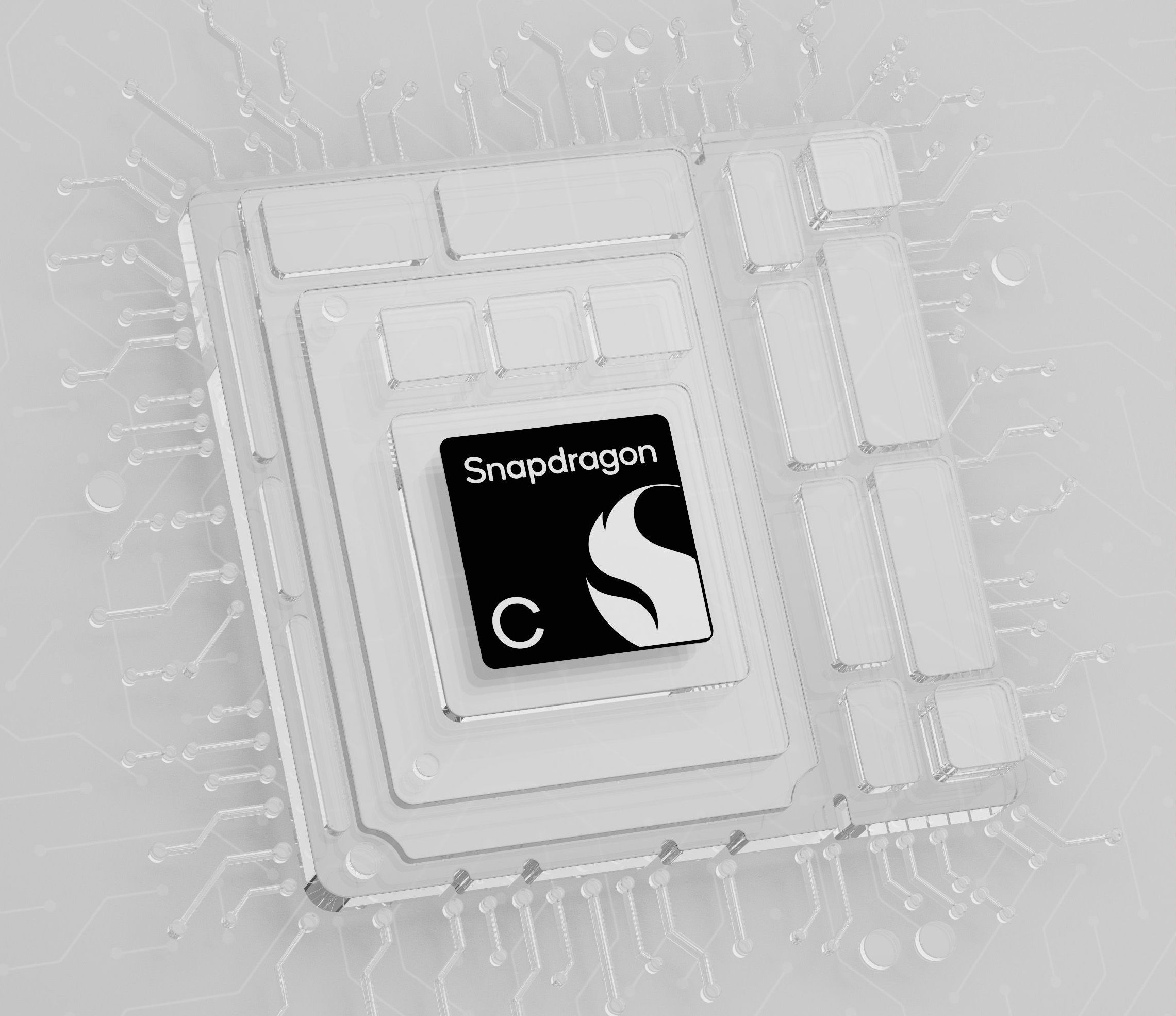
Image source: Qualcomm
It may not sound very exciting, but this is exactly what Windows on Arm needs to learn.
In the past two years, the biggest buzz around AI PCs has mainly been in the mid - to - high - end segment, and it's difficult to lower the price. The problem is that the largest demand in the PC market is not all for flagship models. Many students and families only need a device that is cheap, lightweight, has long battery life, doesn't lag, and can run some basic AI functions.
The significance of the Snapdragon C series lies here. It's trying to prove that Arm - based Windows can also enter the more mass - market price range. However, the real challenge is also here. The biggest challenge for entry - level products is the basic experience. Whether Snapdragon C laptops can ensure a good basic experience and even bring surprises is the key to success.
Another more advanced offering is the newly released DragonFly IQ10 robot reference design. In the speech, Qualcomm broke down the robot into a three - layer computing architecture: immediate execution, action implementation, and reasoning. This approach is very Qualcomm - like. A robot is not just a brain; it also requires central computing, motion control, actuators, sensor synchronization, safety redundancy, and industrial interfaces.
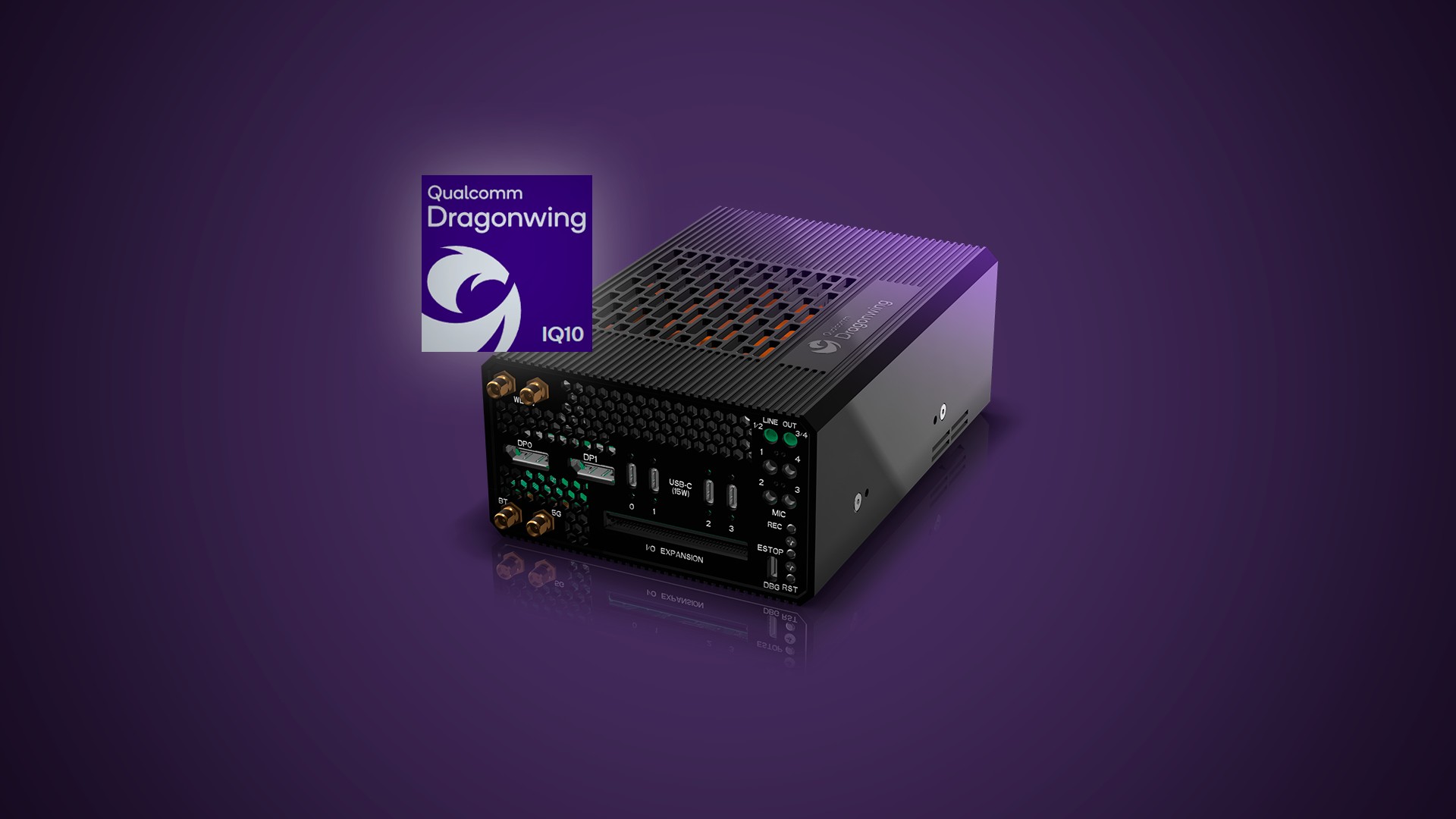
Image source: Qualcomm
The DragonFly IQ10 is designed for industrial AMRs and full - size humanoid robots. It uses an 18 - core Oryon CPU and provides up to 700 TOPS of AI performance through a dedicated NPU, supporting multi - modal perception such as multiple cameras, LiDAR, and radar. Behind the parameters, what Qualcomm really wants to sell is a robot base from prototype to mass production.
This is related to Qualcomm's capabilities accumulated in mobile phones and cars. Mobile phones need to pack extreme computing power into limited power consumption, cars need to handle safety, redundancy, and real - time control, and robots combine these two things.
There is also a preview that Amon didn't elaborate on but is worth paying attention to - the data center.
At the end of last year, Qualcomm launched two AI inference chips, the AI200 and AI250. The AI200 is a rack - level solution for inference, with a single card equipped with 768GB of LPDDR memory. The rack - level solution emphasizes the performance - to - power ratio and total cost of ownership. The AI250 is planned to be commercially available in 2027, focusing on near - memory computing architecture.
Qualcomm's first CPU under its new data center brand, Dragonfly, is also on the verge of release. Amon said in the speech that more details about the data center will be presented at the investor day on June 24th.
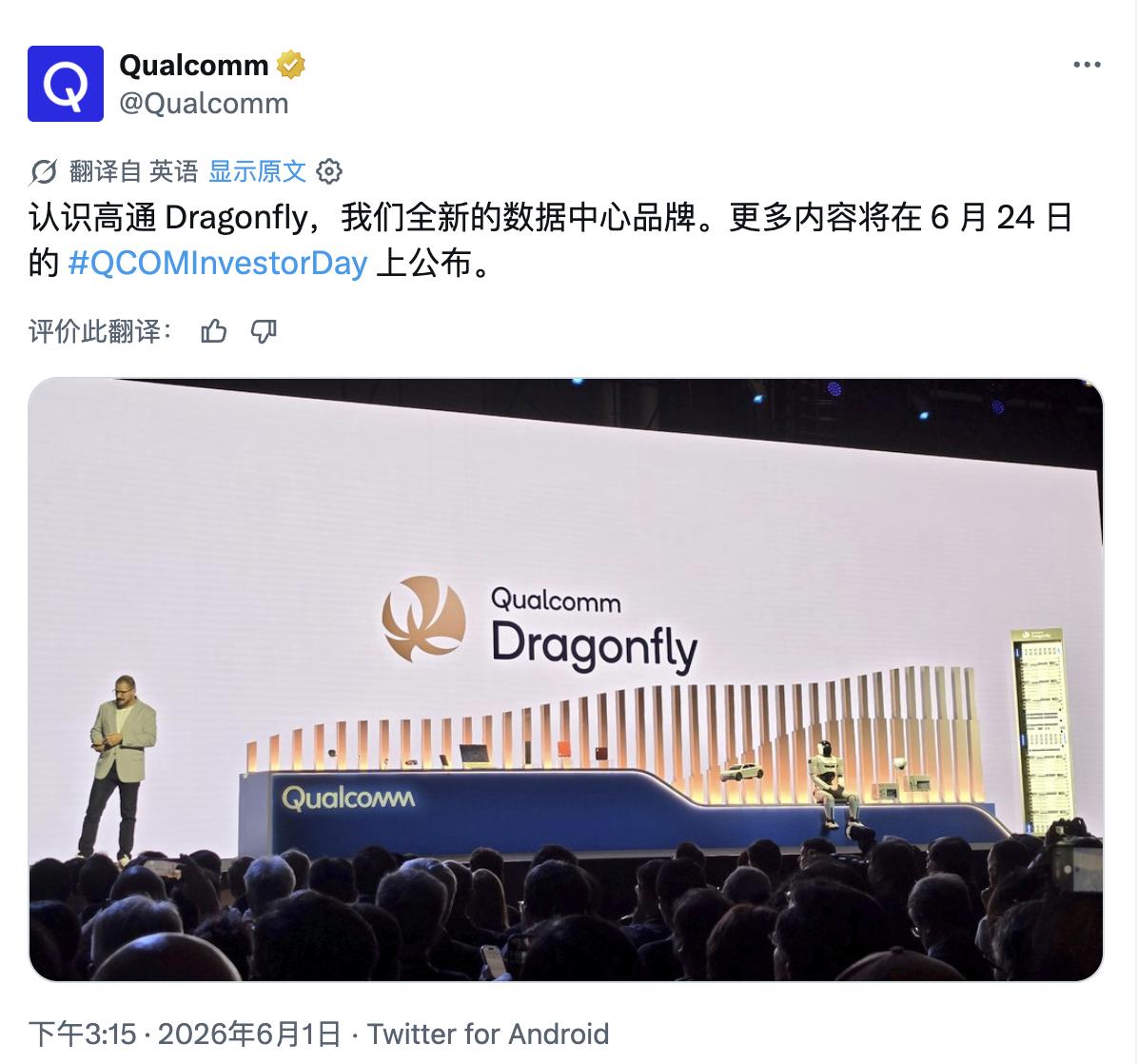
Image source: Qualcomm
From the Snapdragon C, DragonFly IQ10 to the data center CPU, Qualcomm is infiltrating the computing world with the per - watt performance it excels at in the mobile era. As Amon said: From the less - than - 2 - milliwatt connection in earphones to the kilowatt - level systems in data centers, Qualcomm wants to cover the entire computing continuum.
In the era of agents, Qualcomm aims to eliminate the device boundaries of computing
The so - called computing continuum can be understood as a computing spectrum from milliwatt - level to kilowatt - level. One end consists of personal devices such as earphones, watches, glasses, and mobile phones, and the other end includes cars, robots, industrial systems, and data centers. They have different power consumption, forms, and tasks, but in the era of agents, they will jointly form a distributed AI system.
It doesn't matter whether AI runs on the cloud or on the edge. Just like when we use mobile apps today, we rarely care whether a calculation is completed locally or on the cloud. Agents will naturally call all available computing resources and process data where the efficiency is the highest, the latency is the lowest, and it is the safest.
This is exactly the opportunity that Qualcomm wants to seize. It doesn't have to have the strongest computing power in every aspect, but it hopes to provide appropriate computing at each endpoint: earphones need low - power connections, glasses need to understand what you see, mobile phones need to carry personal context, PCs need to run multi - agent workflows, cars need to combine cockpit intelligence and driving perception, and robots need to complete immediate execution, action implementation, and reasoning locally.
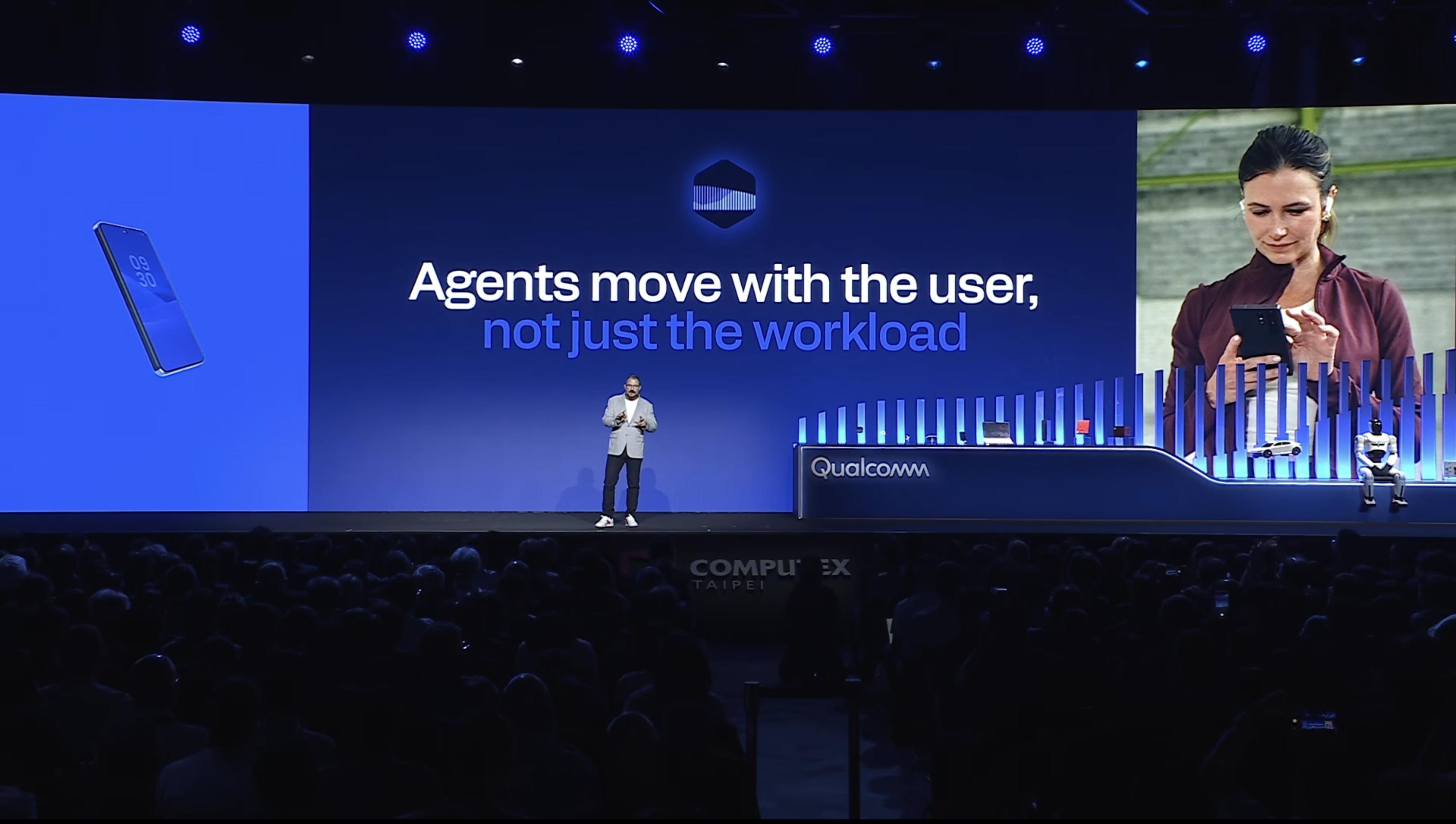
Image source: Qualcomm
This also explains why Amon keeps saying that today's devices are not designed for agents. Most of today's mobile phones, PCs, and applications revolve around “active human operation”: people open apps, input instructions, click buttons, and wait for results. However, agents are different. They will run continuously, carry context, coordinate tasks across multiple systems, and interact with software at machine speed.
This will directly change the hardware architecture.
The CPU not only runs the system and applications but also undertakes task orchestration; the GPU and NPU are responsible for local models, inference, and generation; sensors provide context; and the connectivity enables the device to switch between the cloud, the edge, and surrounding devices in real - time. In other words, the device is no longer just a container for screens and applications but will become a sensor, an actuator, and an identity carrier for agents.
Amon gave a very vivid example with a mobile phone. Early - stage agent users may buy a computer, such as a Mac mini, run the agent on that machine, and interact with it through messages. However, ordinary people can't carry a battery - powered computer around just for a personal agent. The truly reasonable carriers are still mobile phones, as well as future glasses, watches, earphones, and other personal AI devices.
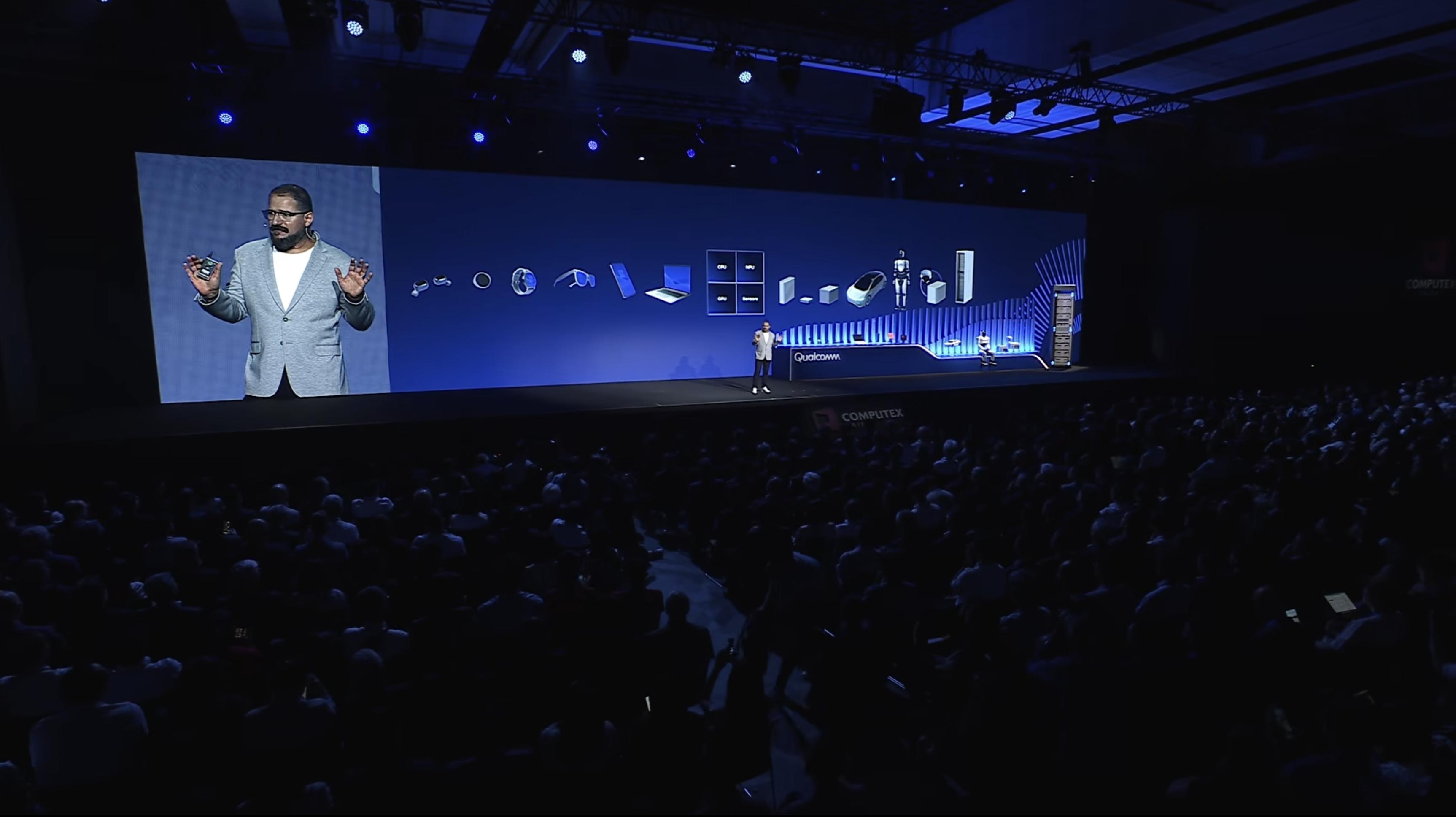
Image source: Qualcomm
So in Qualcomm's narrative, mobile phones won't disappear, but they will no longer be the only center of digital life. They will have two “personalities”: one is a device directly operated by humans, and the other is a device that agents can also operate. This change will subsequently affect PCs, cars, and other terminals.
This is also Qualcomm's judgment on the era of agents. In the future, AI will not only exist in a super app, a computer, or a cloud model but will be distributed across all devices and networks around the user. And Qualcomm has rediscovered the network that was originally scattered among devices and may now be re - connected by agents.
This article is from the WeChat official account “Lei Technology”. Author: Lei Technology. Republished by 36Kr with permission.