OpenAI Re-enters the Robotics Field, Recruiting for Four Core Positions
Altman is recruiting robot engineers in Silicon Valley.
Last month, OpenAI hired He Tairan, a robotics technology expert and a tech blogger with over 500,000 followers. Now, OpenAI Robotics has released openings for four core positions all at once:
Electrical Engineer, Simulation Environment Engineer, Actuator Design Engineer, and Control System Software Engineer -
Preparing to build real physical robots.
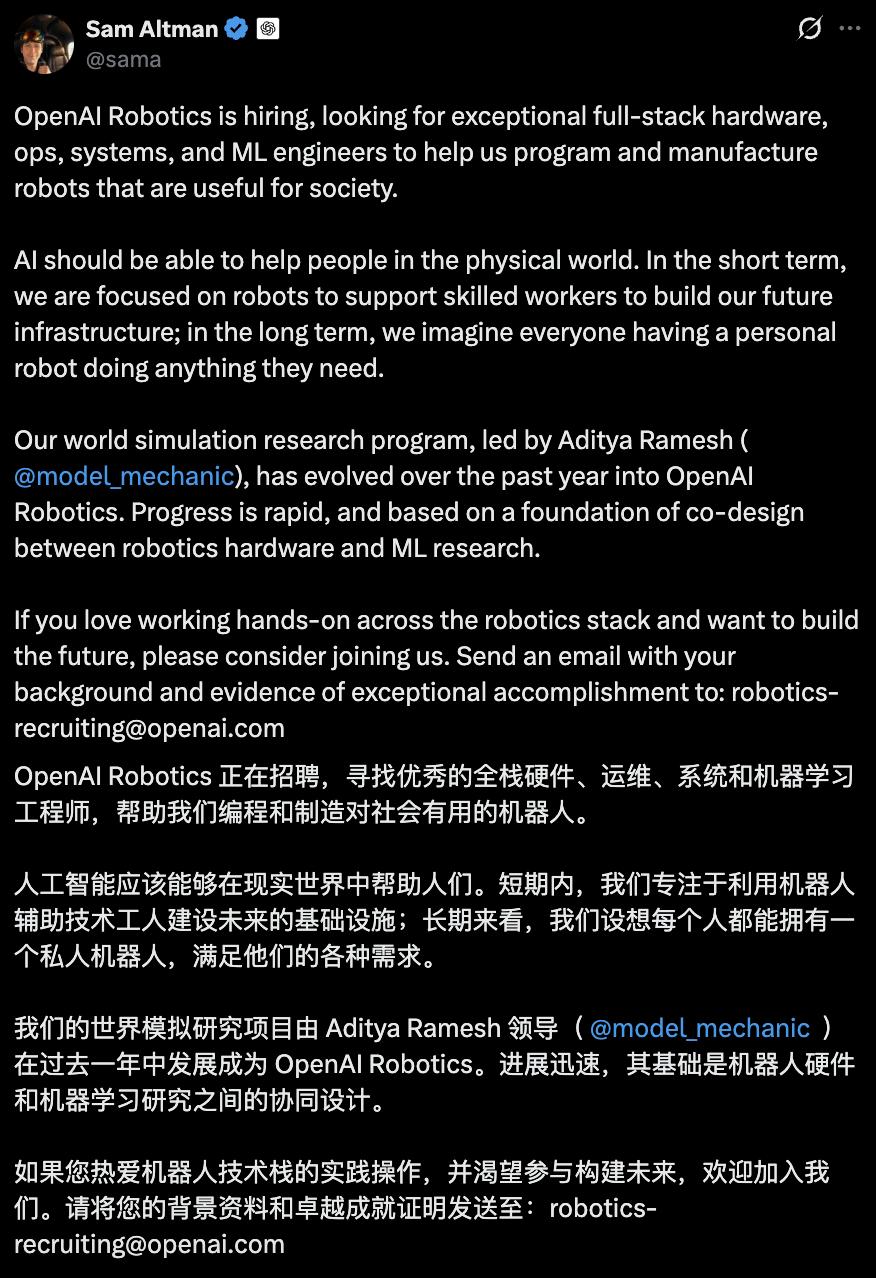
From the underlying circuit boards to the entire control system, all - link positions are open simultaneously, and the layout intention is clear at a glance.
The salary offer is also quite generous. The basic annual salary for some positions reaches $210,000 - $310,000, which is equivalent to over 2.2 million RMB at the highest, plus additional equity options.
Actually, there were rumors in early May that OpenAI planned to split its robotics and consumer hardware departments. Now, with this large - scale recruitment, it may be paving the way for new business.
However, the layout of the embodied intelligence track is not a hasty move. As early as 2019, OpenAI had already launched a robotics project...
OpenAI Restarts Robotics
From 2017 to 2019, OpenAI focused on a robotic hand project, Dactyl, which used reinforcement learning to train a five - finger bionic robotic hand to perform various object manipulation tasks.
The project used the high - degree - of - freedom Shadow Hand hardware. Relying on reinforcement learning and automatic domain randomization technology, it completed massive data training in a simulation environment and then migrated it to the real machine for use.
At that time, the robotic hand not only achieved block flipping but also overcame the problem of solving the Rubik's Cube with one hand. It could operate stably even in the face of external interference and once became a benchmark in the field of dexterous robot operation in the industry.
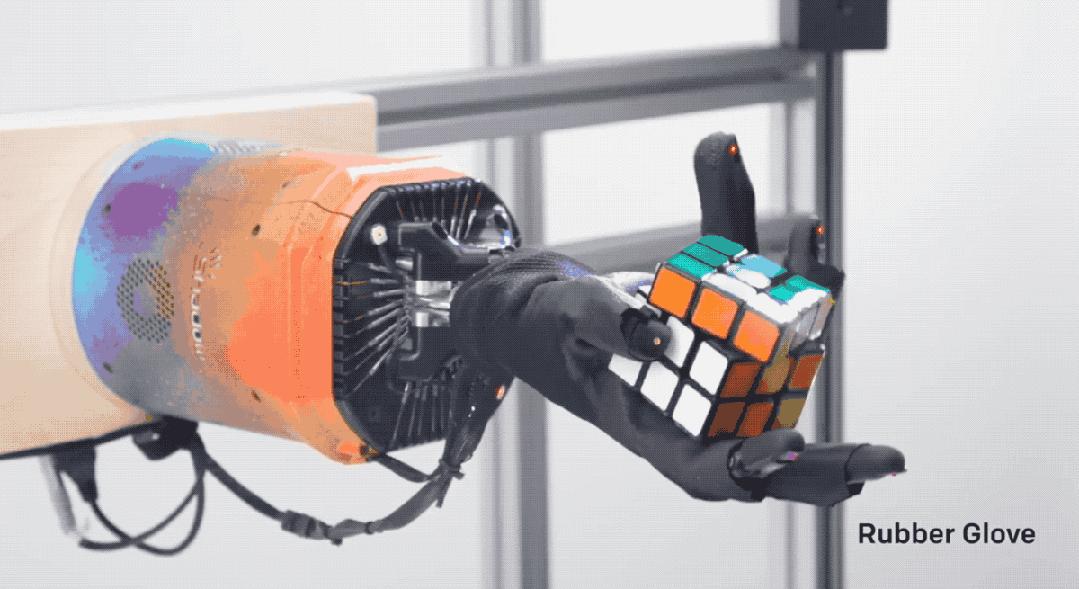
But this project was later cancelled.
Around 2020, OpenAI shut down its robotics team for a while.
The reason was that the training data for robots was scarce and the iteration speed was slow, while the Internet world had almost infinite text and code data. In contrast, the progress of the large - model route was faster and closer to the AGI goal that OpenAI was pursuing at that time.
In the following years, OpenAI fully transformed into language models, and the ChatGPT series of language models achieved great success.
But in fact, Dactyl was also a global benchmark for reinforcement learning + dexterous operation at that time, almost defining the mainstream technical route of "simulation training → real - machine implementation" in the robotics field.
This also influenced the "simulation first" robotics training ideas of Google DeepMind, Tesla, and Figure AI later.
As time passed, competitors have already taken the lead:
Google DeepMind has always been committed to the research and development of basic robot models;
The mass production of Tesla Optimus is getting closer, and the production line is ready at the Fremont factory;
Figure AI, which has received nearly $1.7 billion in financing, recently completed an ultra - long - time continuous operation test with zero failures throughout the process.
Facing the largest AI entrance in the physical world, OpenAI can't help but start running again.
The world simulation research project led by Aditya Ramesh has been officially transformed into OpenAI Robotics.
Now, the team has publicly started the recruitment mode. The four key engineer positions of electrical, simulation environment, actuator design, and control system software are fully open. Adhering to the R & D idea of in - depth combination of hardware R & D and machine learning, they are making all - out efforts to sprint in the robotics track.
Altman said that artificial intelligence should enter the real world and provide assistance to humans in the physical world.
In the short term, they hope to create robots to serve technical workers and contribute to future infrastructure construction;
In the long - term, the goal is to make personal robots enter every household and solve various trivial matters in life.
Chinese Faces in OpenAI's Robotics Team
In the past year, OpenAI has continuously expanded its robotics laboratory and also planned to build a second experimental site.
Judging from the public recruitment information and the team's research direction, OpenAI's robotics team is currently focusing on remote - operation data collection, robot learning, and household - scenario operation tasks.
In this team, Chinese researchers have become the key force in the three core R & D lines.
The first main line focuses on robot learning and dexterous operation.
Lin Xingyu, who joined the team in August 2024, is an early core member in OpenAI's robotics direction.
He graduated from Peking University with a major in computer science. After obtaining a doctorate from the Robotics Institute of Carnegie Mellon University, he completed his post - doctoral research at the Berkeley BAIR Laboratory and has been deeply involved in the field of general robotics.
He was deeply involved in the development of the well - known low - cost remote - operation framework GELLO and the humanoid robot evaluation benchmark HumanoidBench.
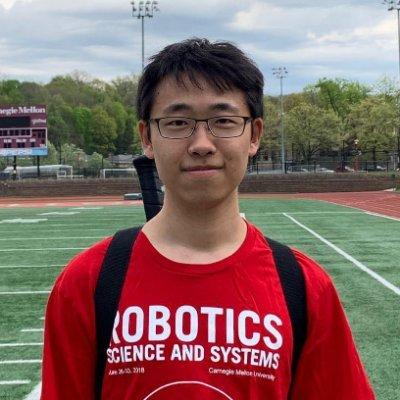
He Tairan, who officially joined in the spring of this year, studied computer science at Shanghai Jiao Tong University for his undergraduate degree and also holds a doctorate from the Robotics Institute of Carnegie Mellon University.
The Omni H2O technology he developed explores the whole - body coordinated operation ability of humanoid robots, enabling movement and operation to be completed collaboratively under a unified framework.
In addition, He Tairan is also a tech blogger with over 500,000 followers and operates the well - known tech podcast Whynot TV.
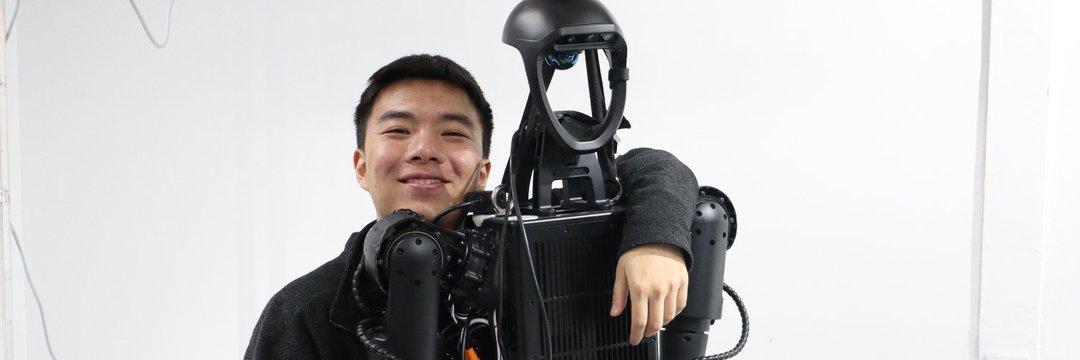
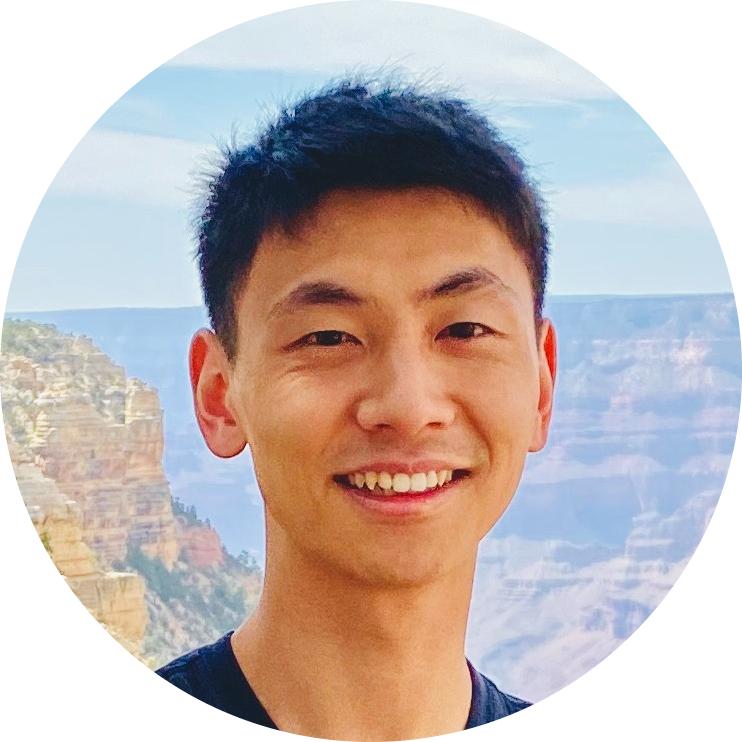
Lawrence Yunliang Chen, who holds a doctorate from Berkeley, comes from the AUTOLAB and BAIR laboratories and specializes in the direction of robot learning and manipulation.
He once interned at NVIDIA and is now engaged in research related to robot learning and operation at OpenAI.
The second main line focuses on the construction of simulation, evaluation benchmarks, and data sets.
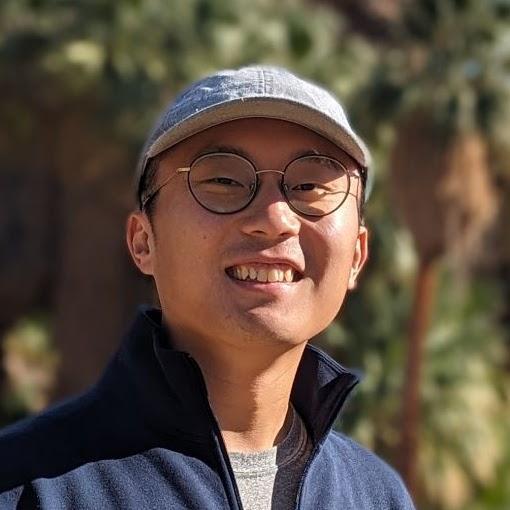
Li Chengshu, who graduated from Stanford University, joined the team in June 2025 and has long been engaged in the research and development of humanoid robot evaluation benchmarks suitable for household task scenarios.
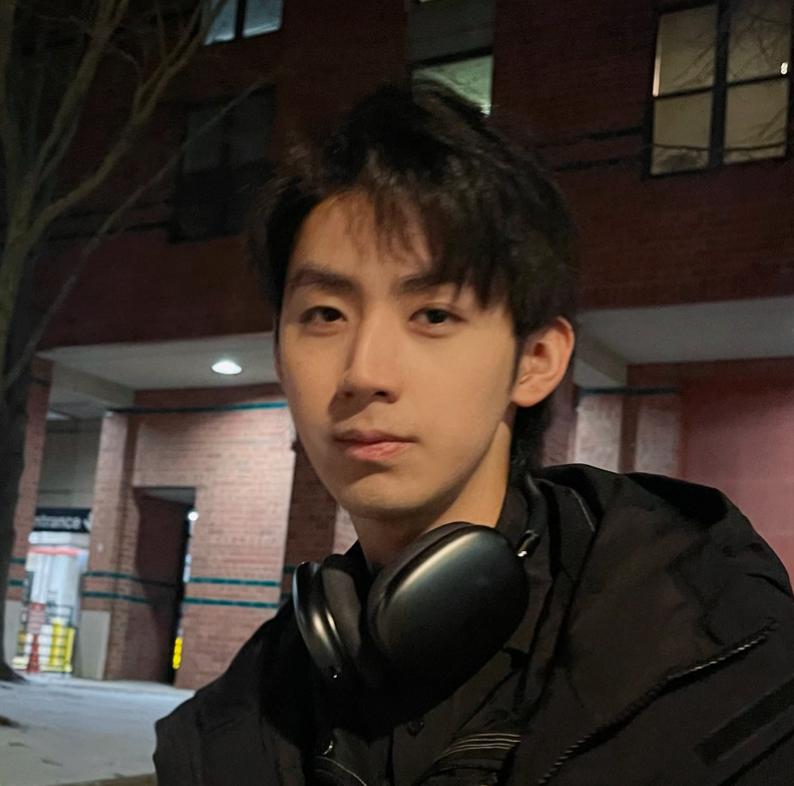
Yin Hang from the Stanford Vision and Learning Laboratory has previously participated in household activity simulation and embodied intelligence evaluation projects such as BEHAVIOR and BEHAVIOR - 1K. His research direction at OpenAI involves simulation environments, remote operation, and data collection.
The third main line is to migrate world simulation technology to the robotics field.
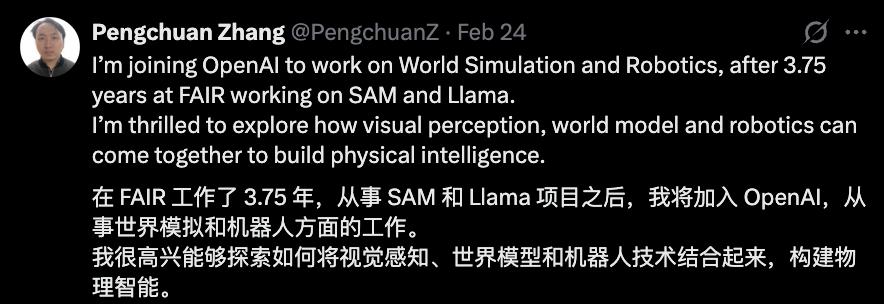
Zhang Pengchuan, a doctor in mathematics from Tsinghua University, worked at Meta FAIR for nearly four years and was deeply involved in the core R & D of major projects such as SAM and Llama.
After joining OpenAI in February 2026, he studies World Simulation and Robotics, exploring the integration of visual perception, world models, and robot systems.
Zhao Jialiang, with a doctorate from MIT CSAIL, has also publicly stated that he has joined OpenAI's robotics laboratory and focuses on the R & D of general agents for the real physical world.
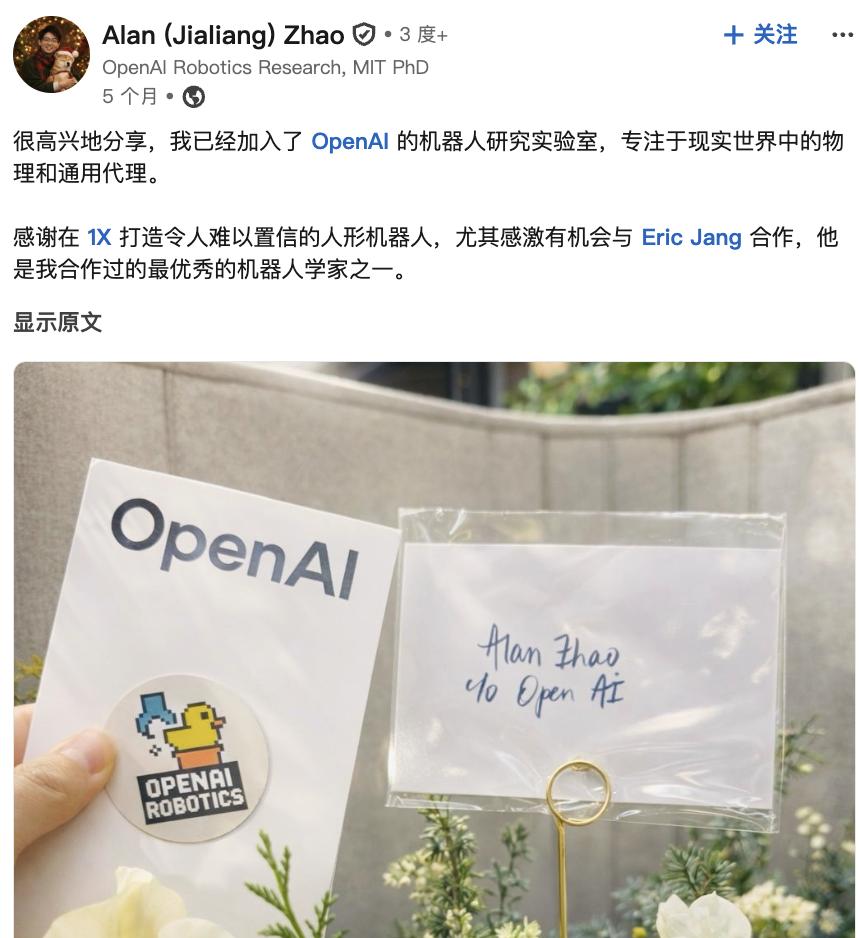
In short, OpenAI Robotics, which already has so many big names, is still recruiting -
The robotics track in Silicon Valley has become more competitive again.
Reference links: [1]https://x.com/sama/status/2061117302528188712[2]https://cryptobriefing.com/openai-robotics-hiring-engineers/
This article is from the WeChat official account "QbitAI". Author: Focusing on cutting - edge technology. Republished by 36Kr with authorization.