Big tech companies can't drive the AI toy market.
Amid the wave of the new round of technological revolution, new products in the consumer electronics field keep getting delayed on PPTs. However, in the seemingly traditional toy industry, a "crucial leap" from concept to shelf has quietly been completed.
In the algorithm recommendations on Douyin and Xiaohongshu, "AI toys" have become synonymous with a new entrepreneurial frontier. The comment sections are filled with eager young people who aspire to replicate the miracles in science - fiction movies -
to create an intelligent companion with emotions and wisdom. However, this seemingly accessible business has a much higher threshold than expected.
From plush keychains to robots, from educational entertainment to emotional companionship, to date, although the AI toy industry is bustling, there has been no blockbuster product yet, and the industry is still waiting for the "final push".
Meanwhile, this market is expanding rapidly, with more diverse product paths, larger - scale financing, and more consumers willing to pay for it.
Ouyang Meizhu, the secretary of the board of Tom Cat, even directly revealed to the media, "Today it's this company, tomorrow it's that one. All kinds of new products are taking turns to debut." "I receive a lot of private messages on my Xiaohongshu every day, asking if they can be agents or distributors for our products."
The starting gun for the AI toy marathon has long been fired.
Hot money is flowing into AI toys, and big companies are leading the race
If you often browse short - videos, you may have been touched by such a story:
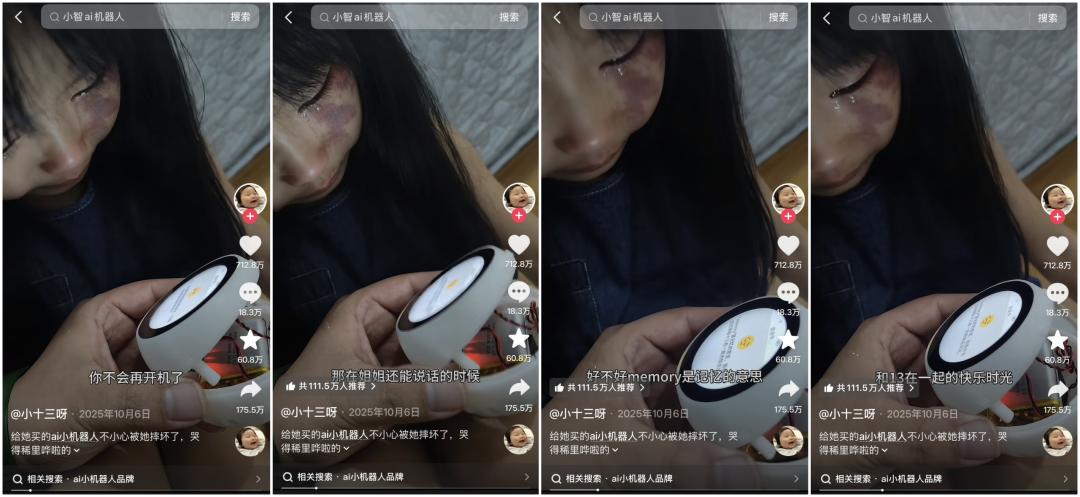
"Dad said you won't turn on again."
"Before sister can still speak, let sister teach you one last word: Memory. It means memory." The AI responded gently.
This is a video on Douyin that has exceeded 100 million views. In the video, a 6 - year - old girl named "Shisan" is crying because she accidentally broke the AI companion toy "Xiaozhi" bought by her parents. Just like the popularity of this video, the AI toy track has taken off completely.
The policy level is also fueling the fire. On November 19 last year, the Ministry of Industry and Information Technology clearly positioned "AI toys" as a new growth engine to drive industrial upgrading for the first time in a relevant release and encouraged toy companies and AI technology companies to form strong partnerships.
Since 2026, there have been one financing event after another in the field of AI toys, and hot money has been continuously pouring in. In April alone, the AI trendy toy brand MOMOTOY received tens of millions of yuan in investment from Yipu Fund, and the new - round financing of Mengyou Intelligence, also in the AI toy track, has accumulated over ten million US dollars.
Actually, based on the data from multiple platforms such as Qichacha, since 2025, there have been more than 50 financing events related to AI toy companies, with a cumulative financing amount of over 20 billion yuan.
So, why is the AI toy track so popular? And why is it happening right now?
There are two reasons. On the one hand, the consumption of emotional value represents the future.
"All AI applications are shell - wrapped applications. The key is to find scenarios that can actually generate benefits." The famous investor Zhu Xiaohu once commented like this. Although he withdrew from the early embodied intelligence project due to unclear commercialization paths, he then bet on AI emotional companion hardware, believing that "AI creating emotional value is a reliable direction in the field of large - model applications today."
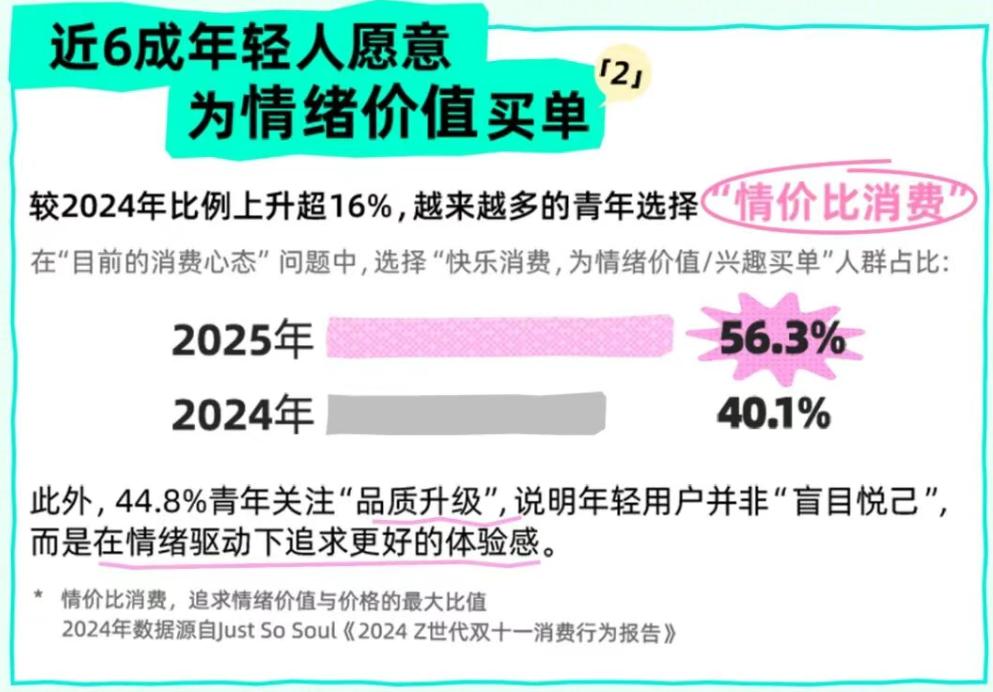
The data also provides support. The "2025 Z - Generation Emotional Consumption Report" shows that nearly 60% of young people are clearly willing to pay for emotional value, with an average monthly expenditure of nearly 1,000 yuan. According to the prediction of the investment institution Ark Invest, by 2030, the global revenue of the AI companion market will exceed 150 billion US dollars.
The other reason is the technical feasibility and the civilian - level cost. In recent years, the development of large models has gradually shifted from all - around capabilities to vertical and in - depth development. Moreover, domestic chips and the supply chain have reduced the hardware cost, enabling high - performance AI to be integrated into toys at a reasonable cost.
When the target of consumption is clearly visible and the bowstring of technology is fully drawn, the investment logic is also quietly changing - from examining the profit potential of a single project to the ecological layout of "seizing the track".
Notably, big companies such as ByteDance, JD.com, and Huawei are leading the race to enter the market.
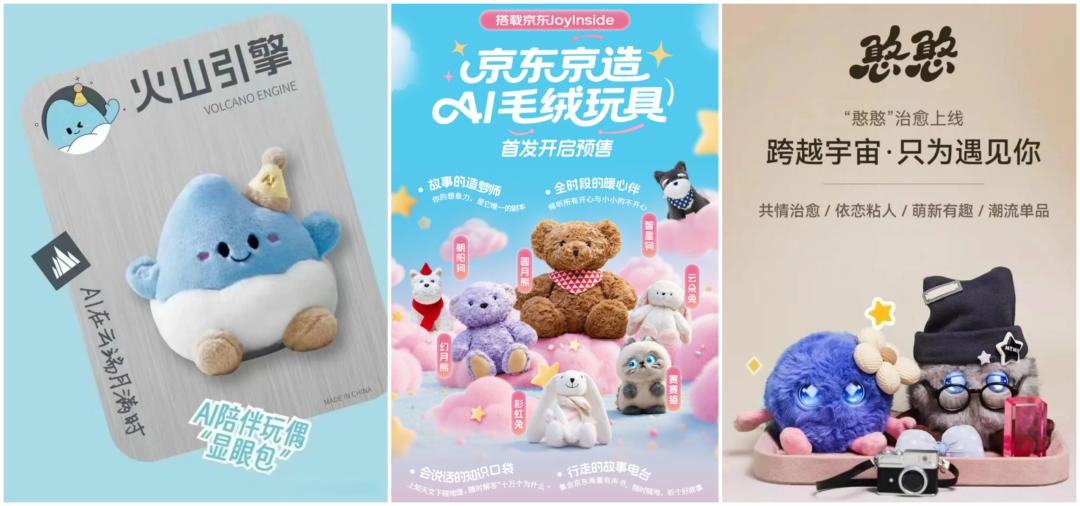
The AI plush toy "Eye - Catching Package" customized by Volcengine under ByteDance has a premium of over 200% in the second - hand market. After its cooperation partner FoloToy accessed the Doubao large model, it quickly rose to prominence;
JD.com has held two AI toy conferences, released the JoyInside software - hardware integration solution, empowered more than 40 brands, and its self - developed AI plush toys were sold out as soon as they were launched;
Huawei, in cooperation with Luobo Intelligence, launched the "Intelligent Dummy" equipped with HarmonyOS 5.0 and the Xiaoyi model, and 6,500 pieces were sold within 15 minutes of its first release.
In addition, a large number of senior executives from big companies are starting a wave of leaving their jobs to start businesses. There are already dozens of large - scale AI toy companies in the market. The teams behind brands such as BubblePal, Youai Rabbit, and Aixiaoban all have work experience in technology giants like Alibaba, Meituan, and Microsoft.
Why is the competitiveness of AI toys not currently AI?
For startups, they are attracted by the commercialization potential of the AI toy market. At present, AI toys that show faster monetization ability are concentrated in the trendy toy track. Many people even regard AI trendy toys as the future of traditional trendy toys.
Li Yong, the founder of Yueran Innovation, once said bluntly: "Yueran Innovation wants to become the Pop Mart in the AI era." He has the confidence to say so. The first AI toy BubblePal launched by his company has exceeded 250,000 units in cumulative sales in 11 months. Calculated at a sales price of 399 yuan per unit, the corresponding sales volume has exceeded 100 million yuan.
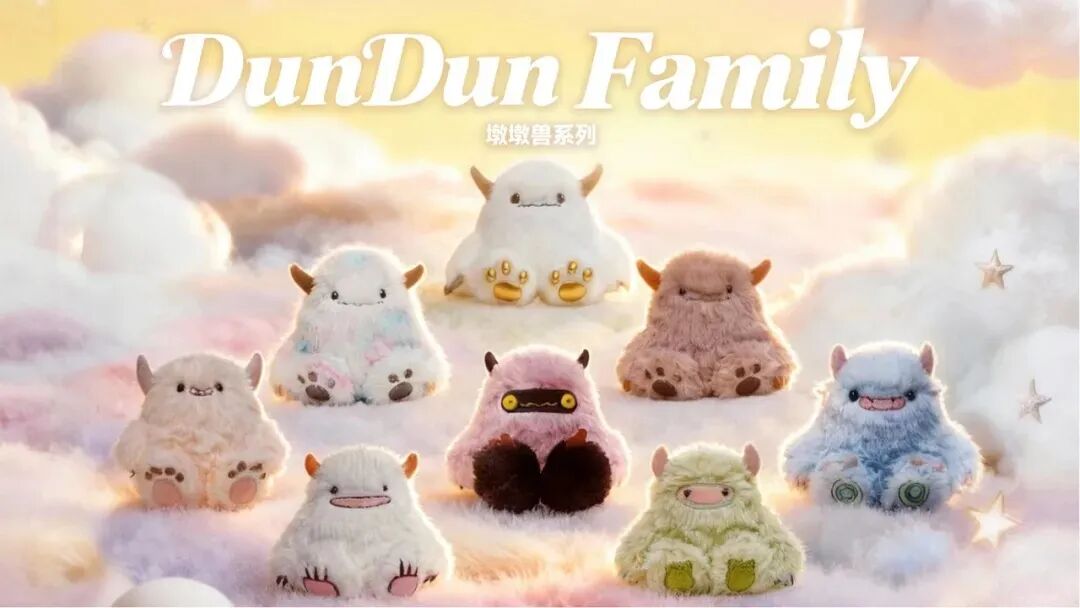
Meanwhile, MOMOTOY, which reached a valuation of 250 million yuan in just 4 months, is also taking this path. Looking at the company's product layout, traditional blind boxes account for a significant proportion. For example, in addition to the AI intelligent body of its popular IP Dun Dun Beast priced at 399 yuan, blind - box keychains priced at 59 yuan each are also sold simultaneously.
So, why has an AI toy turned into a blind - box business?
Although a large number of players have entered the market, there is still no clear definition and consensus on "what a real AI toy is".
Disassembling the current AI toys on the market, they generally consist of three parts: software, hardware, and IP. Theoretically, in terms of importance, it should be software > IP > hardware, but in reality, it is IP > software > hardware.
The reason behind this may be related to big companies. Internet giants with traffic, data, and core technologies enter the market because they value the valuation of AI toys as the "next - generation interaction entrance" and the potential derivative data and subscription service value. In terms of specific implementation paths, there are clearly two types:
One is the asset - light model, whose core logic is to "output the soul and entrust the body". In essence, it is to modularize and platformize their most core AI capabilities; the other is the asset - heavy closed - loop model, that is, to enter the market with their own brands, relying on their own large models to endow the intelligence with high compatibility.
Whether it is the asset - light or asset - heavy model, all players have to answer one question: how to have an AI that can "understand emotions".
The current large models, whether from third - party big companies or self - developed by startups, are still essentially based on probability - based pattern matching and generation. It can imitate a concerned tone but cannot empathize with the loss in silence; it can remember birthdays and send blessings but cannot understand whether this day brings joy or sorrow to the user.
"People's expectations for AI toys exceed their actual capabilities." Da Bai, the COO of the AI toy brand "Super Ball", admitted at an experience event. This is almost a consensus in the industry - most shell - wrapped products can hardly achieve basic natural interaction, let alone in - depth emotional understanding.
In other words, one of the important reasons why AI toys have not been widely popularized is that the business model of AI in scenario - based companionship has not been fully established. How to stimulate users' continuous consumption is an urgent problem to be solved at present.
In order to break away from the homogenization of AI toys and pursue differentiation, betting on IP has become a direct choice for many companies.
One of the reasons why MOMOTOY is favored by capital is its IP capabilities. The brand holds more than 50 original IPs and more than 10 top - level authorized/co - branded IPs. Traditional toy manufacturers that have made faster transformations are mostly enterprises with top - tier IPs. For example, Shifeng Culture has the IP authorizations of Nailong and Pokémon, and Aofei Entertainment has the IPs of Pleasant Goat and Big Big Wolf, Super Wings, etc.
The new forces are also accelerating their cooperation with top - tier IPs to increase their popularity and speed up market positioning. After BubblePal, Yueran Innovation's second product cooperated with Ultraman; not long ago, Ropet also jointly launched a co - branded smart pet "Toothless" with Universal Studios, and the pre - orders exceeded 1,000 units in 5 days.
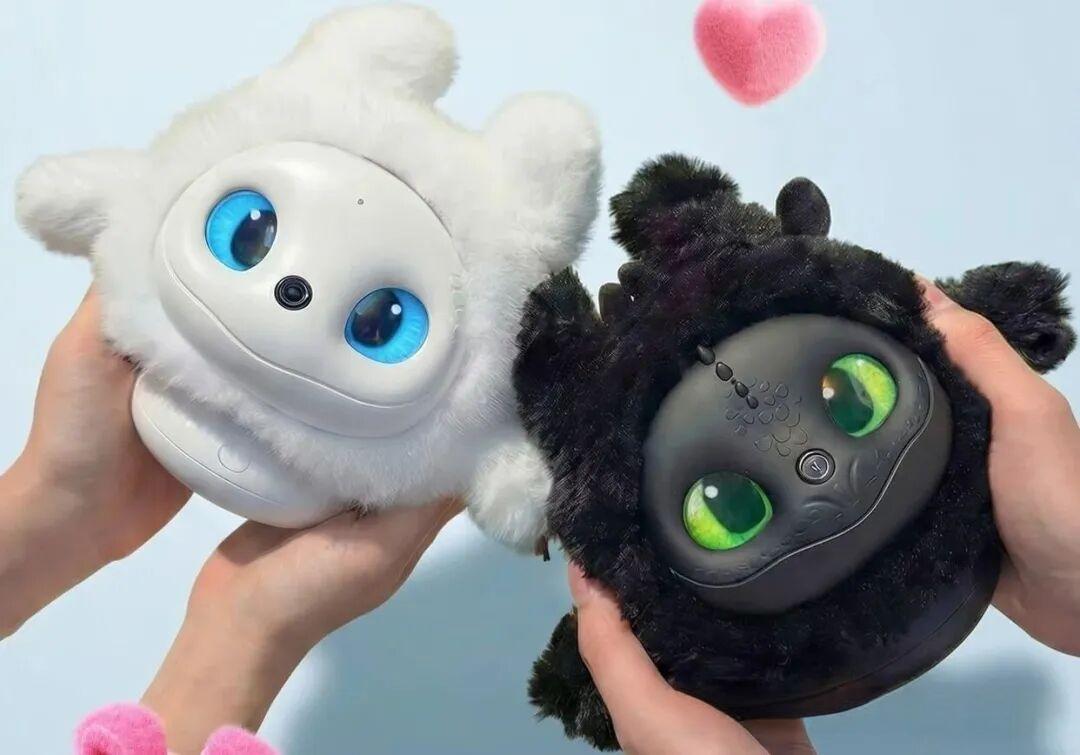
In this context, the value of IP for AI toys is well - known to all players in the track. That's why the wave of capital has boiled this blue - ocean market in a very short time, giving rise to noise and bubbles.
A product manager of an AI toy company admitted that currently, the IP is the key factor that reflects the competitiveness and differentiation of AI toys, and their biggest costs are IP authorization and marketing.
The product life cycle is precisely designed to be about one year. Once the IP authorization expires, a new batch of IPs will be replaced, and repurchase is not considered. Once users activate the product, it is difficult for them to return it. The core competitiveness of the industry is not the model ability but the speed of signing popular IPs and the precise advertising skills to target "refined moms" on Douyin and Xiaohongshu.
Even an investor privately said: "When we look at AI toy projects now, the first thing we ask is not how smart the AI is, but which top - tier IP it can secure and what the ROI of Douyin advertising can be?"
How can AI toys break out of the no - repurchase trap?
Industry insiders generally believe that China is likely to produce the first blockbuster AI toy.
AI toys are essentially a technology application scenario, and China is the world's largest application market. With a large user base, China has the soil to produce C - end blockbusters. On the other hand, AI toys rely on a large amount of user data for continuous optimization, and China's active users and extensive application scenarios provide sufficient training space for the models.
But before that, for consumers, the most concerned question is, why should they choose current AI toys?
"The companionship of traditional toys is static, and knowledge and emotions do not update. However, AI toys are different. They remember what you said yesterday and know what you liked last month. They will integrate and learn from your life, interests, and personality and continuously evolve."
Ouyang Meizhu pointed out that the real transformation of AI companion toys lies in that they are not just "able to chat" but can "grow up with you". "The industry does not lack technology but the ability to match technology with the market. The emergence of a blockbuster product does not depend on how powerful the model is but on whether the product can truly 'understand people's hearts'."
This actually points to the core dilemma faced by all players in the current track: how to use the thinking of making "hardware products" to solve a proposition about "interpersonal relationships". The logic of hardware products is iteration, parameters, and cost - performance, aiming at the moment when users "buy"; while the logic of relationships is cultivation, trust, and tacit understanding, aiming at every day when users "use". The two follow completely different time scales and value laws.
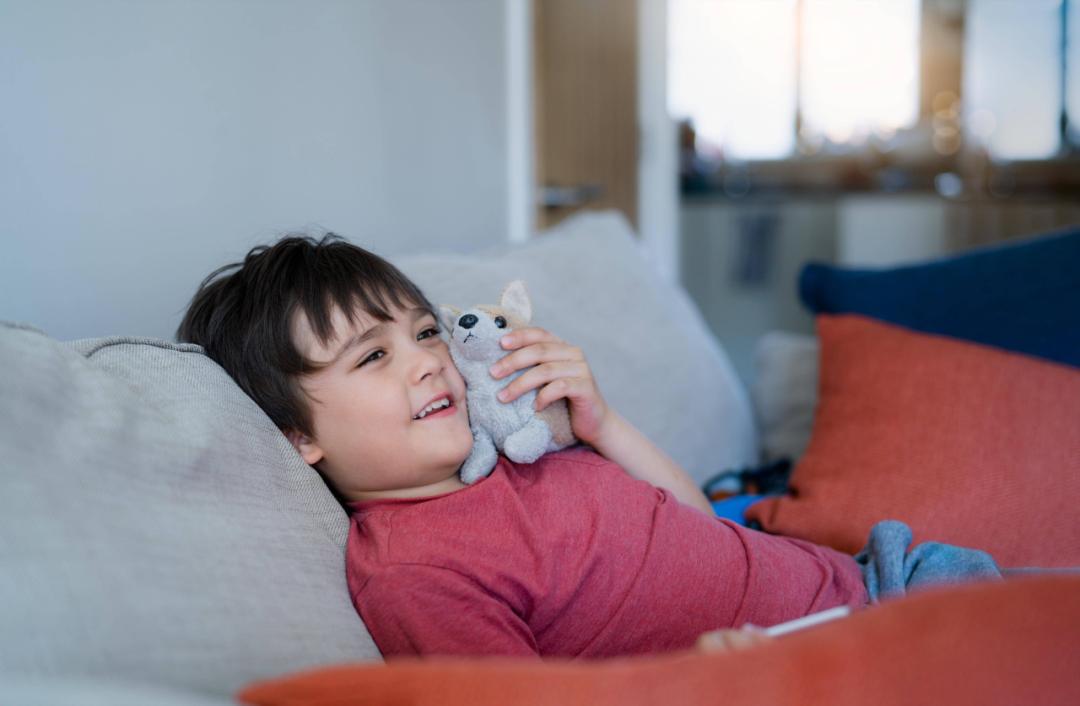
This also explains why in the booming market, the 7 - day no - reason return rate of many trendy toy products featuring "AI companionship" and "emotional interaction" generally exceeds 30%, and the return rate of some single products even reaches 40%.
Users pay for a "relationship" commitment but only experience a product with limited "functions" after receiving it. When their expectations are disappointed, returning the product becomes the most rational choice. This is not because users are demanding but because there is a fatal "mismatch between the product and the description" in the industry's value delivery.
So, the future division will be very clear:
Some will turn to "extreme efficiency". They will be like consumer electronics, competing in the supply chain, chasing trendy designs, and emphasizing cost - performance, becoming the "fast - fashion" in the field of emotional consumption. They do not sell expensive emotional commitments but provide stable and accessible mild companionship, winning in scale and channels;
Others will turn to "emotional depth". They will make breakthroughs in the personalization of large models, memory coherence, and in - depth emotional interaction, creating truly growing and unique digital partners. Their business model will no longer be the hardware price difference but the time and emotional recognition that users pay for this continuous "relationship".
This competition ignited by capital and intensified by big companies will eventually undergo a cruel cleansing. The survivors who