Apple wants to replicate the success of the Apple Watch and is trying to disrupt the entire traditional eyewear industry.
The launch time of Apple's first pair of smart glasses has been postponed by another year.
According to Mark Gurman of Bloomberg in the latest issue of the Power On newsletter, Apple's first smart glasses, codenamed N50, have been postponed from the original plan of being released at the end of 2026 and shipped in early 2027 to being released at the end of 2027. The reason for the delay is not a hardware bottleneck, but something that Apple has been unable to deliver for a long time: an upgraded personalized Siri.
Apple's real competitor has never been Meta
In the past year, almost all discussions about Apple's AI glasses have centered around: "How can Apple compete with Meta Ray-Ban?"
Gurman said that Apple has never targeted the still niche category of smart glasses, but the entire traditional glasses market, especially the mainstream price range of $200 to $500 (equivalent to about 1,300 to 3,400 yuan).

Image source: X
This market segment is currently dominated by Essilor (which owns Ray-Ban and Oakley), Luxottica, and Warby Parker. Apple believes that the scale of this market is much larger than that of the Apple Watch, which currently brings Apple about $17 billion in annual revenue.
In other words, Apple doesn't plan to "join" the scuffle in the smart glasses market. It wants to directly change the way users buy glasses, just as it replaced traditional watches with the Apple Watch.
A replication of the "Apple Watch script"
Apple's betting logic is a strategy that was proven successful a decade ago.
Before the launch of the Apple Watch in 2015, smartwatches were still a niche category. After Apple's attempt to compete with luxury watches failed (the first-generation 18K gold Apple Watch), it precisely targeted the mid-range watch market below $1,000.
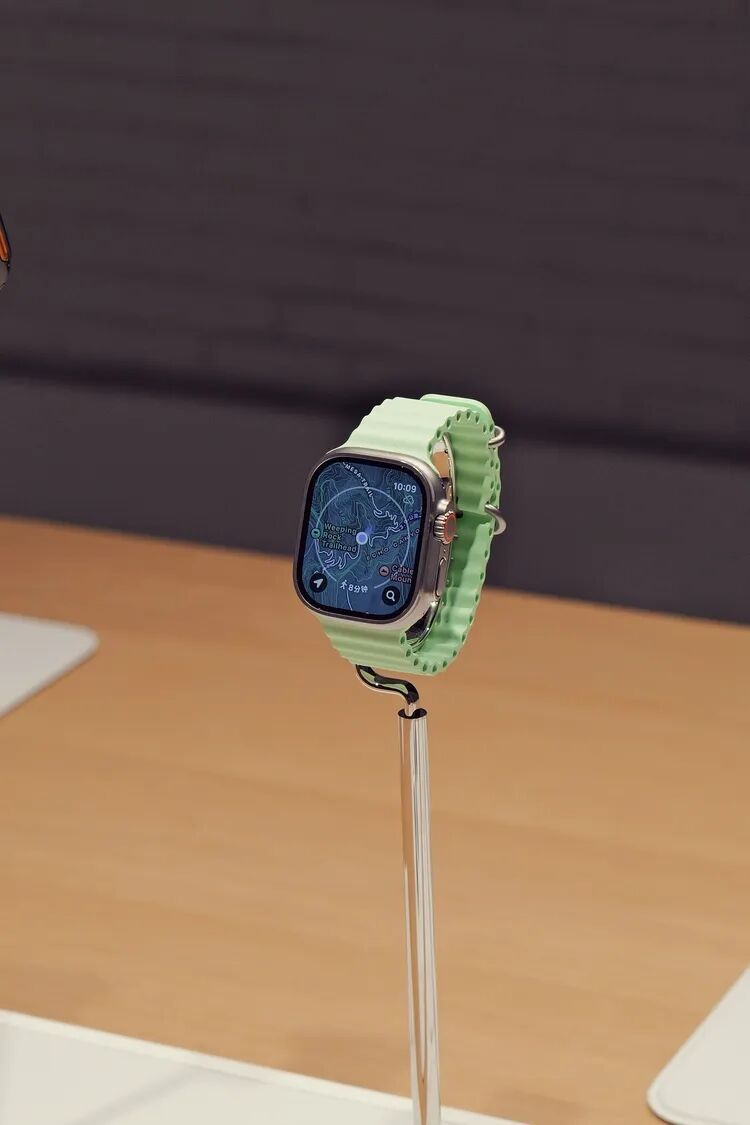
Image source: Unobjective Laboratory
In 2025, Swatch's revenue was 28% lower than the year before the Apple Watch was launched, and Fossil's sales plummeted by about 70% during the same period. However, high-end brands like Rolex and Patek Philippe were hardly affected.
Apple's senior management believes that a similar scenario will play out in the glasses market.
Luxury glasses brands like Cartier, Matsuda, and Dita, which start at thousands of dollars, will not be affected because they sell status or are simply "fashion items" outside the realm of smart glasses. What will really be swallowed up is the middle ground occupied by Ray-Ban and GM.
According to the current plan, the N50 will feature a vertical oval camera (different from the circular layout of Meta's products), offer a variety of frame styles and color schemes. In the long run, Apple even envisions it evolving into a health device and ultimately integrating AR capabilities.
But all ambitions hang on Siri
The problem is that Apple's grand narrative is built on a promise that it has yet to fulfill.
According to reports, the N50 will heavily rely on the progress of visual AI and the new version of personalized Siri. The latter has been repeatedly postponed and has not only delayed the glasses. For example, the rumored AirPods with a camera and smart home devices have also been held back by it.
What's more embarrassing is that the hardware of the new Apple TV set-top box and HomePod mini (codenamed B525, with an upgraded S5 chip) was reportedly ready months ago, and even Apple's headquarters employees have been using them in their daily lives. However, because they have to wait for the new Siri to be released together with Apple Intelligence, the products have been forced to postpone their launch.
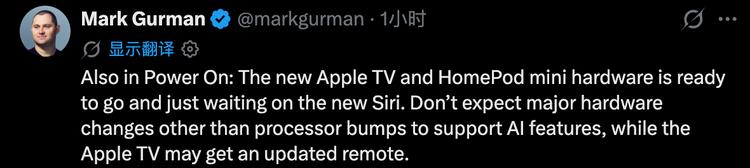
Image source: X
Meanwhile, Meta has taken the lead through offline channels such as LensCrafters and its leading AI capabilities. Coupled with Apple's consistent reluctance to open its ecosystem for compatibility with Android devices, the window for competitors to dominate the market is widening.
Apple is clearly aware of how far behind it is in AI.
As a remedy, it plans to launch an "independent Siri app" for the first time in iOS 27: It will use a main page similar to Claude and ChatGPT to present the conversation status in a list, support text and voice input, and file attachment uploads, and synchronize across devices via iCloud.

Image source: X
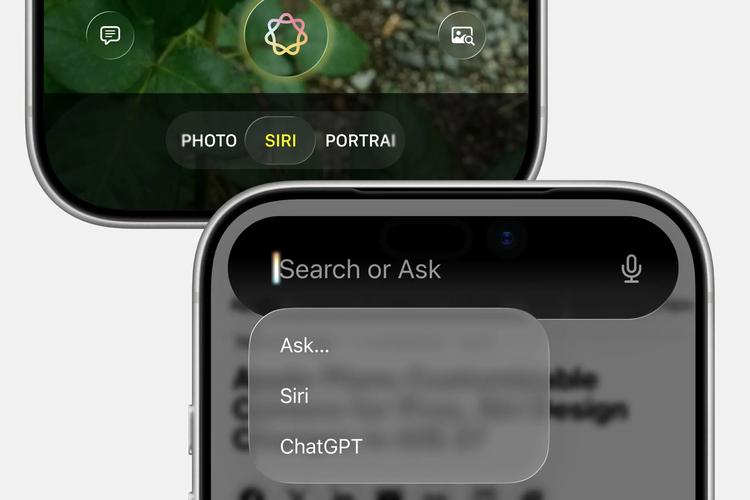
Image source: X
A product, a bet by two CEOs
The importance of these glasses is also reflected in the level of attention they receive within Apple.
It is reported that the project has received the highest level of support within Apple. Tim Cook, who is about to step down, has listed it as a top priority to replace the underwhelming Vision Pro. And Timonthy Donald Cook's successor, Tunes, is also one of the main promoters of this product.
Considering that Cook will hand over the reins on August 31 and Tunes will officially take over on September 1, this means that the glasses to be launched at the end of 2027 are likely to be the first report card to test the "Tunes era."
As for Apple's real AR glasses with a display, they are not expected to be launched before 2030. The subsequent, thinner models of the Vision Pro will not be available until the end of 2028 or 2029.
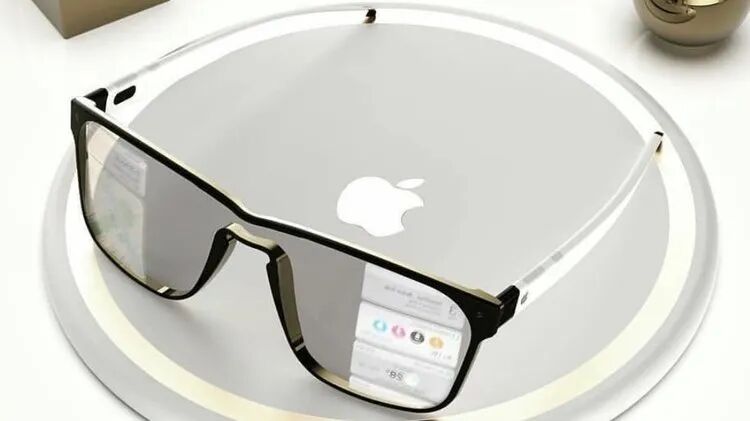
Image source: Internet
Gurman also revealed the system roadmap: This year's iOS 27 and macOS 27 are collectively referred to as "Rizz" internally; next year, with the 20th anniversary of the iPhone, iOS 28 and macOS 28 will be collectively referred to as "Boppy."
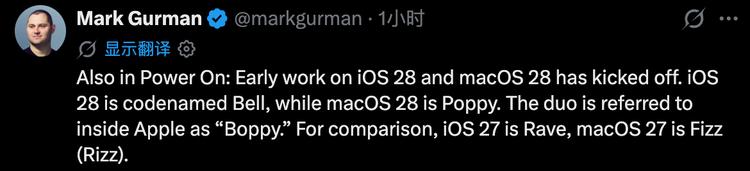
Image source: X
There is actually not much technical suspense in Apple's venture into the glasses market. The real question is: When a company expands its product ambitions from "beating a competitor" to "reshaping an industry," can it first shore up its weakest link in AI?
If the news is true, there is still a year and a half until the N50 is launched, but Siri's "alarm bells" have rung too many times.
This article is from the WeChat official account "Unobjective Laboratory", author: Lu. Republished by 36Kr with permission.