Ready-to-eat food, coffee, and insulated cups have become popular. Where is the next breakthrough for convenience stores?
For a long time, cigarettes have been the core of traffic and the pillar of revenue for convenience stores.
According to the "2025 China Convenience Store Development Report" jointly released by the China Chain Store & Franchise Association and KPMG, cigarettes account for an average of 32.2% of the sales in domestic chain convenience stores. In popular business districts and community stores that meet essential needs, this proportion can reach 35% - 45%. Meanwhile, 67% of customers who buy cigarettes will make secondary associated purchases, making cigarettes the traffic entry point with the highest associated conversion rate among all categories in convenience stores. A single associated purchase can directly increase the average customer spending in the store by 18% - 25%.
Since the 1990s, under the influence of Japanese convenience stores, the domestic convenience store industry has developed rapidly. Cigarettes, as a special commodity, not only ensure a stable cash flow but also maintain a relatively high repurchase rate and associated consumption, becoming the "perpetual motion machine of traffic" in the era of the convenience store industry.
However, the consumption trend in the industry has quietly changed. The smoking rate among the younger generation continues to decline, and the old model that overly relies on tobacco has completed its historical mission. Finding the next traffic entry point in the industry has become an issue that convenience store operators must address, which is crucial for their survival.
Can coffee, rice balls, and ice cups replace cigarettes in convenience stores?
As the cigarette dividend fades, coffee, fresh rice balls, and ice cups are regarded as popular candidates to replace cigarettes in the industry.
Each of the three has its own advantages. Some have extremely high gross profit margins, while others have a high repurchase rate and a wide audience. However, upon closer analysis, they all have different gaps compared to the core standards of cigarettes, which are "stable throughout the year, a necessity for the whole population, and with strong associated consumption."
Let's first look at freshly brewed coffee. It not only has a high gross profit margin and a high repurchase rate but also is the category in convenience store operations that can be most quickly connected to instant retail. At the same time, the addictive nature of coffee consumption is rapidly replacing that of cigarettes. The profit from a cup of affordable convenience store coffee exceeds the revenue from multiple packs of cigarettes, and the repurchase frequency even surpasses that of traditional smokers.
Currently, various convenience store systems are focusing on this category. For example, 7-11, 7CAFÉ, FamilyMart, FAMIMA CAFÉ, LAWSON, and MACHI café have been operating for many years and have formed a large number of regular customers. Domestic convenience store brands have also launched their own brand coffee, such as Qike Coffee of Meiyijia, Jiupa Coffee of Shizu Convenience, Linji Coffee of Linji Convenience, Jiayi Coffee of Xinjiayi Convenience, and Yang Coffee of Tangjiu Convenience. At the same time, new coffee brands are also accelerating their layout of in-store stores in convenience store systems. Among them, NOWWA has more than 10,000 stores, COTTI Coffee has more than 3,000 stores, and Xiaoka Coffee is said to have more than 1,500 stores, and more brands are squeezing into the convenience store system.
When the author communicated with the founder of a convenience store ranked within the top 50, he clearly stated that offering freshly brewed coffee in convenience stores can greatly improve business. Firstly, the average daily sales of each store in his system is 35 cups, about 25 of which are ordered online, and most customers will make associated purchases, effectively activating the activity of online instant retail in the stores. The monthly revenue sharing (he operates a brand coffee in-store) can also cover a part of the costs. Secondly, there is no need to increase the labor cost. The existing staff can fully handle the increased workload, improving the work efficiency of employees. Thirdly, when many business centers introduce convenience stores, whether the store has a brand coffee has become an important factor considered by property owners, which has played a certain role in brand expansion.
Regarding the operation of brand coffee in-store stores and self-owned brand coffee in convenience stores, opinions in the industry vary. However, there are concerns about the marketing strategy of using freshly brewed coffee as a traffic-driving tool with extremely low prices and engaging in a price war. It is believed that long-term low prices and no profit make it difficult to ensure the stability of product quality and customer satisfaction. Of course, well-known large convenience store systems are making long-term strategic layouts. Using a short-term price image to gain customers' recognition is also a business strategy. However, the industry standard of 50 cups per day is a comprehensive consideration of brand, price, and customer recognition.
The shortcoming of coffee is also prominent. It cannot replicate the universal nature of cigarettes. Its core customer group consists only of urban white-collar workers and young office workers, and it highly depends on office buildings and business district scenarios. The sales volume drops significantly in community, school, and suburban stores, and the audience is very niche.
Next, let's look at fresh rice balls. It is currently the category closest to the comprehensive attributes of cigarettes. Rice balls are a real all-day, all-customer group necessity. They can be paired with soy milk for breakfast, coffee for lunch, oden for dinner, and are also suitable for midnight snacks, basically covering all daily consumption scenarios. Students, blue-collar workers, office workers, and drivers, almost all consumer groups can be targeted, and the audience is much broader than that of coffee.
In terms of profit contribution, the gross profit margin of rice balls is stable at 45% - 50%, and the turnover rate is extremely fast. Some stores can sell hundreds of rice balls per day. More importantly, the associated consumption ability of rice balls even exceeds that of cigarettes. Seventy percent of customers who buy rice balls will also purchase dairy products, beverages, and snacks. The only shortcoming is the short shelf life and the problem of homogenization. The 24-hour shelf life easily leads to waste, and the rice ball categories of major brands are generally the same, with little difference in taste, making it difficult to create exclusive differentiation.
Finally, there are ice cups. They are a seasonal profit-making weapon. The cost is extremely low, with a single cup costing less than 1 yuan and a selling price of 2 - 4 yuan. They are undoubtedly a profit-making item in convenience stores. Moreover, there is no need to purchase equipment or engage in complex operations. Relying on consumption scenarios such as cocktail mixing, camping, and binge-watching dramas in convenience stores, ice cups have become extremely popular among the young generation, and the short-term traffic and sales volume are very impressive.
However, ice cups cannot avoid the hard problem of being highly seasonal. They can only achieve high sales volume in three or four months of summer each year and cannot provide stable performance support throughout the year. At the same time, they are a trendy hit, and their popularity depends on social media topics. Once the trend fades, they will be quickly eliminated and can only be used as a short-term revenue-increasing item, unable to support the long-term performance of the store.
Based on a comprehensive comparison, each of the three has its own advantages and disadvantages. However, for a single store, relying on just a few categories cannot fundamentally change the situation. Redefining the consumption scenario of convenience stores is the fundamental solution to the problem.
Reconstruct the all-day category operation of convenience stores with six meals a day
Traditional convenience stores still generally follow the retail logic of supermarkets, only selecting tobacco, alcohol, beverages, snacks, and daily care products for emergency consumption as the main operating categories. Fresh food is only a sporadic supplement, and there is no concept of operating by time periods.
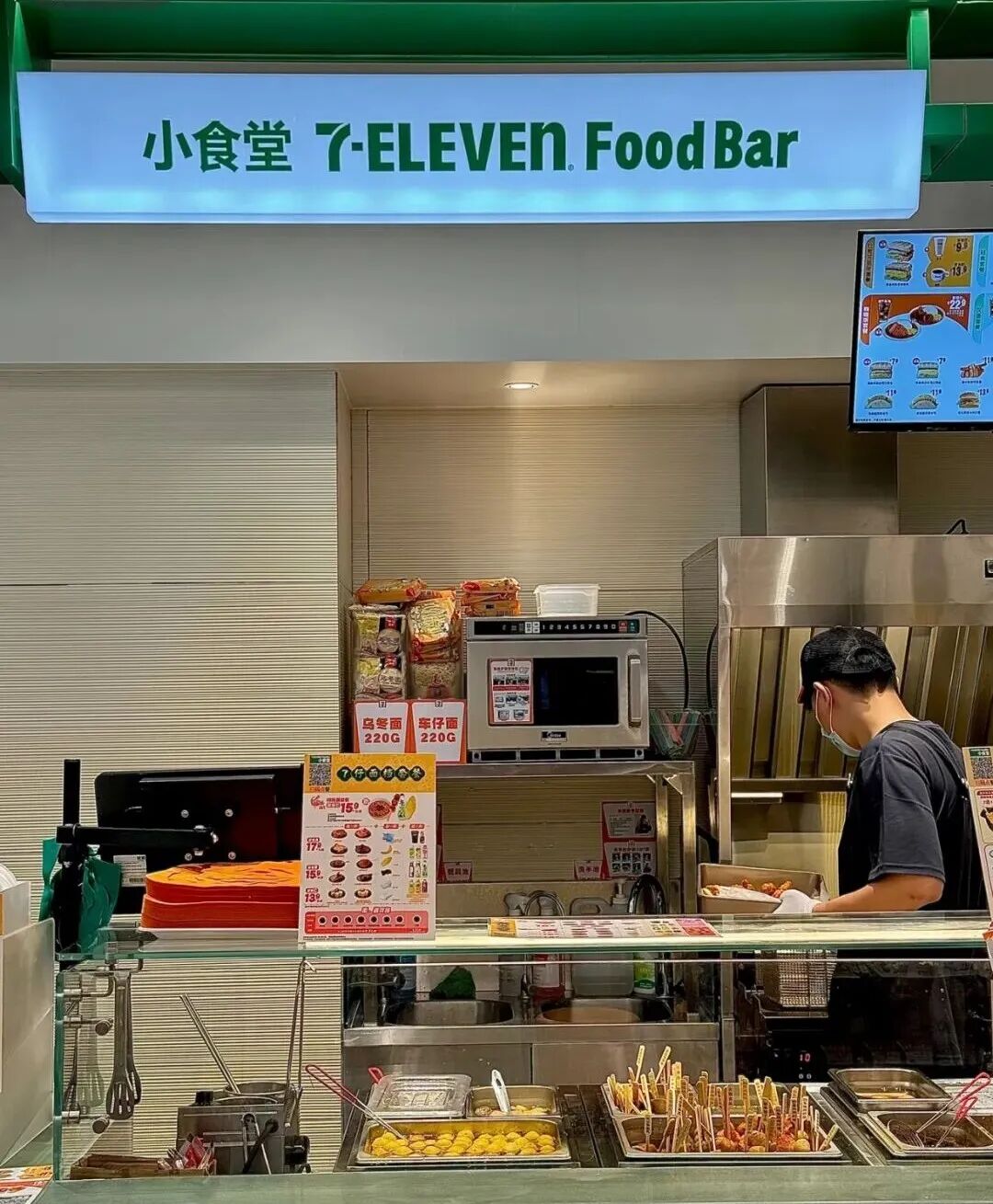
In contrast, new-style convenience stores break out of the traditional thinking. By focusing on six meals a day, they finely divide the operating time periods and take the full coverage of fresh food categories as the core operating system, forming a clear boundary between the business models of new-style and traditional convenience stores.
According to the work and rest schedules of urban office workers and community residents, the whole day is divided into six fixed meal time windows. Corresponding categories are used to target each wave of customers, turning random shopping into regular, purposeful consumption multiple times a day.
The first time period is the morning breakfast (7:00 - 9:00), featuring fast, warm, and portable food. The core categories include freshly brewed coffee, soy milk, steamed buns, shaomai, rice balls, sandwiches, and tea eggs, mainly to meet the efficient satiety needs of people on their commute.
The second time period is the pre-lunch snack (10:00 - 11:00), focusing on light supplements with low calorie intake. Yogurt, room-temperature small desserts, fruit cuts, small bread, and functional drinks are stocked to meet the energy gap of office workers in the morning.
The third time period is the lunchtime meal (12:00 - 13:30), which is the peak sales period of the day. The core categories are hot bento boxes, rice bowls with toppings, mixed noodles, pasta, sushi, and oden, directly competing with fast-food restaurants. The main features are no waiting for food, affordable prices, and a wide variety of choices.
The fourth time period is the afternoon tea (15:00 - 17:00), mainly for emotional replenishment. It includes freshly made coffee, milk tea, ice cream, baked desserts, and small snacks, suitable for workplace breaks and stress relief.
The fifth time period is the evening light meal (18:00 - 20:00), catering to the needs of people on their way home from work. Light bento boxes, noodle soups, sushi, and cooked side dishes are promoted to meet the needs for a simple dinner.
The sixth time period is the late-night snack (21:00 - early morning), focusing on the late-night essential needs. The core categories are oden, hot skewers, marinated foods, instant noodles, hot drinks, alcoholic beverages, and snacks, serving the late-night satiety needs of people who stay up late or return home late.
The whole six-meal system upgrades the convenience store from a small shop selling daily necessities to a 24/7 urban mini-canteen. By promoting corresponding products according to time periods and providing hot food throughout the day, the frequency of customers entering the store from the surrounding area has been significantly increased.
Traditional convenience stores rely on high-frequency daily necessities to attract customers, with thin profit margins and random repurchases. However, with the six-meal system, high-margin fresh food becomes the core profit pillar, transforming customers' random store visits into purposeful visits multiple times a day. Instead of waiting for customers to come in for emergency shopping, the convenience store actively integrates into the daily dining scenarios of urban residents, competing with street breakfast shops, fast-food restaurants, milk tea shops, and late-night snack stalls for customers. By ensuring food safety, providing convenient shopping, and offering 24/7 service, it locks in the most frequent daily consumption of surrounding consumers.
This model brings about a fundamental change, completely reversing the consumption attributes of convenience stores.
The six-meal system only meets some of the living scenarios of surrounding customers. In fact, more can be done.
Create the first living space
The essence of the first living space is a fundamental change in the underlying business logic of new-style convenience stores.
All the designs of traditional convenience stores revolve around selling goods. Shelves are the main body, products are the core, and customers are one-time transaction objects. The store has no additional functions, no value for customers to stay, and no emotional value. Customers leave as soon as they finish shopping and will not develop any dependence or loyalty.
New-style convenience stores redefine the value of the store. The first step is to upgrade from simply selling goods to creating a living scenario.
Instead of just selling products, a complete set of daily solutions is provided. The six-meal system meets the food supply needs; daily emergency items meet unexpected needs; charging facilities, hot water, and resting seats meet the temporary needs of travel and work; and 24/7 operation fills the service gap after supermarkets and restaurants close.
The store is embedded in the communities and office buildings closest to customers, becoming the most frequent and stable basic living facility within a 10-minute living circle, transforming from a "place to buy things" into a "place to live."
On this basis, the convenience store can be further upgraded to a lightweight social space.
Different from the strong sense of ritual and high consumption threshold of coffee shops, convenience stores are a zero-threshold, low-pressure social place. Colleagues can stop by together to buy coffee on their way, and acquaintances can wait for each other temporarily. There is no need for high consumption or fixed time limit. This relaxed and mild social interaction is a very suitable simple space for the current fragmented and lightweight social needs.
More than a decade ago, when the author went to Taiwan, a tour guide's words have always been unforgettable. He said, "Whenever I see the bright lights of the FamilyMart convenience store that has been open for more than a decade near my home when I return late at night, I feel very happy because I'm back home."
In the fast-paced urban life, a convenience store can be a 24/7 public space with lights on; a late-night supply station; a shelter from the rain on a rainy day; and a temporary resting place when people are tired. It is no longer a cold place for transactions between people and goods but a spiritual sustenance that provides a sense of security, healing, and the charm of daily life.
From a transaction place to a living scenario and then to an emotional destination, this is the real meaning of the first living space that consumers need.
Conclusion
Urban convenience stores have gone beyond the superficial competition based on traditional supermarket categories and standard products. The real breakthrough lies in understanding the modern people's desire for daily life and emotional comfort.
From relying on single products to attract customers to focusing on six meals a day and then transforming into a living space where people can stay, relax, and chat, urban convenience stores are gradually moving beyond the transaction itself.