Frische Lebensmittel, Kaffee und Eisbecher sind heiß. Wo liegt der nächste Durchbruch für die Convenience-Stores?
For a long time, cigarettes have been the core of customer flow and the pillar of sales in convenience stores.
According to the "China Convenience Store Development Report 2025" by the China Chain Store & Franchise Association and KPMG: The average proportion of cigarette sales in Chinese chain convenience stores is 32.2%. In popular business districts and communities with high demand, this proportion can range from 35% to 45%. At the same time, 67% of customers who buy cigarettes make secondary accompanying purchases. This makes cigarettes the category with the highest conversion rate of customer flow in convenience stores. A single accompanying purchase can increase a store's average receipt by 18% to 25%.
Since the 1990s, the Chinese convenience store industry has developed rapidly inspired by Japanese convenience stores. Cigarettes, as a special product, not only secure sales but also have a high repeat purchase rate and accompanying purchases. They have thus become the "eternal customer flow machine" in the convenience store industry.
But the industry has slowly changed. The smoking rate among the young generation is steadily declining, and the old model that was overly dependent on tobacco has fulfilled its historical mission. Finding the next customer flow driver in the industry is now an urgent task for convenience store operators, which directly affects their survival.
Can coffee, rice balls, and ice cream cups replace the role of cigarettes in convenience stores?
With the decline in cigarette profits, coffee, fresh rice balls, and ice cream cups are regarded as popular candidates to replace the role of cigarettes in the industry.
Each of these three products has its own advantages. Either they have a very high margin, or a high repeat purchase rate and a wide target audience. But on closer inspection, they deviate to varying degrees from the core criteria of cigarettes - "stable annual demand, universal need, strong accompanying purchases".
Let's first look at freshly brewed coffee. It not only has a high margin and a high repeat purchase rate but is also the category in the convenience store industry that can be quickly connected to instant retail. At the same time, the addiction to coffee quickly replaces that of cigarettes. The profit from a cheap convenience store coffee can be higher than that from several packs of cigarettes, and the repeat purchase frequency can even exceed that of traditional smokers.
Currently, all convenience store systems focus on this category. For example, 7 - 11, 7CAFÉ, FamilyMart, FAMIMA CAFÉ, LAWSON, and (MACHI café) have built a fixed customer base over the years. Chinese convenience store brands have also launched their own coffee brands, such as Qike Coffee of Meiyijia, Jiupa Coffee of Shizu Convenience, Linji Coffee of Linji Convenience, Jiayi Coffee of Xinjiayi Convenience, and Yang Coffee of Tangjiu Convenience. At the same time, new coffee brands are entering the convenience store systems. The number of NOWWA Coffee stores has already reached over 10,000, Cotti Coffee over 3,000, and it is said that Xiaoka Coffee also operates over 1,500 stores. And there are more brands trying to penetrate the convenience store systems.
When I talked to an entrepreneur of one of the top 50 convenience stores, he clearly said that providing freshly brewed coffee in convenience stores significantly improves business success. Firstly, his system sells an average of 35 cups of coffee per day per store, with about 25 cups ordered online. At the same time, most orders lead to accompanying purchases, which effectively stimulates the activity of instant retail in the store. The monthly settlements (he operates a branded coffee store in the convenience store) can also cover part of the costs. Secondly, no additional staffing is required. The existing staff can easily handle the additional work, which increases the work efficiency of the employees. Thirdly, when setting up convenience stores in business districts today, it is an important factor for property operators whether a store has a branded coffee store. This helps with brand expansion.
Views in the industry on setting up branded coffee stores in convenience stores and launching their own coffee brands vary. But there are concerns about the marketing strategy that aims to use freshly brewed coffee only as a promotional tool and compete with low prices. It is feared that a permanently low - price strategy without profit cannot guarantee quality and customer satisfaction. Of course, for large convenience store systems, it is a long - term strategic plan to win customers with an affordable price image. But the industry standard of 50 cups per day is a comprehensive consideration of brand, price, and customer acceptance.
Coffee also has obvious weaknesses. It cannot imitate the universal appeal of cigarettes. Its core target audience consists of urban office workers and young professionals. It is highly dependent on office buildings and business districts, and sales in communities, schools, and suburbs drop significantly. The target audience is very specific.
Now let's consider fresh rice balls. They are the category that comes closest to the comprehensive attributes of cigarettes. Rice balls are a real daily necessity for all target audiences and at all times of the day. They can be served for breakfast with soy milk, for lunch with coffee, for dinner with oden, and also for a midnight snack. They cover almost all daily consumption scenarios. Students, workers, office workers, and drivers - almost all consumer groups can consume rice balls. The target audience is much wider than that of coffee.
In terms of profit contribution, the margin of rice balls is stably between 45% and 50%, and the turnover rate is very high. In some stores, the daily sales volume can reach several hundred pieces. Most importantly, the accompanying purchases of rice balls are even higher than those of cigarettes. Seven out of ten customers who buy rice balls also take dairy products, drinks, or snacks. The only weakness lies in the short shelf - life and homogeneity. The 24 - hour shelf - life can lead to losses, and the rice balls of all brands are generally similar, both in selection and taste. It is difficult to create a unique differentiation.
Finally, there are ice cream cups. They are a seasonal profit wonder. The costs are extremely low, less than 1 yuan per cup, and the selling price is between 2 and 4 yuan. They are undoubtedly a profitable product in convenience stores. Moreover, no additional equipment is required and no complicated operation mode. Thanks to consumption scenarios such as cocktail making, camping, and binge - watching series in convenience stores, ice cream cups are very popular among young people. The short - term customer flow and sales volume are very impressive.
But ice cream cups have the inevitable disadvantage of being highly seasonal. Sales only increase in the three or four summer months and cannot guarantee stable annual performance. They are internet hits and highly dependent on social media. Once the trend is over, they are quickly replaced. They can only serve as a short - term income product and cannot guarantee the long - term performance of a store.
In comparison, these three products each have advantages and disadvantages. But for a single store, a few categories alone cannot bring about the change. The re - orientation of consumption scenarios in convenience stores is the solution to the problem.
Re - orientation of the business strategy of convenience stores by setting up six meals a day
Traditional convenience stores basically follow the trading principle of supermarkets. They focus on emergency products such as alcohol, tobacco, drinks, snacks, and household items. Fresh products are only a supplement, and there is no conceptual planning for different times of the day.
New convenience stores break with traditional thinking. They divide the day into six fixed meals and build a business model based on the completeness of fresh products. This marks the difference between new and traditional convenience stores.
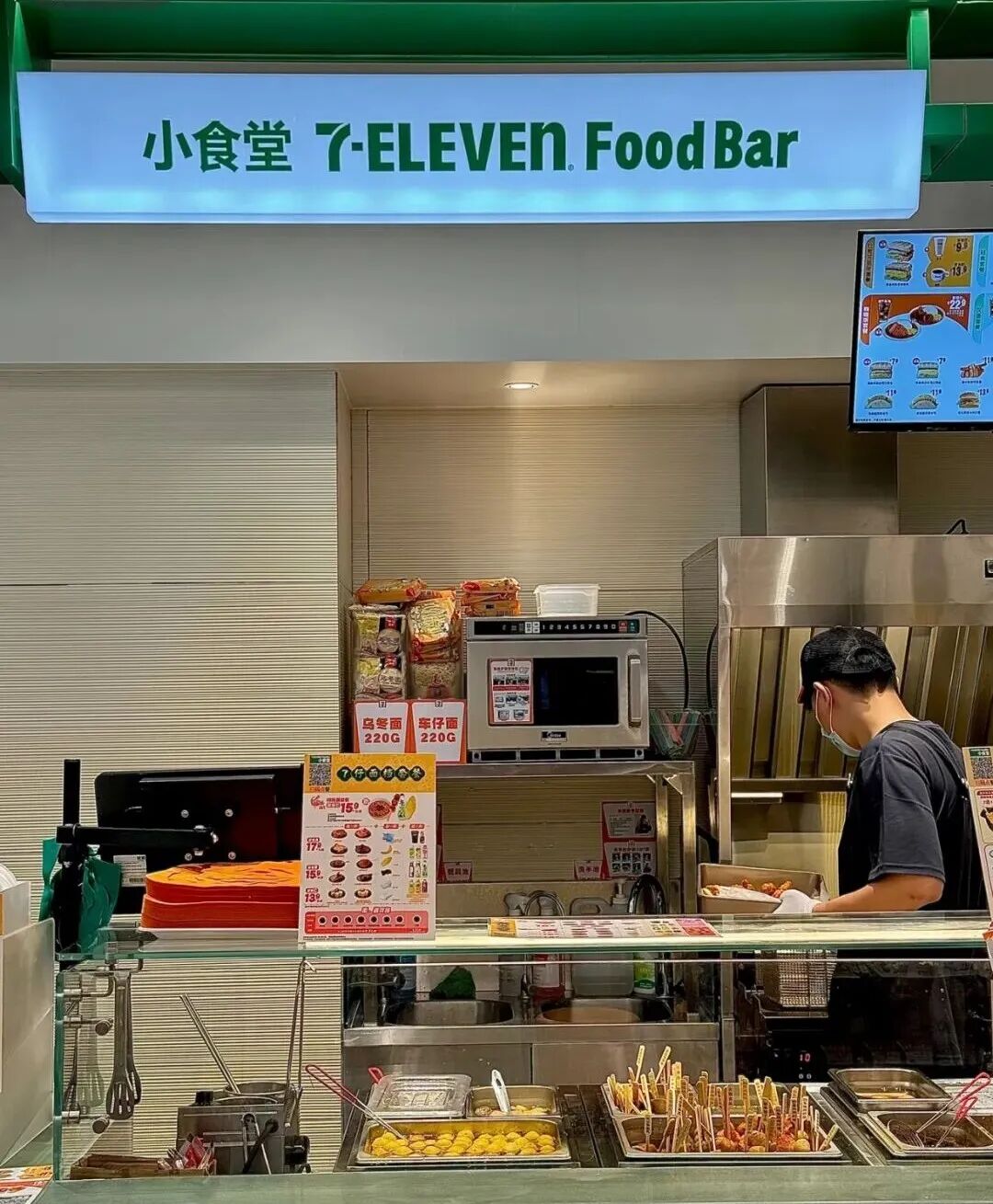
Based on the daily routine of urban professionals and community residents, the day is divided into six fixed meals. Each time period is filled with suitable products to attract customer flow and transform random shopping into regular, multiple daily shopping with a specific purpose.
The first time period is the morning breakfast (7:00–9:00). The offerings are fast, warm, and portable. The core products include freshly brewed coffee, soy milk, steamed buns, rice balls, sandwiches, and egg dishes. The goal is to meet the needs of people on their way to work.
The second time period is the mid - morning snack (10:00–11:00). The offerings are light and healthy. It includes yogurt, small pastries, fruit slices, small bread, and energy drinks. This is to meet the energy needs of office workers in the morning.
The third time period is the lunchtime main meal (12:00–13:30). This is the peak sales time of the day. The core products are warm bento boxes, rice dishes, noodles, sushi, and oden. The offerings are fast, affordable, and diverse, comparable to fast - food restaurants.
The fourth time period is the afternoon coffee (15:00–17:00). The offerings are for relaxation and include freshly prepared coffee, milk drinks, ice cream, baked goods, and snacks. This is ideal for a break at work.
The fifth time period is the evening meal (18:00–20:00). The offerings are light and suitable for people on their way home. It includes light bento boxes, noodle soups, sushi, and ready - made meals. This is to meet the needs of a simple dinner.
The sixth time period is the late - night meal (21:00–morning). The offerings are aimed at people who stay up late or come home late. The core products are oden, sausages, hot dogs, instant noodles, warm drinks, alcohol, and snacks. This is to meet the needs of people at night.
Through the system of six meals a day, the convenience store changes from a small household goods store to a 24 - hour urban micro - kitchen. Adapting the offerings to the time of day and continuously providing hot food significantly increases the number of visits from the neighborhood population.
Traditional convenience stores attract customers with frequently needed household goods. The profit is low, and repeat purchases are rather random. The system of six meals a day is based on high - margin fresh products as the core profit source. It transforms random shopping into regular, multiple daily shopping with a specific purpose. Instead of waiting for customers who shop out of emergency, the convenience store integrates into the daily life rhythm of the urban population. It attracts customers from street breakfast stalls, fast - food restaurants, milk drink stores, and late - night snack stands. By ensuring food quality, shopping convenience, and 24 - hour service, the daily consumption activities of the neighborhood population are determined.
This change fundamentally changes the consumption attributes of convenience stores.
The system of six meals a day only meets part of the living needs of the neighborhood population. There is still more that can be done.
Creation of the first living space
The creation of the first living space means a fundamental change in the business model of new convenience stores.
Traditional convenience stores are designed to sell goods. The shelves are the center, the goods are the core, and the customers are only one - time transaction partners. The stores have no additional functions, no staying time, and no emotional values. Customers buy and leave. There is no bond and no loyalty.
New convenience stores re - define the meaning of the store. The first step is to transform from a simple goods store into a living space.
Instead of just selling goods, they offer a comprehensive solution for daily needs. The system of six meals a day meets the food needs. The emergency products cover sudden needs. The charging facilities, hot water supply, and rest areas meet the temporary needs during travel and work. The 24 - hour service fills the gaps in the opening hours of supermarkets and restaurants.
The stores are integrated into neighborhoods and office buildings and become the most frequently visited and most stable basic supply in a 10 - minute living space. They transform from a "shopping place" into a "living place".
Moreover, convenience stores can become a light social space.
In contrast to coffee houses, which have a strong sense of ceremony and high costs, convenience stores are a social space with zero entry threshold and low pressure. Colleagues can buy coffee together, and acquaintances can meet briefly. No high consumption is required, and there is no time limit. This relaxed, light social contact is a suitable space for the current fragmented and light social needs.
More than ten years ago, I was in Taiwan. A tour guide told me something that I will never forget. He said: "When