Chinese Mythological Universe: The Next Tough Battle in the Film and Television Industry
For a long time, the Chinese film industry has been constantly making up for the lack in the field of genre films. From realistic themes to science fiction, from youth films to mainstream - themed films, almost every track has experienced a rapid expansion driven by capital and a periodic adjustment. Only the "myth" theme has been in an awkward state for a long time and has never formed a stable industrial system.
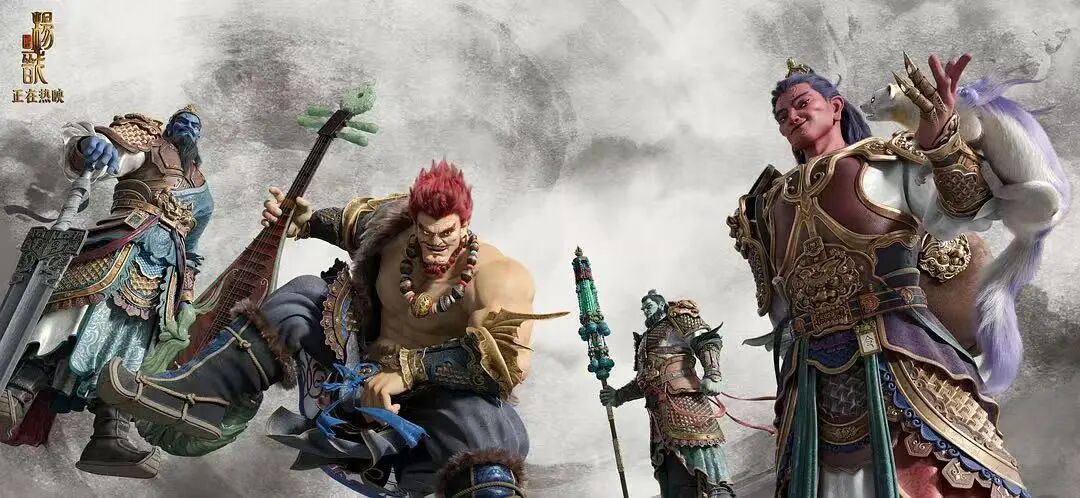
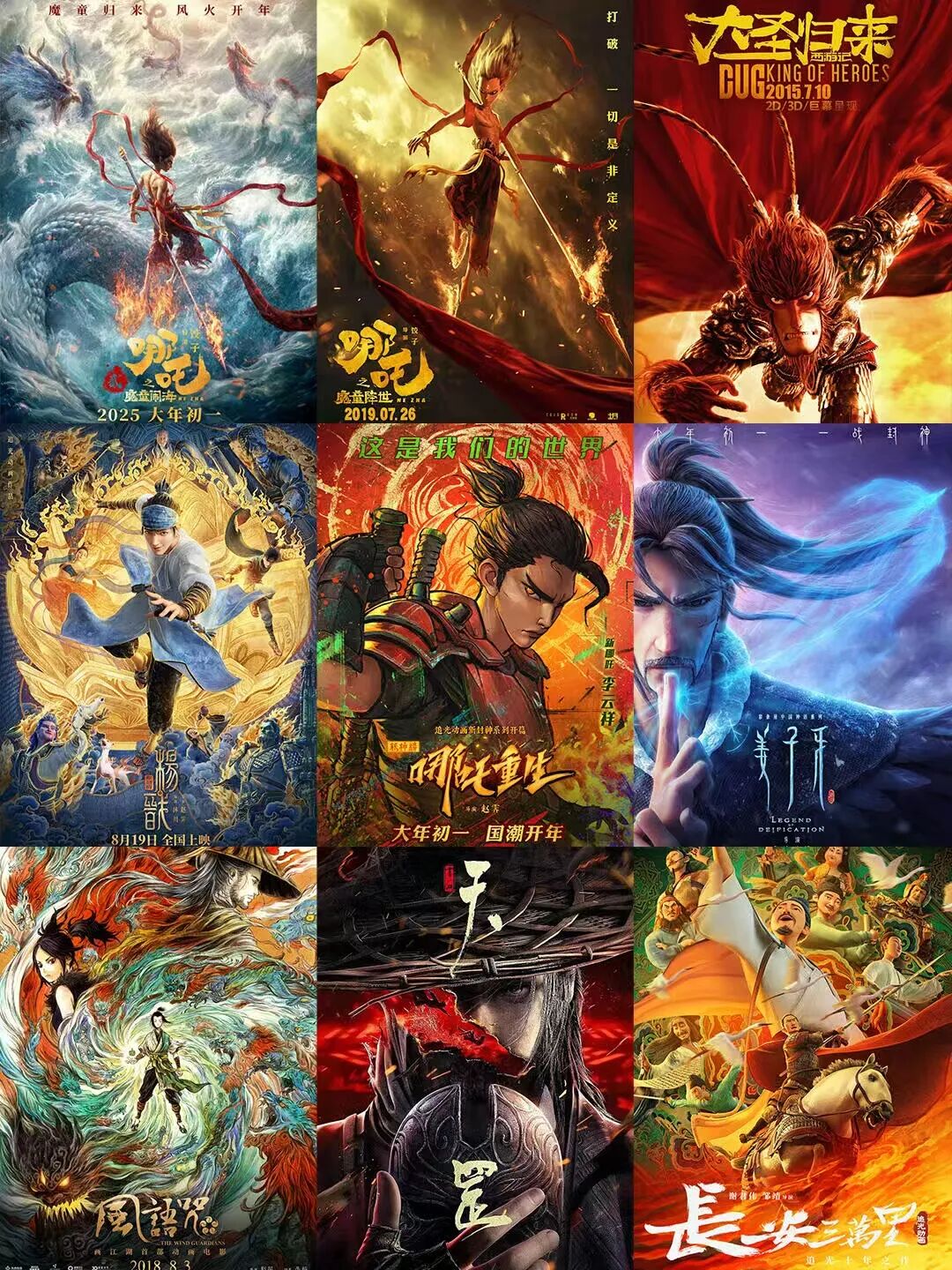
It is only in recent years that animated films have continued to break through the circle. Films such as Nezha: Birth of the Demon Child, Jiang Ziya, New Gods: Yang Jian, and Chang'an 30,000 Miles have proven time and time again that myths are no longer just for children or a marginal genre, but are core assets with the potential to support large - scale production and long - term development.
The "cosmic development" centered around core characters such as Sun Wukong, Nezha, and Yang Jian has gradually spread rapidly within the industry. Major film and television companies are all trying to build their own Chinese myth film systems.
As a result, a concept that has not been officially named but is already taking shape has emerged - the "Chinese Mythological Universe".
The Chinese - characteristic film and television dream: Building the Chinese Mythological Universe!
In just three or four years, Chinese myths have become the most crowded and expensive track in the entire film and television industry. Animation companies, traditional film studios, Internet platforms, and online literature giants - almost all leading film and television companies are getting involved.
The first to form a scale effect was the Light Media system. Relying on the animation brand of Caitiaowu Pictures, Light Media completed a round of the most recognizable development of mythological themes in the past few years. Nezha: Birth of the Demon Child used its strong ability to reshape characters to translate the traditional "rebellious teenager" into a more contemporary emotional individual expression. Jiang Ziya tried to place mythological characters in a narrative structure with more ethical dilemmas, and the subsequent Yang Jian project further extended the visual and character pedigree of this system.
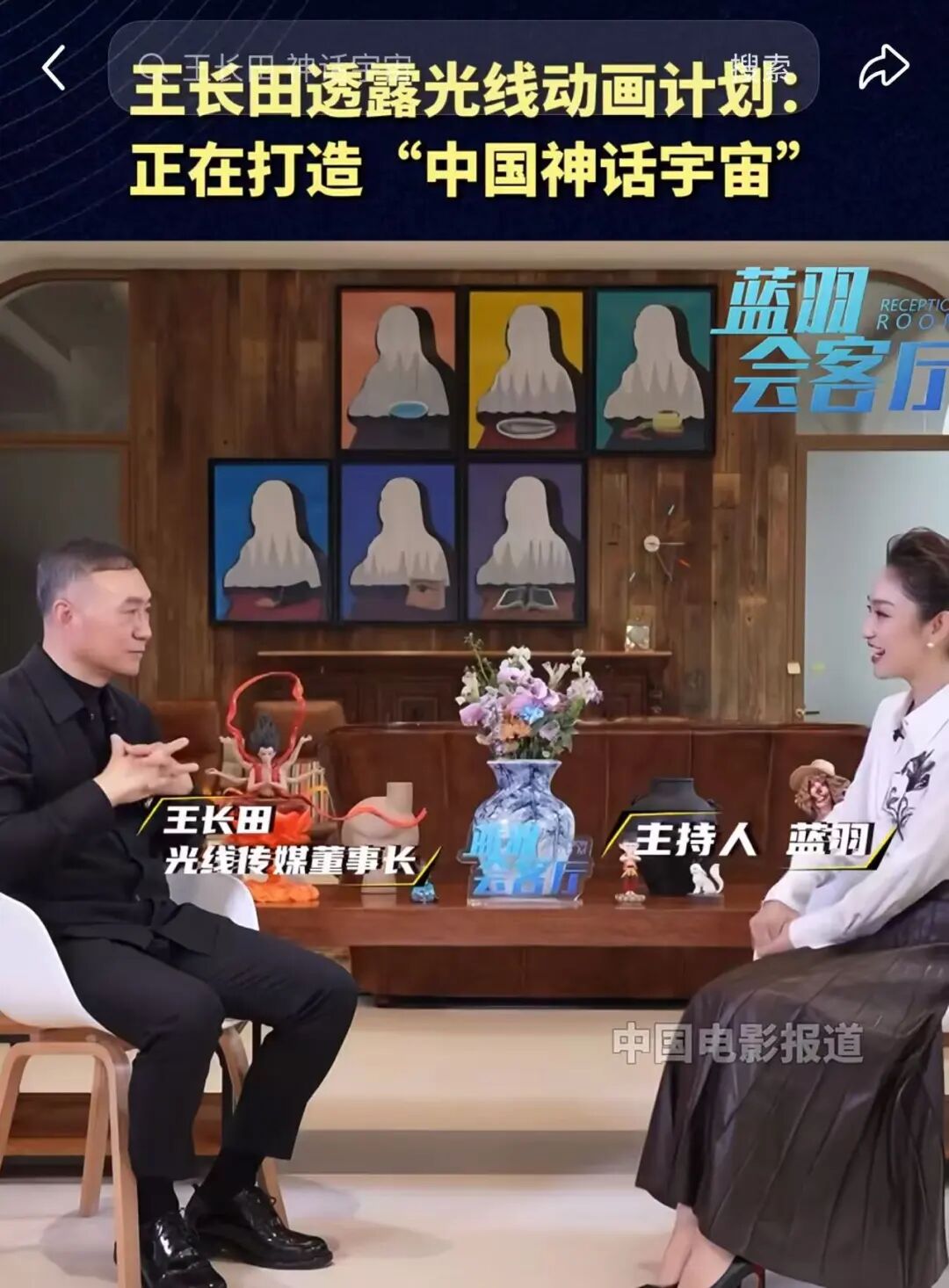
In April 2023, Wang Changtian, the chairman of Light Media, mentioned that the core goal of Light Animation is to create a "mythological universe", which requires long - term planning and great patience, not just making one or two films. In June of the same year, at the opening forum of the 25th Shanghai International Film Festival, he also publicly stated that Light Media is committed to establishing a "Chinese Mythological Universe" and needs to re - sort out the Chinese mythological system. This shows Light Media's emphasis on and expectations for the Chinese Mythological Universe.
Light Media's core advantage lies in the director - studio model. Different projects are led by different creative teams, forming a production structure similar to a "federal system". This model can amplify production capacity in a short time and also helps to maintain creative diversity.
However, this dispersion also means a lack of unity and stability. The differences in worldviews, character settings, and even aesthetic styles between different works make them more like a group of loose single - point blockbusters rather than a highly coordinated cosmic system. For a company that hopes to deeply cultivate IP in the long term, how to find a balance between creative freedom and system constraints has become an unsolved problem.
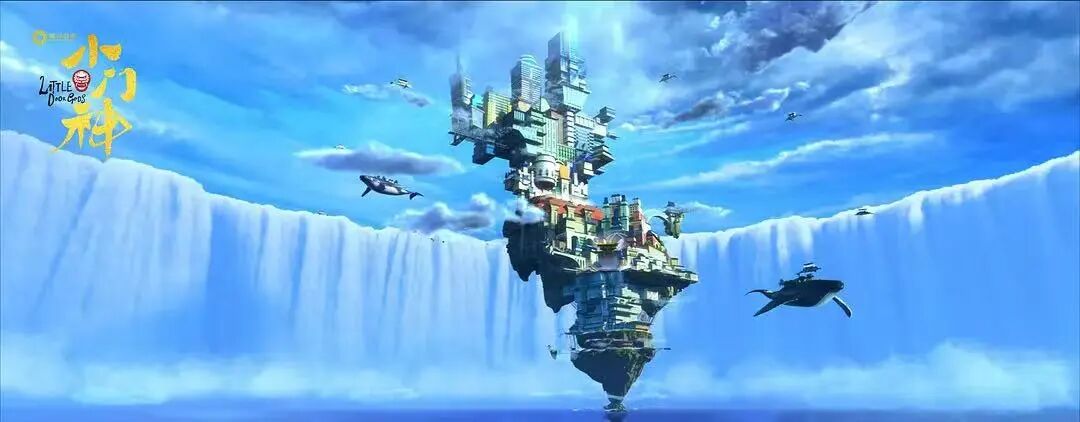
In contrast to Light Media is Light Chaser Animation. As one of the earliest companies in China to emphasize the animation industrialization process, Light Chaser Animation started with The Little Door Gods, gradually established its own style with the "New Gods" series, and then achieved a leap in cultural narrative with Chang'an 30,000 Miles. Its path clearly emphasizes the iterative ability of technology and processes. Especially in the aspects of character design, scene construction, and motion capture, Light Chaser Animation continuously strengthens its assembly - line capabilities, enabling it to meet relatively high industry standards in terms of production stability and visual completion.
However, technology has its limits. As AI tools gradually enter the animation production chain, the technological barriers that originally relied on time and manpower accumulation are being continuously compressed. When the overall production efficiency of the industry improves, it becomes significantly more difficult to maintain a competitive advantage simply by relying on "more delicate pictures". Instead, the original creative ability and narrative depth at the content level have become more irreplaceable core elements.
Live - action film companies have entered from another path. Bona Film Group has clearly proposed to develop a "mythology trilogy" in recent years, trying to replicate the successful experience in the animation field in the dimension of live - action blockbusters.
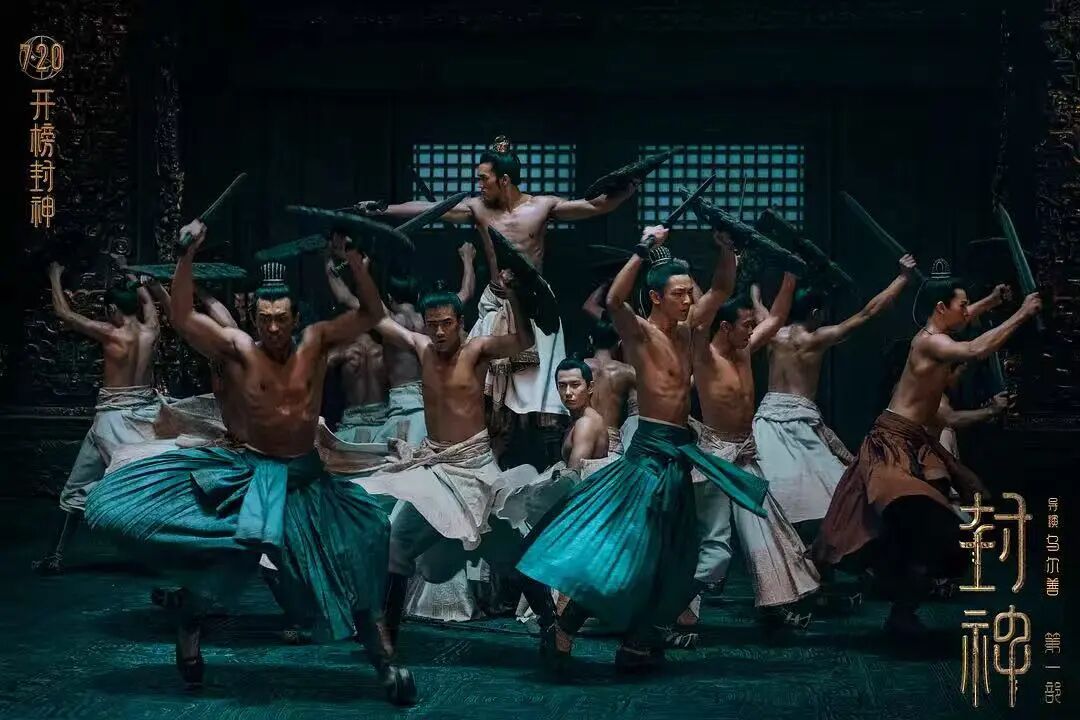
This path is naturally aiming at the industrialized blockbuster model represented by the Fengshen series, that is, through high - investment and high - specification production, to establish an epic narrative system with continuous development capabilities. Compared with animation, live - action films are more complex in terms of actor scheduling, on - location shooting, and visual effects integration, but at the same time, they are more likely to form topics and scale effects in the market.
Outside the mainstream theater system, traditional animation and Chinese comic companies represented by Shanghai Animation Film Studio and Xuanji Technology continue to deeply cultivate on the basis of existing IPs; while Yuewen Group and Chinese Online rely on their huge online literature and short - drama ecosystems to embed mythological elements into lighter - weight content forms.
Of particular concern is the role of online literature platforms. The long - term accumulation of mythological adaptation works provides the industry with a large amount of developable materials. After these contents are adapted into films and television works, they can either enter theaters or be split into online dramas, short dramas, or even interactive games, forming a multi - level commercial recycling path. Chinese Online's experience in the field of short - drama going global provides another possibility for mythological themes: translating local cultural symbols into a more universal narrative structure to find incremental space in the overseas market.
Different companies are constantly increasing their efforts in their respective areas of expertise, trying to occupy a place in the not - yet - fully - formed "Chinese Mythological Universe". This multi - pronged state has, on the one hand, improved the overall supply capacity, and on the other hand, laid the groundwork for intensified subsequent competition.
When everyone is telling "myths", who can truly establish a system with continuous appeal?
Everyone wants to be Marvel. The IP universe is a big and safe pie
Marvel Studios has proven over more than a decade that multi - character development based on a unified worldview can not only extend the life cycle of a single IP but also achieve multiple superpositions of box - office, derivatives, and platform value through character linkages, plot intersections, and event nodes. Once this industrial system is established, its upper limit is much higher than the traditional single - film development model.
The domestic market's understanding of this system is not lagging, but there are not many themes that truly meet the implementation conditions. Realistic themes are restricted by time and space, science - fiction themes have high requirements for industrial infrastructure, and historical themes have natural boundaries in terms of adaptation freedom. In contrast, mythological content has a solid character foundation, wide audience recognition, and extremely high room for re - creation.
Characters such as Sun Wukong, Nezha, and Yang Jian cover the cultural memories of audiences of different age groups. This "innate cognitive advantage" means that creators do not need to establish an emotional connection with the audience from scratch and can focus more on character reshaping and narrative innovation. On the premise that a character already has a communication foundation, the difficulty of extending it into a series or even a universe is naturally significantly reduced.
A more direct driving force comes from the market. Nezha: The Demon Reborn has pushed the box - office ceiling of domestic animated films to a new height of 10 billion. As projects such as Nezha 3 enter the development cycle, the industry believes that mythological themes have the potential to reach a higher box - office range and may even become one of the few types that can stably produce "super projects".
In the logic of capital, this potential means higher certainty. Instead of constantly looking for the next "new story", it is better to dig deeply into the existing cultural matrix and achieve relative risk dispersion through the expansion of characters and the world.
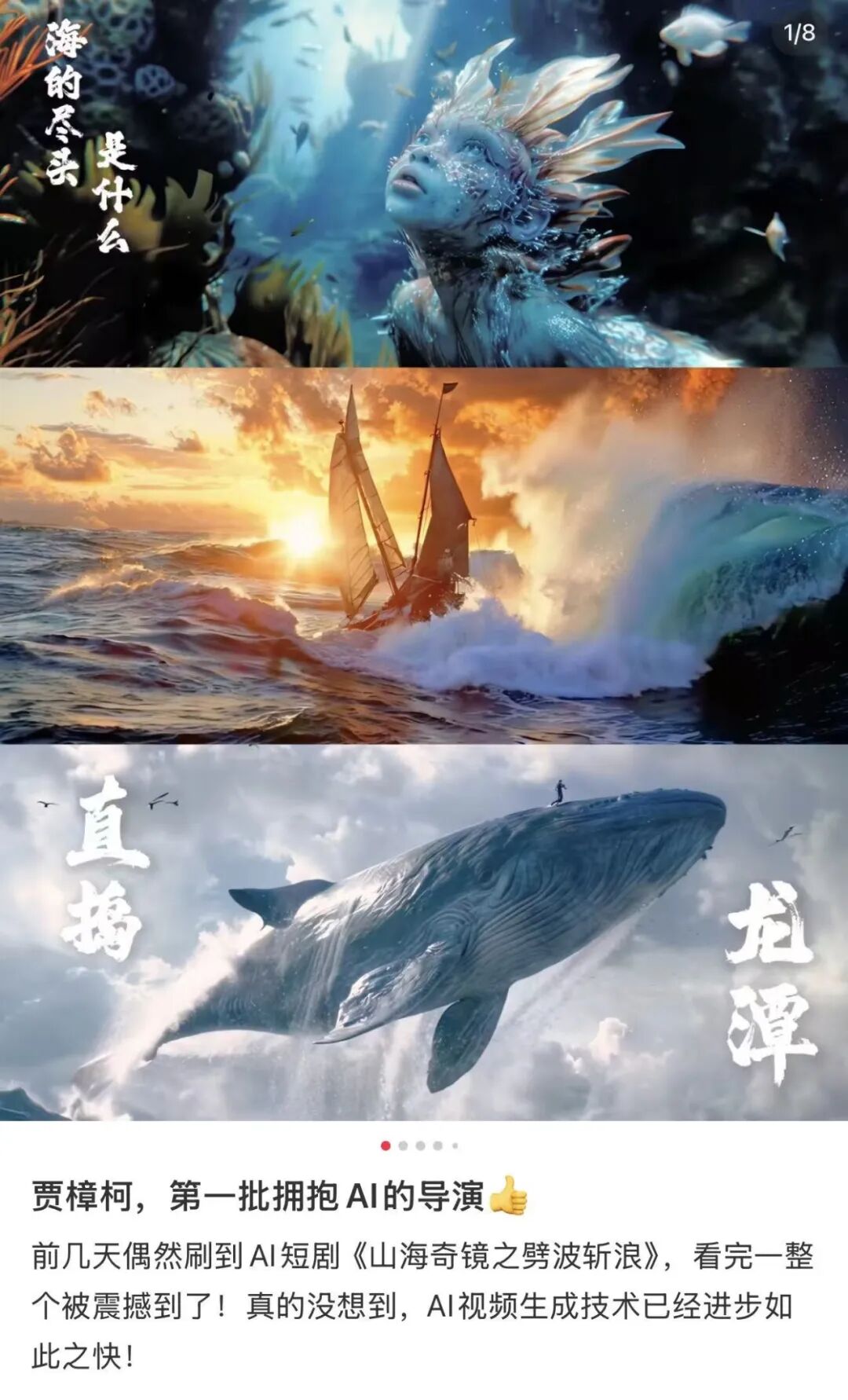
Changes at the technical level have further strengthened this trend. AI tools are rapidly penetrating into all aspects of animation production, visual effects generation, and even pre - production concept design, causing structural changes in the originally high - cost and long - cycle production process.
As production efficiency improves, the pressure on the supply side increases, and market competition has shifted from "whether there is the ability to do it" to "whether it can be done well continuously". In this process, mythological themes with a mature character system naturally have a higher reuse value. A successful character can appear repeatedly in multiple media such as movies, TV series, short dramas, and games, thus forming a cross - platform content matrix.
The policy environment is also providing support for this direction. In recent years, the development and dissemination of traditional culture have been continuously encouraged. Due to their clear cultural attributes and relatively low real - world risks, mythological themes have a relative advantage in project establishment and review. For the "cosmic" development that requires long - term investment, this stability is very attractive.
In addition, the demand for cultural output is also increasing the value of this track. Compared with historical stories that require complex background knowledge, myths are easier to achieve cross - cultural communication at the visual and plot levels. Whether it is hero growth, good - versus - evil confrontation, or fate choice, these core narratives are highly universal. As long as appropriate translation is done in the expression, it is possible to resonate in the overseas market.
With the superposition of multiple factors, "creating one's own mythological universe" has become a common goal in the industry. Whether it is leading film companies, content platforms, or emerging production teams, they are all trying to enter through different paths.
The gods are in a fierce competition, and the heavenly palace system needs optimization
Compared with mature systems such as Marvel, when Chinese myths are re - organized by the modern film and television industry, they face not a single - dimensional challenge but multiple constraints from the worldview structure, market supply, and talent system.
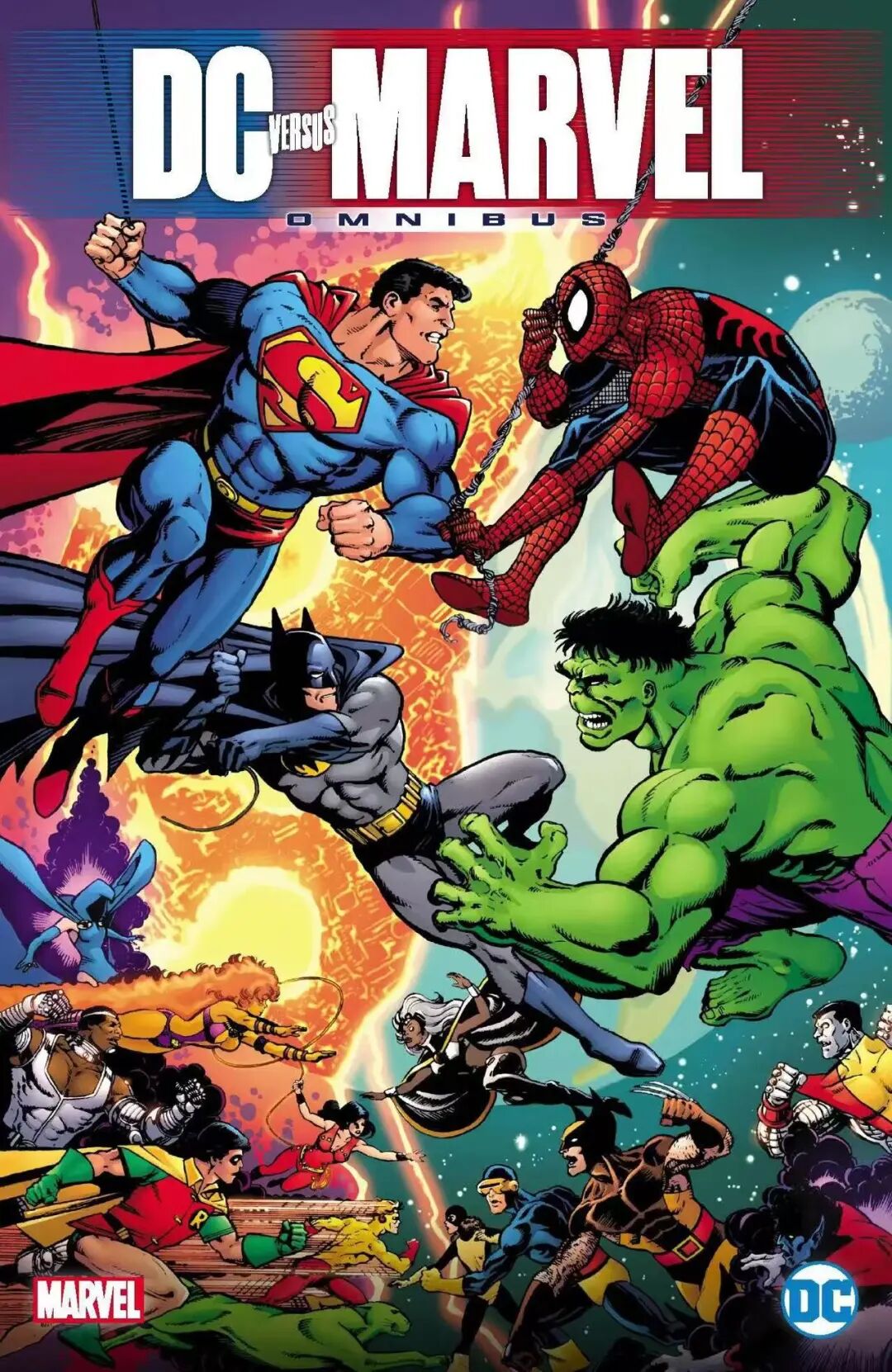
The most prominent problem is the difficulty of unifying the worldview. The reason why the Marvel Universe can continue to expand is not only because the characters are popular but also because it has a relatively stable rule system inside. From physical laws to organizational structures, and then to the timeline of key events, it has strong extensibility. After entering this system, audiences can smoothly transfer their cognition between different works.
In contrast, the sources of Chinese myths are diverse and even contradictory. The living spaces of the gods come from various novels and folk storybooks, and over time, it has become a bit chaotic. The order of the gods in the Taoist system, the causal logic in Buddhist narratives, and the local imaginations in a large number of folk legends have been developing in parallel for a long time, and there is no naturally unified "cosmic underlying logic".
Sun Wukong can make a scene in Heaven, while Yang Jian is a defender of the Heavenly Court order. Nezha is the protagonist when causing trouble in the sea but becomes a villain in the scene of making a scene in Heaven. When these characters are placed in the same narrative space, how to handle the power relationships and value positions between them becomes an unavoidable problem.
The second difficulty comes from the over - concentration of gods and the expansion of the supply side. Driven by both capital and policies, the number of projects around mythological themes has increased rapidly in a short time. From theater animations, live - action blockbusters to online movies, short dramas, and games, almost all content forms are being developed simultaneously. It is not uncommon for different companies to choose similar characters and similar story motifs, and the market has quickly entered a state of "crowded gods".
When the supply far exceeds the audience's digestion ability, aesthetic fatigue is an inevitable result. Once the early freshness fades, the audience's expectations for mythological themes will increase rapidly, and their requirements for narrative quality and visual performance will also rise accordingly. If there is not enough distinction between works and only rely on the popularity of characters, one god may quickly overshadow another. Too many gods may also cause audience backlash.
The third constraint comes from the talent system. The core creative forces that can support mythological blockbusters, such as directors, art directors, and visual effects supervisors, are limited in number in the entire industry. These talents often need years of experience accumulation and also need to have the ability to understand traditional culture and translate it into modern narratives. Their training cycle is much longer than that of ordinary projects.
For example, Tian Xiaopeng, the director of The Deep and Monkey King: Hero Is Back. He is a deep - involved participant in the core projects of Light Animation's "Chinese Mythological Universe" and also serves as the general director of Caitiaowu Pictures under Light Media and his personal studio, October Culture.
In a dialogue during the release of The Deep, Tian Xiaopeng mentioned a detail: "During the production of The Deep, some core art personnel in the team received invitations from other mythological projects, and the conditions offered by the other side were hard to refuse." This phenomenon is becoming the norm in the industry. For every director who is promoting a mythological project, how to keep the core team stable is a greater test than the technology itself.
In the case of concentrated project launches, it has become normal for top - level teams to be repeatedly fought over, which brings a series of chain reactions such as extended production cycles, continuously rising costs, and increased difficulty in team coordination. What is even more worrying is that when different projects share similar creative teams and technical paths, the visual styles and character images presented on the big screen may gradually become similar. The so - called "universe" may become lackluster.
Therefore, instead of discussing who can be the first to complete the construction of the "mythological universe", it is better to return to a more fundamental