How much money can a "dead chicken" swindle from you?
"Raise on behalf and guarantee purchase", "Double the profit", "Expert guidance"... Relying on these gimmicks, they first deceive you to enter the game and collect a deposit. Then they let you watch helplessly as the chicks die out, and deceive you into replenishing another batch. By the time you finally realize what's going on, these chick suppliers have disappeared without a trace, and the equipment in the factory doesn't even belong to them.
The tricks are not new. But every one or two years, similar cases emerge in a certain province - from raising chickens, growing mushrooms to breeding loaches, and even the popular "cloud adoption of livestock and poultry" in recent years. All kinds of agricultural raising-on-behalf scams are not uncommon. Although the outer shell changes again and again, the core remains almost the same.
Why do these "old tricks in new packages" scams always succeed?
01. Deceive One After Another
In a recent report by Beijing News, a fraud gang in Luzhou lured nearly a hundred farmers to pay a deposit with the bait of "providing feed, technology, and guaranteeing purchase". They sold inferior chicks and feed mixed with excessive drugs at high prices. Two months later, all the chickens died, and the company disappeared.
After investigation by the police, it was found that this was not an isolated incident. The criminal gang has been committing crimes in multiple provinces since 2021. They specifically bought shell companies that had been registered for many years and had a good reputation, changed the name and started business. They would disappear within less than a year and start over in another place.
Similar scams have been repeated across the country for more than a decade, from chicks, goslings to mushrooms, ganoderma... The tricks are exactly the same.
The Procuratorial Daily once disclosed a case where an agricultural technology company in Changzhou, Jiangsu Province lured farmers with the promise of raising red polyporus and chicks on their behalf. Within more than a year, they defrauded 14 farmers of a total of more than 270,000 yuan.
This agricultural technology company also used the guise of raising chicks on behalf. They claimed that "the custody fee for each chick is five or six yuan, the purchase price for each chicken after 50 days of breeding is 30 to 40 yuan, and the full principal will be refunded upon maturity. It's a zero-risk breeding!" However, the contract signed with the farmers stipulated that "the survival rate of chicks should reach 95% and the slaughter rate should be 85%". After the technician left, the chicks actually raised by the farmers began to die in large numbers.
After investigation, this agricultural technology company also posted an advertisement for "raising red polyporus on behalf" on the Internet platform. The cost price of each fungus bag sold by the company was only five or six yuan, but they sold it to farmers at a price of 40 to 60 yuan each. The so-called "purchase at 2,500 yuan per catty" was completely non-existent.
From August 2023 to February 2024, relying on slogans such as "Double the profit in three months, the purchase price of dried products is 2,500 yuan per catty" and "As long as you plant according to the technical requirements, we will purchase regardless of size as long as it doesn't get moldy", the company defrauded 8 farmers of more than 70,000 yuan in total.
The loach-raising-on-behalf cases in Fuzhou, Jiangxi and Yichang, Hubei went even further.
A victim in Dongxiang, Fuzhou paid 32,000 yuan to Jiangxi Hengrongda Agricultural Development Co., Ltd. to buy loach fry. But when it was time for the loaches to be harvested, the other party ignored him. "They simply didn't answer the phone or reply to WeChat." The victim said that the total loss of labor and various expenses was more than 100,000 yuan.
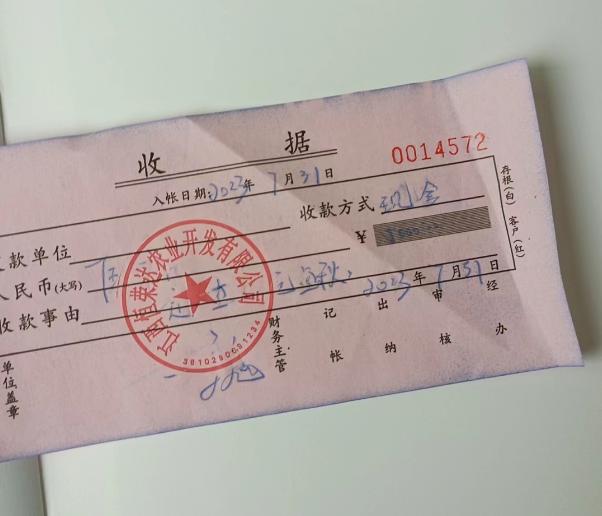
△ The victim reported the case anonymously on "Asking the Government in Jiangxi" and uploaded relevant materials. Source: "Asking the Government in Jiangxi" platform
Another victim, Mr. Lu from Hubei, saw an advertisement of Hubei Shuizhixin Agricultural Technology Co., Ltd. on Douyin. He originally wanted to try raising a bucket of loaches first. But "the company said it wasn't profitable to raise too few, and he had to raise at least three buckets", so he was tempted. After being coaxed, Mr. Lu paid a deposit (13,200 yuan) and express delivery fees (5 yuan per kilometer), a total of more than 10,000 yuan, but he didn't even receive the loach fry.
If the offline "raising on behalf" scams still require renting a venue, buying equipment, and pretending to run a base, the "cloud adoption" model that has emerged in the past two years has a lower cost and can disappear more quickly.
Black pigs, geese, sika deer... As long as the victims invest money and entrust the company to raise them on their behalf, they can receive generous profits regularly. Documents such as business licenses and breeding licenses make the victims believe them without a doubt.
They paid 40,000 yuan for a pig and 70,000 yuan for a goose, but in the end, they received nothing. Their hard-earned money was all gone.
02. How Many Steps Does the Chain Trap Have?
Scams happen every year, and anti-fraud is emphasized every year. Why do these "raising on behalf" tricks always work? The key lies in the elaborate design of the fraud gang.
First, they choose targets that make people "have reasons to believe".
Farmers raising on behalf is not a completely new thing. The forms of "company + cooperative + farmer" or "company + farmer" are a form of China's small-scale peasant economy under the market economy. Apples in Luochuan, Shaanxi, Landes geese in Linqu, Shandong, and yellow chickens in Ningdu, Jiangxi have all embarked on an industrialization path. Wens Foodstuff Group has even taken the "company + farmer" model to the extreme, forming its unique "Wens Model".
The existence of real raising-on-behalf cooperation provides a natural endorsement space for the scams - farmers are not being "randomly" coaxed, but are led into the trap by a "seemingly credible" reference system.
Second, they carefully select their targets and precisely lock in victims with high motivation but low verification ability.
The farmers targeted by these fraud gangs mostly come from remote mountainous areas, including low-income families and people with disabilities. They often have a strong desire to "make money at home". "They are too old to be hired for work, and they have no income at home." Eager to make money, they are easily convinced by the "promises" made by the fraudsters, such as "providing breeding technical guidance, feed and vaccines, and guaranteeing the purchase of mature poultry".
At the same time, they lack relevant agricultural knowledge and cannot tell whether there are any problems with the chicks and feed they buy.
More importantly, the victims and the fraud companies are not in the same area. After seeing the advertisement online, through online communication and express delivery, it often takes a relatively long time from being trapped to discovering the problem, which is enough for the fraudsters to abscond with the money. Even if the scam is exposed, these farmers have little legal knowledge and high costs for safeguarding their rights, so they often let it go and "pay the tuition fee" in vain.
Third, they do a good job in packaging and set up a "stage" that looks more real than a real company.
The fraudsters have a legally registered company, "professional technicians", and visible factories and offices. This set of things is enough to deceive people.
For example, in the Luzhou case mentioned above, the criminal gang specifically bought shell companies that had been registered for many years and had a good reputation. They also equipped the rented factory with some seemingly professional equipment. They even actively invited farmers to visit the factory and arranged enthusiastic reception staff to dispel their doubts.
One of the victims drove for five or six hours from Liangshan to Luzhou. After seeing the real factory and the company's plaque, he was convinced that it was not a scam.
In addition, some fraud gangs will send technicians to the farmers' homes in advance to check the venue and test the water quality. The whole experience is more professional than the business reception of many regular agricultural companies.
Finally, the so-called "technicians" who actually do more harm than good make the "dead end" complete.
With the guise of "raising on behalf", farmers are easily "led by the nose". What kind of feed to feed and how to feed it are all packaged and sold together to the farmers, and then the so-called "technicians" provide on-site guidance. The final result is that these livestock and poultry will definitely not survive.
Taking chicken raising as an example, it is reported that technicians will secretly add salt to the chickens' drinking water or directly tell farmers that there are worms and germs in the chicks' intestines and that they need to be fed more salt water for disinfection. In the end, the chicks die of thirst and cannot be saved.
But because of the previous promise of raising on behalf, in order to meet the final quota, farmers often buy another batch of chicks and rarely suspect that there is a problem with the chicks themselves.
After all the chicks die, the fraudsters will claim that it is the farmers' fault for not knowing how to raise them, saying that "they didn't control the temperature and breeding density well", and use the "failure to meet the survival rate required by the contract" as an excuse to shirk and not fulfill the purchase agreement.
This then becomes a civil dispute with difficult evidence collection, rather than an obvious criminal fraud. For farmers, the cost of hiring a lawyer to collect evidence far exceeds the money they were defrauded of.
03. Deeper Damage
When discussing agricultural raising-on-behalf scams, the usual narrative ends with "how much money the victims have lost". But the damage of this kind of scam to the agricultural industrial chain is much deeper than the book figures.
Basic agricultural products such as livestock, poultry, and aquatic products are the source foundation of food ingredients. The regular raising-on-behalf model is an important part of the upstream supply. However, false frauds damage the grass-roots breeding ecosystem, promote the circulation of inferior agricultural materials, and disrupt the supply at the source of food ingredients, posing a hidden threat to the stability of the catering supply chain.
Ultimately, there may be many fewer chickens on our dinner tables.
At the same time, the "collapse" of the "expert" image also overdrafts farmers' trust in agricultural technology practitioners to a certain extent. Once a farmer has been deceived by a fake "technician", he is likely to be vigilant against any technology promoters who come to his door in the next few years. Even real experts may be slandered.
Moreover, every time a scam is exposed, it will arouse the public's nerves of "being vigilant against raising-on-behalf scams". Over time, the "raising on behalf" model will be stigmatized, and the cost for companies that really want to do this to gain farmers' trust will also increase significantly.
This article is from the WeChat official account "Red Meal Supply Chain Guide". Author: Chunying, Editor: Jingxue. Republished by 36Kr with authorization.