CATL spent 3 billion yuan to build the world's first "energy storage arena". What other secrets are there in the energy storage industry?
A battery manufacturer is putting an end to the tradition of its peers "only reporting good news and hiding bad news."
Yujian Energy learned that on May 28, 2026, the Xiamen Empirical Energy Storage Technology Research Institute, jointly established by the Xiamen Municipal Government and CATL, was officially launched. The research institute covers a total area of 150 mu and has a total investment of about 3 billion RMB. It is currently the world's largest and most comprehensive one-stop testing and empirical platform for energy storage systems in all scenarios.
In June 2025, CATL executives publicly exposed a well - hidden truth in the industry: the energy storage projects put into operation in the early stage claimed to have a cycle life of 10,000 or 15,000 times, but in actual operation, they only lasted for three to five years, and the annual cycle times were mostly less than half of the design value. Even more shocking was the judgment of Zeng Yuqun, the chairman of CATL, in September of the same year - the actual operation life of some projects was less than a quarter of the promised time.
The problem is not complicated at all. There is no set of rapid testing methods in the industry that can allow owners to verify the real reliability of products. The only thing that can help with verification is time, but no one is willing to wait for ten years to find out if the thing they bought is worth the price.
According to data from the National Energy Administration, as of the end of 2025, there were a total of 131 energy storage safety accidents globally, and 80% of them occurred during the normal operation of power stations. It was not due to construction mistakes or extreme weather, but simply the system catching fire during normal operation. An industry that promotes itself with "safety" and "stability" cannot even keep its most basic promises.
This is the background for CATL to invest 3 billion RMB in building the Xiamen Empirical Energy Storage Technology Research Institute. The industry needs a yardstick, an inescapable yardstick.
No one believes what the manufacturer says about how far a Tesla can go
The energy storage industry is following the same old path that the automotive industry took twenty years ago - inflated parameters, inconsistent standards, and consumers voting with their feet.
Today, no one will place an order simply because a car company says "a range of 1,000 kilometers." People look at WLTP, EPA, CLTC, and the actual tests of third - party media. Why? Because they've been deceived too many times. In the early 2000s, the gap between the "economic fuel consumption" calculated by domestic car companies using the constant - speed method and the actual fuel consumption is still a classic anecdote in the automotive evaluation circle.
The energy storage industry hasn't even completed this stage. "Many of the standards we think are 'taken for granted' are actually just the result of historical contingencies being solidified." Chen Xiaobo, the dean of the Xiamen Empirical Energy Storage Technology Research Institute, pointed out the industry's dilemma during an exclusive interview with Yujian Energy and other industry media. The cycle life and energy efficiency written in the tender documents seem objective, but in fact, the testing methods and boundary conditions of each company vary greatly, and finally it has become a parameter competition.
The "2025 Energy Storage System Health and Performance Report" presented a disturbing figure: only 83% of global energy storage projects reached or exceeded the rated capacity during on - site acceptance tests. It is quite common for the SOC estimation error of lithium iron phosphate energy storage systems to reach ±15%. This is not the passing rate; it is the passing rate that has been discovered. And what about those that haven't been discovered? 20% of the systems can only collect low - quality data and can't even figure out where the problem lies.
The First Engineering Company of Northwest Electric Power Construction built a 50MW/100MWh energy storage project in Fufeng County. The first grid - connected commissioning on March 22, 2026, failed. The reason is simple: the SVG dynamic reactive power response time written in the manufacturer's factory report was "≤45ms", while the outline requirements issued by the dispatching department were "≤30ms". The difference is not large, but it was enough to stall the entire project. In the past, similar projects were delayed by an average of 11.6 days. It's not that the technology is not good, but the information was asymmetric from the beginning.
The pricing system of the energy storage industry is being distorted by this information asymmetry. For products with the same nominal cycle life of 10,000 times, Manufacturer A may really be able to achieve it, while Manufacturer B may see the performance drop to half of the design value in the fifth year. But from the perspective of the tenderer, without third - party whole - station verification data, the one with the lower quotation is always the priority. This is the "bad money driving out good money" in the energy storage industry.
When the referee is also an athlete, can they blow the whistle on themselves?
If the problem was just the lack of a testing institution, it would be simple. But the special thing about the Xiamen Empirical Energy Storage Technology Research Institute is that its initiator is CATL, the world's largest battery manufacturer and one of the world's largest energy storage system suppliers.
This reminds people of a classic question: Can the game be fair if the players are also the referees?
"True innovation is not about avoiding failure, but creating an environment where failure can be cheap and fast." Chen Xiaobo's seemingly simple words precisely explain why CATL is willing to spend 3 billion RMB on something that seems to be "asking for trouble" - on this platform, the products of any manufacturer can be repeatedly tested until they fail, and this low - cost and high - efficiency failure is far more valuable than the accidents after the project is put into operation.
The situation in the domestic certification and testing industry is indeed not very good. In 2025, the "double - random, one - public" inspection by the National Certification and Accreditation Administration Commission found that three laboratories no longer met the mandatory product certification testing conditions in some fields. Some testing personnel had serious deficiencies in ability, and some had their CCC designated testing qualifications in the lithium - ion battery field revoked. The construction of the energy storage certification end lags significantly behind the industrial development.
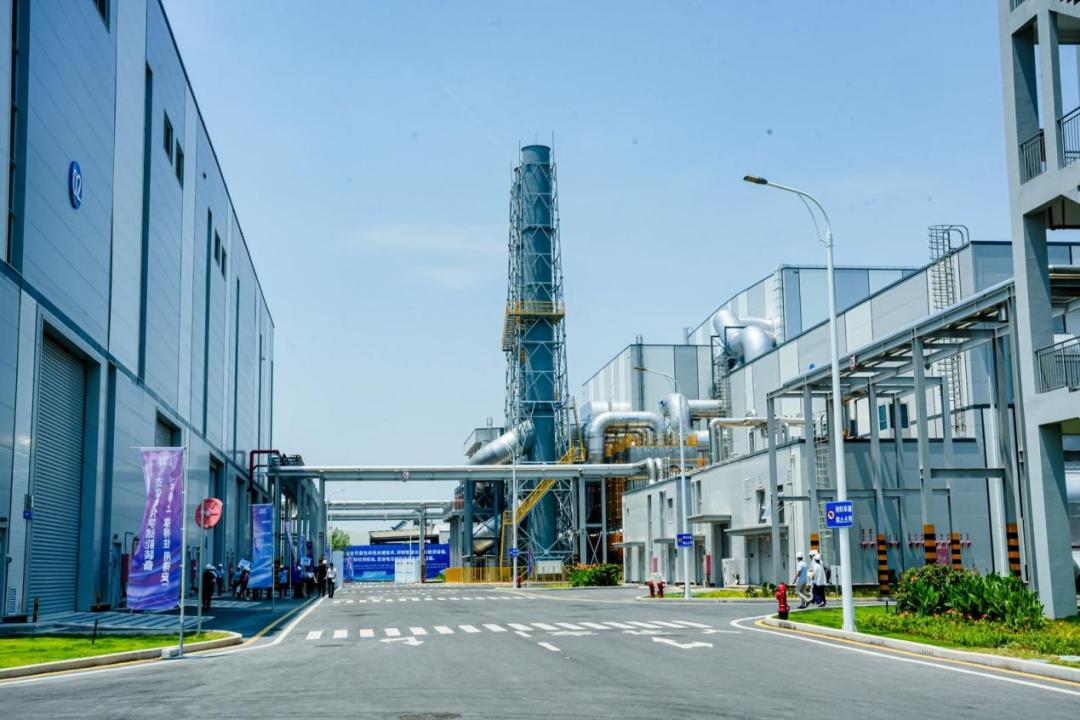
(Empirical energy storage laboratory park)
When answering reporters' questions, Chen Xiaobo said that how to use the data is decided by the owner. If the client does not allow public disclosure, the research institute will not do it. At the same time, the research institute has reached cooperation with global mainstream certification institutions such as TÜV SÜD, TÜV Rheinland, CSA, and Jianheng, and the testing process is jointly supervised by these third - party institutions.
But to be honest, "joint construction" and "supervision" solve procedural problems, not trust problems. What really makes this platform likely to stand firm is CATL's own accounting logic. Chen Xiaobo said something very interesting in an internal communication: "The overall business proportion of CATL's energy storage is only around 20%. As a core anchor point of the zero - carbon strategy, if the industry grows first, everyone will have opportunities."
CATL's energy storage business is already large enough not to rely on testing for profit. It needs a unified standard more, so that the product quality benchmark of the entire industry can be raised. Only in this way can the premium of its products have a reference system, and its competitive advantage when going global can be quantified.
This is the real contradiction. In the short term, CATL is helping its competitors by building this platform, but in the long term, it is paving the way for itself. It doesn't need to make money from testing, but its competitors need this testing to prove that they are not inferior to CATL.
The ship for going global is ready, and now a reliable ticket is needed
Chinese energy storage enterprises are facing not technical barriers but a trust deficit overseas.
Tesla's Megapack is expensive, but customers are willing to pay. The overseas price per watt - hour of a 3.9MWh Megapack unit is several times that of domestic equivalent products. Where is the difference? Tesla has spent five years deploying thousands of energy storage units globally and has verified its products with actual operation data. What Chinese enterprises lack the most is not technology, but this set of operation records verified by third - parties.
Chen Xiaobo pointed out the problem during an interview: "More and more overseas energy storage systems no longer require domestic integrators to provide turn - key projects. If turn - key projects are not provided, the profit that products can obtain in the whole process is limited." An energy storage system without empirical verification can only participate as an equipment supplier when going overseas, and the profit share in the industrial chain is compressed to the minimum.
Look at the pitfalls that peers have encountered overseas. In the Waratah Super Battery Project in Australia, with a scale of 850MW/1680MWh, a 350MVA high - voltage transformer had a "catastrophic failure" about a week before full operation, and the project was directly postponed to 2026. The reason was not that the battery was faulty, but that there was a problem with the supporting transformer - and the delivery cycle of this transformer was more than a year.
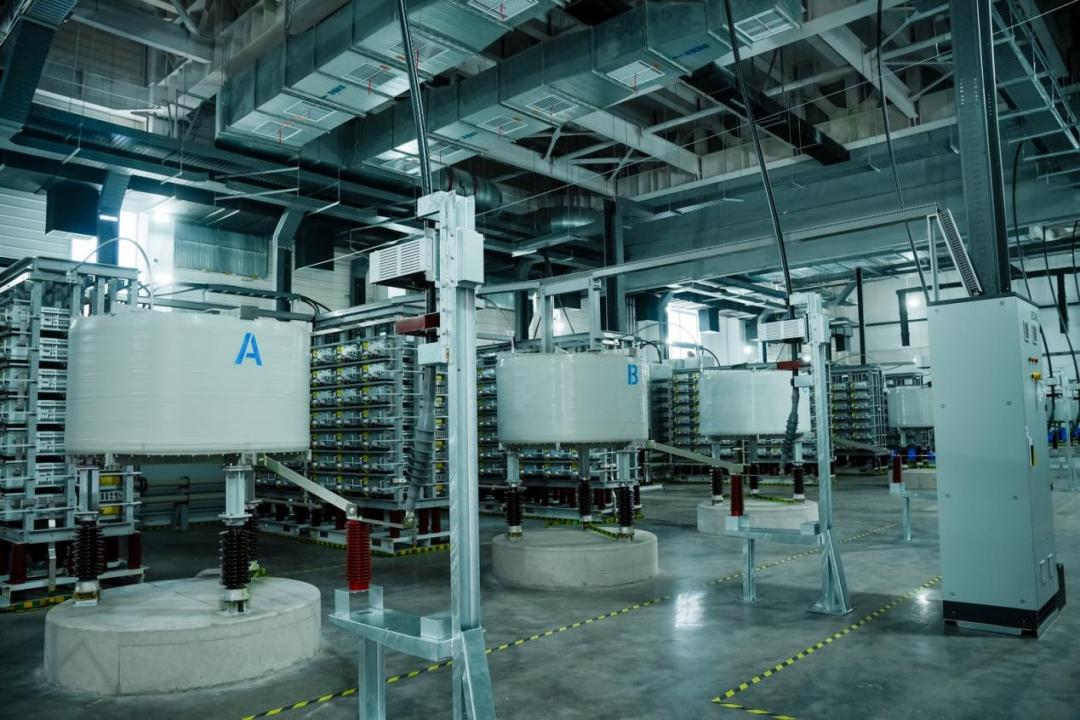
(Grid - connected laboratory)
This is the necessity of whole - station verification. No matter how strong a single component is, if the whole station doesn't work, it doesn't work.
The grid - connected laboratory of the Xiamen Empirical Energy Storage Technology Research Institute is equipped with a 35kV/100MVA grid simulator, which can simulate the grid complexity at the 1000 - node topology level and is compatible with a wide frequency range from 15 to 60Hz. The high - voltage safety laboratory has a testing range from 1kV to 500kV. This means that a Chinese manufacturer who wants to sell an energy storage system to any country can simulate all the extreme working conditions of the local grid here and obtain a test report recognized by the local grid.
By 2026, the cost advantage of Chinese energy storage going global has been compressed to the limit. The only remaining variable is whether the industry can come up with a set of empirical standards that are globally applicable and can convince both the owners and the grid.
The problem of "parameter inflation" in the energy storage industry has a long - standing history, and it cannot be solved by a single enterprise. CATL's choice is to invest 3 billion RMB to put this problem on the table.
Chen Xiaobo mentioned a successful reference case during a group interview: during the formulation of the national standard for power batteries, GB 38031, multiple battery enterprises contributed their batteries for destructive testing, vehicle enterprises provided white bodies, and the leading unit bore the testing costs. Finally, a set of industry - recognized standards was established. This is the path that the Empirical Energy Storage Technology Research Institute wants to take - not seeking to achieve success overnight, but doing things solidly one method at a time.
What is worth paying attention to next is not whether CATL will give preferential treatment to its own products on this platform, but whether other enterprises in the industry are willing to bring their products into this "physical examination center". If they are not even willing to do the test, the owner's confusion will turn into a clear answer.
This article is from the WeChat official account "Yujian Energy", author: Zhao Jianan. Republished by 36Kr with permission.