Contemporary Amperex Technology Co., Limited (CATL) hat 3 Milliarden Yuan in die weltweit erste "Energiespeicher-Arena" investiert. Welche Geheimnisse verbirgt noch die Energiespeicherbranche?
A battery manufacturer independently ends the tradition of its competitors of only reporting good news and keeping the bad news silent.
According to information from "Prospective Energy", on May 28, 2026, the Xiamen Institute for Empirical Energy Storage Technology, jointly established by the Xiamen municipal government and Contemporary Amperex Technology Co., Limited (CATL), was officially inaugurated. This institute covers a total area of 150 mu and has a total investment of about 3 billion yuan. It is currently the world's largest and most fully equipped platform for the comprehensive and inclusive testing and empirical validation of energy storage systems in all scenarios.
In June 2025, a senior employee of CATL publicly exposed the lie in the industry: The energy storage projects put into operation in the initial stage claimed a cycle life of ten thousand or fifteen thousand times, but in practice, they only ran for three to five years, and the annual number of cycles in most projects was less than half of the planned value. Even more shocking was the assessment of Zeng Yuqun, the chairman of CATL, in September of the same year - the actual operating life of some projects was less than a quarter of the promised time.
The problem is not complicated at all. There is no quick testing method in the industry for owners to check the real reliability of products. Only time can help verify the reliability, but no one wants to wait ten years to find out if what they bought is worth the price.
According to data from the National Energy Administration, the number of accumulated global energy storage safety incidents by the end of 2025 was 131, with 80% occurring during the normal operation of power plants. It was neither a construction defect nor extreme weather, but simply that it suddenly caught fire during normal operation. An industry that features "safety" and "stability" as selling points can't even keep its basic promises.
This is the background of why CATL has invested 3 billion yuan in the Xiamen Institute for Empirical Energy Storage Technology. The industry needs a standard, a standard that no one can avoid.
No one believes the manufacturer about how far a Tesla can drive
The energy storage industry is following the same path as the automotive industry twenty years ago - there are exaggerated parameter specifications, uneven standards, and consumers vote with their wallets.
Today, no one will simply place an order just because an automaker claims that its vehicle has a range of a thousand kilometers. People look at the WLTP, EPA, and CLTC values, as well as the measurement results of independent media. Why? Because people have been deceived too many times. In the early 2000s, the difference between the "economical fuel consumption" measured by Chinese automakers using the constant - speed method and the actual fuel consumption was still a classic in the automotive criticism scene.
The energy storage industry hasn't even got past this stage. "Many standards that we take for 'granted' are actually just the hardening of historical accidents." Chen Xiaobo, the director of the Xiamen Institute for Empirical Energy Storage Technology, revealed the difficulties of the industry in an interview with "Prospective Energy" and other industry media. The cycle life and energy efficiency stated in the tenders seem to be objective, but in reality, the testing methods and boundary conditions vary from company to company. In the end, it becomes a race for parameters.
The "2025 Report on the Health and Performance of Energy Storage Systems" shows a worrying figure: Only 83% of the world's energy storage projects reach or exceed the rated capacity during the on - site acceptance test. It is quite common for the SOC estimation error of lithium - iron - phosphate energy storage systems to be ± 15%. This is not the quality rate, but the discovered quality rate. And what about those that weren't discovered? 20% of the systems can only collect low - quality data and can't even tell where the problem lies.
The First Construction Company for Northwest Power Supply built an energy storage project with a capacity of 50 MW/100 MWh in Fufeng County. On March 22, 2026, the first grid connection failed. The reason is simple: The manufacturer's delivery certificate states that the dynamic response time of the SVG is "≤ 45 ms", while the requirements of the guidelines issued by the grid regulation are "≤ 30 ms". The difference is not large, but it's enough to paralyze the entire project. In similar projects, this has on average caused a delay of 11.6 days in the past. It's not that the technology doesn't work, but that the information was asymmetric from the start.
The pricing system of the energy storage industry is distorted by this information asymmetry. For products with the same nominal cycle life of ten thousand times, Manufacturer A may actually achieve it, while Manufacturer B may drop to half of the planned value in the fifth year. But from the perspective of the tenderer, without independent and comprehensive test data of the entire system, the product with the lower price is always the priority. This is the phenomenon of "bad money driving out good" in the energy storage industry.
Can a player who is also the referee blow his own whistle?
If it were just a lack of a testing institute, the problem would be simple. But the peculiarity of the Xiamen Institute for Empirical Energy Storage Technology lies in - its initiators are CATL, the world's largest battery manufacturer and one of the world's largest providers of energy storage systems.
This brings to mind a classic dilemma: Can a competition be fair if the player is also the referee?
"True innovation doesn't lie in avoiding mistakes, but in creating an environment where one can fail cheaply and quickly." This seemingly simple statement by Chen Xiaobo exactly explains why CATL is willing to invest 3 billion yuan in something that at first glance "makes things difficult for itself" - on this platform, the products of every manufacturer can be repeatedly tested until they fail, and this cost - effective and efficient failure is far more valuable than an accident after a project is put into operation.
The situation in the Chinese certification and testing industry is actually not very good. In the "Double - Random and One - Public" inspection by the national certification authority in 2025, it was found that three laboratories no longer met the conditions for mandatory product certification testing in some areas. Some testers had significant deficiencies in their competence, and some were even deprived of the CCC certification for lithium - ion batteries. The construction of energy storage certification lags far behind the industry development.
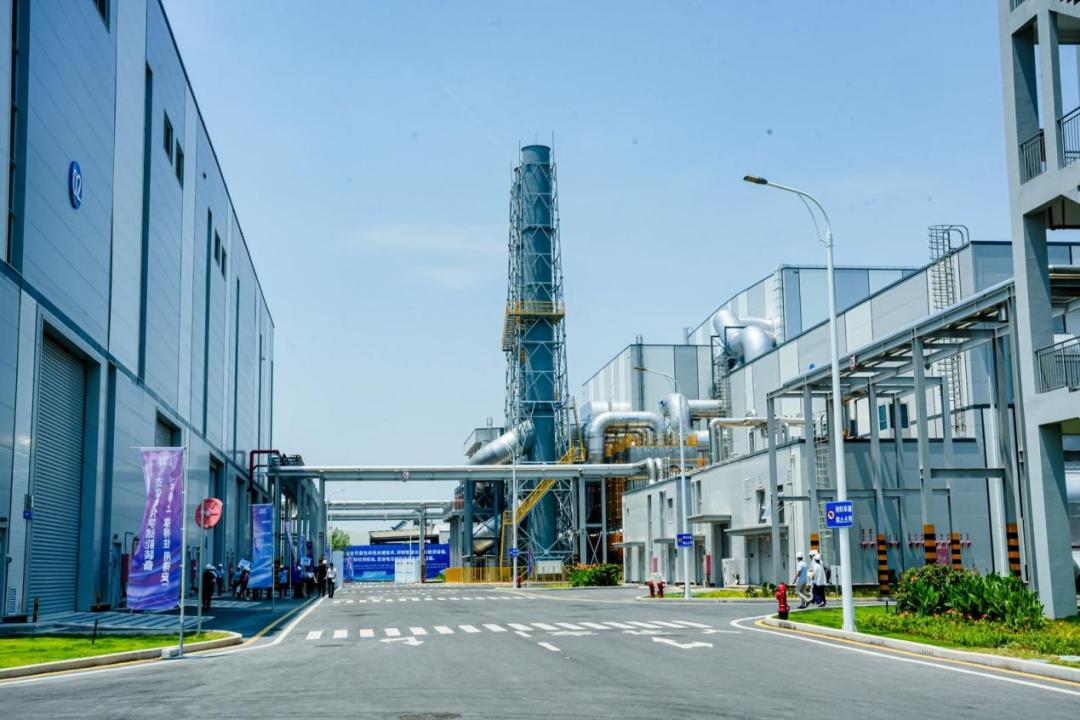
(Empirical Energy Storage Laboratory Site)
Chen Xiaobo said when answering journalists' questions: How the data is used is decided by the owner. If the client doesn't allow the publication, the institute won't do it. At the same time, the institute has cooperated with global leading certification institutions such as TÜV Süd, TÜV Rheinland, CSA, and Jianheng, and the testing process is jointly monitored by these independent institutions.
To be honest, "joint establishment" and "monitoring" solve more of the procedural issues than the trust issues. What may make this platform stable is CATL's own calculation logic. Chen Xiaobo said a very interesting sentence in an internal exchange: "The proportion of CATL's entire energy storage business is about 20%. As a central cornerstone of the strategy for a carbon - neutral era, the industry must grow first so that everyone has a chance."
CATL's energy storage business is already so large that it doesn't need to profit from testing. It rather needs a unified standard to raise the quality level of the entire industry. In this way, its product has a reference point for the price premium, and the competitive advantages in overseas expansion can be quantified.
Here lies the real dilemma. By establishing this platform, CATL helps its competitors in the short term and paves its own way in the long term. It doesn't need to profit from testing, but the competitors need these tests to prove that they are not worse than CATL.
The ship for overseas expansion is built, now you need a reliable ticket
Chinese energy storage companies don't face technical barriers overseas, but a trust deficit.
Tesla's Megapack is sold at a high price, but the owners pay. A 3.9 - MWh Megapack unit costs several times more per watt - hour overseas than a comparable Chinese product. Where lies the difference? Tesla has installed thousands of energy storage units worldwide in five years and confirmed the reliability of its products with real operating data. What Chinese companies lack the most is not technology, but this operating data verified by independent institutions.
Chen Xiaobo said a sentence in an interview that hits the nail on the head: "Increasingly, overseas energy storage systems no longer require domestic integrators to provide turnkey projects. If turnkey projects are not provided, the profit that products can obtain in the entire process is limited." An energy storage system without empirical validation can only participate in overseas projects as a device provider, and the share of profit in the value - added chain is reduced to a minimum.
Let's look at the problems that competitors overseas had. In the Waratah Super Battery project in Australia with a capacity of 850 MW/1680 MWh, just about a week before full commissioning, a "catastrophic failure" of a 350 - MVA high - voltage transformer occurred, and the project was postponed until 2026. The reason was not that the batteries didn't work, but that the associated transformer problem occurred - and the delivery time of this transformer was over a year.
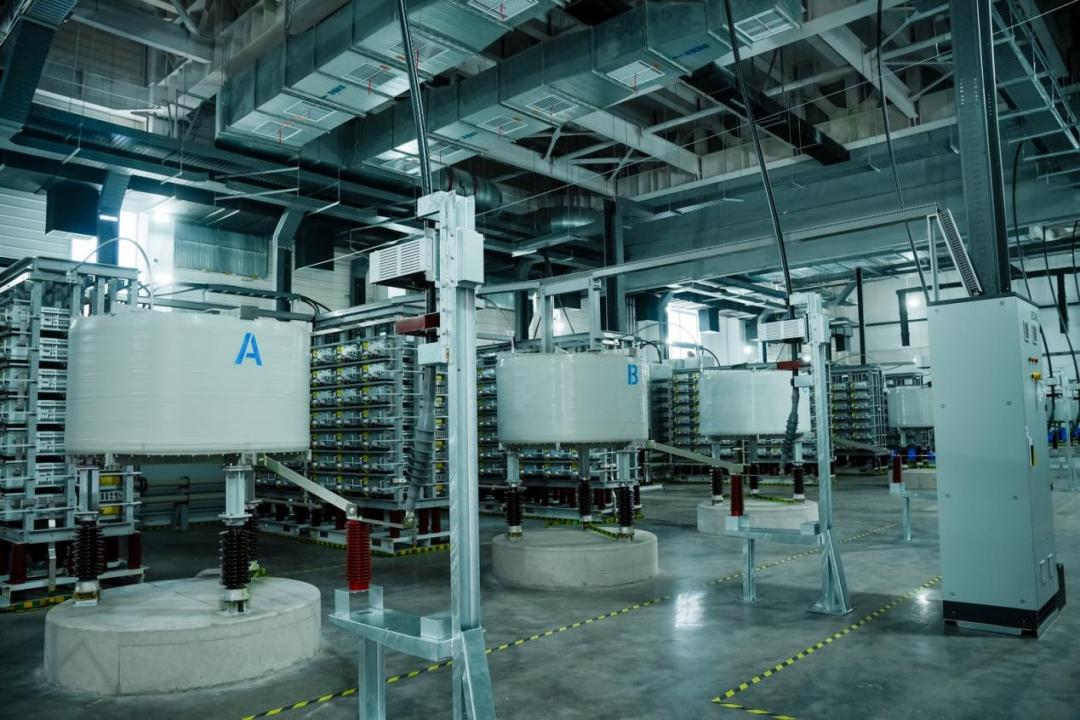
(Grid Connection Laboratory)
This shows the necessity of the comprehensive testing of the entire system. Even if individual components are very good, the entire system won't work if they don't fit together properly.
The grid connection laboratory of the Xiamen Institute for Empirical Energy Storage Technology is equipped with a 35 - kV/100 - MVA grid simulator that can simulate the complexity of a grid with 1,000 nodes and has a wide frequency coverage from 15 to 60 Hz. The high - voltage safety laboratory has a testing range from 1 kV to 500 kV. This means that a Chinese manufacturer who wants to sell an energy storage system to any country can first simulate all the extreme operating conditions of the local grid here and obtain a test report recognized by the local grid.
In 2026, the cost advantage of Chinese energy storage companies in overseas expansion has been reduced to a minimum. The only remaining variable is whether the industry can establish a globally valid empirical standard that is equally accepted by owners and grids.
The problem of "parameter inflation" in the energy storage industry has existed for a long time and cannot be solved by a single company alone. CATL has decided to bet 3 billion yuan and bring the problem to the table.
Chen Xiaobo mentioned a successful example in a group interview: When formulating the national standard GB 38031 for traction batteries, several battery manufacturers provided their batteries for destructive tests, automakers provided light casings, and the leading unit bore the testing costs. Finally, an industry - recognized standard was established. The Xiamen Institute for Empirical Energy Storage Technology wants to follow this path - not to achieve everything at once, but to do things thoroughly step by step.
What's interesting in the future is not whether CATL will use this platform to gain advantages for its own products, but whether other companies in the industry are willing to bring their products to this "health center". If one doesn't even dare to face the test, the owners' uncertainty will turn into a clear answer.
This article is from the WeChat account "Prospective Energy", author: Zhao Jianan, published by 36 Kr with permission.