The first batch of so-called "pitfall" majors are making a comeback under new names.
The translation major has not disappeared. It has donned the new guise of "Foreign-related Rule of Law" and "International Communication".
The library science major has not disappeared either. It has transformed into "Data Science".
Philosophy has definitely not disappeared. It has become the "ethical gatekeeper" in the era of artificial intelligence.
Traditional majors are undergoing a silent "costume-changing" revolution.
The Monterey Institute of International Studies has closed. Beijing Language and Culture University has suspended seven translation specializations. A total of 109 universities across the country have abolished 28 foreign language majors. The time-honored translation major is being labeled as a "hopeless major".
But this is only side A of the story.
Side B is that in a number of new majors offered by Renmin University of China, Fudan University, and East China University of Political Science and Law, students applying for these majors are required to have outstanding foreign language proficiency. In fact, students with an English score below 140 in the college entrance examination don't even have a chance to get in.
These universities are in a scramble for "foreign language-proficient" talents. However, what they are cultivating are not traditional translators, but interdisciplinary talents wearing the "Foreign-related Rule of Law" and "International Communication" mantles.
As one door closes, another opens with a higher profile. Traditional majors have not perished; they have just put on more fitting mantles.
The "Harvard of the translation world" has shut down.
But has translation really exited the stage?
Last year, the Monterey Institute of International Studies (MIIS) announced that it would stop enrolling postgraduate students in July 2026. Once the news was released, it attracted wide attention in the education circle.
As one of the world's three top advanced translation institutes, MIIS has long been known as the "Harvard of the translation world". Its graduates are widely active in government agencies, international organizations, and multinational enterprises.
However, affected by multiple factors such as a continuous shortage of students and financial pressure, this long-established translation school finally couldn't carry on.
More directly, artificial intelligence has had an impact on the translation industry. As early as 2024, data showed that using AI to translate online literature increased efficiency nearly a hundredfold and reduced costs by over 90%.
In China, translation and language-related majors also face huge challenges and are frequently included in the list of "warning majors".
Statistics from the Ministry of Education show that between 2018 and 2022, a total of 109 universities across the country abolished 28 foreign language-related majors.
Among them, 26 universities abolished the Japanese major, 21 abolished the English major, and 10 abolished the Korean major. These majors ranked high in terms of the number of abolitions.
In the 2025 postgraduate enrollment, Beijing Language and Culture University has stopped enrolling postgraduate students in seven translation specializations, including Russian written translation, Japanese interpretation, German written translation, Korean written translation, and Spanish written translation.
In the 2026 postgraduate enrollment adjustment plan, Southeast University plans to stop enrolling students in Russian and Spanish language and literature, and Hebei University plans to stop enrolling students in English and Japanese interpretation.
As many universities stop enrolling students in foreign language majors, the twilight of a long-established major seems to be right in front of us.
But at the same time, another force is rising. In April this year, Renmin University of China established three schools at once: the School of International Finance, the School of Foreign-related Rule of Law, and the School of International Communication.

Photo courtesy of Renmin University of China
While many universities are targeting new engineering fields such as artificial intelligence, low-altitude economy, and embodied intelligence, Renmin University of China is doubling down on liberal arts.
What signal does this send?
The answer may lie in the fact that it's not that liberal arts are no longer viable; they have just re-entered the arena with a new look.
The new guises of translation:
Foreign-related Rule of Law and International Communication
Although the names of schools such as the School of Foreign-related Rule of Law and the School of International Communication do not contain the word "translation", foreign language proficiency has become a prerequisite without exception.
Red Star Education Media · Oak Laboratory noticed that as early as 2022, Renmin University of China was approved as the first batch of national-level research bases for foreign-related rule of law. In 2024, the Law School of Renmin University of China established the "Collaborative Innovation Base Class for Cultivating Foreign-related Rule of Law Talents", which was renamed the "Strategic Foreign-related Rule of Law Talents Class" in June 2025.
One of the biggest cultivation characteristics of the "Strategic Foreign-related Rule of Law Talents Class" is the integrated cultivation of "law + French" qualities. Based on the law major, it deeply integrates legal education and foreign language education, focusing on improving students' application abilities in French and English, and strengthening their ability to study foreign legal systems and cross-cultural communication skills.
There are strict requirements for foreign language proficiency: Students should have excellent English or French scores. The English or French scores of mainland students in the college entrance examination should not be lower than 140 points. Students from Hong Kong, Macao, and Taiwan should provide other test scores that can prove their English or French proficiency.
It's not just Renmin University of China. East China University of Political Science and Law established the first School of Foreign-related Rule of Law in the country as early as 2022, focusing on cultivating foreign-related rule of law talents, setting up interdisciplinary subjects in foreign-related rule of law, supported by disciplines such as political science and foreign language and literature, building an interdisciplinary subject group in foreign-related rule of law, and creating an interactive training platform for various foreign-related talents.
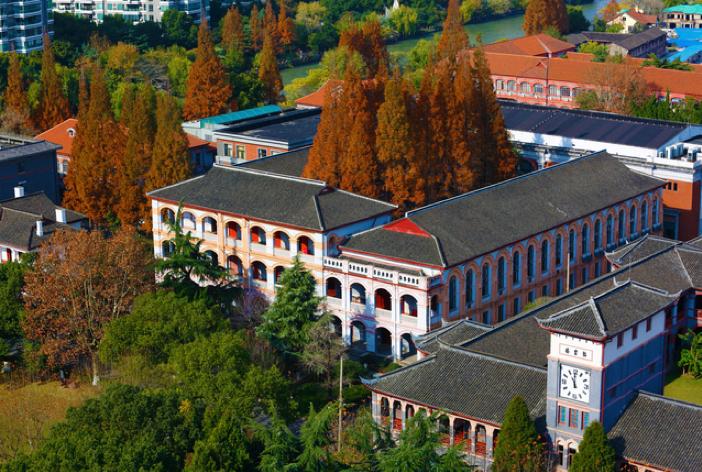
Photo courtesy of East China University of Political Science and Law
As the first School of Foreign-related Rule of Law in the country, East China University of Political Science and Law started enrolling undergraduates in 2023. The requirements for foreign languages are also strict. Students applying for admission are required to have outstanding foreign language proficiency. Priority will be given to students with a score of 80 or above (including 80) in English listening, speaking, and reading in the first semester, or those who can provide other materials such as IELTS or TOEFL test scores to prove their English proficiency, as well as students who have proficiency in a second foreign language such as French, Spanish, or Japanese while meeting the aforementioned English proficiency requirements.
Other schools are also not far behind. Gansu University of Political Science and Law, China University of Political Science and Law, and other universities have successively established schools of foreign-related rule of law. Moreover, the School of Foreign Languages at Gansu University of Political Science and Law has also proposed to build a trinity curriculum system of "law + translation + technology".
In the field of international communication, some universities have also established relevant schools independently.
In 2025, Fudan University established the School of International Communication and Global Leadership, integrating the discipline and talent resources related to international communication across the university. From multiple perspectives such as politics, economy, culture, society, and ecological civilization, it coordinates education and scientific research work, creating a new paradigm for cultivating international communication talents through in-depth interdisciplinary integration.
Chen Zhimin, a member of the Party Committee Standing Committee and Vice President of Fudan University, and the Dean of the School of International Communication and Global Leadership of Fudan University, said that the aim is to build a new highland for cultivating international communication talents that is interdisciplinary, high-level, and practical, with both a Chinese perspective and a global outlook, and to cultivate interdisciplinary strategic communication talents.
In March this year, the School of International Communication at Guangxi Minzu University was officially inaugurated. Wei Shizhen, the Deputy Secretary of the Party Committee and the President of the university, said in his speech that the School of International Communication and the School of Media and Communication are managed under the "one team, two signs" model. The school will integrate disciplinary resources, build a cultivation system for interdisciplinary talents with the qualities of "understanding communication, being proficient in foreign languages, knowing about regions, and being good at practice", and create a platform for cultivating international communication talents, theoretical innovation, and practical cooperation facing ASEAN.
The translation major has not disappeared. It has just taken off the old "pure language" mantle and put on the new clothes of "Foreign-related Rule of Law" and "International Communication". "Being able to translate" has become a basic skill, and the real competitiveness comes from "translation + law", "translation + communication", and "translation + regional and national studies".
It's not just about translation:
More majors are "changing their guises"
If you look at a broader university landscape, you'll find that "changing guises" is no longer exclusive to the translation major.
Traditional library science was considered a major focused on "finding books and cataloging", but now this major is "changing its core". The School of Information Resource Management at Renmin University of China (founded in 1952, the founder of archival higher education in New China) has gradually been transforming towards data management in recent years.
The Master of Library and Information Science (MLIS) program at this school in 2026 has set up a "Data Management Direction (MDA)", with the clear goal of cultivating data management elites who are proficient in the production, collection, cleaning, processing, in-depth mining, visualization, long-term preservation, and asset management of business and government data in the big data era.
In the curriculum of the Master of Library and Information Science at the School of Information Science at Beijing Language and Culture University, there are also technical courses such as Python data analysis basics, big data management and application, data visualization, machine learning, and natural language processing.
In September 2025, the library at Xiangtan University offered an elective course for undergraduates called "AI Services and Document Resource Management", covering content such as AI-driven retrieval tools, intelligent document management, and data mining.
In September 2025, the Nanjing Library, in collaboration with the School of Information Management at Nanjing University, held a sub-forum event titled "Digital and Intelligent Integration: The New Library Ecosystem Driven by Big Data and Big Models", discussing cutting-edge topics such as "human-machine collaborative data insight" and how big models can empower the visual analysis of multi-source information.
At the beginning of this year, the team of Associate Professor Wu Yuhao from the School of Economics and Management at Weifang University published a paper in the CSSCI journal Library, proposing a "data - knowledge - scenario" trinity intelligent library service model, promoting the transformation of library services from "resource-oriented" to "scenario-oriented".
In other words, today's library science students are no longer learning how to classify and catalog books, but Python, big data analysis, and AI model applications. Their core ability to "effectively obtain, organize, analyze, and provide knowledge solutions from a vast amount of information" has become a scarce and universal competitiveness in the era of information overload.
Graduates are no longer just targeting libraries. Internet giants, consulting companies, and data service companies are also their career destinations. This is one of the relatively successful cases of "changing guises".
In the field of civil engineering, Tongji University's "transformation" is the most thorough and provides a textbook example.

Photo courtesy of Tongji University
In 2015, Tongji University first proposed the concept of "Construction 4.0 (Intelligent Construction)". In 2018, its Intelligent Construction major was enrolled for the first time in China and is now a national first-class undergraduate major, ranking first in the country for many consecutive years.
In May 2026, Tongji University established the Department of Building Technology Science. Zheng Qinghua, the Secretary of the Party Committee of the university and an academician of the Chinese Academy of Engineering, said at the founding ceremony that this is "an important measure to promote the reconstruction and cross-integration of disciplines in the field of built environment", which will promote the in-depth integration of architecture, environment, energy, and intelligence.
In the same month, the university was approved to add an undergraduate major in "Engineering Internet". The curriculum is centered around the six-dimensional intersection of "force, electricity, calculation, information, sensing, and control", aiming to cultivate "interdisciplinary leading talents with the ability of digital design of all engineering elements and intelligent services".
More profound changes have taken place in the cultivation model. Last year, Tongji University launched the "Enlightenment College" for the class of 2025 freshmen. The college implements a "2 + 1+ X" cultivation system for top innovative talents, aiming to improve students' comprehensive qualities such as "scientific literacy, engineering thinking, interdisciplinary and practical abilities, AI innovation ability, and international competence".
Tongji University has also set up a "Leading Talents Class (Future Construction)", characterized by being led by academicians and integrating undergraduate and postgraduate education. The curriculum covers cutting-edge content such as digital twin of engineering states, principles of intelligent sensing, and engineering robots.
In May 2026, the annual meeting of the National Digital Construction Industry-education Integration Community was held in Liyang, Jiangsu. At the meeting, the School of Civil Engineering at Southeast University shared the "Southeast University's practice in cultivating intelligent construction talents". The participating representatives visited the Liyang Innovation Center of Southeast University on-site, where three practical training projects, including the building machine experiment platform, intelligent tower crane operation, and multi-functional robots, were demonstrated. Intelligent construction is no longer just a concept; it is becoming a reality.
The traditional "bricklaying" major is turning into an interdisciplinary subject of "programming + robots + architecture".
The practices of the above universities prove that this transformation is not just about changing names but a systematic reconstruction from the curriculum system to the cultivation model.
Let's look at other majors. Traditional philosophy was regarded as a "useless discipline", but now it is at the forefront of the trend and is transforming into artificial intelligence ethics.
In 2023, the Department of Philosophy at East China Normal University was approved to offer a master's degree in applied ethics. Among the four directions of this major, there is a "science and technology ethics" direction, targeting cutting-edge fields such as artificial intelligence robots, smart cities, and big data remote sensing, and aiming to cultivate "interdisciplinary ethical talents facing real-world problems and with a multi-disciplinary background".
In 2026, Sun Yat-sen University also joined this track and added the "Applied Ethics" major to its part-time postgraduate enrollment catalog.
A once-marginalized "hopeless major" has thus entered an area of urgent national strategic need, responding to the "trolley problem" and algorithmic discrimination in the AI era.
Preschool education, which also