XPeng "Bleeding" to Break Through the Three Tracks of Physical AI
On May 28th, XPeng Group released its financial report for the first quarter of 2026. Like other new car - building companies, it turned from profit to loss.
However, the real highlight of this financial report doesn't lie in the result of "loss" itself. There is a more thought - provoking proposition hidden behind the numbers: A car company that has not yet achieved annual profit is pouring billions of real money into a future called "Physical AI".
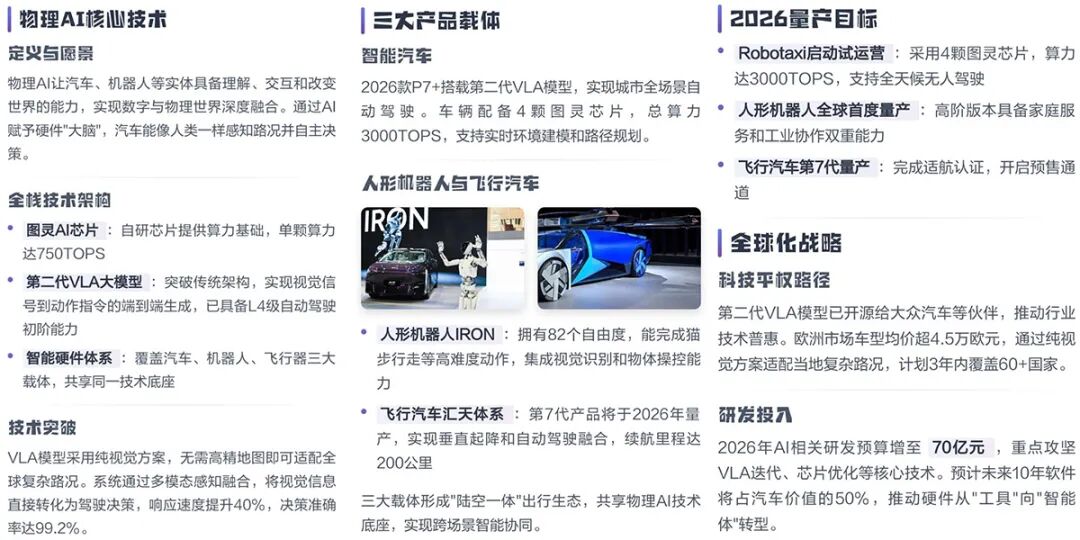
Picture/Explanation of Physical AI. Source/Screenshot from the Internet, New Energy Outlook
So - called "Physical AI", according to He Xiaopeng's explanation, means enabling things in the physical world to have a brain, movement ability, and operation ability. It may be easier to understand when combined with his product line. Smart cars can drive by themselves, IRON humanoid robots can do work on their own, and the flying car "Land Aircraft Carrier" can fly by itself.
This sounds very sci - fi. Considering China's current policies and regulations, it seems more like an adventure.
If the bet pays off, XPeng may become the Chinese company closest to Tesla, or even surpass Tesla; if it fails, every penny on XPeng's account today may become the countdown before its downfall tomorrow.
At this moment, its 42 billion yuan in cash is being depleted at a rate of over 5 billion yuan per quarter. In the continuous cycle of generating, replenishing, and losing blood, how will this gamble on time, money, and ambition end?
1. "Ice and Fire" in the Financial Report
Looking at XPeng's report card for the first quarter of 2026, the most intuitive feeling is "contradiction": the ability to make money has clearly improved, but the amount of money lost has increased.
Let's first look at a set of key figures. XPeng's total revenue in the first quarter was 13.03 billion yuan, a year - on - year decrease of 17.6%. Among them, the automobile sales revenue was 11 billion yuan, a year - on - year decrease of 23.5%.
The sales volume was the main factor dragging down the revenue: XPeng only delivered 62,682 vehicles in that quarter, a year - on - year decrease of 33.3%, setting the lowest quarterly delivery volume since the second quarter of 2024. The Spring Festival holiday, the gap during the product transition period, and the market squeeze caused by the intensive launch of competing products together led to this trough. However, this is understandable. Looking at the automotive industry, the situation of each company is similar.
On the other hand, despite the shrinking revenue, XPeng's profitability has substantially improved. In the first quarter, XPeng's overall gross profit margin reached 20.6%, a full 5 percentage points higher than 15.6% in the same period last year, setting the highest record for XPeng in the same period over the years.
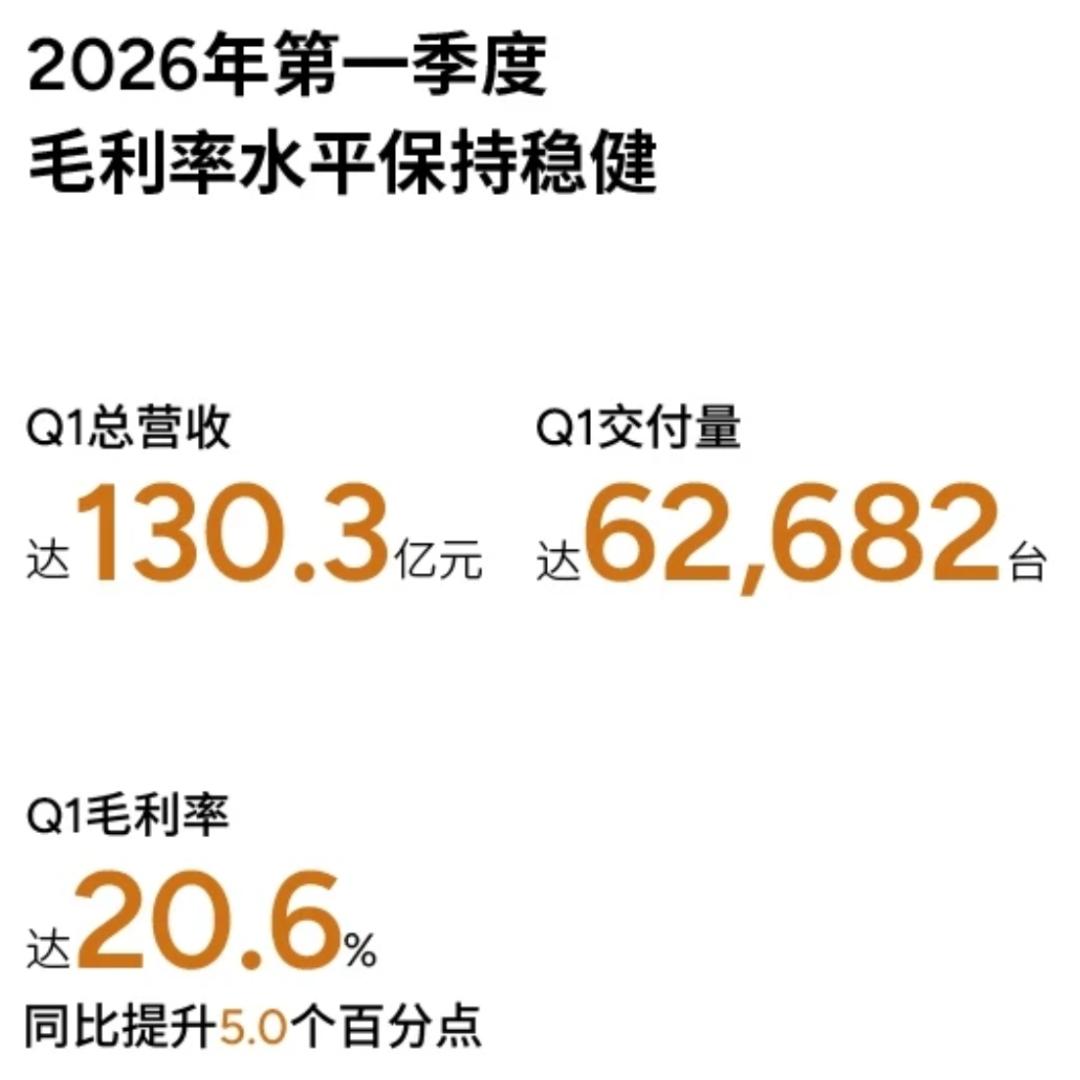
Picture/Revenue situation of XPeng Motors in the first quarter of 2026. Source/Screenshot from the Internet, New Energy Outlook
The gross profit margin of automobile sales also climbed to 12.1%, a year - on - year increase of 1.6 percentage points. In the trough of delivery volume, this figure means that XPeng's ability to make money per vehicle has truly improved.
So, why did the net loss expand from 660 million yuan in the same period last year to 1.78 billion yuan, a sharp increase of 168.7%? The answer lies in R & D investment. XPeng's R & D expenditure in the first quarter was as high as 2.91 billion yuan, a year - on - year increase of 46.8%, nearly 1 billion yuan more than 1.98 billion yuan in the same period last year.
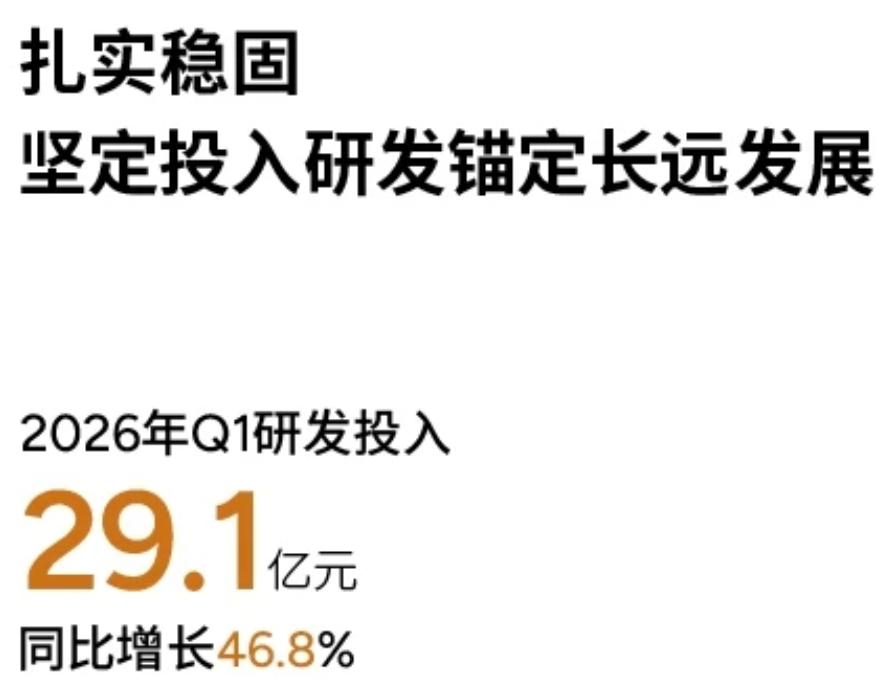
Picture/R & D investment of XPeng Motors in the first quarter of 2026. Source/Screenshot from the Internet, New Energy Outlook
XPeng clearly stated that these incremental funds are mainly invested in the development of new models and AI - related technologies, namely the second - generation VLA large - scale model, Turing AI chips, Robotaxi, and humanoid robots.
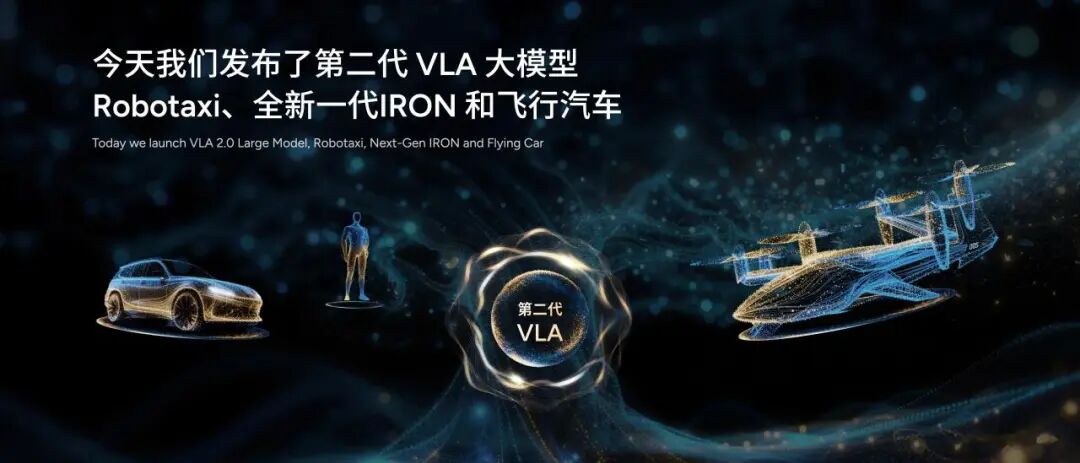
Picture/AI - related technologies of XPeng Group. Source/Screenshot from the Internet, New Energy Outlook
So, you see, Against the backdrop of a 17.6% year - on - year decrease in revenue, XPeng's R & D expenditure skyrocketed by nearly 50% in the opposite direction. This "scissors gap" directly swallowed up all the positive effects brought about by the increase in gross profit.
In fact, what XPeng should be more vigilant about is the speed of cash consumption. In this financial reporting season, XPeng's available cash decreased from 47.66 billion yuan at the end of 2025 to 42.09 billion yuan, that is, it decreased by about 5.57 billion yuan in one quarter.
Although the first quarter is usually the quarter when car companies' cash flow is the tightest, even if we put aside seasonal factors, a more real risk exposure is that After deducting the accounts payable of about 24.2 billion yuan due within three months, the "safety cushion" that XPeng can truly freely control has narrowed to about 17.8 billion yuan. According to He Xiaopeng's public speech, in 2026, XPeng's R & D budget for AI - related projects alone is as high as 7 billion yuan.
Another issue worthy of attention is that XPeng's current asset - liability ratio has climbed to 71.77%, further rising from 70.56% at the end of 2025. At the end of 2025, XPeng's total liabilities reached 72.8 billion yuan, among which accounts payable and notes payable were as high as 37.163 billion yuan, a sharp increase of more than 61% compared with 23.08 billion yuan at the end of 2024.
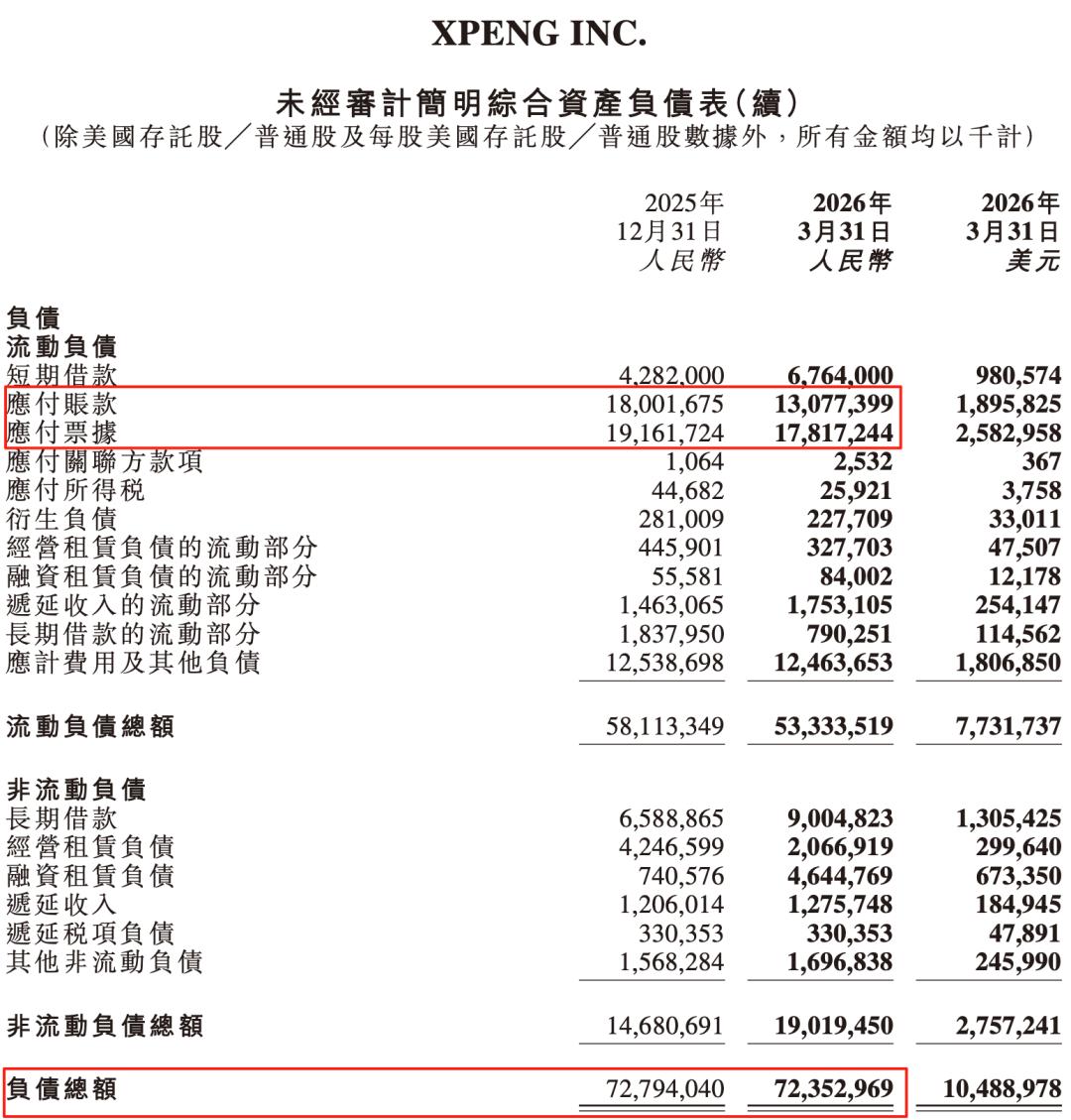
Picture/Liability situation of XPeng Motors in 2025. Source/Screenshot from the Internet, New Energy Outlook
After calculating this account clearly, a clear picture emerges: on the one hand, XPeng's main automobile business is losing blood, and on the other hand, it is nurturing multiple technology fronts that are still in the very early stage of commercialization.
2. The Most Tesla - like Chinese Car Company?
According to media reports, XPeng recently held a mass - production mobilization meeting for robots with nearly a thousand people, clarifying that it will achieve mass production of humanoid robots by the end of 2026 and is expected to have them serve as sales guides in XPeng's offline stores in the first quarter of 2027.
On the other side of the ocean, Tesla's exclusive Optimus robot factory at the Texas Super Factory has officially started construction. The planned annual production capacity of this factory can reach up to 10 million humanoid robots. In order to accelerate the implementation of robots, Tesla has shut down the production lines of Model S and Model X at the Fremont Factory in California. It is expected that the first batch of robots will be put into production from July to August this year, and the products will be used for internal operations in the factory first.
In addition, He Xiaopeng said in a conference call for the first - quarter financial report that The XPeng GX fleet equipped with full redundancy has conducted small - scale public road L4 tests in Guangzhou. XPeng aims to launch a demonstration operation service for passenger - carrying Robotaxi in Guangzhou in the third quarter of this year.
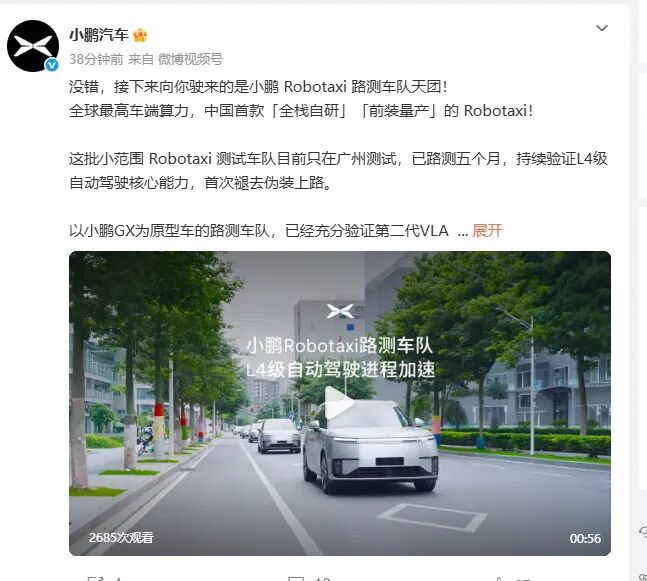
Picture/XPeng Robotaxi road test. Source/Screenshot from the Internet, New Energy Outlook
On the other hand, since Tesla launched its Robotaxi service in Austin in June 2025, it has been in operation for nearly a year. However, this service is still being piloted at a "loss - making price" to attract users, and it is expected that there will be no significant revenue throughout 2026.
In this regard, it makes sense for XPeng to be called the "Chinese Tesla". However, This "similarity" is more like a double - edged sword: it may be an opportunity to overtake on a curve, or it may be a financial trap caused by premature investment.
If we compare the "timing" of their development, we can find some clues.
In 2020, 17 years after its establishment, Tesla achieved annual profit for the first time, thanks to the global popularity of Model 3 and Model Y. The annual net profit was 721 million US dollars, and the global sales volume was 499,500 vehicles.
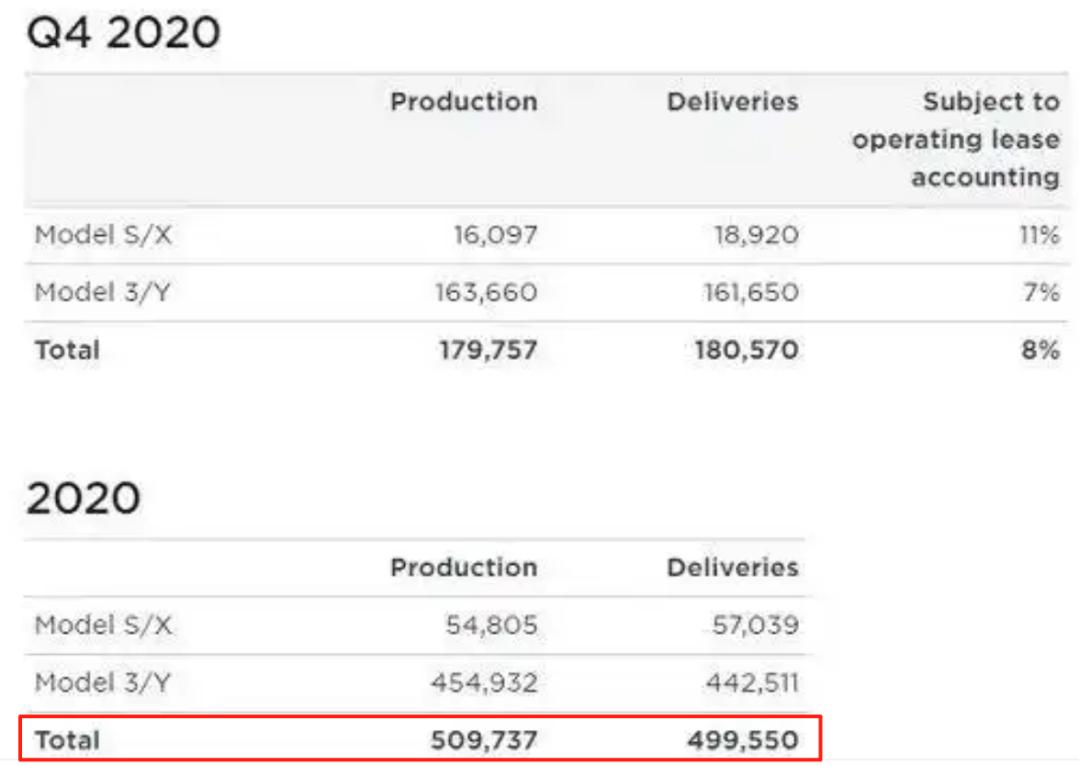
Picture/Tesla's sales volume in 2020. Source/Screenshot from the Internet, New Energy Outlook
After opening the door to profit, Elon Musk gradually increased his heavy investment in FSD full - self - driving, Dojo supercomputing, and Optimus robots starting from 2021.
Public data shows that in 2024, Tesla's R & D expenditure in the fields of AI and autonomous driving was about 3.6 billion US dollars, accounting for about 38% of the annual net profit; in 2025, Tesla's total R & D expenditure was about 6.41 billion US dollars, among which the investment related to AI and autonomous driving accounted for about 30% - 50% (about 1.9 - 3.2 billion US dollars).
To put it simply, Tesla first established and developed its automobile business as a "cash cow", and then used the profits generated by it to nurture the future of AI, following a relatively stable path.
However, as of the first quarter of 2026, XPeng has not achieved annual profit in its 12 - year history. Although it had a single - quarter profit of 380 million yuan in the fourth quarter of 2025, the annual net loss was still 1.14 billion yuan.
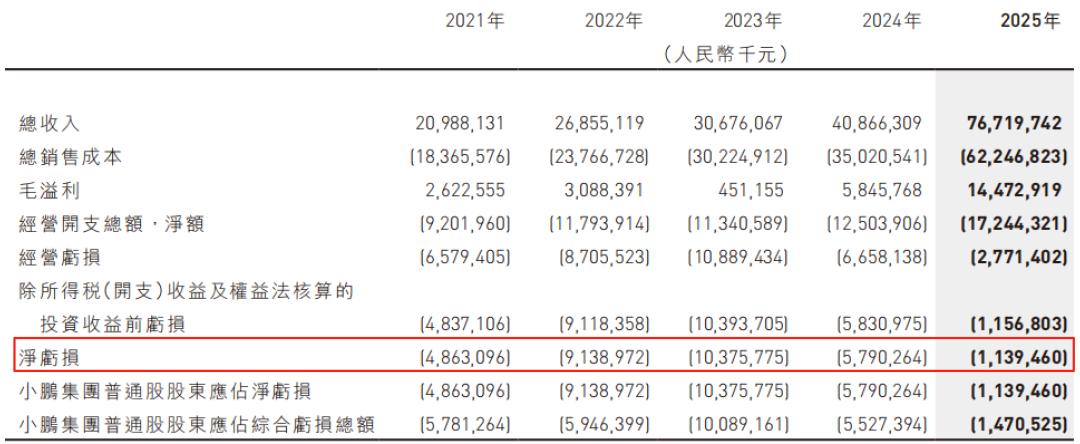
Picture/XPeng Motors' net loss in 2025. Source/Screenshot from the Internet, New Energy Outlook
The root cause behind this difference does not lie in XPeng being more radical or less rational than Tesla back then, but in the completely different competitive environment it is in.
When Tesla achieved annual profit for the first time, the wave of electrification had just begun. Traditional car companies had little achievement in the pure - electric field, and the market competition was mild. Tesla had plenty of time to first consolidate its profit model and then calmly layout future technologies.
And When XPeng transformed from a car company into an AI technology group, the penetration rate of new energy vehicles exceeded 60%, and intelligent driving was changing from a "differentiated selling point" to a "standard threshold".
XPeng's intelligent driving has even changed from a core brand label to an object of many consumers' complaints. On April 18th, when a car owner in Dali was driving with the assisted - driving function enabled, the vehicle misidentified the shadow of a street lamp as an obstacle and triggered an AEB emergency stop, resulting in a rear - end collision. The car owner was not taken seriously during the negotiation and only received a written apology from the staff of XPeng's public relations department after multiple complaints.
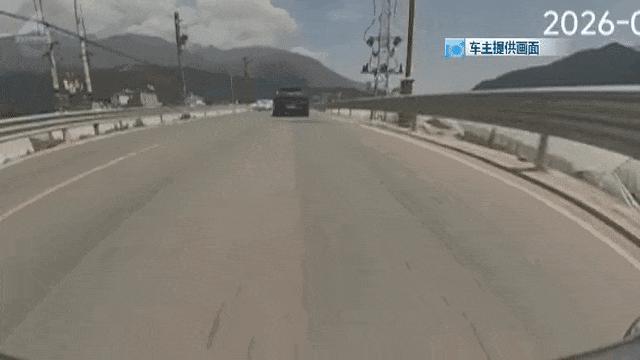
Picture/XPeng Motors' rear - end collision scene. Source/Screenshot from the Internet, New Energy Outlook
According to incomplete statistics, In the past two years, car owners' complaints about XPeng's intelligent driving (especially XNGP/NGP) have mainly focused on system misjudgment leading to emergency braking, random steering, unfulfilled functions (such as the limited - area urban NGP), insufficient OTA support for old cars, and shirking of responsibility after accidents.
Now, He Xiaopeng is making a big bet on VLA 2.0. Although the prospects seem bright, the process may be more dangerous.
3. Moving Towards the "Dawn"
In XPeng's context, "Physical AI" is an ambitious general term, which means to let AI come out of the screen, enter the real world, and be integrated into cars, robots, and aircraft, enabling machines to perceive, think, and act on their own.
These