Seven bigwigs in the automotive industry fired salvos in Shenzhen: Sales without profit are a false prosperity, and the industry elimination race is accelerating.
Industry leaders strongly criticize the involution. Has the competition pattern in the domestic automotive circle changed?!
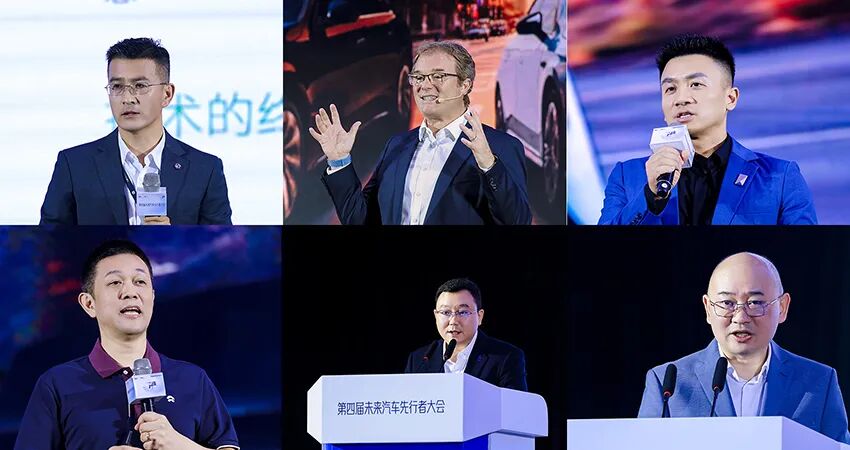
CheDongXi reported from the scene of the Greater Bay Area Auto Show on May 29th. Just now, Li Bin, the founder, chairman, and CEO of NIO; Xu Jun, the senior vice president and chief operating officer of Leapmotor; Wang Hui, the chairman of Avita Technology; Zhang Zhengping, the chairman of SERES; Zhuang Mude, the senior executive vice president of Mercedes-Benz (China) Investment Co., Ltd.; Xiang Xingchu, the chairman of JAC Group; Zhou Guang, the founder and CEO of DeepRoute.ai and other top executives in the automotive circle gathered in Shenzhen to discuss industry issues.
Compared with previous years, the intense competition at this year's conference is not only about price wars and parameter competitions. Instead, it focuses on a more realistic issue: When the new energy vehicle industry enters the elimination stage, how should automakers find a new balance among growth, profitability, technological investment, and brand upgrading?
"Sales without profit are false sales, and the scale achieved through price wars is a false prosperity." A statement by Wang Hui points out the most acute contradiction in the current industry.
Li Bin believes that even though the price war is gradually subsiding, the competition in the Chinese automotive market will still be extremely fierce in the next one or two years. Enterprises still have to face a comprehensive competition in terms of products, technology, and system capabilities.
In addition to the price war, the parameter competition is also being re - evaluated. Xu Jun believes that parameters such as range, computing power, and configuration "are only the most basic entry tickets so far, not the decisive factors." This also shows that the competition in the new energy vehicle market is shifting from parameter lists to real - world usage scenarios.
From anti - involution and anti - parameter stacking to the inflection point of pure - electric vehicles, AI - driven reconstruction of luxury, brand upgrading, and breakthroughs in the ultra - luxury segment, these topics together constitute the core signals released by this conference.
That is, the Chinese automotive industry is bidding farewell to the stage of simply competing in scale and speed and entering a new cycle centered on profitability, technological foundation, brand value, and system efficiency.
01. Li Bin of NIO: The competition in the automotive market remains fierce, with R & D investment exceeding 6.88 billion yuan
Judging from the speeches of many top executives of automakers at this conference, the Chinese new energy vehicle industry is shifting from simply pursuing scale to a systematic competition in terms of profitability, R & D investment, brand value, and user experience.
Li Bin, the founder, chairman, and CEO of NIO, made a very realistic judgment at the conference: In the next one or two years, the competition in the Chinese automotive market will still be extremely fierce. "Although the price war is subsiding, the competition will still be very tough without it."
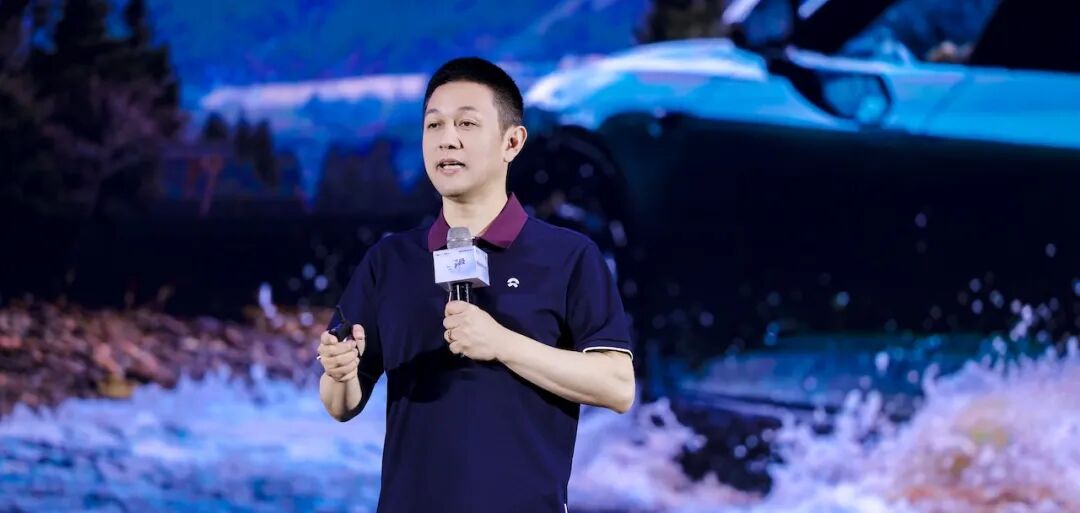
▲ Li Bin, the founder, chairman, and CEO of NIO
In his view, the Chinese automotive industry has entered a new stage of competition. Although the production volume of complete vehicles in the first few months of this year has been satisfactory, the domestic retail market is under significant pressure, and backward brands and technologies will be phased out more quickly.
That is to say, the industry competition will not become easier just because the price war is cooling down. In the future, automakers will compete not only on price but also on the comprehensive capabilities of products, technology, brand, charging system, and operational efficiency.
Li Bin also revealed that from January to April this year, NIO delivered more than 112,000 vehicles in total, a year - on - year increase of 71%, making it the fastest - growing among the top ten automakers in new energy retail sales. More importantly, NIO has achieved operating profit for two consecutive quarters. Compared with simply pursuing sales volume, this change means that new - force automakers are entering a new stage where they must prove their self - hematopoietic ability.
Regarding the pure - electric vehicle route, Li Bin believes that 2025 is an important inflection point: The experience benefits brought by pure - electric products are now exceeding the experience losses caused by inconvenient charging.
In April this year, the penetration rate of new energy vehicles reached 61.4%, among which pure - electric vehicles accounted for nearly 69% of new energy vehicles and more than 41% of all vehicle types in terms of power.
Li Bin said that NIO has cumulatively invested more than 6.88 billion yuan in R & D over 11 years and more than 2 billion yuan in the charging and battery - swapping field. This year, it will add 1,000 more battery - swapping stations.
In the future, NIO will pay more attention to ROI in vehicle development. It has clearly stated that it will not develop extended - range or plug - in hybrid vehicles and will not develop MPVs for the time being. It will continue to focus its resources on underlying R & D and the battery - swapping system.
02. Xu Jun of Leapmotor: Reflecting on the parameter competition, range and computing power are not the decisive factors
If the keywords for NIO are "long - term investment" and "inflection point of pure - electric vehicles", then Leapmotor's thinking points further to another focus of industry competition: Should automakers continue to stack parameters or return to the real needs of users?
Xu Jun, the senior vice president and chief operating officer of Leapmotor, said at the Future Auto Pioneers Conference that new - force automakers entering the automotive industry should not be simply defined as "disruptors" or "followers" but as "pioneers carrying on the past and forging ahead into the future."
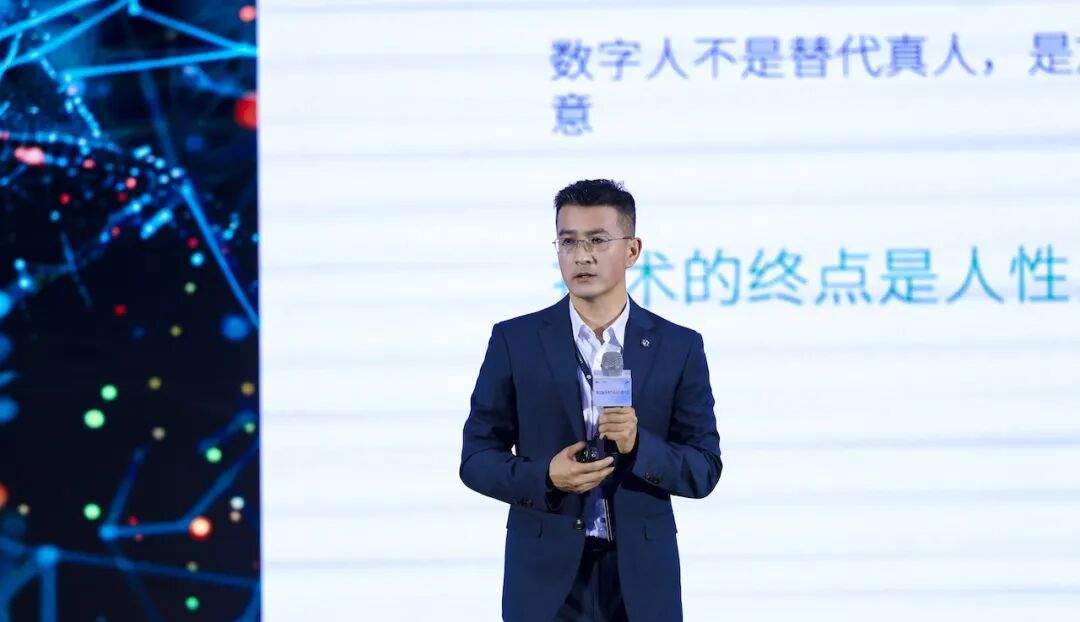
▲ Xu Jun, the senior vice president and chief operating officer of Leapmotor
In his view, the parameter competition in the current automotive market is becoming increasingly homogeneous.
Taking range as an example, the difference between a 700 - kilometer and a 1,000 - kilometer range may only be a low - probability requirement in most daily scenarios. Enterprises should not over - emphasize low - frequency scenarios and make consumers pay for excessive functions.
In response, Xu Jun believes that parameters are now just entry tickets and no longer the key to victory. What automakers really need to solve is "whether users need a car or a travel solution."
He summarizes user needs as "more, faster, better, and cheaper", and the corresponding product logic is "better configuration at the same price and better price at the same configuration", providing high - quality and affordable travel solutions with higher configuration and better prices.
When talking about the industry price war, Xu Jun said bluntly that no enterprise wants to engage in a price war, but price is indeed the most sensitive factor for consumers at present.
"Reducing prices is a decision, and reducing costs is an ability." Leapmotor's approach is to build system capabilities through "hidden efforts", including system coordination, scenario definition, and long - term compound interest.
Regarding the second brand, although Xu Jun did not disclose details, he emphasized that the overseas expansion of Chinese automakers will go through three stages: "Made in China, Intelligent Manufacturing in China, and Innovation in China", and brand creation will be the core in the next step.
03. Wang Hui of Avita: Reflecting on "sales without profit", price war is not the way out
From Leapmotor's reflection on "excessive parameters" to Avita's warning about "sales without profit", we can see that a new consensus is forming in the industry: Scale growth alone is no longer enough. Whether automakers can build brand premium and healthy profitability beyond price wars is becoming the core proposition for the next stage.
Wang Hui, the chairman of Avita Technology, said at the Future Auto Pioneers Conference that the automotive industry has entered the second half of the intelligent era from the first half of the electrification era. However, the industry consensus has also led to homogeneous competition. Enterprises are not only competing on price but also on configuration, ecosystem, and service, ultimately "eroding their own profits."
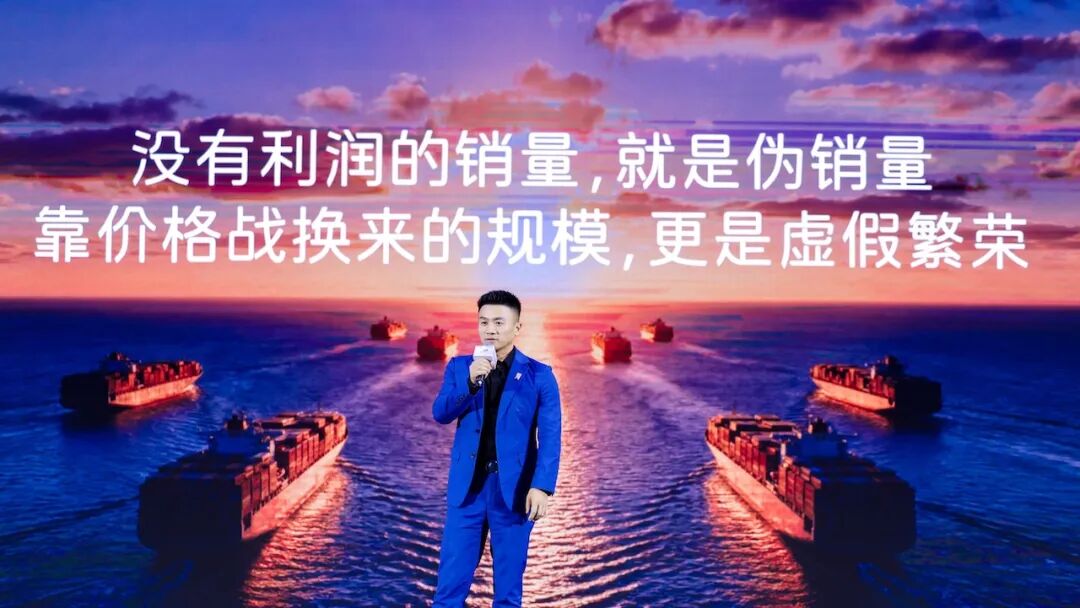
▲ Wang Hui, the chairman of Avita Technology
He cited data from the China Passenger Car Association, saying that in 2025, the domestic automotive sales volume exceeded 34.4 million vehicles, but the industry profit margin was only 4.1%. From January to February 2026, the profit margin further dropped to 2.9%.
In his view, "sales without profit are false sales, and the scale achieved through price wars is a false prosperity."
Therefore, Avita's judgment for the next stage of the industry is that automakers must shift from price competition to value competition and from "selling products" to "strengthening the brand."
Wang Hui mentioned that in the past few years, consumers paid more attention to product parameters such as acceleration, range, and screen size when buying cars. However, now more and more users are starting to care about what a brand believes in, what it pursues, and whether it is trustworthy. Whether a brand can build long - term trust is becoming a more crucial part of the system competition.
Based on this judgment, Avita has chosen to reduce ineffective investment and concentrate resources on creating high - quality products.
Wang Hui revealed that Changan Group has streamlined the planned vehicle models for the next five years from 63 to 36. Cooperation with Huawei is an important advantage for Avita, but it is not the only factor determining victory. The brand's own user insight, original design, and self - research ability are the long - term barriers.
Wang Hui also specifically mentioned that Chinese automakers do not need to become "the next Land Rover or Porsche" but should become the first truly original and recognizable Chinese brand.
After the price war cools down, Avita aims not for short - term scale but to establish a more sustainable growth model among brand, profit, and globalization.
04. Zhang Zhengping of SERES: High - end positioning cannot rely solely on configuration. Xiang Xingchu of JAC: Must break out of low - level competition
In the discussion of brand upgrading and value competition, SERES focuses on re - defining the "high - end standard". For Wenjie, high - end is not just an increase in the price range but a systematic integration of safety, reliability, quality, and user value.
Zhang Zhengping, the chairman of SERES Automobile, said at the Future Auto Pioneers Conference that the new energy vehicle industry has bid farewell to extensive scale growth, and the logic of users' car - selection has also changed. They no longer only look at parameters and displacement but pay more attention to the car - using experience, safety capabilities, and brand value.
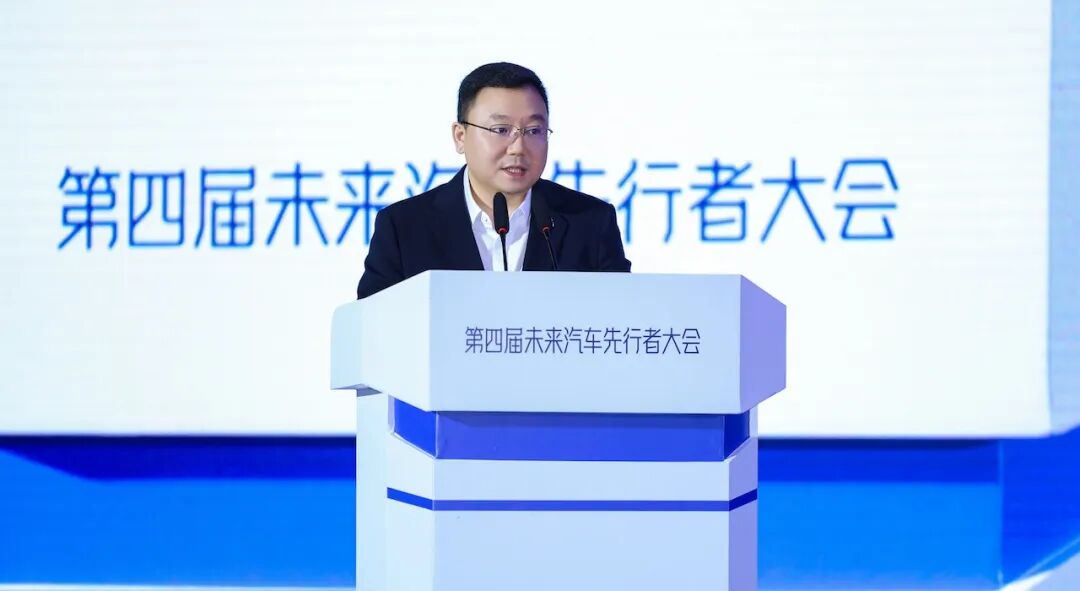
▲ Zhang Zhengping, the chairman of SERES Automobile
Zhang Zhengping mentioned that the logic of users' car - selection is no longer just comparing parameters and displacement but paying more attention to the car - using experience, safety capabilities, and brand value.
The success of Wenjie's sales also shows that Chinese brands have indeed entered the price range previously dominated by traditional luxury brands. However, the greater challenge is whether safety and quality can meet the expectations of high - end users after the sales volume breaks through.
Therefore, Zhang Zhengping put "safety is the greatest luxury" at the core of his speech. Compared with simply promoting assisted - driving capabilities, this statement actually reflects that the industry is shifting from "function availability" to "safety and reliability."
In addition, manufacturing consistency is also given more importance. Zhang Zhengping mentioned that Wenjie's super factory will also promote the automated and unmanned inspection of off - line vehicles starting this year.
For high - end new energy vehicles, this kind of invisible manufacturing ability is becoming the basic threshold for brand upgrading.
In response to Tesla's FSD entering the Chinese market, Zhang Zhengping said that the new Wenjie M9 is equipped with 6 lidars and 40 sensors throughout the vehicle. Its goal is not simply to reach the human level but to "surpass the human state" through integrated perception.
Behind this statement is a typical choice of Chinese automakers in the assisted - driving route: using more sensor redundancy and local scenario data to gain users' trust in the safety boundary.
As a member of the Hongmeng Smart Mobility circle, Xiang Xingchu, the secretary of the Party Committee, chairman, and general manager of JAC Group, also gave a speech at the forum, conducting a self - analysis of the current industrial changes faced by the enterprise.
Xiang Xingchu believes that the automotive industry is entering a stage of "value reconstruction." The technological route is shifting from multi - point development to integration, the industrial boundary is constantly expanding, and the automotive industry is deeply integrated with industries such as energy, integrated circuits, and artificial intelligence.
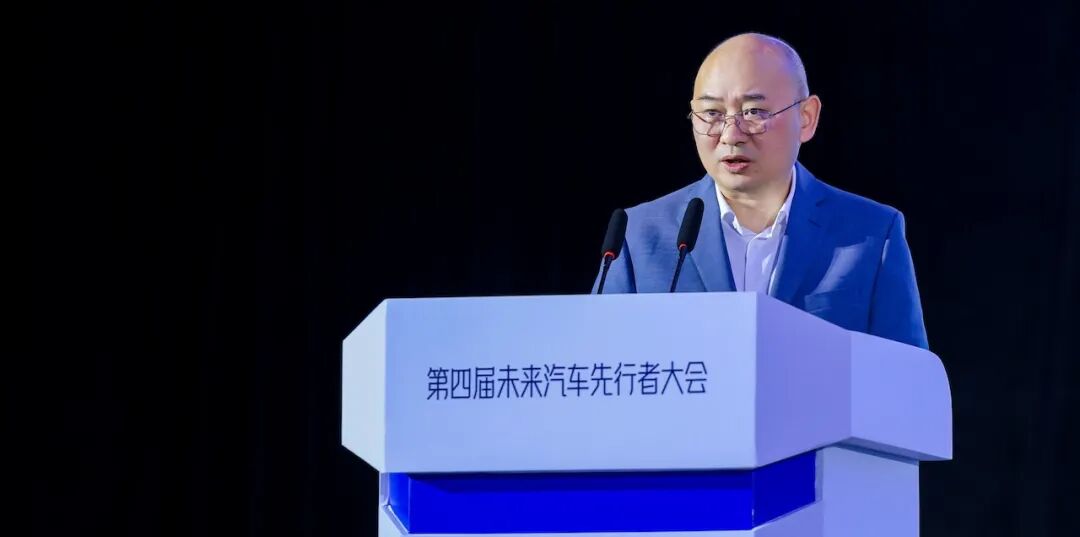
▲ Xiang Xingchu, the secretary of the Party Committee, chairman, and general manager of JAC Group
He believes that the market share of traditional fuel vehicles is shrinking at a rate of 10% to 15% per year, and the price war and value war in the industry are intensifying. Automakers must break out of low - level competition and enter the high - value track.
In response, the Zunjie Super Factory is equipped with more than 1,800 robots, collecting more than 300,000 data points per second and monitoring 26,000 key quality points to improve the quality of intelligent manufacturing.
For JAC, what the Zunjie project really needs to verify is not only whether Chinese brands can reach the million - level price range but also whether traditional automakers can complete the systematic upgrading of organization, manufacturing, and value chain through cross - border cooperation.
In the future, JAC aims to achieve a sales volume of one million vehicles and a revenue of 10 billion yuan by the end of the 15th Five - Year Plan and become a world - class intelligent travel technology enterprise by 2035.
05. Zhuang Mude of Mercedes - Benz: Betting on AI to reshape the luxury car experience, from local adaptation to global output
Chinese brands are re - defining the high - end market with intelligence, safety, and user experience, and traditional luxury brands are also accelerating their response to this change. Mercedes - Benz's speech shows