Half flock in, half flee: The two-sided game in Singapore's AI hotbed
After three years of starting a business in Singapore, Zhou Yu plans to leave.
Today's Singapore has long been well - known as the "Silicon Valley of Asia", attracting AI entrepreneurs from all over the world. Among them, the Chinese entrepreneurial groups can be basically divided into two categories: one is the young people studying in Singaporean universities who have come up with novel and interesting business ideas and found like - minded partners in school; the other is the senior executives from large companies who have experienced many years in the workplace. They have completed US - dollar - based financing in China and their business models have become relatively mature. They regard Singapore as a springboard for global market layout.
The former are mostly young entrepreneurs new to the industry, who value the relaxed business environment. The latter, with mature businesses and rich experience, have clear goals and aim to go international relying on the local geographical advantages.
Zhou Yu belongs to the former. In her view, the entrepreneurial environment in Singapore is a bit boring: mediocre technology, conservative investment, and a social atmosphere lacking in entrepreneurial vitality. In contrast, in China, creative projects are emerging one after another; the Middle East is also striving to become the third pole in the global AI game. The idea of "going out to see" is becoming more and more intense.
For the latter, Singapore has become the best place to maximize their advantages.
In China, there has been an agreed - upon trend in the venture capital circle: believing in and being infatuated with the so - called "AI native generation" born in the 1995s and 2000s; founders born in 1985 or earlier have instead become an obvious shortcoming in investment considerations.
The pragmatic, rational, and steady - advancing business temperament of Singapore coincides with that of middle - aged people.
Ellen, a former investor in a US - dollar fund in China, came to Singapore in 2023 and recorded in - depth conversations with AI entrepreneurs who migrated here through the podcast program "Offline Time". She realized that in the AI era, the real understanding of demand and the awe of the market are the biggest moats. "This is something polished over a decade or two. The sense of smell for products, the judgment of the market, and the recognition of risks are the rarest and the greatest confidence for an entrepreneur. So, for all the middle - aged and elderly in the AI field, as long as we still have our cards, we are still at the table."
Some leave while others flock in. Singapore has become a besieged city for AI entrepreneurs and is also a constant offshore hub on the road to AI globalization for Chinese entrepreneurs.
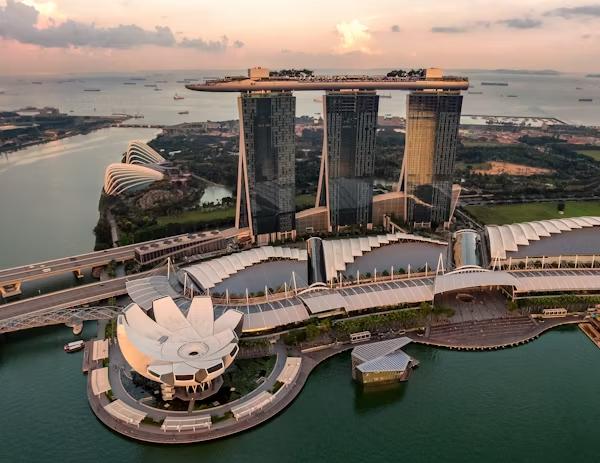
Is Singapore really the end of the Chinese AI entrepreneurial universe?
In recent years, the increasingly bustling Singapore has caught the attention of everyone in the overseas - going circle.
According to Bloomberg data, in 2025, Asian billionaires injected S$77 billion (about RMB 408.5 billion) into Singapore. Under the situation of tense Sino - US relations, fluctuating Middle East situation, and the stalemate of the Russia - Ukraine war, more high - net - worth groups choose to place their assets in Singapore, which has political stability and tax incentives.
Also in 2025, China surpassed the United States to become the largest source of fixed - asset investment in Singapore, accounting for 20.6% of investment commitments, while US companies' investment commitments accounted for 17.3%. In 2024, US companies' investment accounted for as high as 55.5%, while China only accounted for 2.5%.
Where there is money, there are people.
People in the venture capital circle follow the capital and come with the trend, starting new business maps here. "Now, the end of the universe is Singapore." an investor joked.
Ellen is one of them. She shared with Xiaguang She, "After the pandemic, more and more investors came to Singapore. At that time, the overseas - going entrepreneurial ecosystem in Singapore was very diverse: consumption, fintech, robotics, catering, and so on. I didn't set a direction at the beginning and talked to almost all the overseas - going companies I could find. But as I went on, I found that the trend had changed. With the rise of large - scale models in China and Manus coming to Singapore, AI entrepreneurship has changed from a niche to a regional mainstream."
The suspension of the Manus cross - border merger and acquisition case has become a clear warning signal and a turning point in the journey of Singaporean AI entrepreneurs. This forces entrepreneurs to clarify their identity and direction from the very beginning, with no gray area for operation or negotiation.
Regarding this, Ellen analyzed that the Singapore government doesn't care about "whether you have a Chinese background" at all. They only look at three things: where the company is registered, whether the equity structure is locked by a single country, and whether the business is global. "As long as it is a Singapore - based entity with global customers, it is an international company, not the 'Chinese - funded label' you imagine. And the real invisible red line is a single - team, for example, all Chinese, Indian, or American. Because a company with a single culture is difficult to be regarded as an international company."
In Ellen's view, the biggest advantage of Singapore lies in its geopolitical neutrality. In her podcast interview, an AI entrepreneur told her, "The existential question for Singapore is whether it can continue to remain non - aligned. In the past, when the world was relatively peaceful, Singapore could maintain neutrality. But if the geopolitical situation is no longer harmonious, can it continue to remain impartial? This question is related to the country's fortune."
Another advantage may stem from Singapore's small land area. One - hour commuting can cover the whole country, and the social networks of people from different classes overlap highly, which reduces information friction, makes resource distribution more homogeneous, and makes power and culture more open and transparent.
This garden city, with a land area less than one - ninth of Shanghai, has gathered the most popular technology companies such as Google, Meta, IBM, Microsoft, Amazon, and TikTok, with a dense and thick interpersonal network.
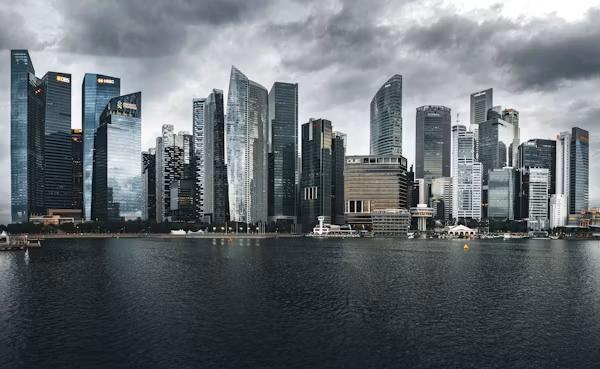
One of Singapore's modern landmarks: Marina Bay Sands
"There are a lot of AI - related activities in Singapore, and it's always the same group of people running around to participate in these activities. The person sitting across from you today might very well be an executive from OpenAI. So you can get first - hand and fresh information here, while in China, there may be a lot of second - hand information." Ellen said.
The elimination of information barriers has lowered the threshold for entrepreneurship, which is highly consistent with the role of AI: accelerating the flow and dissemination of information and narrowing the global cognitive gap.
In this sense, Singapore is naturally a promised land for AI entrepreneurs.
The duality of the "AI hotbed": opportunities on one side, constraints on the other
Many AI entrepreneurs based in Singapore mentioned a project of "selling eggs with AI" to Xiaguang She.
This is a local Singaporean enterprise. It only presents itself as an egg trader externally, but in fact, it is an AI food supply - chain company. The team has only five people. Relying on AI to optimize the whole - link process, restaurants can place orders with one click via WhatsApp, and procurement and distribution operate efficiently, making food materials high - quality and inexpensive. In just one year, they served nearly 2,000 local restaurants, obtained a scarce egg import license, ranked sixth in the local industry, and achieved annual sales of millions of dollars. Currently, they are expanding into the new business of edible oil and have also attracted the favor of many industrial investors.
The development path of this enterprise may most appropriately reflect the characteristics of Singaporean AI entrepreneurial projects: practical, specific, lightweight, and simple. If they can't do large - scale models on a grand scale, they will focus on steady and detailed applications.
This also stems from the business opportunities contained in the Singaporean market itself.
In October 2025, the "Singapore Digital Economy Report 2025" released by the Infocomm Media Development Authority (IMDA) of Singapore showed that the AI adoption rate of small and medium - sized enterprises in Singapore was only 14.5% - a huge space waiting to be filled, which means opportunities for entrepreneurs.
In this regard, the British "Financial Times" analyzed that "The biggest dividend of the next wave of AI entrepreneurship may not be in the model layer or the infrastructure layer, but in the 'last - mile' implementation layer - and the focus of this battlefield is shifting to the Asia - Pacific region. The Asia - Pacific AI market was valued at about $102.5 billion in 2025 and is expected to exceed $816 billion by 2032, with a compound annual growth rate of 34.5%. Behind this growth rate is a huge market that has just been awakened. The moats of these AI projects that solve specific problems do not lie in the code, but in relationships, trust, and local knowledge."
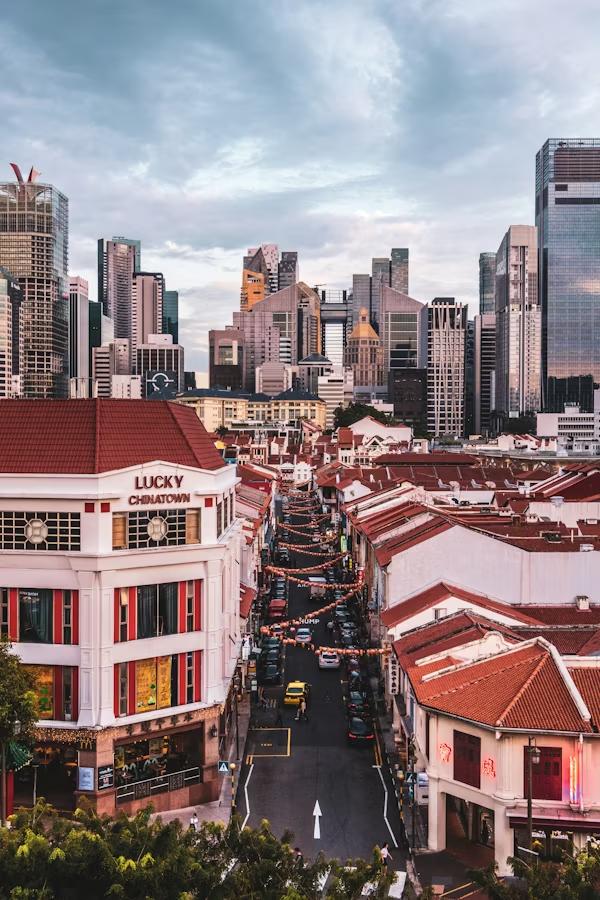
The bustling Singapore streets
The other side of being practical is being conservative.
Specifically in terms of financing, Ellen told Xiaguang She that the drawbacks of Singapore are very obvious. "VCs give very little money. They are very conservative, so many people will choose to return to China or go to the United States after a while. You know, since 2016, the DPI of Singaporean local funds has never exceeded 1. The best is about 0.6 - that is, limited partners can get back at most 60% of the money they invested. A fund in 2014 was relatively good, with a return of about 1.5 times, which is basically at the bottom among Chinese US - dollar funds. Not making money for limited partners for ten years directly determines their mindset when investing in projects: they strictly control the valuation, and generally, the post - investment valuation does not exceed $30 million."
"I often have the feeling that Singapore is a good place for company registration and a good market entry point, but its capital ecosystem is far from mature enough to support a high - growth startup. Slow pace, conservative valuation, and unclear exit paths - these are not individual problems but the current situation of the whole system. For Chinese AI founders going overseas, the most practical strategy may be: set up the structure, conduct business, and build customer relationships in Singapore, but don't only focus on local financing. Look for angel investors in the industry, and consider established Chinese US - dollar funds or global funds." Ellen said.
Zhou Yu also agrees with this. "The capital market in Singapore still tends to invest in later - stage projects because the overall culture in Singapore is more about seeking stability. They are not very willing to do very risky things, and their own entrepreneurial willingness is not strong either."
In terms of project and product competitiveness, an overly calm business environment can easily make entrepreneurs "unaware of the Han Dynasty, let alone the Wei and Jin Dynasties".
In terms of the competitive atmosphere, Singapore is not as anxious and depressing as China, without the FOMO feeling in the technological transformation period. But on the other hand, an overly comfortable market environment will make entrepreneurs calmly polish their products. "But once they go out, they will find that the world has changed. Their products already have countless competitors, and maybe the technology of the next era has already arrived. So entrepreneurs need to balance this scale by themselves."
This "pragmatism" route also comes from Singapore's national character. When talking about the personality of Singaporean locals, "Kiasu" (a word in English derived from the Minnan dialect meaning "fear of losing") is an unavoidable term.
"Kiasu" stems from the survival instinct bred in the living environment of a small and densely - populated country. Singaporeans are always striving to be at the forefront. In the bustling food courts in Singapore, local residents are used to using tissues, umbrellas, work cards, and coats to reserve seats for fear of not getting a seat. When Luckin Coffee first entered the Singapore market, there was also a queuing frenzy. Singaporeans are fond of queuing and will follow the queue when they see people queuing, for fear of missing out on discounts or opportunities.
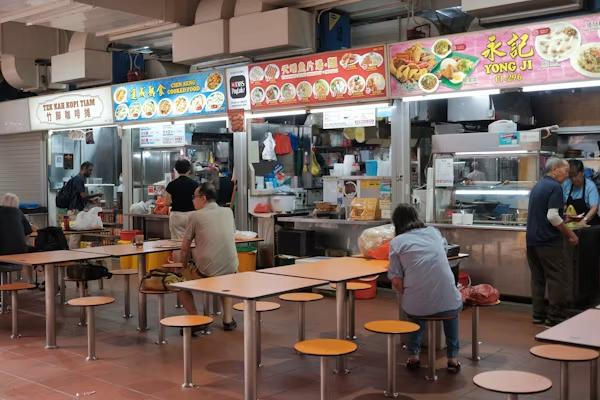
A Singapore food court
On the other hand, the "Kiasu" mentality also brings a social atmosphere of aversion to risks and conservatism. This is the most practical survival strategy for a small country with a small population and also reflects the satisfaction and stability of the nationals under Singapore's perfect and precise social welfare.
BBC journalist Nicolas Walton accurately described this mentality of Singaporeans in his book "In Search of Singapore: The History and Reality of Singapore" written during his stay in Singapore.
Sometimes, people don't even know why the people in front are queuing, but they still follow the queue because they are afraid of missing something. Kiasu stems from Singapore's constant emphasis on its small size and vulnerability. People who are Kiasu don't care about creating and sharing value at all. In this way, Singapore cannot produce real entrepreneurs, but can only cultivate "copy - and - paste" businesses, such as bubble tea shops... trendy coffee shops and cat cafes."
Based in Singapore, but not limited to Singapore
In the view of Joyce, the initiator of the Chinese AI entrepreneurial community CSAIA in Singapore, for local nationals, Singapore is a secluded paradise. "They are too well - protected."
For example, almost all of Singapore's entrepreneurial policies that directly provide money, subsidies, or co - investment require that local citizens or permanent residents hold at least 30% of the shares (most require at least 51%), and the main applicant must be a local. Foreigners can come to start a business, hold 100% of the company's shares, and obtain an EntrePass, but they can hardly get the core subsidies. To get government funds, they must find a local major shareholder or a local founder to stand as a figurehead.
In Zhou Yu's view, Singapore is not only a paradise but also an Asian version of "Zootopia".
It has gathered Chinese, Malays, Indians, and Westerners. Different ethnic groups are highly integrated, and every law and policy is announced in four official languages, just like the utopia in "Zootopia" where all animals live in peace and perform their respective duties.
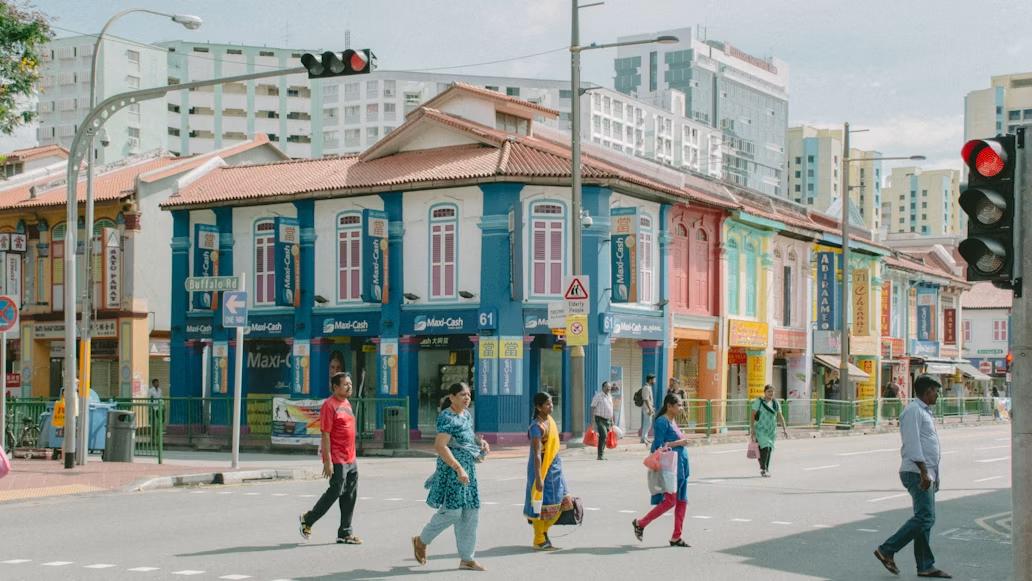
The streets of Little India in Singapore
For Chinese entrepreneurs, although they have obvious advantages in product strength, it is a difficult problem to recruit reliable local talents in Singapore and build an ideal local team.
You know, the employment logic of an entrepreneurial team is not to recruit many junior engineers like large companies. Instead, it needs a person who can take a project from scratch. Such a person should not only be very familiar with the overseas market but also understand Chinese work culture and cooperate smoothly with Chinese teams. There aren't many local Singapore