Xiaomi, No Longer on a Breakneck Pace, Still Needs to Be "Anti-Fragile"
On May 26, 2026, Xiaomi Group released an unexpected quarterly report. The total revenue was 99.142 billion yuan, a year-on-year decrease of 10.9%; the net profit was 4.7 billion yuan, a year-on-year decline of 56.5%; the adjusted net profit was 6.072 billion yuan, a year-on-year decline of 43.1%.
This is the first time in many years that Xiaomi has experienced a simultaneous decline in quarterly revenue and profit. In this quarter, the external environment has hit Xiaomi with soaring storage chip prices, the phasing out of national subsidy policies, intense competition in the new energy vehicle market, and weak global demand for mobile phone replacements.
However, the dismal financial report cannot be simply attributed to "seasonal fluctuations". The shipment volume of smartphones decreased by 19.2% year-on-year, the revenue of the IoT business declined by 23.7%, and the delivery volume of the automotive business dropped by 44.2% quarter-on-quarter. The pressure on these three core businesses indicates that as Xiaomi navigates different sectors such as consumer electronics, home appliances, and car manufacturing, structural pressures in organizational capabilities and resource allocation are emerging.
In the field of car manufacturing, Xiaomi has basically overcome the crisis caused by two safety incidents. The stable order volume has also enabled Xiaomi to move beyond the logic of explosive product growth and enter a mature sales cycle for cars.
A person close to Xiaomi told China Entrepreneur that the sales logic of Xiaomi cars has undergone a fundamental transformation. In the early days of the product launch, relying on the brand's popularity, the sales team could fulfill orders without actively seeking customers. Now, Xiaomi is shifting from "lying back and winning with traffic" to refined operation and expanding its offline channels. "However, the transformation and integration of the team have also led to short-term fluctuations in sales volume."
The construction of the car manufacturing team and the expansion of the business have increased the number of Xiaomi employees to 56,000 by the end of 2025, with an annual increase of over 10,000 in both 2024 and 2025. This has also presented new management challenges to Xiaomi, which emphasizes individual combat capabilities. A related person revealed, "Mr. Lei has strong control over his -1 and -2 levels of management, but the rapid expansion of the middle - level management and the increase in organizational entropy have made Xiaomi start to show signs of the 'big - company disease'."
Correspondingly, Xiaomi's "youth - oriented" strategy still needs to be implemented. A person close to Xiaomi revealed that in 2019, Lei Jun noticed that the average age of Xiaomi employees was increasing by one year each year, "which means there is no real change." Although Lei Jun has been working on this issue, no significant results have been achieved yet.
More importantly, after two years in the spotlight following the large - scale delivery of cars, while Xiaomi's brand has been refreshed, it also needs to consider how to re - define itself and maintain its leading position. Although Lei Jun has summarized Xiaomi as a "hard - core technology company", this financial report also shows that Xiaomi will still find it difficult to completely break away from the "cost - sensitive" gene in supply chain management in the short term.
This also poses a challenge to the increasingly large Xiaomi in terms of how to remain attractive in the fierce talent competition when riding the AI wave. "Over the years, salary has not been Xiaomi's biggest attraction. It can recruit many students from top universities like Tsinghua and Peking because people are willing to join the most cutting - edge companies. If the company is not cool enough and its products are not in the top - tier, recruitment will gradually become a problem," said a person close to Xiaomi.
Compared with car manufacturing and consumer electronics, AI is undoubtedly more closely related to "hard - core technology" and is also an innovative business that the outside world has high expectations for Xiaomi. However, due to the cash - flow pressure from car manufacturing and environmental changes, the balanced development of Xiaomi's AI also faces tests.
An insider told China Entrepreneur that at a core cadre meeting, Xiaomi's executives stated, "The goal of AI is to keep up with the first - tier players without falling behind, and at the same time, control costs." At the earnings conference call, Xiaomi stated that it will invest at least 16 billion yuan in AI this year and over 60 billion yuan in the next three years. "ByteDance announced an investment of 200 billion yuan in AI this year, but Xiaomi only has a little over 200 billion yuan in cash on its books. We can't use up all our 'ammunition'."
Recently, Xiaomi's stock price has been cut in half from its peak. Along with the financial report, Xiaomi launched a HK$20 billion share repurchase plan and announced that the cumulative repurchase amount since the beginning of 2026 has exceeded HK$8 billion to boost market confidence.
However, behind the short - term performance fluctuations, Xiaomi's deep - seated structural vulnerabilities cannot be ignored. Xiaomi, which aims to become a "hard - core technology company", needs to build "anti - fragility" capabilities at the organizational level and find more diverse sources of power beyond Lei Jun's "single - core drive".
Overcoming the Most Severe Chip Cycle in History
Even with strong supply chain management capabilities, Xiaomi still found it difficult to cope with the "super cycle" of storage chips.
Reflected in the financial report, as the "cash - cow" business, the smartphone business recorded revenue of 44.3 billion yuan this quarter, a year - on - year decrease of 12.5%. The shipment volume was 33.8 million units, a year - on - year decline of 19.2%. Although Xiaomi emphasized that the global average selling price (ASP) increased by 8.2% year - on - year to 1,310 yuan, reaching a record high, the gross profit margin only remained at a low level of 10.1%.
On May 21, after a new product launch, when answering questions about chip price increases, Lei Jun told media such as China Entrepreneur that the prices of memory for laptops and even TVs have increased by 10 times, and the price increase is extremely crazy. "We are using various methods internally to improve efficiency instead of simply passing on the cost pressure to consumers, but our capabilities are indeed limited. People have no idea how much cost pressure we are facing today. We are still trying to be fair in pricing."
To overcome the impact of the cycle, Xiaomi chose a strategy of "maintaining prices rather than volumes", giving priority to allocating storage resources to high - end models. The cost was a significant contraction in the shipment volume in the mid - and low - end markets.
In the first quarter of 2026, the shipment volume of Xiaomi phones in the Chinese market decreased by 34.6% year - on - year. Lin Keyu, an analyst at Counterpoint Research, told China Entrepreneur that the decline in shipment volume was also related to the high base in the same period last year. "In the first quarter of 2025, when the national subsidy policy was implemented, Xiaomi lowered the prices of its mid - and low - end models to meet the subsidy requirements, resulting in a large - scale release of shipment volume and directly raising the performance base."
At the same time, Xiaomi phones are also facing intense competition from both high - end and low - end markets. In the high - end market, Apple's price cut of the iPhone 17 Pro directly impacted the Android flagship camp. In the mid - and low - end market, the gross profit margin of some Redmi models was less than 5%. To protect profits this quarter, Xiaomi actively reduced the shipment volume of Redmi, resulting in a 19% drop in the overall phone shipment volume.
However, while facing a severe external environment, it is also an undeniable fact that the innovation pace of Xiaomi phones has slowed down. Analysts point out that after the Xiaomi 15 series, product iterations have become more conservative, and the differences between Xiaomi phones and competing products from OPPO, vivo, and Honor in core functions such as imaging, battery life, and endurance are becoming smaller. "Everyone is competing on cost - performance and thinness, and there isn't much difference," a former Xiaomi employee said frankly. "But Xiaomi's core advantage over OPPO and vivo lies in ecological synergy. Owners of Xiaomi cars or smart home appliances are more likely to buy Xiaomi phones."
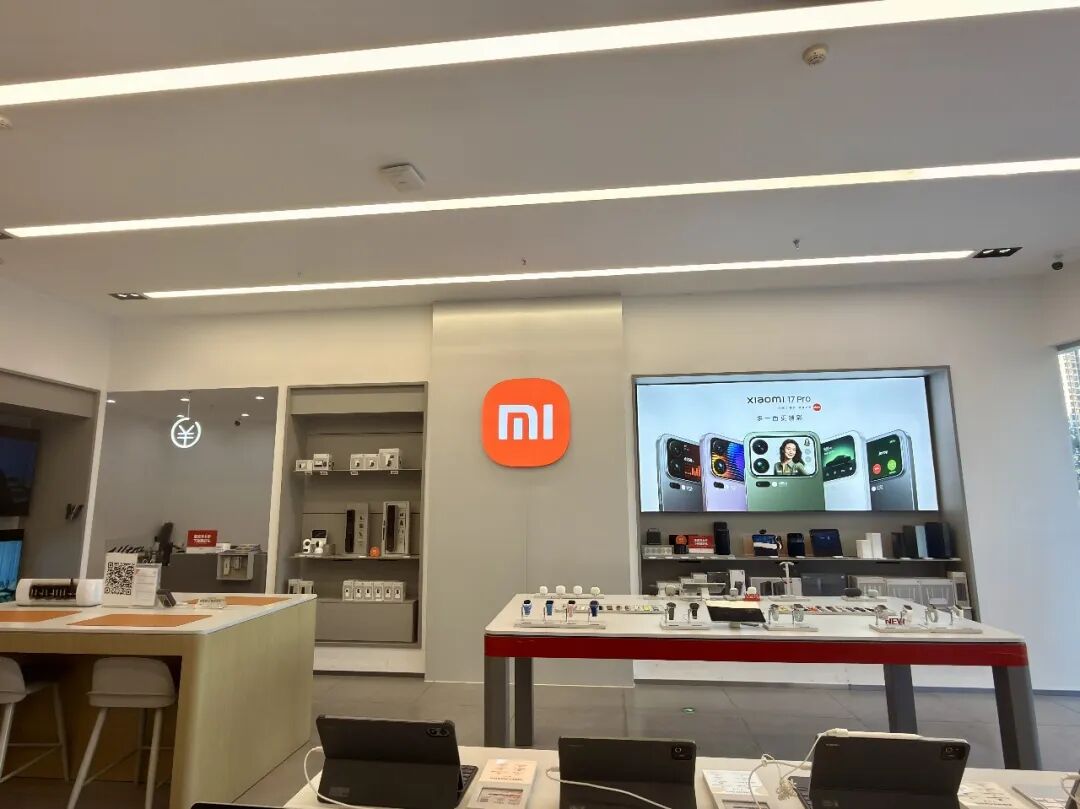
In addition, a person close to Xiaomi revealed that Lei Jun's current focus is "mostly on the automotive business". Although Lu Weibing, the president of the group, is in full charge of the phone business, the brand - building effect of "Lei Jun's promotion" on phones has weakened. These changes will also extend to the group's resource allocation and technical staff deployment. At the same time, in the high - end market, Xiaomi lacks a customer - locking mechanism similar to Apple's "Yearly Upgrade Program" or Huawei's "HarmonyOS ecosystem stickiness", "which means it has to pay higher customer acquisition costs."
Although the once - promising overseas market still contributes 50% of the revenue, the operating pressure has further increased.
A person close to Xiaomi said that after the Indian government froze 4.8 billion yuan of Xiaomi's funds in 2023, the local business was forced to shrink. Canalys data shows that Xiaomi's market share in India has dropped from first to third. At the same time, the increasingly strict data privacy and carbon footprint compliance requirements in the EU are also raising operating costs. "After the setback in India, it has affected the team's localization, and decision - making power has been more concentrated at the headquarters."
It is worth noting that the "IoT and Lifestyle Consumption" business also experienced an unusual year - on - year decline of 23.7% in the latest financial report, making it the business segment with the largest decline among the three core businesses.
However, the gross profit margin of the IoT business still remained at a relatively high level of 25.2%. The overseas revenue reached a record high and achieved double - digit year - on - year growth, indicating that the changes are more affected by cyclical factors. Lu Weibing explained in the earnings conference call that the decline was mainly due to the weakening of the national subsidy policy and the high base in the same period last year.
An insider also told China Entrepreneur that last year, Xiaomi was the biggest beneficiary of the national home appliance subsidy policy. Almost all of its high - cost - performance home appliances were within the scope of the subsidy, while most high - end brands such as Casarte, Samsung, and LG exceeded the price limit.
Breaking Out of the "Production Capacity Hell" in Delivery
In terms of the smart car business, Xiaomi's revenue this quarter was 19 billion yuan, a year - on - year increase of 5.1%. However, the delivery volume was 80,856 vehicles, a quarter - on - quarter decrease of 44.2%. The gross profit margin also dropped from 22.7% in the previous quarter to 20.1%, and the operating loss widened to 3.1 billion yuan.
The direct reason for the decline in delivery volume is product iteration. Xiaomi voluntarily stopped selling the old - model SU7 in the first quarter, and only the YU7 was the main model on sale throughout the quarter. Xiaomi aimed to build up orders for the new - generation SU7. Currently, the delivery cycle of the YU7 has shortened from over 20 weeks at its peak to less than 10 weeks, indicating that the backlog of orders has basically been cleared.
According to industry analysts, in addition to the increase in raw material costs, the decline in the gross profit margin of the automotive business to 20.1% this quarter was also affected by the purchase tax subsidy. Xiaomi previously promised that for users who locked in orders before November 30, 2025, if the delivery was delayed to 2026 due to Xiaomi's reasons, Xiaomi would fully bear the difference in the purchase tax, with a maximum subsidy of 15,000 yuan. Media estimates that this cost is expected to be 2 billion yuan.
As a novice in car manufacturing, the single - product matrix of Xiaomi also restricts the profitability of its automotive business. Currently, Xiaomi only has two car models, the SU7 and the YU7, and there is an overlap in their price ranges. In contrast, BYD has formed a multi - category matrix of "sedans + SUVs + MPVs", and NIO and Li Auto are also rapidly expanding their product lines.
As the popularity of the best - selling models fades and industry competition becomes more normalized, an insider at Xiaomi told China Entrepreneur that the sales logic of Xiaomi cars is undergoing a fundamental transformation. Terminal sales teams must actively seek customers, invite test drives, and start operating private - domain traffic, "shifting from relying on traffic to refined operation". Currently, Xiaomi has set up 490 car sales stores in 143 cities across the country, continuously expanding its offline channel network.
After the launch of the new - generation SU7 on March 19, although it did not reproduce the "supply falling short of demand" situation of the first - generation model, it locked in over 80,000 orders in 48 days, showing a stable performance. The delivery cycle is maintained at around 3 months.
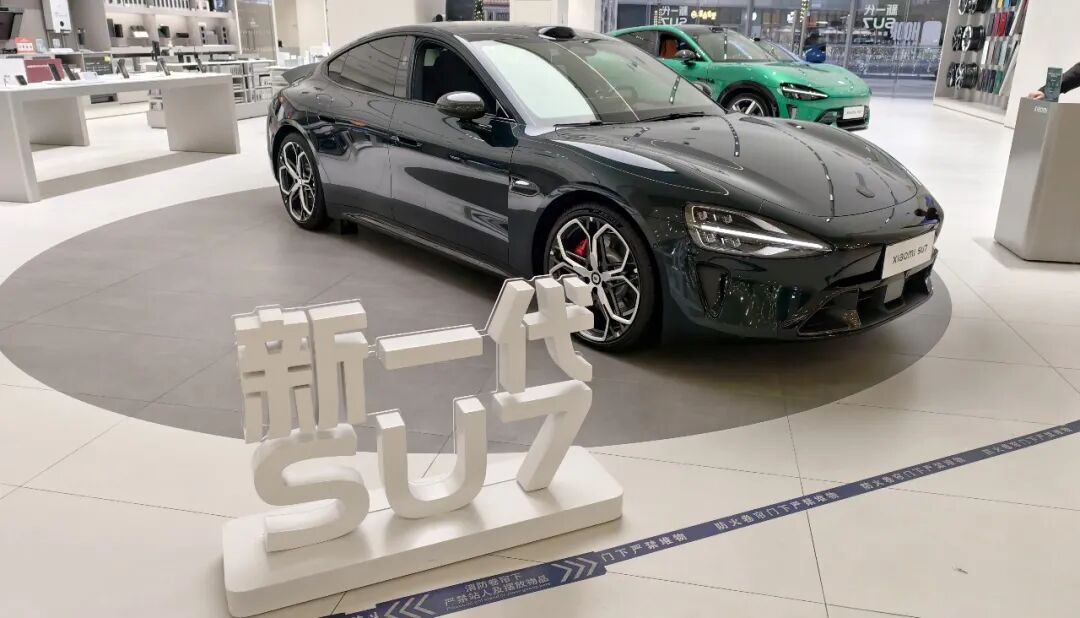
In 2025, Xiaomi delivered 411,000 cars throughout the year, a year - on - year increase of over 200%. In 2026, as the automotive business moves from the "traffic dividend period" to the "normal operation period", the challenge for Xiaomi to deliver 550,000 cars is actually greater.
A former Xiaomi employee told China Entrepreneur, "After all, Xiaomi is still a young car - making company. It has only been 3 years from the announcement of car - making to the launch of the first product. There must be deficiencies in basic skills."
Since the second half of 2025, Xiaomi has been continuously recruiting external talents from the automotive supply chain to make up for its shortcomings. Kong Yanshuang, the former general manager of Tesla China, and Song Gang, the former vice - president of production and manufacturing at Tesla's Shanghai factory, have joined Xiaomi's automotive business.
"Judging from Xiaomi's performance, the level is quite high," the aforementioned person said. The SU7 has ranked first in sales in the pure - electric sedan market priced above 200,000 yuan, and the YU7 ranks second in the SUV market. "This proves that the product itself has no problems."
Countering Organizational Entropy Increase with 50,000 Employees
Since its establishment in 2010, Xiaomi has been constantly facing environmental changes and business competitions. In a short period, Xiaomi has achieved the feat of car - making and transformed from a "technology company" to a "comprehensive technology manufacturing group", demonstrating its resilience in the process of growth. However, now, in addition to dealing with external problems, the ever - growing Xiaomi also needs to solve some internal organizational issues.
Many people related to Xiaomi have mentioned to China Entrepreneur the issue of "entropy increase" in Xiaomi in the past two years. The expansion of the employee population has led to more hierarchical levels, and blind spots that senior executives cannot see have emerged in the "middle" positions.
A person close to Xiaomi revealed, "Xiaomi also values the 'old - timers' who have been with the company for a long time, and there is a phenomenon of group cohesion. Although Xiaomi has regulations such as 'cadres should be rotated every three years' and'must be rotated every five years' to prevent job solidification and promote a younger workforce, there are still many cases of core positions being occupied for an extended period."
In addition, as the AI strategy sweeps across the entire industry, how Xiaomi will bet on AI in the next three years and how to balance the high investment on the balance sheet with the implementation challenges are also testing the wisdom of the management.
Xiaomi stated in its financial report that it will invest at least 16 billion yuan in AI in 2026 and over 60 billion yuan in the next three years. In terms of technology implementation, Xiaomi's large - scale model MiMo - V2.5 - Pro has ranked first among global open - source models on the Artificial Analysis list. The end - side AI assistant "MiClaw" has started multi - terminal closed - beta testing on products such as mobile phones, tablets, PCs, and smart speakers with screens.
However,