Toshifumi Suzuki passed away. Three counterintuitive stories about him and 7-Eleven
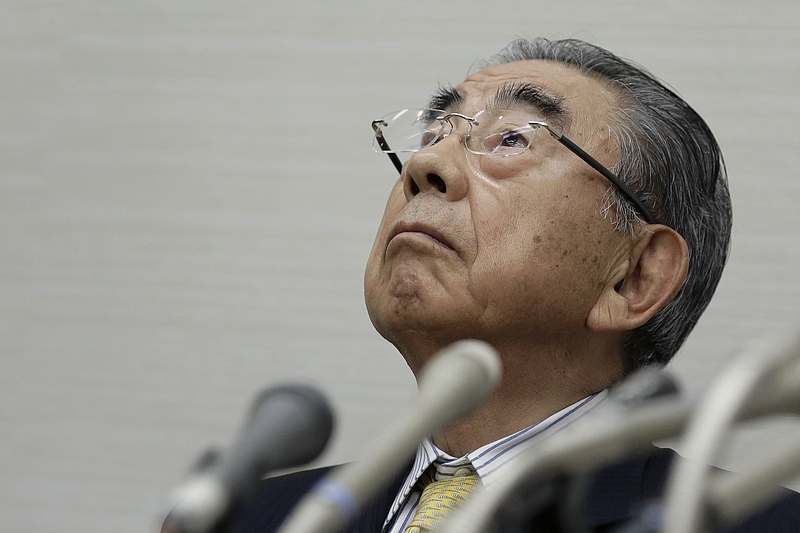
Toshifumi Suzuki
Author | Yixuan Zhong
Editor | Qian Qiao
On May 25th, Seven & I Holdings issued an obituary stating that Toshifumi Suzuki, the founder of Japan's 7-Eleven, had passed away recently at the age of 93.
As the world's largest chain convenience store brand, the story between 7-Eleven and Toshifumi Suzuki is one of continuation and rebirth, but their encounter began by chance.
In the early 1970s, Toshifumi Suzuki, then a senior executive at Ito-Yokado, went to the United States for training. On his way to California, he noticed 7-Eleven for the first time. This small and unassuming convenience store had opened more than 4,000 stores in North America.
Four years later, the first 7-Eleven store in Japan officially opened. Just one year later, the number of 7-Eleven stores in Japan quickly exceeded 100, while it took the United States 15 years to achieve the same. In 1991, Japan's 7-Eleven reverse-acquired 70% of the shares of its parent company, and it completely became a Japanese brand.
To this day, the total number of 7-Eleven stores worldwide has exceeded 85,000, with an annual sales volume of over $100 billion. It is the world's largest chain convenience store brand. In the retail industry, there has been a widely circulated saying: There are only two convenience stores in the world, 7-Eleven and other convenience stores.
However, Toshifumi Suzuki's pioneering work goes far beyond that. Consumption is a unique behavior in human society, and the charm of retail lies in the fact that its evolution can never be explained linearly. As a convenience store that has spanned half a century in Japan, 7-Eleven has experienced the end of the post-war boom, the peak of the bubble economy, and Japan's lost three decades. The drastic changes in the consumption environment it has experienced have also made this company more representative today.
In his book The Philosophy of Retail, Toshifumi Suzuki almost wrote down the entire growth history of 7-Eleven in Japan. He recalled that for 40 years, almost every new idea he proposed was strongly opposed. To some extent, Toshifumi Suzuki's professional life was spent going against common sense.
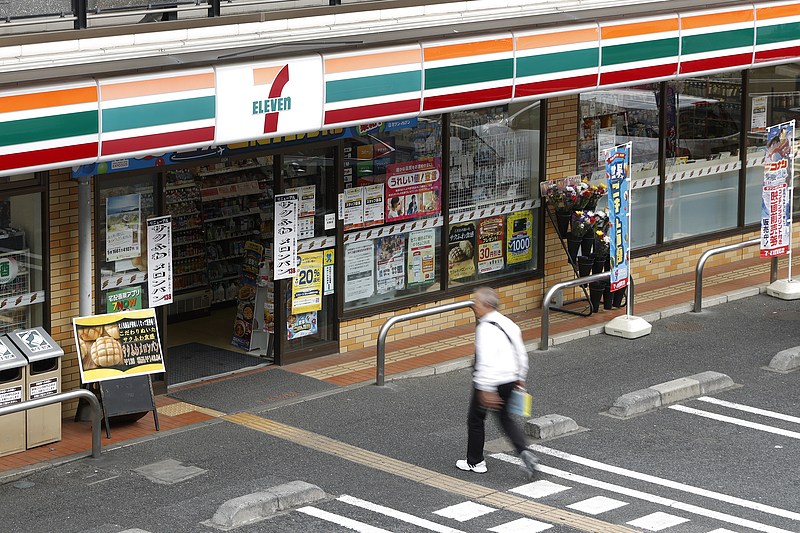
A 7-Eleven store in Japan
The first was the introduction of 7-Eleven. Since the 1960s, consumer demand in Japan has been booming, but there has been a strong conflict between the operators of large supermarkets and small shops. The latter are worried that large supermarkets represented by Ito-Yokado are expanding to completely annex and monopolize them.
The 7-Eleven store that Toshifumi Suzuki saw in the United States was the latter. As a senior executive at Ito-Yokado, his move was strongly opposed within the company. A board member even mocked him face to face as a "daydreaming layman." Supermarkets had already squeezed the space of small shops, and opening a 7-Eleven was going against the trend.
However, he always believed that large supermarkets and small shops would eventually coexist in Japan. The situation faced by small shops was not because of supermarkets, but essentially due to low efficiency and insufficient product strength.
After overcoming the opposition within the company and going through a long and arduous negotiation at the US headquarters, the first 7-Eleven store in Japan finally opened in 1974.
Toshifumi Suzuki is extremely sensitive to details. After 40 years, he still clearly remembers the name of the first 7-Eleven franchisee, Kenji Yamamoto, a 23-year-old young man. Because the income of his family's sake brewery was limited, he was willing to take a chance after reading the 7-Eleven franchise information in the newspaper. Toshifumi Suzuki also remembers that the first customer of 7-Eleven was a man who bought a pair of sunglasses priced at 800 yen.
The second was to build its own bank and install ATMs. In the retail industry, Toshifumi Suzuki's move almost deeply changed Japanese society, but at that time, he was once regarded as an opportunist. In 1999, the last year of Japan's lost decade, the public was still in the long-term panic and pain caused by the financial crisis, and banks were on the verge of bankruptcy. However, 7-Eleven wanted to build its own bank. The media interpreted it as wading into troubled waters and reported extensively that the retail company was seizing the bank's business.
The doubts about him being an ambitious person were widespread. In Toshifumi Suzuki's memory, the opposition was much more intense than they had imagined, and it was also unique in his career.
However, in fact, Toshifumi Suzuki's logic has never deviated from the essence of "retail providing convenience." Before building its own bank, Toshifumi Suzuki had already tried to turn 7-Eleven into Japan's infrastructure, and he was also the first person to successfully implement this idea.
In today's Japan, in addition to basic commodities, 7-Eleven also provides services such as breakfast, ready-to-eat food, ATMs, utility bill payment, and express delivery collection and delivery. Even stores in different locations will have different divisions of labor according to the needs of the population. For example, community stores will pay more attention to convenience services. A retail practitioner told 36Kr that different from China, 7-Eleven in Japan is not just a convenience store in name; it is essentially a collection of different business formats.
As for the idea of building its own bank, although it sounded crazy at the time, it was just a last resort. Toshifumi Suzuki was not opposed to cooperating with banks, but the difference in handling fees between weekdays and weekends in banks, which is a common sense in the financial world, was considered by him to be completely contrary to the retail concept of "customer experience first" and deviated from the essence of convenience.
Toshifumi Suzuki used a car as an analogy. If the existing banks in Japan are high-priced cars, then the bank that 7-Eleven wants to establish is a bus that customers can easily get on and off.
Soon, his judgment was confirmed. After installing ATMs in the stores, more consumption scenarios were created. People were willing to make purchases at 7-Eleven while waiting in line to withdraw money, and the rich variety of goods on the shelves also alleviated the annoyance of waiting. The three-year profit target set by the Financial Services Agency of Japan for 7-Eleven was also successfully achieved.
"Convenience" has always run through the growth history of 7-Eleven. An impressive detail is that at the bottom of the 7-Eleven shelves, there are even paper bags for funerals and weddings. Toshifumi Suzuki believes that unlike planned celebrations, funerals often come suddenly and in a hurry. He hopes that when residents need to buy condolence bags, 7-Eleven can provide support.
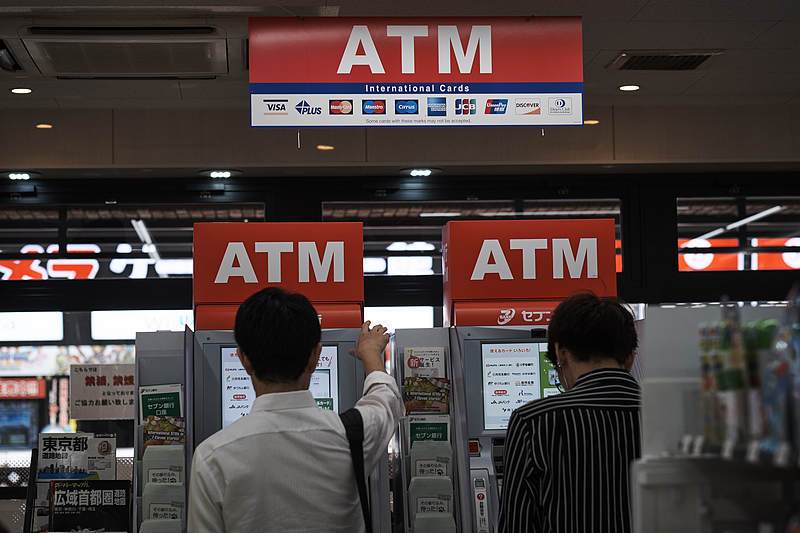
Two men using an ATM at a convenience store in Tokyo, Japan
The third was the 200-yen rice balls. Special rice balls have always been the representative products of 7-Eleven. Compared with ordinary rice balls, the cost of ingredients for these rice balls is higher. In 2001, 7-Eleven first launched the "Golden Salmon Rice Balls" and "Salmon Roe Rice Balls" priced at 160 yen and 170 yen respectively. As rice ball products of a convenience store, they were already considered high-priced.
More importantly, at the beginning of the new millennium, Japanese society was still in the context of macro-deflation, and the unemployment rate remained high, reaching the highest level after the war in 2002 (an average of 5.4% annually). People had a relatively comfortable life but did not believe that tomorrow would be better. They were extremely cautious about consumption and only paid for high-end or cost-effective products. That was the era when Uniqlo rose rapidly, and fleece jackets became a national product. Japanese housewives' shopping reality shows also became popular in the country. People were eager to turn on the TV just to save money to the extreme.
Prices were also dropping continuously. McDonald's hamburgers were sold for only 65 yen each, and the price of Yoshinoya's beef bowl dropped from 400 yen to 280 yen. Most convenience stores also launched 100-yen rice balls to prepare for the competition.
However, Toshifumi Suzuki said that 7-Eleven should still make 200-yen rice balls. Naturally, this proposal was also strongly opposed within the company, but he believed that experience would only be a hindrance. The purchasing power always existed. As long as one simply thought from the customers' perspective, 200 yen was not the key; whether the products could meet the needs was.
That year, the high-priced rice balls sold well against the trend during the deflation period, and the GMV of 7-Eleven's rice ball category increased by double digits year-on-year.
Looking back, Toshifumi Suzuki had many other actions that went against common sense. In Japan, 7-Eleven pioneered the 24/7, 365-day-a-year operation of convenience stores, which was against social common sense at that time. During the first New Year's holiday, 7-Eleven couldn't even find suppliers. Yamazaki Baking was the first partner willing to make an attempt. Toshifumi Suzuki later wrote in his book that this was of epoch-making significance. Since then, slogans such as "It's great to have 7-Eleven" and "It's so convenient to be open 365 days a year" have been widely spread in Japan.
Today, two of Toshifumi Suzuki's most well-known proverbs are widely circulated in the retail industry. The first one is "Don't think for the customers; think from the customers' perspective." 7-Eleven's approach is to embed itself in the Japanese social structure and become a part of its operation.
Moreover, Toshifumi Suzuki foresaw very early that Japan was moving towards a serious situation of a declining birth rate and an aging population. In the future, there would be more and more people who didn't have the energy or ability to go far to shop. 7-Eleven should achieve high density, become urban infrastructure, and provide all possible conveniences. This is very similar to today's instant retail war in China, except that the battlefields are different, with the former being offline and the latter being online.
As for the second one, "Single product management" and "Assumption - Execution - Verification (PDCA for Retail)", that is, the refined management of single products, predicting sales volume, verifying the prediction with sales data, and then dynamically adjusting the inventory. 7-Eleven proved the feasibility of this system with its high-loss rice balls and fresh food. This method, which doesn't sound new today, after being fully digitized and depersonalized, is China's Bianlifeng.
Beyond the retail industry itself, the convenience store culture represented by 7-Eleven has deeply penetrated into Japanese society. On March 11, 2011, the Great East Japan Earthquake occurred, which was one of the most disastrous events in Japanese history. The impact of the tsunami and the Fukushima nuclear leakage on this land has not been eliminated to this day.
Toshifumi Suzuki wrote in his book that the significance of 7-Eleven to the Japanese people has gone beyond that of a convenience store. As long as the lights of the 7-Eleven signs in the disaster area have not been turned on again, these unusual sensations will trigger strong uneasiness in the customers' hearts.
However, the times are changing rapidly. In 2016, Toshifumi Suzuki retired, and 7-Eleven reached its peak performance that year. The parent company's financial report showed that its revenue was as high as 793.6 billion yen, and the net profit was about 162.9 billion yen. The convenience store business was the main source of income, ranking first in the industry. However, since 2019, the customer flow of 7-Eleven has been declining continuously, and the growth rate of the number of stores has decreased significantly.
The retail industry itself has been reshaped, the growth rate of convenience stores has slowed down, and the performance of the discount store Don Quijote has been remarkable. The social structure in Japan has also changed. The decrease in population has directly led to a decline in 7-Eleven's sales, and the aging population has also impacted 7-Eleven's once 24/7 operation myth. In 2019, 57-year-old franchisee Minoru Matsumoto was involved in a contract termination storm due to privately changing the business hours and facing a penalty of 17 million yen. The Japanese public opinion was in an uproar. Minoru Matsumoto himself was old, and due to the death of his wife and high labor costs, he was unable to support the 24/7 operation. After being criticized for lacking human touch, 7-Eleven was forced to relax its decades-long tradition of all-day operation.
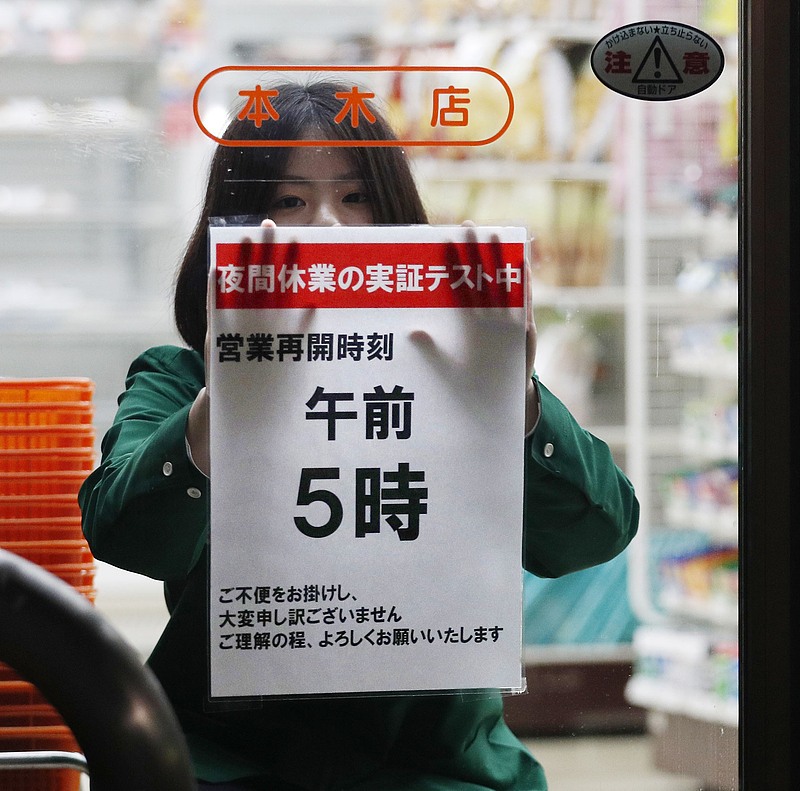
7-Eleven in Japan starts to shorten its business hours
After reaching the scale ceiling, in addition to meeting the core demand of convenience, 7-Eleven also needs to provide more differentiated products to consumers. This is also the answer given by Lawson. So far, Lawson is the only company among the three major convenience store chains in Japan with a positive customer flow growth.
In China, the 7-Eleven model has not achieved the results it desired. Different from Japan, the convenient services that 7-Eleven is proud of, such as express delivery, takeout, and utility bill payment, have already been taken over by e-commerce in China. It has neither the opportunity nor the ability to replicate the Japanese myth. To this day, after 34 years in China, 7-Eleven has about 5,500 stores in China, more than FamilyMart but less than Lawson.
From the perspective of the convenience store format itself, the convenience store market in China also presents a decentralized pattern. Mei Yijia, with more than 40,000 stores, is the absolute leader in South China. Easytop and Kunlun Hospitality focus on special channels. 7-Eleven focuses on first-tier cities, while Lawson and FamilyMart are quite strong in East China. Furong Xingsheng, Shizu, and Jianfu are well-known local players. Moreover, there are 7 million mom-and-pop stores in China. For consumer goods companies, being able to enter convenience stores may not be something to boast about. Reaching the most remote mom-and-pop stores is the real ability of the distribution channel, and the outstanding representative in this regard is Nongfu Spring.
More importantly, the number of financing events related to convenience stores is gradually decreasing. In 2017, the number of convenience store investment and financing events exceeded 70, with a total investment and financing amount of 6.513 billion yuan. However, after the pandemic, there was a cliff-like decline, and many chain convenience store brands disappeared.
An investor who focuses on the retail industry told 36Kr that running a convenience store is a business with high investment, heavy assets, and a long