Don't wait for all-solid-state batteries before 2030.
In the past two years, the promise of all-solid-state batteries has been like the boy who cried wolf. In the automotive and battery industries, every now and then, companies announce major breakthroughs or mass production. However, as expected, it's always just empty talk without any real action.
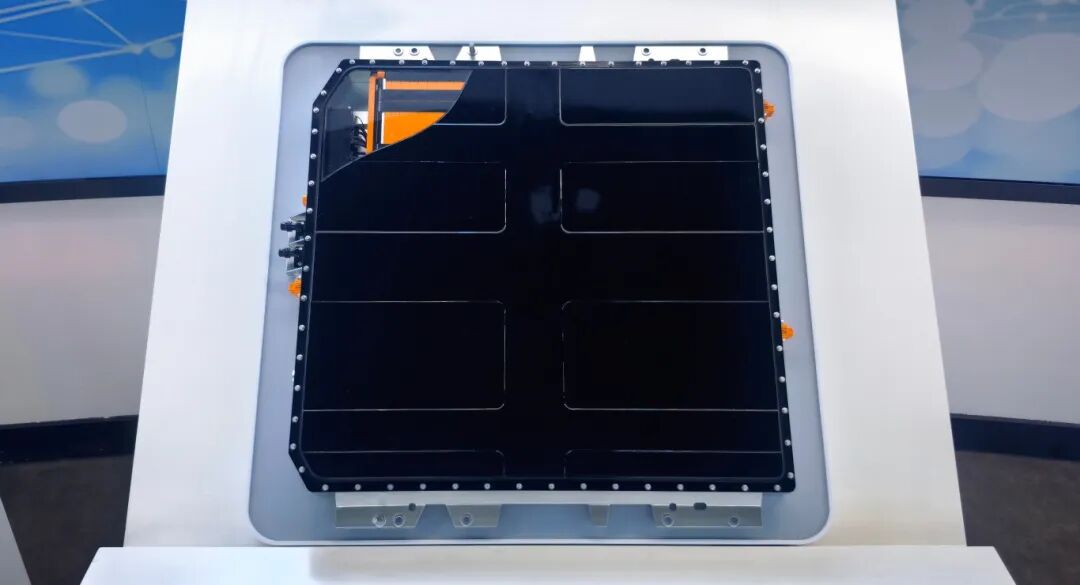
All the talk about mass production is just that - talk. What's the actual situation? So far, there hasn't been a single real mass-produced all-solid-state battery (a pilot line doesn't count as mass production).
However, there are always people who are willing to tell the truth. By referring to various press conferences and forums this year, we can conclude that it would be quite an achievement if all-solid-state batteries can enter the industry in large quantities by 2035. By then, you might have changed your car twice. Of course, don't be scammed in Douyin live streams with claims like "Solid-state batteries are officially on the market. Only these 5 models are worth buying."
01
From Radical to Cautious
Actually, just because a few cars are equipped with all-solid-state batteries for testing and there's a 0.2GWh pilot line doesn't mean it's mass production. There are bottlenecks in the mass production of all-solid-state batteries, and it's not that easy to achieve. To put it bluntly, it's like a carrot hanging in front of a donkey - you can see it but can't reach it.
At the recently held "2026 Next-Generation Battery Technology and Industry Development Conference", Zhu Xingbao, the chief scientist of Guoxuan High-Tech, rarely pointed out several existing difficulties. Simply put, even the mainstream sulfide route still has a long way to go before it can be applied in practice.
For example, at the material level, the stability of sulfide solid electrolytes is not ideal. They are prone to produce hydrogen sulfide and experience performance degradation. The release of hydrogen sulfide also requires a much higher safety level in the production environment for mass production.
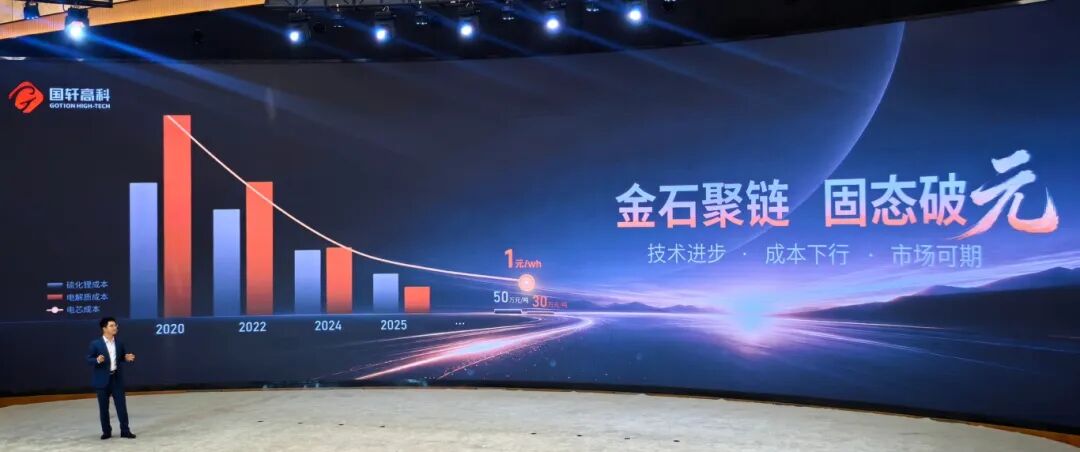
Although Guoxuan High-Tech announced at its own technology conference that it would enter the "1-yuan era" and reduce the mass production price of lithium sulfide (99.99%, 4N level) from 300 - 500 million yuan per ton to 500,000 yuan per ton, which is a significant step forward. However, don't get too excited too soon. Reducing the material cost is just the beginning.
As Zhu Xingbao said, at the cell level, current verification is mainly at the mold level. If it is extended to large cells of 60Ah, the cycle performance will face significant challenges.
Why 60Ah cells? Because 60Ah is the standard capacity for vehicle-grade verification, marking the leap from "samples" to "products".
Currently, the "first echelon" in the industry is at the level of 60Ah cells. For example, as a leading enterprise, CATL achieved the offline production of 60Ah vehicle-grade cells in 2025, is expected to build a GWh-level mass production line in 2026, is expected to have shipments close to 1GWh in 2027, and will achieve large-scale mass production in 2030.
In addition to CATL, BYD's 60Ah sulfide all-solid-state battery cells were officially offline in March 2026. It plans to achieve small-scale mass production in 2027, with a target energy density of 500Wh/kg, and large-scale application in 2030.
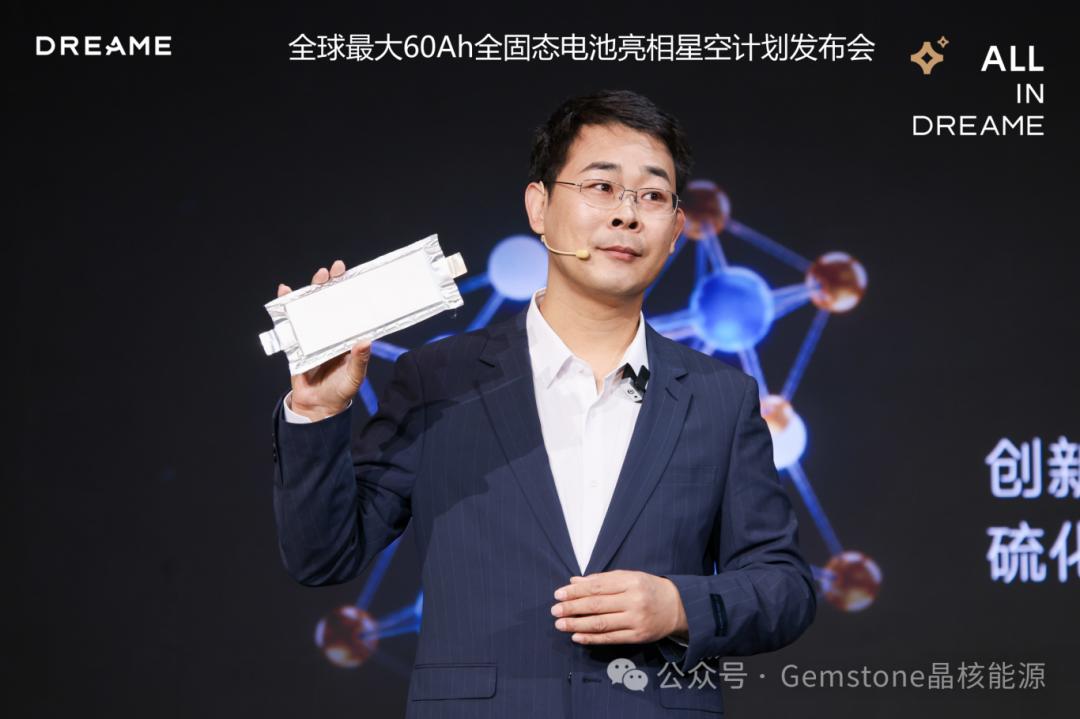
Moreover, on March 18th this year, Jinghe Energy also released the "world's largest 60Ah all-solid-state battery" and claimed to have established a top global supply chain system. It has passed strict development tests and will officially deliver and verify to the market within 2026, with mass production in 2027.
Can you see? The small-scale mass production time is basically in 2027. And even at the current best level, the cycle life is only about 1000 - 1500 times. For commercialization, it's still too low.
Zhu Xingbao also told the truth. Different from liquid batteries, the product yield rate between 10Ah and 60Ah all-solid-state battery cells varies greatly. Even if the technology is feasible, the parameters meet the standards, and the batteries can be produced, the yield rate is still the core bottleneck and needs to be focused on.
This is also the direct reason for the high cost of all-solid-state batteries at present. After all, many industry insiders believe that although all-solid-state batteries are on the verge of mass production, there are still multiple bottlenecks in terms of technology, equipment, and materials, and the industrialization process should not be rushed.
Also, in terms of pressure requirements, to maintain the stability of the solid-solid interface, all-solid-state battery cells rely significantly on high pressure. Under the current technical conditions, it must be maintained at around 20MPa, which is far from the 5MPa generally required by car manufacturers. This will inevitably lead to high costs.
Compared with Guoxuan High-Tech's high-profile announcement that all-solid-state batteries will enter the "1-yuan era" a few days ago, Zhu Xingbao's speech at this conference revealed the actual difficulties, allowing us to view the progress of all-solid-state batteries more calmly and objectively.
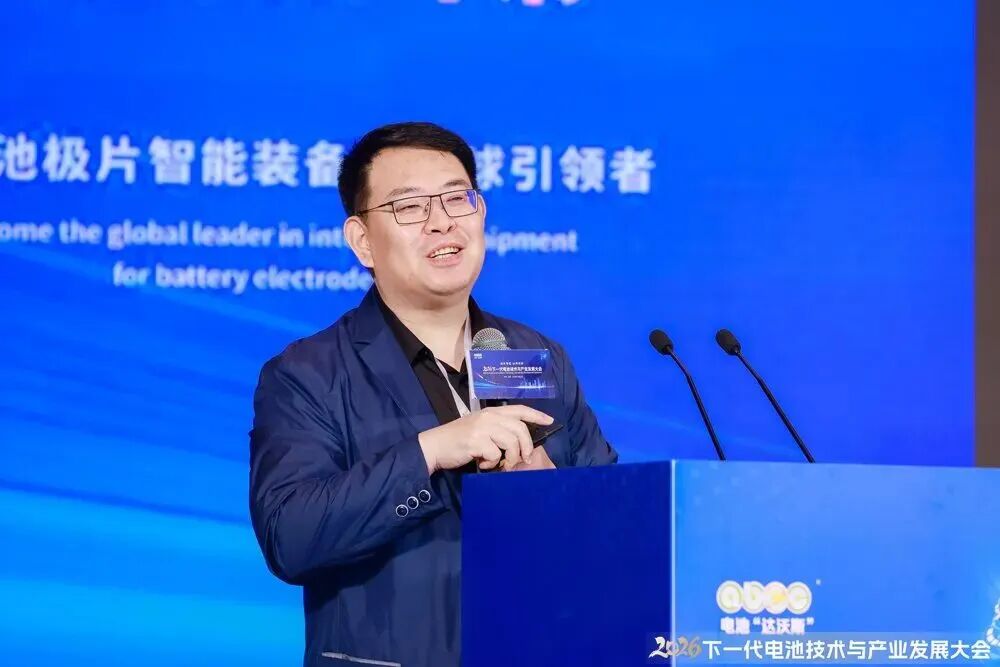
Even Ouyang Minggao, an academician of the Chinese Academy of Sciences and a professor at Tsinghua University, who is a pioneer in promoting all-solid-state batteries, has changed his attitude in recent years.
At the industry forum (Carbon Storage Network) in 2023, Academician Ouyang said that "large-scale production is expected from 2027 to 2030." His view at that time was that all-solid-state batteries were a worthy goal for 2030, and ChatGPT could accelerate material research and development, and success could be achieved with global efforts.
After several years of difficult exploration in the industry, at this conference, Academician Ouyang was not as radical. He said that from 2025 to 2030, the industry should still focus on advanced liquid lithium batteries, with the energy density evolving towards 350 - 400Wh/kg, and sodium/potassium batteries supplementing and adapting to specific scenarios.
After 2030, there will be a transition from solid-liquid hybrid batteries to solid-state batteries, with the energy density increasing to over 450 - 500Wh/kg, and the positive and negative electrodes and solid electrolyte materials will be iteratively upgraded. After 2035, the industry will expand into the field of next-generation battery technologies such as lithium-sulfur batteries.
The change from "encouraging acceleration" in 2023 to "not rushing, taking it step by step" in 2026 reflects the extremely high difficulty of mass production.
02
The "Terminator": Solid-Liquid Batteries
An interesting thing is that recently, the 18th CIBF2026 (Shenzhen International Battery Technology Exchange/Exhibition) just ended. The relevant media summarized the industry status of solid-state batteries this year in one sentence: "Everyone is aiming for solid-state batteries, but they are still testing the waters."
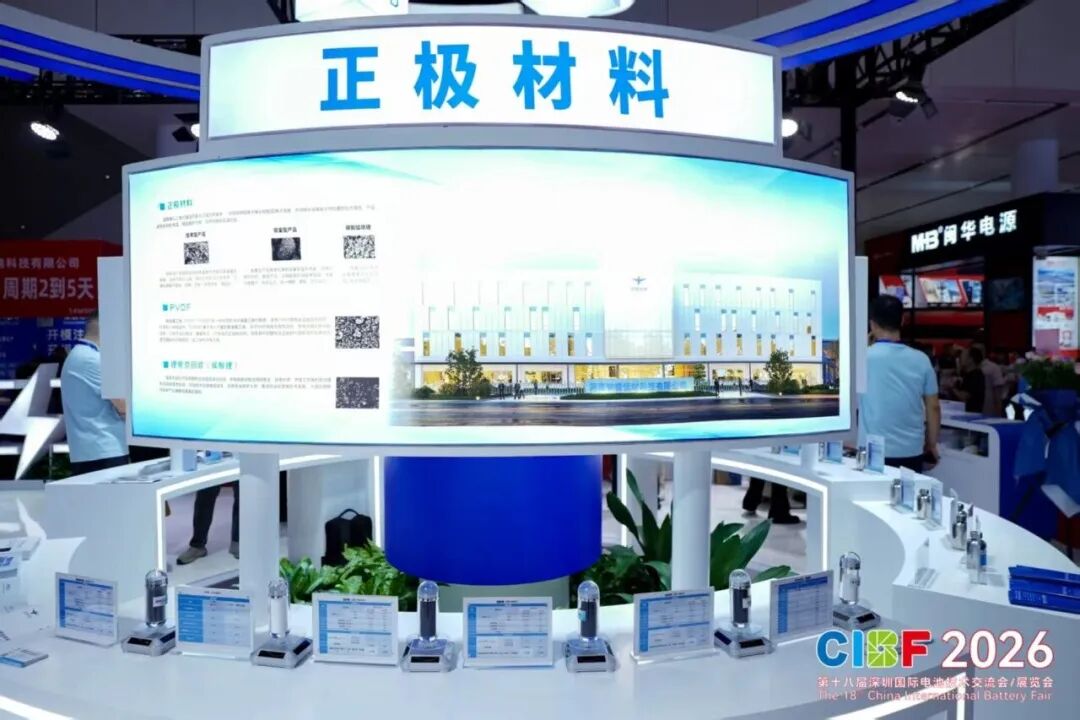
Unintentionally, this reveals the current industry situation of all-solid-state batteries - "testing the waters" in terms of technology routes, costs, and the market. In other words, battery companies are testing the feasibility of technical routes, the real acceptance of downstream car manufacturers, and secretly sizing up their competitors. Since it's all about testing, it's still a long way from mature mass production and implementation.
Moreover, since all-solid-state batteries seem out of reach for now, the most practical "terminator" should be solid-liquid batteries (semi-solid batteries).
Four years ago, I said in "Semi-Solid Batteries May Be the End of Electric Vehicles" that semi-solid batteries may be the end. Four years have passed, and the current industry development still proves the correctness of my view.
At that time, I wrote that semi-solid batteries have obvious time and cost advantages compared to all-solid-state batteries. And the key is that semi-solid batteries can improve safety (safety is relative, and beyond a certain point, higher safety may not be meaningful).
Currently, although the concept and achievements of all-solid-state batteries are everywhere, there is still no unified optimal solution for the development of next-generation battery technologies, and the industry is still exploring diverse development paths. Among them, solid-liquid batteries, formerly known as "semi-solid batteries", have increasing opportunities.
After all, in terms of manufacturing, from material stability, solid-solid interface impedance issues, to single electrodes and finished battery cells, the entire production process of all-solid-state batteries needs to be re-explored, and dedicated equipment and production lines for solid electrolytes need to be added. The most efficient and cost-effective way is the semi-solid battery route, which can achieve the transition from liquid to semi-solid by gradually reducing the amount of electrolyte and reusing existing production line equipment.
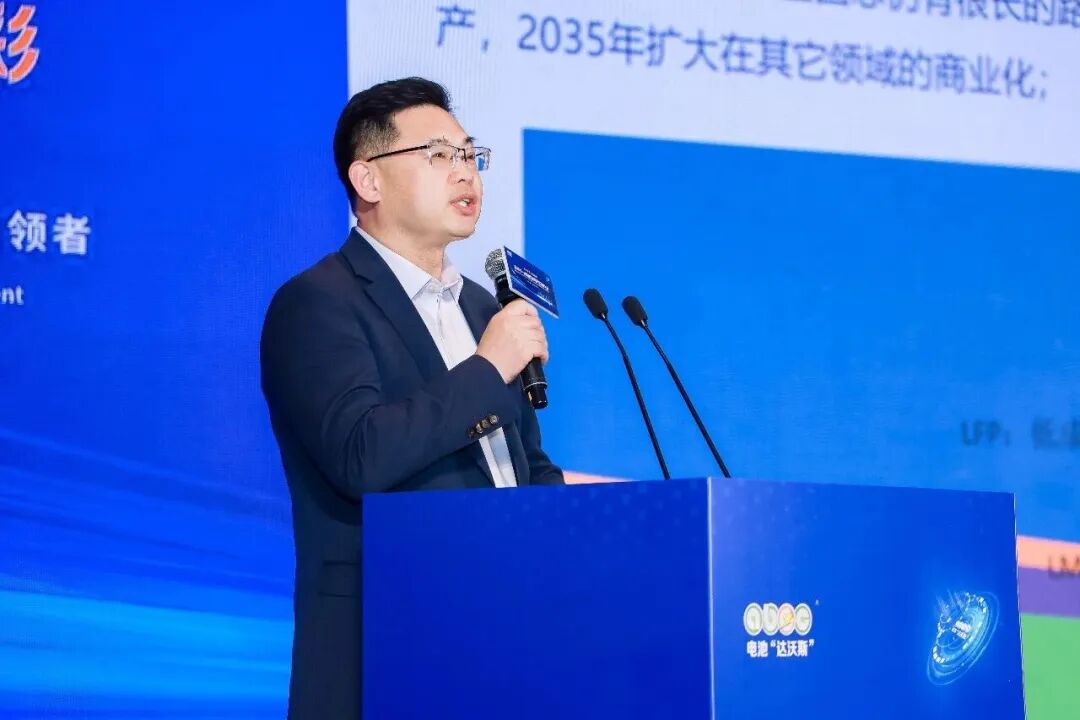
Similarly, Yang Hongxin, the chairman and CEO of Honeycomb Energy, is also a supporter of the solid-liquid battery route. He believes that from a commercialization logic perspective, solid-liquid hybrid battery technology is not a short-term transitional technology but is more likely to become the mainstream market route in the long term.
Because high cost is the core obstacle to the popularization of solid-state batteries. Even by 2035, it will be difficult for them to have cost competitiveness. "From a cost calculation perspective, in 2027, the material and manufacturing costs of solid-state batteries will be several times that of ternary lithium liquid cells, and (currently) the cost of ternary lithium liquid cells is more than twice that of lithium iron phosphate cells."
In addition, not only can the solid-liquid hybrid electrolyte technology be applied to prismatic batteries, but when applied to large cylindrical batteries, it can also achieve a "1 + 1 > 2" synergistic effect in terms of safety, performance, and manufacturing. Yuan Dingkai, the chairman of Yunshan Power (Ningbo) Co., Ltd., also said that solid-liquid hybrid batteries are a key transitional technology from liquid batteries to solid-state batteries.
From the current development perspective, semi-solid batteries also have a good "third way" solution, which is the "condensed matter battery". It provides a combination point between liquid and solid that is "safe, efficient, and manufacturable".
CATL, the developer of this battery, has released the third-generation Qilin condensed matter battery with the slogan "No Qilin, No High-End" at its technology day. The cell energy density is 350Wh/kg, the cruising range is 1500km, and the weight is reduced to a maximum of 650kg.
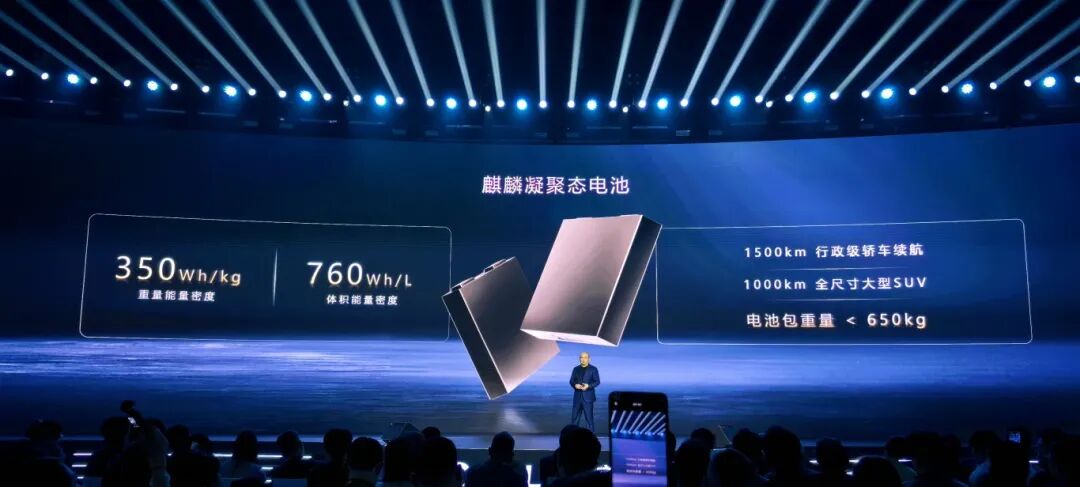
Importantly, the cell energy density of the Qilin condensed matter battery is nearly twice that of lithium iron phosphate (140 - 180Wh/kg) and 75% higher than that of high-end ternary lithium (250 - 280Wh/kg). This is not the highest density. As early as 2023, the energy density of CATL's condensed matter battery for the aviation field was as high as 500Wh/kg, and now it has been downgraded for the safety of passenger cars.
Specifically, the Qilin condensed matter battery uses a gel-state electrolyte, which is like jelly, flame-retardant, and doesn't flow like water. The speed of lithium ions passing through it is close to that in liquid electrolytes, so charging and discharging are still very fast. Moreover, since the electrolyte doesn't flow and has strong thermal stability, less heat insulation materials and cooling pipelines need to be arranged inside the battery. Coupled with the fact that the condensed matter battery can reuse existing production lines, the cost is very feasible.
Guoxuan High-Tech is also following up and has launched the solid-liquid battery "G Yuan Smart Battery", which also uses a high-conductivity condensed matter electrolyte. Of course, in addition to condensed matter batteries, there are many other ways for semi-solid batteries, which won't be elaborated here.
After all, with the advantages of increased energy density, enhanced safety, no increase in cost, and the ability to reuse existing production lines, it's no wonder that Yang Hongxin said that "2026 will be the year of mass production of solid-liquid hybrid batteries." And this is also the reason why Honeycomb Energy values this technical route.
Undoubtedly, if solid-liquid batteries achieve breakthrough mass production, this year will also become the "terminator year" for solid-state batteries in the industry. And Academician Ouyang also said at this conference that for the sake of caution, all-solid-state battery cars should not be sold in the next two years. "Many people are waiting for solid-state batteries now, but I think there's no need to wait. Current electric vehicles are already very good."
This article is from the WeChat official account "C Dimension", author: Wang Xiaoxi, editor: Wang Yue. Republished by 36Kr with permission.