Breaking news: The US NSF has blacklisted four top universities, yet Harvard and Yale are completely unaware.
A major earthquake has suddenly hit the U.S. scientific research community!
Just today, Nature exclusively broke a bombshell news —
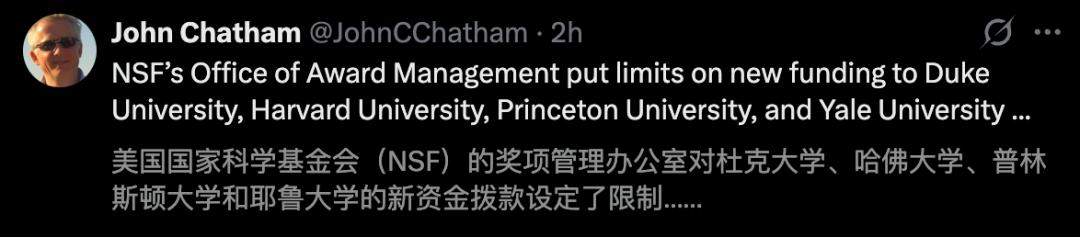
The U.S. National Science Foundation (NSF) has secretly "blacklisted" four top - tier universities and completely blocked their new research funding.
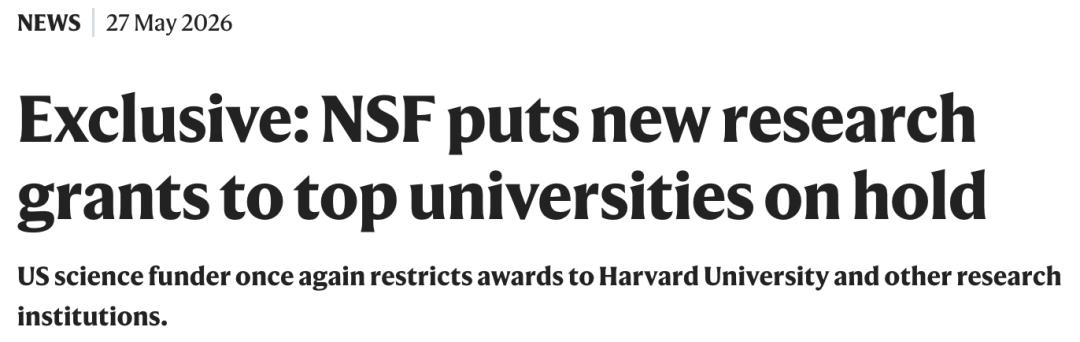
Three Ivy League universities: Harvard, Yale, Princeton, and Duke are all on the list.
What's most shocking is that there was no public notice, no formal explanation, and even these four universities were completely unaware!
Funding for Four Top - Tier Universities Frozen
As is well - known, the NSF, with an annual budget of $8.8 billion, is the absolute "financial backer" of basic research in the United States.
A large portion of the "resources" for scientists conducting research in mathematics, physics, engineering, and biology at universities across the United States are allocated by it.
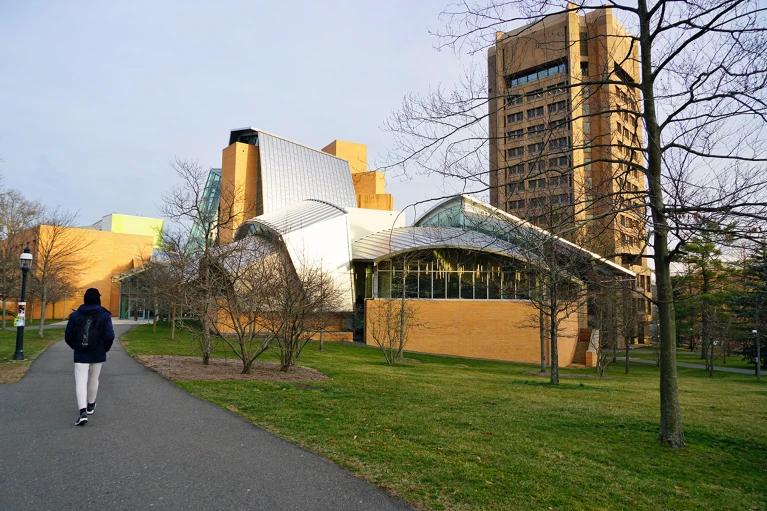
However, now, this "major financial backer" that holds the key to the nation's scientific research has abruptly cut off the funding pipelines of four top - notch universities.
The leaked internal documents have revealed a glimpse of this incident —
As early as April 9, the NSF's Office of Award Management (OAM) quietly put a cold label on these four top universities in the system's background:
Future Awards to Organization on Hold.
What does this mean?
An insider within the NSF said bluntly that a "blockade order" of this level is extremely rare!
Normally, it is only used when a university is on the verge of closing down or has exposed extremely serious audit scandals.
In other words, the NSF has directly treated Harvard, Yale, Princeton, and Duke as "troubled schools".
But what's most chilling is, what exactly did these four top - tier universities do wrong?
The NSF has neither responded nor explained, and it remains a complete mystery to this day.
33 Projects Stalled for 91 Days
The impact of this incident is extremely fatal for university research projects.
Under normal circumstances, the OAM takes an average of only 10 days to approve a research project.
However, currently, 33 research proposals from these four universities and their collaborators have been stalled for a full 91 days.
Many of them were quietly held up even before the "suspension" label was officially applied on April 9.
Moreover, before these proposals reached the OAM, they had already been approved by independent scientist reviewers, endorsed by NSF project officers, and approved by institutional leadership.
In other words, these projects are completely qualified at the academic level, and the stalling is purely an "artificial blockage" at the administrative level.
Looking at another set of data is even more shocking:
In 2024, these four universities received a total of 218 new project grants from the NSF.
As of the current fiscal year 2026, the four universities combined have only received 13. After the freeze order on April 9, Duke and Harvard have received 0 new projects.
These numbers represent the reality that the top scientific research forces in the United States are facing.
85% in Mathematics, Physics, and Engineering; Quantum Computing Also Affected
Ironically, 85% of the 33 stalled projects are concentrated in the fields of mathematics, physics, and engineering.
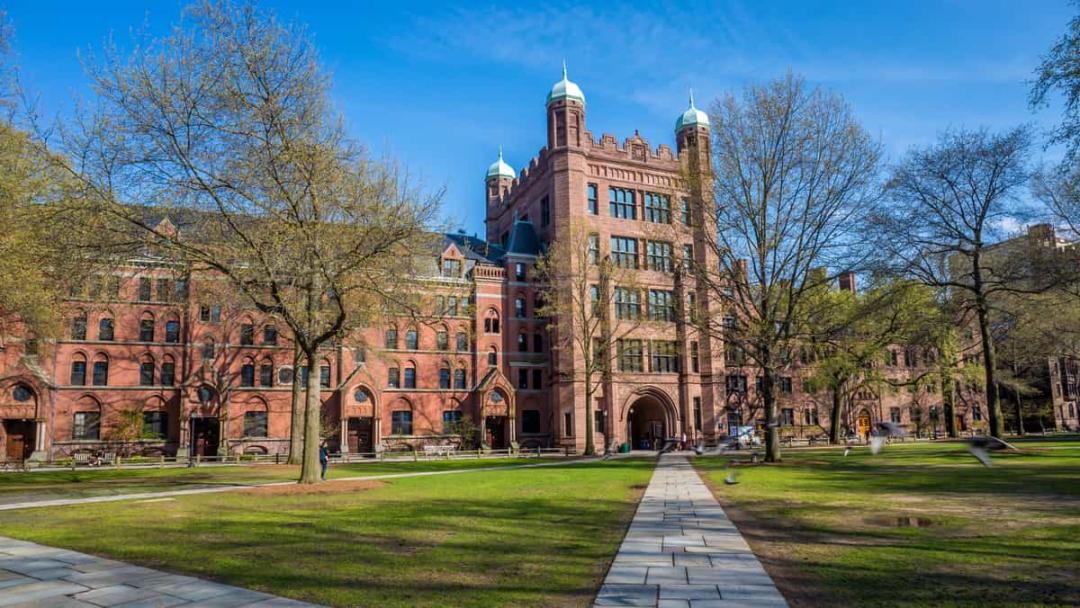
Among the stalled projects are a five - year grant for promising young scientists and a support project for Yale University's Quantum Research Center.
What's even more significant is that even "continuous funding" types of grants have not been spared.
The VERENA project led by Yale University is an interdisciplinary research project mainly focused on predicting the next global pandemic threat.
An annual follow - up funding of over $2 million was approved by the project officer on January 20, but it is still stuck in the OAM's approval process.
It's been more than five months.
Colin Carlson, a disease ecologist at Yale University and the project leader, said, "The 40 - person team has suffered a significant loss. If the money doesn't arrive, he will have to lay off the remaining members at Yale in the next few months."
A project aimed at predicting the next global pandemic for humanity has been strangled by administrative processes.
The U.S. Scientific Research Machine is Idling
Actually, the experiences of the three Ivy League universities and Berkeley are just the tip of the iceberg.
The funding allocation speed of the entire NSF in the fiscal year 2026 has dropped precipitously.
According to data from the research funding tracking organization Grant Witness, the NSF has only approved 613 new projects so far this fiscal year —
That's only about 20% of the level during the same period from 2021 - 2024, and the amount of funds disbursed is only about one - third of previous years.
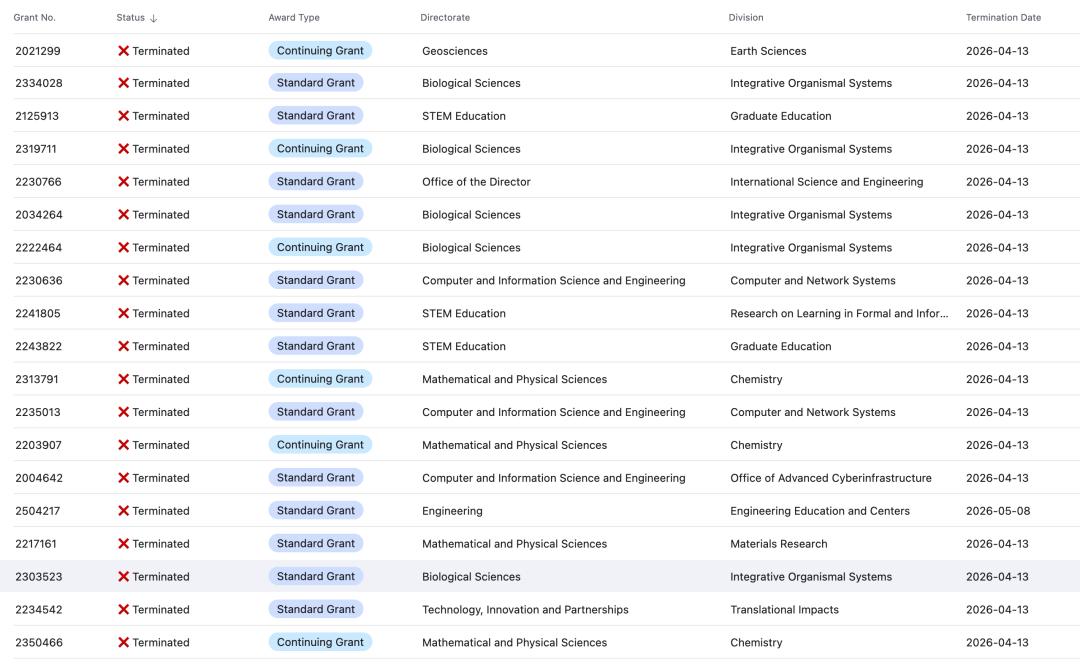
The NIH (National Institutes of Health) is in the same dire situation as well: about 10,000 grants have been disbursed this year, compared to 18,000 during the same period in previous years.
This is not because there is no money; Congress has allocated the funds, and the money is there.
Rather, there is a problem with the operation of the entire federal research funding machine: the NSF does not have a formal director, and the DOGE terminated 1,752 projects (worth $1.4 billion) in 2025.
Coupled with the White House's delay in releasing the institutional budget, multiple factors have combined, and the entire system is on the verge of paralysis.
What's even more terrifying is the White House's plan for the NSF's future: the budget proposal for the fiscal year 2027 suggests cutting the NSF's annual budget from $8.8 billion to $4 billion, a direct halving.
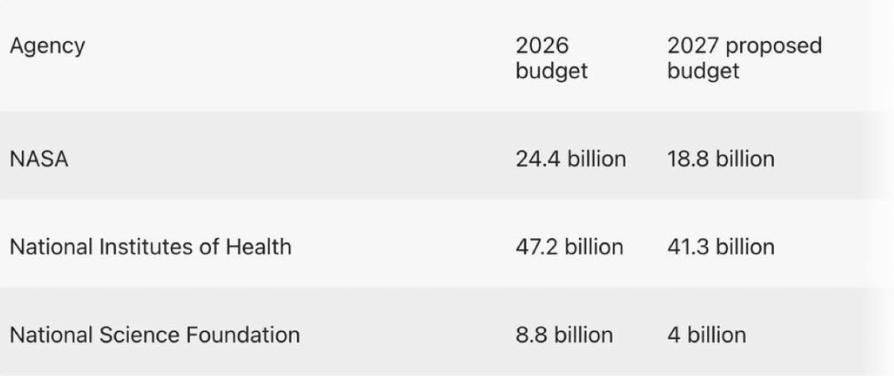
If this budget proposal is passed, the NSF's funding success rate will plummet from 26% in 202;4 to 7%.
This means that out of every 14 excellent research proposals that have undergone strict peer review, only 1 will receive funding.
On the Eve of the Battle for ASI, Pulling the "Plug" Yourself
Taking a step back and looking at this incident, we can see that it reflects a problem far more serious than "four universities not getting funding".
We are standing at the most critical technological turning point in human history.
OpenAI, Anthropic, and Google DeepMind are in a race to reach the ultimate goal of ASI.
However, ASI will not appear out of thin air.
It requires breakthroughs in mathematics, new paradigms in physics, and extreme innovation in engineering, precisely the fields that the NSF is currently blocking.
Quantum computing, nanotechnology, and interdisciplinary biological research are not just paper - based games in the ivory tower; they are the infrastructure for the next generation of intelligence.
The return cycle for basic scientific research starts at ten years.
Every dollar of funding frozen today won't come due now. It will arrive on time in 2035 when AI most needs original theoretical breakthroughs.
By then, the players at the ASI table may suddenly find that the cards in the United States' hand stopped being printed ten years ago.
Reference: https://www.nature.com/articles/d41586-026-01667-6
This article is from the WeChat official account “New Intelligence Yuan”. Author: ASI Revelation; Editor: Peach David. Republished by 36Kr with authorization.