What are the thresholds for the popularization of AI hardware? At Beyond in Macau, iFlytek, XREAL and others provided the answers.
All technology exhibitions are talking about AI, but in many cases, AI still remains within large models, apps, office software, agents, and cloud services. It's lively enough and abstract enough, still separated from the real lives of ordinary people by a screen.
On May 27th, BEYOND Expo 2026 officially opened in Macau.
For many, the reputation of BEYOND Expo may not be as well - known as CES or MWC. However, in the past few years, it has become an increasingly important observation window for the Asian technology industry.
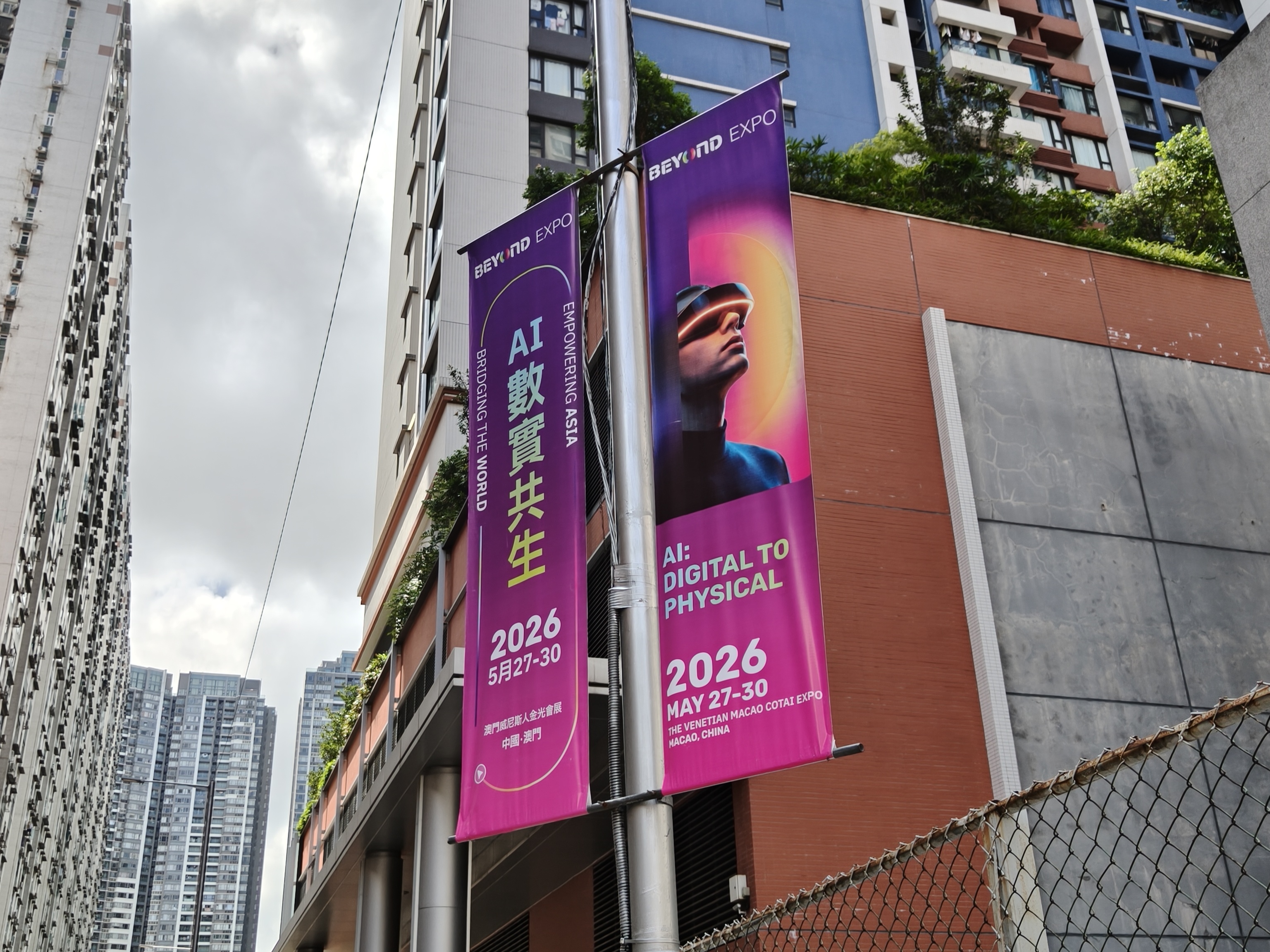
Streets in Macau, Image source: Lei Technology
This year's BEYOND Expo 2026 will be held from May 27th to 30th, with the theme of "AI: Digital to Physical". It covers areas such as artificial intelligence, robotics, AR/VR/XR, intelligent transportation, healthcare, and consumer technology, with over 1200 technology companies participating.
Rather than focusing on a certain type of product, Beyond Expo 2026 actually cares more about how this round of AI technology can move from models, software, and the cloud to terminals, industries, and the real world. It is more calm and rational.
This is also the important reason why Lei Technology was invited as an official cooperative media to report on - site this year. In the past few years, we have continuously followed the changes in AI glasses, robots, intelligent hardware, cloud computing, and large - model applications. BEYOND Expo 2026 just brings these elements together in the same exhibition venue.
iFlytek, Rokid, Zhipu Robotics, Qingxian, Alibaba Cloud, ByteDance, Zdeer, etc. will showcase their latest progress in AI and intelligent hardware here. More precisely, this year's BEYOND Expo has also pushed the discussion to more specific issues, which can be seen from the opening ceremony and the media day activities on the first day.
XREAL and Pudu Discuss "Physical AI": The iPhone Moment Needs to Wait
At the opening ceremony, two founder dialogues well represent the character of this BEYOND Expo. One is from Xu Chi, the founder of XREAL, and the other is from Zhang Tao, the founder of Pudu Robotics. One talks about AI glasses, and the other talks about robots. Although they seem to be in different fields, the underlying questions are highly consistent: What are the real thresholds for AI to enter the physical world?
Xu Chi mentioned XREAL's cooperation with Google.
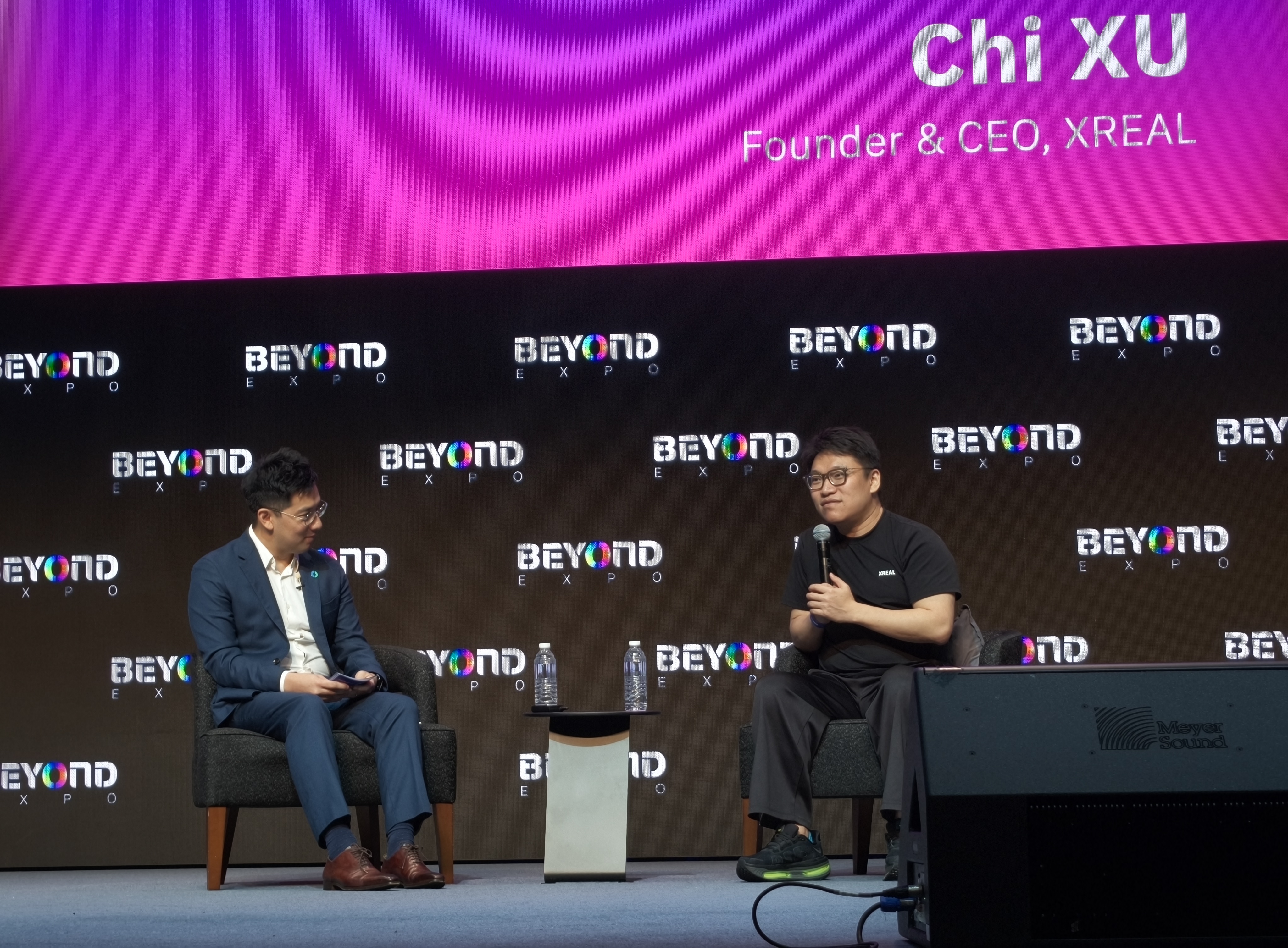
Xu Chi on the right, Image source: Lei Technology
After the release of Apple Vision Pro in 2024, the entire industry faced a real problem: Head - mounted displays do represent the future, but they are too expensive and heavy. So the industry began to look for a lighter and cheaper alternative to achieve a similar core experience to Vision Pro at a lower cost. XREAL, with years of experience in lightweight AR glasses, caught Google's attention in this context.
According to Xu Chi, there were problems with Google's software prototype before the demonstration, and there was not enough rehearsal time. XREAL immediately sent engineers to the United States. They solved the problems together on Monday, fixed them completely on Tuesday, rehearsed on Wednesday, and successfully completed the demo on Thursday.
Globalization is not just about selling products overseas or holding press conferences abroad. To truly enter the cooperation chain of top global technology companies, one needs technical accumulation, engineering response, product delivery, and the ability to solve problems on - site.
Xu Chi's judgment on AI glasses is straightforward. He believes that glasses are the best carrier for AI. Although mobile phones, computers, rings, and earphones can all access AI, glasses have two unique advantages: They can accompany users all day long and can understand what the user is focusing on through the first - person perspective or even the point of gaze.
In simple terms, the AI in glasses can not only hear what the user says but also see what the user sees and even understand why the user is looking there. This is also the greatest potential of today's AI glasses.
However, Xu Chi didn't overstate. If the birth of the iPhone is considered as version 1.0, he believes that the smart glasses industry is still at the 0.x stage. AI glasses may indeed become the next - generation terminal, but they still need to solve some tough problems such as wearing comfort, battery life, heat dissipation, display, interaction, and content ecosystem.
On the other hand, the dialogue of Zhang Tao, the founder of Pudu Robotics, is like pouring cold water on the current robot craze. In the past year, humanoid robots, embodied intelligence, robot dancing, and robot running have almost dominated the spotlight at technology exhibitions. But Zhang Tao's judgment is clear:
The ChatGPT moment for humanoid robots or embodied intelligence has not arrived yet.
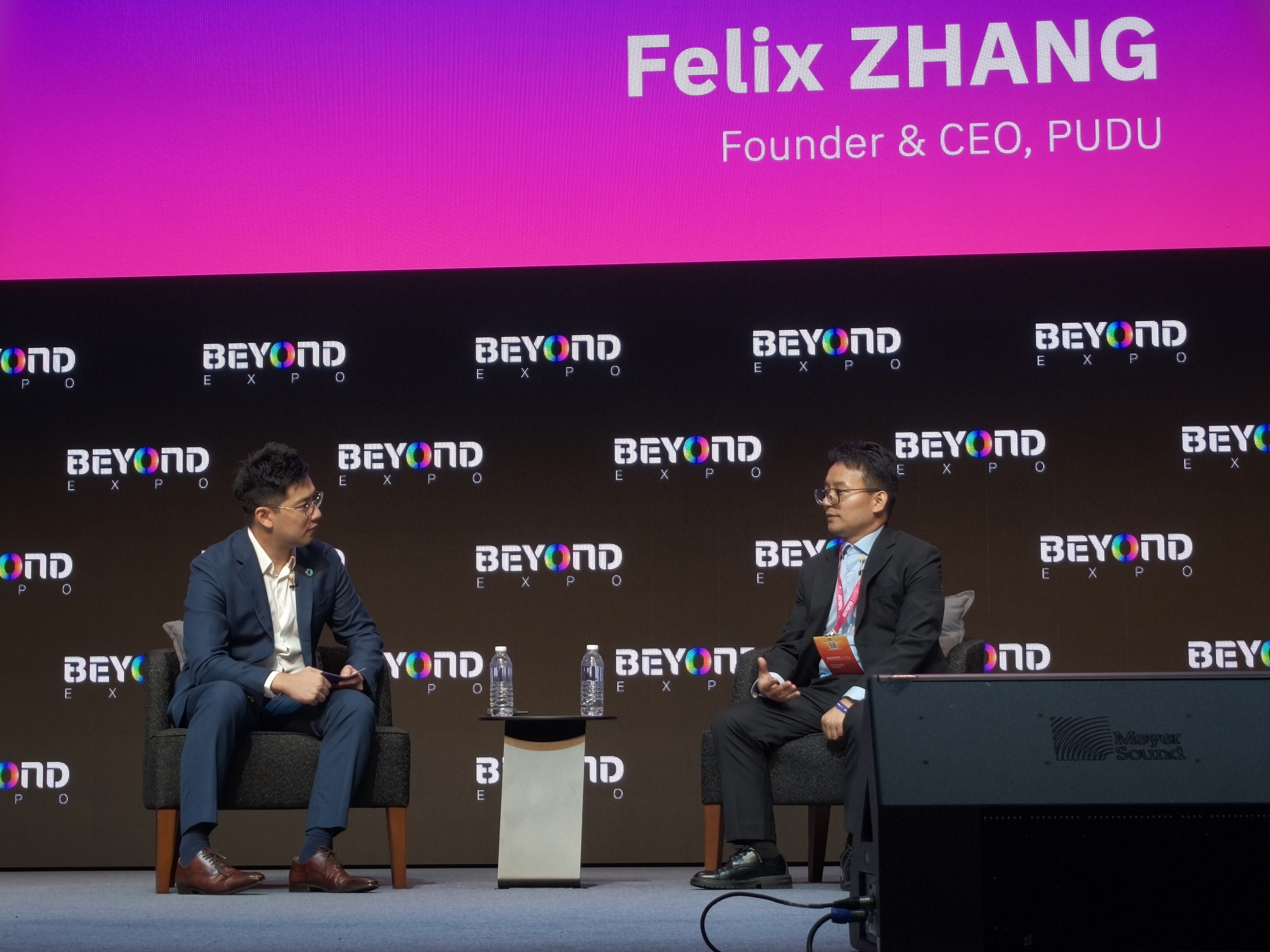
Zhang Tao on the right, Image source: Lei Technology
The reason is data.
To develop good algorithms for autonomous driving, often more than 10 million hours of real - machine data are required. And robots are much more complex than autonomous driving. Robots face more degrees of freedom, more complex environments, and more long - tail tasks. They may need tens of millions to hundreds of millions of hours of real - machine data, combined with synthetic data, Internet data, and human video data.
Currently, many robot companies are just starting to build their data infrastructure and still have a long way to go to achieve true generalization ability.
More importantly, his definition of the ChatGPT moment is not about laboratory results but whether users can use the product without psychological burden. ChatGPT became a phenomenon - level product not only because the model is powerful but also because it delivered the large model to ordinary people through a chat tool.
The same goes for robots. The real turning point will not come from stage performances but from the emergence of products that ordinary customers can deploy at low cost and ordinary users can use naturally.
There is a long way between being popular and being useful. Zhang Tao mentioned that Pudu started with food - delivery robots and later expanded to cleaning, delivery, industrial warehousing and handling, humanoid, and quadruped robots. It develops humanoid robots not because humanoid forms are more attractive but because in some long - tail scenarios, special - purpose robots are difficult to cover all complex tasks.
For example, for cleaning a building or a warehouse, the floor can be cleaned by special - purpose cleaning robots, but countertops, facades, railings, and tricky corners may require more general - purpose humanoid robots.
From this perspective, XREAL and Pudu are actually talking about the same thing: After AI enters the physical world, it's not about concepts but about product definition, engineering capabilities, and real - world scenarios. Glasses need to be wearable, and robots need to be functional. Only when these two things are achieved can the subsequent AI make sense.
The Real Threshold for the Explosion of AI Hardware Lies in Product Power, Not Technology
Compared with the speeches and dialogues at the opening ceremony, the media day is like another side of BEYOND Expo. There are not as many industry judgments here. Instead, there are specific products in front of you. Some of them are still in the early stage, while others have entered the mass - production and sales stage. The common feature of these products is that they all try to combine AI, sensors, algorithms, and hardware into a more specific scenario.
The VOCCI AI ring makes AI hardware "lighter".
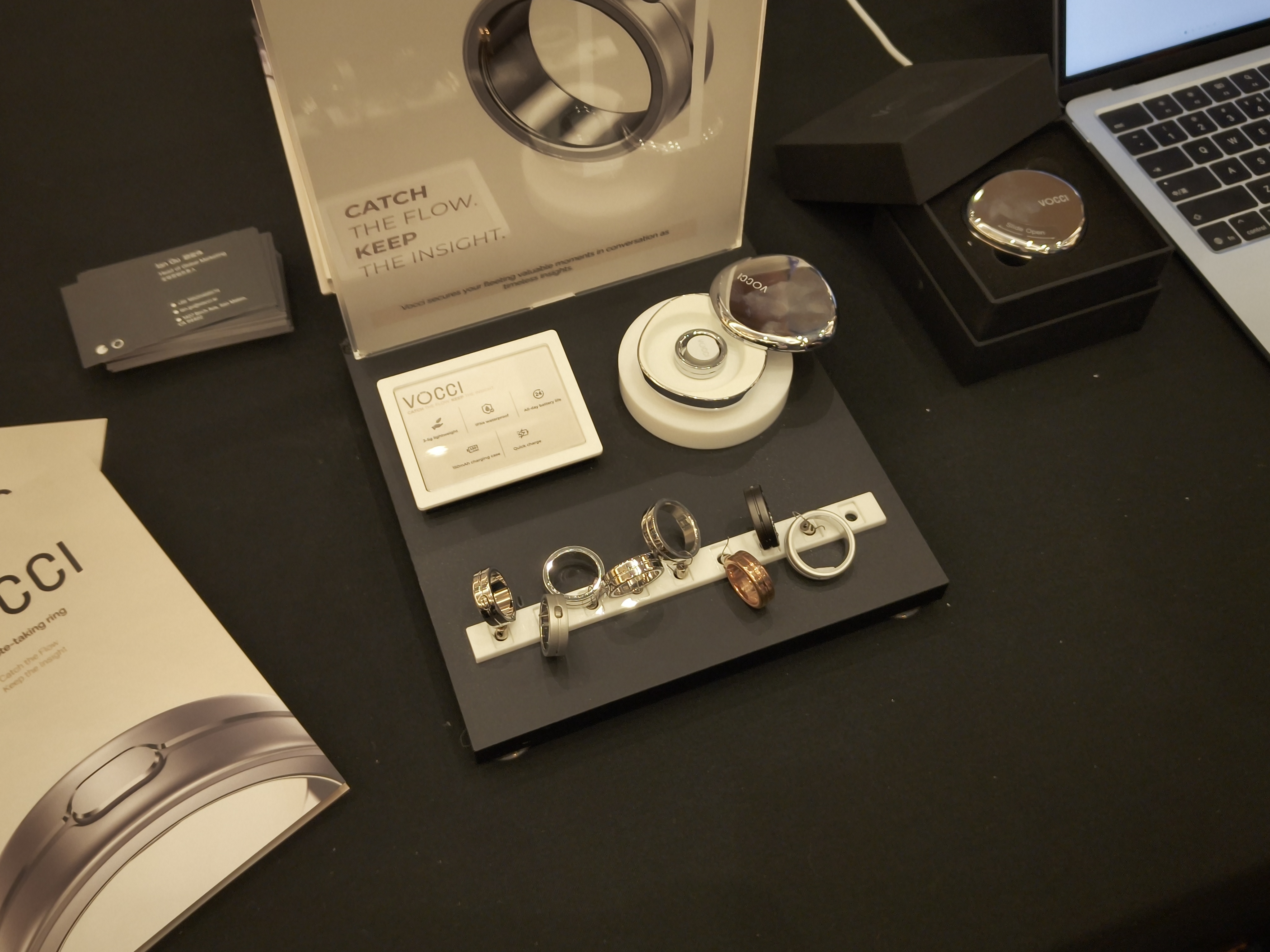
Image source: Lei Technology
When people think of smart rings, the first things that come to mind are health - monitoring devices like Oura or Galaxy Ring, which record sleep, heart rate, and exercise data. However, VOCCI focuses more on AI note - taking, with the core functions of voice recording, transcription, and summarization. It aims to solve the problem of whether people can record information without taking out their phones during meetings, interviews, business communications, or when they suddenly have an inspiration.
This direction is very promising because it makes the entry point of AI more natural. The ring is always on the hand, closer than a mobile phone, lighter than a recording pen, and more user - friendly than glasses, and it also has a longer battery life.
The consumer - grade desktop CNC of MAKERA represents another direction. It may not be as photogenic as a flying camera or as attention - grabbing as a robot, but its value is clear: It brings the precision machining capabilities that used to be exclusive to factories, engineers, and professional makers to the desktops of ordinary people.
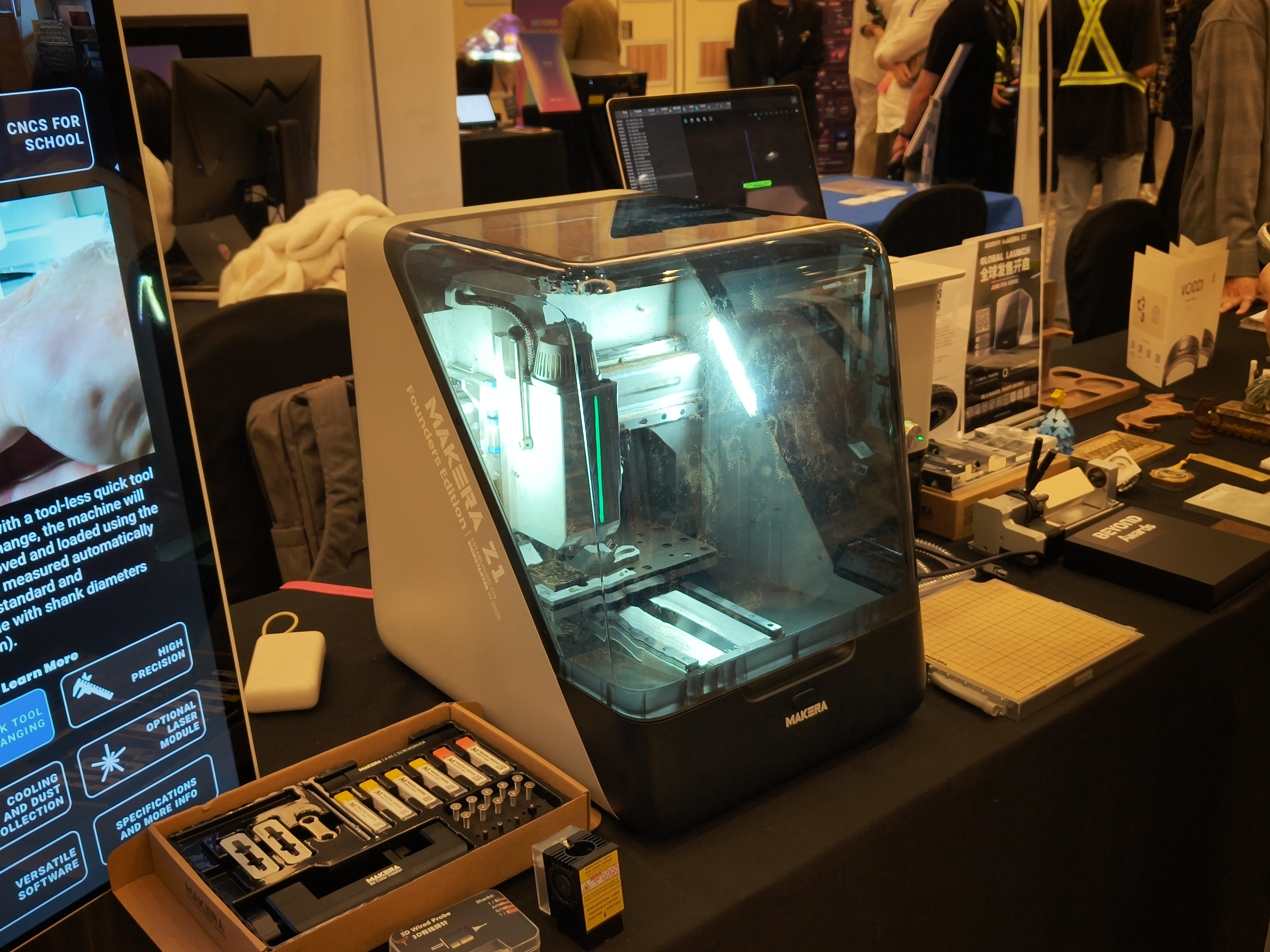
Image source: Lei Technology
In the past few years, consumer - grade 3D printing represented by Tuozhu has made many people understand desktop manufacturing. But 3D printing is more like additive manufacturing, piling up materials layer by layer. Desktop CNC is subtractive manufacturing, cutting, carving, and processing a piece of material into the desired shape. What MAKERA wants to do is to lower the threshold of using CNC with more automated software, more user - friendly processes, and more miniaturized equipment.
The GEMO AI intelligent hydro - facial device represents another rising direction: AI beauty equipment. The biggest problem with home - use beauty devices in the past was that users didn't know how to use them, whether they were suitable for themselves, and what solutions to use for different skin types. GEMO's approach is to use AI recognition, solution recommendation, and parameter adjustment to transform some professional care processes into executable solutions for home devices.
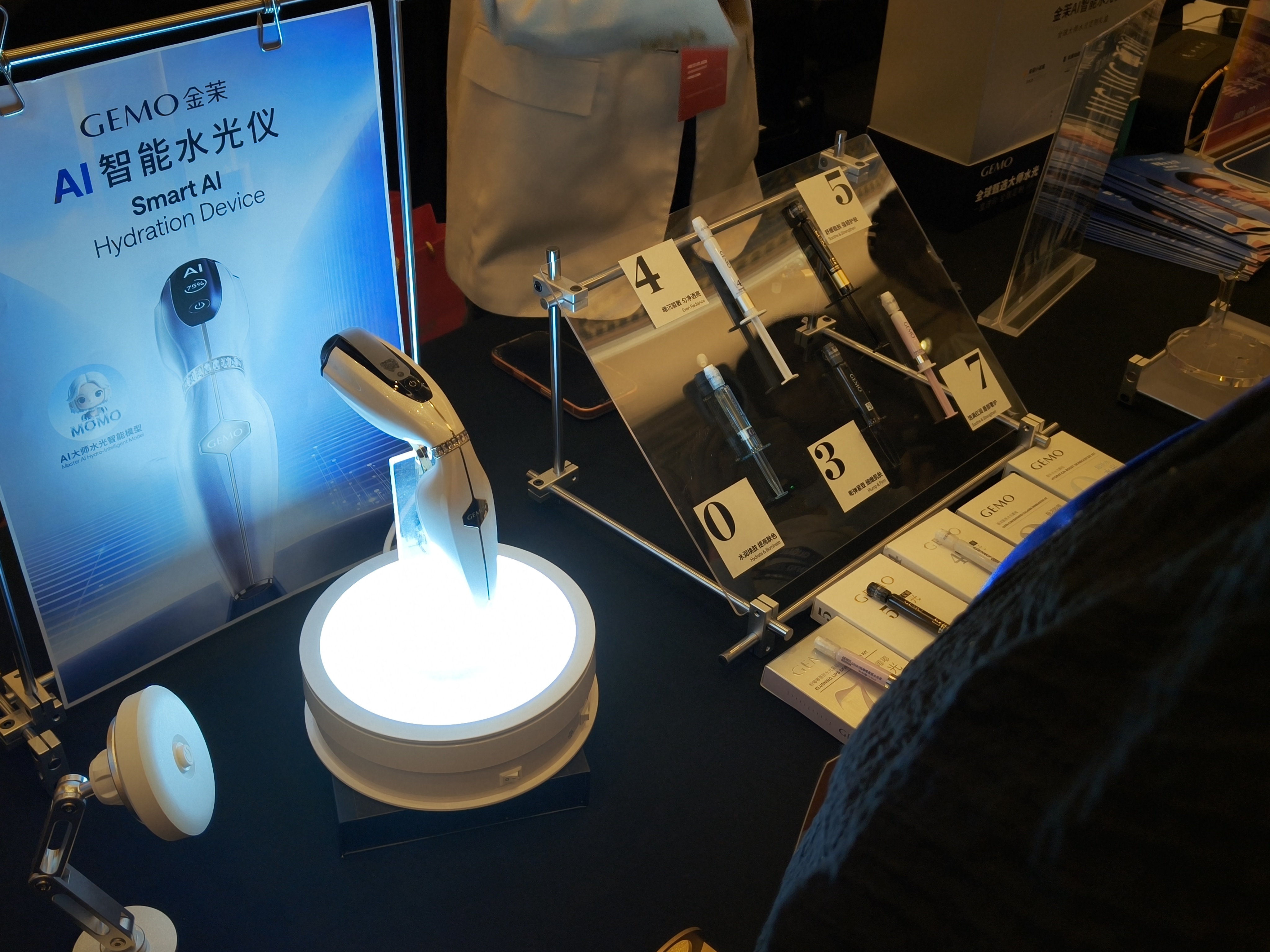
Image source: Lei Technology
This direction is naturally attractive, and in fact, many women were attracted to it on - site. On the one hand, many consumers hope to bring more beauty care home; on the other hand, AI can "package" complex processes into simpler interactions.
However, for beauty and medical - aesthetic related devices, one cannot just rely on the intelligent recommendations in the promotion. What really matters is the accuracy of recognition, the safety of parameters, the verification of consumables and solutions, and whether there are protection mechanisms when ordinary users misuse the device at home. AI can lower the threshold here, but it cannot replace safety boundaries.
There is also an AI - enabled senior - friendly glasses still under development that is worth mentioning. Compared with AI glasses for young people, the demand for AI - enabled senior - friendly glasses may be more practical. The elderly need to see clearly, hear clearly, remember, navigate, get reminders, seek help, and stay connected with their families.
Moreover, this product is also in cooperation with Tencent Hunyuan.
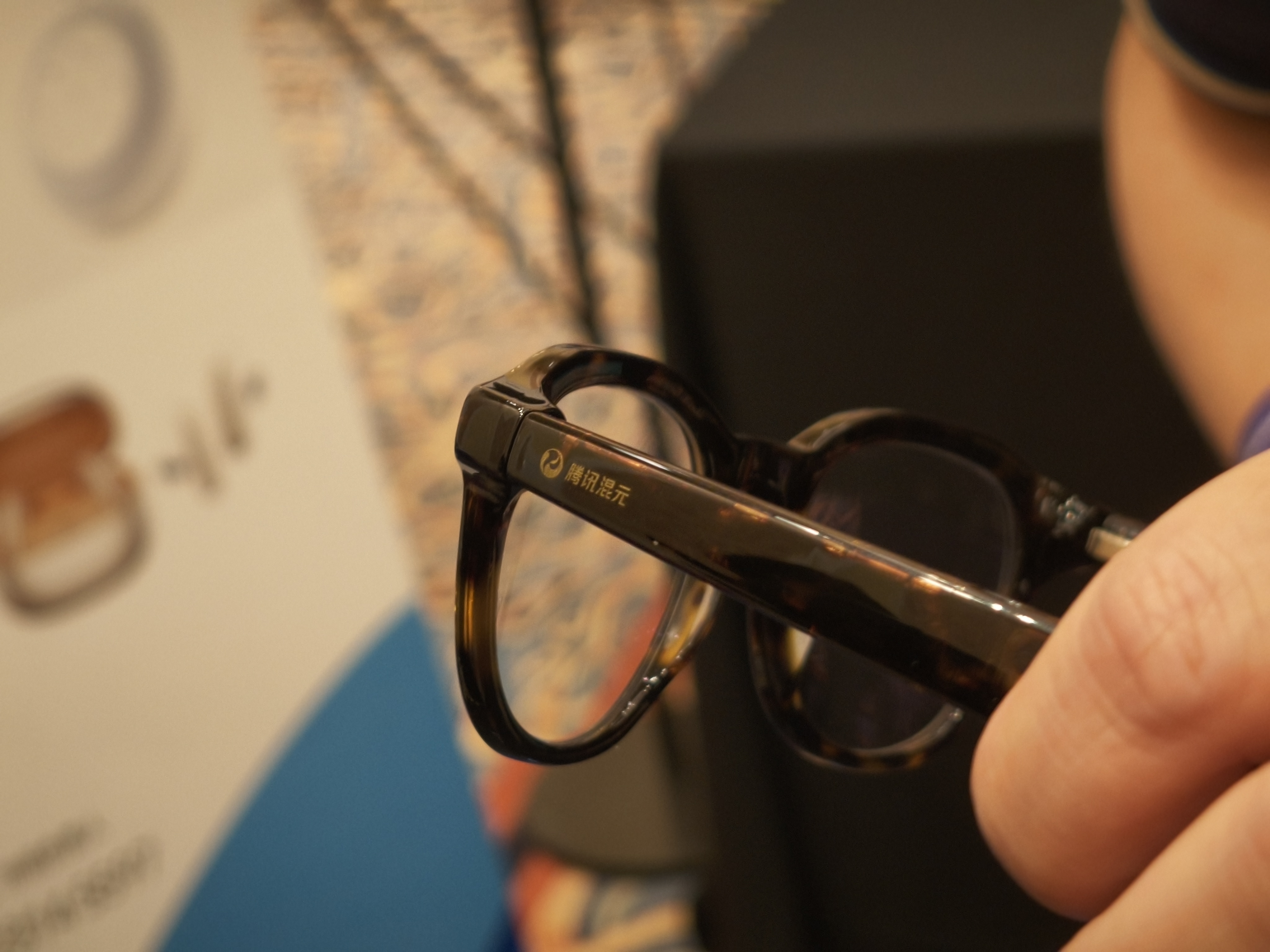
Image source: Lei Technology
Here, AI glasses are more positioned as a tool to assist daily life. Of course, this direction is also more difficult. Elderly users have a lower tolerance for complex interactions and are more sensitive to wearing comfort, battery life, false recognition, after - sales service, and price. For them, an occasionally cool AI function doesn't mean much. The key is whether it can work reliably in an emergency and whether it will cause trouble in daily use.
Whether the AI - enabled senior - friendly glasses can succeed does not depend on which large model it is connected to but on whether it can converge the model's capabilities into a few scenarios that the elderly can really use.
Similarly, the iFlytek AI glasses officially released at Beyond Expo are 40 - gram full - function AI display glasses, focusing on multi - scenario AI translation, intelligent cueing, meeting recording, and AI intelligent assistant.
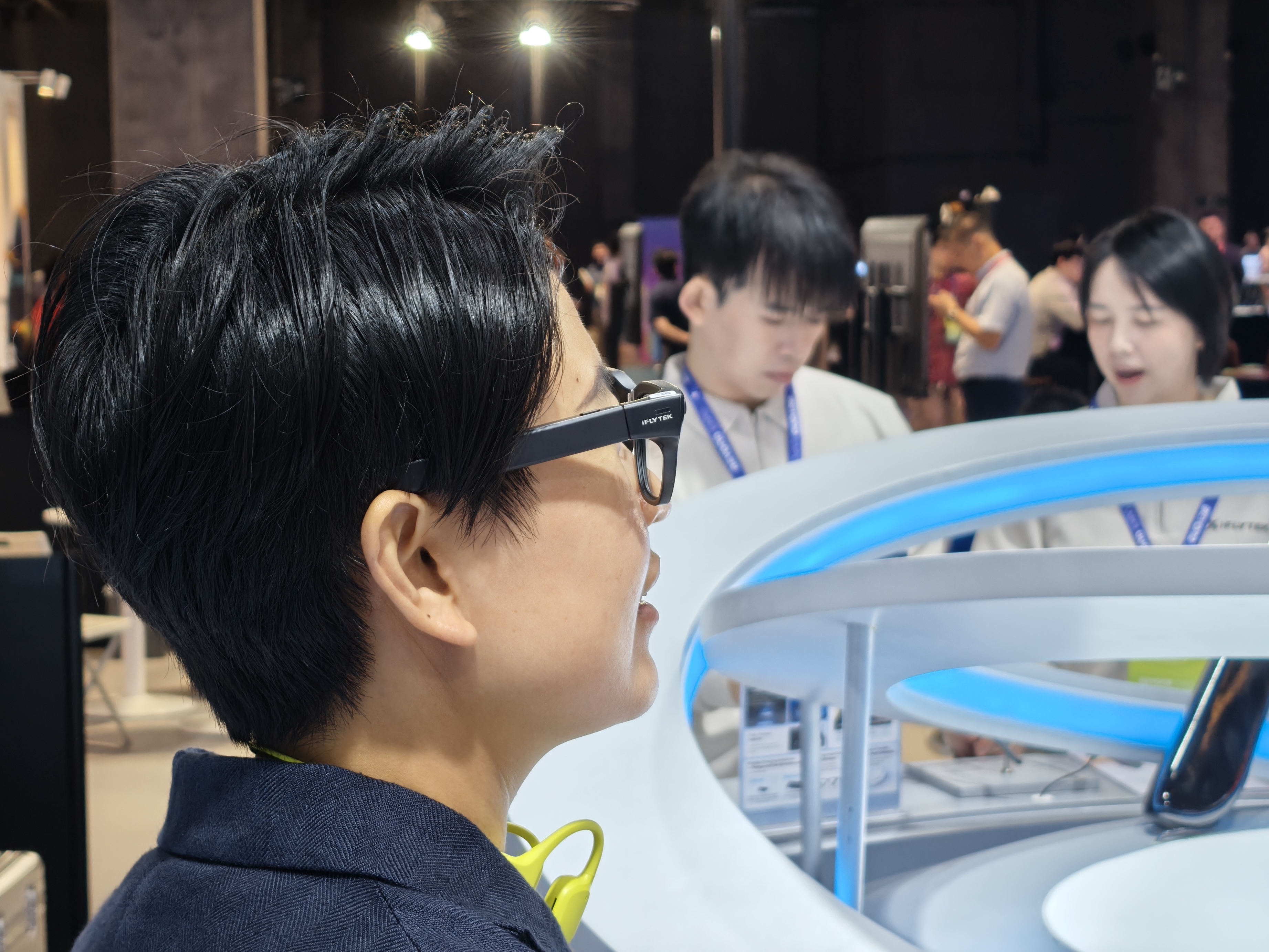
Image source: Lei Technology
iFlytek didn't start with the far - fetched concept of spatial computing or rush to replace mobile phones. Instead, it focused its first - generation product on the most familiar and necessary business scenarios to meet the needs of translation, meeting recording, and office work.
This is crucial. Because today, whether it's AI glasses or other AI hardware, the most important question is what problems they are going to solve.
Judging from the on - site experience, iFlytek AI has a relatively clear product idea: It uses lightweight design to solve the wearing threshold, display technology to solve the problem of looking down, multi - modal noise reduction to solve real - world communication noise, translation to meet the necessary needs, and GlassClaw to solve various pain points and itch points in the office scenario.
From AI rings to AI glasses, more AI hardware entrepreneurs may have realized that AI hardware is not simply "AI + hardware". It still needs to "start with the end in mind", with user needs as the goal, and AI as the "powerful tool of the era" to achieve the goal.
Of course, we can also see some products, such as shoe - washing machines, massage sticks, electric - stimulation eye masks, desktop anime - themed cultivation boxes, external sound cards for game audio, intelligent cooking seasoning boxes, intelligent children's desktop game - themed picture books, nitrogen coffee machines, intelligent companions for intimate relationships, modular