Can a city with a population of 20 million drive the development of the Northwest China?
As the "Number One City in Northwest China," Xi'an is accelerating the expansion of its urban radiation map.
Recently, the Xi'an Housing Provident Fund Management Center issued a notice to carry out mutual recognition and mutual lending of housing provident funds with cities in Qinghai Province. This is another cross - provincial cooperation following the opening of mutual recognition and mutual lending of housing provident funds between Xi'an and cities in the Guanzhong Plain Urban Agglomeration.
Not long ago, the high - speed railway from Xi'an to Shiyan entered the full - line connection test stage, and the high - speed railway from Xi'an to Ankang has also started static acceptance. Xi'an is on the verge of becoming the third city in China with a "rice - shaped" high - speed railway hub.
From the "soft connection" of mutual recognition of provident funds to the "hard connection" of high - speed railway access, Xi'an's "circle of friends" continues to expand. However, to truly rise as a "strong center" in the "Great Northwest," improving connectivity is just the first step for Xi'an.
01
Population Attraction
In the current context of accelerated population flow, the increase in permanent residents has become an important measure of a city's comprehensive competitiveness. According to the data from the 7th National Population Census, from 2010 to 2020, Xi'an ranked fourth in the country and first in the north with a population increase of 4.48 million, second only to Shenzhen, Guangzhou, and Chengdu.
However, in recent years, Xi'an's status as the "city with the largest population increase in the north" has been repeatedly challenged.
In 2023, Zhengzhou surpassed Xi'an with a population increase of 180,000 and became the new leader in the north. In 2024, although Xi'an only increased by 89,400 people, which is not outstanding nationwide, it still regained the first place in the north. In 2025, Jinan led the northern cities with a new population of 101,300.
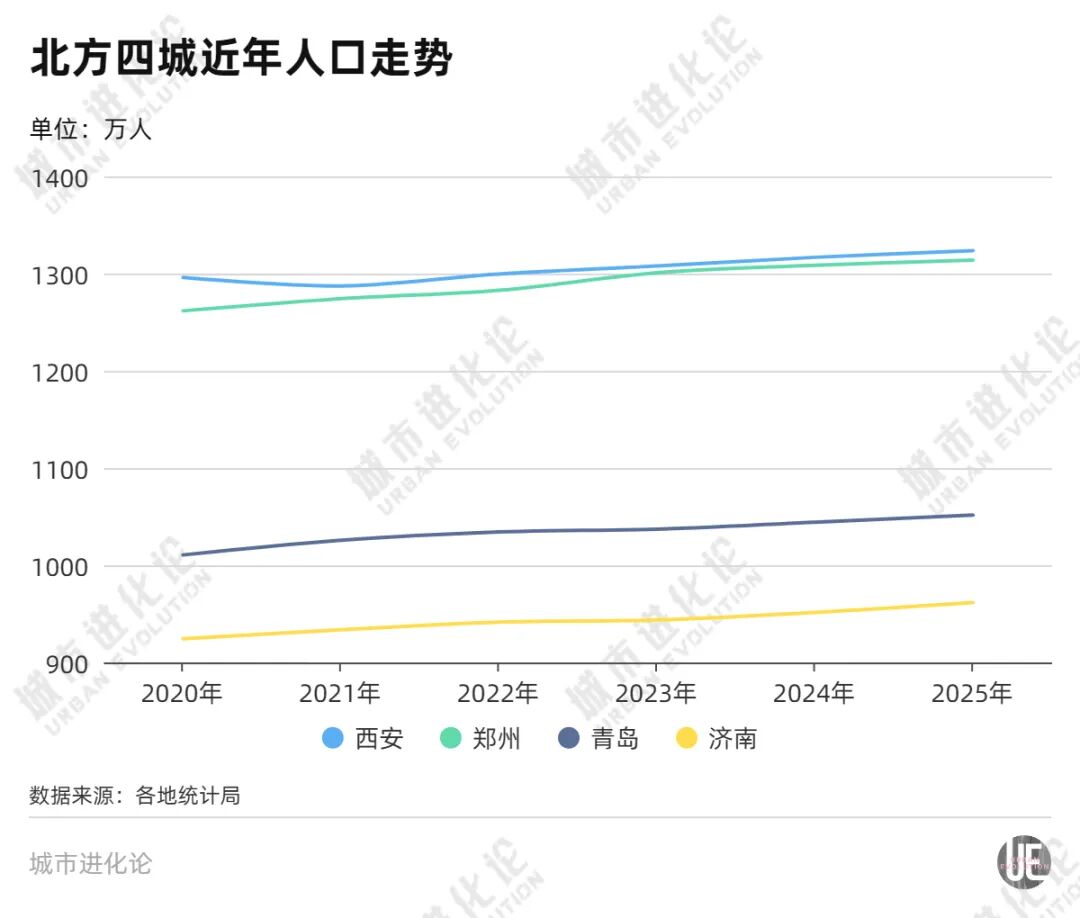
In the past five years, Xi'an's permanent population has increased by 276,300, lagging behind Zhengzhou (521,200), Qingdao (409,800), and Jinan (372,000) among northern cities.
Moreover, from the perspective of the structure of the migrant population, Xi'an is not the "absolute center" of population flow in the northwest cities.
Referring to the cross - provincial population flow, according to the data from the 7th National Population Census, among the 1.9337 million people in Shaanxi with their household registration in other provinces in 2020, people from Henan and Gansu ranked first and second with 369,600 and 300,900 respectively. However, in turn, Xinjiang is the largest "second hometown" for people from Gansu, with 899,300 Gansu people gathered there. Similarly, the largest outflow destinations for people from Qinghai, Xinjiang, and Ningxia are Gansu, Sichuan, and Xinjiang respectively.
The mutual recognition and mutual lending of provident funds are expected to help Xi'an further expand its "population hinterland."
Previously, experts pointed out when analyzing cross - provincial mutual recognition and mutual lending of provident funds that this measure can lock in potential populations through housing financial tools. The facilitation of provident fund loans will lower the threshold for purchasing a house in the regional central city, which helps to truly "retain" the inflowing population and form an expectation of long - term settlement.
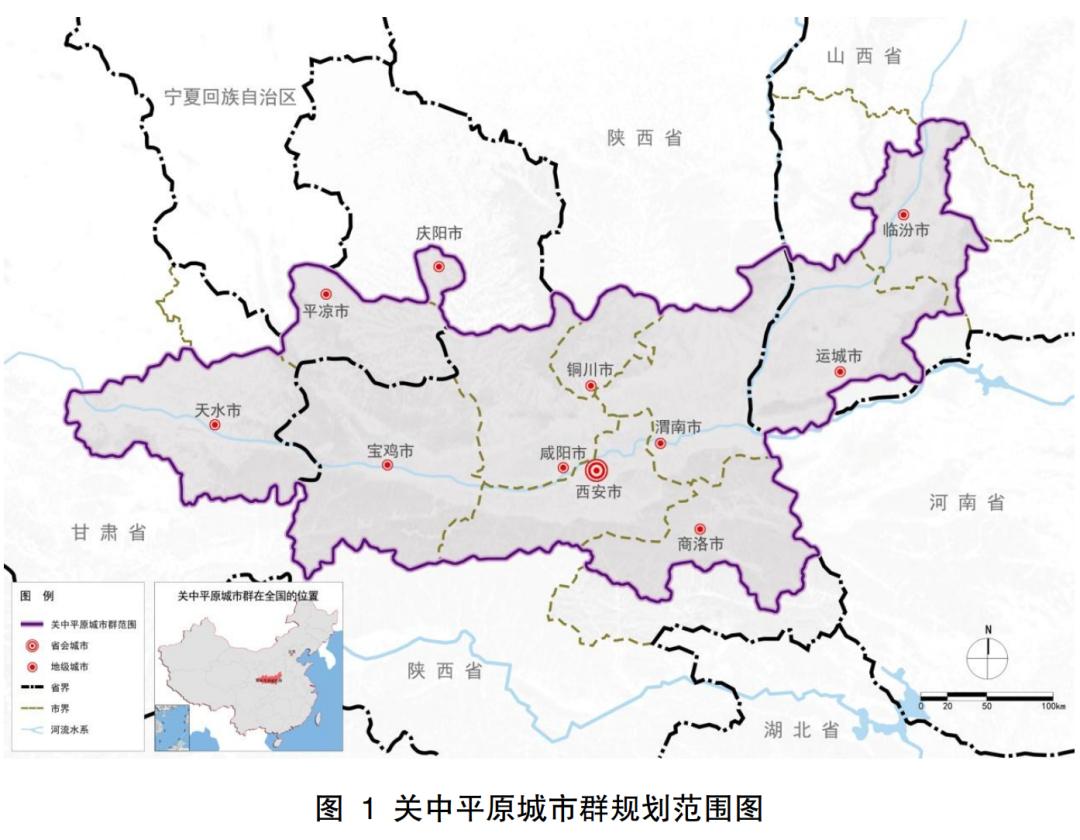
In 2023, 14 cities in the Guanzhong Plain Urban Agglomeration signed a provident fund cooperation agreement and established a cooperation mechanism for mutual recognition and mutual lending. Now, Xi'an has further extended the scope of "mutual recognition and mutual lending of provident funds" to cities in Qinghai Province, which offers more room for imagination.
According to the previously released "Overall Plan for the Territorial Space of Xi'an (2021 - 2035)," by 2035, the permanent population in the Xi'an urban area will be controlled within 15.6 million, and the infrastructure will be planned and laid out according to the actual service population of 20 million.
The blueprint of a city with a population of "20 million" is also filled with the expectation of driving the development of the Great Northwest.
In the view of Zhang Baotong, a researcher at the Shaanxi Academy of Social Sciences, Xi'an shoulders the heavy responsibility of promoting the co - construction of the Silk Road Economic Belt and driving the development of the "Great Northwest." He pointed out that the Guanzhong Plain Urban Agglomeration currently mainly covers Gansu. After including Qinghai this time, Ningxia and Xinjiang should also be included to truly implement the development concept of the "Great Northwest."
02
Hub Status
To realize this concept, in addition to the "soft connection," "hard connection" is also needed.
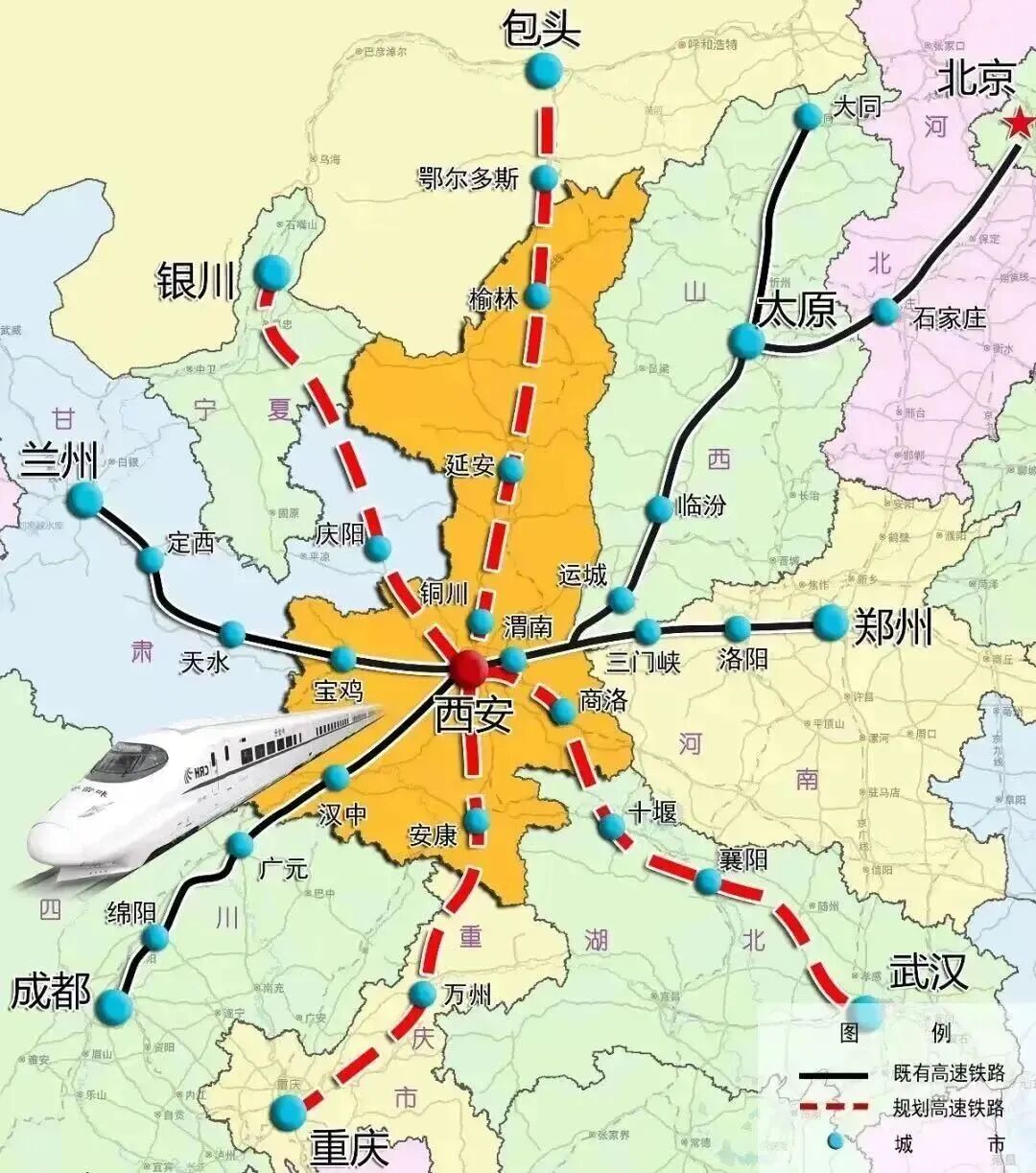
Xi'an's "rice - shaped" high - speed railway network (reference picture). Image source: Xi'an Release
Xi'an is located at the geometric center of China and is an important hub and economic link connecting the eastern and western regions. This "centrality" has allowed Xi'an to occupy a prominent position in Chinese history for a long time. However, as time has passed, "sticking to the northwest" has once become a label for outsiders to recognize Xi'an.
Why is Xi'an's "central" status no longer prominent? The Qinling Mountains may be an important reason. It is located only more than 20 kilometers south of the city center of Xi'an. While playing the ecological security function of the "central water tower," it also serves as the north - south dividing line in China, "trapping" Xi'an in the northwest corner.
A prominent example is reflected in the construction process of Xi'an's high - speed railway.
"When the high - speed railway is built, a fortune will be made." High - speed railways are undoubtedly an important link for cities to allocate resources over long distances. In 2010, with the completion of the Zhengzhou - Xi'an High - Speed Railway, the first high - speed railway in the central and western regions, Xi'an became one of the early cities to enter the high - speed railway era. However, it also made Zhengzhou a necessary "transfer station" for Xi'an to go east, north, and south for a long time.
Xi'an's breakthrough point also first appeared in the high - speed railway. In 2017, after nearly 10 years from the proposal of the concept, the Xi'an - Chengdu High - Speed Railway was completed and put into operation, reducing the travel time from Xi'an to Chengdu from 16 hours to less than 4 hours, and also allowing these two major western cities to enter each other's "3 - hour economic circle."
The Xi'an - Shiyan High - Speed Railway is considered the key stroke in completing Xi'an's "rice - shaped" high - speed railway network. It will completely break the traditional path dependence of "bypassing Zhengzhou when going south from Shaanxi" and realize a direct connection between the land of Shaanxi and Central China.
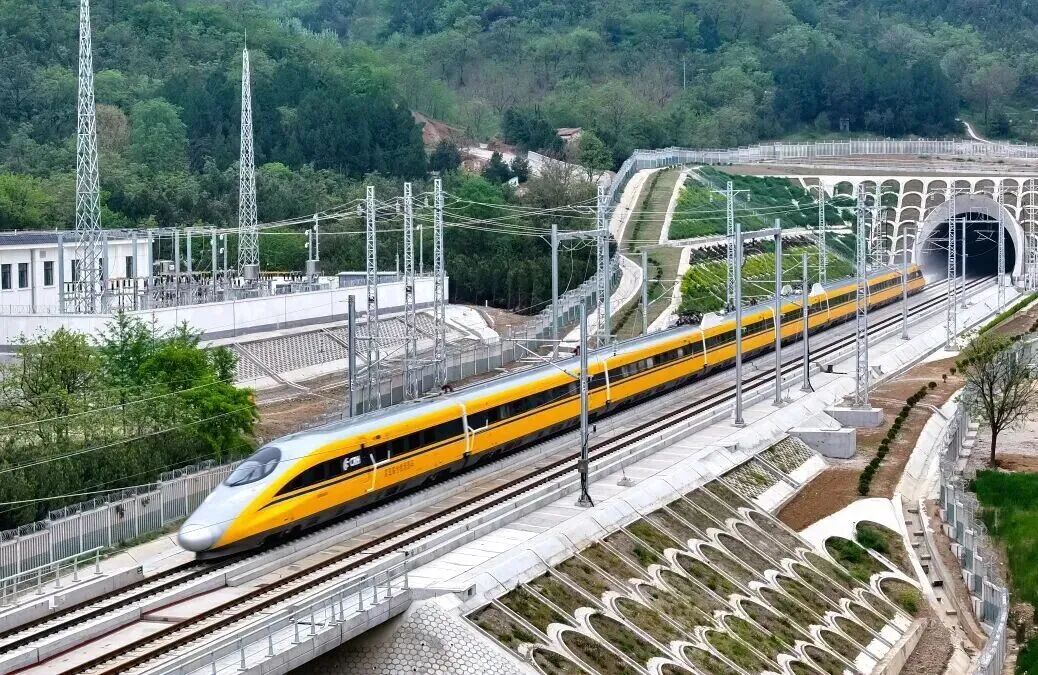
Image source: Xi'an Railway Information
Before this, Xi'an has already built high - speed railways such as Zhengzhou - Xi'an, Xi'an - Baoji, Datong - Xi'an, Baoji - Lanzhou, Xi'an - Chengdu, Yinchuan - Xi'an, and Xi'an - Yan'an, forming a high - speed railway network in six directions.
According to the plan, in June and September this year, the Xi'an - Shiyan High - Speed Railway and the Xi'an - Ankang High - Speed Railway will be put into operation successively. Xi'an will become the third city in China with a complete "rice - shaped" hub after Zhengzhou and Hefei.
In addition, in the 14th Five - Year Plan Outline of Shaanxi, the construction of the Xi'an - Chongqing High - Speed Railway has entered the "accelerated construction" stage. In the longer term, Shaanxi will also "study and promote the construction of the Xi'an - Hefei High - Speed Railway." According to the previous plan, this high - speed railway line will connect to the Xi'an - Shiyan High - Speed Railway from Shangluo, becoming another direct channel from Xi'an to the Yangtze River Delta.
The arrival of more high - speed railway lines will further lead Xi'an to "break out" of the Qinling Mountains and change its past image of being located in a corner of the northwest.
03
Coordinated Development
Breaking free from the "constraints of the Qinling Mountains" and reshaping the regional pattern is just the beginning. When Xi'an is more deeply integrated into the national unified market, how can it truly improve its ability to allocate resources and participate in urban competition and cooperation?
The key to solving the problem lies back in the northwest.
Currently, the development of cities in China is no longer a single - point breakthrough of individual cities. From the perspective of the 14th Five - Year Plan Outline of the country, multiple urban agglomerations have been assigned specific tasks. Among them, the Beijing - Tianjin - Hebei, the Yangtze River Delta, and the Greater Bay Area will build world - class urban agglomerations. The Chengdu - Chongqing Twin - City Economic Circle will "improve its development level" and "build an important growth pole for high - quality development." The Urban Agglomeration in the Middle Reaches of the Yangtze River will "accelerate its development." However, in the northwest region, there is still a lack of a representative urban agglomeration.
For Xi'an, relying on itself alone is inevitably difficult. Judging from the city's GDP last year, Xi'an only ranked 20th in the country with 1.3 trillion yuan. Among the top 50 cities, only Xi'an and Yulin in the northwest were shortlisted. To further play its hub function, Xi'an should take the lead in connecting various resources in the northwest region.
The Guanzhong Plain Urban Agglomeration is regarded as an important breakthrough. Not long ago, the development and reform departments of Shaanxi, Shanxi, and Gansu jointly issued the "Key Cooperation Matters for the Construction of the Guanzhong Plain Urban Agglomeration in 2026," clearly deepening industrial collaboration and complementary layout of industrial chains in key areas such as integrated circuits, new - energy vehicles, and advanced equipment manufacturing, and supporting Xi'an to accelerate the cultivation and construction of an international logistics hub and other key tasks to continuously enhance the comprehensive strength and overall competitiveness of the Guanzhong Plain Urban Agglomeration.
In a broader perspective, in the face of higher goals and more intense competition, the relationship between Xi'an and the five northwestern provinces needs to be further reshaped.
In Zhang Baotong's view, to strengthen the cooperation among the five northwestern provinces, the first step is to break the past situation of each province acting on its own and transform the plan of co - constructing the Silk Road Economic Belt into specific actions. At present, the progress in this regard is far from enough.
Taking population flow as an example, what lies behind it is actually industrial restructuring. Mature urban agglomerations such as the Yangtze River Delta and the Greater Bay Area all take the division of labor and cooperation in the industrial chain as the core. As the fulcrum of the Yangtze River Delta, Shanghai has built an industrial network of integrated circuits, biomedicine, new - energy vehicles, artificial intelligence, etc. in the region, which has not only driven the rise of trillion - level cities but also continuously broken through its own development "ceiling."
Of course, for Xi'an and the five northwestern provinces, this step is still a long way off. What is more worthy of attention at present is: Is it necessary and can the cooperation among the five provinces promote the further growth of Xi'an?
Consensus has not yet been formed, but a grand vision has been put forward. As Zhang Baotong envisioned, with Xi'an as the center, combining Yangling, Tongchuan, and Weinan to build the Greater Xi'an Metropolitan Area, making it the "heart" of the Eurasian Continental Bridge Economic Belt and then growing into the largest international metropolis on the Silk Road Economic Belt.
This article is from the WeChat official account "Urban Evolution Theory," author: Yang Qifei. Republished by 36Kr with authorization.