Kann eine Stadt mit 20 Millionen Einwohnern die Nordwestregion Chinas antreiben?
As the "first city in the northwest", Xi'an is currently accelerating the expansion of its urban influence.
Recently, the Housing Provident Fund Management Center of Xi'an has issued an announcement stating that it will introduce a system of mutual recognition and loan provision of housing provident funds with cities in Qinghai Province. This is another cross - border step after the introduction of the system with cities in the Guanzhong Plain Urban Agglomeration.
Recently, the high - speed railway between Xi'an and Shiyan has entered the full - line testing phase, and the high - speed railway between Xi'an and Ankang has started the static inspection. Thus, Xi'an is getting closer to the position of the third "M - shaped" high - speed railway hub in China.
From the "soft connection" through the mutual recognition of housing provident funds to the "hard networking" through high - speed railways, Xi'an's "circle of friends" is continuously expanding. However, to truly develop into the "strong center" of the "Great Northwest", improving the networking is only the first step for Xi'an.
01
Population Attractiveness
In an era of accelerated population movement, the growth of the permanent population is an important criterion for a city's comprehensive competitiveness. According to the data of the seventh national census, from 2010 to 2020, Xi'an ranked fourth in China and first in the north with a population increase of 4.48 million, only behind Shenzhen, Guangzhou and Chengdu.
In recent years, however, Xi'an's position as the city with the highest population growth in the north has been repeatedly challenged.
In 2023, Zhengzhou overtook Xi'an with a population increase of 180,000 and took the lead in the north. In 2024, although Xi'an only grew by 89,400 people, which is not particularly impressive in the national comparison, it regained the first place in the north. In 2025, Jinan took the lead among northern cities with 101,300 new residents.
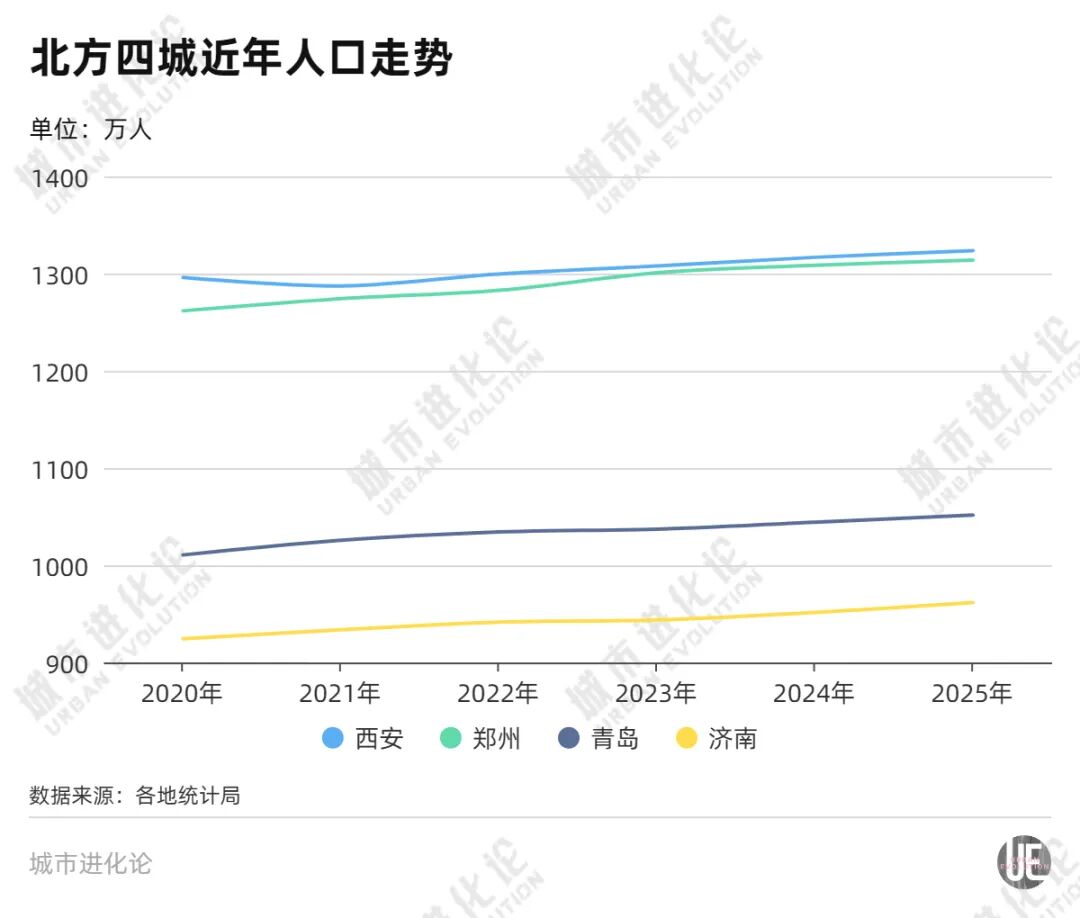
In the past five years, the permanent population in Xi'an has increased by 276,300, lagging behind Zhengzhou (521,200), Qingdao (409,800) and Jinan (372,000) among northern cities.
From the perspective of the structure of migrants, Xi'an is not the "absolute center" of population movement in northwestern cities either.
Looking at cross - border population movement, according to the data of the seventh national census in 2020, among the 1.9337 million residents in Shaanxi whose household registration was in another province, residents from Henan and Gansu led with 369,600 and 300,900 respectively. Conversely, Xinjiang is the largest "second hometown" for people from Gansu, where 899,300 people from Gansu live. The situation is similar for residents from Qinghai, Xinjiang and Ningxia, whose largest emigration destinations are Gansu, Sichuan and Xinjiang respectively.
The system of mutual recognition and loan provision of housing provident funds could help Xi'an further expand its "population space".
Previously, experts pointed out in the analysis of the cross - border system of mutual recognition and loan provision of housing provident funds that it can retain potential population through housing financing means. The facilitation of housing provident fund loans will facilitate real - estate purchases in the regional center and contribute to the fact that migrants actually "stay" and settle in the city in the long term.
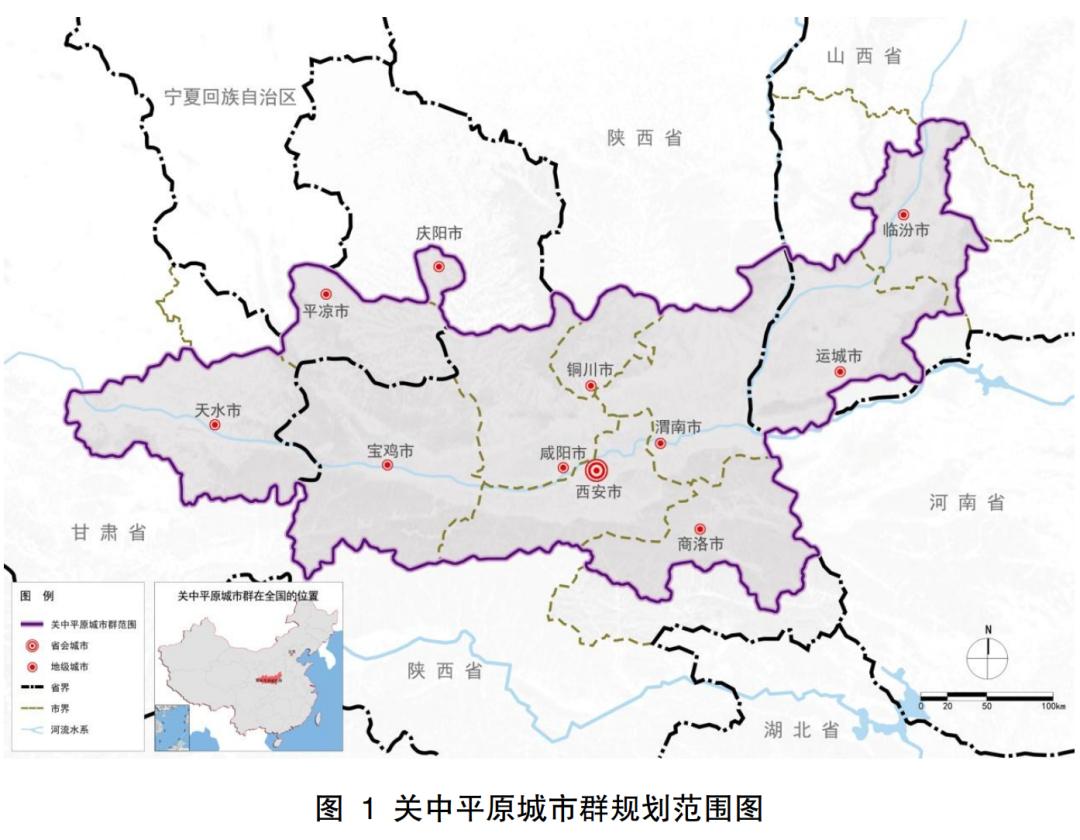
In 2023, 14 cities in the Guanzhong Plain Urban Agglomeration signed a cooperation agreement on housing provident funds and established a system of mutual recognition and loan provision. Now Xi'an is expanding the scope of the "system of mutual recognition and loan provision of housing provident funds" to cities in Qinghai Province, which brings even greater opportunities.
According to the previously released "Overall Plan for the Urban and Rural Areas of Xi'an (2021 - 2035)", the permanent population in Xi'an should be limited to less than 15.6 million by 2035, and the infrastructure should be planned for an actual service capacity of 20 million people.
The image of a city with 20 million residents is also associated with the hope of driving the development of the Great Northwest.
In the view of Zhang Baotong, a researcher at the Shaanxi Academy of Social Sciences, Xi'an bears the responsibility of promoting the common development of the Silk Road economic zone and driving the development of the "Great Northwest". He pointed out that the Guanzhong Plain Urban Agglomeration currently mainly includes Gansu, and after the inclusion of Qinghai, Ningxia and Xinjiang should also be included to truly implement the development concept of the "Great Northwest".
02
Central Position as a Transportation Hub
To realize this vision, in addition to the "soft connection", the "hard networking" is also required.
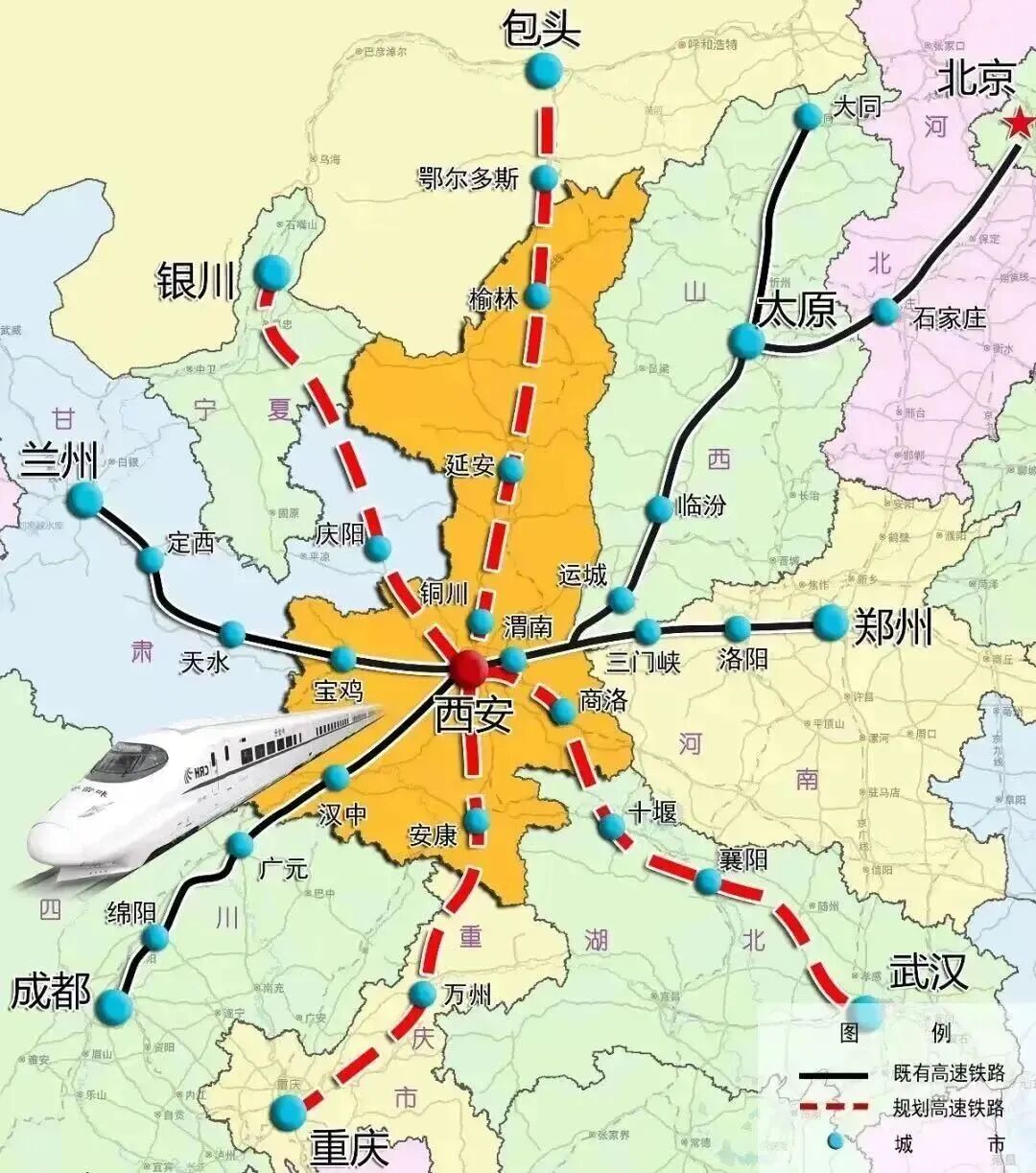
The "M - shaped" high - speed railway network in Xi'an (documentary picture) Picture source: Xi'an Release
Xi'an is located in the geometric center of China and is an important transportation hub and economic link between the east and the west. This "centrality" has given Xi'an a prominent position in Chinese history for a long time. However, over time, the image of Xi'an as a city focusing on the northwest has been established in the public.
Why is Xi'an's "central position" no longer so prominent? The Qinling Mountains could be an important reason - they are only about 20 kilometers south of the city center of Xi'an. While it functions as an ecological safety barrier in the form of a "central water tower", it is also the north - south dividing line of China and has "trapped" Xi'an in the northwest corner.
A striking example can be seen in the history of high - speed railway construction in Xi'an.
"When a high - speed railway is put into operation, gold flows." High - speed railways are undoubtedly an important link for long - distance resource allocation. In 2010, the first high - speed railway in central and western China, the Zhengzhou - Xi'an high - speed railway, was completed. As a result, Xi'an became one of the first cities to enter the high - speed railway era. However, for a long time, Xi'an had to use Zhengzhou as a transfer station to travel east, north and south.
The breakthrough for Xi'an also came first in the field of high - speed railways. In 2017, the Xi'an - Chengdu high - speed railway, which was put into operation nearly 10 years after the idea, was opened. As a result, the travel time from Xi'an to Chengdu was shortened from 16 hours to less than 4 hours, and the two major western cities came within a "3 - hour economic circle" of each other.
The Xi'an - Shiyan high - speed railway is regarded as the crucial "stroke" in the "M - shaped" high - speed railway network in Xi'an. It will completely break the traditional dependence on bypassing Zhengzhou when traveling south from Shaanxi and enable a direct connection between Shaanxi and central China.
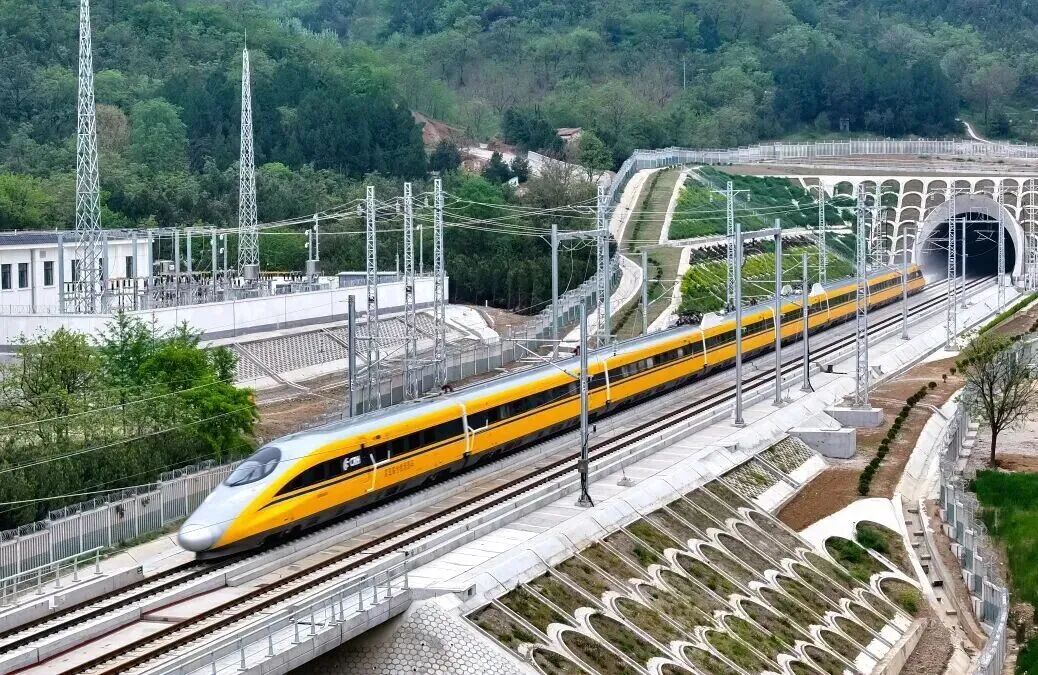
Picture source: West China Railway News
Before this, the high - speed railways Zhengzhou - Xi'an, Xi'an - Baoji, Datong - Xi'an, Baoji - Lanzhou, Xi'an - Chengdu, Yinchuan - Xi'an and Xi'an - Yan'an had already been completed, forming a six - direction high - speed railway network.
According to the plan, the Xi'an - Shiyan and Xi'an - Ankang high - speed railways will be put into operation successively in June and September this year. Xi'an will thus become the third city in China with a complete "M - shaped" high - speed railway hub after Zhengzhou and Hefei.
In addition, the Xi'an - Chongqing high - speed railway in Shaanxi's "Fifteen - Five" plan has already entered the "accelerated construction" phase. In the long term, Shaanxi will also promote the "research and promotion of the construction of the Xi'an - Hefei high - speed railway". According to the previous plan, this line is supposed to connect to the Xi'an - Shiyan high - speed railway in Shangluo and thus become another direct connection from Xi'an to the Yangtze River Delta.
The arrival of more high - speed railways will further "lead" Xi'an out of the Qinling Mountains and change its old image as a city in the northwest corner.
03
Cooperative Development
Breaking free from the "constraint of the Qinling Mountains" and reshaping the regional structure are only the beginning. When Xi'an is more deeply integrated into the unified national market, how can it truly improve its ability for resource allocation and participation in urban competition and cooperation?
The key to solving the problems lies again in the northwest.
Nowadays, urban development in China is no longer limited to the single action of a single city. According to the national "Fifteen - Five" plan, specific tasks are assigned to several urban agglomerations: The Beijing - Tianjin - Hebei urban agglomeration, the Yangtze River Delta and the Greater Bay Area of Guangdong, Hong Kong and Macao are supposed to become world - class urban agglomerations, the Chengdu - Chongqing twin - city economic circle should "raise" its development level and become an "important growth pole for high - quality development", and the urban agglomeration in the middle reaches of the Yangtze River should "develop more rapidly". However, there is no representative urban agglomeration in the northwest.
It is difficult for Xi'an to make progress alone. In 2025, Xi'an ranked only 20th in China with a GDP of 1.3 trillion yuan. Among the top 50 cities in China, only Xi'an and Yulin from the northwest are represented. To further develop its function as a transportation hub, Xi'an should first connect the resources in the northwestern regions.
The Guanzhong Plain Urban Agglomeration is regarded as an important breakthrough point. Recently, the development and reform commissions of Shaanxi, Shanxi and Gansu provinces jointly issued the "Key Issues for the Cooperation in the Development of the Guanzhong Plain Urban Agglomeration in 2026", which stipulate the deepening of industrial cooperation and the complementary arrangement of industrial chains in key areas such as integrated circuits, new - energy vehicles and advanced machinery manufacturing. The acceleration of the development of Xi'an as an international logistics hub and other key tasks are supported to continuously improve the comprehensive strength and competitiveness of the Guanzhong Plain Urban Agglomeration.
From a broader perspective, the relationship between Xi'an and the five northwestern provinces needs to be further reshaped to achieve higher goals and succeed in more intense competition.
In Zhang Baotong's view, to strengthen the cooperation between the five northwestern provinces, the situation of independent actions in the past must first be overcome, and the plans for the common development of the Silk Road economic zone must be translated into concrete actions. At present, the progress in this regard is still far behind.
Take population movement as an example. Actually, there is an industrial restructuring behind it. In established urban agglomerations such as the Yangtze River Delta and the Greater Bay Area of Guangdong, Hong Kong and Macao, industrial cooperation and division of labor in the industrial chain are the core. Shanghai, as the core of the Yangtze River Delta, has built an industrial network in areas such as integrated circuits, biotechnology, new - energy vehicles and artificial intelligence. This has not only triggered the emergence of cities with a GDP of one trillion yuan, but also further promoted Shanghai's own development.
Naturally, this step is still far away for Xi'an and the five northwestern provinces. At the moment, it is more important to consider whether it is necessary and possible to further strengthen Xi'an through the cooperation of the five provinces.
There is still no consensus, but the visionary idea has already been formulated. As Zhang Baotong imagines, a Greater Xi'an area including Yangling, Tongchuan and Weinan should be created around Xi'an, which will become the "heart" of the Silk Road economic zone along the Asia - Europe Bridge and finally become the largest international metropolis on the Silk Road.