Fender "Reclaims" the Stratocaster: A Rights Confirmation Delayed by 70 Years
A seemingly "obscure" legal decision has stirred up a huge wave within the guitar industry.
In March 2026, Fender won a crucial judgment in Germany. The body contour of the Stratocaster (commonly known as the "ST model") electric guitar was recognized as a copyrighted work of applied art.
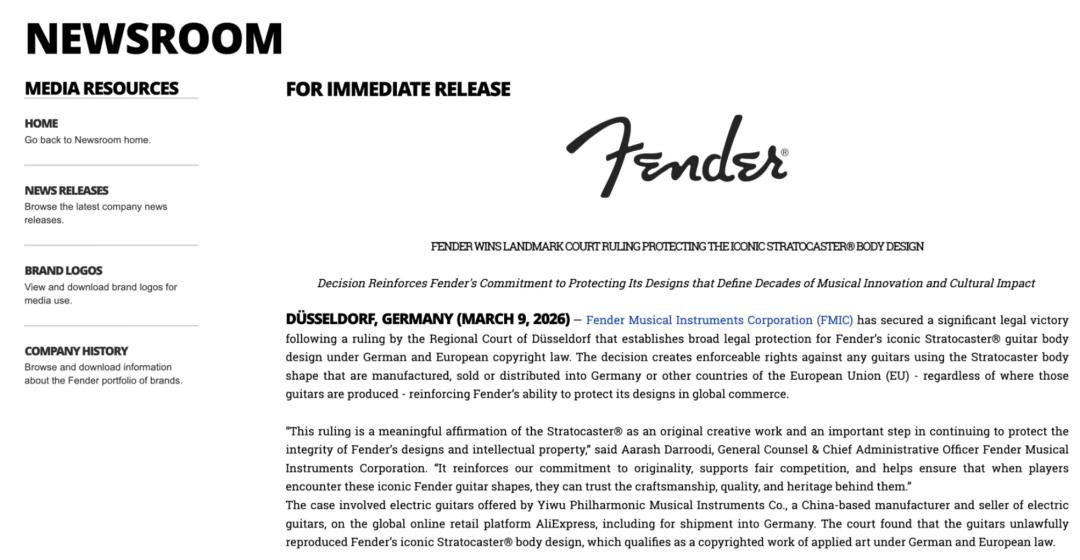
The significance of this ruling lies in the fact that, for the first time in a major European market, it clearly acknowledges that a classic design dating back to 1954, despite being replicated and reinterpreted by countless brands globally, can still be re - established as brand assets.
After the judgment, Fender quickly launched legal actions centered around Europe: sending out a flurry of lawyer's letters, demanding the removal of infringing products from e - commerce platforms, and forcing small and medium - sized brands to modify their designs or exit the market. These series of actions have also sparked fierce debates among brand owners, independent luthiers, dealers, and even music fans. Fender has not made a public response yet.
The Stratocaster is one of the most recognizable instrument designs in music history. Over the years, there have been many imitators, and it has almost become one of the standard guitar models in the industry. Fender's current actions aim to transform the design that has become a common resource in the industry back into private brand assets.
The questions raised by these cease - and - desist letters are: How much impact will the German court's ruling have? How wide and deep will the impact be? In essence, this legal action touches on a long - standing default boundary in the industry: what can be owned and what belongs to public culture.
A
How did the classic design become a common property in the industry?
To understand this controversy, we must go back to the origin of the Stratocaster.
In 1954, Leo Fender introduced the Stratocaster. This guitar was revolutionary in both structure and appearance: a double - cutaway body, a streamlined contour, a back cutout that fits the human body, and a pickguard layout that has been imitated by countless people. This design not only improved the playing experience but also quickly became part of the visual system of rock music.
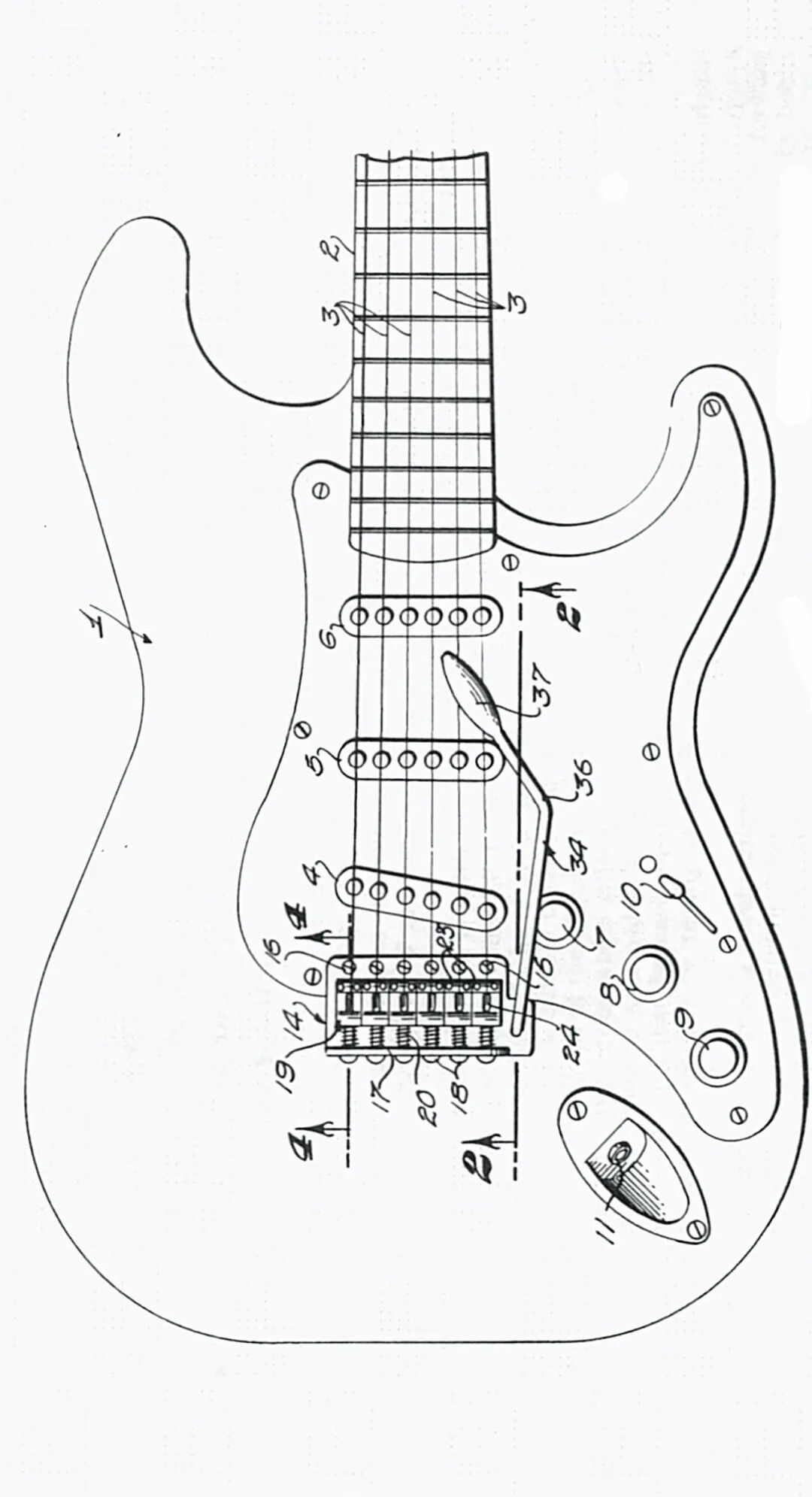
The body design of the Fender Stratocaster
However, at that time, Fender did not fully layout its intellectual property rights for this appearance.
On the one hand, the industrial design protection system in the United States in the 1950s was not yet mature. On the other hand, Fender itself was more like an engineering - driven manufacturing company rather than a modern enterprise that values brand and legal assets. Leo Fender never applied for copyright for the body design of the Stratocaster guitar, only for the headstock design.
More importantly, almost no one could foresee at that time that this design would become a common language in the industry in the next few decades.
As a result, since the 1960s, the contour of the Stratocaster has been widely replicated. From Japanese brands, to later Korean and Chinese manufacturers (including the so - called "Lu Fen" that Chinese people often talk about), to small and medium - sized brands in Europe and the United States, the ST model has almost become the standard template for electric guitars.
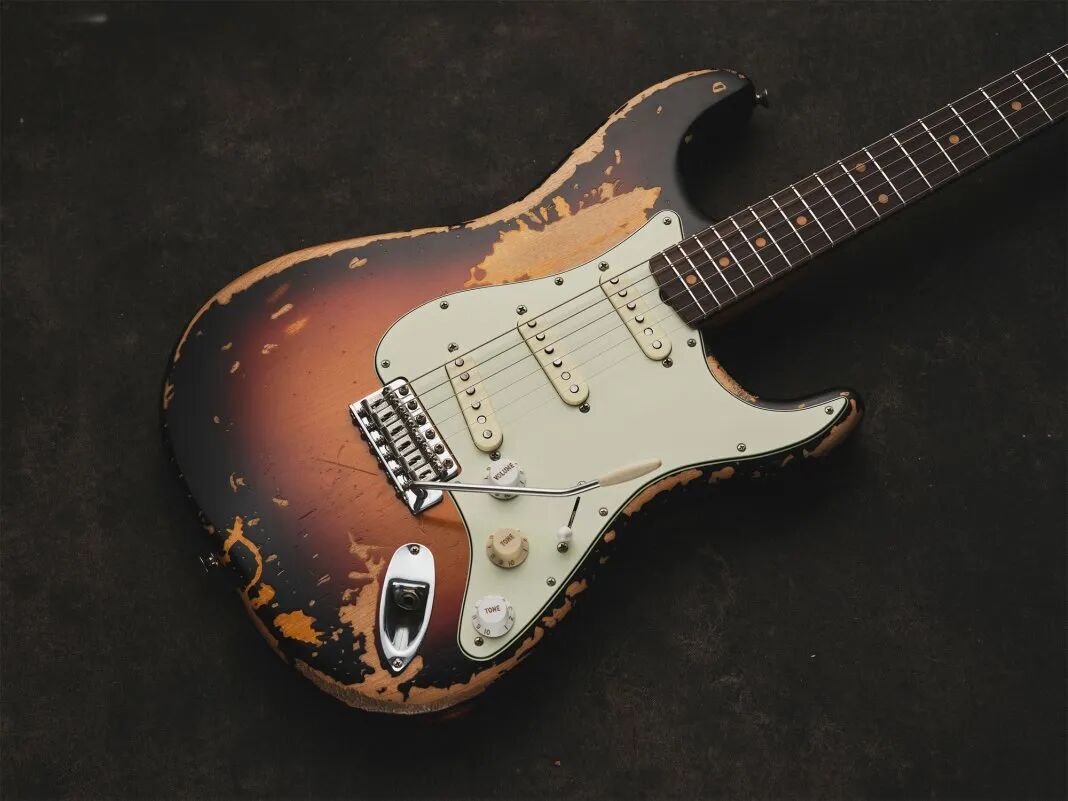
This widespread imitation has led to a result: the shape of the Stratocaster has gradually evolved from a brand design to an industry symbol. The body contour of the Stratocaster guitar is so common that it is used in dictionaries and even in familiar emoji to refer to ordinary electric guitars.

Fender Stratocaster guitar (Image source: Internet)
Fender's attempt to register the body shapes of its Stratocaster, Telecaster, and Precision guitars as trademarks in the United States was rejected. Similar applications were also previously rejected in the UK and other European regions.
The Trademark Trial and Appeal Board of the United States Patent and Trademark Office stated: "Fender refers to the 'iconic' status of these instrument contours in American popular culture. However, we must address a specific question: Will consumers associate the two - dimensional contours depicted in these drawings with the product source?"
Although Fender prepared a large amount of material to prove that guitars sold by numerous companies used the body shapes that Fender was trying to trademark, the relevant department still believed that "the applicant failed to prove that its works are distinctive enough for these two - dimensional guitar body contours to indicate their source on their own" and "the evidence clearly shows that these shapes are very common in the industry and cannot be used to identify their source."
B
From a landmark judgment to brand competition
For Fender, the fact that its own design has become a common template in the industry is precisely the result of it being imitated for so many years without being stopped.
It wasn't until 2026 that this state was broken. The Düsseldorf Regional Court in Germany clearly stated that Fender's iconic Stratocaster body design is a copyrighted work of applied art.
The defendant infringing merchant is Yiwu Aile Musical Instruments Co., Ltd. from China. The company listed electric guitar products on the international online retail platform AliExpress and supports sales to Germany. The judgment prohibits them from manufacturing, selling, or distributing guitars with the Stratocaster body shape in Germany and the EU. In case of future infringement, a maximum fine of 250,000 euros can be imposed for each infringement. If the fine cannot be enforced, the relevant responsible person may also face up to six months of imprisonment, with the specific punishment subject to the legal limit.
That is to say, even if a design has existed for 70 years and has been widely imitated, as long as it can still represent a certain brand, it can be re - included in the scope of legal protection. Although the judgment is only valid in the EU region, it has a landmark significance. From now on, when making guitars imitating Fender's shape, one always has to worry about the risk of getting involved in a lawsuit. This provides a legal basis for Fender's subsequent actions.
Fender Stratocaster guitar (Image source: Internet)
After the judgment was issued, Fender took action very quickly. The law firm representing Fender has sent cease - and - desist letters to several guitar manufacturers, demanding that they stop producing instruments using the Stratocaster design.
According to information disclosed by overseas media, the lawyer's letter states: "The body designs of these guitars are almost identical to the body design of our client's 'Stratocaster' guitar. Their similarity to the Stratocaster guitar is no less than that of the guitars involved in the Düsseldorf judgment."
"Therefore, you have infringed our client's copyright on the Stratocaster body shape. Accordingly, our client has the right to demand that you stop selling such guitars, disclose your sales and marketing information, compensate for losses, destroy the infringing products, recall the infringing products, and reimburse our litigation costs."
Although this is an EU ruling, at least one American company has also received a lawyer's letter. This company is LSL Instruments, a family - owned boutique guitar company in California, and it is currently the only brand that has publicly claimed to have received a lawyer's letter.
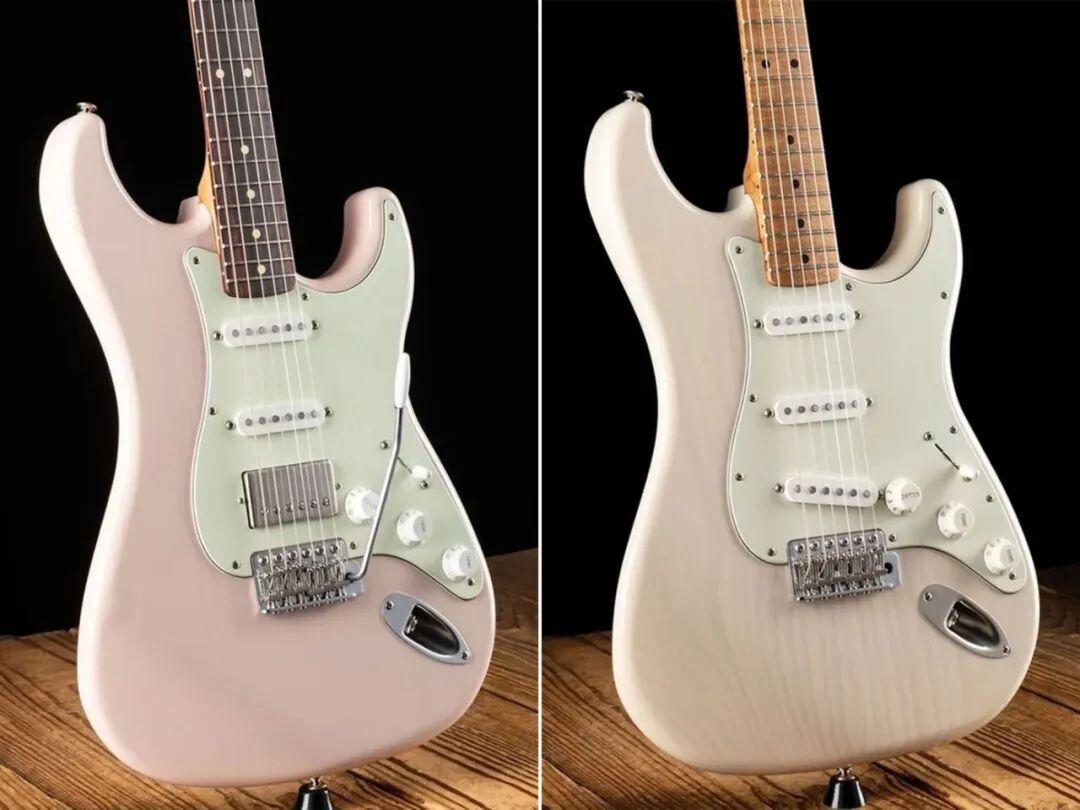
LSL Saticoy guitar (Image source: Internet)
The brand launched a fundraising campaign on GoFundMe over the weekend to cover legal fees and has raised more than $7,000 so far. They told Guitar.com, "We produce less than 500 guitars a year, while Fender's annual production is as high as 500,000. Our small company poses no threat to them, but now we are facing such a situation."
C
When a cultural symbol is "privatized" again
If the contour of the Stratocaster cannot be used, the entire history of the electric guitar industry will have to be rewritten.
The relevant topic has quickly spread and sparked discussions within the guitar industry. Opponents believe that Fender is over - protecting its rights. Nearly 70 - year - old guitarist Tim Pierce directly said in a YouTube video that Fender's move is "brand suicide." Supporters believe that small and medium - sized brands have been free - riding for a long time, and the judgment will force the industry to break away from the path - dependence of "copying the classics."

For Fender, regaining the ownership of the guitar contour design means regaining one of Fender's most important visual assets. In the past, the existence of a large number of imitation products, along with the improvement of manufacturing capabilities in China and Southeast Asia, has allowed a large number of low - cost ST - type guitars to enter the global market, which has directly impacted Fender's price system in the entry - level product line (such as Squier). In recent years, Fender has paid more and more attention to profit margins and brand control. Reconstructing market boundaries through legal means is a typical approach.
In the United States, a lawsuit involving the guitar shape of Gibson also received a judgment recently. The court found that Dean Guitars had infringed multiple trademarks of Gibson and needed to make compensation and was prohibited from promoting or selling infringing guitars. At the same time, the court determined that Gibson's classic ES guitar model is a common design.
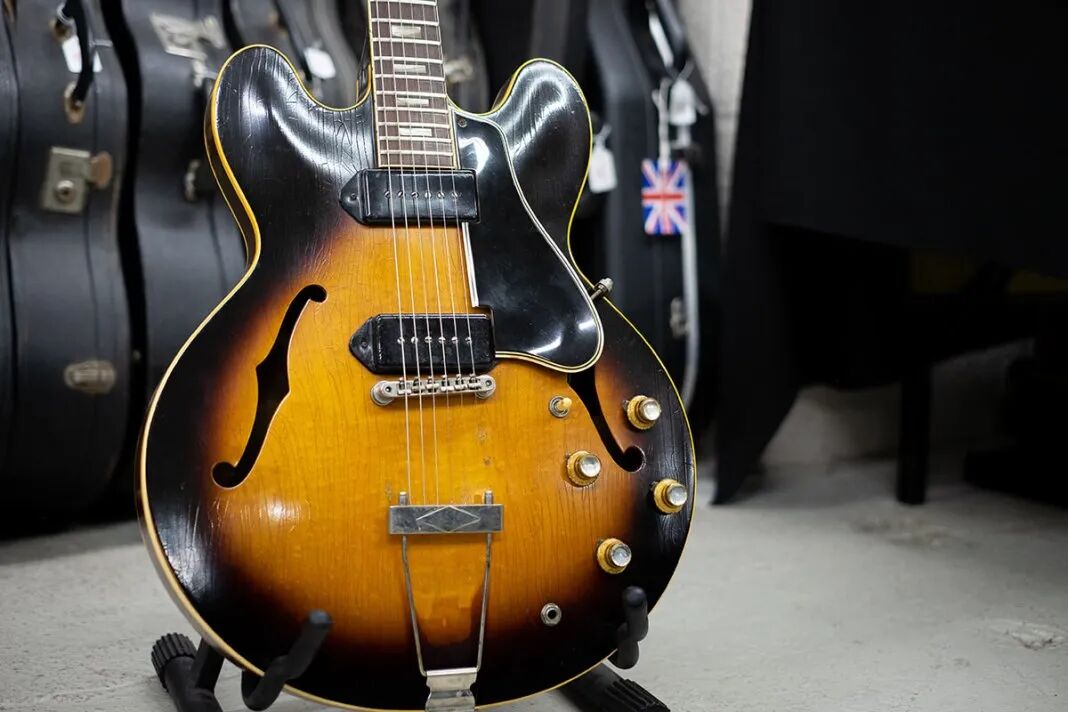
1960s Gibson ES - 330 (Image source: Internet)
The ES body shape is not exclusive to Gibson, but this is only in the United States. Gibson still holds the patent for the ES body shape in many other regions, including the EU. Importantly, Gibson still holds multiple rights such as the headstock design and the ES word trademark. Therefore, other brands cannot casually imitate classic guitar models like the ES - 335. Even if they do imitate and sell, they are still in a very risky situation.
Both major guitar brands have spared no effort in legal litigation to protect the classic guitar shape designs. In terms of results, Fender's current actions are more significant.
Legally, Fender's claims are being supported; commercially, this is a rational re - demarcation of boundaries; but culturally, it is still controversial. When a design has become an industry language, should it still be monopolized by a single brand?
Fender's answer is already written in the German court's judgment. Whether the industry will accept this answer remains to be verified by time.
This article is from the WeChat official account "New Music Industry Observation" (ID: takoff), author: Yibai, published by 36Kr with authorization.