Large tech companies are fully betting on AI programming, and Vibe Coding is triggering a wave of "everyone creating applications".
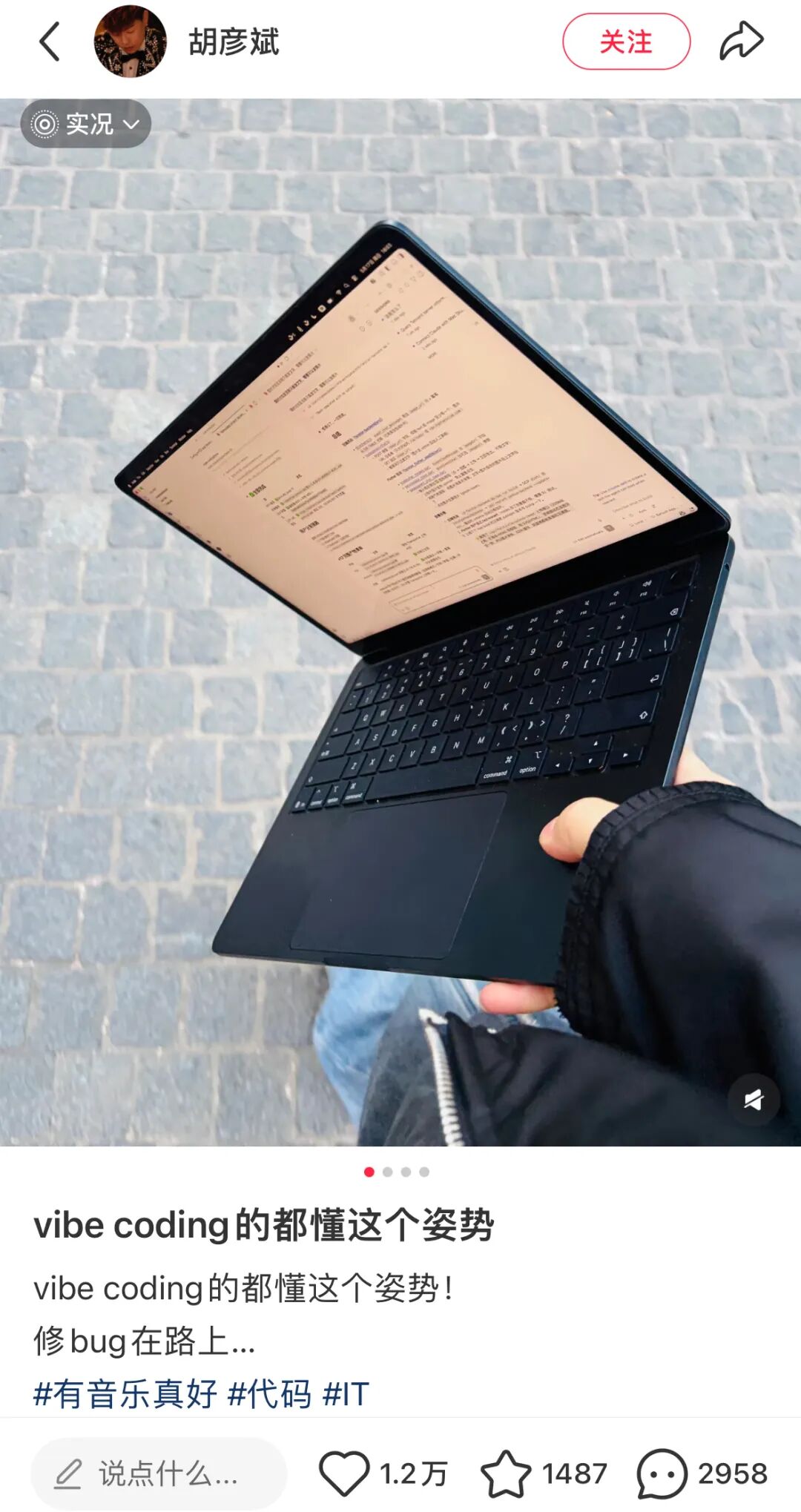
In May 2026, singer Hu Yanbin posted on social media about his daily life of using AI programming to develop apps. It is reported that the interactive community app he developed for his fans is called "Yan Fire". Its functions cover tour information display, daily check - ins, interactive communication, etc., and it has currently launched an internal test.
After the post was published, the comment section quickly became lively. After all, a Chinese - speaking singer - songwriter starting to immerse in Vibe Coding is quite a hot topic. What's more noteworthy is that the number of people like Hu Yanbin, who can "develop apps without knowing much about code", is increasing at an astonishing speed.
When Ant Lingguang was first launched half a year ago, the "Flash App" function promoted the concept of ordinary people developing apps, and public opinion was polarized at that time. By the second quarter of 2026, the situation had completely changed, and domestic leading Internet companies had all entered the field.
Baidu has pushed the experience of natural - language - generated applications to the level of production - grade delivery. Tencent has launched an independent product focusing on inspiration and co - creation atmosphere. ByteDance has made its AI programming tool an independent terminal detached from the traditional development environment, upgrading AI from an auxiliary tool to a collaborative entity capable of independently performing tasks.
The fundamental driving force behind this collective shift is the qualitative change in the capabilities of basic models, that is, from only being able to write code snippets to being able to independently understand requirements, plan architectures, generate code, and complete debugging and deployment in a complete closed - loop.
When AI truly has engineering - grade delivery capabilities, the re - configuration of productivity relations is no longer a technological fantasy but an industrial reality that is happening. It can be said that behind the full - scale entry of large companies is a deep - level reconstruction of software production thresholds, creator ecosystems, and industry value distribution.
Capability Inflection Point: The Qualitative Change from "Being Able to Write Code" to "Being Able to Independently Deliver"
To put it more straightforwardly, Vibe Coding is like a cloud - based personal chef.
In the past, if you wanted to have your own app, you had to learn to cut vegetables, prepare ingredients, cook, and understand kitchen management. Now, just tell the "menu" what you want to eat, and the AI "kitchen staff" can directly serve the finished product to you. You don't need to have professional programming skills. You just need to clearly state your requirements, and the rest, including code generation, function arrangement, and packaging, will all be silently completed by AI in the background.
In this regard, Ant Lingguang was the first player in China to take the lead. In November 2025, Ant Group launched the full - modality AI assistant "Lingguang". One of its three core functions, the "Flash App", has the core selling point of generating an interactive mini - app within half a minute by describing requirements in natural language. The Ant team calls this interaction paradigm "Wish Coding", that is, going directly from "thinking" to "using".
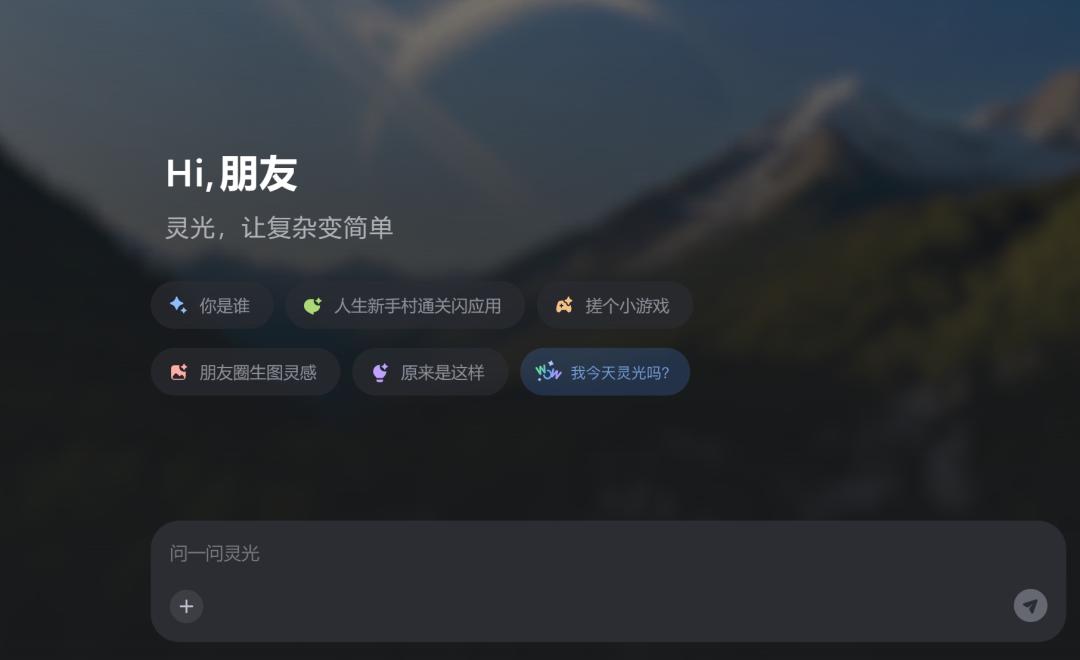
After Lingguang was launched, the data was quite impressive. The number of downloads exceeded 2 million in six days. As of December 26, 2025, users had created over 12 million Flash Apps, and the vast majority of creators had no knowledge of code at all. However, public opinion was somewhat polarized at that time. Many people thought it was just an "advanced interactive card" with a stronger toy - like nature, but the fact is not so.
In February 2025, Andrej Karpathy, the co - founder of OpenAI, first proposed the concept of Vibe Coding to describe how AI enables developers to create applications with little concern for the code itself.
At that time, the AI - driven full - stack application development platform Lovable, created by Swedish developers Anton Osika and Fabian Hedin, had attracted the attention of the capital market and completed a $15 million Pre - A round of financing. In December 2025, Lovable completed a $330 million Series B financing, and its valuation rose to $6.6 billion. In addition, recently, TechCrunch reported that Cursor, a highly - regarded unicorn enterprise in the US AI programming field, plans to raise $2 billion, and the company's valuation is expected to climb to $50 billion.
When the concept of AI programming first became popular, the industry did face bottlenecks. The code generated by AI required a lot of intervention from professional developers to be put into use. The applications generated by ordinary users remained at the stage of "looking like something but not really usable". High churn rate and low retention were common problems in the entire track.
The real turning point occurred around 2026. In May 2026, the SWE Atlas benchmark test evaluated the performance of multiple large models in three professional engineering processes: Codebase Q&A, test writing, and code refactoring. GPT - 5.4 and Opus 4.7 had the highest comprehensive scores. The analysis showed that top - level models were already able to take over tasks and complete delivery in a real - world engineering environment.
What's more noteworthy is the catching - up speed of domestic models. Recently, the global third - party programming list Code Arena was released. Alibaba's latest flagship model Qwen3.7 - Max scored 1541, surpassing models such as GPT - 5.5 and Gemini - 3.5 - Flash, and ranking second in the world among large - model manufacturers, only after the Claude series.
The practical significance of this ability leap is that AI has evolved from "being able to write runnable code snippets" to "being able to independently complete a complete software project", opening up the entire process from requirement understanding, architecture design, code generation to debugging and deployment.
Last year, Ant Lingguang was questioned for being "useless", but it bet on the continuous improvement of the capabilities of basic models. When the models truly crossed the critical point from "being able to write code" to "being able to independently deliver", the fundamentals of the entire track were re - defined.
In April 2026, the Lingguang App comprehensively upgraded its Flash App function. The upgraded platform integrates multi - agent collaboration and full - modality content generation technology, and can generate content interaction interfaces according to users' natural - language instructions. At the same time, it strengthens the call of the native capabilities of mobile phones, such as cameras, gyroscopes, LBS positioning, vibration feedback, etc. By the same period, the cumulative number of Lingguang's Flash Apps had exceeded 30 million, and the perseverance of the pioneer began to pay off.
Large Companies Enter the Field: Three Sets of Underlying Logics on the Same Track
When the value of the track is confirmed, the ways in which large companies enter the field are worth examining. On the surface, all companies are doing "enabling ordinary people to generate applications with natural language", but their strategic intentions and path choices are significantly different. The root cause of this difference lies in the different core capabilities, user bases, and business logics of each enterprise.
Baidu's strategy is the most "heavy - weight", with the core being to bet on production - grade delivery and a commercial closed - loop. On March 24, 2025, MeDo was officially launched in full volume. In September of that year, it supported one - click generation of WeChat native mini - programs. By the 3.0 version in May 2026, it had evolved to be able to directly generate iOS and Android native applications through natural language and support online hot updates.
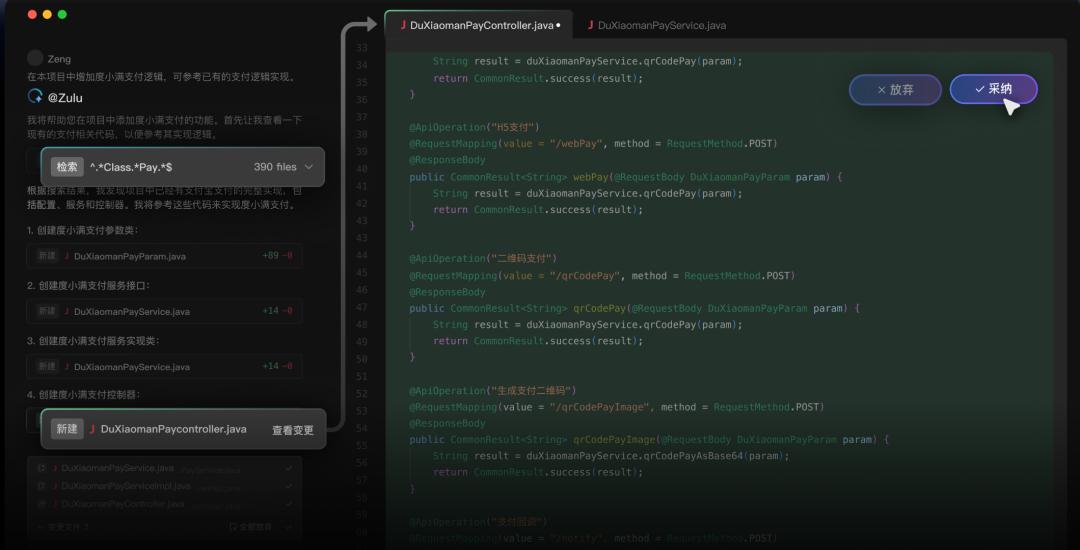
A scenario demonstrated at Baidu's Create Conference is quite convincing. A second - grade primary school student used MeDo to "create" an installable native application on - site without writing a single line of code. 90% of the code of the MeDo App itself was also automatically generated by the MeDo intelligent agent. This detail itself is the most direct product declaration. As of now, the MeDo App has served over 10 million users and created an application value of 5 billion yuan.
Tencent's Toast has taken a completely different lightweight route. Launched on May 15, 2026, Toast is positioned as an "exploratory Vibe Coding product" and an "application generation and inspiration co - creation platform". The core experience is that users input natural - language descriptions of their ideas, and AI automatically disassembles functional requirements and packages them with one click to generate an APP that supports local download and installation.
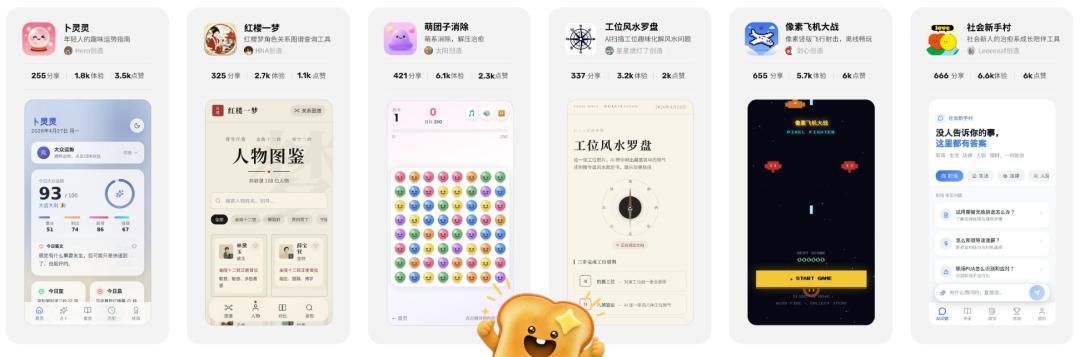
Different from MeDo, which emphasizes "production - grade", Toast focuses on "fun" and "sharing". The platform has built - in functions such as social sharing and an inspiration square. Users can make their applications public as templates for others to replicate with one click or make secondary creations. This "light - use + social - spread" model bears the gene of Tencent's products, completes market education with extremely low thresholds, and achieves large - scale user growth through social chains.
During the same period, Tencent Cloud's intelligent agent development platform also launched the ADP intelligent workbench, which realizes the generation of enterprise - level intelligent agent applications with natural language for enterprise scenarios, forming a complementary layout between C - end interesting exploration and B - end business applications with Toast.
ByteDance's strategy is more systematic and radical. In July 2025, ByteDance launched the AI - native integrated development environment (IDE) tool TRAE and first conducted a Beta test of the SOLO mode on the international version. In March 2026, it further launched the SOLO independent terminal detached from the traditional IDE architecture, providing two working modes: "Code" and "More Than Coding".
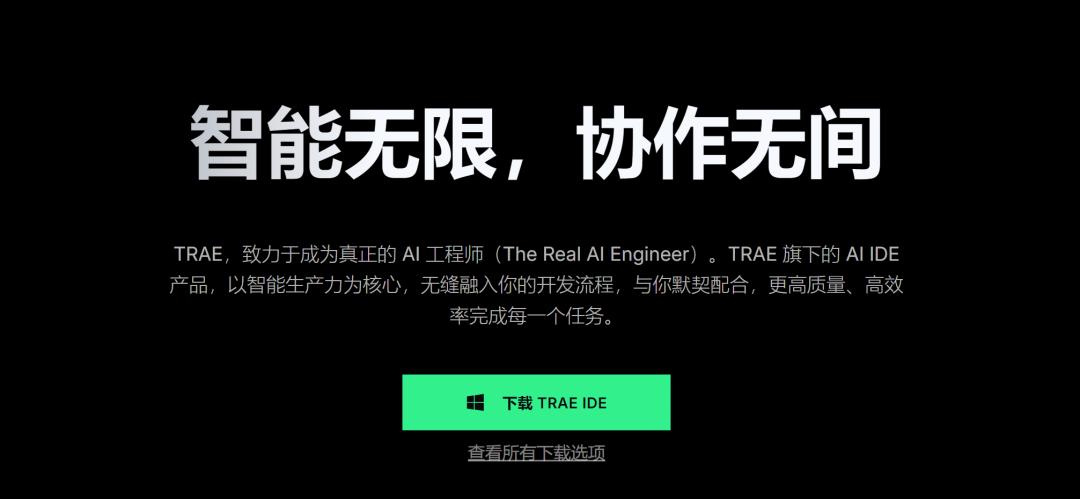
Its core breakthrough lies in generalizing the capabilities of AI Agents from programming to the entire R & D process. Users can upload different types of materials such as meeting transcripts, hand - drawn sketches, and un - cleaned data files, and AI automatically completes requirement analysis, prototype design, data processing, and report generation.
ByteDance's ambition is not only to enable ordinary people to generate applications but also to define a collaborative paradigm in which AI is upgraded from a tool waiting for instructions to an entity capable of independently planning and executing tasks. Its multi - level layout also includes products such as Doubao MarsCode to cover the domestic developer ecosystem.
In 2025, the global market size of low - code and AI programming platforms reached $50 billion. According to Gartner's prediction, in 2026, more than 75% of new enterprise applications globally will be built using low - code or no - code technologies. Against this background, the industry is showing a structural differentiation of "large companies competing for entry points and small companies competing in coding". Start - up companies have begun to collectively shift to vertical scenarios for in - depth refinement, while large companies are systematically competing for development entry points and infrastructure in the AI era.
At the same time, the entry of large companies is accelerating the reshuffle and integration of the industry. This competition will not only be about product functions but also about who can build a complete ecological system. When the development threshold is as low as just stating one's ideas, it is only a matter of time before the explosion of application creation, as the development of applications by primary school students is changing from a news event to an industry norm.
Universal Creation: The Realistic Gap between Productivity Release and Commercialization
As the technical threshold is continuously lowered and large companies enter the field in full force, deeper changes are taking place. The production relations in software production are being fundamentally rewritten, which touches on the structural issues of "who creates software" and "how value is distributed".
Hu Yanbin's "Yan Fire" App provides a vivid example. When a person has a deep understanding of a vertical scenario, such as a singer's understanding of his fan group, AI can enable him to directly transform this understanding into a fully - functional product without going through the long chain of finding a team, writing requirement documents, development, testing, and going live.
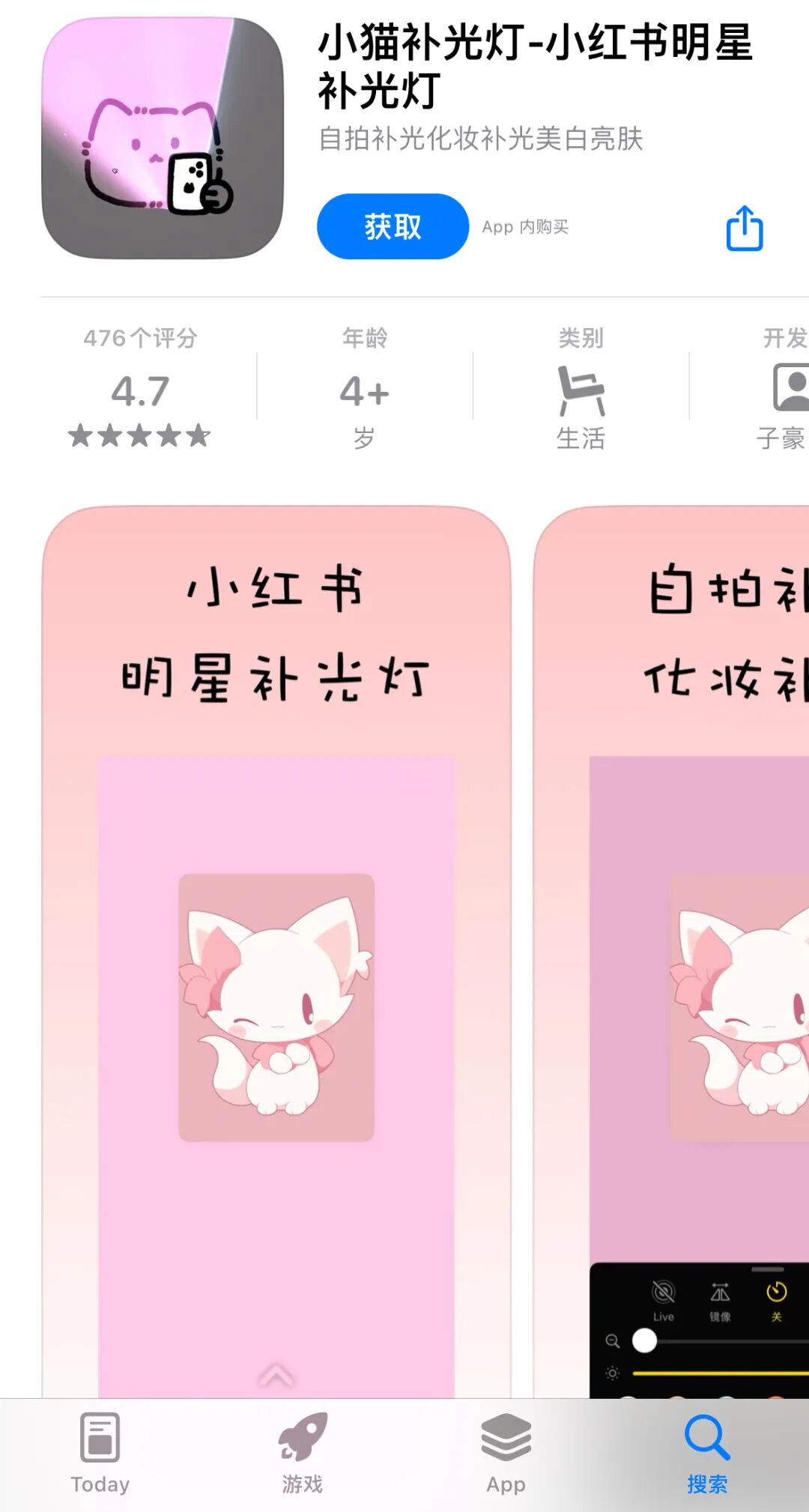
More cases are emerging. In 2025, an independent developer with no programming experience completed the "Kitten Fill - Light" application with the help of an AI programming tool and earned three or four hundred thousand yuan after its launch. There have been cases on Baidu's MeDo platform where early developers have earned tens of millions. The college student group is also earning considerable income through Vibe Coding.
In the traditional software development model, the process from the conception to the launch of an application requires the collaboration of product managers, designers, front - end, back - end, and test engineers. Vibe Coding is compressing this process into "one person plus an AI". When programming ability itself is no longer a scarce resource, the real scarce resource becomes the ability to understand requirements and transform ideas into products, which is in line with the paradigm shift from the monopoly of professional developers to universal content creation in the Internet era.
However, the commercialization prospects of this path are not smooth. Industry data from CodeRabbit shows that in 2025, the average number of bugs in code generated by AI was about 1.7 times that of code written manually. At the same time, security risks cannot be ignored.
In March 2026, Kaspersky Lab disclosed multiple malicious abuse attacks against legitimate no - code development platforms. Attackers used the legitimate domain names and SSL certificates of the platforms to build highly - realistic phishing pages, bypassing traditional security detections. Multiple mainstream platforms were also reported to have security vulnerabilities such as remote code execution and SQL injection. These risks point to a deep - seated problem: when code is written by AI rather than humans, who is ultimately responsible for quality and security?
What's more noteworthy are the challenges at the commercial model level at this stage. According to The Information, Lovable's gross profit margin is only 35%, and the gross profit margin of the programming assistant Replit fluctuates around 36%, while the average gross profit margin in the traditional software industry is usually between 60% and 80%.
In the long run, after technology is no longer a moat, platforms must find real barriers and further open up the process from generation to distribution and