SAS, Profitable for 30 Consecutive Years: When "Not Being Fast Enough" Becomes a Risk

John Sall (left), co-founder of SAS and a billionaire, and Jim Goodnight (right). Photo source: AARON KOTOWSKI FOR FORBES
What makes this article worthy of Chinese readers' attention is not only the transformation story of an established American software company, but also a fable about the "technology cycle": When the bubble of generative AI begins to burst, the market will eventually re-evaluate those companies that are "not flashy but stable enough." SAS's decades-long profit record, which was a burden in the frenzied year of 2023, may become a moat in 2026. For the market experiencing the return of rationality in AI investment, Goodnight's conservatism may be more valuable for reference than Silicon Valley's radicalism.
In Cary, North Carolina, Jim Goodnight, co-founder and CEO of the data analytics company SAS and a billionaire, sits leisurely in a leather office chair in a meeting room, wearing a simple white shirt. This meeting room doesn't look like an executive office but rather a geological exhibition hall. Behind him are various crystal-clear strange stones: a cluster of pyrite, amethyst, a fossilized duck-billed dinosaur egg unearthed from the Gobi Desert, which is 69 million years old, and a meteorite. He jokes expressionlessly, "Don't let this thing hit your head."
Now, SAS has reached its 50th anniversary, and CEO Goodnight is already 83 years old. Like the displayed strange stones, they were born before a large number of AI companies with high-speed expansion but continuous losses disrupted the industry landscape, and they are the imprints left from that era. SAS can analyze massive amounts of data in real-time for customers, helping partner enterprises make more scientific business decisions.
Long before AI was used to refer to various technological fields, Goodnight was a pioneer in the field of statistics, laying the development prototype of the data analytics industry. He admits, "Many people look down on us and casually say, 'SAS is just an old traditional software company.' But that's not the case. For fifty years, we've been constantly optimizing and upgrading."
Now, SAS must prove to the market that the company's long-term accumulated foundation does not mean being complacent and stagnant.
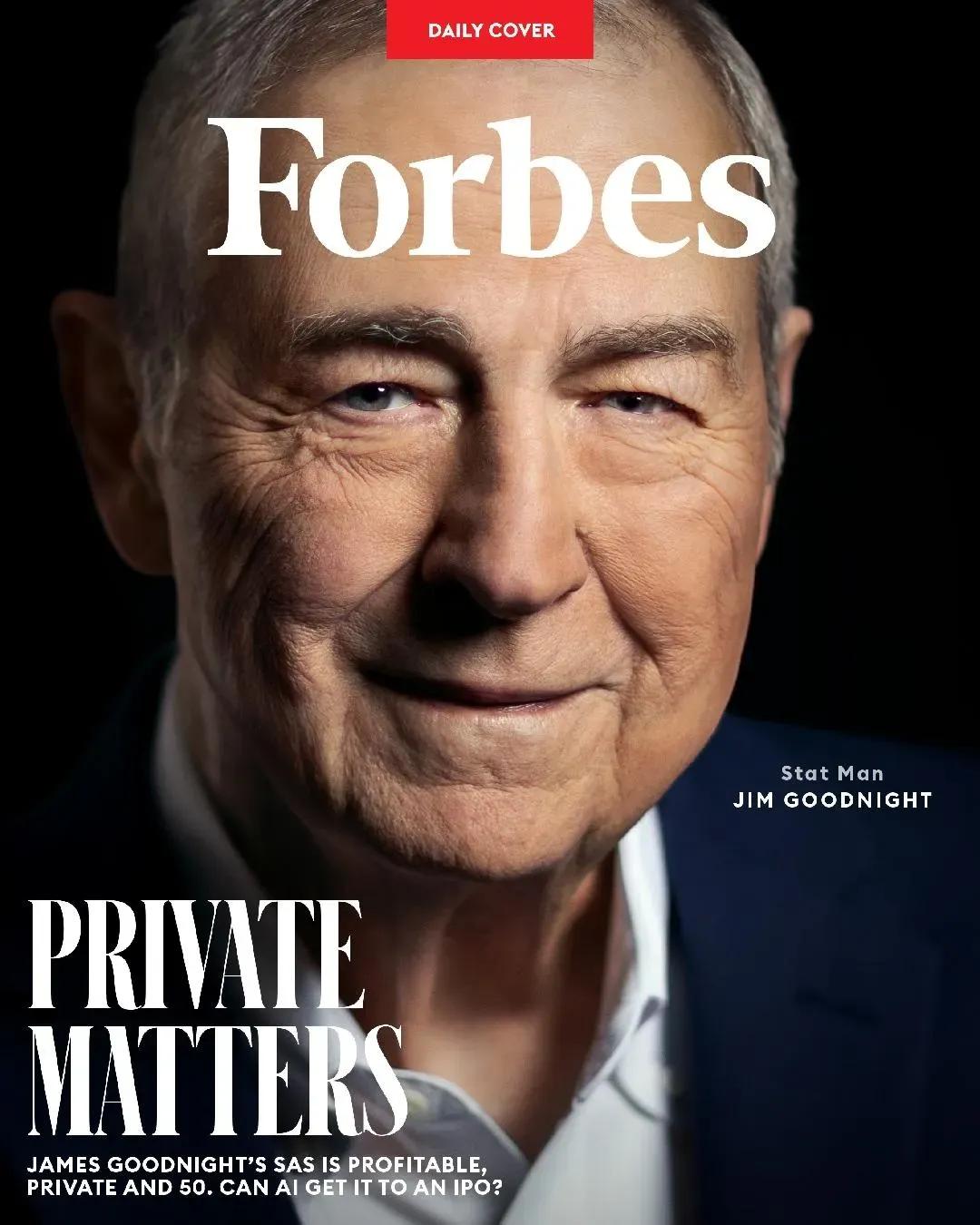
Photo source: AARON KOTOWSKI FOR FORBES
01
SAS's annual revenue has exceeded $3 billion, and its cooperative customers are all over the world's industrial giants, including 90% of financial service enterprises, all medical and health and life science enterprises, and most government departments. Since its establishment, the company has always maintained a non-listed operation state, with perennial profits and no debt burden.
The AI boom is testing SAS's traditional development model.
OpenAI, Anthropic, and a large number of emerging data analytics competitors are all promoting the creation of a new future, claiming to completely abandon the service models of traditional established industry enterprises. Mega cloud service providers such as Microsoft and Amazon are even bundling data analytics technology with AI services and including them in cloud service contracts. The market competition in the public domain is also becoming increasingly fierce. At the internal corporate level, the management change is already on the agenda, not just an empty talk. For years, Goodnight has been hinting at a management handover and even listed going public as an alternative for the company's inheritance. He said bluntly, "Once the company goes public, the CEO needs to be replaced. No one wants an old guy like me to promote stocks."
SAS has always pursued stable operations to resist market fluctuations, but now a thorny problem has emerged: Can it quickly complete the transformation and innovation without abandoning its foundation of being steady and prudent, and gain a foothold in the AI era? And can SAS achieve all this without Goodnight at the helm?
Goodnight is very confident about this. He has personally experienced multiple industry boom-and-bust cycles: During the peak of the Internet bubble, he considered introducing external capital but finally chose to give up; after the Internet bubble burst, this cautious decision allowed the company to smoothly survive the crisis; he has also experienced investment failures, such as the layout in the aviation field; in 2022, the market adjustment also forced SAS to postpone its listing plan. He doesn't agree that generative AI has rewritten the operating rules of the business market.
When it comes to large language models, Goodnight's view is very reasonable. He believes that AI large models essentially just rely on probability to calculate the next word that will appear in a sentence. "How can this actually solve the practical problems in various industries?" In his eyes, SAS's decades of accumulated customer reputation and industry professional experience - especially the deep barriers built in the financial, medical and health, and government service fields - are still its core advantages in the market.
However, in the AI era, Goodnight, who is in his later years, will ultimately hand over the heavy responsibility of SAS's future development to the new generation of managers.
In recent years, he has gradually handed over the daily operation and management of the company to a new generation of senior management team, with Chief Technology Officer Bryan Harris and Chief Operating Officer Gavin Day at the core. Goodnight has already started training them to take over the company's management, but the final CEO candidate has not been determined yet.
The development blueprint for the new generation of management seems simple, but it's not easy to implement: To reverse the market's old and rigid impression of SAS and prove to customers that the company has already undergone a transformation; to promote practical AI technology to actually help customers optimize business decisions, rather than creating concept products with only a false reputation; to flexibly adjust the product form to fully meet the diverse usage needs of different customers.
Harris admits that the company's long-established industry status has become the biggest obstacle to SAS's development.
02
The large-scale headquarters park of SAS in North Carolina visually confirms its long-established industry status. This 300-acre park surrounded by green trees is fully equipped with facilities, including a childcare center and a medical clinic; during lunch breaks, employees can be seen playing amateur football in teams on the park lawn; there is also a five-star hotel, which is rare in the state, and dozens of gentle sheep are grazing leisurely under the solar panels. Turning left on Data Analytics Avenue and entering Research Avenue, and then walking to Binary Road, a shiny silver pi sculpture is particularly eye-catching. The layout design of the entire park not only embodies Goodnight's business philosophy but also demonstrates SAS's academic foundation.
The full name of SAS is Statistical Analysis System, and the prototype of the company was born at North Carolina State University. In the late 1960s, Goodnight, who had just obtained a doctorate in statistics and stayed at the university to teach, joined hands with Tony Barr to develop data analytics software to organize and analyze the massive data of the university's agricultural department.
As this practical software gained more than a hundred external cooperative customers, in 1976, Goodnight, Tony Barr, John Sall, and Jane Helwig officially established the SAS Institute. In 1979, Tony Barr sold his 40% shares for $340,000; Helwig left the company a few years later and sold her shares, and she passed away in 2021. Now, Goodnight holds two-thirds of SAS's shares and has a fortune of $13.3 billion, becoming the richest person in North Carolina; John Sall holds the remaining one-third of the shares, with a personal wealth of $6.5 billion.
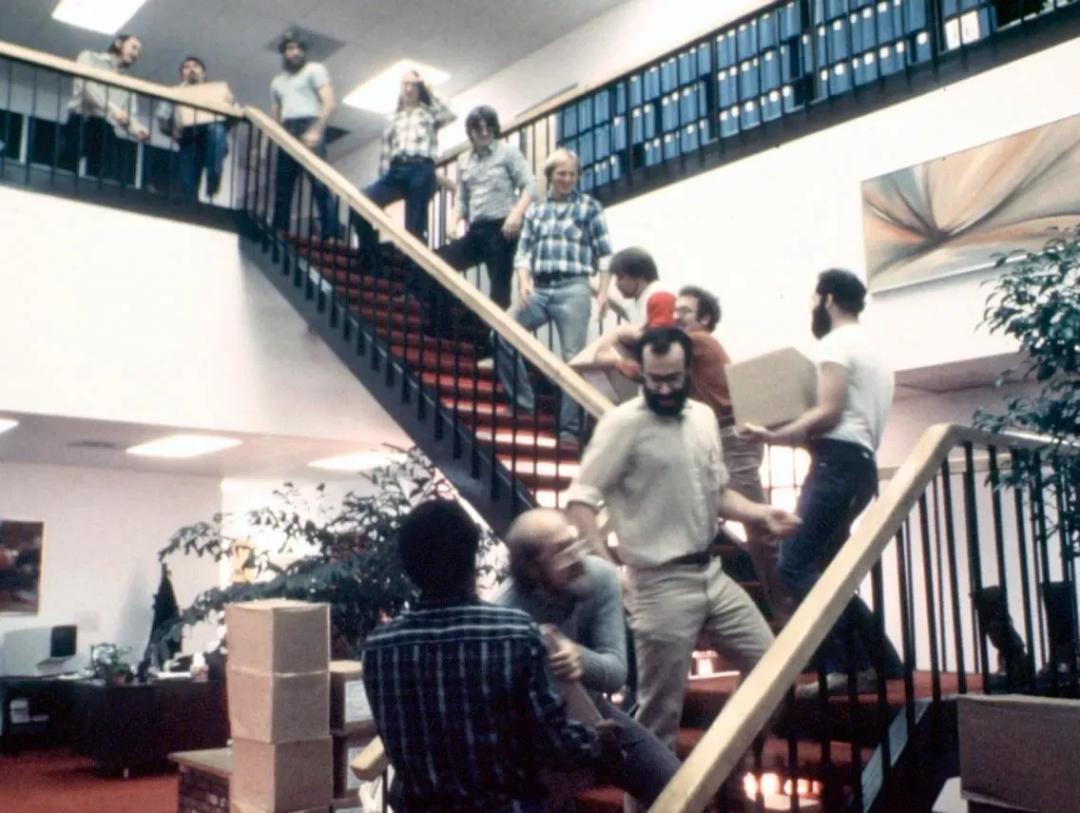
This is the scene of SAS's former "human chain book transmission." All employees lined up to relay the paper manuals of SAS software and store them uniformly. Photo source: COURTESY OF SAS
SAS has been operating with its own funds since its establishment and has never sought external financing. In the early days, SAS software was sold in the form of paper manuals. Whenever a large number of paper manuals arrived, all employees, including the founders, would line up in a production line to move and store the manuals in the basement of an employee's house. Co-founder Sall named this tradition "human chain book transmission."
Sall said that after the number of consultation calls from potential customers gradually decreased, Goodnight, who came from a hardware store owner's family and was well-versed in practical business operations, took the lead in dividing potential customers into four major categories in alphabetical order, and let several founders personally expand the market and connect with customer resources.
This practical business strategy has achieved remarkable results. Since its first day of establishment, SAS has always maintained a positive cash flow.
Previous reports from Forbes showed that in 1996, the company's revenue reached $600 million, and the operating profit was about $300 million. Sall said that SAS has been developing steadily for decades, always prioritizing profits and never blindly pursuing the speed of expansion.
Along the way, SAS has accumulated an excellent reputation and is known for treating employees well - the well-equipped park is a good example. Since the 1980s and 1990s, SAS has supplied 11,000 pounds (nearly 5 tons) of M&M's chocolate beans to all employees every week. Later, it successively added a park clinic, a pharmacy, a welfare childcare center, and a hair salon. Such generous benefits were very rare at that time. This is also Goodnight's employee retention strategy: to improve employees' happiness, reduce the employee turnover rate, and at the same time save the high costs of retaining employees through high bonuses and stock options that would dilute equity.
He used to joke that at the end of work every night, the company would lose 95% of its assets - he was referring to SAS's employees. In the post-pandemic era, with the popularity of the remote work model, this joke no longer applies. Goodnight said helplessly that now it's even difficult to gather employees to work in the office.
03
Three years ago, Harris proposed an idea that he was very optimistic about to Goodnight: SAS could use computer vision to analyze the video data of farms to judge how diseases spread among chicken flocks and help farmers ensure the health of their chickens. But Goodnight rejected this idea with one question: "How much do the cameras cost? Farmers won't pay for such equipment at all."
Whether from the perspective of customers (such as farmers in the above example) or based on SAS's own development considerations, Goodnight has always been highly focused on costs and profitability for decades. He said bluntly that 90% of the funds in AI innovation are wasted in vain and repeatedly emphasized that SAS needs to further improve its profitability.
The CEO believes that SAS has been able to stand firm for a long time because of its pursuit of continuous profits, even if it means sacrificing rapid growth. It is reported that Anthropic's revenue has increased by about 10 times year-on-year for three consecutive years, while SAS's revenue increased by 9% last quarter, roughly in line with Morningstar's prediction that the annual growth rate of software companies will be around 10% by 2029.
Goodnight believes that the development pace of AI companies "needs to slow down." But this doesn't mean that SAS ignores market trends. In 2023, the company announced that it would invest $1 billion in developing AI-driven products in the next three years. "We were going to spend that much money anyway, so we might as well announce it publicly," Goodnight said flatly.
The problem is that the AI market is not monopolized by SAS.
It faces competitors who entered the market earlier and invested more. The large technology companies include Microsoft, Amazon, and Oracle, and the newer entrants include Snowflake, Databricks, Alteryx, etc. In the public sector, Palantir has been taking contracts from the US government from SAS and other companies. Last year, the increase in Palantir's revenue from the US government was about twice the total revenue of SAS's government business.
SAS's consistent approach is to meet customers' needs where they are most anxious.
The company cooperates with almost every major bank and the Big Four accounting firms to help them use AI in a safe and traceable way for fraud detection and financial risk management. For a company that has been promoting "caution" as its selling point for decades, the healthcare, government, finance, and other regulated industries are its natural advantageous fields. But even in these fields, the competitive pressure is increasing. Anthropic has been recruiting industry experts and announced in May this year that it would launch a set of financial service industry products, directly competing with SAS for the same customers.
"Everyone is in a 'coopetition' relationship," Harris said. Customers have asked SAS to integrate its products with competitors' platforms, and the company has readily agreed.
This gives SAS unique flexibility among its peers. If customers want data analysis to be done in the cloud (whether it's Microsoft, Amazon, or any other platform), SAS can do it. If they want it to be done locally, SAS can also meet the requirement - and can use the programming language chosen by the customers. This is very important for hospitals and government agencies, especially when there are conflicts between sensitive data management and regulatory compliance at home and abroad. On a screen in the administrative building specially used to receive customer visits, it recently read: "Welcome the delegation from the UAE government."
Harris believes that digital twins may become a new source of revenue. SAS is cooperating with Epic Games to develop relevant solutions, using AI to create virtual copies of complex physical facilities (such as manufacturing plants) for planning the most efficient layout of facilities, predicting safety accidents without endangering workers' safety, and conducting various virtual tests. For example, the paper products manufacturer Georgia Pacific uses digital twins in its Savannah River plant to test and train robots, thereby reducing costs and ensuring employees' safety. Digital twins currently only contribute millions of dollars in revenue, but Harris believes that this business can grow to $500 million in three to four years.
SAS is also trying to use quantum computing to handle ultra-complex transactions that traditional computers cannot handle, such as bank fraud detection. SAS has other plans, including using data and AI to empower sports teams. In December last year, SAS announced a partnership with Liverpool Football Club to help the team improve its marketing effectiveness with its own products. At the company's 50th anniversary conference, SAS also announced the launch of a series of new tools integrating AI agents.
"SAS has always been eager to solve every problem it encounters and wants to try every field," commented Casey Lange, the research director at IDC, and added, "This is actually a double-edged sword." She used to work at SAS and believes that the company should focus more on its main business.
04
Goodnight still hopes to push the company to go public, believing that this is the best way to realize part of his shares without splitting and selling SAS. But five years have passed since SAS first said it was ready to go public. The window for going public has narrowed, and the investment trend has changed. Sometimes it seems like a slide that only leads to regret. "We don't want to go public when all the funds are being sucked away by SpaceX," he said.
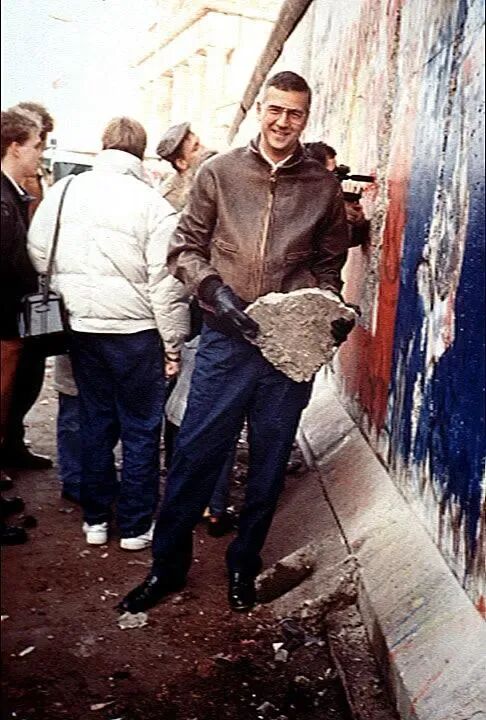
Goodnight flew to Germany in 1989 to witness the fall of the Berlin Wall with his own eyes. Now, a fragment of the Berlin Wall is placed in his office in Cary, North Carolina. Photo source: COURTESY OF SAS
There is also room for improvement in the financial data. Before starting the roadshow, Goodnight hopes that the company can achieve the "Rule of 40," a common benchmark for software companies, which means that the sum of the revenue growth rate and the profit margin reaches 40%. Achieving this indicator will help the company stabilize its stock price in the public market, especially when competing with fast