Sales have dropped to a new low. Who on earth still insists on buying non-electric cars?
The sales of fuel-powered vehicles have once again suffered a painful decline.
Data from the Passenger Car Association shows that in April, the sales volume of new energy passenger vehicles in China reached 849,000, and the penetration rate historically broke through the 60% mark, rising to 61.4%.
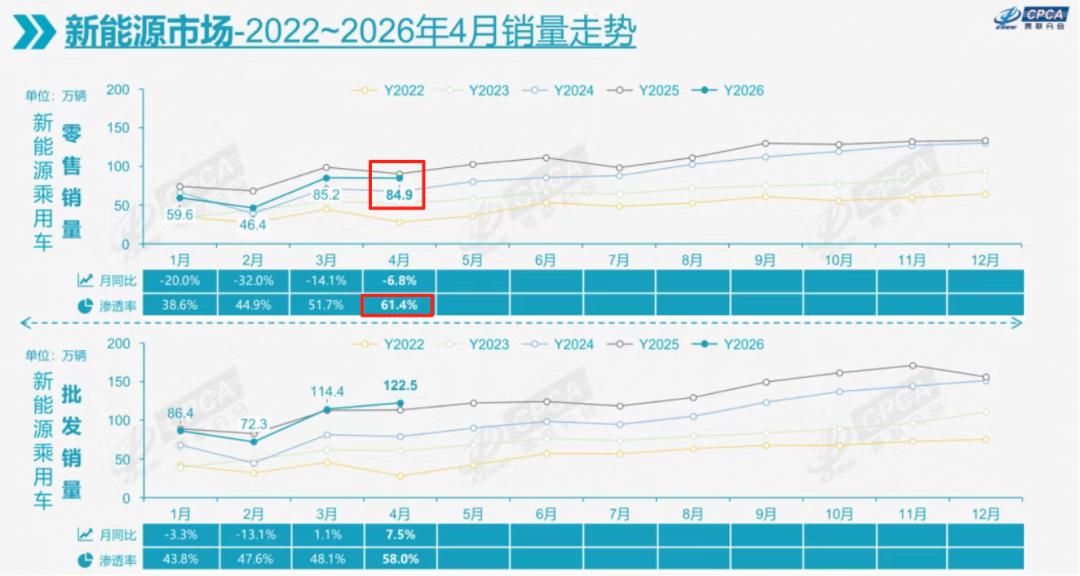
Picture/Sales volume and penetration rate of new energy vehicles in April 2026 Source/Screenshot from the Internet, New Energy Outlook
In sharp contrast, the retail sales volume of fuel-powered vehicles in April was 530,000, a year-on-year decrease of 37% and a month-on-month decrease of 33%.
Although the "trend is over" for fuel-powered vehicles, there are still some consumers who have an unshakable obsession with them and even will only buy fuel-powered vehicles.
This article will take you through eight aspects to understand why some car owners still hold on to fuel-powered vehicles.
1. Obsessed with the mechanical driving experience and in love with fuel-powered vehicles
Xue Kai (pseudonym) is a die-hard fuel-powered vehicle enthusiast. In his view, a car is not just a means of transportation, but also a "mechanical partner". The pure mechanical texture and immersive driving experience that fuel-powered vehicles have developed over a century are difficult to replicate and surpass for current new energy models.
Xue Kai said bluntly that even though many new energy vehicle brands are now emphasizing chassis tuning and using high-tech features such as "by-wire chassis" to pursue driving pleasure, in his heart, the handling of such models still cannot compare with traditional fuel-powered vehicles.
"People who really understand driving value the primitive pleasure brought by machinery more." Xue Kai said.
Since the first internal combustion engine vehicle came out, fuel-powered vehicles have gone through more than a century of development. From the initial simple means of transportation, they have gradually completed power innovation, structural upgrades, and track trials.
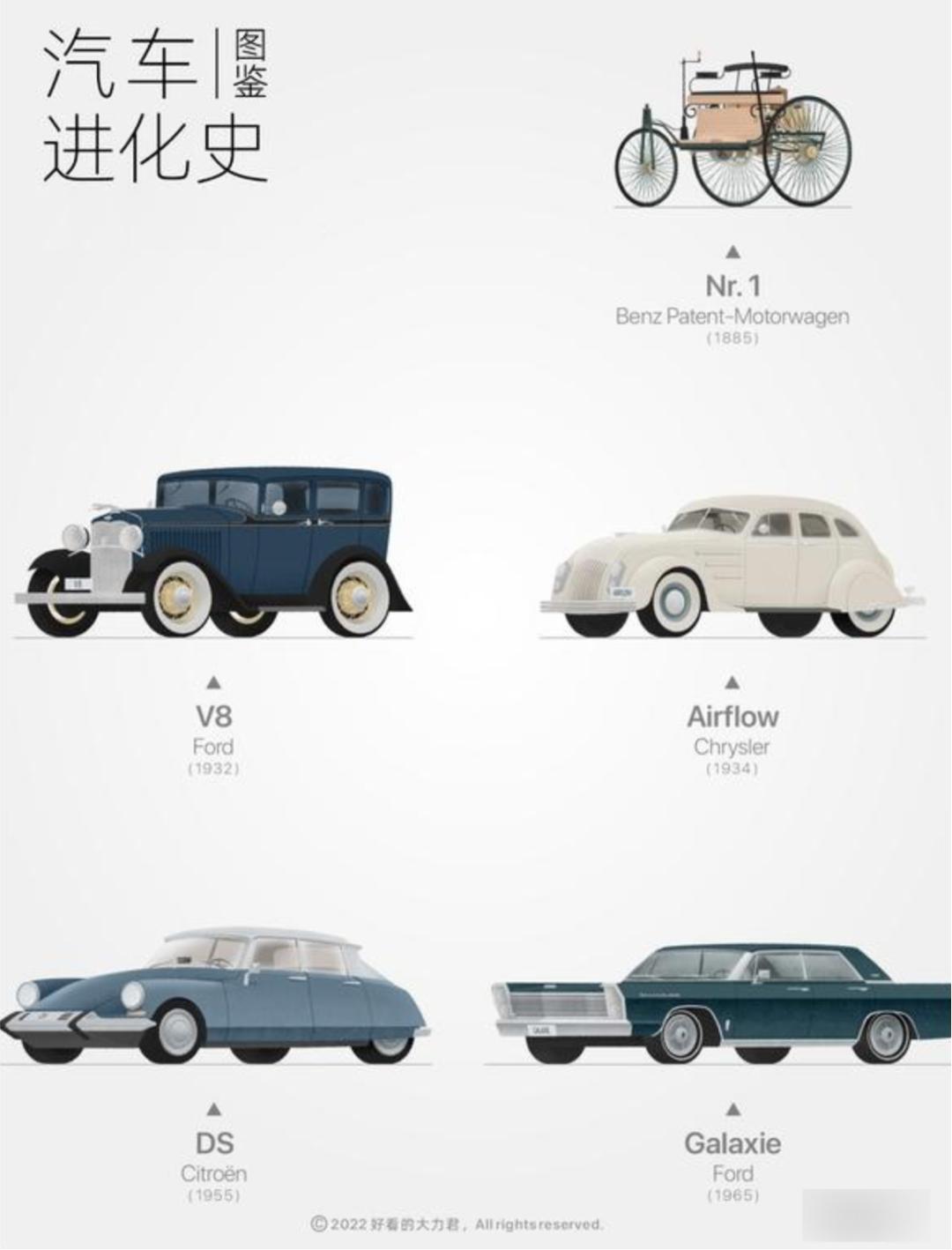
Picture/Development history of fuel-powered vehicles Source/Screenshot from the Internet, New Energy Outlook
This has also made core power components such as engines and gearboxes well-tested by the market for a long time, and their stability and maturity are deeply rooted in people's hearts.
Xue Kai said that it is this reputation and trust accumulated over the years that make many loyal fuel-powered vehicle enthusiasts, including himself, hard to easily recognize that new energy vehicles, which have a relatively short development time, can match fuel-powered vehicles in terms of driving heritage.
2. Abandoning "delicate" electric vehicles due to work environment
Zhang Fan (pseudonym) works in equipment maintenance in a rural area. He is either at the repair site or on the way to it. The old minivan he drives every day has run more than 200,000 kilometers. The chassis is full of dents from gravel, and the doors don't close properly. So, it's time to replace the car.
He wants to buy a better SUV, but he doesn't consider new energy vehicles.
Every time he goes to work, his trunk is filled with heavy equipment and toolkits. He often goes to mountainous areas or muddy country roads. A car with a lower chassis would get stuck. The delicate battery pack of an electric vehicle is under the chassis. He doesn't even dare to think about how much it would cost to repair if it hits a rock.
Zhang Fan said that he needs a car that he can start by turning the key and can be repaired at any repair shop, not an electronic product with a big screen.
After much selection, he finally chose the old Volkswagen Tharu. It doesn't have any fancy designs, and the interior is still the same as before. But it has a high chassis, a hard suspension, and a large trunk. He doesn't feel bad when driving on rough roads. On the day he picked up the car, he said, "This car is like my toolkit, sturdy, handy, and not fussy."
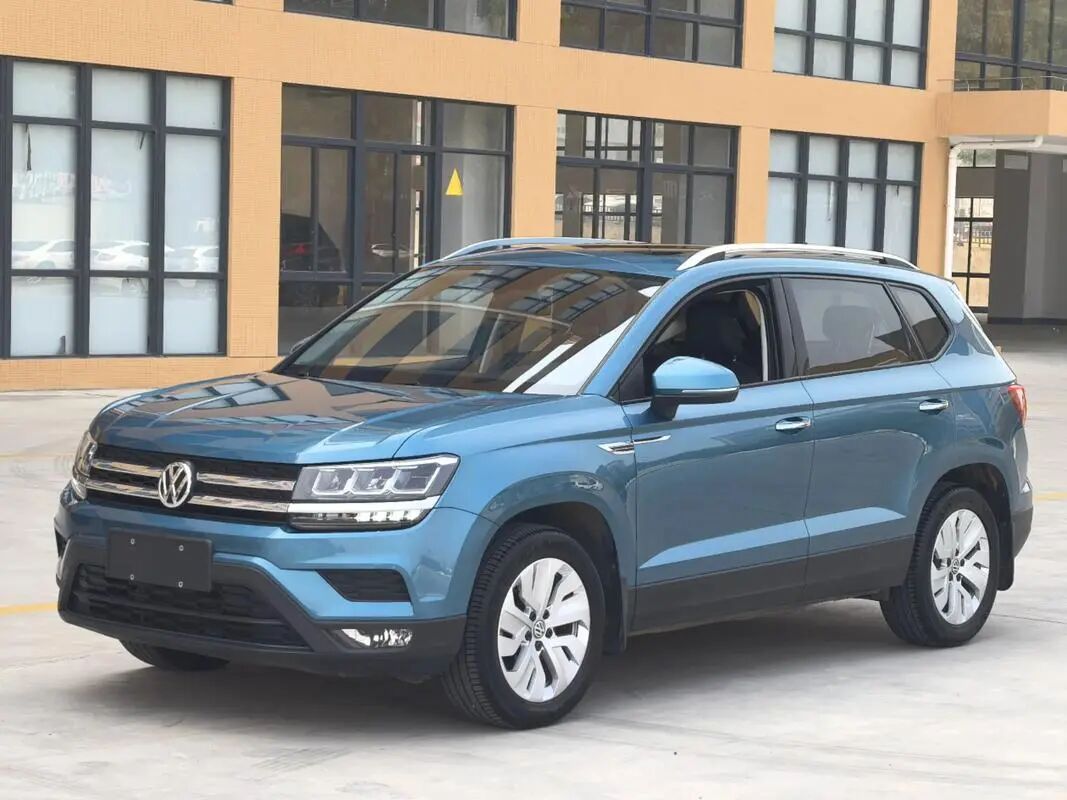
Picture/Old model Tharu Source/Screenshot from the Internet, New Energy Outlook
3. Unable to "reconcile" with range anxiety
Range anxiety is also one of the reasons why some consumers abandon new energy vehicles.
Although we have made great improvements in both the number of charging piles and charging technology, and some cars can even be fully charged in a few minutes. If using battery swapping, it only takes 92 seconds at the fastest.

Picture/ARCFOX Beta S3 battery swapping in 92 seconds Source/Screenshot from the Internet, New Energy Outlook
Even so, some fuel-powered vehicle owners still think it can't compare with refueling.
"After all, the refueling speed doesn't change depending on the technology. A 50,000-yuan fuel-powered vehicle and a 500,000-yuan fuel-powered vehicle can enjoy the same speed." A fuel-powered vehicle owner said bluntly.
Some people also pointed out that so-called supercharging has many limiting conditions, and it's difficult for ordinary people to reach the advertised charging power. As for battery swapping, the biggest problem is that there aren't enough battery swapping stations. "During this May Day holiday, there were even two electric vehicle owners who got into a fight over a charging pile."
4. Low frequency of daily car use, electric vehicles are not attractive
For people who use cars infrequently and have a short annual driving mileage, the cost-saving advantage of new energy vehicles is not very appealing.
Xiao Xu (pseudonym), who has driven a Honda for ten years, said that she only uses the car to pick up and drop off her child every day, driving no more than three to five kilometers a day. She only travels within the city during holidays, with a distance of about a hundred kilometers. In total, her annual driving mileage is only about 10,000 kilometers. "I bought my car in April 2016, and it's been more than ten years. The total driving mileage is less than 100,000 kilometers."
She did the math: even if she replaced her car with an electric one and drove 10,000 kilometers a year, saving 0.4 yuan per kilometer compared to a fuel-powered vehicle, she would only save 4,000 yuan a year. But she doesn't have a place to install a home charging pile and has to charge outside. With the electricity price and service fee, the money saved will be reduced, and she also has to spend time.
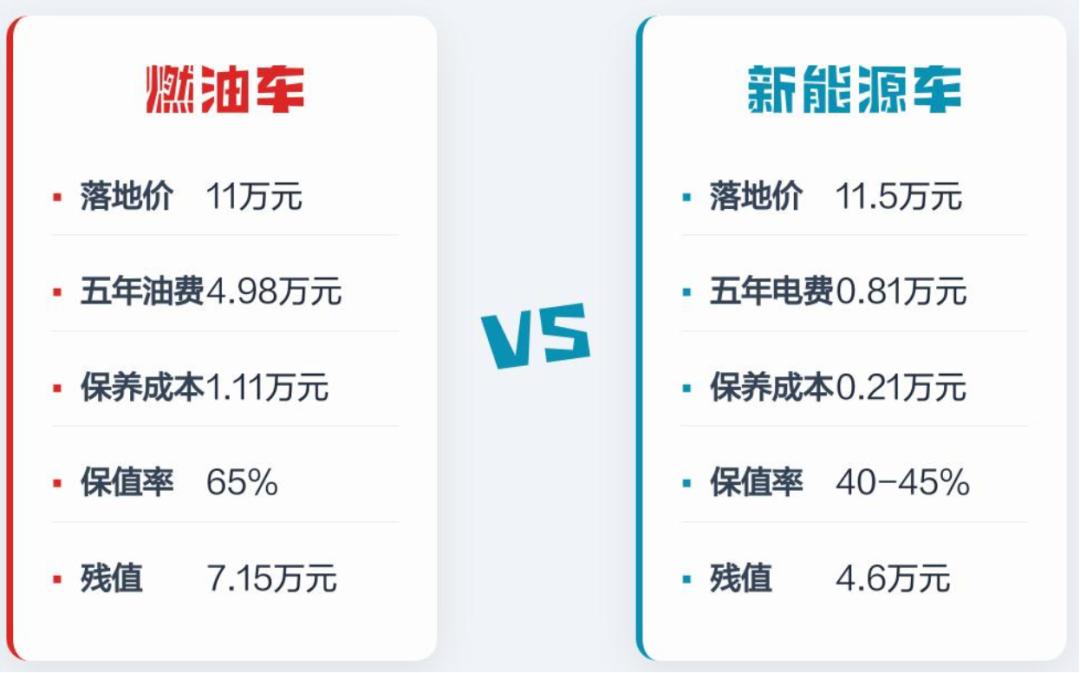
Picture/Comparison of 5-year costs between fuel-powered and electric vehicles Source/Screenshot from the Internet, New Energy Outlook
The most important thing is that her old Honda has had no minor problems in ten years except for changing the oil and tires, and the maintenance cost is not high.
"For me, a car is just a means of transportation. It can keep me out of the wind and rain and not break down on the road. I only drive 10,000 kilometers a year. Saving a little on fuel isn't worth the hassle." Xiao Xu said frankly that she will buy another fuel-powered vehicle when this one is scrapped.
5. Easy to buy, troublesome to maintain, fuel-powered vehicles are more worry-free
Many consumers choose fuel-powered vehicles because their core requirement is to be "worry-free and trouble-free", especially in terms of maintenance and repair. They believe that fuel-powered vehicles have more obvious advantages.
Previously, many fuel-powered vehicle owners who wanted to switch to electric vehicles complained that during the car-buying process, they were told by the salesperson that "after-sales maintenance and repair must be done at designated repair points".
"If you replace parts at non-designated places, you basically lose the qualification for warranty." A fuel-powered vehicle owner said bluntly.
Another fuel-powered vehicle owner also said that there are a lot of online news and many stores for new energy vehicles now, but you have to go to a far place to pick up the car or get after-sales service. "This is too troublesome. I can't drive fifty or sixty kilometers just for a regular maintenance!"
In addition to the above complaints, the detection and maintenance of the three-electric system of new energy vehicles have a high technical threshold and are more expensive.
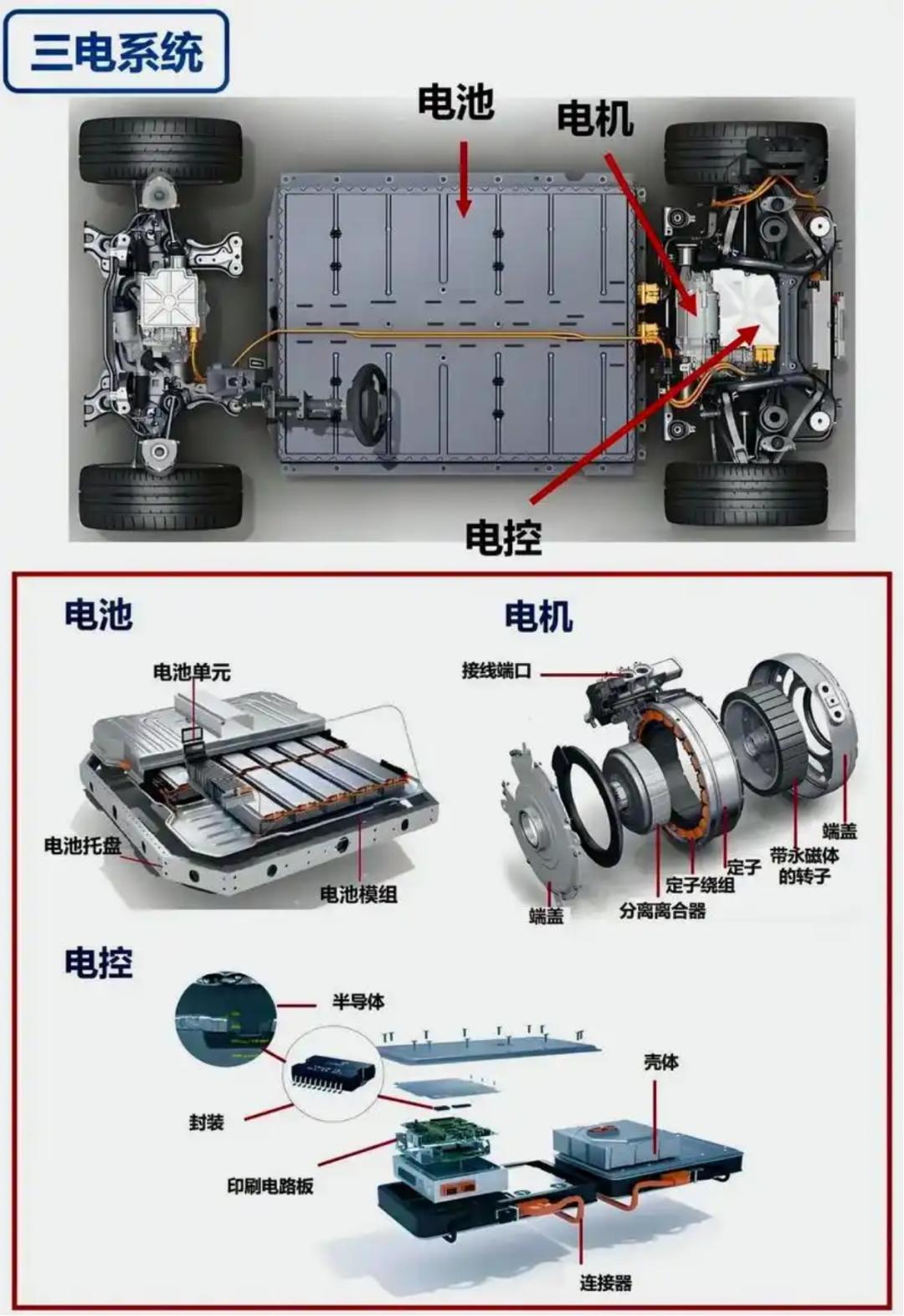
Picture/Illustration of the three-electric system Source/Screenshot from the Internet, New Energy Outlook
In comparison, the maintenance system of fuel-powered vehicles is very mature. Whether it's changing the oil and oil filter or conducting routine inspections, the process is simple and the technology is mature.
This is undoubtedly more attractive to consumers who are not good at studying automotive technology and don't want to spend too much time and energy on maintenance.
6. With the same car purchase cost, the fuel-powered vehicle is more "substantial"
In terms of car purchase cost, some consumers found in the horizontal comparison of models in the same class that after multiple rounds of price cuts, fuel-powered vehicles now have a more prominent cost-performance ratio, and the advantage of buying them is particularly obvious.
Taking the mainstream household car purchase budget of 100,000 yuan as an example, most new energy models in this price range are limited to entry-level small cars with limited space or compact household cars with basic configurations. The comprehensive range of these vehicles is generally around 400 kilometers.
Although they can meet the needs of daily travel, there will still be some concerns when it comes to long-distance self-driving. Even the intelligent features that some new energy vehicles promote have shortcomings.
In contrast, when choosing a fuel-powered vehicle with the same budget, the selection range is greatly expanded. Not only can you buy mainstream household models that were previously priced at 150,000 yuan, but even mainstream B-class fuel-powered sedans that used to be priced at 200,000 yuan have now seen their actual landing prices generally drop below 150,000 yuan with significant terminal discounts.
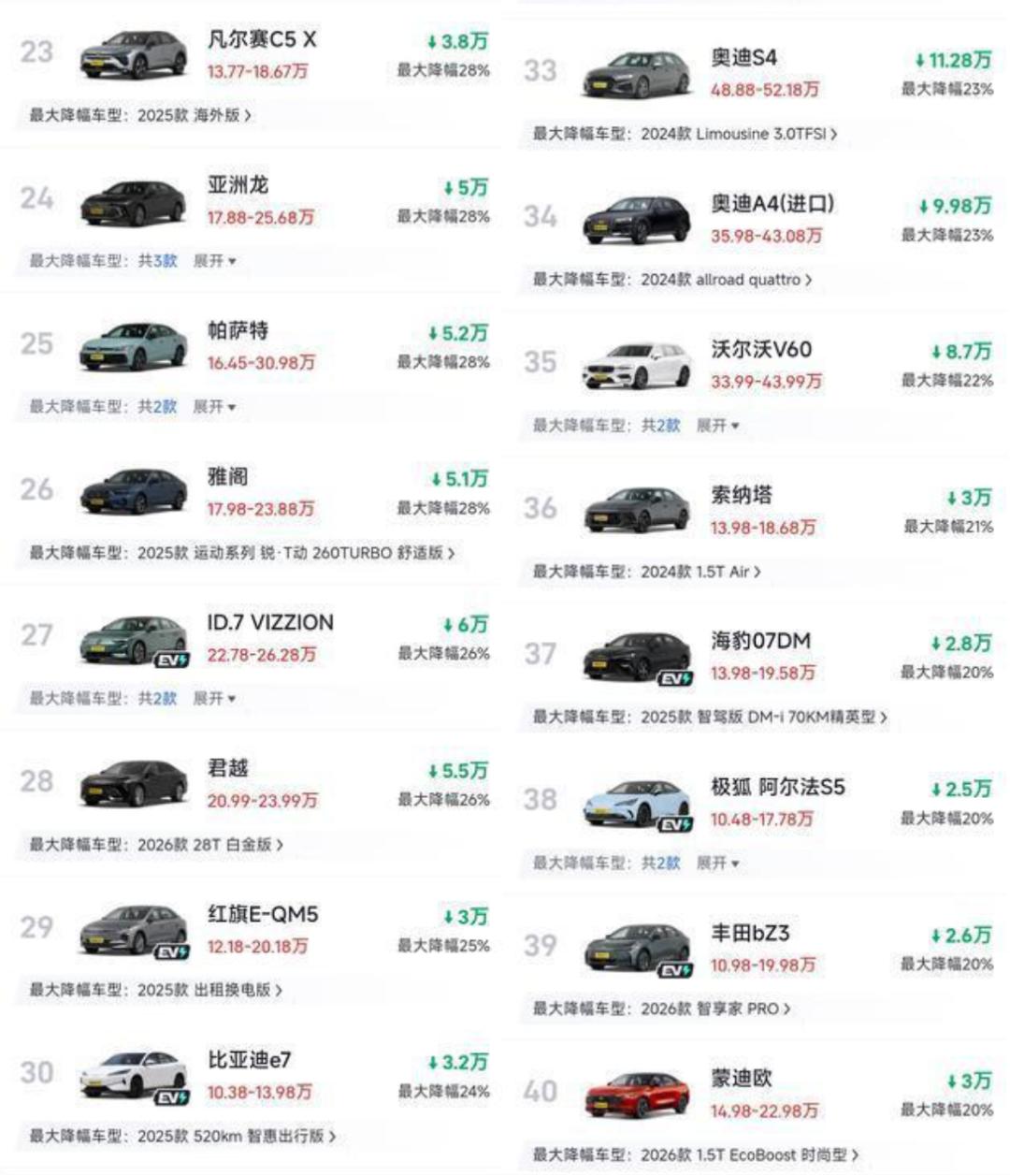
Picture/Discount range of some B-class cars Source/Screenshot from the Internet, New Energy Outlook
In addition, with the full popularization and upgrade of automotive intelligent technology, the shortcoming of insufficient intelligence in fuel-powered vehicles is being quickly made up.
For example, intelligent cockpits and in-vehicle interconnection systems have become standard features in many fuel-powered vehicles. Even mainstream L2-level intelligent assisted driving functions such as full-speed adaptive cruise control, lane keeping, and automatic emergency braking are not inferior in fuel-powered vehicles, which can meet the intelligent experience needs of car owners in daily commuting and long-distance travel scenarios.
7. The difference in depreciation rate is obvious, fuel-powered vehicles are more "resistant to depreciation"
Low depreciation rate has always been another major problem that new energy vehicles are criticized for, while it is one of the core advantages of fuel-powered vehicles at present.
Due to the fast pace of technological iteration in new energy vehicles, new models are constantly being launched, and old models quickly become "outdated". Coupled with problems such as battery degradation and the non-transferability of the first-owner rights, the depreciation rate of new energy vehicles is generally low.
According to data from the China Automobile Dealers Association in January 2026, the 3-year depreciation rate of mainstream fuel-powered vehicles is 65%-70%, while that of pure electric vehicles is only 55%-60%. The difference can reach 10%-15%.
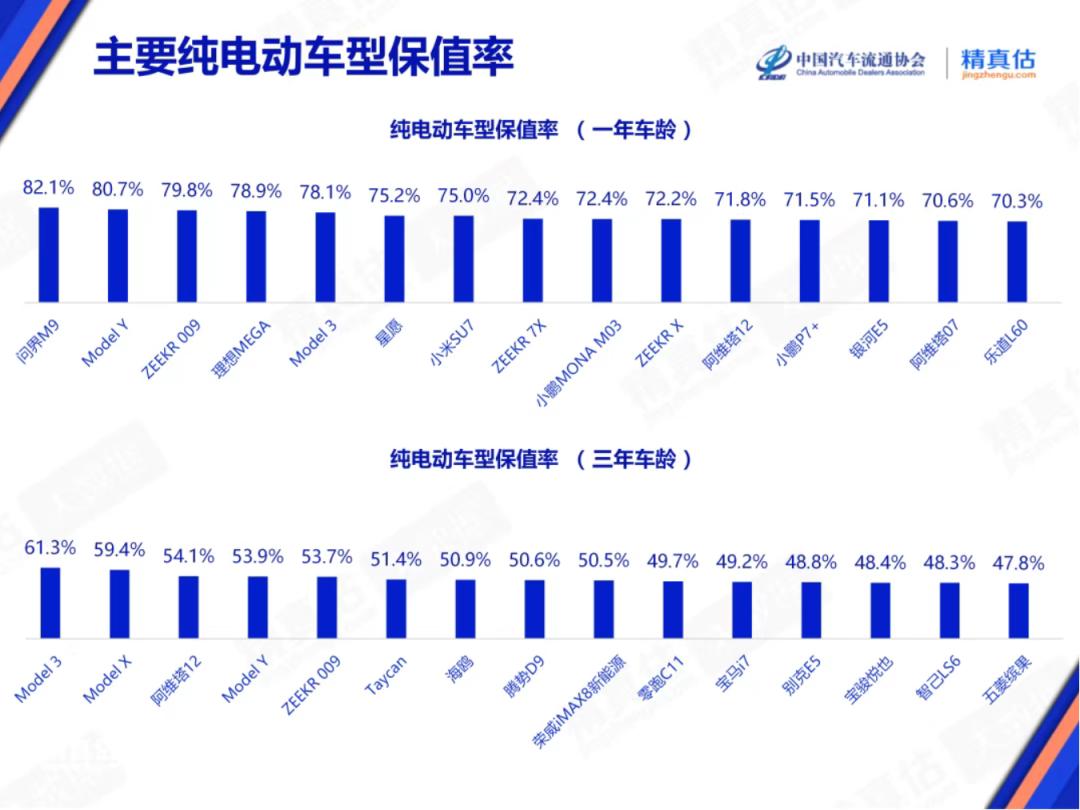
Picture/Depreciation rate of major pure electric vehicles Source/Screenshot from the Internet, New Energy Outlook
When the vehicle is 5 years old, fuel-powered vehicles can still maintain a residual value of 40%-50%, while new energy vehicles generally only have 30%-40%.
For consumers who plan to change their cars within 3-5 years, the "halved" depreciation rate of electric vehicles will undoubtedly be a factor that hinders their car purchase.
On the contrary, the "depreciation-resistant" feature of fuel-powered vehicles can reduce their losses when selling the car, which is also an important reason why many people stick to fuel-powered vehicles.
The above-mentioned Honda owner, Xiao Xu, said bluntly that her car, which she bought for 150,000 yuan, can still be sold for 20,000 yuan even after ten years. If it were an electric vehicle, it would probably only be scrapped.
8. Life is more important than new technology, can't dispel concerns about battery safety?
Beyond products and technology, battery safety is the