Is the bean mosaic craze just a bubble, according to industry insiders? Unraveling the business truth behind the bean mosaic fever
In the past year, bean crafting has swept through the consumer market. From the year-on-year surge of 9018% in the order volume of Generation Z in the Spring Festival consumption data on Douyin, to Taobao listing it as one of the top ten commodities of the year with a nearly 500% increase in search volume, and then to the nearly 8 billion topic views on Xiaohongshu, this wave of popularity triggered by social media has rapidly elevated bean crafting from a niche interest to a representative symbol of emotional consumption. Capital and entrepreneurs have taken action. In the past year, over 7,000 new handicraft-related enterprises have been established across the country. Bean crafting has almost become a standard attraction project for offline experience stores, and market forecasts suggest that its scale is rapidly approaching the 1-billion-yuan mark.
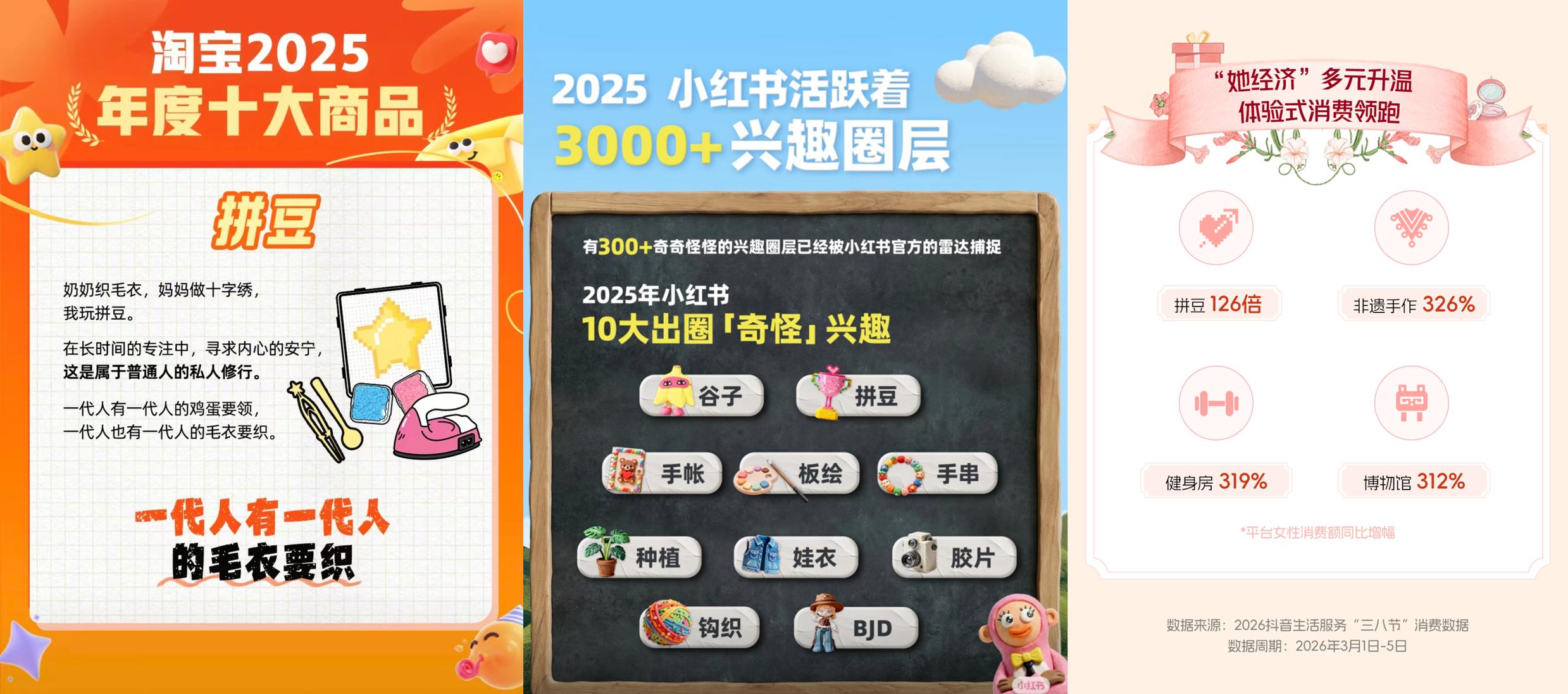
The popularity of bean crafting on Taobao, Xiaohongshu, and Douyin
However, at the same time, Zhu, a senior entrepreneur in the industry, judged that "pure bean crafting stores may become a bubble" and pointed out that this business highly depends on traffic dividends and low-price promotions, and is facing severe homogeneous competition and copyright risks.
On one hand, there are the explosive data and the bustling scenes of queuing for experiences seen from the outside. On the other hand, there are deep concerns about the fragility of the business model from the inside. This huge cognitive gap constitutes the core contradiction in the current bean crafting market.
Therefore, it is necessary for us to examine a more fundamental question: Does the bean crafting craze bring entrepreneurs a fleeting trend or a new opportunity worthy of long-term in-depth exploration?
01 Breaking through the Niche: Why Does Bean Crafting Appeal to Young People?
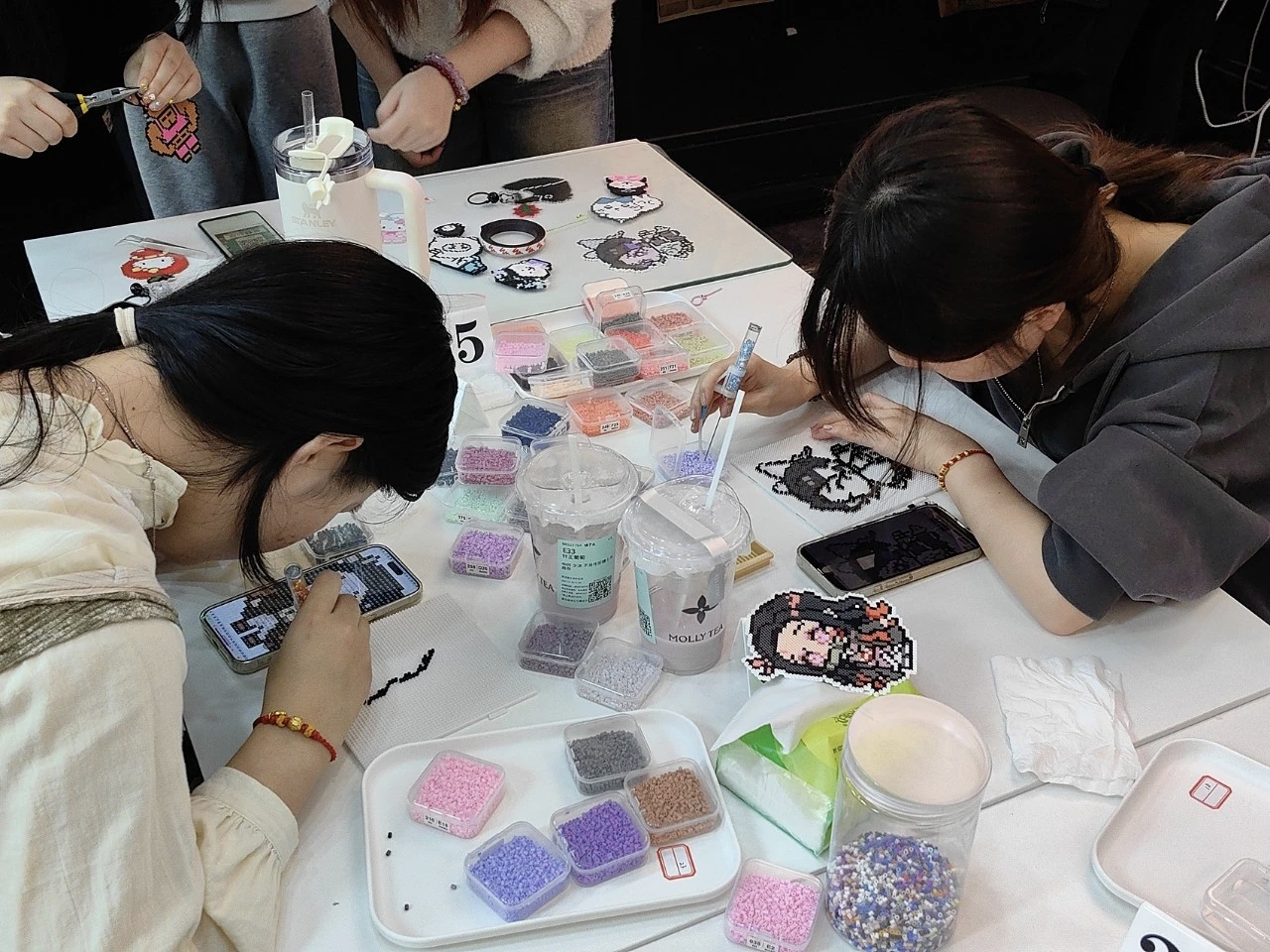
What is bean crafting? Simply put, it involves placing colored small beans on a template according to a design and then ironing them into a single piece to make fridge magnets, pendants, and ornaments. The combination of low threshold, high feedback, and strong creativity gives it an inherent ability to spread.
The "timing" of bean crafting and its own "advantages" form the foundation for its popularity:
- Plenty of time: The main customer group consists of students and young people who have a lot of free time to sit down and spend one or two hours or even a whole day on bean crafting. It has become a new way for them to kill time and socialize.
- Unlimited creativity: They can craft whatever they like, such as emojis, anime characters, idols, and even turn their friends' photos into pixelated images and craft them. The playability is infinite, and the creative space is vast.
- Two types of satisfaction: Small patterns can be completed in half an hour, providing immediate feedback. Large patterns take two days to complete and then be ironed into a finished work, offering delayed satisfaction. Both types of pleasures are available, allowing people with different personalities to find fun.
- Low cost: The material cost only accounts for 10% - 20% of the selling price. Consumers can spend thirty or forty yuan and have an afternoon of fun, which is more rewarding than watching a movie or having a cup of milk tea.
However, low-threshold handicraft projects are not rare. Zhu believes that bean crafting has broken through the niche circle and swept across social media because it is more deeply bound to the current content algorithms and traffic logic.
Zhu frankly said that the explosion of bean crafting is "a product of the era" and "caused by the joint promotion of self-media."
"There are too many handicraft projects similar to bean crafting, such as felt crafts and wool felting. Many of them have the same product characteristics as bean crafting. But none of them has received as much traffic as bean crafting."
The content recommendation mechanism of social platforms makes short videos and pictures showing the bean crafting process and beautiful finished products highly likely to gain wide spread, forming a chain reaction from KOLs to ordinary users. This kind of exposure not only creates a strong herd mentality and trend pressure ("everyone is playing when you scroll through your phone"), but also turns bean crafting from an actively sought experience into a demand that is pushed and stimulated. Users are first attracted by the content, develop an interest, and then look for offline stores, which has changed the customer acquisition path of traditional handicraft stores.
Zhu analyzed that previous popular handicraft projects were mostly limited to the small circle of handicraft enthusiasts, while bean crafting has billions of social media topic views. Its application scenarios have extended from professional handicraft stores to waiting areas in hot pot restaurants, video game arcades, art training classes, and even study rooms. It has become a cross-industry general attraction tool or experience supplement project.
This power of mass marketing has jointly built a solid user base for bean crafting.
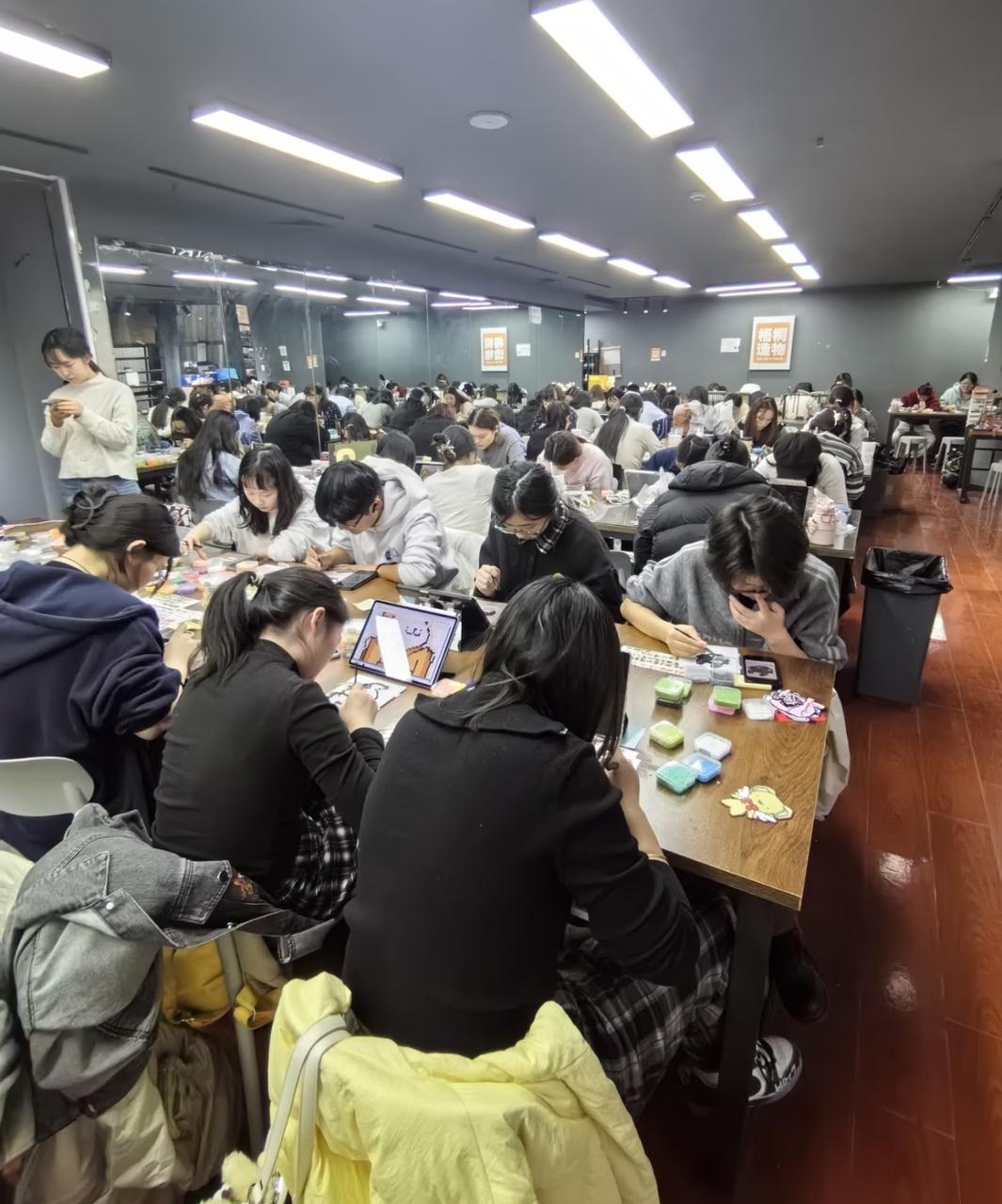
A bean crafting store like a "factory assembly line"
Furthermore, the content form of bean crafting perfectly meets the expression and social needs of the younger generation. Its pixelated style allows it to easily reproduce any popular anime IP, idol image, or online emoji, transforming the interest points in the virtual world into tangible and owned physical symbols.
Zhu summarized it as "low-cost emotional value." Young people can obtain a unique souvenir carrying personal emotions with a relatively low cost and time investment.
Therefore, the breakthrough of bean crafting is an inevitable result of the combined effects of the friendliness of the product itself, the amplification effect of social media, and the emotional consumption needs of the younger generation. The reason why it can surpass previous popular handicraft projects is that it is not just a handicraft project, but also a social currency and emotional solution that is selected by the algorithm era and can be widely participated in and spread.
At the same time, Zhu also calmly pointed out the essence of this kind of consumption: it is not a necessity of life, but a pure emotional business, and the length of its life cycle completely depends on how long the traffic can be maintained.
He predicted that the emergence of the next popular handicraft project has nothing to do with the absolute quality of the product itself. It is the algorithm that makes a new choice again.
02 Analyzing the Business Model of Bean Crafting: Three-Tier Structure and Profit Logic
To analyze the business model of bean crafting, the key lies in understanding its clear industrial chain hierarchical structure. According to Zhu's analysis, the business opportunities related to bean crafting can be divided into three significantly different levels: the supply chain end, the content and traffic end, and the offline experience terminal. The gameplay, threshold, profit structure, and suitable groups for each level are completely different.
Level 1: The supply chain end, including factory production, wholesale supply, and e-commerce sales of raw materials.
The entry barrier for this level is extremely high. It requires substantial capital, a stable production line, and a strict quality control system. The profit model of this level is characterized by a stable but relatively thin profit margin, mainly relying on economies of scale. It is more suitable for participants with a manufacturing background or capital strength.
Zhu observed that as the industry has heated up, a large number of bean crafting producers have flooded into the market in recent years, resulting in extremely fierce competition. The market has once fallen into a state of involution with uneven quality and intense price wars.
However, while the basic raw materials are in a homogeneous and red - ocean competition, the intense industry involution has also reversely promoted the innovation and upgrading of tools and services.
Take the core tool, the "bean crafting board," as an example. In the early days, the bean crafting board was just an ordinary plastic grid board worth a few yuan. Now, it has evolved into an intelligent bean crafting board that can achieve digital guidance of the design through connecting to a mobile phone applet. When users upload a picture, the light beads on the board will light up in the corresponding colors in real - time, guiding the position of the beans, greatly reducing the operation threshold and the energy consumption for identifying the design. This innovation has increased its price from the original 4 - 10 yuan to 200 - 400 yuan.
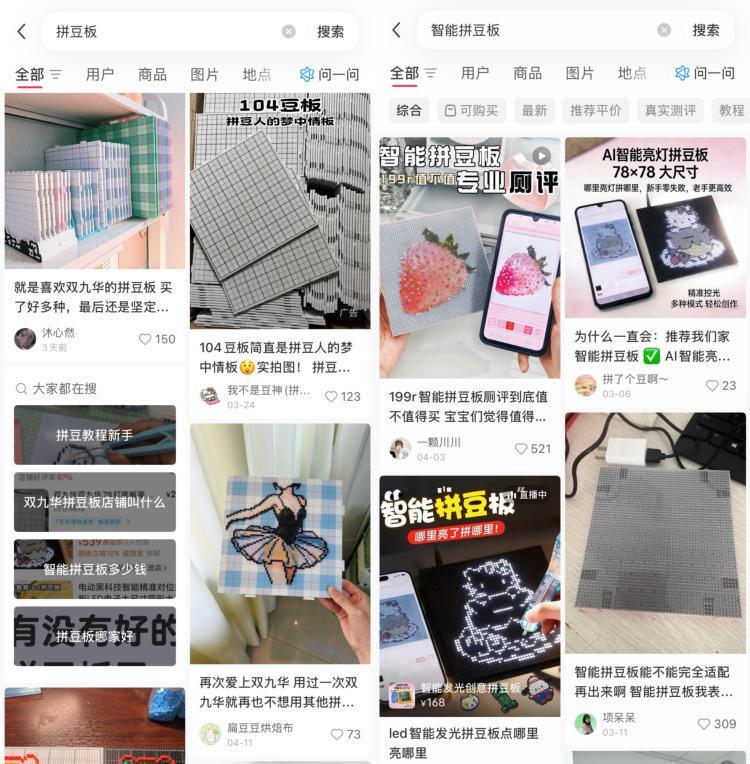
Traditional bean crafting board and the intelligent bean crafting board that is like a cheat code
Similar product evolution has also occurred in auxiliary tools. In the past, bean crafting players generally used the most basic tweezers, while now there are specially designed bean needles and bean pens on the market. More notably, as the user base has expanded and the experience has deepened, personalized customization needs have begun to emerge.
Zhu revealed that he has received many orders this year to use 3D printing technology to make customized bean pens or bean needles. The price of such personalized tools has also risen from a few yuan to nearly 100 yuan.
This reveals an important trend: when basic products tend to be standardized and in low - price competition, tool innovation and demand customization around the user experience are becoming new value high - points in the industrial chain.
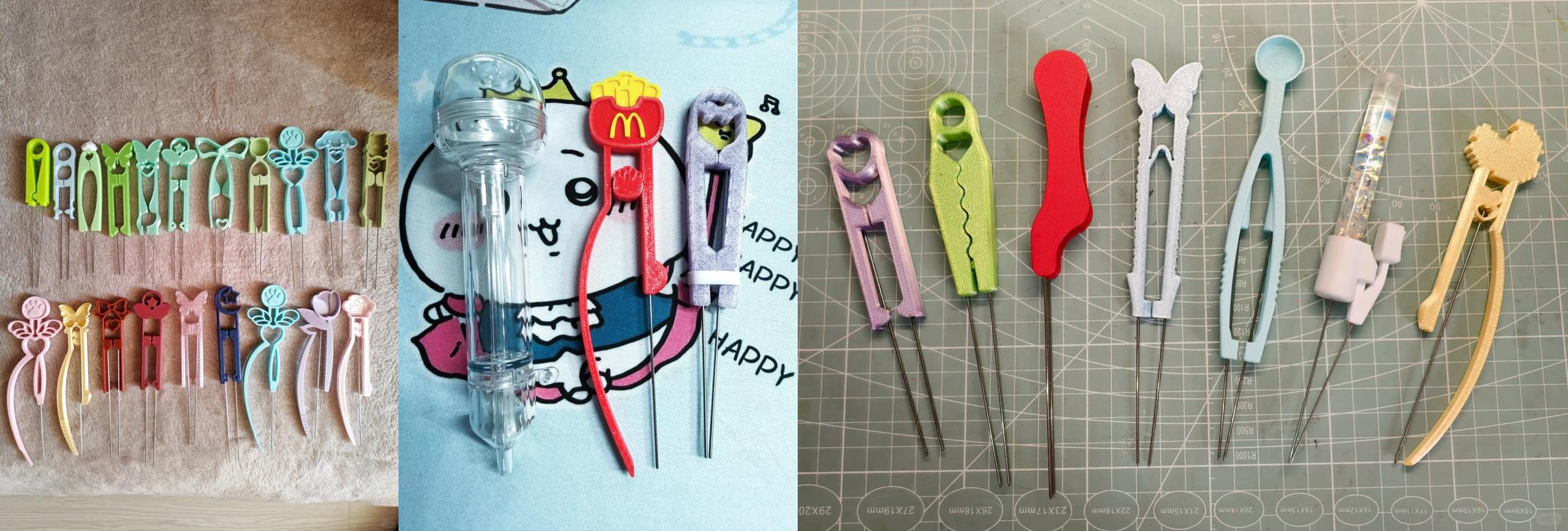
Personalized design has appeared in bean - taking tools
Level 2: The content and self - media end, including short - video sales, advertising cooperation, course development, and sharing of useful information.
The entry threshold for this level is relatively moderate. The core ability lies in the talent for content creation and the sense of catching traffic. However, as Zhu observed, the traffic dividend in the industry is shrinking, and the monetization efficiency is much lower than before. In the early days, a WeChat account with tens of thousands of followers could earn a commission of more than ten yuan per order for sales, while now it may suddenly drop to two or three yuan.
This has significantly squeezed the profit margin of this level, making it more suitable for individuals or teams that are truly good at content expression and can continuously produce creative works.
Level 3: The downstream offline experience terminals, that is, the bean crafting handicraft stores all over the place.
In terms of the capital threshold, this may be the easiest link to start among the three - tier structure. One can try to enter the market with more than 100,000 yuan. However, Zhu pointed out that it is precisely this low threshold that has led to extremely disparate business results. The profit performance of stores varies greatly. There are cases where stores are in trouble right after opening, and there are also successful examples that can achieve stable cash flow.
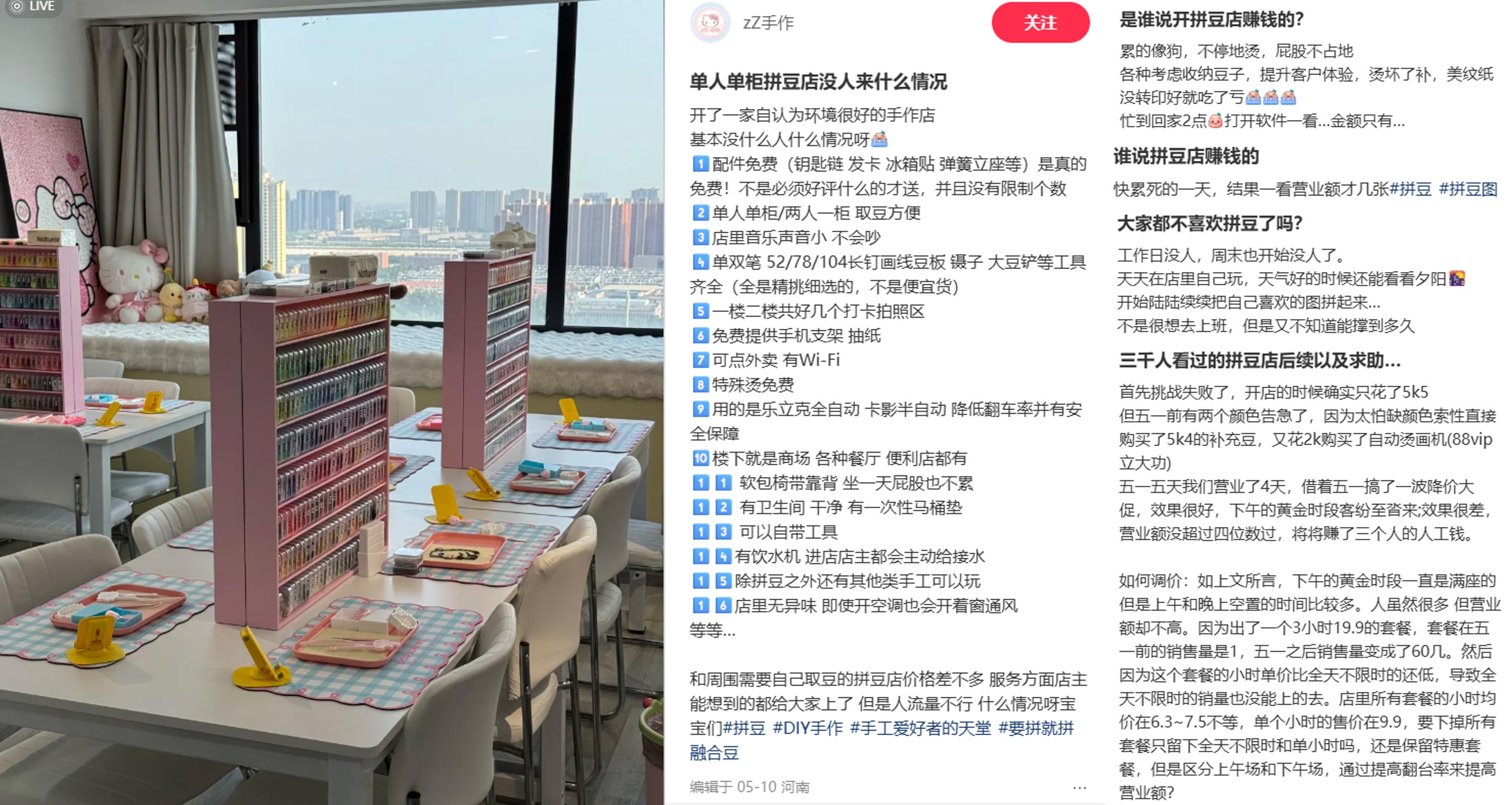
Many bean crafting store owners on social media are expressing their profit - making difficulties
He believes that in the current industry environment, "among the three things, opening a store is actually the easiest." This is because the upstream supply chain has fallen into intense homogeneous and price competition, and the content monetization in the middle is also becoming more and more difficult. In contrast, as long as offline stores do well in core aspects such as location selection, customer service, and on - site experience management, they can still build a predictable revenue model.
Zhu's own path provides a vivid example of integrating this hierarchical structure. He started with a direct - operated physical store and used the stable profits generated by the store to gradually nourish and invest in the optimization of the supply chain and the construction of the content team. This model not only disperses the risks of a single link but also gives him a more resilient foundation for survival in the volatile market.
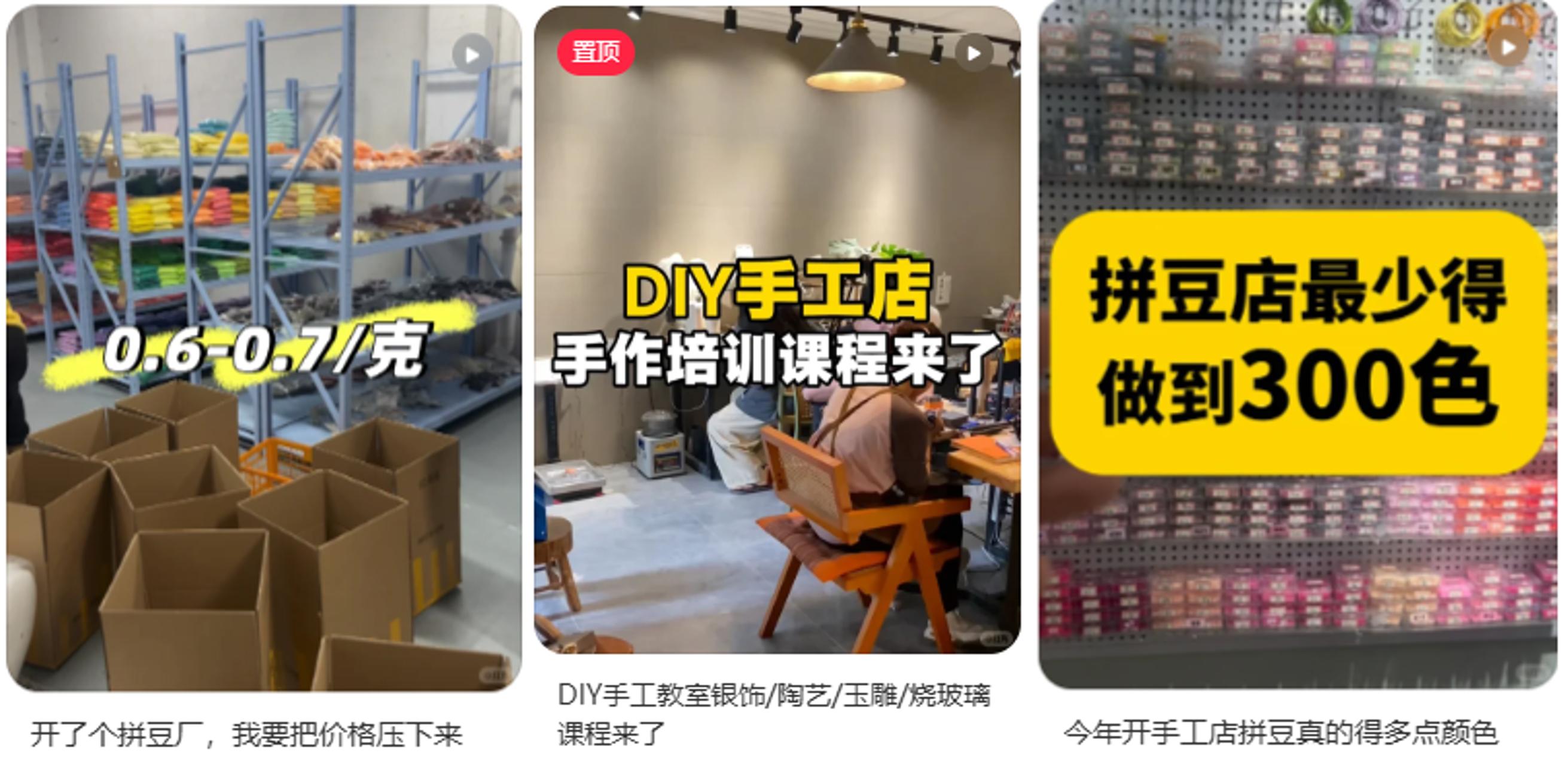
Zhu's three - level integrated model: factory supply chain + content sharing + offline handicraft store
The rapid emergence of bean crafting handicraft stores on the streets is driven by an extremely attractive profit model. Zhu disassembled the cost logic for us: The high - quality bean crafting raw materials directly supplied by the factory cost about 30 yuan per catty, and this one - catty of materials can be used to make dozens of small works. Calculated at a selling price of 30 - 40 yuan for a fridge magnet, the material cost is only 3 - 5 yuan. "Excluding labor and rent, the gross profit of bean crafting is stable at 80% - 90%."
This high - gross - profit characteristic is not an isolated case. Compared with other popular handicrafts, such as pottery, for a pair of cups sold for more than 100 yuan, the comprehensive cost including clay, glaze, and electricity for firing usually does not exceed 10 yuan, and the profit margin is also considerable. In contrast, for the once - profitable silver jewelry project, due to the price of silver raw materials soaring from 5 yuan per gram to nearly 20 yuan, its gross profit margin has been significantly squeezed. "So now in handicraft stores, bean crafting and pottery have become the main profit - makers."
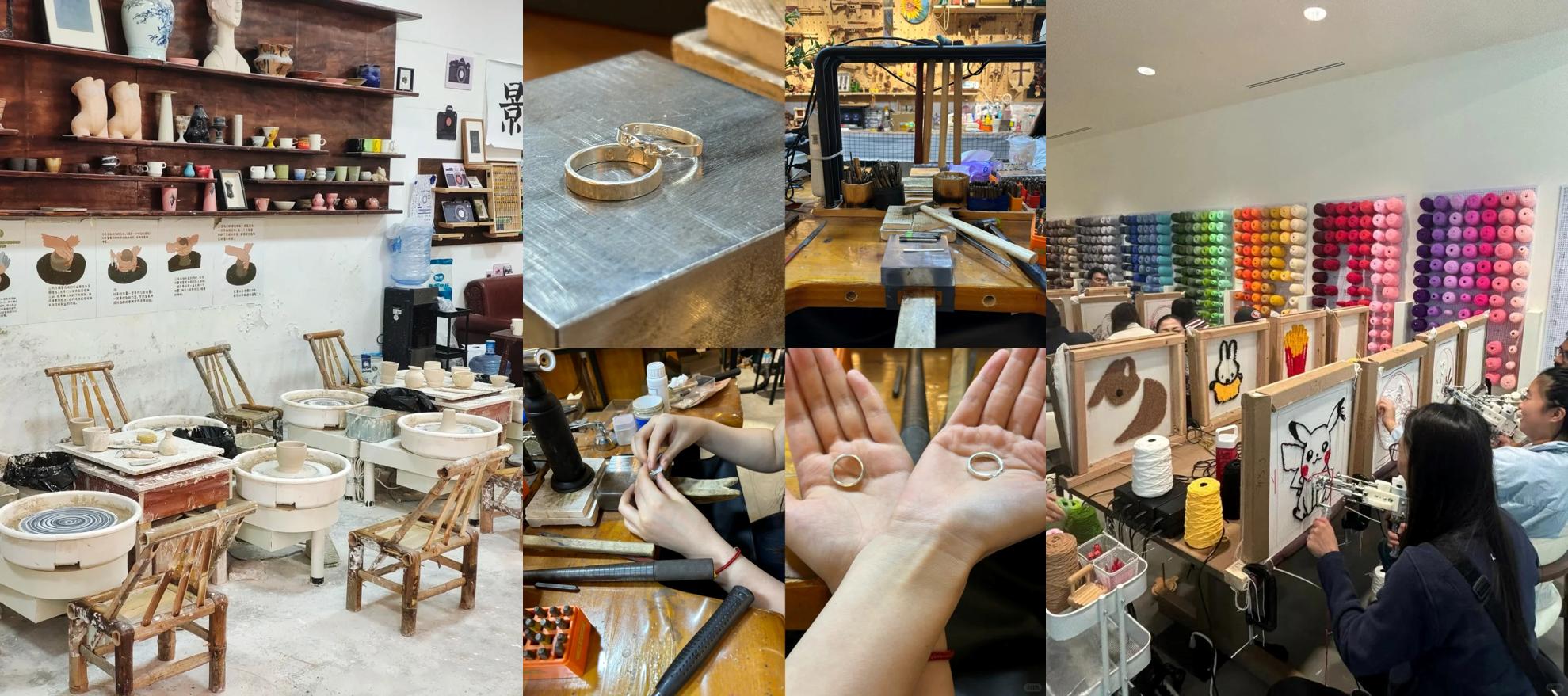
Common popular handicrafts in handicraft stores before the boom of bean crafting: pottery, silver jewelry, tufting
However, this seemingly attractive gross