The "medicated waxberries" that everyone hates have been severely undermined by their own people.
"These waxberries have all been soaked in chemicals. We don't even eat them ourselves."
A single statement from unscrupulous vendors has effectively condemned the once-popular waxberries to death.
Fruit growers and dealers in Longhai District, Zhangzhou, Fujian, are now filled with regret!
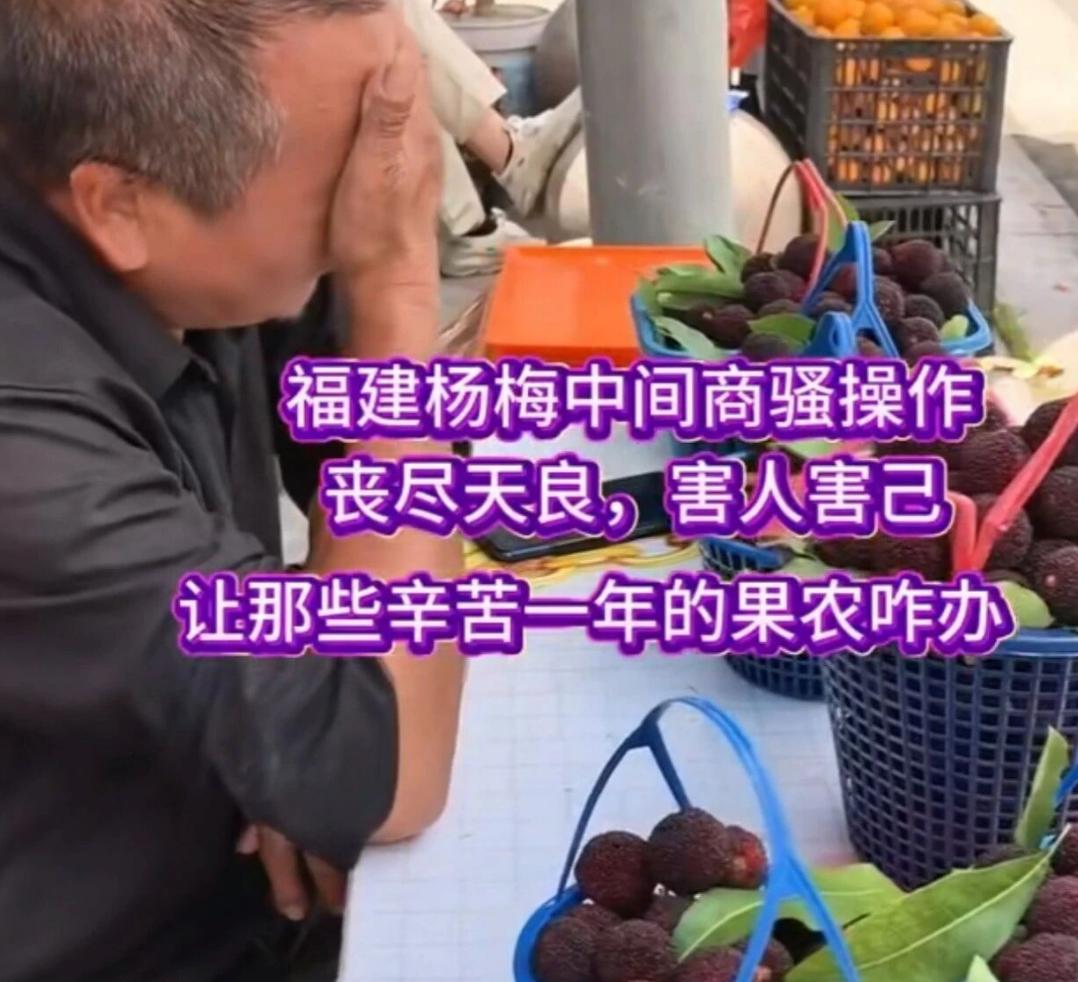
Local waxberry growers wept in front of the camera, saying, "The 700-year-old planting history is about to be ruined in our hands."
Now, waxberries that cost 2 yuan per jin to grow are only selling for 1.5 yuan. "Good-quality waxberries that used to sell for 7 or 8 yuan per jin are now being sold as if they were garbage. We lose money on every jin we sell."

Dealers who purchase waxberries locally said that they lose about 10,000 yuan for each truckload of waxberries they buy. The more they buy, the more they lose.
According to industry statistics, the wholesale price of large waxberries at the Hangzhou fruit wholesale market has dropped from 70 - 80 yuan per box to 20 - 30 yuan. At the Shanghai fruit wholesale market, the price of Fujian waxberries has plummeted from 11 - 12 yuan per jin when they first hit the market to 2 yuan per jin, and no one wants to buy them.
The daily sales volume of waxberries at the Ningbo fruit wholesale market has dropped from 70,000 boxes to less than 10,000 boxes. The price of some waxberries has dropped to 10% of the original price, but they still can't be sold.

Public information shows that Zhangzhou has a history of over 700 years in waxberry cultivation.
Among them, the waxberry output in Longhai District exceeds 60,000 tons, and the output value of the entire industrial chain is nearly 1 billion yuan. The income from the waxberry industry accounts for more than 57% of the total income of the town. The annual income of many local fruit growers has gone down the drain.

The impact of this storm is far from limited to Zhangzhou.
When consumers can't tell which waxberries have been soaked in chemicals, the simplest choice is: don't buy them.
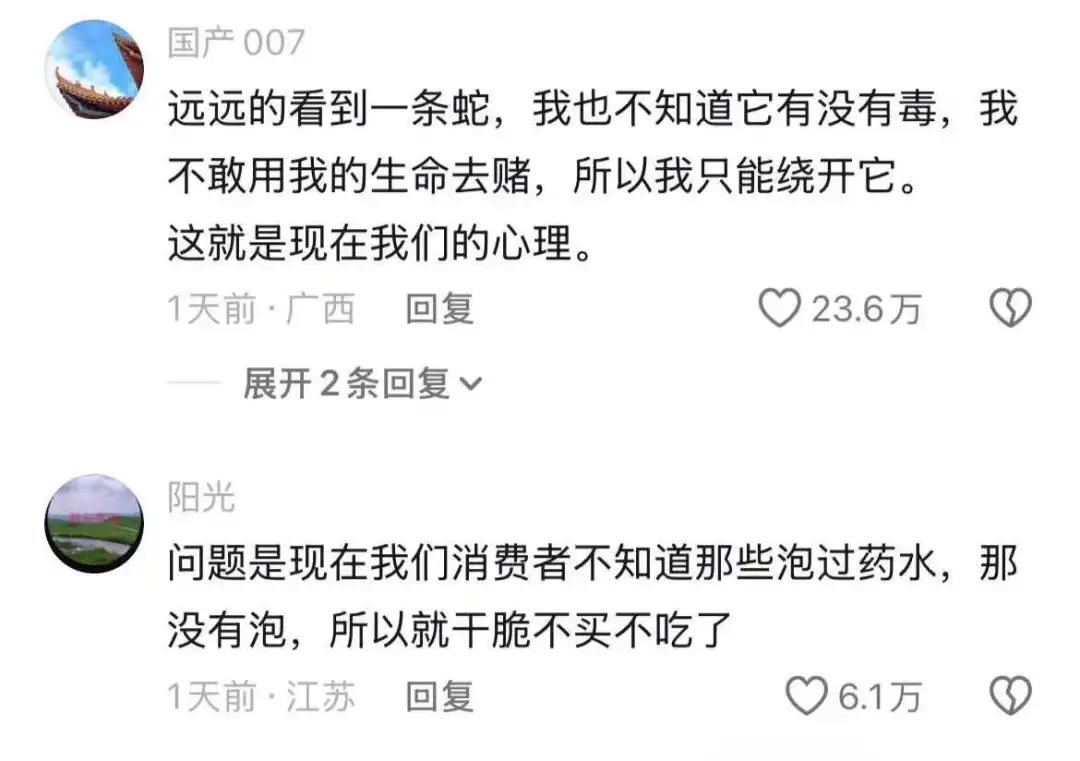
As soon as there was a problem with Fujian waxberries, waxberries from Yunnan and Zhejiang also became unsalable.
The waxberries on the trees are ripe, but no buyers come. They can only rot on the branches.
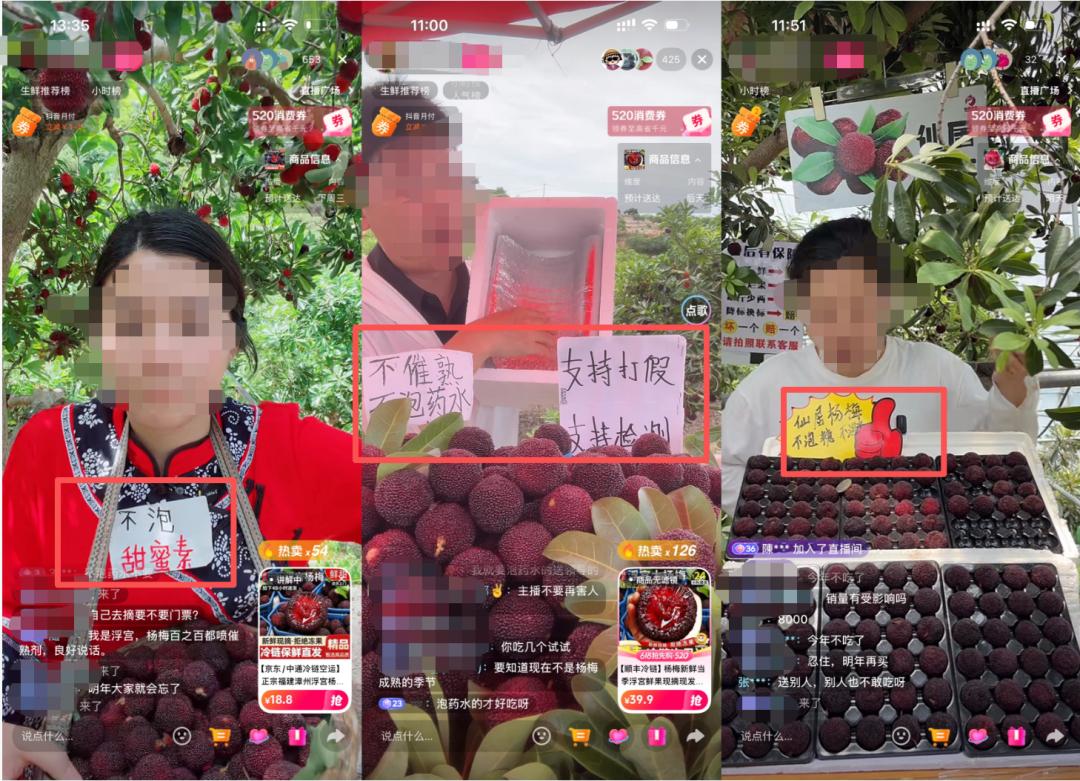
In order to prove that their waxberries haven't been soaked in chemicals, fruit growers have resorted to various means: some hold their ID cards while live - selling the fruit, and some directly pick up freshly - harvested waxberries and eat them in front of the camera, but it's all in vain.
Why did the storm of "chemical - soaked waxberries" ferment so quickly?
Thousands of catties of "Waxberry Assassins" stabbed everyone overnight
It only took a few days from the exposure of "chemical - soaked waxberries" to their removal from the market across the country.
Why did a tiny waxberry turn from a "golden fruit" to a "poisonous fruit" that everyone avoids overnight?
Daoge believes that there are three key issues behind the storm that have gradually fermented the situation and pushed the emotions of ordinary consumers to the peak step by step.

The first question is: Who first exposed the "chemical - soaked waxberries"?
According to local people, the practice of soaking waxberries in chemicals has been going on for more than a decade and has long been an open secret.
The first to expose the "chemical - soaked waxberries" were the undercover reporters from the local Fujian TV station's "First Help Group".
As soon as the news came out, some people praised: It's really commendable for a local media to speak out boldly and expose its own dirty laundry!

The second question is: Where exactly do these "chemical - soaked waxberries" end up?
The answer is, "Don't deceive locals, but specifically target outsiders."

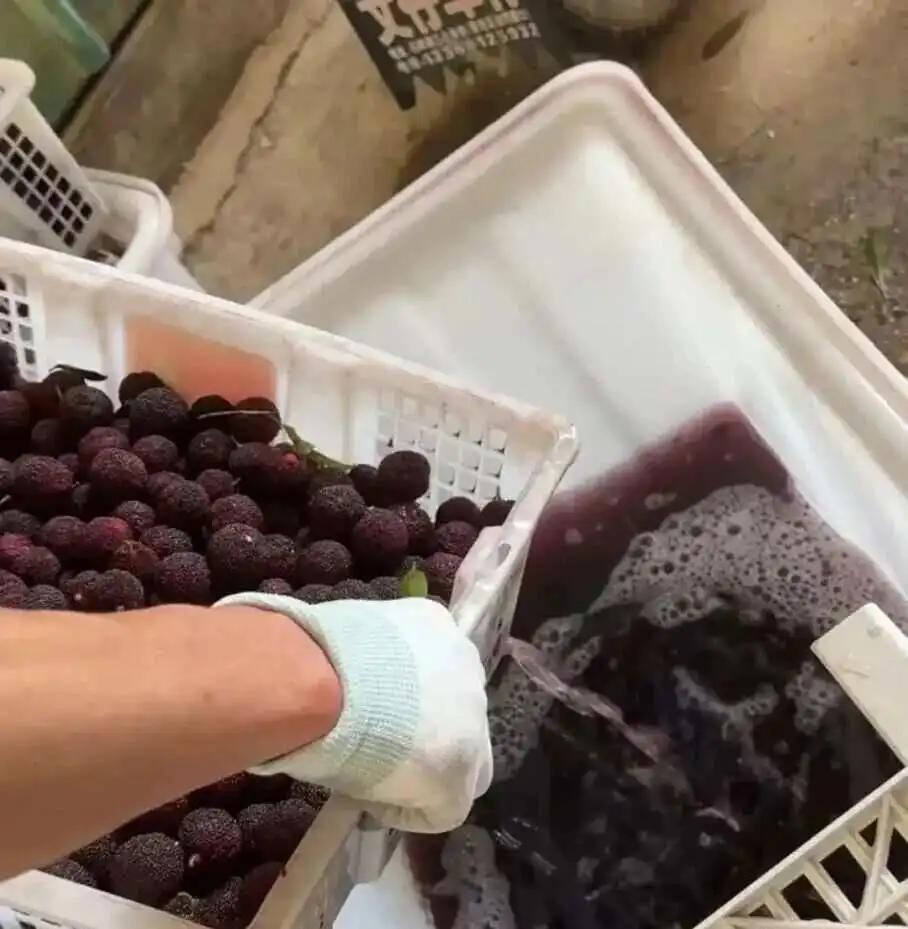
In the undercover footage, freshly - harvested baskets of waxberries are first soaked in an unknown liquid, then fished out, drained, and packed into boxes, and sent to various parts of the country such as Zhejiang and Shanghai.
The liquid used to soak the waxberries mainly contains two ingredients. One is "sodium dehydroacetate", a preservative that is clearly prohibited by the state from being used on fresh fruits. The other is a compound sweetener, which claims on the packaging to be 8,000 times sweeter than sucrose and is a standard "three - no product".
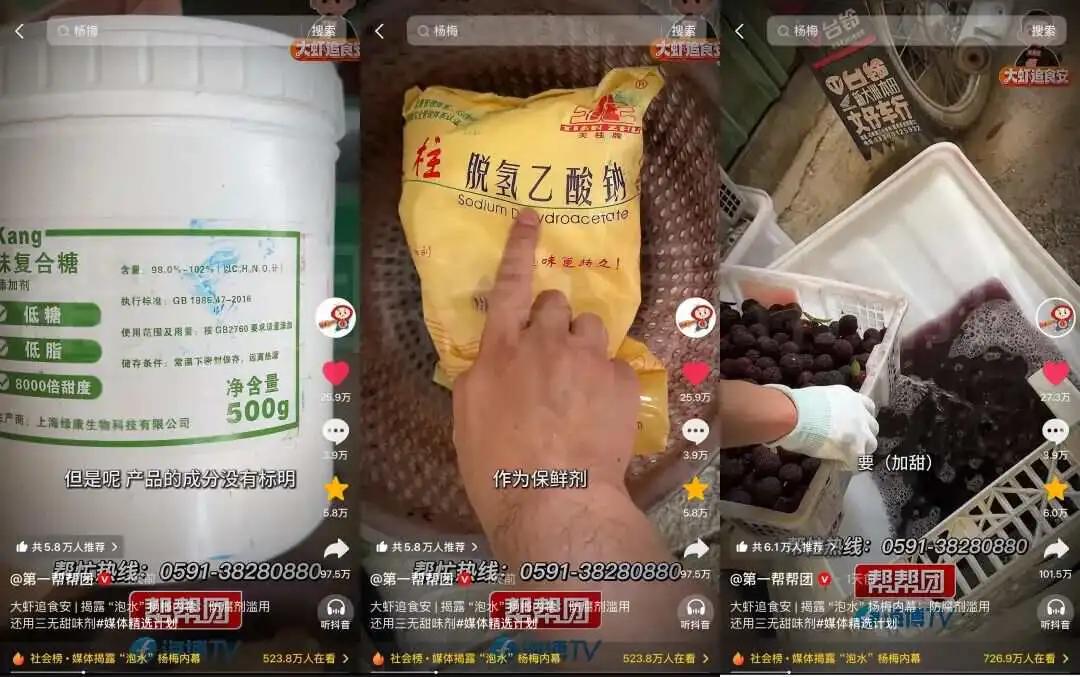
The vendors and workers themselves don't eat these waxberries, clearly indicating that they know these "scientific tricks" are harmful to the body. Some workers even quietly reminded the reporters not to eat the chemical - soaked waxberries.
Surprisingly, the amount of the chemical agent used depends entirely on the workers' feelings. "If they use a heavier hand, they add more; if they use a lighter hand, they add less."
Some people estimate that each purchasing point processes at least thousands of catties of waxberries a day. So, based on the number of local purchasing points, the scale of waxberries flowing into the market may be calculated in tons.
These "poisonous fruits" are silently entering wholesale markets, e - commerce platforms, and fruit stores from the origin, and then being served on the tables of consumers across the country.
The third question is: How did local fruit growers and dealers react after the incident was exposed?
Their reactions exceeded everyone's expectations: Either play the victim or shift the blame.
On social platforms, many local fruit growers cried, saying that although their own waxberries were not soaked in chemicals, the business had completely cooled off just as the fruits on the trees were ripe.
It's understandable that fruit growers are heart - broken about their losses, but many of them are shifting the concept and accusing consumers of "stabbing" innocent fruit growers by not wanting to buy waxberries.

The president of the local waxberry association also pleaded tearfully in a video: "Please, give the fruit growers a chance!"

According to incomplete statistics, as of now, the direct economic loss caused by this storm to the entire industrial chain has reached 120 million yuan.
More people are worried that it's not just waxberries that have problems. After all, a few years ago, it was also exposed that mandarins were illegally using preservatives.
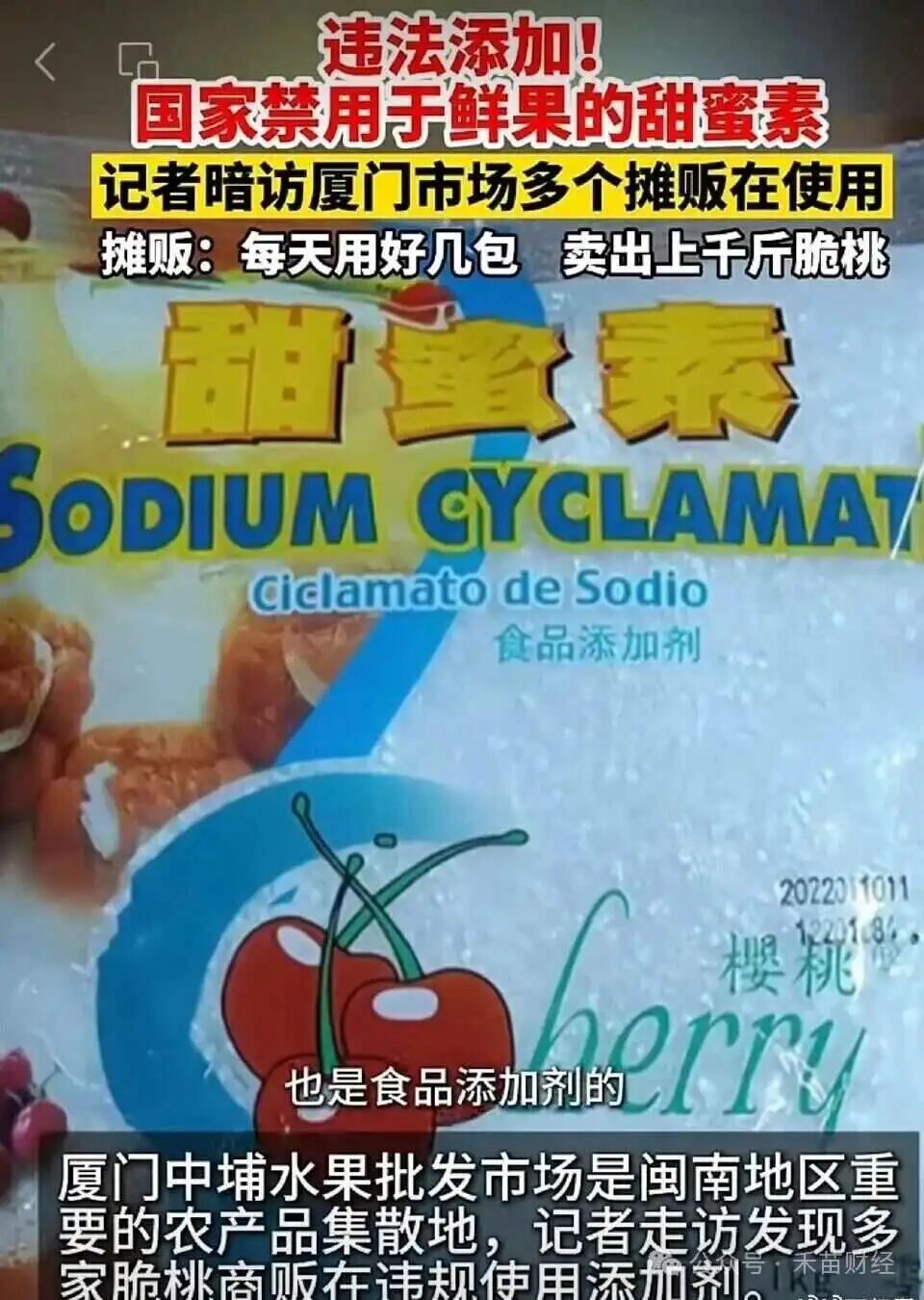
Not long ago, undercover reporters found that in the Xiamen fruit wholesale market, many vendors soak fresh crispy peaches in acesulfame potassium and cyclamate to enhance the "appearance" of the fruits.
If the exposure of "chemical - soaked waxberries" has already turned people's stomachs, then the subsequent development will really make people see what a magical reality is.
Two flops in 15 years, and no one in the whole network apologized
"Those who ate the poisonous waxberries didn't cry, but those who sold the poisonous waxberries cried first."
After the incident continued to ferment, some people were busy proclaiming their innocence, crying that their waxberries were never soaked in chemicals; some were busy shifting the blame, claiming that soaking in chemicals was just an individual operation and the entire industry shouldn't be blamed.

Some people even pointed the finger at the exposers, as if the problem wasn't the unscrupulous vendors but the reporters who pointed out the problem.
The "Help Group", which was the first to expose the "chemical - soaked waxberries", was regarded as a thorn in the side by some fruit growers. They posted questions one after another: Should the reporters be responsible for the waxberries rotting in the fields now?
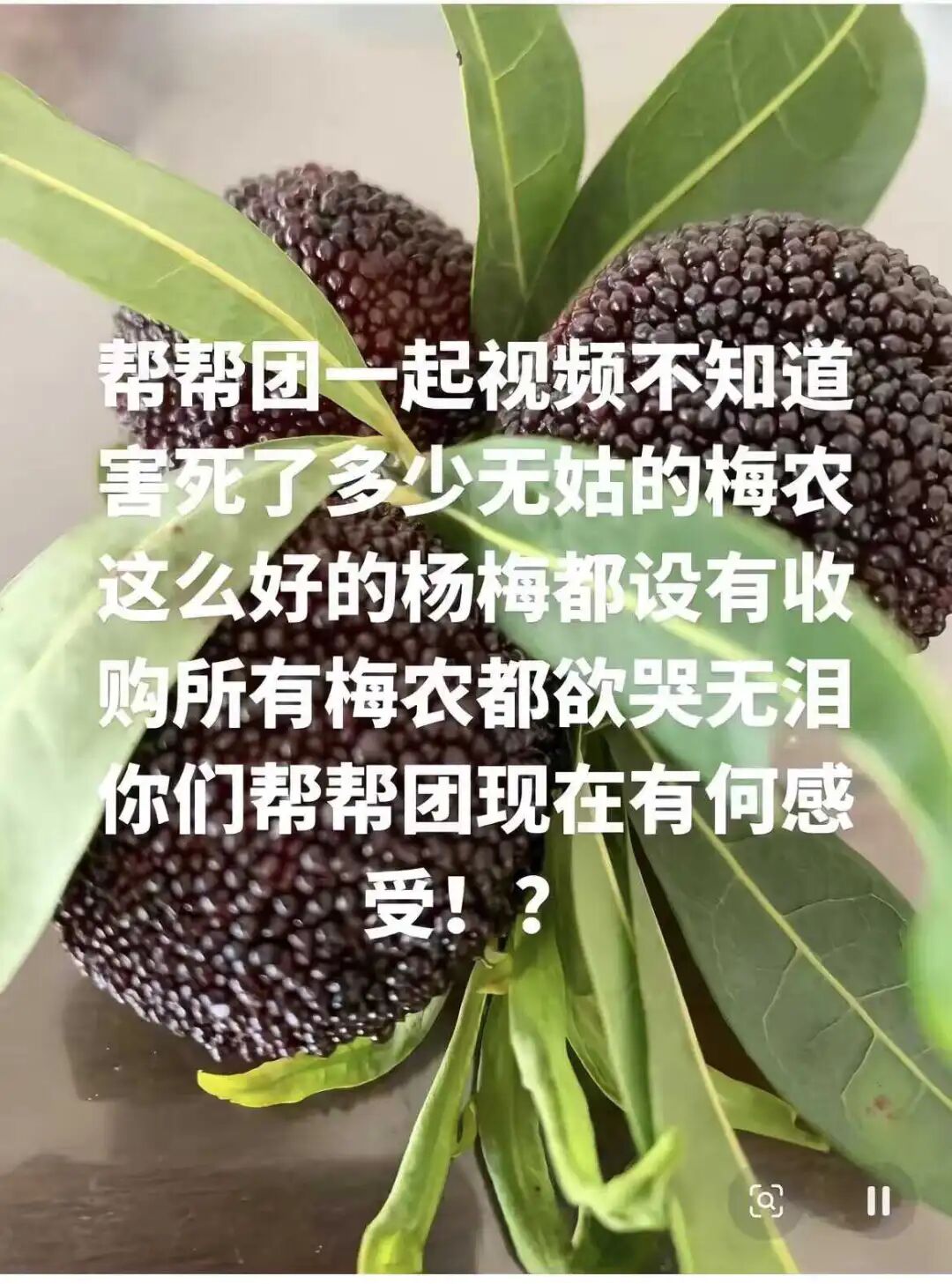
Reporter Yang Wei, who spoke out on self - media, also received personal threats from local fruit growers:
"Dare you come to Longhai and take a look?"

Fruit growers are busy proclaiming their innocence, and dealers are busy playing the victim.
Consumers who have eaten the "poisonous fruits" may suffer damage to their nervous systems, liver, and kidneys, but no one has apologized for the health risks they have endured.
