The antibiotic content in pork exceeds the standard by 37 times. Where is the quality control of the meat product giant?
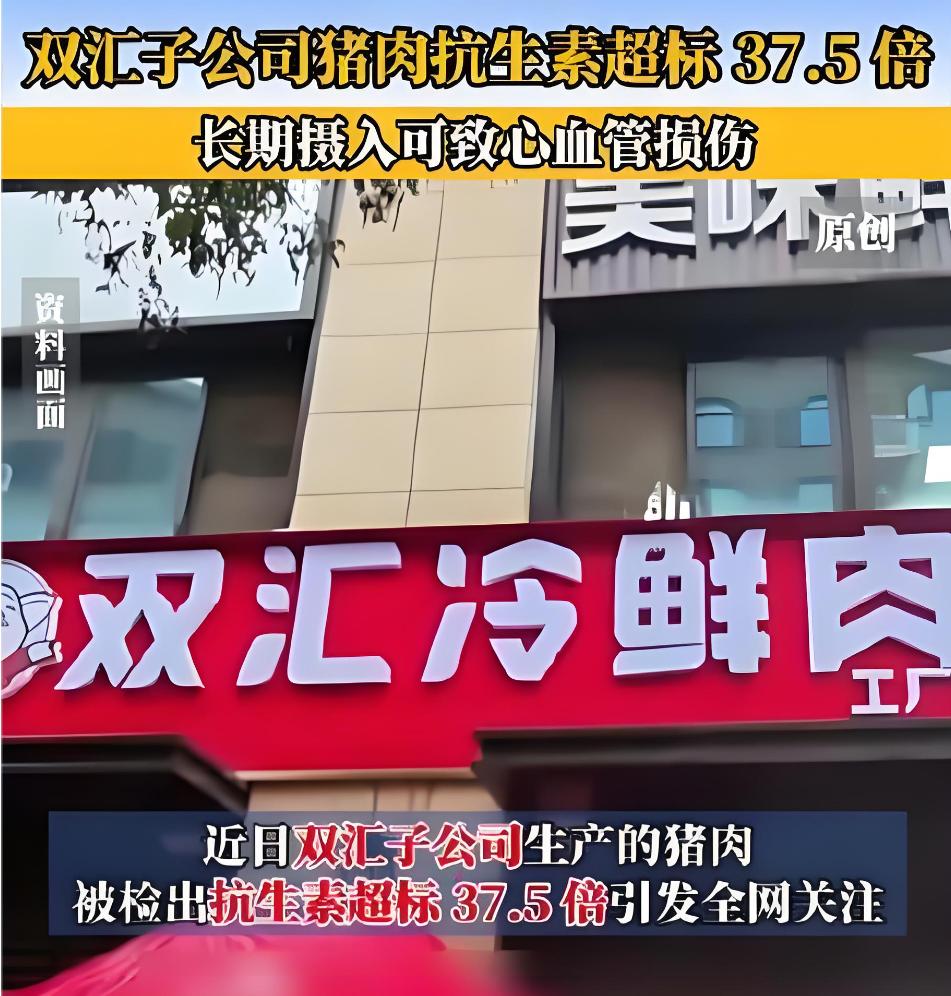
A set of data on the excessive antibiotic content in pork has once again pushed Shuanghui, a leading enterprise in China's meat products industry, into the spotlight of public opinion.
The incident occurred a few days ago. A notice from the Market Supervision and Administration Bureau of Heilongjiang Province showed that the "pork hindquarters" produced by Wangkui Shuanghui Beidahuang Food Co., Ltd., a holding subsidiary of Shuanghui Development, were detected with a lincomycin content as high as 7,700 μg/kg, while the limit value in the national food safety standard is 200 μg/kg. This is a full 37.5 times the standard.
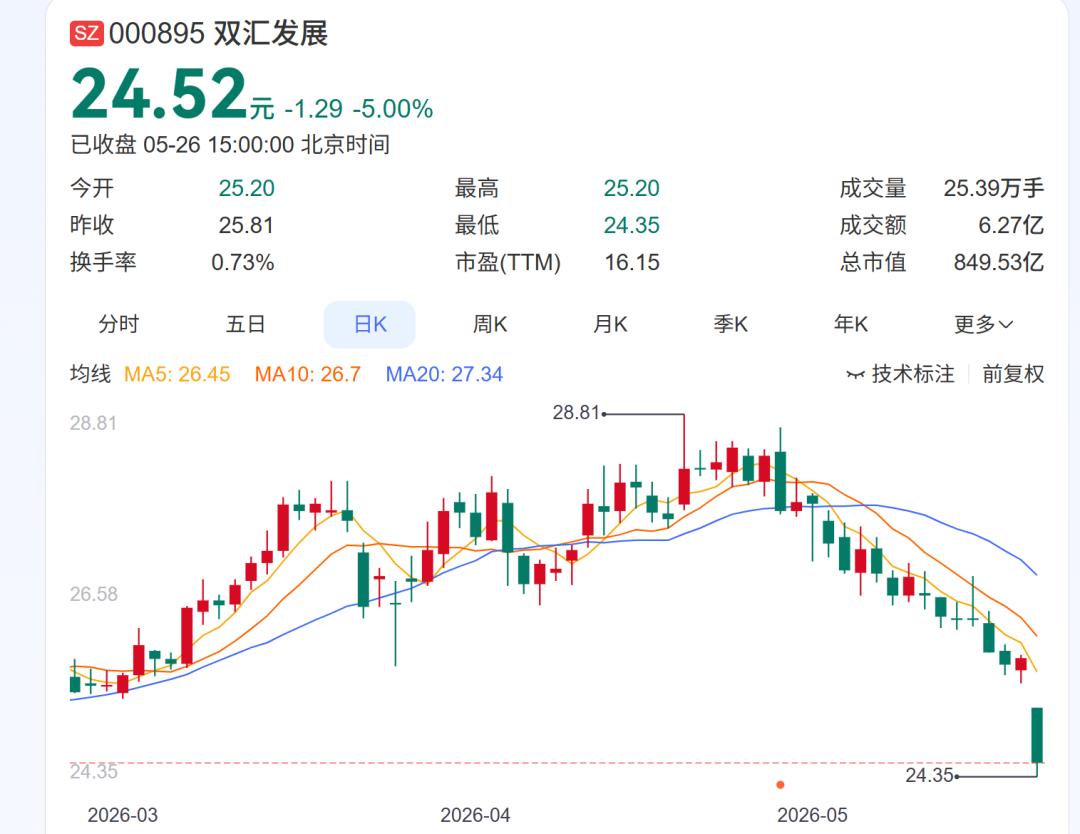
For a moment, Shuanghui's stock price plummeted by more than 5% during intraday trading. As of the close on May 26, the stock price closed at 24.52 yuan per share, and the total market value shrank to 85 billion yuan. This meat products giant with an annual revenue close to 60 billion yuan has stumbled in the same place again.
Every time a food safety incident is exposed, it is ultimately the shareholders and consumers who foot the bill. So, who should take the blame this time?
Is Shuanghui still worthy of consumers' trust?
01 How serious is this excessive content?
Lincomycin is simply an antibiotic used in livestock and poultry breeding to prevent and treat bacterial infections in animals such as pigs. According to national standards, the residue of this type of antibiotic in pig muscle should not exceed 200 μg/kg. However, the residue in this batch of products from Shuanghui's subsidiary reached an astonishing 7,700 μg/kg.
Exceeding the national limit standard by 37 times. What does this figure mean in the food safety industry?
According to information from the Heilongjiang Market Supervision Bureau, long - term or excessive intake of foods with excessive lincomycin may cause gastrointestinal reactions, nausea, vomiting, and diarrhea. In severe cases, it may lead to pseudomembranous enteritis; people with allergic constitutions may experience rashes, itching, and even anaphylactic shock; large - dose intake may even affect the blood system, causing a decrease in white blood cells and platelets.
What's more noteworthy is that the involved enterprise, Wangkui Shuanghui Beidahuang, raised objections to the authenticity of the samples, but it was ultimately determined that "the objections are not valid."
In other words, this test result is conclusive, and there is no possibility of being "wronged."
Immediately after the public opinion fermented, Shuanghui's response was: "The company established a special working group immediately for a comprehensive investigation. The problem mainly lies in the upstream breeding link. The involved batch of products was produced in August 2025, and there is no longer any of this batch in the market. The problem mainly occurred in the upstream breeding link. In the future, the company will strengthen the management of suppliers and enhance the monitoring points for veterinary drug batches."
The representative of Shuanghui Development's securities affairs also said in an interview with reporters that "in the future, we will strengthen the management of pig suppliers and increase the frequency of veterinary drug residue monitoring."
Does it sound a bit familiar?
In 2011, when the "lean meat powder" incident of Shuanghui was exposed, the company's chairman, Wan Long, held a meeting of 10,000 people to publicly apologize and announced that each pig would be tested for "lean meat powder" online one by one. At that time, the company promised to increase the testing cost by 300 million yuan to ensure that the "18 - step quality inspection process" would hold the bottom line.
Fourteen years later, products with a 37.5 - fold excessive content slipped through the inspection and left the warehouse. How can consumers' trust withstand such repeated erosion?
02 What kind of company is Shuanghui?
Shuanghui Development, fully named Henan Shuanghui Investment and Development Co., Ltd., focuses on the meat industry and has built a full - industrial - chain layout covering feed, breeding, slaughtering, meat product processing, foreign trade, condiments, packaging, and commerce. Slaughtering and meat product processing are its two pillars.
In terms of operating revenue, the company achieved an operating revenue of 59.274 billion yuan in 2025, a slight decrease of 0.48%. However, surprisingly, the company achieved a net profit attributable to the parent company of 5.105 billion yuan with a slight decrease in revenue, a year - on - year increase of 2.32%.
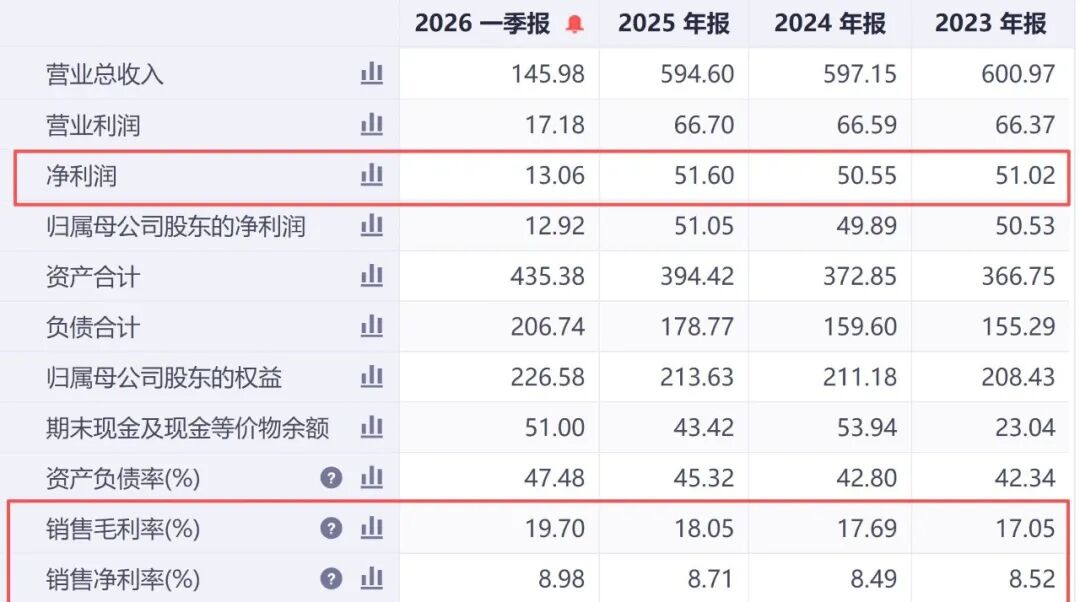
Data source: Flush IFInD
What this reflects is that Shuanghui's profit structure is becoming increasingly dependent on the high - margin meat product business.
Let's look at a set of core data for 2025:
Also worth noting is the dividend. In 2025, Shuanghui plans to distribute a cash dividend of 8 yuan for every 10 shares to all shareholders, with a total distribution of about 2.772 billion yuan. Coupled with the interim cash dividend of that year, the total dividend for the whole year will reach 5.024 billion yuan.
With profit growth and generous dividends, is there a gap between the concerns of the management and the public's worries? While the company is pursuing impressive financial results, has the defense line of food safety become lax?
03 The "weakness" of Shuanghui from the financial structure
After looking at the financial data, Shuanghui's advantages and disadvantages become clear in comparison with its peers.
First, look at the absolute advantage. Among large meat processing enterprises, Shuanghui is still the undisputed leader.
However, competitors have quietly caught up.
The biggest threat may come from Muyuan Co., Ltd., a giant in pig breeding.
Public inquiries show that Muyuan's slaughter volume in the first three quarters of 2025 reached 19.16 million heads, a year - on - year increase of more than 140%. In the same period, Shuanghui's slaughter volume was about 9.13 million heads. Muyuan, which started from breeding, has achieved more than twice the slaughter volume of Shuanghui.
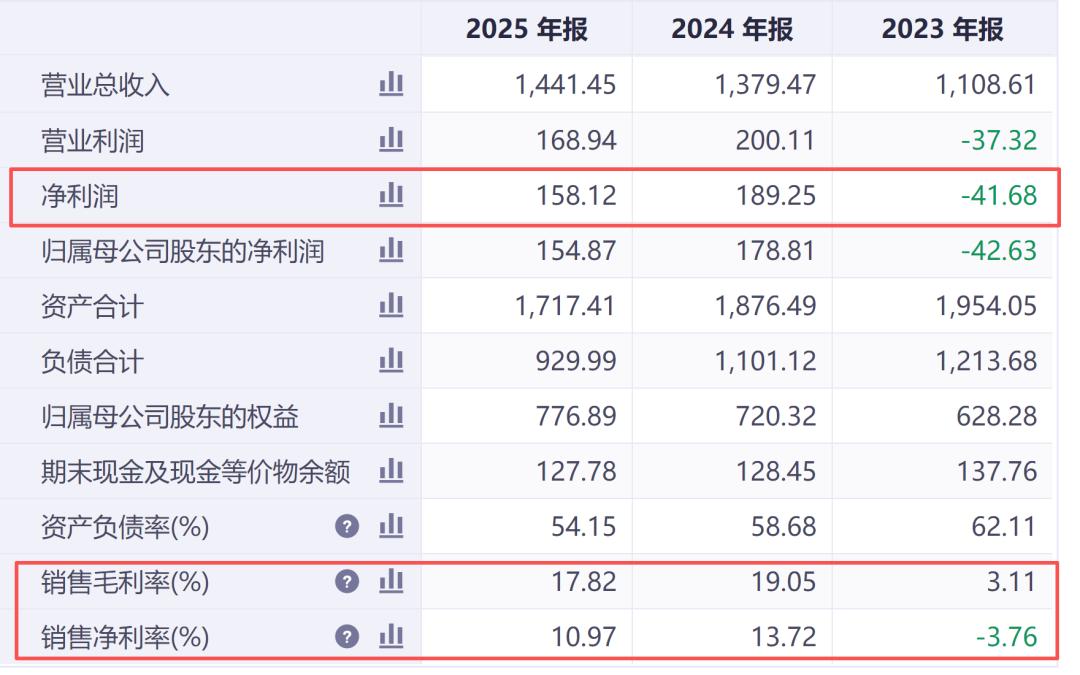
Chart: Muyuan Co., Ltd.'s financial reports in the past three years. Data source: Flush IFInD
The second pressure point lies in profit elasticity. The gross profit margin of Shuanghui's slaughtering business is only 4.94%, which is very thin. Once there are fluctuations in the cost side, the profit will be severely compressed. While the gross profit margin of meat products is as high as 37.05%, it highly depends on consumer confidence.
This precisely explains why food safety incidents have a far greater impact on Shuanghui than on its peers.
If consumers start to question the upstream supply chain, the brand meat products with the highest gross profit margin will be the first to suffer.
04 Chain reaction
The market has cast its vote. On May 26, Shuanghui Development's stock price fell by more than 5% during intraday trading, and its market value evaporated by billions of yuan in one day.
A deeper impact occurred at the brand level. After the "lean meat powder" incident in 2011, Shuanghui once faced losses of up to 12.1 billion yuan and a severe consumer trust crisis. Fourteen years later, history seems to have some similarities.
However, there is an obvious difference between this time and 2011: the industry pattern has changed. Shuanghui is no longer consumers' only brand choice.
Muyuan, Yurun, Jinluo, and even regional chilled meat brands are all waiting to divide the market share.
It is particularly noteworthy that this incident occurred against the background of the full implementation of a number of new national standards for veterinary drug residues.
Since September 1, 2025, a series of new national standards for screening 127 kinds of drug residues have been officially implemented. In the face of stricter testing, the regulatory scanner is becoming more and more sensitive.
This means that for regulatory authorities, similar problems will be investigated more deeply and widely.
If leading enterprises do not plug the loopholes in source control, greater storms await them.
05 Why do problems always occur in this link?
Many people will ask a question: As a leading enterprise in the industry and a well - known listed company, Shuanghui has obvious advantages in the full - industrial - chain. Why does Shuanghui always have food safety accidents in the upstream breeding link?
In fact, most large - scale slaughtering and processing enterprises do not achieve complete self - sufficiency in raw materials.
A large proportion of Shuanghui's pig purchases come from scattered farmers and small - scale farms. The degree to which each farmer complies with the withdrawal period varies, which is the weakest link in risk management. Objectively speaking, it also poses great management difficulties for an enterprise.
What's more noteworthy is that Shuanghui stated that "it has been monitoring the risk of lincomycin in recent years, and no problems have been detected." However, precisely this non - detection exposes the serious lack of monitoring coverage and testing frequency.
Facing thousands of small and medium - sized farms upstream, it is impossible to cover all samples in sampling tests. If only key periods and key batches are sampled, the remaining risks may evolve into the next "37.5 - fold" at any time.
Some people may say that it should be blamed on those farmers for using drugs illegally.
But judging from the results: It is Shuanghui's products that are ultimately sold to consumers with the "Shuanghui" brand label. A brand enterprise cannot both pursue high gross profit margins and not take responsibility for the safety of the supply chain.
While an enterprise earns brand premium, it should also assume brand responsibility.
In the 2025 annual report, Shuanghui still emphasized that it would "promote the steady improvement of business quality by optimizing the management structure, increasing market innovation, and digital empowerment."
But now that there are food safety hidden dangers, consumers may ask: Although it is important to increase the layout of online channels and accelerate the expansion of offline distributors, has the food safety management level really been improved due to the promotion of digitalization?
Has a more rigid and hard - bound monitoring system been established in the breeding link?
Otherwise, the old problems from 20 years ago will still drag down Shuanghui today.
06 Conclusion
Food safety is no small matter. The scale of China's meat products market has exceeded 2.1 trillion yuan. For a leading enterprise with an annual sales volume of nearly 60 billion yuan, there is no reason not to do a good job in food safety management in terms of technology and capital.
The problem has never been "whether it can be done" but "whether it wants to be done."
After the "lean meat powder" incident 14 years ago, Shuanghui established the "March 15 Shuanghui Food Safety Day." If we look back at this day today, it should become a continuous supervision symbol, rather than an old account that is occasionally mentioned or a gimmick for brand promotion.
Of course, we cannot completely deny an enterprise that has been deeply involved in the industry for more than 30 years because of one incident.
Objectively speaking, Shuanghui has played an irreplaceable role in the development history of China's meat industry.
From introducing the concept of chilled meat, promoting cold - chain transportation, to establishing the industry standard of "18 - step inspection," and then to driving the income increase of millions of farmers in Henan and even the whole country, this enterprise's industrial contributions are real.
Even in 2025, Shuanghui still paid more than 4 billion yuan in taxes and directly and indirectly created nearly 200,000 jobs. In critical moments such as dealing with African swine fever and ensuring the stable supply of pork, Shuanghui's production capacity allocation ability is also an important support for the national "vegetable basket" project.
The exposure of problems precisely provides a direction for improvement.
What we hope to see is a Shuanghui that dares to face up to problems and make sincere rectifications, rather than an old - fashioned enterprise that is killed by public opinion with one blow.
In the investment market, Shuanghui is still a good dividend - type target.
But for every consumer who hesitates whether to pick up a pack of Shuanghui ham sausages in front of the cold cabinet in the vegetable market, what they need is not comfort but real, non - discounted safety guarantees.
Disclaimer: This article is only an analysis of financial hotspots, and the views are for reference only and do not constitute any investment or consumption advice.
This article is from the WeChat official account "Investment Banking Circle", author: Senior Sister of Investment Banking. It is published by 36Kr with authorization.