Investigation into the chaos of children's toothpaste: Who is exploiting parenting anxiety?
In today's toothpaste market, the promotional slogans keep "breaking through the sky." Words like "medical research," "3D dazzling whiteness," "ultra - white," "locked whiteness," and "light - sensitive whiteness" are often prominently printed on the outer packaging of various toothpaste products. In late April, multiple products under the well - known brand Colgate sparked a heated discussion and made it onto the hot search list. Just one month after the storm subsided, the chaos in the toothpaste industry resurfaced. This time, the problem focused on the field of children's toothpaste.
Yesterday (May 25th), "Beijing News" published an article titled "Children's toothpaste is labeled 'not edible,' but e - commerce platforms imply 'swallowable'? An investigation into the chaos in children's toothpaste ——".
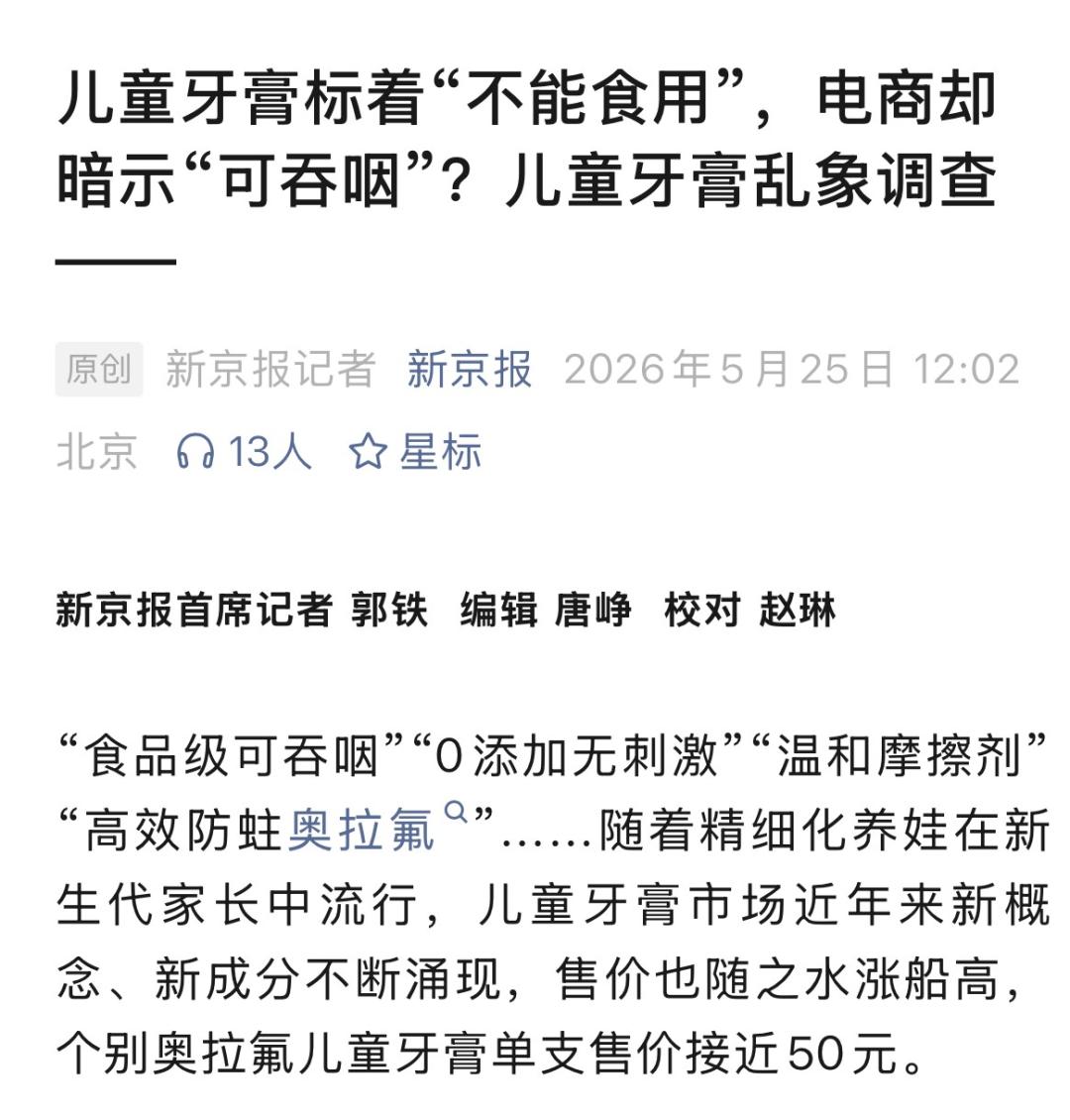
△ Image source: Screenshot from the "Beijing News" report
The article stated that after a recent survey of 18 children's toothpaste products, there are currently four main types of chaos in this market: First, products explicitly or implicitly claim to be swallowable and tout food - grade raw materials; Second, the addition of olaflur is mostly a gimmick; Third, medical - device - labeled anti - cavity creams illegally claim to be able to replace toothpaste; Fourth, adult oral products are disguised as children's special products.
It is worth noting that the brands involved in this incident include Ou Ju, Guo Ting, He Bei, Tong Jiang, Ya Yal Le, Sheng Tong, usmile Smile Plus, etc., basically covering the current mainstream and popular brands in the market.
In response to this phenomenon, when interviewed by Jumeili, many senior experts in the industry analyzed that the problems in the children's cosmetics industry are concentrated in two major aspects: On the one hand, the refined parenting needs have led to fierce involution in the industry, prompting brands to frequently engage in marginal publicity; On the other hand, in the field of children's oral care, there are also real shortcomings such as insufficient supervision and lack of public popular science.
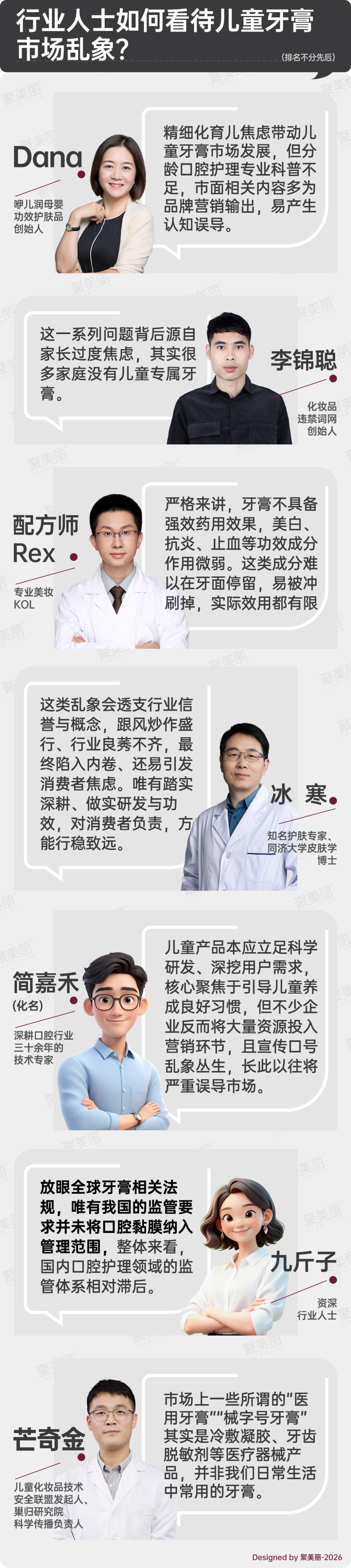
Wild growth: The four major problems in the children's toothpaste market
Based on the results of the market research by "Beijing News" this time, the chaos in the children's toothpaste market is prominent. Many brands have problems such as weak compliance awareness, quality control omissions, and irregular marketing.
1. Marginal misleading: Claiming "swallowable" and "food - grade"
The survey by "Beijing News" showed that the outer packaging of 18 children's toothpaste samples all marked warning signs such as "not edible" and "beware of swallowing." However, on the e - commerce product detail pages and in communications with customer service, many products explicitly or implicitly claim to be swallowable and belong to the food - grade category, creating a chaos of "compliant packaging but non - compliant publicity."
Among them, brands like AODEOCARE, Kangaroo Jack, and He Bei directly marked "0 fluoride, swallowable" and "swallowable"; brands like Dinosaur Doctor and Mi Chu indirectly conveyed the perception of swallowability with phrases like "no burden if accidentally swallowed" and "no need to worry if accidentally swallowed." In a further investigation, it was also found that brands like Orginese Ou Ju once claimed to use "food - grade raw materials." Although they later changed it to "practical raw materials," there is still a risk of misleading.
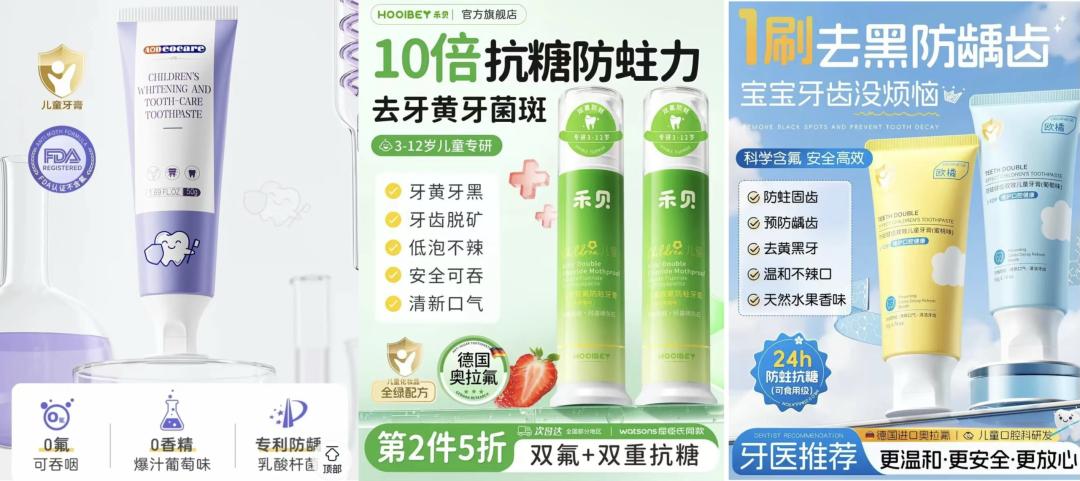
△ Image source: Screenshot from the "Beijing News" report
In response to this kind of marketing chaos, many industry experts unanimously believe that using "edible" and "food - grade" as promotional selling points essentially violates relevant laws and regulations.
Dana, the founder of Yierrun Maternal and Infant Efficacy Skin Care Products, with a pediatric major background from Shanghai Jiao Tong University School of Medicine, pointed out: "Children's toothpaste belongs to ordinary cosmetics, which need to be marked with the small golden shield logo and comply with the exclusive standards for oral care. The regulations clearly prohibit publicity such as 'harmless if accidentally ingested' and 'swallowable'. Even if there are safety test data, it is not allowed to conduct non - compliant marketing."
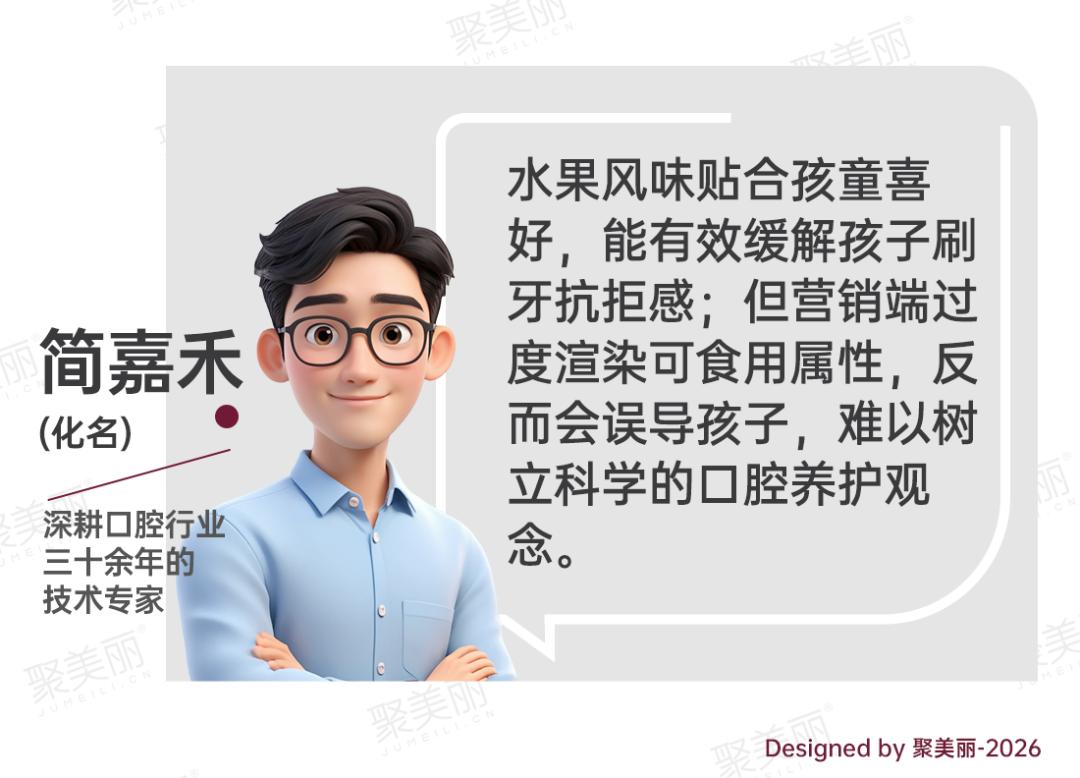
Jian Jiahe (pseudonym), a technical expert who has been deeply involved in the oral industry for more than 30 years, said bluntly: "Toothpaste cannot provide nutrition. Claiming it to be edible is a typical consumer misguidance. It only means that accidental and small - amount swallowing has no safety hazards. This kind of publicity makes it easy for children to neglect the cultivation of the habit of brushing teeth properly and not swallowing toothpaste." At the same time, he also added that the design of food - like flavors is beneficial to establishing correct oral care concepts to a certain extent.
However, Jiu Jinzi (pseudonym), a senior industry insider, holds a different view. She said: "Nowadays, children's toothpaste is relatively sweet, which makes some parents worried - children often swallow the toothpaste when brushing their teeth."
However, Jiu Jinzi also said that the "edible" attribute is a typical gray area in the supervision of the oral care field. "Taking oral popping beads as an example, this category was originally classified as food. Now, many children's cosmetics also launch similar products, operating on the edge of supervision. Although these products are marked as non - edible, there are frequent cases of children accidentally ingesting them, but they are currently regulated according to cosmetic standards."
Bing Han, a well - known skin - care expert and a doctor of dermatology from Tongji University, pointed out from a long - term perspective: "When merchants claim 'swallowable', their intention is to emphasize the safety of raw materials rather than encourage consumption. 'Non - toxic if swallowed' is an expression of a safety attitude and may not mislead parents and children. However, this kind of publicity intensifies industry involution and is not advisable, and it will weaken parents' supervision awareness and hinder children from establishing correct oral care habits."
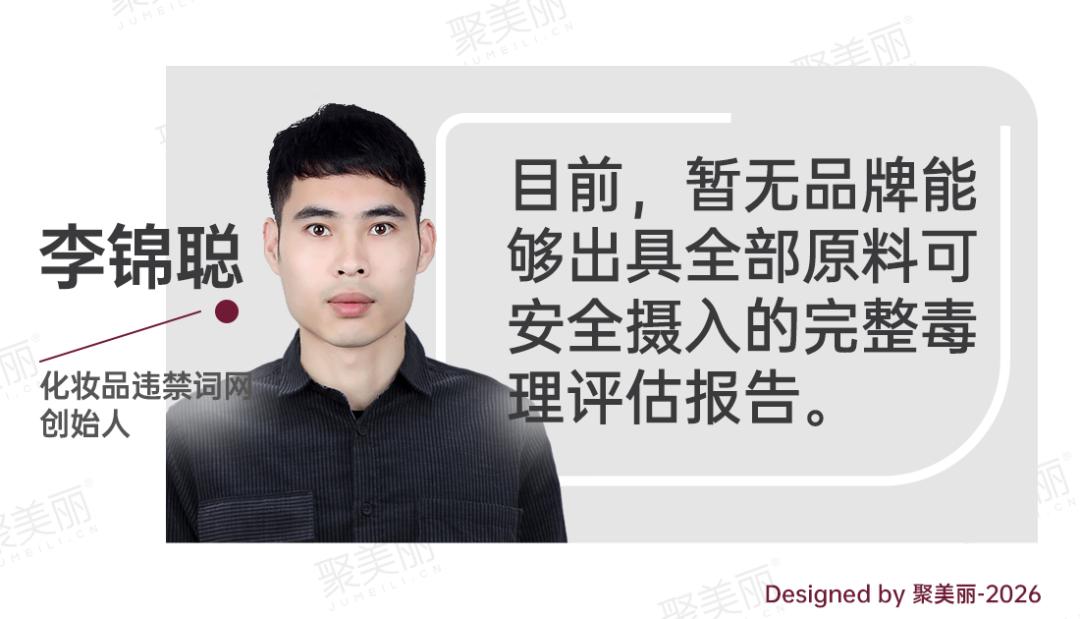
Li Jincong, the founder of the Cosmetic Prohibited Words Network, analyzed from the legal perspective: "Marking toothpaste and cosmetics as swallowable and edible are all false and exaggerated publicity. Even if all the raw materials of the product reach the edible level, such publicity is not allowed."
Children's toothpaste must mark relevant warning words such as "should be used under adult supervision", "not edible", and "beware of swallowing" on the visible surface of the sales packaging; children's toothpaste with added fluoride should mark the single - use limit.
Rex, a professional beauty KOL and formulator, further explained the safety risks: "If children accidentally ingest an excessive amount of toothpaste, combined with the irritating substances such as preservatives and surfactants in the product, it is easy to damage the oral and esophageal mucosa, posing health risks."
2. Olaflur: High - price and low - quality, mostly conceptually added
In recent years, olaflur, as a new type of organic fluoride anti - cavity ingredient, has become a popular raw material in the field of children's oral care. Brands featuring this raw material often claim in their publicity that it has excellent surface activity and antibacterial ability.
However, according to Jian Jiahe, "I have consulted relevant clinical trial reports. Globally, I have only seen 4 cases showing its effectiveness, and these 4 cases do not prove that its effect is better than other fluoride toothpastes. (Note: Here refers to traditional ingredients such as sodium fluoride, sodium monofluorophosphate, and stannous fluoride)"
He also added: "In addition, there is some controversy about the composition of the cationic part of olaflur to a certain extent. The safety data I have seen are concentrated on stearylamine and cetylamine. I have never seen the data of hexadecenylamine. However, due to an additional unsaturated double bond, hexadecenylamine is more reactive. Theoretically, it is impossible to directly prove its safety with the data of alkylamines. It's like if I prove that an iron rod won't cut my hand, I can't prove whether an iron sheet can cut my hand."
Based on this situation, in the investigation, "Beijing News" observed that the cost of olaflur is high - the raw material price is about 40,000 yuan per kilogram, much higher than 60 yuan per kilogram for sodium fluoride. Due to its scarcity, it has gradually become a selling point for high - end children's toothpaste, and the unit price of some products is nearly 50 yuan.
It further pointed out that there is a common phenomenon in the market of overpricing based on olaflur, but in fact, it is mostly conceptually added.
The survey results showed that among the above - mentioned samples, only 1 product is made of pure olaflur, and the other 15 are "mixed - fluoride" products that mix olaflur with sodium fluoride and sodium monofluorophosphate, and none of them marked the individual content of olaflur.
Among the 15 toothpaste products that promote olaflur, only 6 have a higher addition amount than other fluoride - containing ingredients (Note: refers to sodium fluoride and sodium monofluorophosphate), 1 has a lower addition amount than other fluoride - containing ingredients, and the other 8 products list olaflur as an "other trace ingredient", involving brands such as Orginese, Guo Ting, He Bei, Ya Yal Le, and usmile Smile Plus.
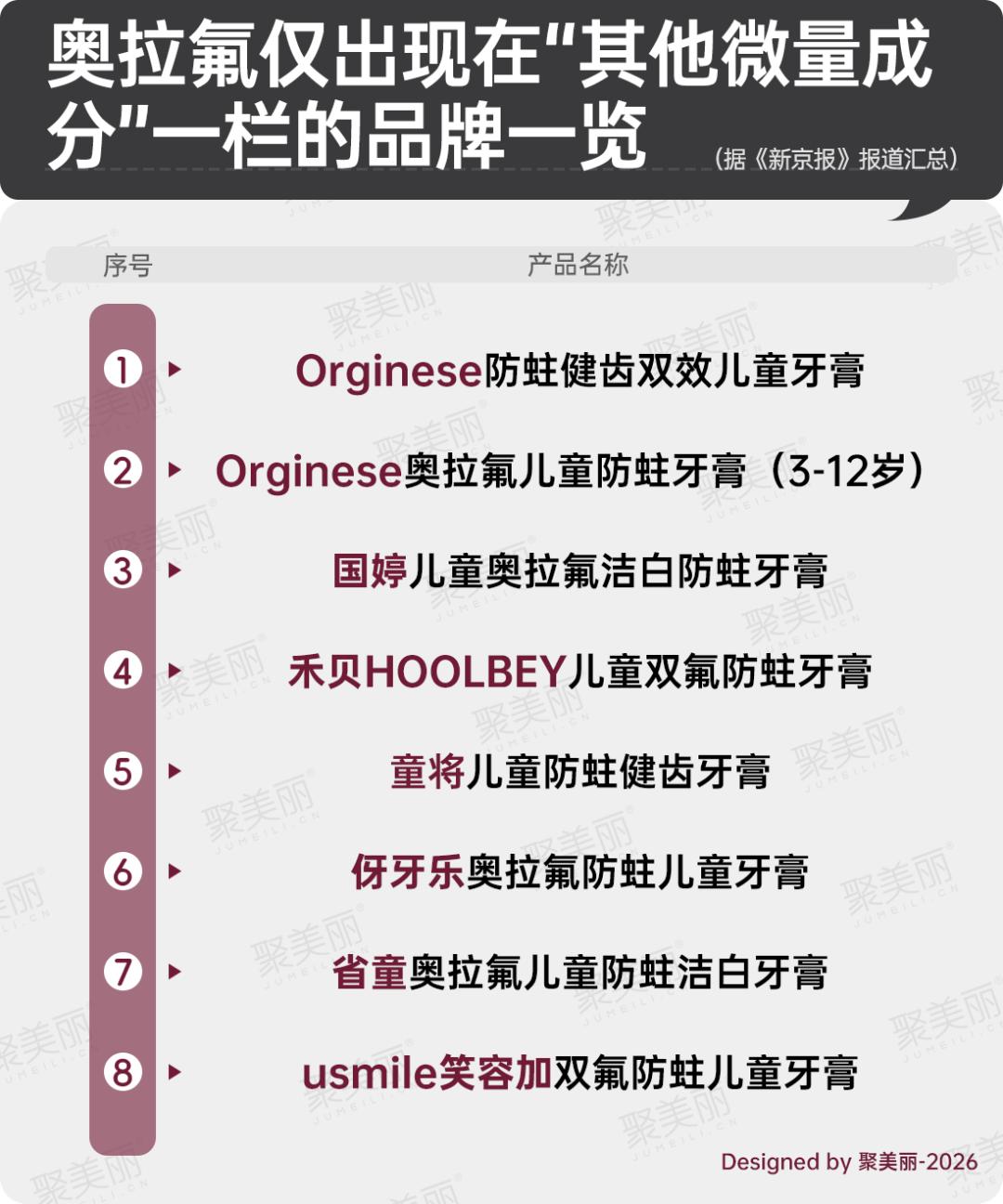
For example, Sheng Tong Olaflur Toothpaste claims to contain "0.1% olaflur", but in fact, olaflur is only a trace ingredient, and the customer service's statements about the content are self - contradictory.
Li Jincong analyzed and pointed out that from the legal perspective regarding the fluoride content, trace addition does not equal conceptual addition. Excessive addition of fluoride is strictly prohibited: the limit is 0.11% (calculated as total fluoride). It is not excluded that some brands use the "mixed - fluoride" formula system to prominently promote the concept of olaflur. Apart from the lack of scientific rigor of olaflur itself, from a professional perspective, it is not recommended for children under three years old to use anti - cavity products.
For children's toothpaste that achieves anti - cavity effects through the addition of fluoride, and the fluoride content meets the "Requirements for Microbiological and Physicochemical Testing Items for Toothpaste Filing": 0.05 - 0.11% (total fluoride, soluble fluoride, free fluoride), the evaluation of the anti - cavity effect can be exempted. When the total fluoride is less than 0.05%, the product cannot be claimed as fluoride - containing toothpaste or fluoride - containing anti - cavity toothpaste, etc.
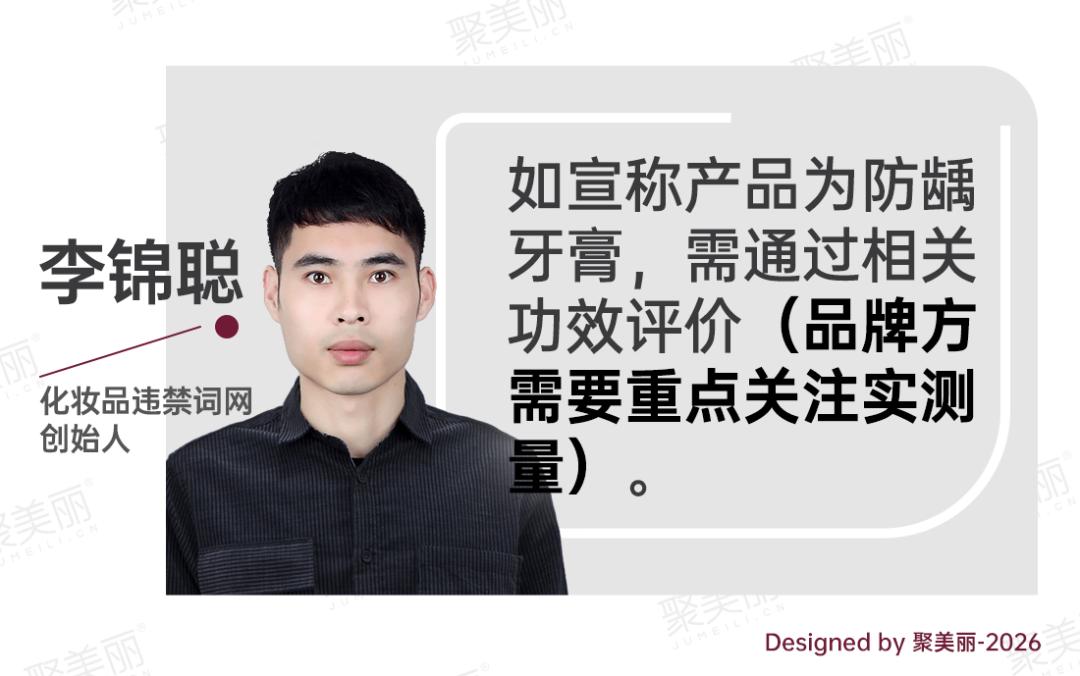
At the same time, according to the regulations and group standards provided by Li Jincong, in the "Health Industry Standards of the People's Republic of China", the cycle of the anti - cavity toothpaste efficacy evaluation using laboratory evaluation methods and clinical trial methods is 2 - 3 years. And in clinical trials, the age requirements for subjects are extremely strict. The experimental subjects for permanent tooth crown caries are children and adolescents, the experimental subjects for primary tooth crown caries are 3 - 4 - year - old children, and the subjects for root caries should be middle - aged and elderly people over 40 years old. The number of subjects in each group should be at least 300.
Similarly, the "Guidelines for the Evaluation of Efficacy Claims of Children's Cosmetics" compiled by the Group Standard of the Guangdong Cosmetics Science and Technology Research Association emphasizes that it is not recommended to select children under three years old for the human body test of anti - cavity efficacy. It is also worth noting that, according to the editorial board members, there is a consensus within that it is not recommended to promote anti - cavity effects for oral care products such as children's toothpaste for children under three years old.
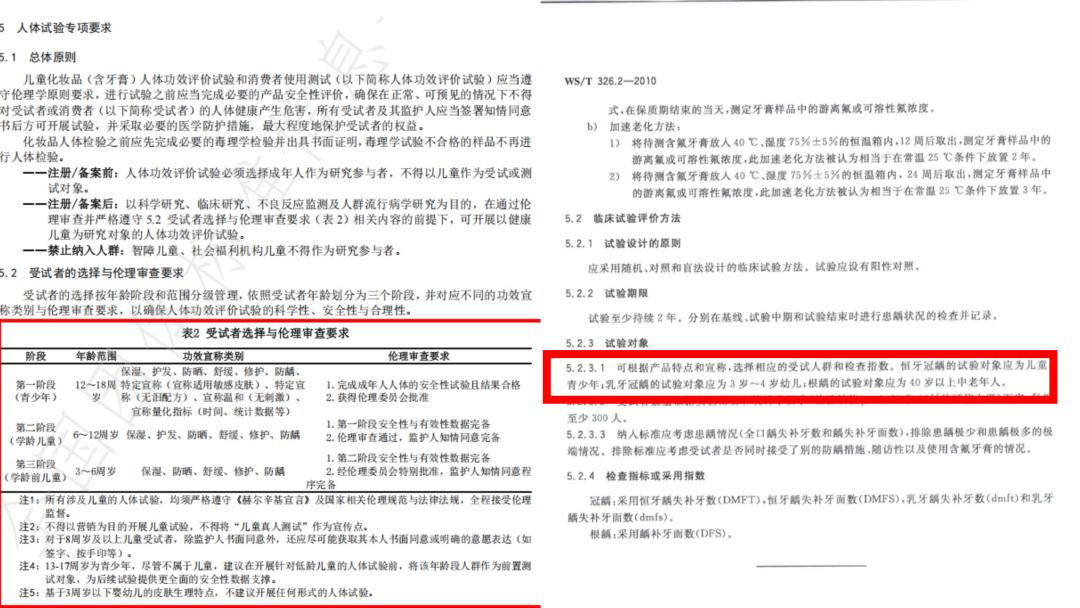
△ Left: Group standard "Guidelines for the Evaluation of Efficacy Claims of Children's Cosmetics", Right: "Health Industry Standards of the People's Republic of China"
The formulator Rex also suggested, "Children under three years old usually do not need to use toothpaste. They can simply use clean water with a soft - bristled toothbrush to clean their teeth. Infants with a smaller number of months do not need to use toothpaste at all. After a child reaches the age of three, they can start using fluoride - containing toothpaste to brush their teeth every day. The key is to maintain the habit of brushing teeth daily."
3. Medical - device - labeled anti - cavity creams posing as toothpaste, inconsistent publicity
In recent years, the chaos of medical - device - labeled products cross - border riding on the popularity has occurred frequently. Many merchants take advantage of the public's trust in medical devices and package Class II medical devices as children's toothpaste for sale, disrupting the order of the oral care market.
According to the investigation by "Beijing News", many Class II medical device products labeled as "oral anti - cavity cream" and "anti - cavity gel"