Apple opens the door to third-party app stores.
At 5 p.m. on the evening of April 17, 2024, Riley Testut pressed the release button for AltStore PAL in a hotel room in Europe. Prior to this, he and Shane Gill, the other co - founder of AltStore PAL, had been traveling around Europe for nearly two months: flying from Texas, USA, to Ireland, then to Dublin, Brussels, and Denmark, waiting for Apple's review notice on trains and cruises.
AltStore PAL is one of the earliest third - party iOS app stores to go live after the official implementation of the European Union's Digital Markets Act (DMA). Initially named AltStore, it was just a temporary tool built by Testut to distribute Delta, a Nintendo emulator app he developed. On January 25, 2024, one month before the official implementation of the DMA, Apple announced a full set of new regulations in the EU. Testut and his team, who had been closely following this matter, decided to transform AltStore into AltStore PAL.
"All the processes finally worked out, which is also the result we've been looking forward to," Testut recalled at the Deep Dish Swift Developer Conference held in Chicago, USA, in April 2026.
However, looking back two years later, the world behind the door is far colder than expected.
Who will pay the price for the opened door by regulations?
After the implementation of the DMA, Apple was identified as a "gatekeeper". The EU requires it to open iOS app sideloading, allowing the existence of third - party stores and alternative payment channels. In theory, developers now have a new choice of distribution channels.
On the surface, this is a historic loosening. However, in addition to complying with the regulations, Apple introduced the Core Technology Fee (CTF): When the annual first - time installation volume of an app in the EU exceeds 1 million times, developers need to pay 0.50 euros for each excess installation.
In April 2025, the EU fined Apple 500 million euros for violating the "anti - steering clause" of the DMA. Apple then adjusted its fee system in June of the same year: the CTF evolved into the Core Technology Commission (CTC), canceling the per - installation fee and instead levying a 5% commission only on transactions with digital product revenues, which was fully implemented in the EU in January 2026.
"Apple didn't really open the door wide; it just replaced a high wall with a toll gate," European iOS independent developer haxi0 (online name haxi0sm) told a reporter from IT Times.
haxi0 is a well - known European iOS app and jailbreak plugin developer. Outside Apple's official ecosystem, he has developed tools such as TrollApps and Jaility. The former is an unofficial app distribution platform similar to the App Store, and the latter is a system function enhancement tool based on TrollStore. After the implementation of the DMA, he has an almost instinctive ability to distinguish the new regulations.
A report commissioned by Apple from a third - party in November 2025 revealed another reality: More than 90% of developers did not pass on the cost savings from Apple's adjusted fee policy after the implementation of the DMA to consumers.
Who is holding on, and who has left?
In the third - party store arena, those who enter have different motives and different current situations.
Setapp was the first to fall. Setapp, from the Ukrainian software company MacPaw, which offered dozens of selected apps in a single monthly subscription model, was once regarded as one of the stores with the potential to challenge the App Store. However, in February 2026, MacPaw announced the shutdown of Setapp, citing "the continuous evolution and excessive complexity of Apple's business terms, which are not compatible with Setapp's existing business model".
Ekta Mittal, an analyst at CCS Insight in Europe, believes that MacPaw's exit sends a clear signal: it is extremely difficult to build a sustainable and profitable third - party store under Apple's current rules. "The arena is still a niche area at present. Coupled with the pressure of the CTC, it's difficult for startups to operate continuously, which indicates that the EU is likely to introduce further regulatory measures in the future."
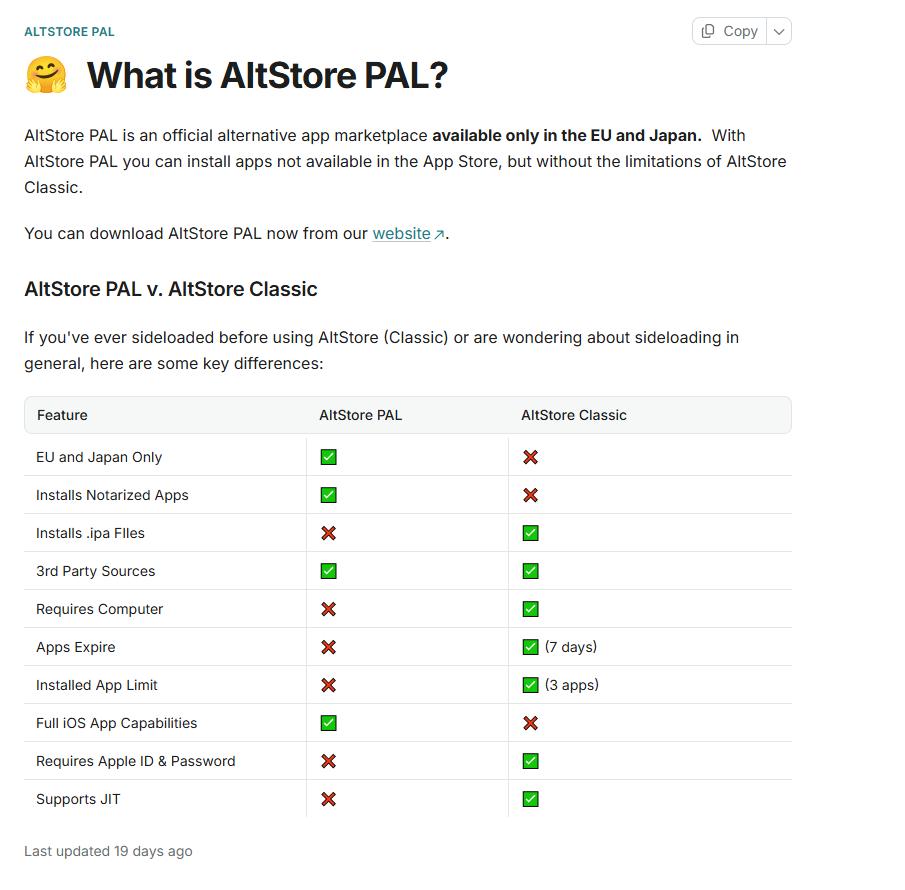
The players who stay are taking very different paths. AltStore PAL has never prioritized business from the start. Apps are hosted by developers themselves, and users need to manually add a "source" to see the app list. Under this "decentralized" architecture, a community has developed its own ecosystem: virtual machine app UTM, app OldOS that recreates the vintage iOS interface, and dictionary app Kotoba have all found a "shelter" where it's difficult to find a place in the App Store.
The Epic Games Store has a different style. The return of Fortnite is highly dramatic. This game was removed from the App Store in 2020 for violating Apple's in - app purchase regulations, which triggered a long - lasting legal battle. In 2024, with the launch of the iOS version of the Epic Games Store, it reappeared on the screens of European iPhone users.
The entry of the veteran Android third - party store Aptoide represents pure business logic. This Portuguese company, founded in 2009, told reporters that it is one of the largest third - party app stores in the Android ecosystem in Europe and North America, with 500 million active users.
Wu Xulan, the business director of Aptoide, emphasized their differentiated positioning to reporters: not selling ads, with revenue sharing as the core, helping developers reach user groups that could not be covered by Google and Apple channels before. "EU users value privacy highly. Our app store does not require an account for downloads, and all apps are security - certified. This is a very important feature for EU users."
However, haxi0 poured cold water on third - party app stores: "Currently, third - party app stores are still a niche ecosystem. Most users only use them to download one or two apps, such as games like Fortnite and game emulators."

Fortnite
Mittal's prediction is consistent with this: In the next one to two years, the download volume of third - party iOS app stores in the EU will not exceed 5%. "Even though the Android system has always had third - party stores open, in Europe, users still prefer the Google Play Store." She believes that the future breakthrough for third - party stores lies in games and social platforms - "They are the most in line with users' interests and have the strongest potential for commercial monetization."
The design of the threshold may not be accidental
Even if users want to enter that door, Apple has designed a high enough threshold.
haxi0 explained to a reporter from IT Times the process of users installing apps from third - party stores: click on the link, a risk prompt pops up, enter the system settings to enable the "Allow app market" permission, go back to the browser, click to download again, and confirm for the second time. Apple will insert warning pop - ups at key nodes, clearly indicating that "the security of third - party apps cannot be guaranteed". "Ordinary users are already used to trusting the blue official App Store icon. Once multiple confirmation boxes pop up continuously along with malware risk warnings, most people will give up directly."
Source: pexels
In the EU, even if an app is only available on third - party stores, developers still cannot bypass Apple's "notarization review", including malware scanning, security checks, and verification of known vulnerabilities.
"Apple still holds the key to remotely shut down apps," haxi0 added. "When users install an app, iOS will verify the credentials with Apple's servers. Once an app is determined to be in violation or the developer's certificate is revoked, this app will immediately become invalid on all EU devices. Users are still trapped in Apple's sandbox, just in a different form."
haxi0 believes that Apple's current licensed third - party app store model is not a real opening. Android users only need to download the APK installation package and enable the "Install apps from unknown sources" permission, and the system can directly install and run the app. However, Apple's third - party stores can only be realized through web distribution and Apple's Marketplace Kit development framework. It is only "decentralized distribution authorized by Apple", not real sideloading.
Japan is another test paper
Different from the EU, Japan has taken a different path.
In December 2025, Japan's Mobile Software Competition Act (MSCA) was officially implemented. Apple immediately implemented relevant compliance functions, allowing third - party app stores and alternative payment channels to enter the Japanese market. In January 2026, AltStore PAL and the Epic Games Store were launched in Japan one after another. Aptoide also launched its iOS app store AppArena on March 31.
Kato Kenji, the representative director of SQOOL, a Japanese game industry media and promotion company, has a similar judgment to that in Europe: "Third - party stores can hardly gain the recognition of ordinary users, game developers, and publishers just by having lower handling fees and failing to provide more added value."
However, Wu Xulan is more optimistic about the Japanese market. Aptoide has deeply cooperated with BBSS, a digital service provider under SoftBank. It has launched a points - cashback activity in more than 2 million physical stores in Japan and pre - installed the app store on the mobile phones sold by SoftBank. "For foreign game manufacturers, this is a brand - new channel to reach user groups that were previously inaccessible."
The root cause of the differences between the two regions lies in the completely different legislative logics. Apple has clearly stated that the MSCA provides clearer rules than the DMA: Japanese law relies more on "dialogue rather than confrontation", giving Apple more room to preserve security and privacy. Therefore, Apple is willing to cooperate actively. In contrast, the confrontational legislative approach of the DMA forces Apple to adopt a minimum - compliance strategy, constantly struggling between fines and revisions, and finally resulting in a more complex fee system.
Who is most affected?
Although the emergence of third - party stores has broken down Apple's ecological wall for developers, in fact, developers are still the most affected.
haxi0 said: "Regulatory agencies are caught in an endless tug - of - war with Apple, and all the technical pressure and cost burdens are placed on developers." Developers now need to maintain two completely different sets of commercialization code systems for the EU and other regions around the world, and also bear additional costs through Apple's "notarization review".
The dominoes of global regulation are falling one by one.
The UK recognized Apple as having a "strategic market position" in October 2025, aiming to strengthen supervision. The lawsuit between Epic Games and Apple in the US is still pending. Mittal predicts that Apple is likely to implement a global unified policy to share compliance costs - "Maintaining different rules in different regions for a long time is too costly. Apple's full switch to the USB - C interface and opening AirDrop to Android are all precedents of this trend."
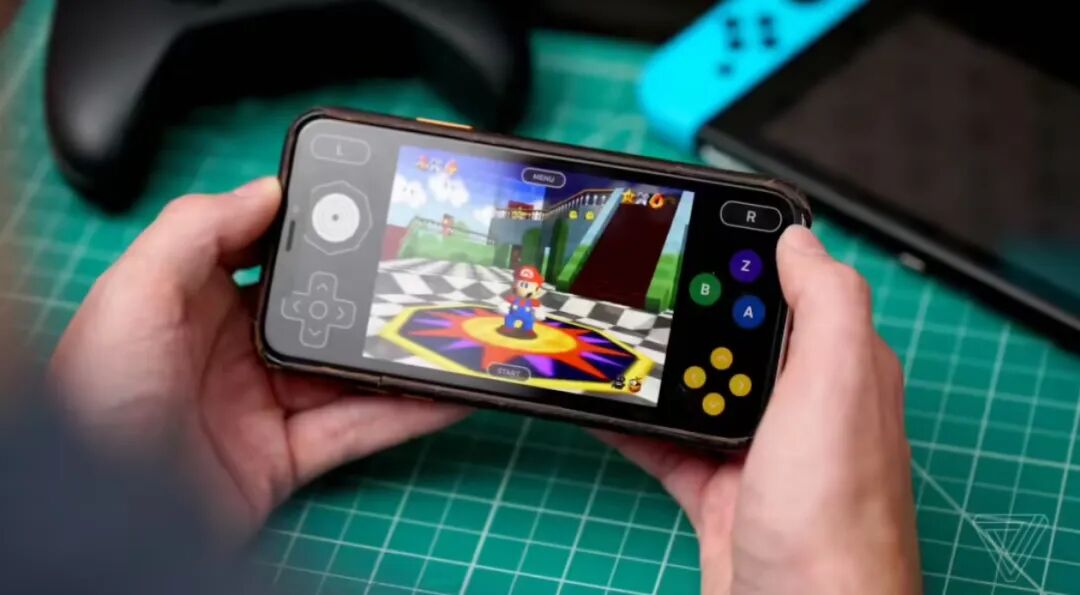
Testut mentioned in his speech that Delta reached the top of the App Store's overall app list, which was "one of the most surreal moments" in his life. "Just a few weeks ago, I never expected that a game emulator like Delta could be listed on Apple's official app store. This proves that there are a large number of high - quality apps on the market that are loved by users but have no chance to be listed due to strict review rules. After Apple relaxed the restrictions, Delta immediately topped the list. This is the meaning of fair competition." However, Delta's success still went through Apple's official App Store channel in the end.
The door is open, but so far, only a few have walked in.
Images / AltStore PAL, Fortnite, pexels, AIGC, The Verge
This article is from the WeChat official account "IT Times" (ID: vittimes), author: Lin Fei. Republished by 36Kr with authorization.