From "Talking the Talk" to "Walking the Walk": A "Lobster" Revolutionizes Hotel Intelligence
To take a 20-minute nap, he kept waking up the smart speakers in the hotel again and again.
This was a real experience of Ma Yingyao, the chairman and CEO of Shangmei Digital Hotel Group, in his own hotel a few years ago. When taking a rest, he needed to turn off the lights, the TV, and the curtains, but he had to give instructions round after round and then add another sentence, "Turn off the ones in the living room too." After all the trouble, his drowsiness was long gone. "This is not real intelligence. It's just changing the buttons into voice output instructions."
Undoubtedly, Ma Yingyao is the most "radical" founder in the hotel industry when it comes to intelligence. In 2022, he simply changed the company name from Shangmei Life to Shangmei Digital. Technologies such as smart door locks with face recognition and mobile check-in without going through the front desk were also explored earlier by Shangmei. However, these still can't be called real "intelligence". After all, high-frequency demands such as extending stays, delivering items, and issuing invoices still have to be handled manually in the end.
"For more than a decade, technology has not favored our industry," Ma Yingyao said with a tone of helplessness. It wasn't until "Xiaomei Lobster" started operating in Shangmei's stores that he felt for the first time that the intelligence of hotels could finally take a step forward.
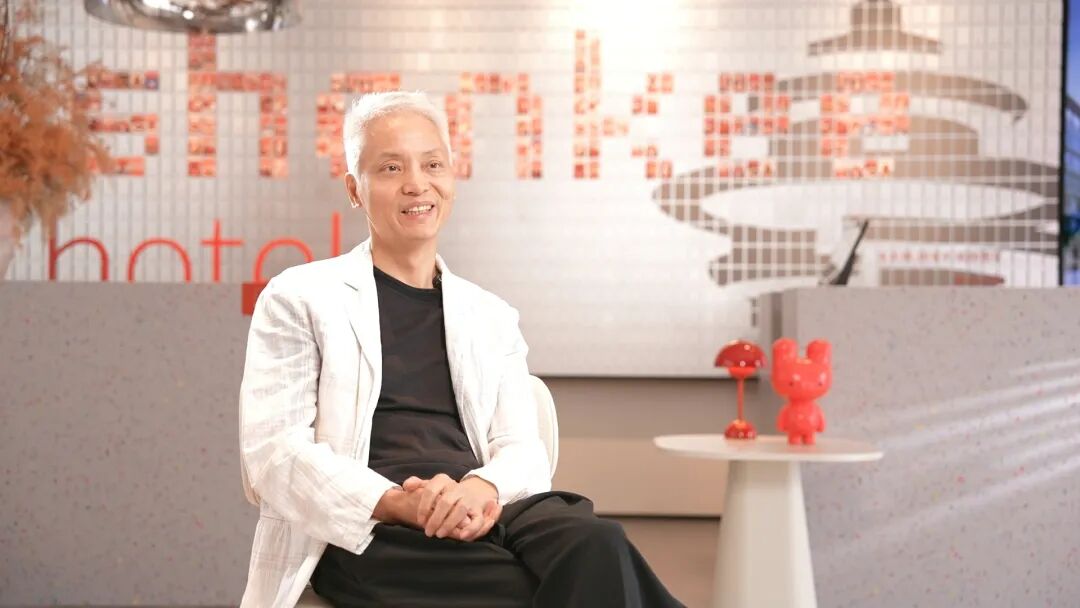
Ma Yingyao, Chairman and CEO of Shangmei Digital Hotel Group

From "Can Talk" to "Can Do", What Does Hotel AI Really Lack?
The previous "intelligence" in the hotel industry mostly stayed at the level of "question and answer".
When a guest says to the smart speaker in the room, "Send a bottle of water", the system can understand it, and the front desk can also receive a reminder. But then, someone still has to manually enter the system, assign the order, and make a record. The intelligent pricing system on the computer can pop up suggestions. The store manager can only see "Suggest reducing the room price by 10 yuan", but in the end, it's still up to people to decide whether to adjust and how to adjust.
The tools seem more advanced, but the work hasn't decreased at all. So when Ma Yingyao vigorously promoted intelligence in Shangmei, the employees were full of doubts. "Will this thing end up like the N products in the dozens of iterations we've developed in the past, and be abandoned after a few days?"
But Ma Yingyao's persistence is not a hasty decision. The front end of the hotel seems to have countless personalized scenarios. Should the check-out be delayed by one hour or two? Should an extra bottle of water or a pair of children's toothbrushes be sent to the guest room? Guests may have 100 strange demands, but when it comes to the actions of the store, there is a corresponding set of standard answers. "The service manual in our industry may have existed 50 years ago. It includes guests' preferences for guest rooms, check-out times, etc. There's nothing new about how hotels should operate."
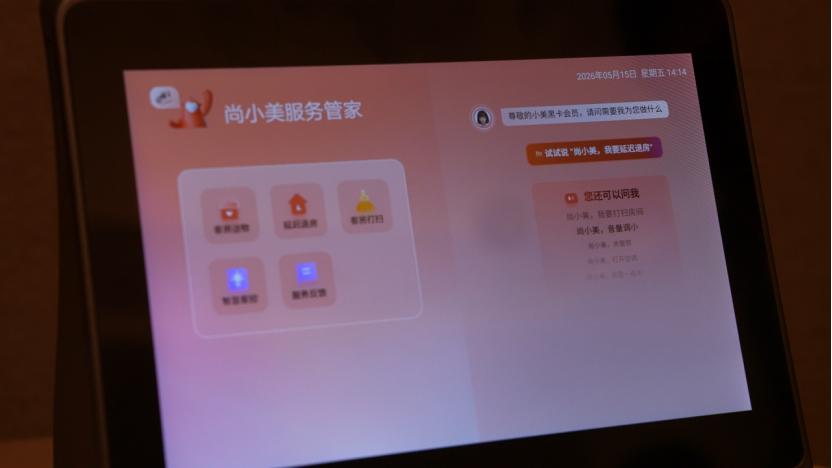
The demands are numerous and trivial, but the corresponding actions can be broken down into standardized steps. Undoubtedly, this is where AI, especially Xiaomei Lobster, can really shine. The difference between Xiaomei Lobster and the previous intelligent devices is that this time it can really do the work for the hotel.
When saying the same sentence, "Send a bottle of water to my room", if it is said to the Shangmei smart speaker connected to the Tencent Cloud Intelligent Agent Development Platform ADP, Xiaomei Lobster not only recognizes the intention but also triggers the subsequent processes such as order assignment, accounting, and delivery. When a guest says, "I want to check out tomorrow, change it to 4 p.m.", it doesn't just reply "Okay", but directly handles the operations that were originally on the front desk by linking the room status, orders, and relevant systems. Ma Yingyao described this change as "from 1 to 2 and then to 100, not a sequential process of 1, 2, 3".
"When we use AI in our personal lives, we mostly regard it as an information provider, with questions and answers. But when using AI in a business environment, such as the most common scenarios in guest rooms like sending water, delivering items, extending stays, and issuing invoices, consumers' demand for AI must be that after I tell it something, the water should be delivered to my room, and the invoice should be sent to my phone or email. So, based on Shangmei's original SOP, we make AI really land and do the work to provide services for consumers." Yang Haichuan, the director of Tencent's Smart Culture and Tourism Solutions, introduced that it took about four months for both sides to make Xiaomei Lobster work from the start of the demand research to the actual implementation.

Why Has the Long-Paved Road Finally Become Feasible This Time?
For Ma Yingyao, Xiaomei Lobster is not a new technology story but a long-overdue verification.
If he were to make a judgment about the future of the hotel industry, quasi-unmanned operation would definitely be the clearest direction. This is not based on science fiction fantasies but on his personal experience of more than a decade in the hotel industry.
"The staff-to-room ratio (the ratio of the total number of hotel employees to the total number of hotel rooms) will definitely continue to decline," Ma Yingyao said. "There aren't enough young people willing to do these boring jobs." The whole industry is finding it increasingly difficult to recruit sufficiently skilled people. In the lower-tier cities where Shangmei has a deep presence, it's even more difficult to recruit store managers or clerks with experience in chain hotels. Many employees have to start facing guests awkwardly on their first day of work.
Ma Yingyao's judgment has always been clear: If intelligence can only provide prompts and queries, it can't solve the long-term problem of insufficient manpower in the stores, nor can it solve the short-term problem of standardizing hotel services.
Ma Yingyao found a helpless macro phenomenon in his research: Whether it's developing AI knowledge bases, intelligent process SaaS, or smart hardware, almost no external technology companies show interest in the hotel industry. The reason is that technology giants pursue high growth and high margins and prefer to focus on vertical fields in large domains. For example, for a new door lock technology, real estate developers will be the first choice because a single order can sell 100,000 sets. The hotel industry is highly fragmented, and the procurement amount of a single customer is extremely low. A small hotel with 30 rooms may spend less than 10,000 yuan on door locks. This "fragmented and small" nature makes the hotel industry a "not worth doing" commercial blind spot in the eyes of technology giants.
This means that Shangmei has to blaze a path for hotel-specific AI.
This hotel company has a research and development team that is quite large in the hotel industry. From scan-code check-in, to touch-to-unlock, to the transformation of the front desk system and self-developed smart speakers, the underlying processes have actually been paved for a long time. In Ma Yingyao's words, "99.9% of the preparations have already been completed."
Xiaomei Lobster, the result of the cooperation between Shangmei and Tencent, makes up that most important 0.1%. Yang Haichuan said, During the implementation process, Tencent Cloud first connected all the more than a dozen systems used in Shangmei's daily store operations to the AI agent. From the complex PMS and telephone systems to the guest room control and delivery robots, the originally scattered links were brought into the same set of processes for the first time.
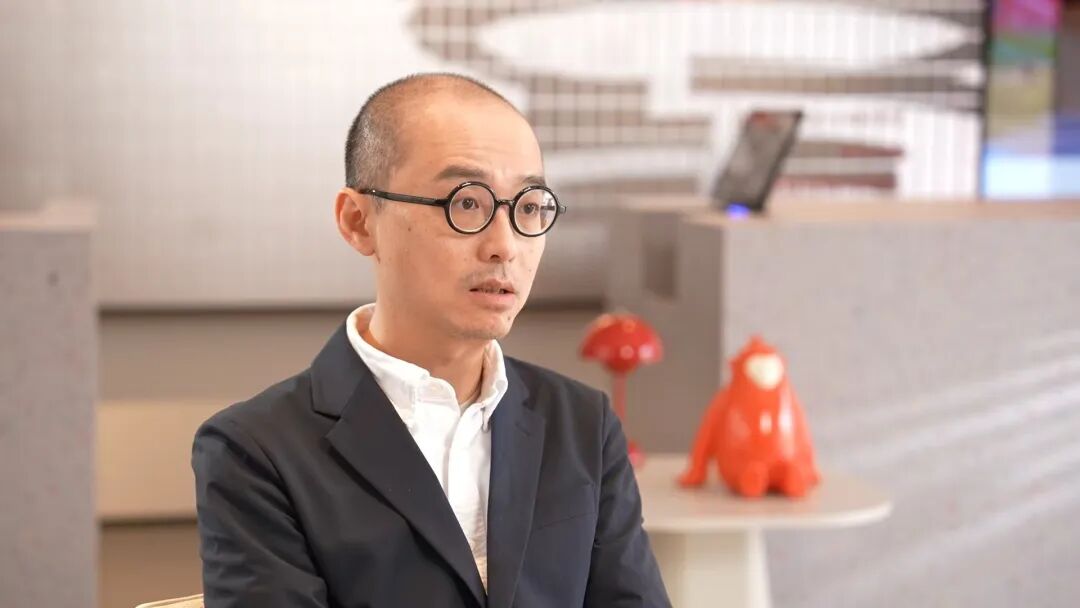
Yang Haichuan, Director of Tencent's Smart Culture and Tourism Solutions
But the real difficulty in making this work doesn't only lie in the model. The guests' accents, the ambient noise in the rooms, how to recover permissions, and which data to keep locally are all details that need to be polished one by one. "Without strong intervention in the model, no matter which model you use, the perfect response rate to consumers' service experience may only be about 50%." In Yang Haichuan's view, what really determines the upper limit of the experience is not just the model but a whole set of Harness Engineering that integrates the enterprise's original service system.
In a serious business environment like a hotel, the end customers who receive the service need to have an extremely safe experience. Yang Haichuan also repeatedly emphasized: "In our cooperation with Shangmei, we have carried out very strict process control on the limitation of hallucinations. AI can be ignorant, but it can't talk nonsense."
In addition to the model application itself, Shangmei paid a relatively high cost for this safety lock in terms of hardware linkage. They didn't choose to upload all sensitive data to the cloud but adopted "edge-side deployment". The guests' facial information only exists in two places: the mobile phone and the local door lock, and it is deleted immediately after verification and will never be uploaded to the cloud. "Although this increases the hardware cost of the door lock because a storage and networking module needs to be installed in the lock, the security is 100% guaranteed." Ma Yingyao said, This seemingly "cumbersome" combination of edge and cloud solution is precisely the foundation for AI to truly survive in the hotel industry.
In the past, when the intelligent products developed by the group came out, employees would think, "This technology is not bad", but it wasn't enough to change the training methods, cost structure, and front-line division of labor. Ma Yingyao said that Xiaomei Lobster made employees start to truly feel for the first time that "one day, the front desk staff won't need training and can just stand there to help guests with their luggage."
More importantly, the employees' mindset has also changed. In the past few years, Shangmei has invested a lot of time, energy, and money in digitalization, but there haven't been many products that have been verified on a large scale. Doubts and wavering are not uncommon. Looking back later, Ma Yingyao thought that the most difficult thing during that period was not how the outside world saw it, but how to make the internal staff always believe that this path was worth continuing. Although Xiaomei Lobster has only been launched in some directly-operated stores and the experience is not perfect, Ma Yingyao is more pleased to see that both employees and guests are full of great interest in using Xiaomei Lobster.
In Ma Yingyao's plan, by next year, Shangmei's self-developed speakers and Xiaomei Lobster's software and hardware digital solution can be exported to single hotels and some small chain hotel brands outside Shangmei to help more peers.
For the hotel industry, the value of AI has never been limited to saving a little manpower and reducing a few steps of operation.
A deeper change is that when standard actions such as sending water, extending stays, and issuing invoices start to be taken over by AI, people can focus on the parts that really require judgment, experience, and warmth. Yang Haichuan said, "It seems that AI solves the problem of mechanized labor, but precisely because of the solution of these problems, the further potential of people is released."
It doesn't necessarily mean that the hotel industry has been completely rewritten. This is an ancient industry, and human interaction is always indispensable. But it at least means that AI agents have started to truly land in the hotel industry, which is highly standardized and highly dependent on service experience.
The value of AI in the hotel industry will only be reflected in a more practical thing: When the guests check in next time, can the process be smoother and the interruptions be fewer? Especially, when they travel to other cities on business or for a trip next time, will they still be willing to stay in hotels of the same brand or series?
Facing this problem that he has been pursuing for many years, this time, Ma Yingyao has unprecedented confidence.