It's better for children to learn a trade than to touch computers. A top-secret report reveals the industry's inside story.
A few days ago, a programmer friend in Beijing came to me to pour out his grievances, saying that there was extremely cruel lay - off happening around him. All those laid off were senior programmers with a monthly salary of 40,000 to 50,000 yuan. Then yesterday, I saw an in - depth follow - up report on the Indian IT industry.
The report reveals that the Indian IT outsourcing industry is facing an irreversible and accelerating decline.
Putting these two things together and making a comparison, I can't help but shiver. After all, I was once a programmer.
This is not just a cycle of peaks and troughs, but a complete and silent demise of an industry. For those Internet companies that have been making easy money in the past two decades by piling up manpower and writing low - level code, their foundations have been completely hollowed out.
In the past 30 years, there has been almost only one single path for the rise of the Indian middle class: Study computer science and join big IT companies.
The report mentioned an Indian middle - aged IT man named Rajdeep. In the 1990s, he was born in a very cramped one - bedroom apartment in Kolkata. Although he was really interested in economics, under the almost coercive persuasion of his parents, he resolutely switched to studying computer science.
(It's just like me 20 years ago. I was actually interested in finance, but was persuaded by my father to study computer science.)
In a country with a large - scale impoverished population, global top - tier IT outsourcing giants like Tata Consultancy Services (TCS) and Infosys are the saviors of ordinary families.
As long as one gets a science degree, they can sit in a modern office building with high - end canteens and entertainment facilities, earn a high salary far exceeding the national average, and even get the opportunity to go on business trips to Europe and the United States to gain experience and completely change the family's fate.
This logic is actually the wealth - creation myth that has been playing out in China in the past two decades.
Around 2013, there was a big explosion in the domestic mobile Internet. At that time, I was working at the Guangzhou R & D center of Kingsoft Network, and I witnessed how the software and hardware ecosystem expanded wildly.
In those years, the entire industry was extremely short of people. Even if one only had a junior college degree, as long as they went to a training class on the market to study Java, PHP or front - end development for a few months, they could easily pass the interview and get a high - paying job that made their peers envious at that time.
In essence, whether it is domestic companies like iSoftstone, Chinasoft International, and Pactera, or Indian IT outsourcing giants, their business models are extremely simple and crude: Charge by headcount and working hours.
When a big company in North America or China needs to develop a system, the outsourcing company will recruit 100 young programmers and 10 project managers (PMs). Just like a contractor leading migrant workers to build a building, they will write the code line by line.
Young people exchange overtime and hair loss for high salaries, and the company earns a large headcount difference in the middle.
In this stable pyramid structure, the bottom layer consists of a large number of young programmers, and the middle layer is composed of PMs responsible for coordination and supervision. Everyone thought that as long as technology continued to develop, this digital building would keep being built, and their jobs would be secure forever.
However, this seemingly indestructible business closed - loop is now being severely hit by the rapid evolution of AI large models.
In the past, it would take ten junior programmers a week to write basic code and conduct hundreds of software tests. Now, a mature AI tool can automatically generate it in just a few minutes and even find all the bugs.
There is a passage in the report of the US research company HFS Research that is accurate and unforgettable:
"The bottom layer is collapsing, and the middle layer is also disappearing. Project managers and middle - level professionals who exist to coordinate and supervise a large number of young employees are losing their roles as the number of management objects decreases."
This is a real dimensionality reduction strike. When young programmers at the bottom are replaced by AI in batches, those middle - level managers who used to show their value by managing people, holding meetings, and monitoring progress instantly become a burden.
What's even more terrifying is that the traditional industry charging model has been completely subverted. Customers have woken up. They are no longer willing to pay for the R & D costs of how many people the outsourcing company has invested and how many working hours have been consumed. Instead, they coldly demand: Pay directly for the final delivered results.
If the skin is gone, where can the hair attach itself?
The financial reports don't lie. Tata Consultancy Services (TCS), the largest IT giant in India, not only saw its revenue shrink, but also reduced its employee count by about 5% in the fiscal year 2025. In the past two decades, the employee scale of this giant has always been stable and has been growing rapidly.
And a certain domestic IT outsourcing giant also doubled its losses in the first quarter of 2026 compared with the same period last year.
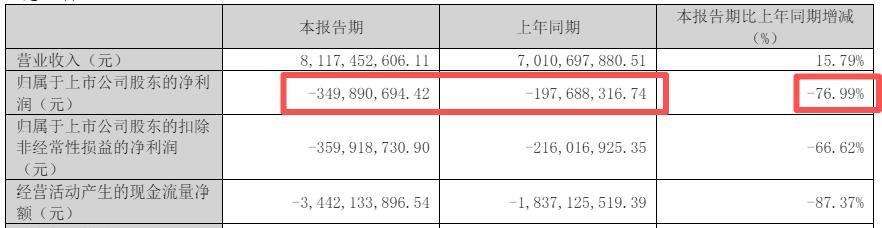
The stock price has been halved in two years.

Under the IT boom in India, up to 8.36 million young people have flocked to engineering universities in the past five years, dreaming of crossing social classes. But the reality is that the number of unemployed university graduates aged 20 to 29 in India has soared to 11 million. The proportion of university graduates among young unemployed people has terrifyingly climbed from 44% to 67%.
This extreme employment stagnation is mercilessly destroying the beliefs of an entire generation.
The situation in China is also desperate, but with more contradictions. On the one hand, traditional IT positions are being drastically cut and employees are being laid off. On the other hand, companies related to AI and large - model algorithms are desperately recruiting people with extremely high salaries.
But there is an insurmountable gap between them. Those high - paying AI positions require top - level mathematical talent and complex algorithm logic architectures. For middle - aged IT men who are used to patching up in traditional software engineering, it is almost impossible to make a transformation.
Looking at the situation in the United States, it is even more cruel.
Recently, Meta started a new round of lay - offs. Nearly 8,000 people were laid off, accounting for about 10% of the total number of employees. At the same time, 6,000 vacant positions were frozen.
On the surface, many people thought Meta was losing money again. On the contrary, in the first quarter of 2026, Meta's revenue was 56.3 billion US dollars, a 33% increase; the net profit was 26.8 billion, a staggering 61% increase. It is making much more money than last year, but laying off more people. Since 2022, Meta has laid off a total of 35,000 people.
Why? Mark Zuckerberg has bet all his chips on AI. In 2026, Meta's investment in AI infrastructure has been raised to 125 billion to 145 billion US dollars, almost twice as much as last year's 72.2 billion.
Someone has to pay for such a large investment. It's not the shareholders, but the employees. Among the 8,000 laid - off employees, the engineering and product teams are the most affected.
At the same time, about 7,000 people were forcibly transferred to new organizations such as "Applied AI Engineering" and "Agent Transformation Accelerator". Their core task is actually very cruel: use their professional experience to feed, train, and optimize the AI agents that will completely replace their entire industry.
Once the agents are mature, a large part of these 7,000 people will also face the same fate...
This is not just Meta's problem. Since 2026, Amazon has laid off about 16,000 people, Cisco plans to lay off nearly 4,000 people, and Block is going to cut 40% of its staff.
Most of these companies' profits have not declined; in fact, they are still increasing. They are not in a downturn but are undergoing a transformation, replacing the current human - based workforce with AI - based technology. The money saved is then reinvested in AI, forming a self - reinforcing cycle.
...
The Indian middle - aged IT man Rajdeep, who made a lot of money overseas at the beginning of the article, now looks at his 12 - year - old son and makes a decision that makes his whole family sigh: He will never persuade his child to study computer science as his parents did to him back then.
As a senior survivor in this industry, he has seen through the truth: in the era of full - scale AI penetration, this low - end technical job, once regarded as a ticket to the elite class, may be completely eliminated at any time.
This article is from the WeChat official account “Washu” (ID: washu66). The author is Washu. It is published by 36Kr with authorization.