Autonomous driving is waiting for its ChatGPT moment.
In the new wave of AI, the autonomous driving track has long been closely watched by the market.
The movements of Tesla, a leading player, are one of the hot topics. Tesla officially announced on May 21, 2026, that its supervised version of the Full-Self Driving (FSD) autonomous driving system has been approved to enter the Chinese market. It should be noted that since July 2025, domestic intelligent driving systems have remained at the assisted driving stage, and policies prohibit car brands from randomly promoting autonomous driving functions. Relatedly, Tesla China's official website adjusted the Chinese name of its FSD to "Tesla Assisted Driving" on May 24, 2026.
This is the first time Tesla has officially announced that its advanced assisted driving function has entered the Chinese mainland market. This progress has intensified market competition, pushing the focus of industry competition from the marketing competition of hardware parameters to the real optimization of user experience, and may accelerate the evolution of domestic intelligent driving competition towards software payment and higher-level intelligent driving.
The upsurge of many industry players rushing to go public has also sparked heated discussions. On May 20, 2026, Unisound Technology, a provider of autonomous driving solutions, officially listed on the main board of the Hong Kong Stock Exchange. Before that, Momenta, Qingzhou Zhihang, and Yuanrong Qixing were all reported to have submitted listing materials to the Hong Kong Stock Exchange.
Autonomous driving has many sub - fields. For example, in terms of carrying objects, there is a distinction between carrying passengers and goods, and in terms of implementation scenarios, there is a difference between closed roads and open roads. Autonomous trucks in ports and mining areas, as well as Unisound Technology's business focusing on specific areas such as airports, all belong to closed - scene applications.
The public's attention is focused on C - end passenger cars that can drive on open roads, including Robotaxis (driverless taxis) and other passenger cars equipped with intelligent driving systems. Overseas players in the Robotaxi field include Waymo and Zoox, while domestic players include Luobo Kuaipao, Pony.ai, and WeRide. Some intelligent driving systems for other passenger cars are self - developed by car manufacturers, including Tesla, NIO, XPeng, Li Auto, and Xiaomi; others are provided by intelligent driving development companies to car manufacturers, such as Huawei, Momenta, Qingzhou Zhihang, and Yuanrong Qixing.
Autonomous driving requires vehicles to complete the full - link closed - loop of perception, decision - making, and control with millisecond - level delay, placing extreme requirements on the coordination of algorithms, hardware, and data. It can reflect a region's level in basic research, engineering capabilities, and industrial chain coordination. At the same time, as one of the few AI implementation scenarios that have entered large - scale public road verification and commercial operation, autonomous driving technology has observable and testable characteristics, becoming a window for the public to directly perceive cutting - edge technology.
According to data from the research institution Global Market Insights, the global market size of autonomous vehicles was $202.4 billion (approximately RMB 1.37 trillion) in 2025, will reach $220.8 billion (approximately RMB 1.5 trillion) in 2026, and is expected to reach $354.6 billion (approximately RMB 2.4 trillion) in 2035. The compound annual growth rate (CAGR) from 2026 to 2035 is 5.4%. Among the global markets, the Asia - Pacific region is the largest dominant market.
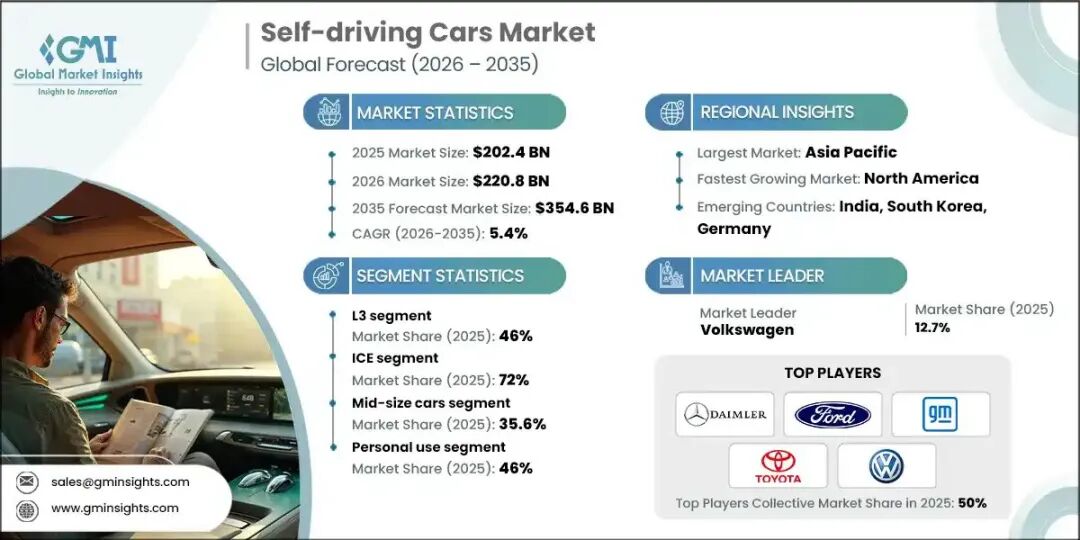
Autonomous driving around the world is accelerating from technical verification to large - scale commercial implementation. The large number of participants and the rapid pace of technological iteration in the domestic market are particularly prominent, and the race is entering a decisive moment.
01
Different Technical Routes
To understand autonomous driving, one must start with the classification, because all differences regarding technical routes, safety responsibilities, and commercial implementation stem from this.
Currently, the international community generally adopts the autonomous driving classification standard issued by the Society of Automotive Engineers (SAE International), which divides autonomous driving into six levels from L0 to L5: L0 is fully manual driving; L1 to L2 belong to assisted driving, and the driver needs to monitor the whole process and take over at any time; L3 is conditional autonomous driving, and the system can independently complete driving tasks under specific conditions, but the driver needs to be on standby to take over at any time; L4 is highly autonomous driving, and within the designed operating range, the system independently completes all driving tasks without human intervention; L5 is fully autonomous driving, and the system can drive autonomously under all conditions, no longer requiring a steering wheel and pedals.
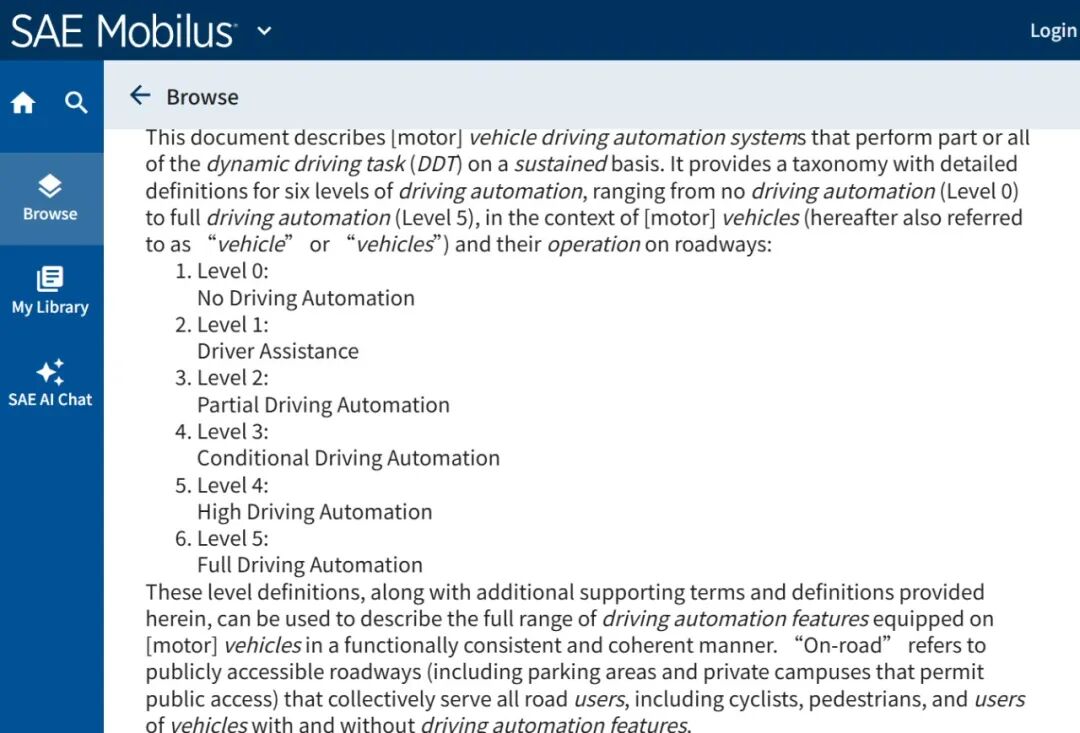
Simply put, for L2 and below, humans are in control, and the driving system provides assistance. This is also the origin of terms such as urban NOA (Navigate on Autopilot) and highway NOA. L2 - level assisted driving has been mass - produced and penetrated on a large scale globally. L3 is being piloted for access in some countries and regions, while L4 has been commercially operated first in fields such as Robotaxis and closed - scene logistics.
In the field of intelligent driving systems for passenger cars, the dispute over technical routes between L3 and L4 is one of the fundamental strategic differences.
L3 requires human drivers to regain control of the vehicle within a specified time after the system issues a takeover request, that is, human - machine co - driving, taking over at any time. With the basic popularization of L2, the "gradualists" in the industry believe that autonomous driving should transition step - by - step from L2 to L3 and then to L4.
Huawei is a representative of this technical route. Jin Yuzhi, CEO of Huawei's Intelligent Automotive Solution Business Unit, publicly stated in April 2026 that for intelligent driving to reach the level of L4 where humans can completely leave the driver's seat and no steering wheel is needed, it requires at least 10 times the safety of human driving. Regulations, insurance support, and technological upgrades all require the accumulation of experience data. Therefore, the process of L3 should be accelerated first, data should be accumulated for the C - end, and user trust should be established.
According to Haike Finance, in December 2025, the Ministry of Industry and Information Technology issued access permits to two L3 models, Changan Deepal SL03 and BAIC ARCFOX Alpha S. These are the first batch of special license plates for L3 - level highway autonomous vehicles in China. However, these two models are designated by car manufacturers and local governments for pilot operation in specific areas, such as the inner - ring expressway in Chongqing and the Beijing Daxing International Airport Expressway, and are not available for C - end retail. In addition, players such as SAIC, FAW, BYD, Li Auto, and Hongmeng Zhixing have obtained L3 test licenses for specified areas.
The "leapfroggers" who advocate skipping L3 and going directly to L4 seem more radical.
He Xiaopeng, the chairman and CEO of XPeng Motors, has a representative view. He Xiaopeng mentioned that the safest path for intelligent driving is to directly iterate from L2 to L4. If one can only ensure safety but cannot achieve driverless driving, it essentially still belongs to the L2 category. He believes that fully autonomous driving will be implemented in 1 - 3 years, and all cars will become powerful super - intelligent agents in 3 - 5 years.
At the L3 level, drivers are allowed to take their hands and eyes off the wheel, but their attention cannot be detached from the driving task. This means that drivers cannot fully relax and must always stay alert. This state may consume more mental energy than focused driving. According to He Xiaopeng's statement, L3 is essentially just an upgraded version of L2.9. In specific scenarios, both are controlled by the system, and there are situations where human takeover is required, with no fundamental difference.
More alarmingly, there have been cases of car owners falling asleep after activating intelligent driving in the L2 era. Once L3 is implemented on a large scale, such behaviors may become more common. Based on this judgment, the leapfroggers advocate skipping L3 and directly moving towards L4 without human intervention to avoid the legal ambiguity and safety risks in the stage of human - machine responsibility handover.
Skipping L3 means saving on certification fees, redundant hardware costs, and commercial preparation work around responsibility transfer. R & D resources can be more concentrated on next - generation technologies such as end - to - end large models. However, this also brings risks. After official certification, L3 intelligent driving is compliant and can directly establish user awareness. If L3 is skipped, only expressions such as "L2+" and "L2.9" can be used. No matter how close the function is to L4, it is still assisted driving legally, and the persuasion cost in the purchase decision is higher.
02
Scale Needs to be Further Expanded
Technological exploration in the field of autonomous driving is always deeply bound to the commercialization process.
L4 - level autonomous driving is not a blank slate. Robotaxis themselves belong to the L4 category, which was also the core goal in the early stage of the industry's development. Looking back, the early players have been developing autonomous driving for 10 years. For example, Waymo was spun off from Google in 2016 to specialize in autonomous driving, and Baidu announced the establishment of its Intelligent Driving Business Group in 2017.
Driverless taxis are the most direct window for high - level intelligent driving technology to face the public and be tested. They transform technological capabilities into daily services that can be experienced and paid for. Once they are commercially operated on a large scale, they are expected to reshape the urban travel pattern. Because they are closest to ordinary users and the commercial closed - loop is most urgent, Robotaxis have continuously occupied the focus of attention of capital, enterprises, and regulators and are regarded as the touchstone for autonomous driving to move from technical verification to industrial maturity.
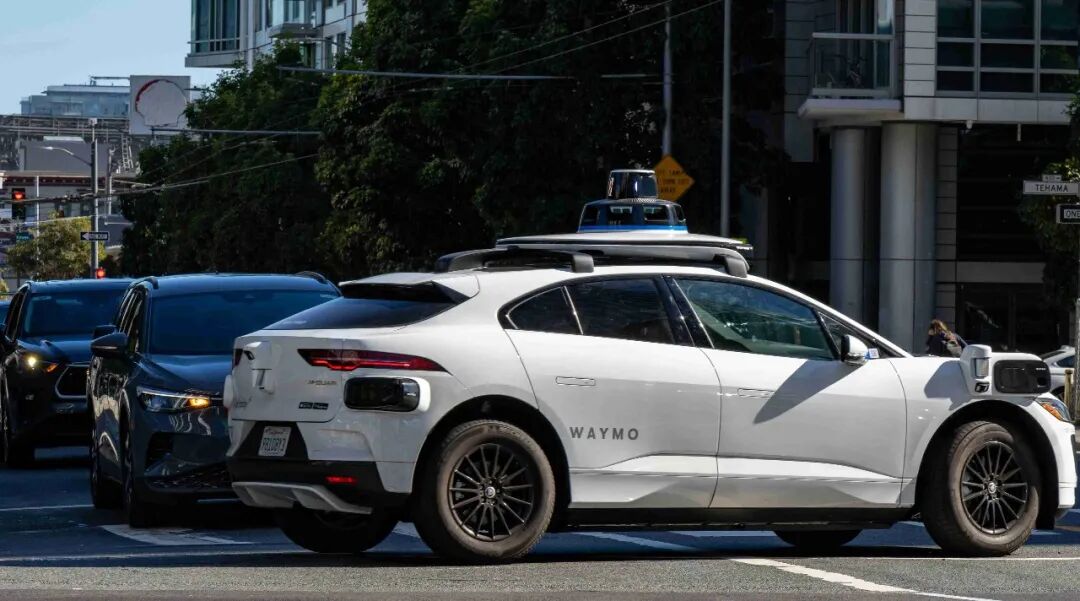
Waymo is the leading global player in the Robotaxi field. Official data shows that as of May 2026, Waymo receives about 500,000 orders per week. Its fully driverless service covers 11 cities in the United States, and it is also deploying in overseas markets such as London, UK, and Tokyo, Japan. It plans to increase the weekly order volume to 1 million by the end of 2026. In February 2026, Waymo completed a $16 billion (approximately RMB 108.7 billion) financing, and its post - investment valuation is $126 billion (approximately RMB 856.1 billion).
Baidu is one of the earliest companies in China to layout the autonomous driving field. The financial report shows that in the first quarter of 2026, Baidu's Robotaxi service, Luobo Kuaipao, completed 3.2 million fully driverless trips, a year - on - year increase of about 129%. The peak weekly order volume in March exceeded 350,000. As of April 2026, Luobo Kuaipao has provided more than 22 million autonomous driving travel service orders to the public. Baidu founder Robin Li said that Luobo Kuaipao has achieved break - even in some cities.
It should be particularly noted that the commercial prospects of driverless technology depend not only on how fast the technology can develop but also on how well the commercial model works.
The development trajectories of Pony.ai and WeRide are quite representative. These two companies listed on the NASDAQ in 2024 and then listed on the Hong Kong Stock Exchange on November 6, 2025.
Pony.ai's business is divided into three major sectors: autonomous driving travel services, autonomous truck services, and technology licensing and applications. The financial report shows that Pony.ai's total revenue in 2025 was $90 million (approximately RMB 648 million). Among them, the revenue from autonomous driving travel services was $16.6 million (approximately RMB 120 million, accounting for 18.5% of the total revenue), the revenue from autonomous truck services was $40.6 million (approximately RMB 292 million, accounting for 45.1%), and the revenue from technology licensing and applications was $32.79 million (approximately RMB 236 million, accounting for 36.4%). From 2022 to 2025, Pony.ai incurred losses of $148 million (approximately RMB 1.066 billion), $125 million (approximately RMB 900 million), $275 million (approximately RMB 1.98 billion), and $76.75 million (approximately RMB 553 million) respectively, with a cumulative loss of $624 million (approximately RMB 4.493 billion).
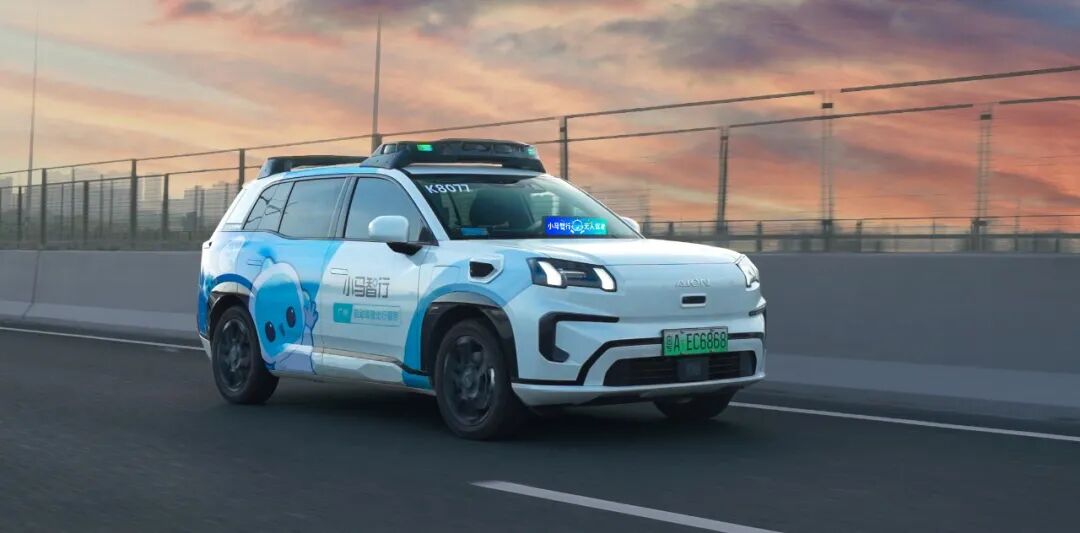
WeRide's business is mainly divided into product business, including driverless taxis, driverless minibuses, and driverless sanitation vehicles, and service business, including intelligent data and autonomous driving - related operations. According to the financial report, WeRide's total revenue in 2025 was RMB 684 million. Among them, product revenue was RMB 359 million (53%), and service revenue was RMB 324 million (47%). From 2022 to 2025, WeRide incurred losses of RMB 1.298 billion, RMB 1.949 billion, RMB 2.516 billion, and RMB 1.654 billion respectively, with a cumulative loss of RMB 12.763 billion.
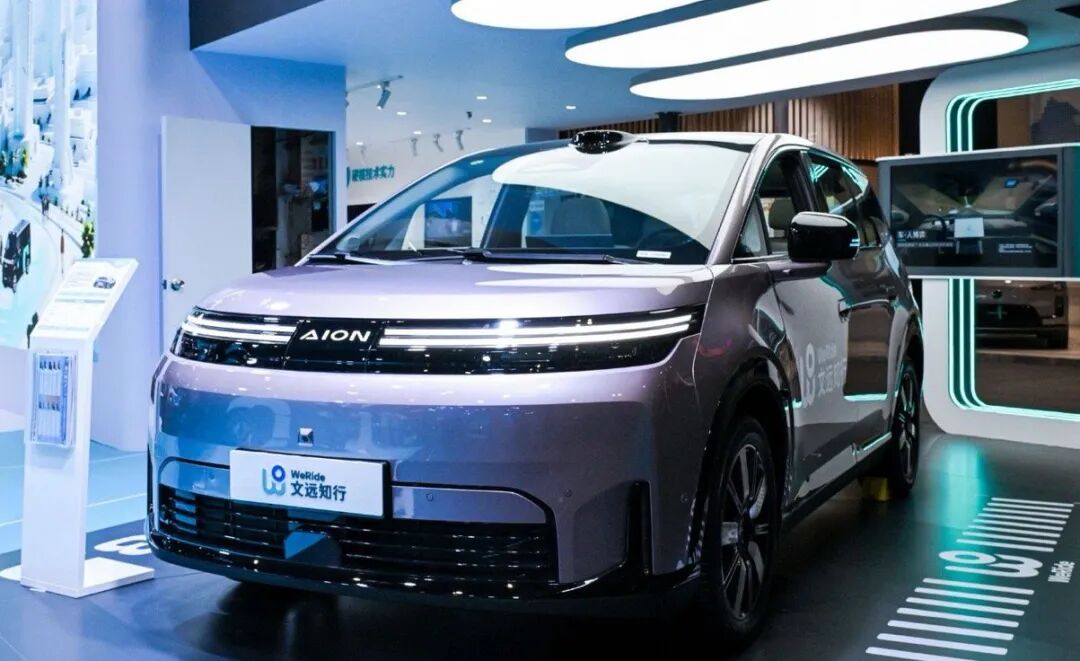
In fact, Pony.ai, WeRide, and Luobo Kuaipao all claim to have achieved break - even for a single vehicle. However, the industry generally believes that real company - level profitability will only come after the fleet scale breaks through a critical level, the ratio of remote safety operators to vehicles continues to decline, and the pre - installed mass - production costs are significantly reduced. Therefore, the focus of attention on the commercialization progress of Robotaxis is shifting from whether a single vehicle can achieve break - even to whether regional and multi - fleet overall profitability can be achieved in multiple cities. This is not only a test of technological maturity but also a comprehensive challenge to operational efficiency.