In May, the popularity of second-hand housing remained high. Who is entering the market to buy houses?
Different from previous years when the "spring market" heat was mostly concentrated in March and April, the heat of the second - hand housing market in May this year has not subsided. Affected by factors such as the later Spring Festival, the decrease in the total price threshold after the housing price adjustment, and the policy optimization in some cities, the transaction volume of second - hand houses in 20 cities increased month - on - month in April, and the growth trend continued in May. Judging from the transaction characteristics, since March, the market heat in key cities has been mainly supported by low - total - price, small - sized houses and communities with relatively mature supporting facilities.
Overall market: The number of second - hand residential transactions in 20 cities increased by 13.4% year - on - year in April, and by 19.5% year - on - year from May 1st to 24th
Chart: Monthly number of second - hand housing transactions and year - on - year trend in 20 key cities
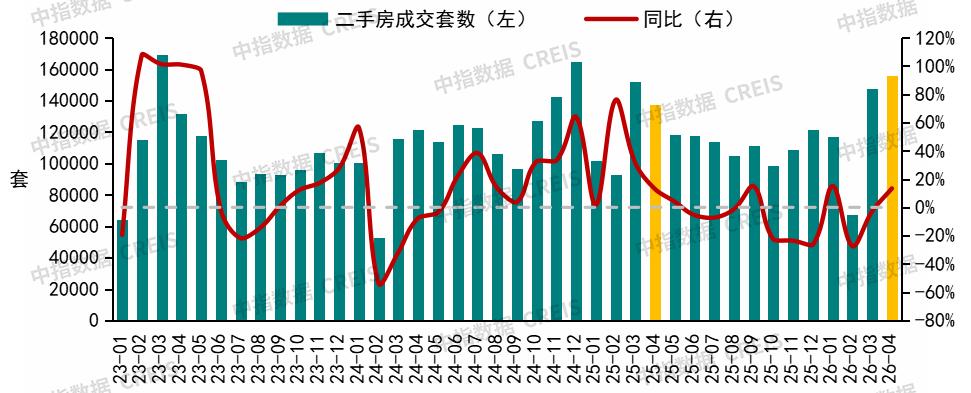
Chart: Weekly number of second - hand housing transactions and year - on - year trend in 20 cities since 2025
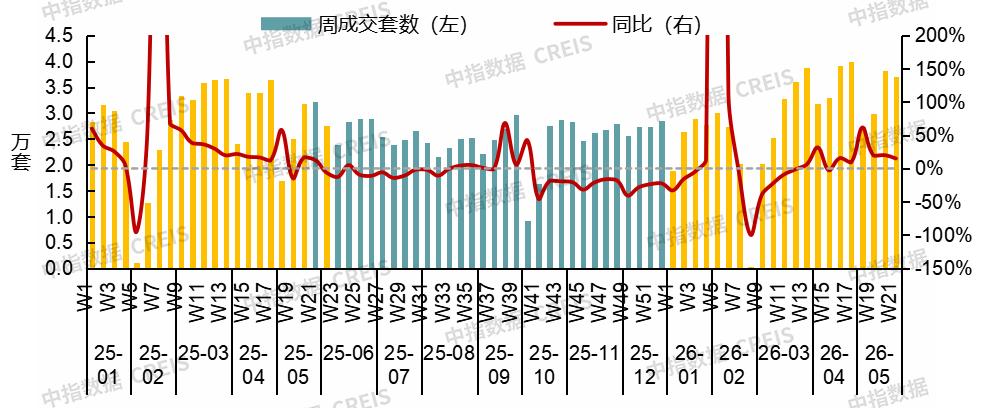
Chart: Weekly number of second - hand housing transactions around the Spring Festival holiday (T + 0) from 2023 to 2026
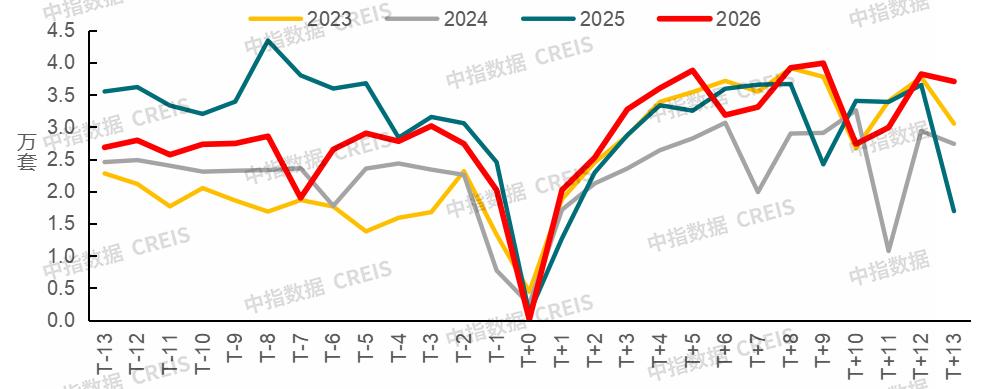
Affected by the Spring Festival in 2026 being about two weeks later than last year, the processes of house - viewing, listing, price negotiation and online signing and filing for second - hand houses after the festival were postponed accordingly, and the release rhythm of spring demand was extended. According to China Index Academy data, 156,000 second - hand residential units were sold in 20 cities in April, a month - on - month increase of 5.4% and a year - on - year increase of 13.4%. It was the first month - on - month increase this year, and the transaction volume in 13 cities in April reached a new high for the same period in the past five years.
After entering May, the second - hand housing transactions in key cities remained highly active. From May 1st to 24th, 107,000 second - hand residential units were sold in 20 cities, a year - on - year increase of 19.5%, and the growth rate continued to expand compared with April. The cumulative number of transactions from January to May (from January 1st to May 24th) increased by 3.7%.
Different from previous years when the "spring market" transaction heat was mostly concentrated in March and April, the heat of the second - hand housing market continued in May this year. Even after excluding the difference in the Spring Festival time, the number of second - hand housing transactions in the 13 weeks after the Spring Festival this year was 12% higher than the same period in 2025, indicating that the release of this round of demand was stronger than in previous years.
Chart: The number of listed second - hand residential units in 25 key cities since 2023 (according to leading real - estate agencies)
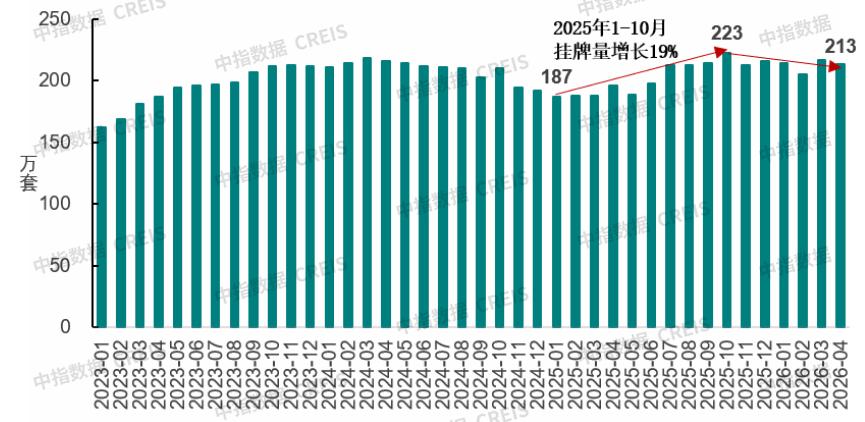
From the supply side, the listing volume has stabilized and the price decline has narrowed. Although the second - hand housing transaction volume in 2025 was not weak overall, it was mainly driven by a sharp increase in the listing volume, and the prices were under continuous pressure. This year is different. According to China Index Academy data, at the end of April 2026, the stock listing volume of second - hand houses in 25 key cities decreased by 1.6% month - on - month, and dropped by 4.3% compared with the peak in October last year. Among them, the listing volumes in Beijing and Shanghai decreased with fluctuations. At the end of April, they decreased by 1.1% and 18.5% year - on - year respectively, and dropped by 14% and 21% compared with the peak in October last year. In terms of prices, the core cities experienced an accelerated decline in the fourth quarter of last year, while in March and April this year, Shanghai has achieved consecutive month - on - month increases, and the price declines in cities such as Beijing and Shenzhen have also narrowed significantly compared with the fourth quarter of last year. The simultaneous occurrence of increased transaction volume, stable listing volume and stable prices is an important difference between this round of market recovery and the "trading at a lower price for higher volume" model last year. It is necessary to pay attention to whether this trend can continue in the future.
Key cities: The transaction heat of second - hand houses in Beijing and Shanghai continued in May, and the market activity in Guangzhou and Shenzhen increased significantly after the new policies
Chart: Weekly sales volume and year - on - year trend of second - hand commercial residential houses in Beijing and Shanghai
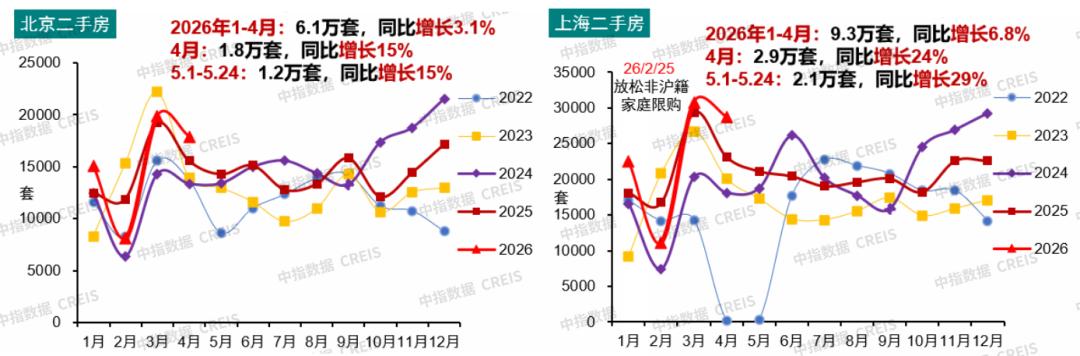
Beijing and Shanghai led the recovery of the second - hand housing market in this round. In April, 18,000 second - hand residential units were sold in Beijing, reaching a new high for the month of April in the past five years; in April, 29,000 second - hand commercial housing units were sold in Shanghai, and the transaction volume was at a high level for the same period in recent years. Among them, the filing volume exceeded 1,000 units for eight days. After entering May, the year - on - year growth of transactions in Beijing and Shanghai continued to be high. From May 1st to 24th, the year - on - year growth rates were 15% and 29% respectively. Among them, on May 10th in Shanghai, 1,664 units were signed online in a single day, setting a new high for a single - day in the past five years again after 1,632 units on April 11th.
In addition, in February, Shanghai launched a pilot project to purchase second - hand houses in Xuhui, Jing'an and Pudong New Area. As of May 21st, a total of 523 second - hand houses were purchased, among which 458 were purchased in Xuhui (accounting for 87.6%). The core innovation of the Xuhui model lies in the in - depth combination of the purchase of old houses and the renovation of "two types of old buildings and one village". More than 300 of the purchased houses are old houses that are "inhabited by people with housing difficulties but not suitable for renovation". Through government purchase, they are transformed into "Homes for Urban Builders and Managers in the New Era" (dormitory - type rental housing specifically for front - line workers), which has found a way to revitalize the historically - left problems. At the same time, Xuhui launched a mechanism of "housing vouchers can be used city - wide and for both new and second - hand houses". The purchase funds are issued in the form of housing vouchers with a validity period of one year, which greatly enhances the willingness of residents to replace their houses. In the second quarter, the pilot project was further expanded to five central urban areas including Huangpu, Changning, Hongkou, Yangpu and Putuo. The procurement of affordable rental housing in the central urban areas of Shanghai has entered a new stage of "full - scale promotion". Overall, the significance of the government's purchase of second - hand houses lies not only in the rapid procurement of affordable rental housing, but also in the formation of a price anchor through market - based purchase, which stabilizes the valuation expectations of old houses and effectively boosts market confidence.
Chart: Weekly sales volume and year - on - year trend of second - hand commercial residential houses in Shenzhen and Guangzhou
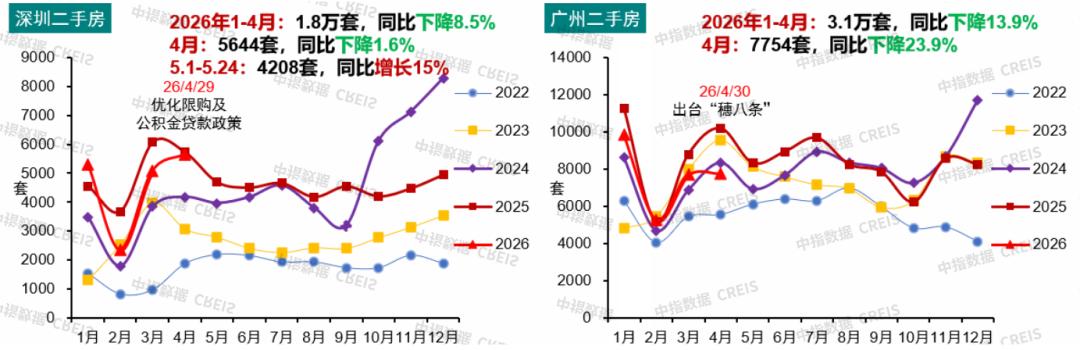
In contrast, the market recovery in Guangzhou and Shenzhen was relatively weak in April, and policies were optimized under pressure. In April, 5,644 second - hand residential units were sold in Shenzhen, and the year - on - year decline narrowed to 1.6%; in Guangzhou, 7,754 units were sold, a year - on - year decrease of 24%. Facing market pressure, the two cities introduced a series of optimization policies at the end of April. On April 29th, Shenzhen relaxed the purchase restrictions in some core areas and increased the housing provident fund loan limit. From May 1st to 24th, the year - on - year growth of second - hand residential transactions was 15%. On April 30th, Guangzhou introduced the "Eight Measures for Guangzhou", covering measures such as increasing the housing provident fund loan limit and providing subsidies for "selling the old and buying the new", aiming to reduce the cost of house replacement and smooth the replacement chain. The effects of the new policies have begun to show. According to the data of the Guangzhou Housing and Urban - Rural Development Bureau, during the May Day holiday, the average daily number of house - viewings and the average daily number of subscriptions of second - hand houses in Guangzhou increased by 15.6% and 5.2% respectively compared with April, and the number of subscriptions increased by 63.4% year - on - year.
Transaction structure: The proportion of low - total - price housing sources has increased, and the structural recovery dominated by rigid demand is obvious
Chart: Proportion of sales volume of second - hand houses in different total - price and area segments in Beijing, Shanghai and Shenzhen
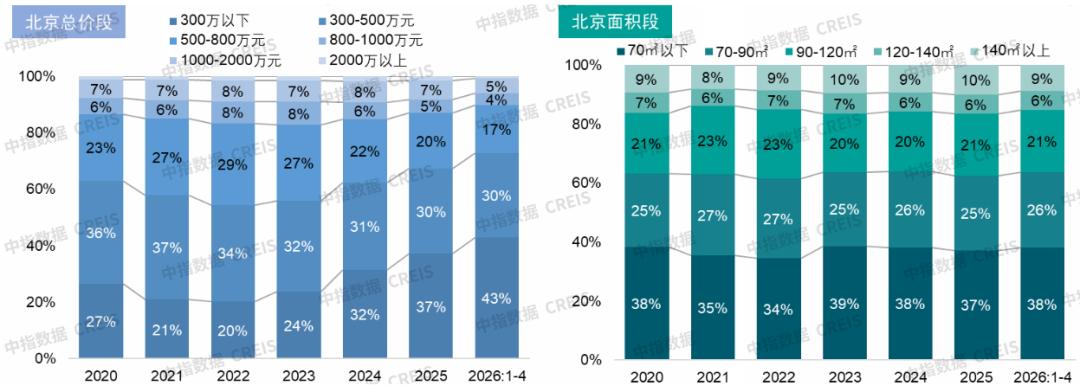
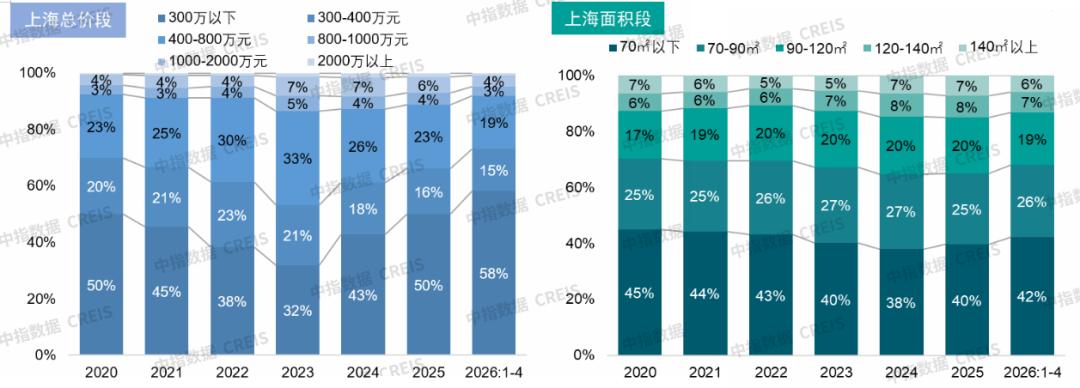
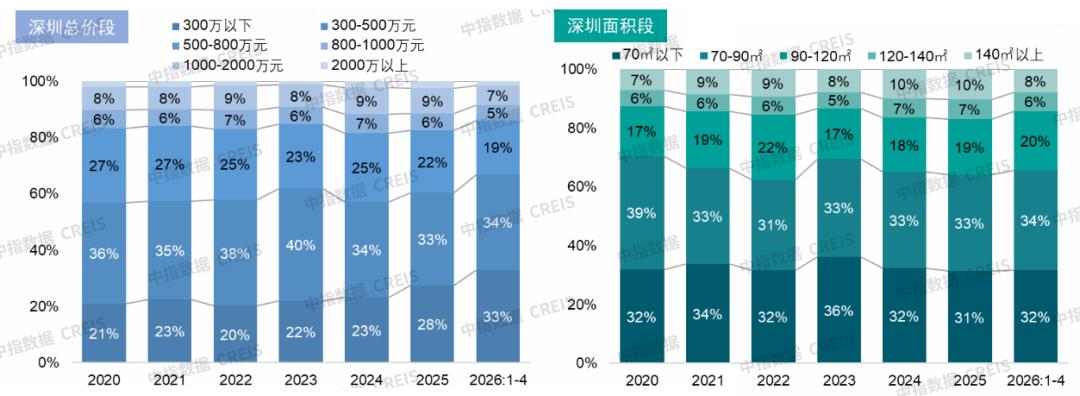
From the perspective of transaction total - price segments, the second - hand housing transactions in first - tier cities continue to be concentrated in the low - total - price segments. According to China Index Academy data, from January to April 2026, 49,000 second - hand houses below 3 million yuan were sold in Shanghai, a year - on - year increase of 41%, and the transaction proportion reached 58%, an increase of 8 percentage points compared with 2025; the proportions in Beijing and Shenzhen also increased by about 6 percentage points respectively. This is mainly due to the continuous decline in housing prices in the early stage. The total price threshold of some housing sources has dropped to the range that rigid - demand buyers can afford, and the cost - effectiveness is prominent, attracting rigid - demand buyers who were previously on the sidelines to enter the market.
From the perspective of transaction area segments, the trend of transactions concentrating on small - sized houses also exists, but the intensity is weaker than that of the total - price segments. From January to April, the proportion of transactions of housing sources below 70 square meters in Beijing, Shanghai and Shenzhen increased to 38%, 42% and 32% respectively, slightly higher than in 2025.
The difference in the change range between the total - price segments and the area segments essentially stems from the structural effect brought about by the decline in housing prices. On the one hand, the prices of some small - sized housing sources have dropped to the range that rigid - demand buyers can afford, attracting the sidelined demand to enter the market; on the other hand, some housing sources with moderate areas have "fallen" into the low - total - price range passively. Therefore, the increase in the proportion of the low - total - price segments is significantly greater than that of the small - sized housing segments.
Table: Proportion of sales volume of second - hand houses in different ring - roads and different construction years in Shanghai
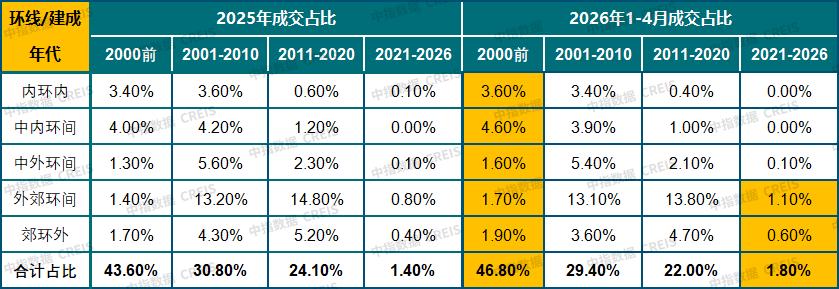
From the perspective of the housing age of the transaction housing sources, from January to April this year, the proportion of transactions of housing sources built before 2000 in Shanghai increased by 3 percentage points compared with 2025. From the perspective of ring - roads, the increase in the proportion of transactions of old communities built before 2000 was mainly concentrated between the middle and inner ring - roads, indicating that the old housing sources in the core areas have become more attractive to rigid - demand buyers after the price adjustment. At the same time, the promotion of the "buying old and replacing with new" pilot project, urban renewal and the renovation of old communities have, to a certain extent, boosted the market's expectations for the value of old communities.
Overall, since April, the second - hand housing market in key cities has continued the active trend in spring. In May, the heat in Beijing and Shanghai